
Food safety and customers within the hospitality industry

- Slides: 10
Food safety and customers within the hospitality industry
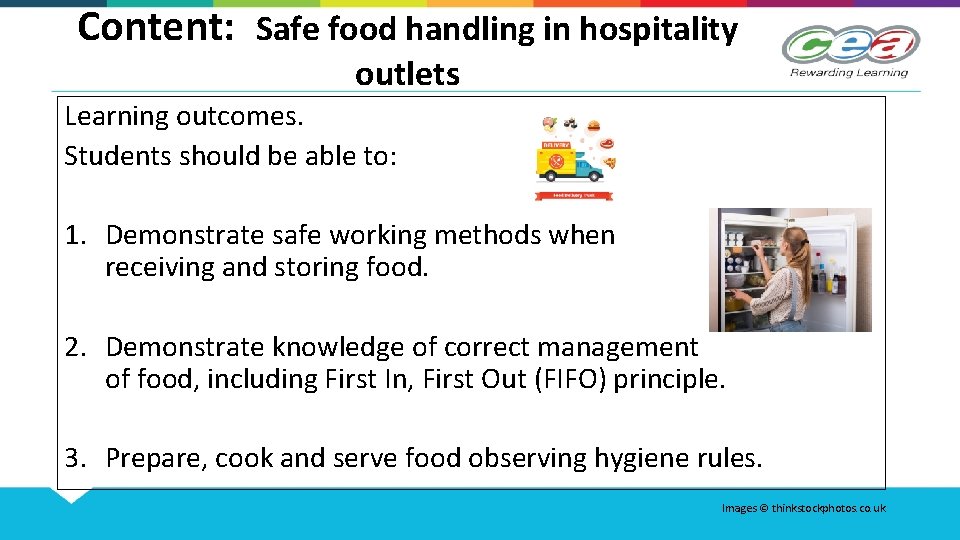
Content: Safe food handling in hospitality outlets Learning outcomes. Students should be able to: 1. Demonstrate safe working methods when receiving and storing food. 2. Demonstrate knowledge of correct management of food, including First In, First Out (FIFO) principle. 3. Prepare, cook and serve food observing hygiene rules. Images © thinkstockphotos. co. uk
HOW are customers kept safe? The government sets out regulations (rules) that have to be followed in all businesses selling food What is covered by the regulations? Food premises Staff training Food handling When are checks made? Regular inspections by Environmental Health Officers
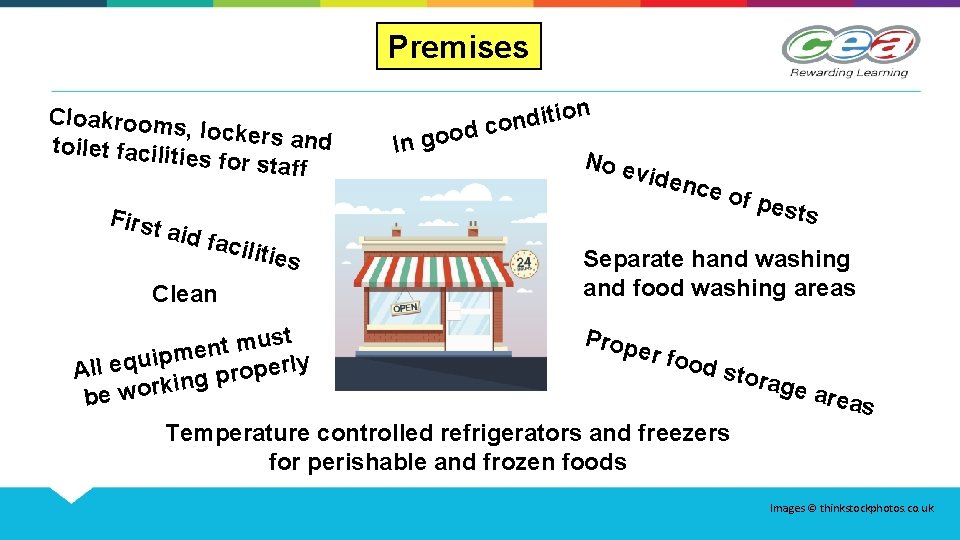
Premises Cloakrooms , lockers an d toilet facilit ies for staff In goo on i t i d n d co No e viden ce of First a id fac ilities Clean t s u m t en m p i u q ly r e p All e o r gp n i k r o be w pests Separate hand washing and food washing areas Prop er fo od st orag e are as Temperature controlled refrigerators and freezers for perishable and frozen foods Images © thinkstockphotos. co. uk
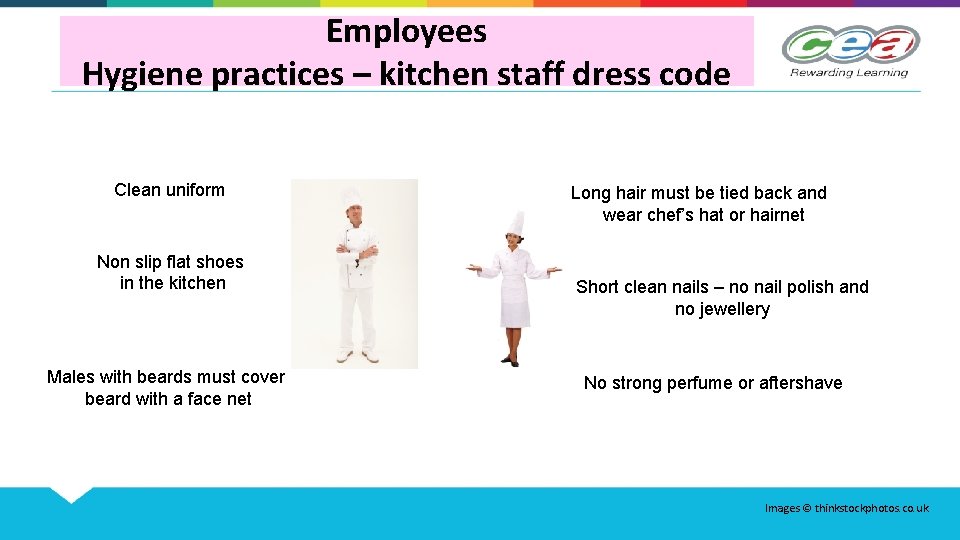
Employees Hygiene practices – kitchen staff dress code Clean uniform Non slip flat shoes in the kitchen Males with beards must cover beard with a face net Long hair must be tied back and wear chef’s hat or hairnet Short clean nails – no nail polish and no jewellery No strong perfume or aftershave Images © thinkstockphotos. co. uk
Fast facts – food handlers All food handlers must by law • Have up to date training in food safety • Wear clean ‘whites’ or appropriate uniform • Tie back hair and wear a hat • Not wear nail polish • Not wear jewellery • Not cough or sneeze over food • Not lick fingers or spoons • Wash hands frequently and especially after handling raw meat after handling dirty vegetables after going to the toilet • Cover cuts with a blue plaster • Report when they are or have been ill particularly with a stomach upset Discuss each of these rules and give reasons why each one is important for food safety Images © thinkstockphotos. co. uk
Food Deliveries All food deliveries must be checked carefully ü The temperature of frozen food must be checked using a temperature probe to ensure it is at -18 o. C ü The temperature of chilled food should be 5 o. C ü The packaging of dried foods must be inspected to check it is not damaged. ü Fresh fruit and vegetables should not show signs of wilting or damage. ü Records must be kept showing that checks have taken place Images © thinkstockphotos. co. uk
Food storage Good stock control systems must be in place so that all food is stored properly. The oldest food must be used first otherwise it may go out of date and have to be dumped. This leads to food wastage and a loss of profit. The First In First Out (FIFO) system should be used. All storage areas must be kept clean. They should be well ventilated to help keep the temperature cool. Good lighting is essential to check cleanliness. Storage areas must be checked frequently for evidence of pests. Windows should be covered with mesh and insect-o-cutors help control insects Chilled and frozen foods must be put in refrigerators and freezers immediately they are delivered. Refrigerator temperature should be below 5 o. C. Freezer temperature should be below -18 o. C The temperatures must be checked daily and recorded. Good food storage helps to reduce food waste. Check food regularly and dispose of food that is past the use by date. Have good waste disposal systems in place. Make sure all bins have lids and do not overfill them Images © thinkstockphotos. co. uk
Fast Facts – Preparing and cooking food safely Preparing Food COLOUR CODING RED = raw meat Blue = raw fish Yellow = cooked fish Green = fruit & salad Brown = vegetables White = dairy and bakery ü ü ü Sanitise all surfaces regularly Clean all equipment frequently during preparation Keep raw and cooked food separate to prevent cross contamination Use colour-coded boards and knives Keep chilled food in the fridge until ready to use (5 o. C) Make sure frozen food is thawed before cooking Fruit and vegetables must be washed before use Check ‘use by’ and ‘best before’ dates Food should not be prepared too long before cooking or service Do not leave food uncovered Put all waste in the bin immediately ‘Clean as you go’ REMEMBER the 3 ‘C’s – CLEAN, COOL, COVERED Images © thinkstockphotos. co. uk
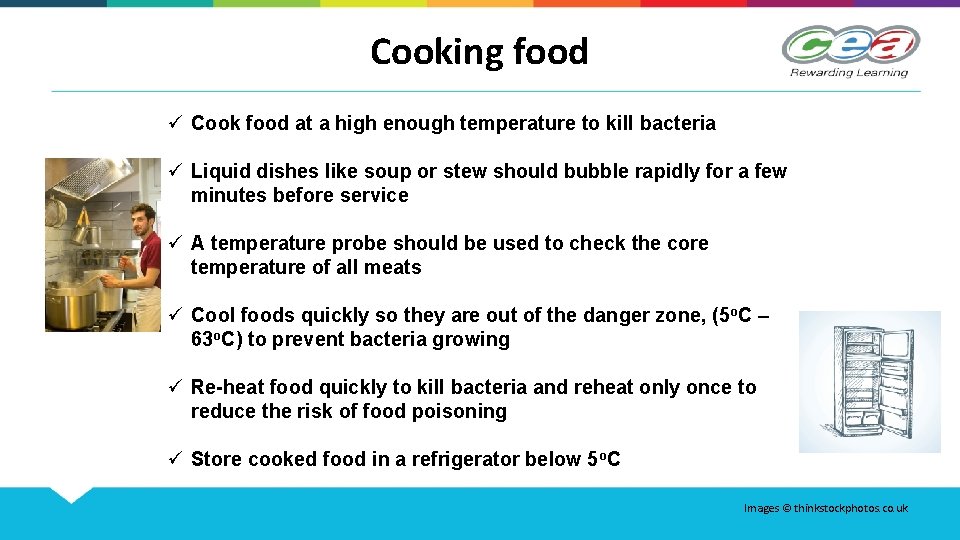
Cooking food ü Cook food at a high enough temperature to kill bacteria ü Liquid dishes like soup or stew should bubble rapidly for a few minutes before service ü A temperature probe should be used to check the core temperature of all meats ü Cool foods quickly so they are out of the danger zone, (5 o. C – 63 o. C) to prevent bacteria growing ü Re-heat food quickly to kill bacteria and reheat only once to reduce the risk of food poisoning ü Store cooked food in a refrigerator below 5 o. C Images © thinkstockphotos. co. uk