
Food production and energy production dont compete Land

- Slides: 25
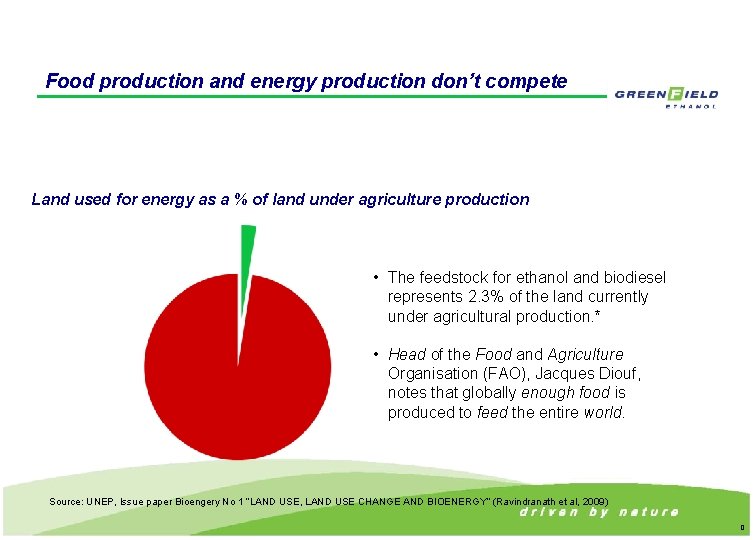
Food production and energy production don’t compete Land used for energy as a % of land under agriculture production • The feedstock for ethanol and biodiesel represents 2. 3% of the land currently under agricultural production. * • Head of the Food and Agriculture Organisation (FAO), Jacques Diouf, notes that globally enough food is produced to feed the entire world. Source: UNEP, Issue paper Bioengery No 1 “LAND USE, LAND USE CHANGE AND BIOENERGY” (Ravindranath et al, 2009) 0
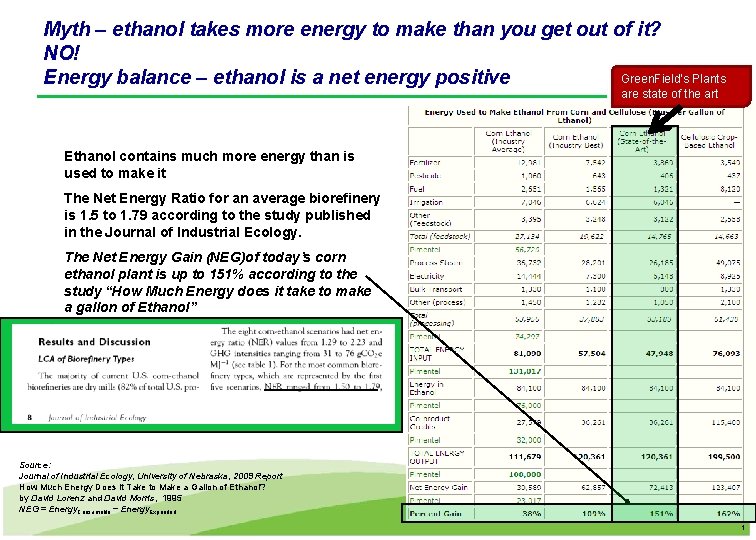
Myth – ethanol takes more energy to make than you get out of it? NO! Green. Field’s Plants Energy balance – ethanol is a net energy positive are state of the art Ethanol contains much more energy than is used to make it The Net Energy Ratio for an average biorefinery is 1. 5 to 1. 79 according to the study published in the Journal of Industrial Ecology. The Net Energy Gain (NEG)of today’s corn ethanol plant is up to 151% according to the study “How Much Energy does it take to make a gallon of Ethanol” Source: Journal of Industrial Ecology, University of Nebraska, 2009 Report How Much Energy Does It Take to Make a Gallon of Ethanol? by David Lorenz and David Morris, 1995 NEG = Energy. Consumable − Energy. Expended 1
Ethanol – Quick Facts • In 2010, global production of ethanol will reach 85 billion litres • 50 billion litres are produced in North America • Canada's production of homegrown clean ethanol was over 2 billion litres in 2009 and displaced 6. 75 million barrels of foreign oil. • In 2010, Greenfield will produce almost 600 million litres of ethanol • Current Canadian mandate is for 5% ethanol to be blended in all gasoline – (September 2010) 2
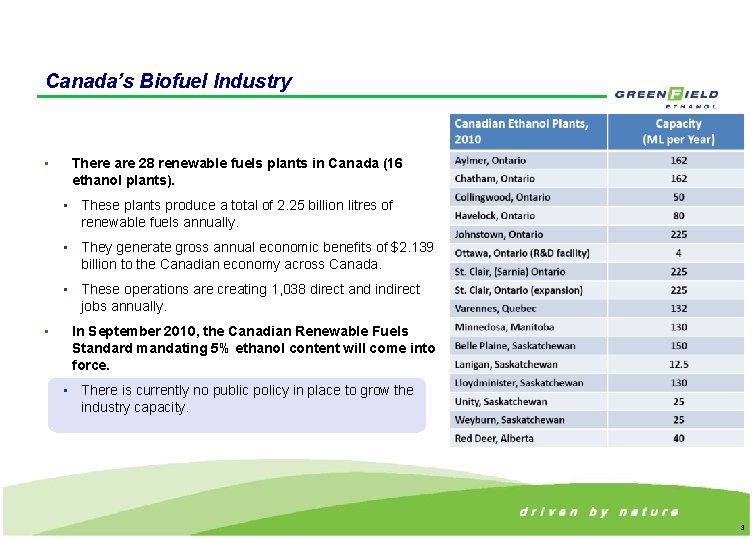
Canada’s Biofuel Industry There are 28 renewable fuels plants in Canada (16 ethanol plants). • • These plants produce a total of 2. 25 billion litres of renewable fuels annually. • They generate gross annual economic benefits of $2. 139 billion to the Canadian economy across Canada. • These operations are creating 1, 038 direct and indirect jobs annually. In September 2010, the Canadian Renewable Fuels Standard mandating 5% ethanol content will come into force. • • There is currently no public policy in place to grow the industry capacity. 3
Policy In Canada A national mandate for 5% ethanol content in gasoline will be in place September 2010. First generation capital support is exhausted. First generation operating support will taper off and there is no policy or programs in place to take their place Second generation capital support exists under SDTC programs. Second generation operating support does not exist. 4
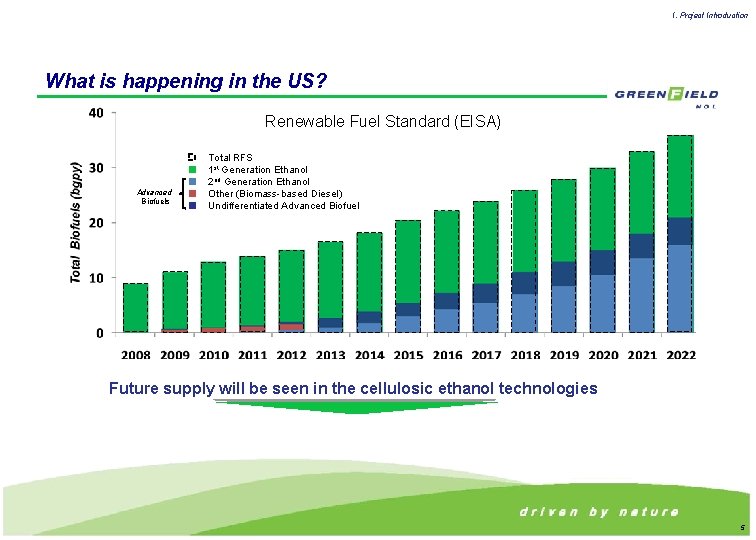
I. Project Introduction What is happening in the US? Renewable Fuel Standard (EISA) Advanced Biofuels Total RFS 1 st Generation Ethanol 2 nd Generation Ethanol Other (Biomass-based Diesel) Undifferentiated Advanced Biofuel Future supply will be seen in the cellulosic ethanol technologies 5
USA Blend Wall It is expected that the blend wall will increase this summer. Too early to know if it will go to E 15 immediately. 6
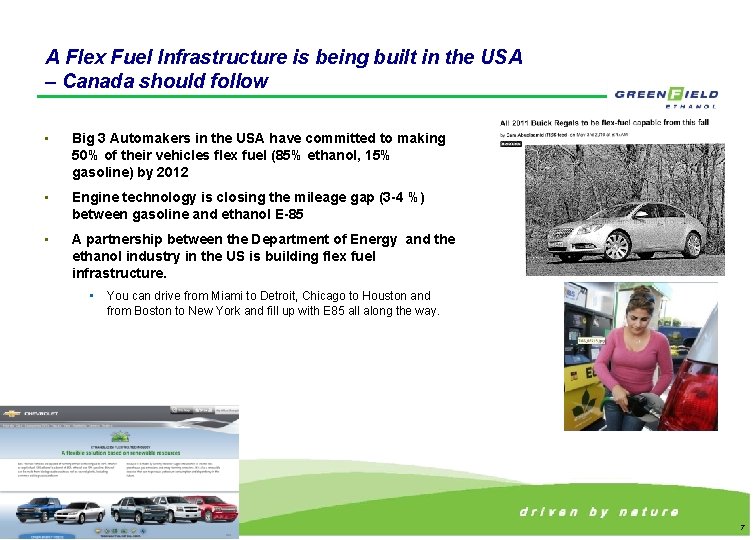
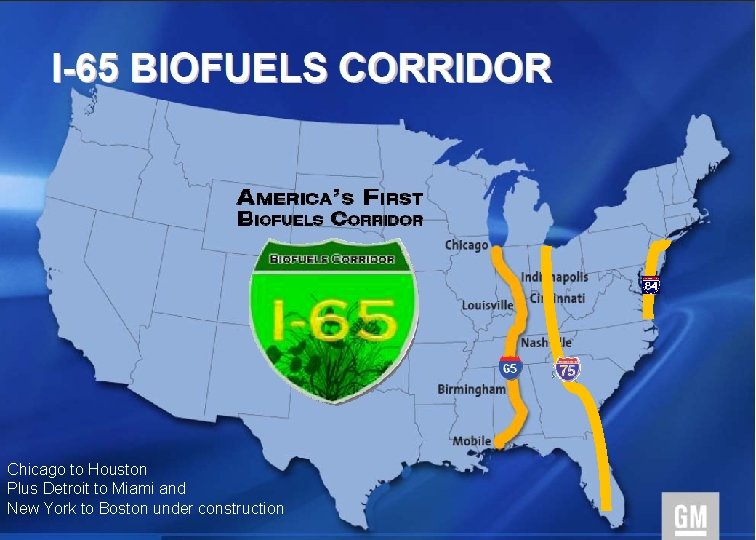
A Flex Fuel Infrastructure is being built in the USA – Canada should follow • Big 3 Automakers in the USA have committed to making 50% of their vehicles flex fuel (85% ethanol, 15% gasoline) by 2012 • Engine technology is closing the mileage gap (3 -4 %) between gasoline and ethanol E-85 • A partnership between the Department of Energy and the ethanol industry in the US is building flex fuel infrastructure. • You can drive from Miami to Detroit, Chicago to Houston and from Boston to New York and fill up with E 85 all along the way. 7
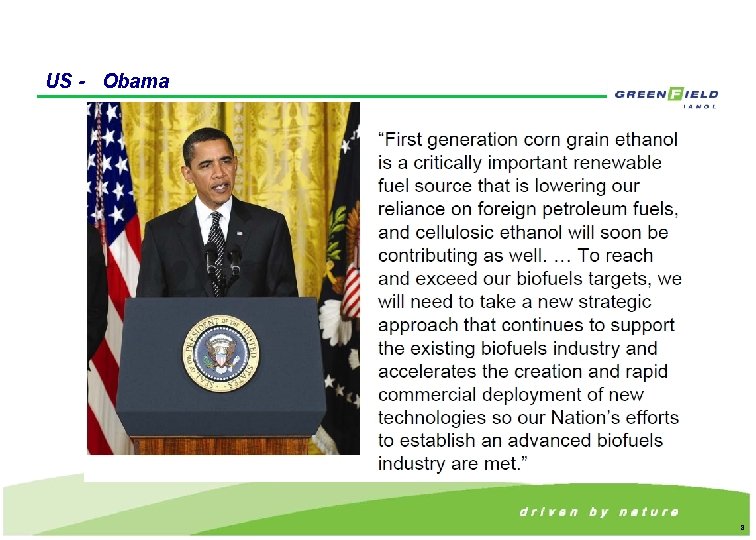
US - Obama 8
9
US – e 85 Corridor Chicago to Houston Plus Detroit to Miami and New York to Boston under construction 10
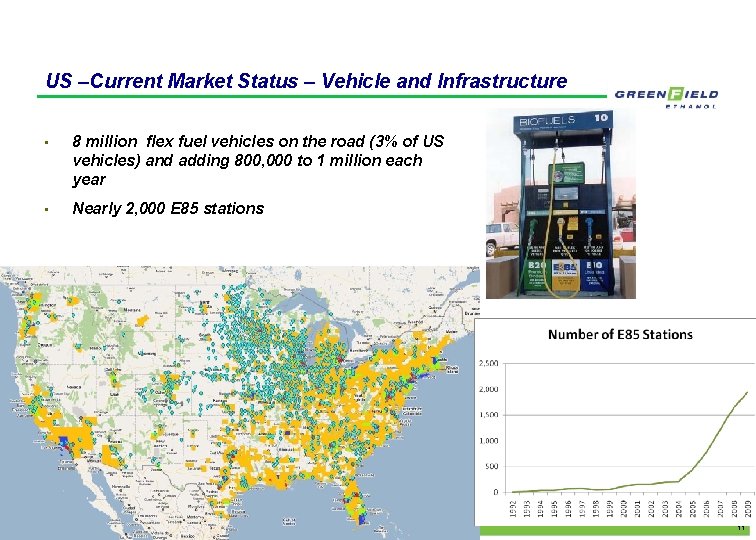
US –Current Market Status – Vehicle and Infrastructure • 8 million flex fuel vehicles on the road (3% of US vehicles) and adding 800, 000 to 1 million each year • Nearly 2, 000 E 85 stations 11
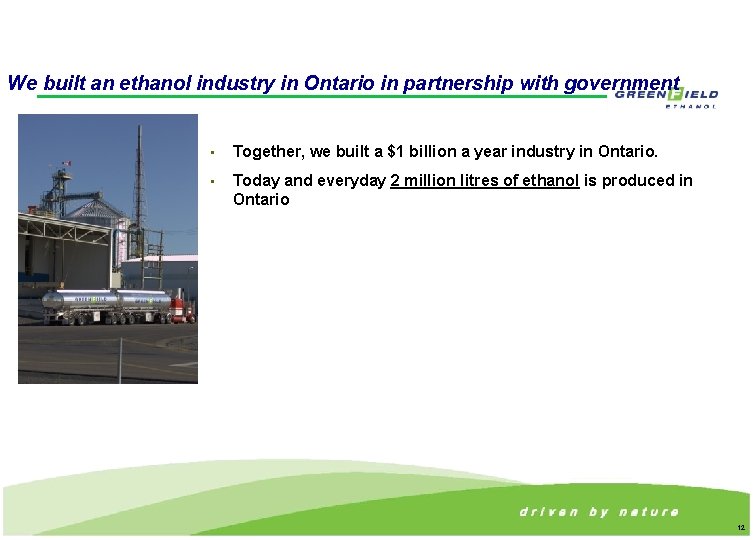
We built an ethanol industry in Ontario in partnership with government • Together, we built a $1 billion a year industry in Ontario. • Today and everyday 2 million litres of ethanol is produced in Ontario 12
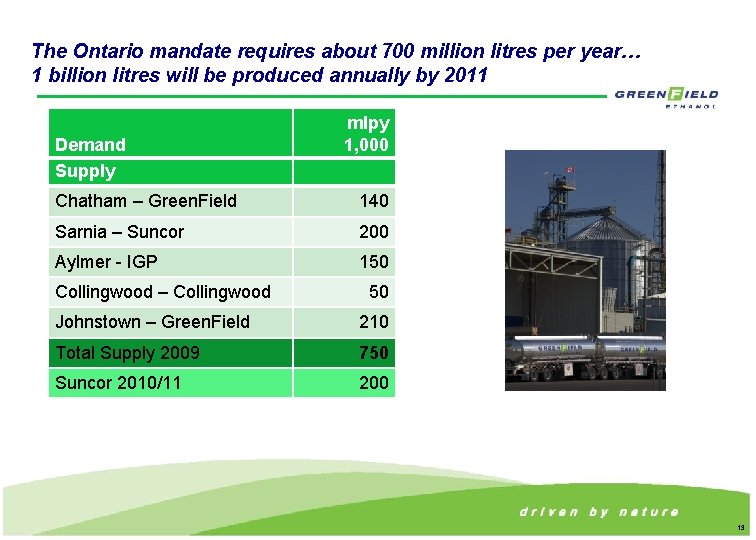
The Ontario mandate requires about 700 million litres per year… 1 billion litres will be produced annually by 2011 Demand Supply mlpy 1, 000 Chatham – Green. Field 140 Sarnia – Suncor 200 Aylmer - IGP 150 Collingwood – Collingwood 50 Johnstown – Green. Field 210 Total Supply 2009 750 Suncor 2010/11 200 13
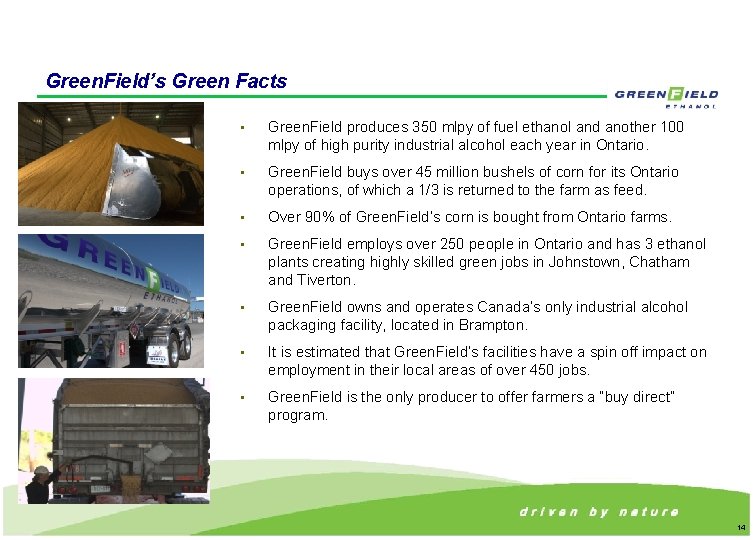
Green. Field’s Green Facts • Green. Field produces 350 mlpy of fuel ethanol and another 100 mlpy of high purity industrial alcohol each year in Ontario. • Green. Field buys over 45 million bushels of corn for its Ontario operations, of which a 1/3 is returned to the farm as feed. • Over 90% of Green. Field’s corn is bought from Ontario farms. • Green. Field employs over 250 people in Ontario and has 3 ethanol plants creating highly skilled green jobs in Johnstown, Chatham and Tiverton. • Green. Field owns and operates Canada’s only industrial alcohol packaging facility, located in Brampton. • It is estimated that Green. Field’s facilities have a spin off impact on employment in their local areas of over 450 jobs. • Green. Field is the only producer to offer farmers a “buy direct” program. 14
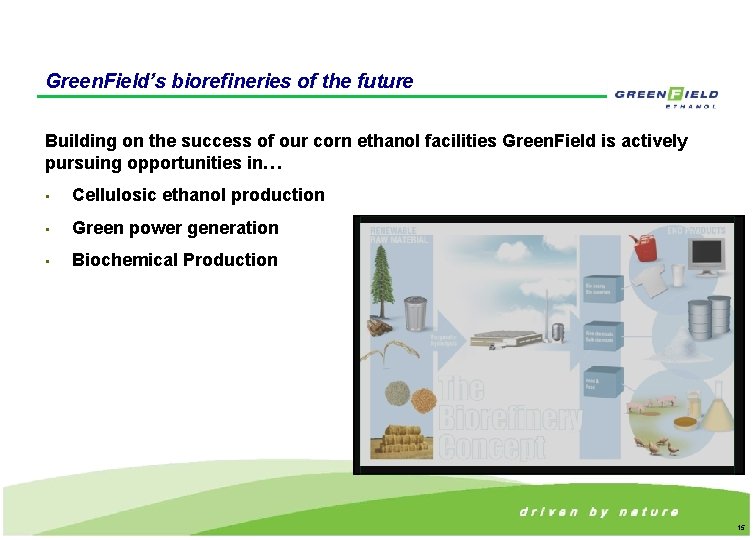
Green. Field’s biorefineries of the future Building on the success of our corn ethanol facilities Green. Field is actively pursuing opportunities in… • Cellulosic ethanol production • Green power generation • Biochemical Production 15
Green. Field is investing in second generation ethanol The first step is ethanol from non traditional feedstocks… Cellulosic Ethanol using fermentation to convert biomass to ethanol. • • Today we are making ethanol from corn cobs using Green. Field’s patented technology. This technology is the foundation for making ethanol from other agricultural products and forestry waste. • Engineering is complete for the commercial demonstration plant. Construction will start in 2010. Cellulosic Ethanol using Gasification to convert municipal solid waste to ethanol. • • Green. Field is in partnership with Enerkem for future Ontario and Quebec plants. Enerkem’s first plant is being built in conjunction with the City of Edmonton waste diversion department. The Enerkem technology used for feedstock-waste paper, cardboard, plastics, packaging, sawdust, woodchips etc. and makes ethanol (or methanol). • The next plant will be built at Green. Field’s Varennes, Quebec location 16
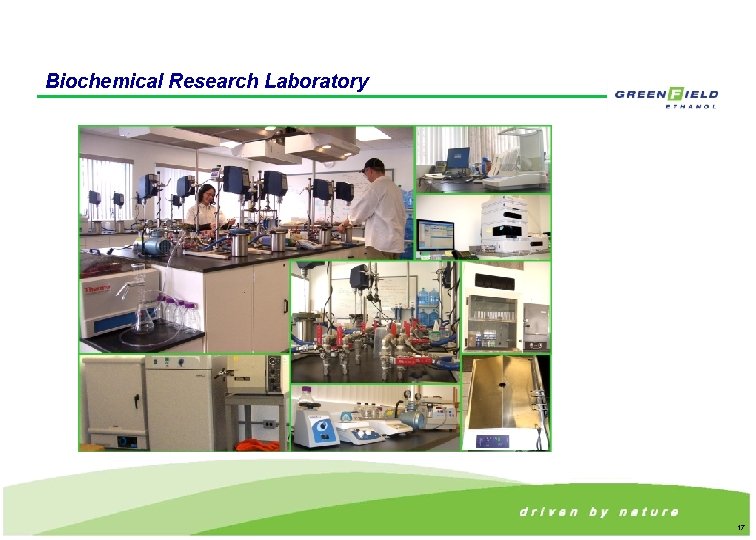
Biochemical Research Laboratory 17
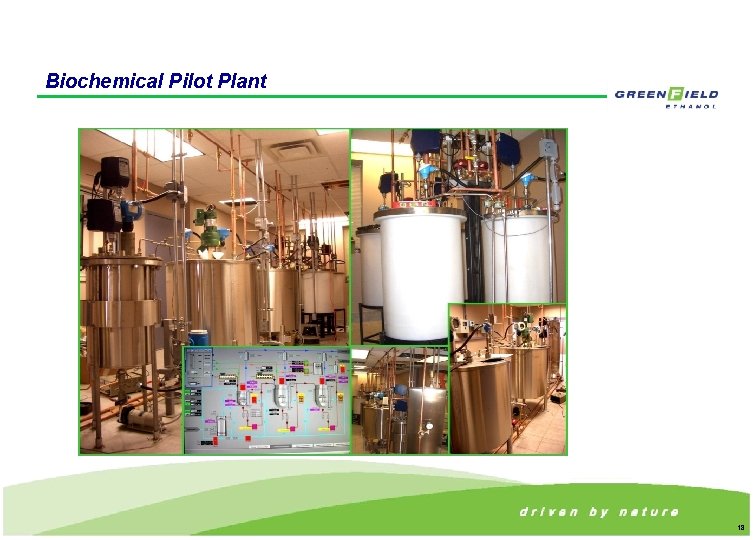
Biochemical Pilot Plant 18
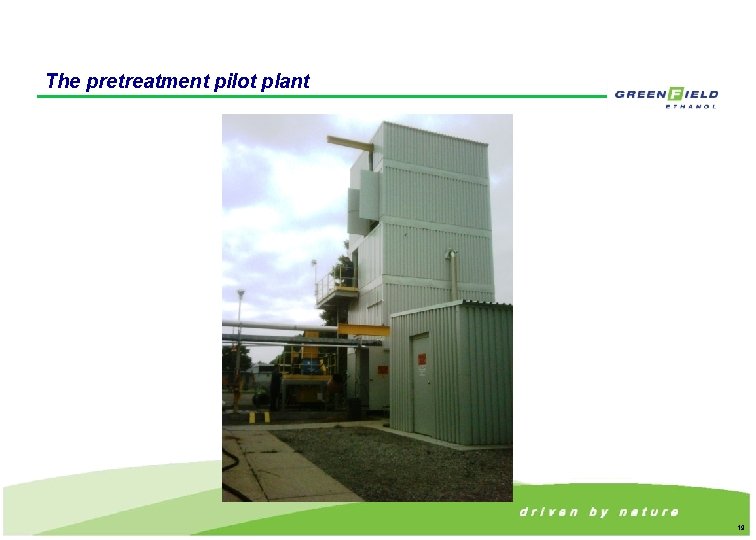
The pretreatment pilot plant 19
Is there anything wrong with Ethanol? Should it become a more important part of the transportation fuel mix in Canada?
Will biofuels really make a difference? Health ---Economy – Security -- Environment Currently, the ethanol industry replaces 364 million barrels of imported oil each and every year in the USA and Canada. A major study by the Windmill Group identifies 645, 000 jobs created by ethanol in the USA and $92 billion. First generation ethanol has 59 percent fewer Greenhouse Gas Emissions when compared to conventional gasoline. Cellulosic ethanol, the second generation of renewable fuels, is 90 percent cleaner than gasoline, and with the current feed stock of biomass, there is enough biomass in the USA alone to produce 85 billion gallons (61% of the gasoline that is used in the US every year) of cellulosic ethanol annually. 21
Cleaner Home Grown Fuel. Biofuels will make a difference. The fact is - ethanol works – it makes us less dependent on foreign oil, contributes to this country’s economy and is better for the environment. 22
Barriers and Opportunities Support for the ongoing growth of the industry and commercialization of research. 1. Investment Community 2. Public Policy Makers and Politicans 23
Canada’s Energy Policy -- Important steps to make Canada’s Transportation system clean and green Important elements of a Renewable Transportation Fuels Strategy 1. Ensure access to markets through flexible and practical renewable fuels standards (mandates). 2. Support commercialization of new biofuels technologies by providing: a) Direct capital support such as SDTC Nex. Gen Fund (critically important) b) ‘Safety net’ operating support for advanced biofuels (similar to eco. Energy for Biofuels Program) c) Tax measures designed to stimulate private investment (i. e. flow through shares) 3. Promote ‘flex fuel’ vehicles and infrastructure for high level renewable blends (i. e. E 85) 4. Regulate trade to protect domestic industry from ‘dumping’ 5. Alignment of carbon management systems with the US (i. e. ‘cap and trade’ regulations) 24