
Food Preparation Nutrition Knowledge Organiser Factors that affect
- Slides: 1
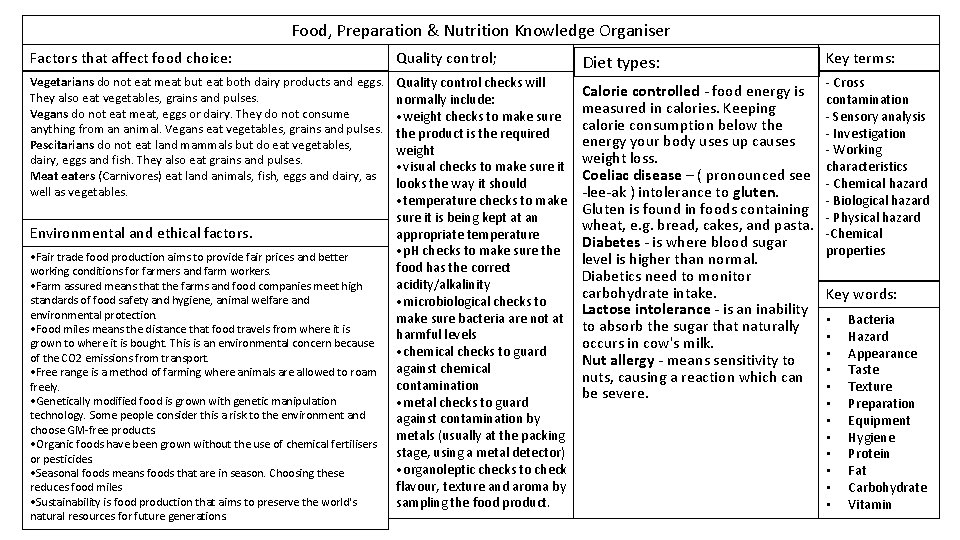
Food, Preparation & Nutrition Knowledge Organiser Factors that affect food choice: Quality control; Diet types: Key terms: Vegetarians do not eat meat but eat both dairy products and eggs. They also eat vegetables, grains and pulses. Vegans do not eat meat, eggs or dairy. They do not consume anything from an animal. Vegans eat vegetables, grains and pulses. Pescitarians do not eat land mammals but do eat vegetables, dairy, eggs and fish. They also eat grains and pulses. Meat eaters (Carnivores) eat land animals, fish, eggs and dairy, as well as vegetables. Quality control checks will normally include: • weight checks to make sure the product is the required weight • visual checks to make sure it looks the way it should • temperature checks to make sure it is being kept at an appropriate temperature • p. H checks to make sure the food has the correct acidity/alkalinity • microbiological checks to make sure bacteria are not at harmful levels • chemical checks to guard against chemical contamination • metal checks to guard against contamination by metals (usually at the packing stage, using a metal detector) • organoleptic checks to check flavour, texture and aroma by sampling the food product. Calorie controlled - food energy is measured in calories. Keeping calorie consumption below the energy your body uses up causes weight loss. Coeliac disease – ( pronounced see -lee-ak ) intolerance to gluten. Gluten is found in foods containing wheat, e. g. bread, cakes, and pasta. Diabetes - is where blood sugar level is higher than normal. Diabetics need to monitor carbohydrate intake. Lactose intolerance - is an inability to absorb the sugar that naturally occurs in cow's milk. Nut allergy - means sensitivity to nuts, causing a reaction which can be severe. - Cross contamination - Sensory analysis - Investigation - Working characteristics - Chemical hazard - Biological hazard - Physical hazard -Chemical properties Environmental and ethical factors. • Fair trade food production aims to provide fair prices and better working conditions for farmers and farm workers. • Farm assured means that the farms and food companies meet high standards of food safety and hygiene, animal welfare and environmental protection. • Food miles means the distance that food travels from where it is grown to where it is bought. This is an environmental concern because of the CO 2 emissions from transport. • Free range is a method of farming where animals are allowed to roam freely. • Genetically modified food is grown with genetic manipulation technology. Some people consider this a risk to the environment and choose GM-free products. • Organic foods have been grown without the use of chemical fertilisers or pesticides. • Seasonal foods means foods that are in season. Choosing these reduces food miles • Sustainability is food production that aims to preserve the world's natural resources for future generations. Key words: • • • Bacteria Hazard Appearance Taste Texture Preparation Equipment Hygiene Protein Fat Carbohydrate Vitamin