
Food Preparation and Nutrition Commodities Cereals Type One
- Slides: 2
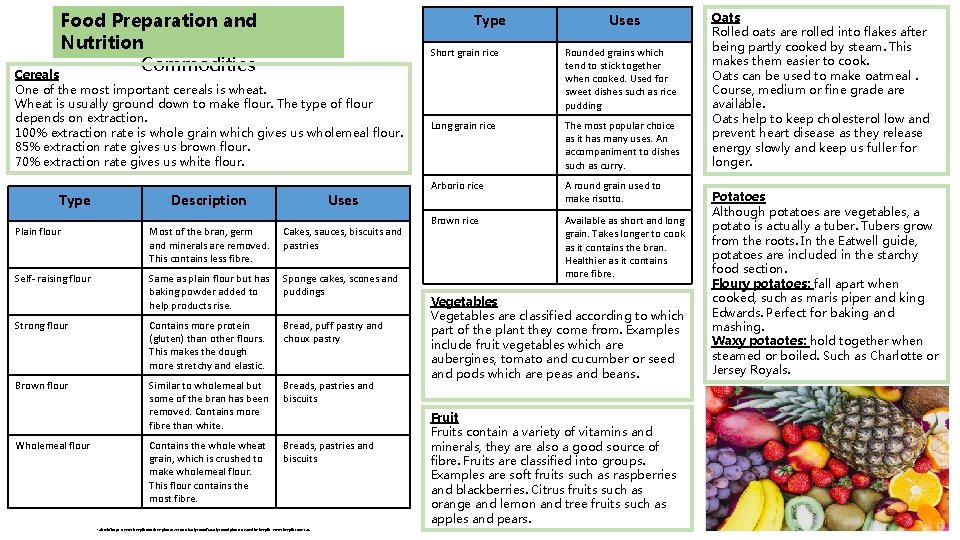
Food Preparation and Nutrition Commodities Cereals Type One of the most important cereals is wheat. Wheat is usually ground down to make flour. The type of flour depends on extraction. 100% extraction rate is whole grain which gives us wholemeal flour. 85% extraction rate gives us brown flour. 70% extraction rate gives us white flour. Type Description Uses Plain flour Most of the bran, germ and minerals are removed. This contains less fibre. Cakes, sauces, biscuits and pastries Self- raising flour Same as plain flour but has baking powder added to help products rise. Sponge cakes, scones and puddings Strong flour Contains more protein (gluten) than other flours. This makes the dough more stretchy and elastic. Bread, puff pastry and choux pastry Brown flour Similar to wholemeal but some of the bran has been removed. Contains more fibre than white. Breads, pastries and biscuits Contains the whole wheat grain, which is crushed to make wholemeal flour. This flour contains the most fibre. Breads, pastries and biscuits Wholemeal flour <a href='https: //www. freepik. com/free-photos-vectors/background'>Background photo created by freepik - www. freepik. com</a> Uses Short grain rice Rounded grains which tend to stick together when cooked. Used for sweet dishes such as rice pudding Long grain rice The most popular choice as it has many uses. An accompaniment to dishes such as curry. Arborio rice A round grain used to make risotto. Brown rice Available as short and long grain. Takes longer to cook as it contains the bran. Healthier as it contains more fibre. Vegetables are classified according to which part of the plant they come from. Examples include fruit vegetables which are aubergines, tomato and cucumber or seed and pods which are peas and beans. Fruits contain a variety of vitamins and minerals, they are also a good source of fibre. Fruits are classified into groups. Examples are soft fruits such as raspberries and blackberries. Citrus fruits such as orange and lemon and tree fruits such as apples and pears. Oats Rolled oats are rolled into flakes after being partly cooked by steam. This makes them easier to cook. Oats can be used to make oatmeal. Course, medium or fine grade are available. Oats help to keep cholesterol low and prevent heart disease as they release energy slowly and keep us fuller for longer. Potatoes Although potatoes are vegetables, a potato is actually a tuber. Tubers grow from the roots. In the Eatwell guide, potatoes are included in the starchy food section. Floury potatoes: fall apart when cooked, such as maris piper and king Edwards. Perfect for baking and mashing. Waxy potaotes: hold together when steamed or boiled. Such as Charlotte or Jersey Royals.
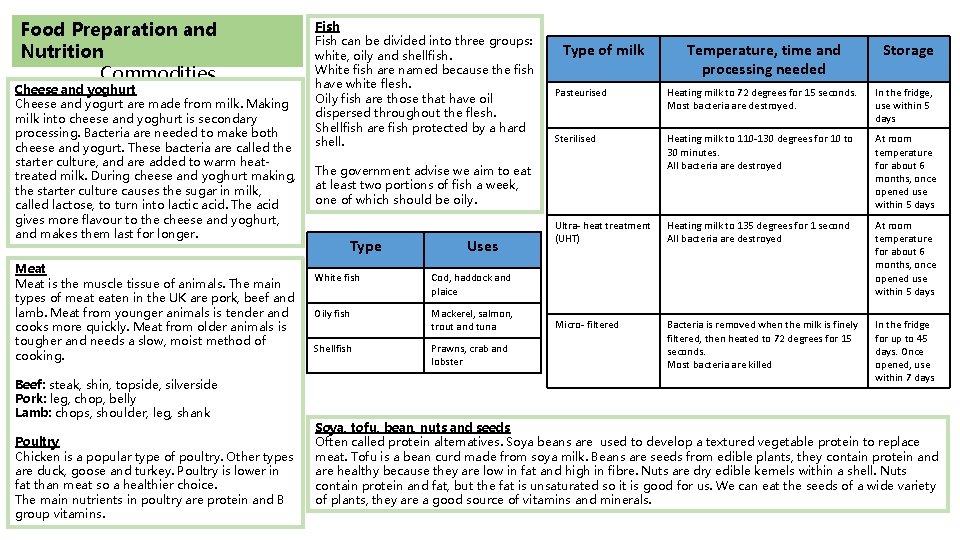
Food Preparation and Nutrition Commodities Cheese and yoghurt Cheese and yogurt are made from milk. Making milk into cheese and yoghurt is secondary processing. Bacteria are needed to make both cheese and yogurt. These bacteria are called the starter culture, and are added to warm heattreated milk. During cheese and yoghurt making, the starter culture causes the sugar in milk, called lactose, to turn into lactic acid. The acid gives more flavour to the cheese and yoghurt, and makes them last for longer. Meat is the muscle tissue of animals. The main types of meat eaten in the UK are pork, beef and lamb. Meat from younger animals is tender and cooks more quickly. Meat from older animals is tougher and needs a slow, moist method of cooking. Beef: steak, shin, topside, silverside Pork: leg, chop, belly Lamb: chops, shoulder, leg, shank Poultry Chicken is a popular type of poultry. Other types are duck, goose and turkey. Poultry is lower in fat than meat so a healthier choice. The main nutrients in poultry are protein and B group vitamins. Fish can be divided into three groups: white, oily and shellfish. White fish are named because the fish have white flesh. Oily fish are those that have oil dispersed throughout the flesh. Shellfish are fish protected by a hard shell. Type of milk Uses White fish Cod, haddock and plaice Oily fish Mackerel, salmon, trout and tuna Shellfish Prawns, crab and lobster Storage Pasteurised Heating milk to 72 degrees for 15 seconds. Most bacteria are destroyed. In the fridge, use within 5 days Sterilised Heating milk to 110 -130 degrees for 10 to 30 minutes. All bacteria are destroyed At room temperature for about 6 months, once opened use within 5 days Ultra- heat treatment (UHT) Heating milk to 135 degrees for 1 second All bacteria are destroyed At room temperature for about 6 months, once opened use within 5 days Micro- filtered Bacteria is removed when the milk is finely filtered, then heated to 72 degrees for 15 seconds. Most bacteria are killed In the fridge for up to 45 days. Once opened, use within 7 days The government advise we aim to eat at least two portions of fish a week, one of which should be oily. Type Temperature, time and processing needed Soya, tofu, bean, nuts and seeds Often called protein alternatives. Soya beans are used to develop a textured vegetable protein to replace meat. Tofu is a bean curd made from soya milk. Beans are seeds from edible plants, they contain protein and are healthy because they are low in fat and high in fibre. Nuts are dry edible kernels within a shell. Nuts contain protein and fat, but the fat is unsaturated so it is good for us. We can eat the seeds of a wide variety of plants, they are a good source of vitamins and minerals.