
Food n n n n Carbohydrates Lipids Fats
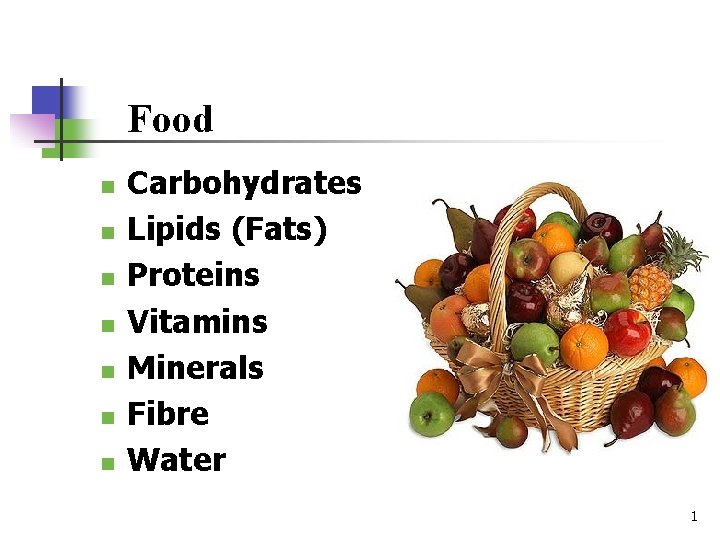
Food n n n n Carbohydrates Lipids (Fats) Proteins Vitamins Minerals Fibre Water 1
The Five Classifications of Food • Carbohydrates • Fats (Lipids) • Protein • Vitamins • Minerals Also • Water • Fibre 2
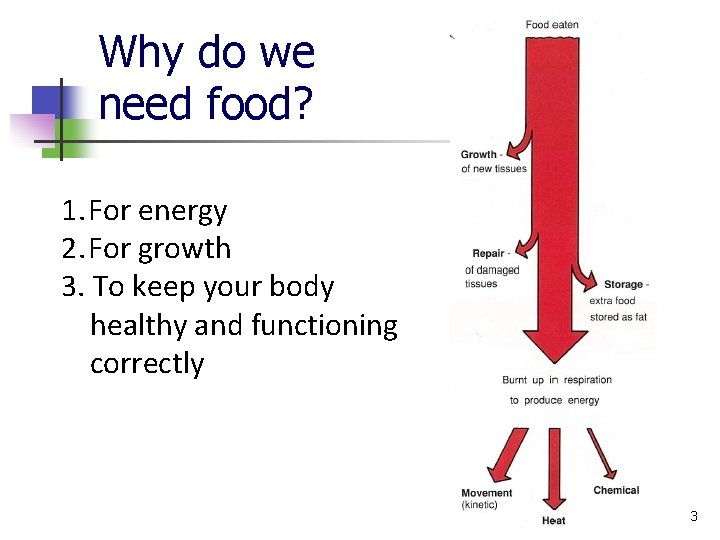
Why do we need food? 1. For energy 2. For growth 3. To keep your body healthy and functioning correctly 3
Carbohydrates 4 4
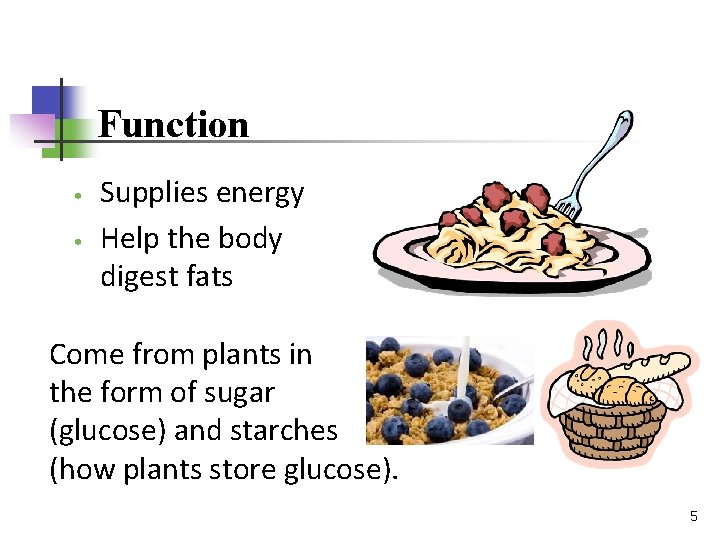
Function • • Supplies energy Help the body digest fats Come from plants in the form of sugar (glucose) and starches (how plants store glucose). 5
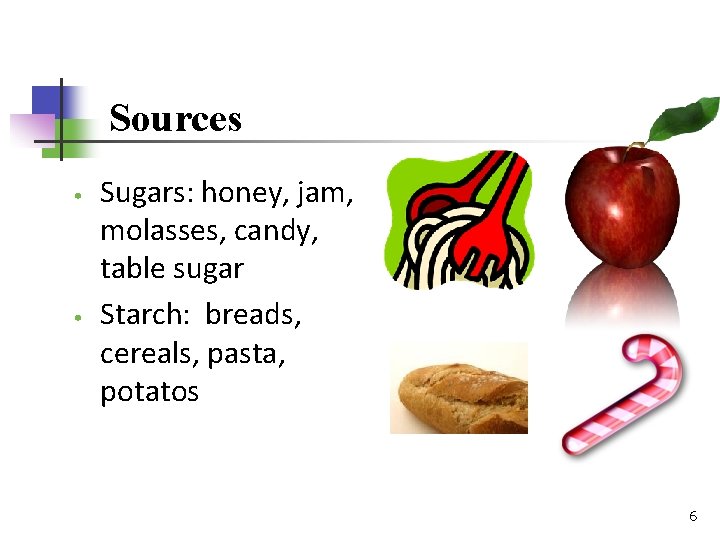
Sources • • Sugars: honey, jam, molasses, candy, table sugar Starch: breads, cereals, pasta, potatos 6
Fats (Lipids) 7 7
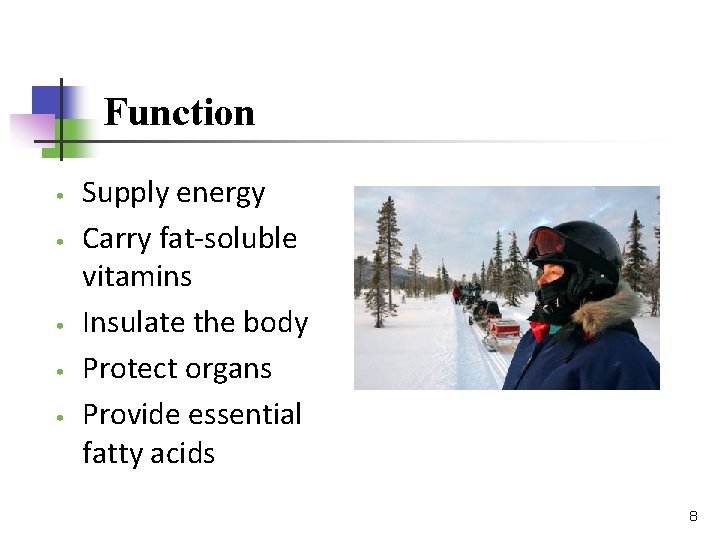
Function • • • Supply energy Carry fat-soluble vitamins Insulate the body Protect organs Provide essential fatty acids 8
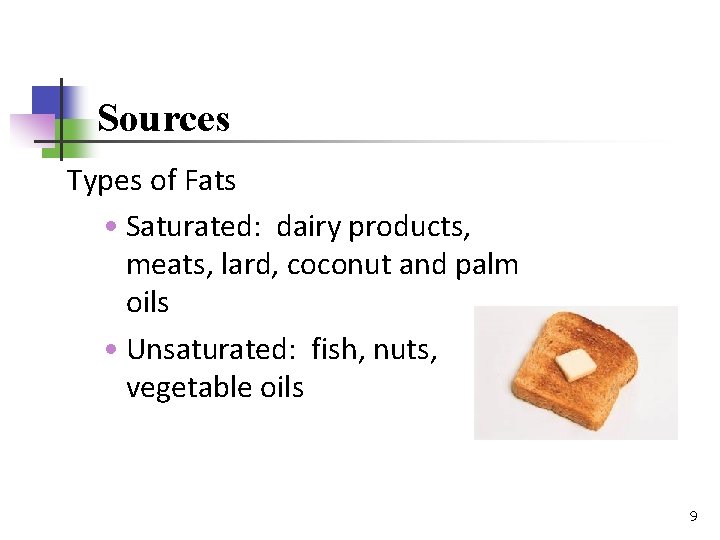
Sources Types of Fats • Saturated: dairy products, meats, lard, coconut and palm oils • Unsaturated: fish, nuts, vegetable oils 9
Proteins 1010
Functions • • Builds and repairs muscles and cell tissues Helps the body make important substances Regulates body processes Supplies energy 11
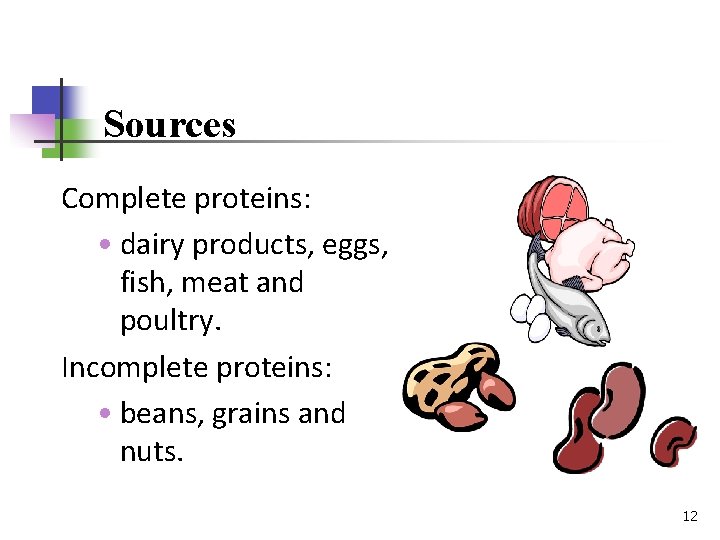
Sources Complete proteins: • dairy products, eggs, fish, meat and poultry. Incomplete proteins: • beans, grains and nuts. 12
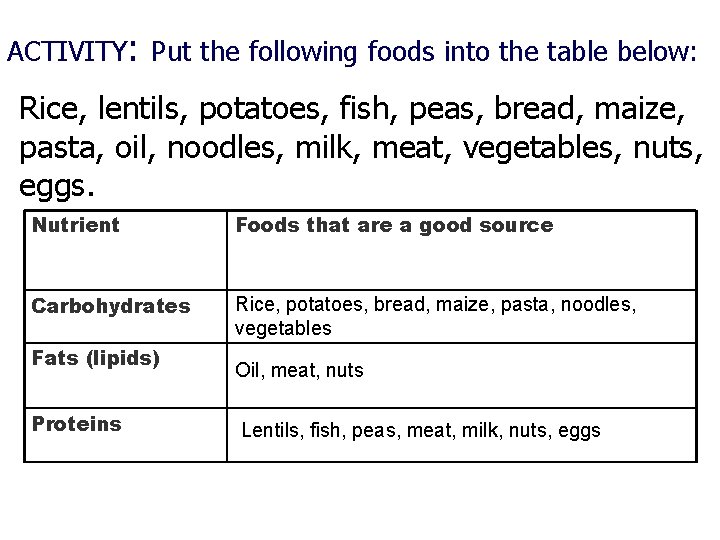
ACTIVITY: Put the following foods into the table below: Rice, lentils, potatoes, fish, peas, bread, maize, pasta, oil, noodles, milk, meat, vegetables, nuts, eggs. Nutrient Foods that are a good source Carbohydrates Rice, potatoes, bread, maize, pasta, noodles, vegetables Fats (lipids) Oil, meat, nuts Proteins Lentils, fish, peas, meat, milk, nuts, eggs
Vitamins 1414
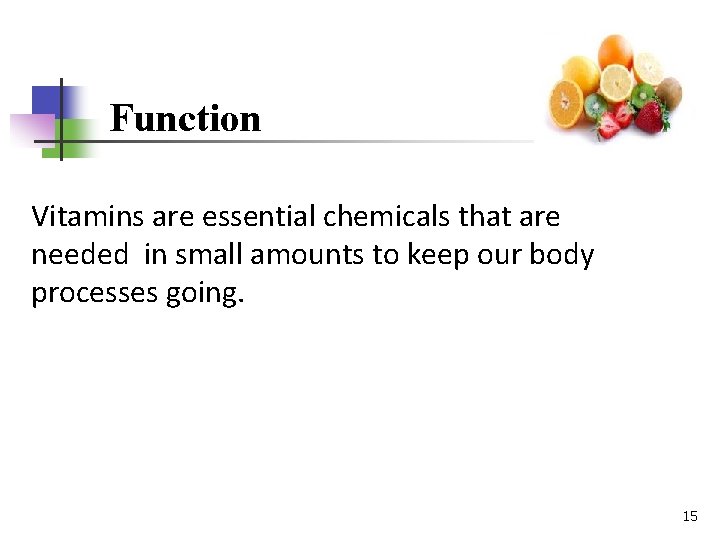
Function Vitamins are essential chemicals that are needed in small amounts to keep our body processes going. 15
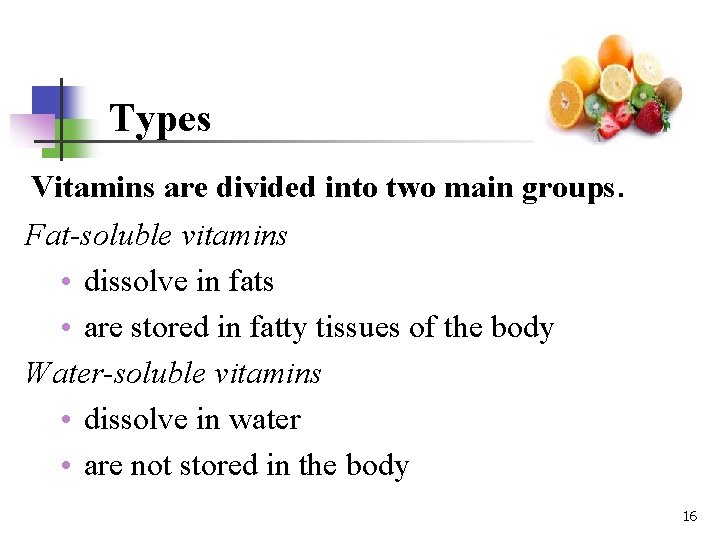
Types Vitamins are divided into two main groups. Fat-soluble vitamins • dissolve in fats • are stored in fatty tissues of the body Water-soluble vitamins • dissolve in water • are not stored in the body 16
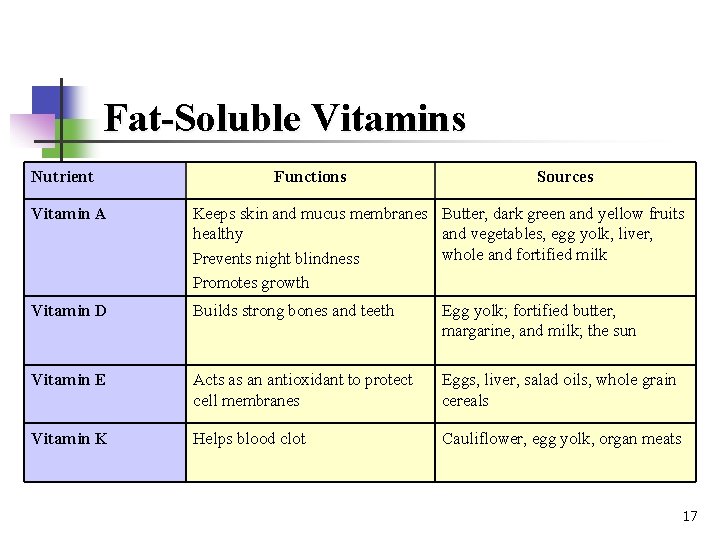
Fat-Soluble Vitamins Nutrient Functions Sources Vitamin A Keeps skin and mucus membranes Butter, dark green and yellow fruits healthy and vegetables, egg yolk, liver, whole and fortified milk Prevents night blindness Promotes growth Vitamin D Builds strong bones and teeth Egg yolk; fortified butter, margarine, and milk; the sun Vitamin E Acts as an antioxidant to protect cell membranes Eggs, liver, salad oils, whole grain cereals Vitamin K Helps blood clot Cauliflower, egg yolk, organ meats 17
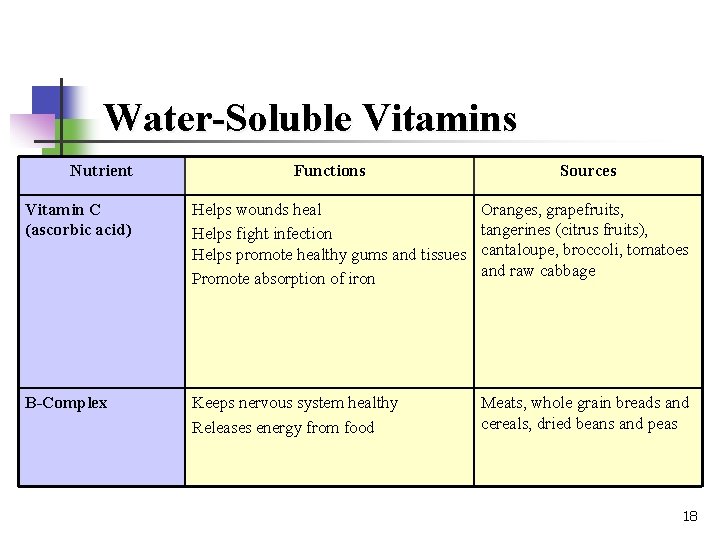
Water-Soluble Vitamins Nutrient Functions Sources Vitamin C (ascorbic acid) Helps wounds heal Helps fight infection Helps promote healthy gums and tissues Promote absorption of iron Oranges, grapefruits, tangerines (citrus fruits), cantaloupe, broccoli, tomatoes and raw cabbage B-Complex Keeps nervous system healthy Releases energy from food Meats, whole grain breads and cereals, dried beans and peas 18
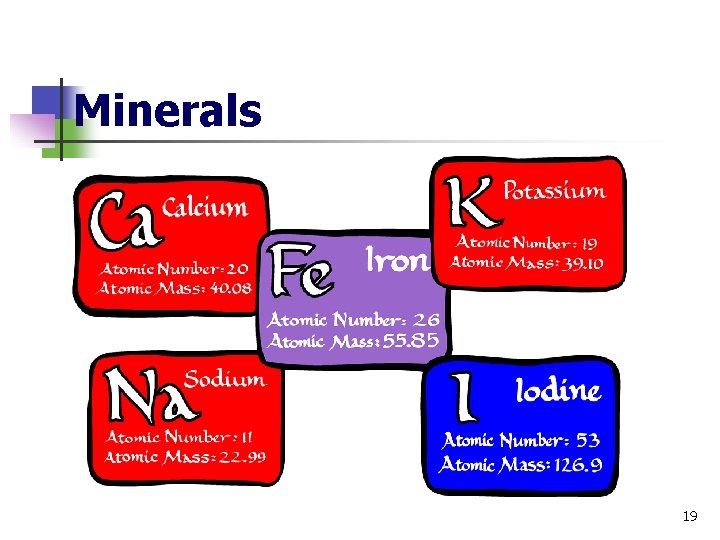
Minerals 19
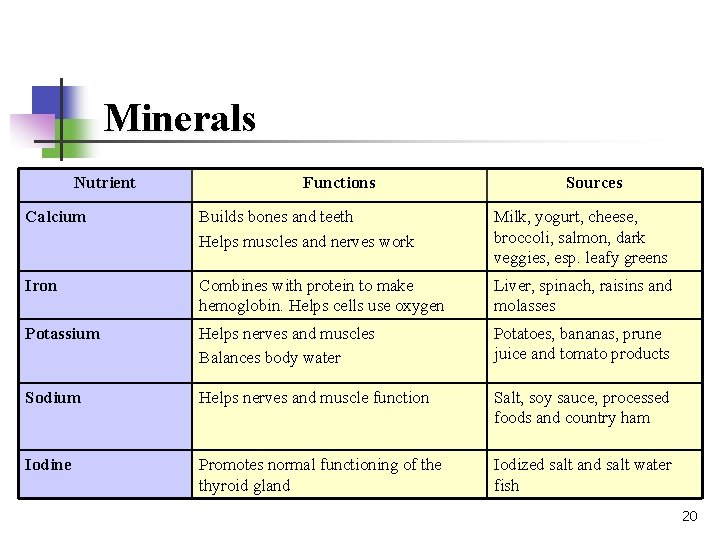
Minerals Nutrient Functions Sources Calcium Builds bones and teeth Helps muscles and nerves work Milk, yogurt, cheese, broccoli, salmon, dark veggies, esp. leafy greens Iron Combines with protein to make hemoglobin. Helps cells use oxygen Liver, spinach, raisins and molasses Potassium Helps nerves and muscles Balances body water Potatoes, bananas, prune juice and tomato products Sodium Helps nerves and muscle function Salt, soy sauce, processed foods and country ham Iodine Promotes normal functioning of the thyroid gland Iodized salt and salt water fish 20
Water 2121
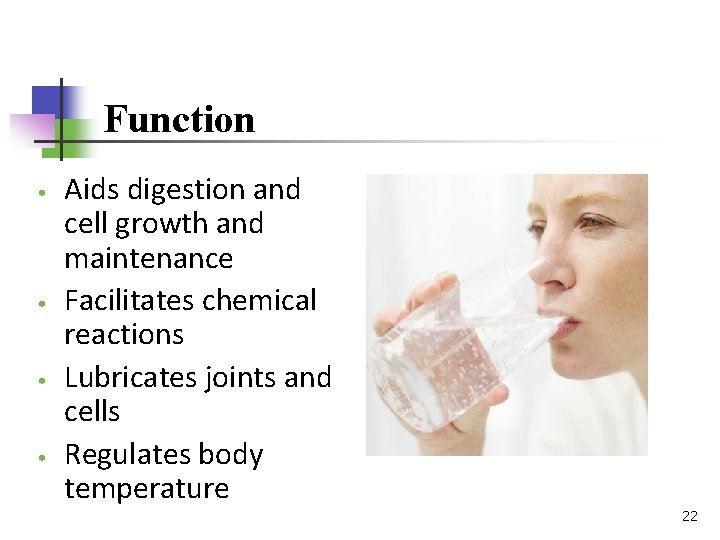
Function • • Aids digestion and cell growth and maintenance Facilitates chemical reactions Lubricates joints and cells Regulates body temperature 22
Fibre n Complex carbohydrates that the body cannot break down. These help clean out the digestive system. Most plants are high in fibre eg fruits, vegetables, whole grains 23
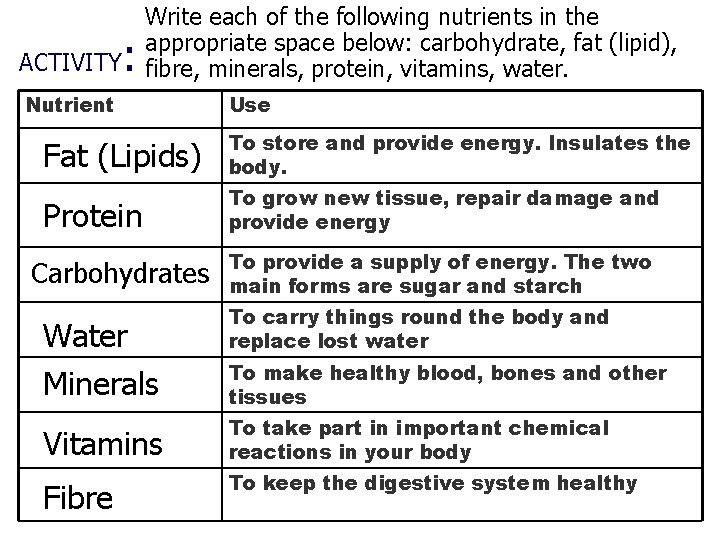
Write each of the following nutrients in the appropriate space below: carbohydrate, fat (lipid), ACTIVITY fibre, minerals, protein, vitamins, water. : Nutrient Use Fat (Lipids) To store and provide energy. Insulates the body. Protein To grow new tissue, repair damage and provide energy Carbohydrates Water Minerals Vitamins Fibre To provide a supply of energy. The two main forms are sugar and starch To carry things round the body and replace lost water To make healthy blood, bones and other tissues To take part in important chemical reactions in your body To keep the digestive system healthy
References n n images. pcmac. org/Si. SFiles/Schools/NC/. . . /4. 0 1 C_Nutrients. ppt Hunt, G. (2007) New Millenium Science 25
- Slides: 25