
Food Microbiology 1 Unit 2 Indicators in Food

Food Microbiology 1 Unit 2 Indicators in Food Microbiology III
Enterobacteriaceae Family (Enterics) o Gram negative rods, aerobe or facultative anaerobe o Simple nutritional requirements o Wide temperature range for growth o Ferment carbohydrates to form gas and acid (not all ferment lactose for example, Salmonella) o Off-flavors are produced o Some produce slime
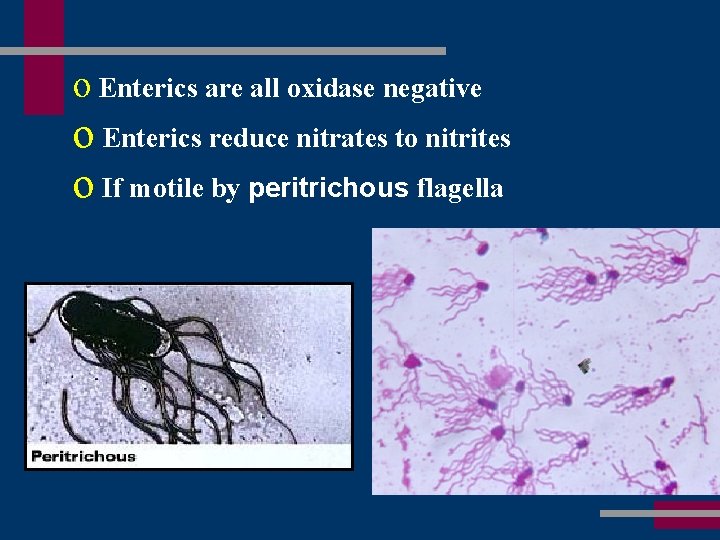
o Enterics are all oxidase negative o Enterics reduce nitrates to nitrites o If motile by peritrichous flagella

Examples of Enterobacteriaceae • Esherichia coli • Citrobacter • Enterobacter • Klebsiella • Proteus • Erwinia • Salmonella • Shigella

Coliforms • Are a sub-group of the Enterobacteriaceae • Are those Enterobacteriaceae capable of fermenting lactose to acid and gas • Used as an indication of inadequate or unsanitary processes • All share common characteristics as Gram negative non-spore forming rods • Facultative anaerobes • Found in soil, water & GI tract of animals
Fecal Coliform bacteria • Sub-group of coliforms that includes those typically associated with fecal contamination • Distinguished by producing gas and acid from lactose at elevated temperatures (44. 5 - 45 o C) whereas non-fecal coliforms at lower temperatures • If found in food products or contact surfaces Fecal contamination!

Examples of Fecal Coliforms • Escherichia coli • Some Klebsiella spp • Some Enterobacter spp
Staphylococcus • Gram positive cocci, Mesophiles, Facultative anaerobes • Grow in the presence of 10% Na. Cl • Cause problems in cooked products with moderately low water activities • Commonly found on the skin and nose of humans or animals
Importance of Staphylococcus Their presence indicates: • Extensive mishandling • Inadequate sanitization of equipment and contact surfaces • Possible presence of toxin Example: Staphylococcus aureus
Molds • They cause spoilage but some strains are pathogenic by producing toxins (mycotoxins) • Predominates in grains • Can accumulate in poultry meat • Toxins are stable and resistant to heat • Toxins accumulate in the body
Mycotoxins Ø They are a broad class of highly toxic metabolites produced as a result of mold growth by certain substrates E. g. Aflatoxins (Aspergillus flavus) are potent carcinogen Ø Mycotoxins can cause losses in animal production ØMore than 200 recognized mycotoxins
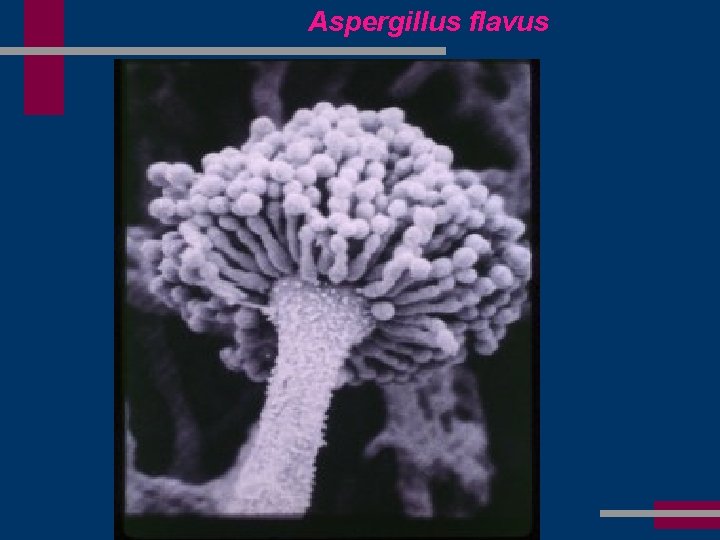
Aspergillus flavus
Aspergillus flavus q Food and feed fungi q Found in stored grains such as peanuts q It rarely invades stored grains as such and rarely produce aflatoxins when other fungi are present and compete q The highest risk is in peanuts
Aflatoxins • The mycotoxin called aflatoxin is produced by the grain mold Aspergillus flavus • Aflatoxins are the best known and most intensively researched mycotoxins in the world • Have been associated with various diseases; E. g. aflatoxicosis, in livestock , domestic animals and humans • The occurrence of aflatoxins is influenced by certain environmental factors:
Aflatoxins • Geographic location • Agricultural and agronomic practices • The susceptibility of commodities to fungal invasion during preharvest , storage, and/or processing periods • Aflatoxins demonstrated potent carcinogenic effect in susceptible laboratory animals and acute & chronic toxicological effects in humans • Many countries have attempted to limit exposure to aflatoxins by imposing regulations on commodities intended for use as food and feed
Aflatoxins • There are four major aflatoxins : B 1, B 2, G 1, G 2 • B 1 being the most potent • Found in Cereals, Nuts, Spices and Dried Figs • Should be reduced to the lowest level possible in animal feed and human food • Acute = rapid effect but does not persist • Chronic = accumulation of effects over time
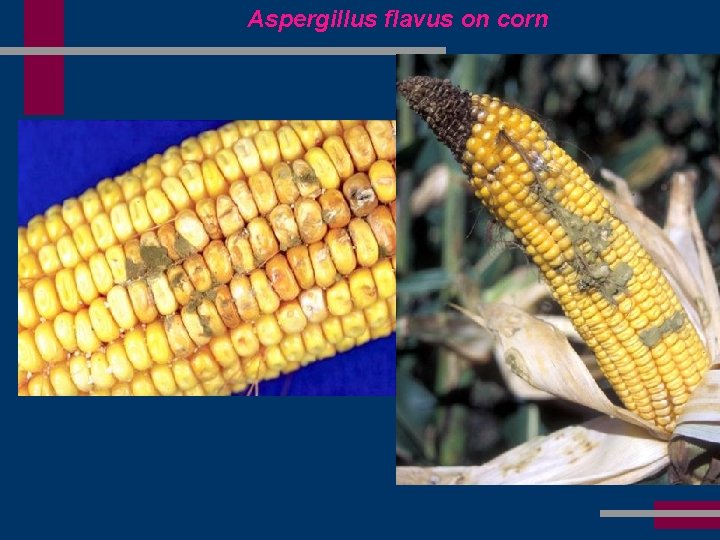
Aspergillus flavus on corn
Patulin 1. A mycotoxin produced by certain species of Penicillium, Aspergillus, and Byssochylamys molds that may grow on foods like fruits, grains and cheese 2. Found in apple juice, apples and pears with brown rot, flour 3. Does not appear to pose a safety concern, with the exception of apple juice 4. The rotten portions of most fruits and grains are typically removed prior to consumption 5. In cheese, high cysteine content interacts with patulin and renders it inactive 6. Is destroyed by fermentation not found in alcoholic fruit beverages or vinegars produced from fruit juices
1. Thermal processing causes only moderate reductions in patulin levels in apple juice patulin will survive the pasteurization processes

Why molds are important? Their presence indicates possible presence of mycotoxins and to avoid them in fruit juice and grains!!! Yeasts DO NOT
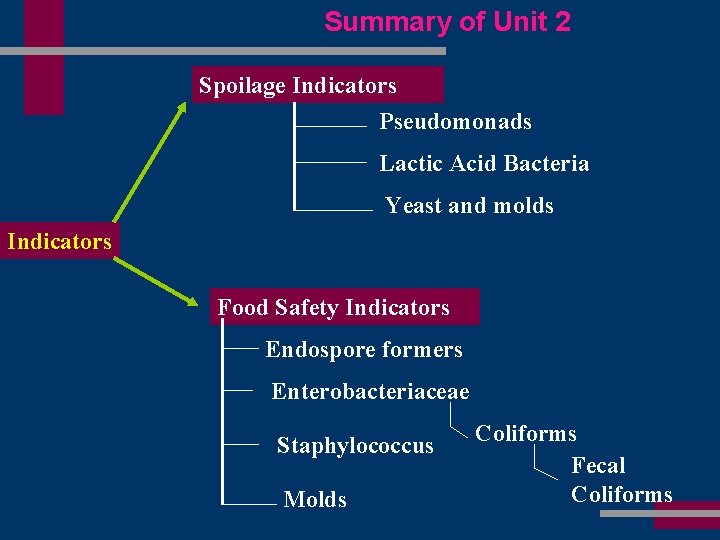
Summary of Unit 2 Spoilage Indicators Pseudomonads Lactic Acid Bacteria Yeast and molds Indicators Food Safety Indicators Endospore formers Enterobacteriaceae Staphylococcus Molds Coliforms Fecal Coliforms
- Slides: 21