
Food Labels Healthy Food Choices Nutrition informationplaces you
Food Labels & Healthy Food Choices
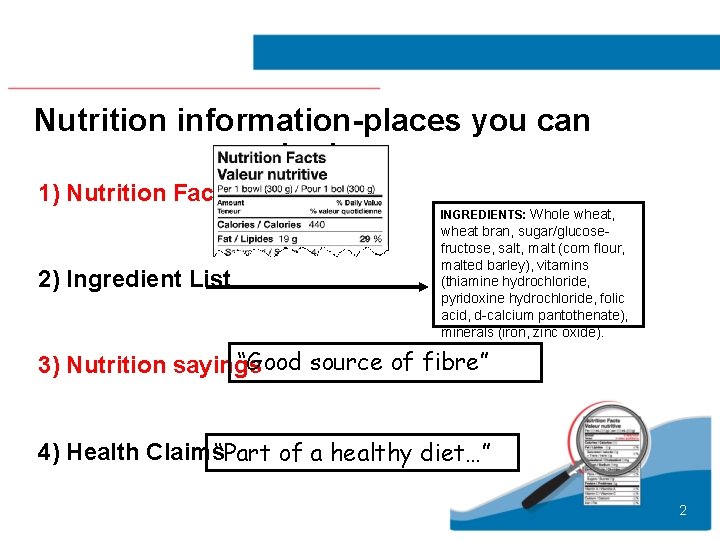
Nutrition information-places you can look 1) Nutrition Facts INGREDIENTS: Whole wheat, 2) Ingredient List wheat bran, sugar/glucosefructose, salt, malt (corn flour, malted barley), vitamins (thiamine hydrochloride, pyridoxine hydrochloride, folic acid, d-calcium pantothenate), minerals (iron, zinc oxide). “Good source of fibre” 3) Nutrition sayings 4) Health Claims“Part of a healthy diet…” 2
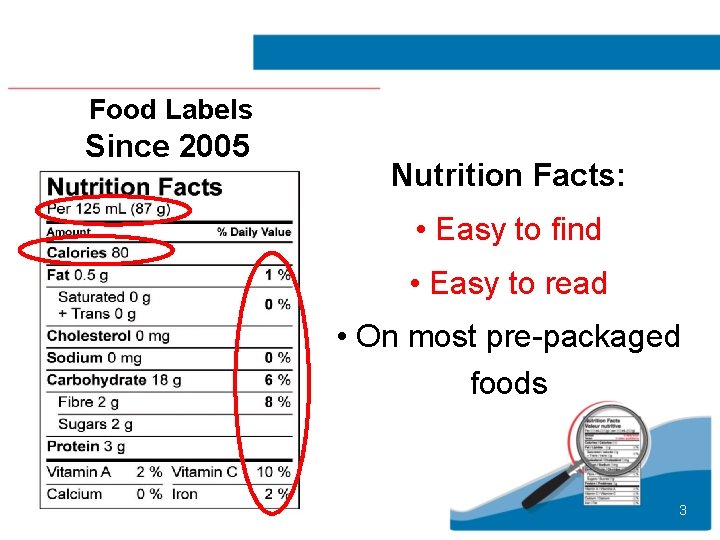
Food Labels Since 2005 Nutrition Facts: • Easy to find • Easy to read • On most pre-packaged foods 3
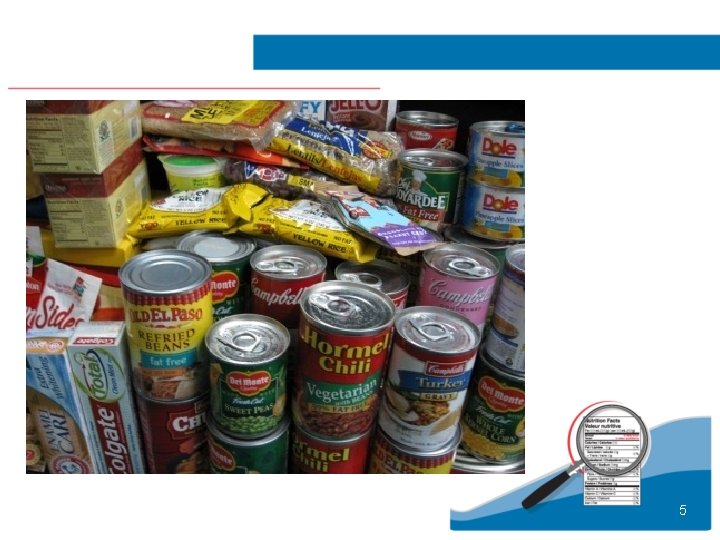
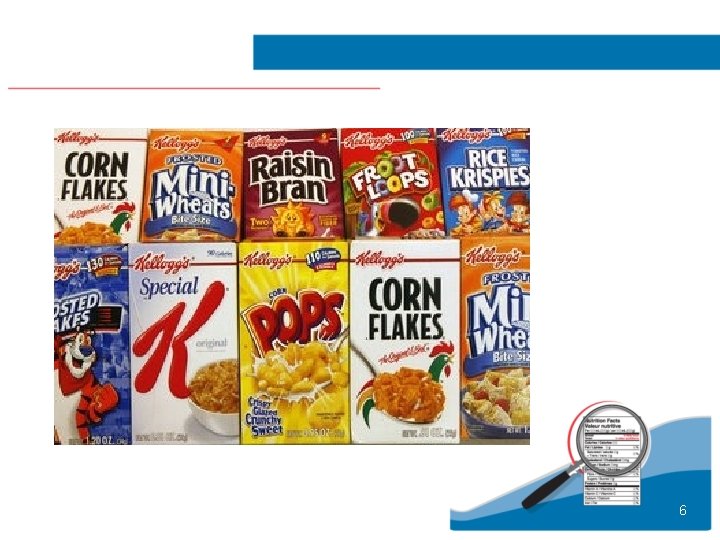
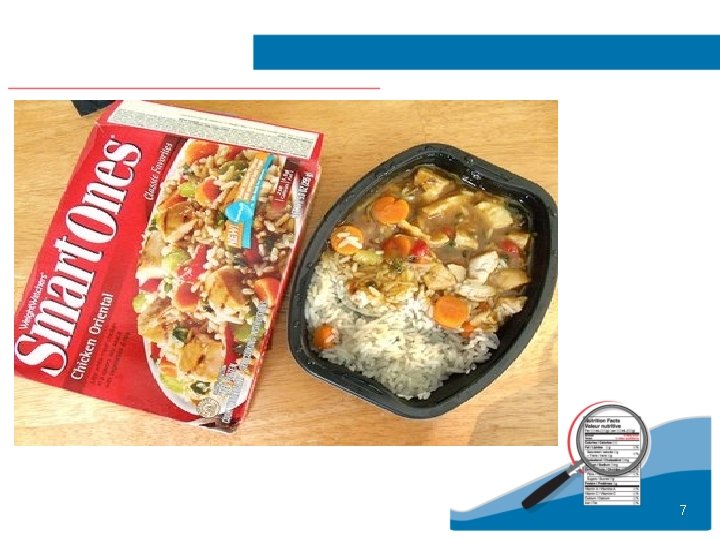
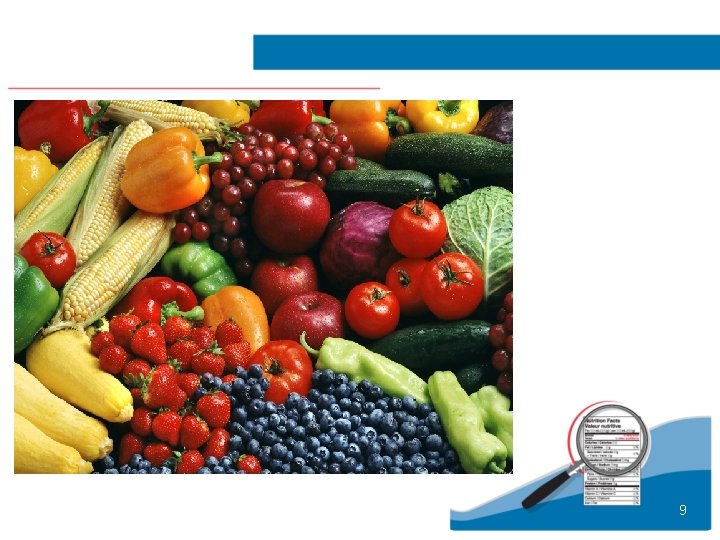
What food products have Nutrition Facts? Almost all packaged foods have Nutrition Facts. Some food that don’t are: • fresh fruit and vegetables; • raw meat, poultry, fish and seafood; • foods prepared or processed at the store like: bakery items, sausage, salads; • foods that contain very few nutrients: coffee beans, tea leaves, spices; • alcoholic beverages. 4
5
6
7

8
9
10
WHY are we using Nutrition Facts labels? • to easily compare similar foods • to look for foods with a little or a lot of a specific nutrient • to select foods for special diets • To make healthy choices about what we eat 11
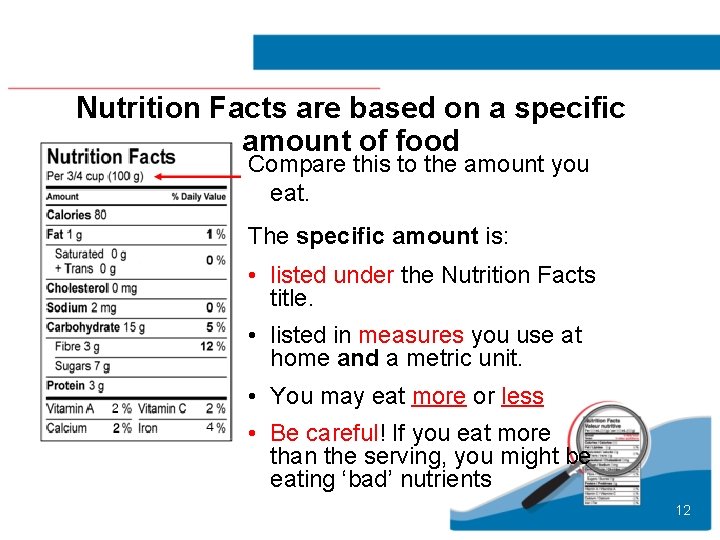
Nutrition Facts are based on a specific amount of food Compare this to the amount you eat. The specific amount is: • listed under the Nutrition Facts title. • listed in measures you use at home and a metric unit. • You may eat more or less • Be careful! If you eat more than the serving, you might be eating ‘bad’ nutrients 12
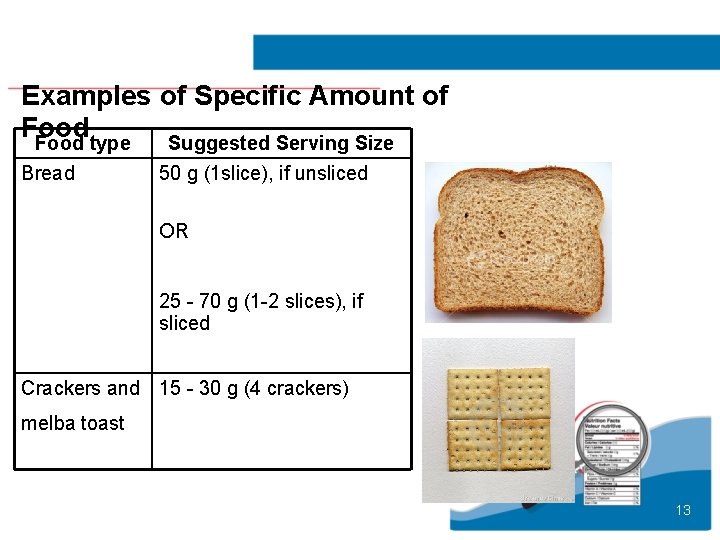
Examples of Specific Amount of Food type Suggested Serving Size Bread 50 g (1 slice), if unsliced OR 25 - 70 g (1 -2 slices), if sliced Crackers and 15 - 30 g (4 crackers) melba toast 13
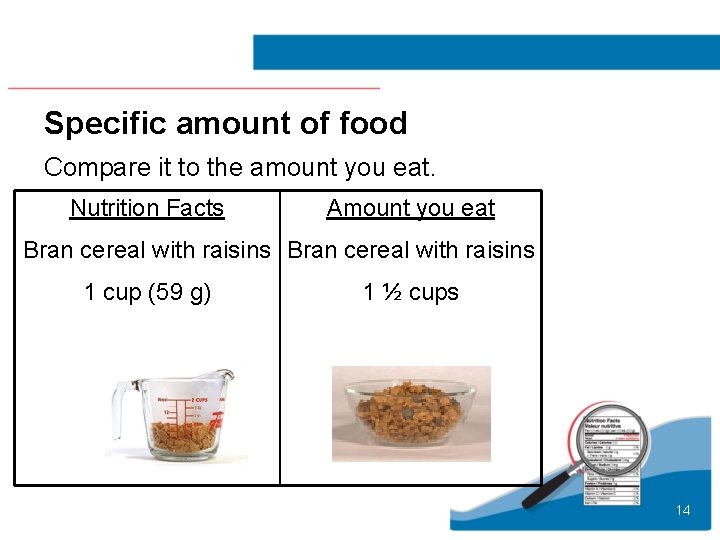
Specific amount of food Compare it to the amount you eat. Nutrition Facts Amount you eat Bran cereal with raisins 1 cup (59 g) 1 ½ cups 14
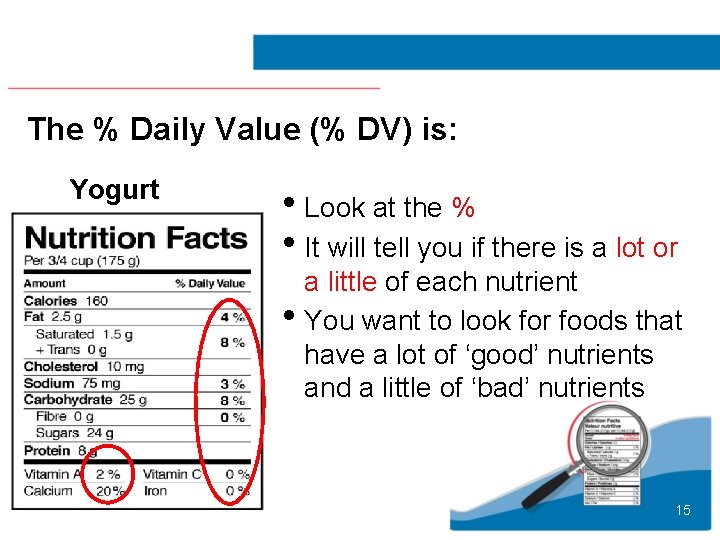
The % Daily Value (% DV) is: Yogurt • Look at the % • It will tell you if there is a lot or a little of each nutrient • You want to look for foods that have a lot of ‘good’ nutrients and a little of ‘bad’ nutrients 15
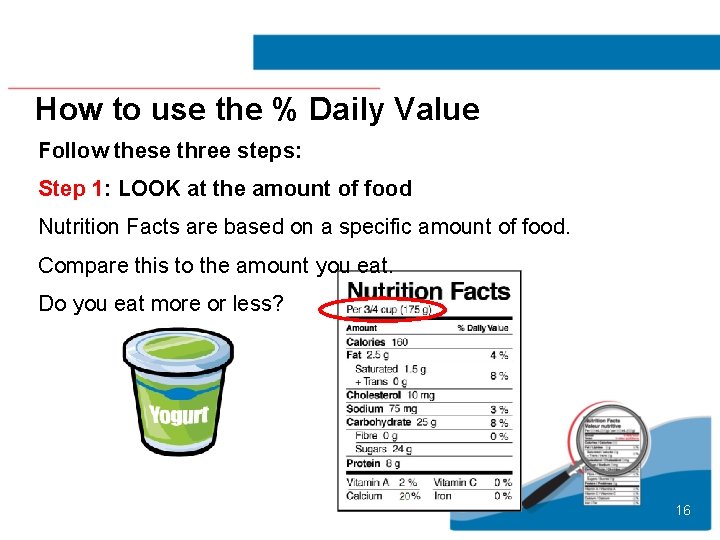
How to use the % Daily Value Follow these three steps: Step 1: LOOK at the amount of food Nutrition Facts are based on a specific amount of food. Compare this to the amount you eat. Do you eat more or less? 16
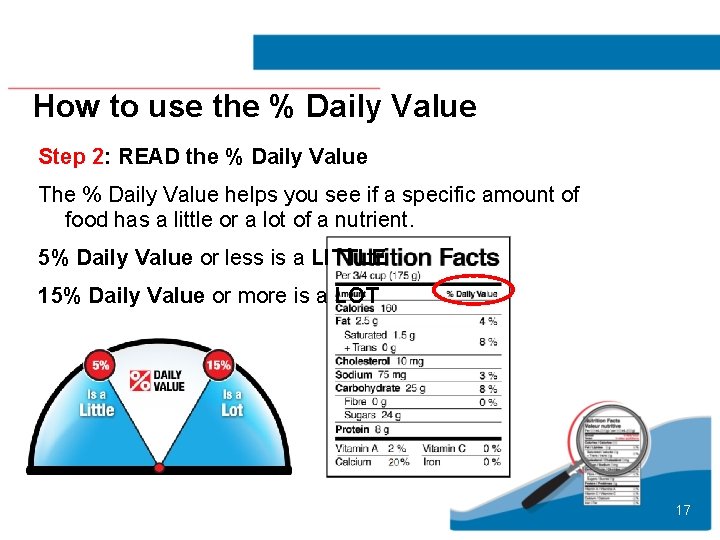
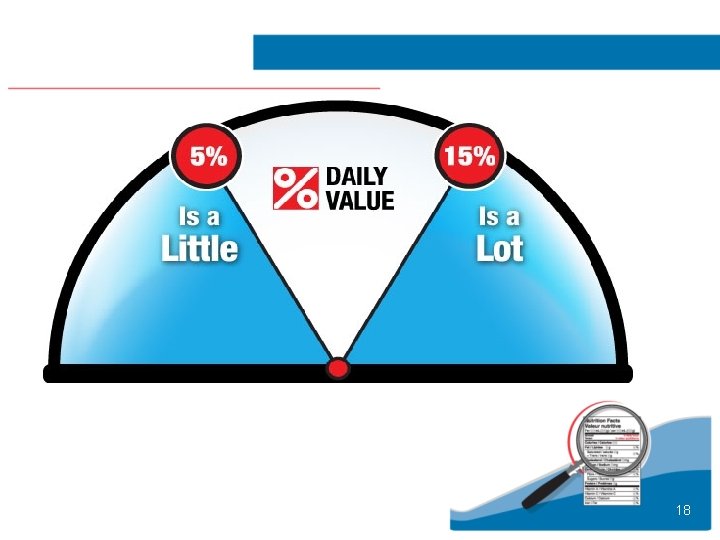
How to use the % Daily Value Step 2: READ the % Daily Value The % Daily Value helps you see if a specific amount of food has a little or a lot of a nutrient. 5% Daily Value or less is a LITTLE 15% Daily Value or more is a LOT 17
18
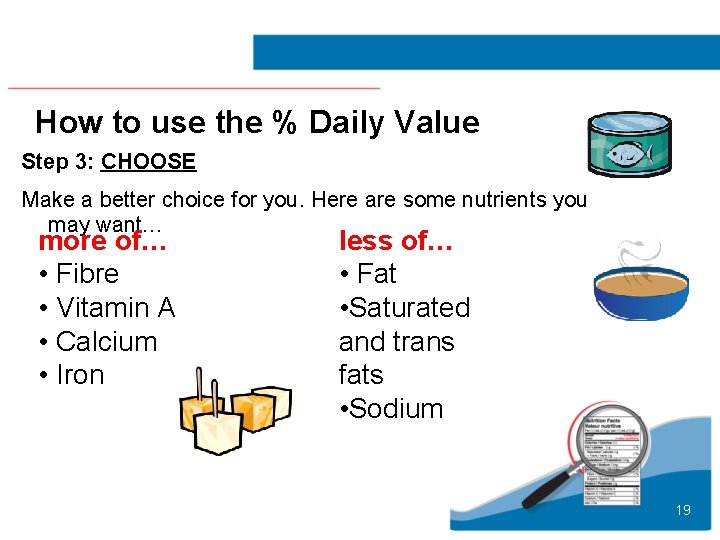
How to use the % Daily Value Step 3: CHOOSE Make a better choice for you. Here are some nutrients you may want… more of… • Fibre • Vitamin A • Calcium • Iron less of… • Fat • Saturated and trans fats • Sodium 19
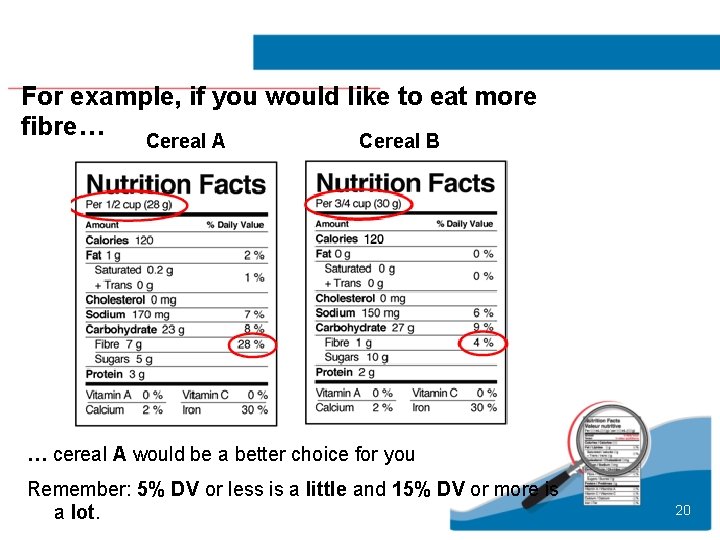
For example, if you would like to eat more fibre… Cereal A Cereal B … cereal A would be a better choice for you Remember: 5% DV or less is a little and 15% DV or more is a lot. 20
- Slides: 20