
FOOD LABELLING STORAGE Information for N 5 Practical
FOOD LABELLING & STORAGE • Information for N 5 Practical Cookery
FOOD LABELLING Required by law Additional information The product name A product description A list of ingredients The weight or quantity Storage instructions Cooking instructions Name and address of manufacturer Date code Country of origin Suitability e. g for vegetarians Freezing instructions Serving suggestions Additional products in the range. Fairtrade Certified organic
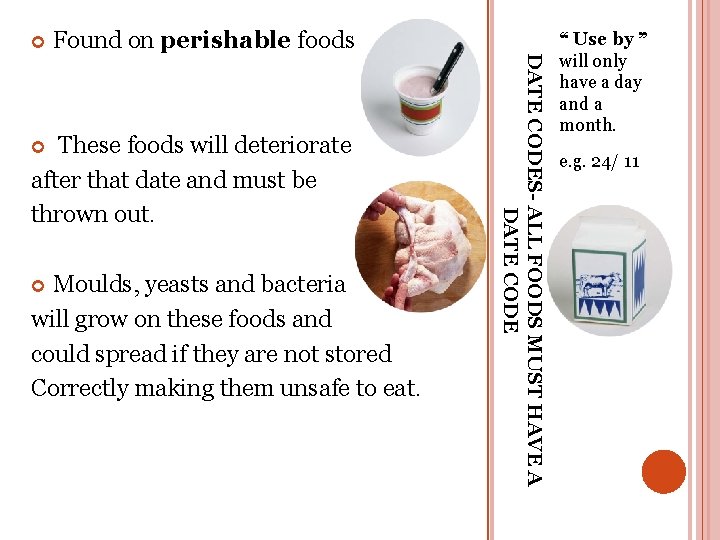
These foods will deteriorate after that date and must be thrown out. Moulds, yeasts and bacteria will grow on these foods and could spread if they are not stored Correctly making them unsafe to eat. DATE CODES- ALL FOODS MUST HAVE A DATE CODE Found on perishable foods “ Use by ” will only have a day and a month. e. g. 24/ 11

After that date the food may not be at its best and its taste, colour appearance and texture will have changed. DATE CODES- ALL FOODS MUST HAVE A DATE CODE These date codes are found on foods that can last for up to 3 months. “ Best Before” Will have a date month and usually a year. e. g Best before 24/11/10
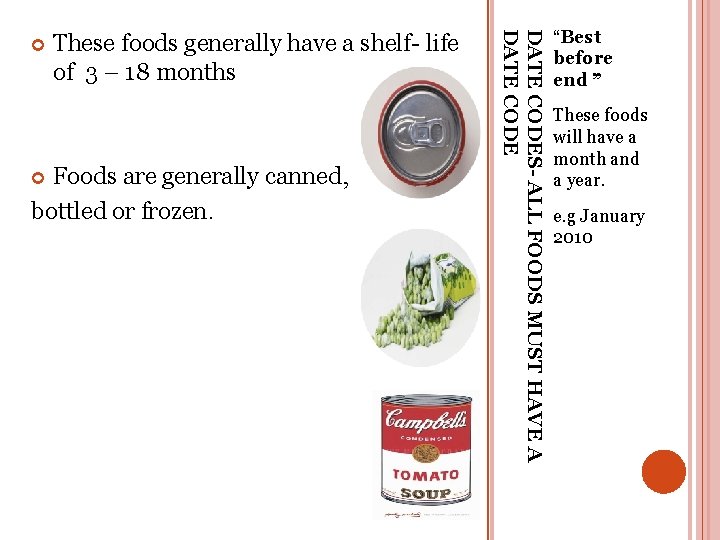
These foods generally have a shelf- life of 3 – 18 months Foods are generally canned, bottled or frozen. DATE CODES- ALL FOODS MUST HAVE A DATE CODE “Best before end ” These foods will have a month and a year. e. g January 2010
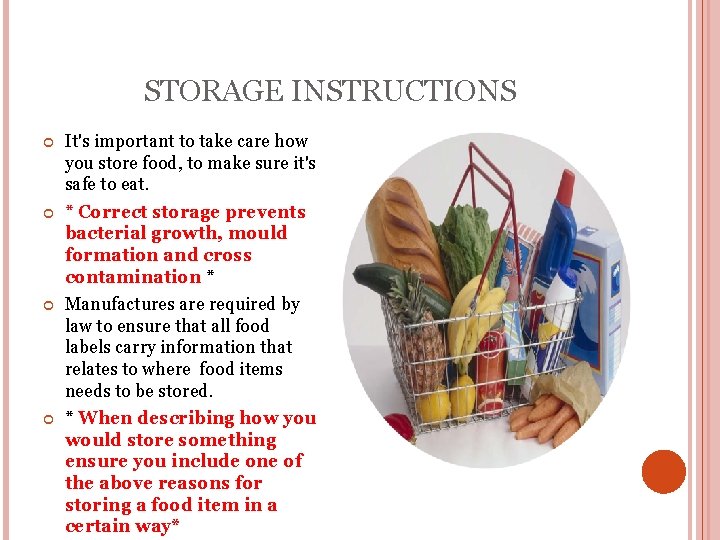
STORAGE INSTRUCTIONS It's important to take care how you store food, to make sure it's safe to eat. * Correct storage prevents bacterial growth, mould formation and cross contamination * Manufactures are required by law to ensure that all food labels carry information that relates to where food items needs to be stored. * When describing how you would store something ensure you include one of the above reasons for storing a food item in a certain way*
EXEMPLIFICATION OF A N 5 RESPONSE: When storing raw mince it must be stored in a sealed container/ tub at the bottom of the fridge to prevent cross contamination/ bacterial multiplication. When storing flour (or dry ingredients) it must be stored in a dry cool store cupboard, in a sealed packet or container to prevent moisture or physical contamination. When storing an open jar of jam it must be stored in a fridge, sealed with a tight fitting lid to prevent mould formation. These are describe questions and you must say where, how and why!
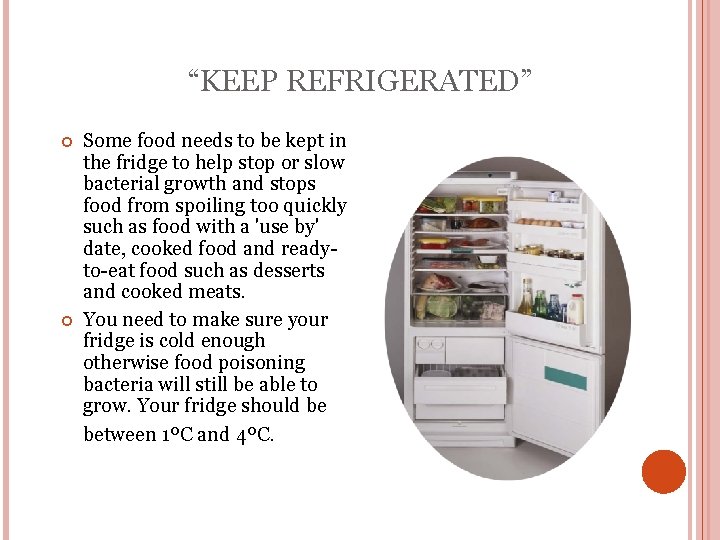
“KEEP REFRIGERATED” Some food needs to be kept in the fridge to help stop or slow bacterial growth and stops food from spoiling too quickly such as food with a 'use by' date, cooked food and readyto-eat food such as desserts and cooked meats. You need to make sure your fridge is cold enough otherwise food poisoning bacteria will still be able to grow. Your fridge should be between 1ºC and 4ºC.
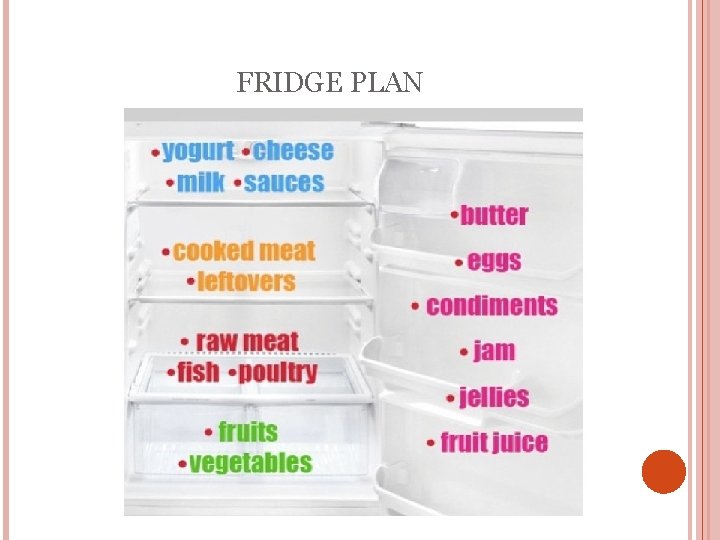
FRIDGE PLAN
RULES FOR STORING FOOD IN THE REFRIGERATOR • Keep raw meat and unwashed vegetables separate from ready-toeat foods. • Don't let raw meat drip onto other food – keep it in sealed containers on the bottom shelf of your fridge. • Cross contamination is one of the major causes of food poisoning. It is the transfer of bacteria from foods (usually raw) to other foods. • Keep the fridge door closed as much as possible. • Make sure food is cool before you put it in the fridge. • You should always try to place the newest items at the back, and the oldest items at the front.
RULES FOR STORING FOOD IN THE REFRIGERATOR • If your fridge is full, turn the temperature down to help it fight bacteria. You can check your fridge temperature using a fridge thermometer. • If you have any leftover cooked food, cool it as quickly as possible (ideally within one to two hours) and then store it in the fridge. • If you have cooked something large, like a turkey or a big pot of stew or curry, split it up into smaller portions. This will help the food cool down more quickly and will make it easier to fit in the fridge. • If you're having a party or making a buffet, leave the food in the fridge until people are ready to eat. Generally, you shouldn't leave food out of the fridge for more than four hours.
STORING EGGS IN THE FRIDGE • Store eggs in a cool, dry place, ideally in the fridge. • Store eggs away from other foods. It’s a good idea to use your fridge’s egg tray, if you have one, because this helps to keep eggs separate. • Eggs can be eaten a few days after their best before date, as long as they are cooked thoroughly until both yolk and white are solid, or if they are used in dishes where they will be fully cooked, such as a cake. • If salmonella is present in eggs, it could multiply to high levels and cause food poisoning however salmonella contamination levels in UK-produced eggs is low, and salmonella is killed by thorough cooking.
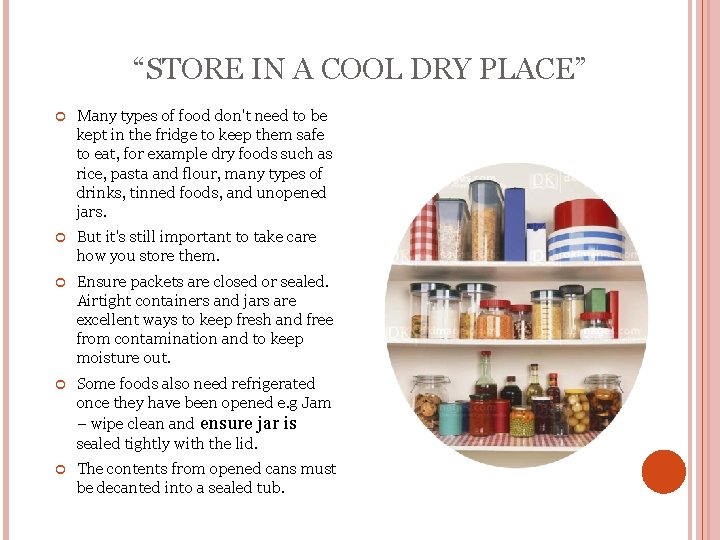
“STORE IN A COOL DRY PLACE” Many types of food don't need to be kept in the fridge to keep them safe to eat, for example dry foods such as rice, pasta and flour, many types of drinks, tinned foods, and unopened jars. But it's still important to take care how you store them. Ensure packets are closed or sealed. Airtight containers and jars are excellent ways to keep fresh and free from contamination and to keep moisture out. Some foods also need refrigerated once they have been opened e. g Jam – wipe clean and ensure jar is sealed tightly with the lid. The contents from opened cans must be decanted into a sealed tub.
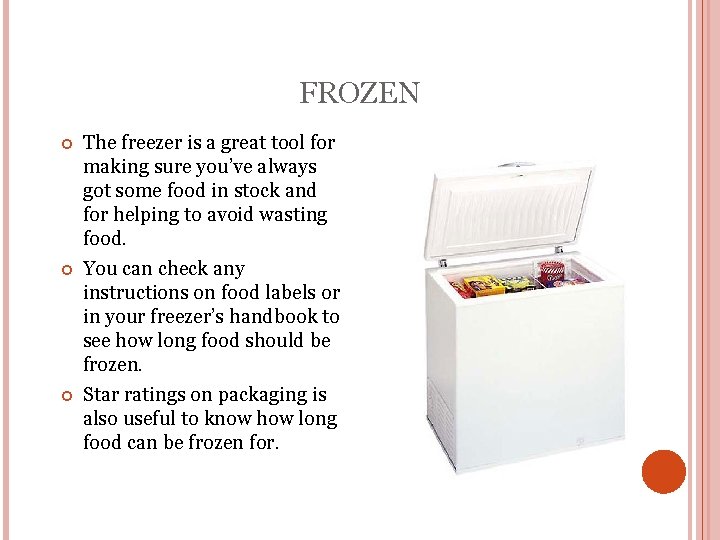
FROZEN The freezer is a great tool for making sure you’ve always got some food in stock and for helping to avoid wasting food. You can check any instructions on food labels or in your freezer’s handbook to see how long food should be frozen. Star ratings on packaging is also useful to know how long food can be frozen for.
- Slides: 14