
Food Labelling from Patients Perspective in Europe the
Food Labelling from Patients’ Perspective in Europe: the Good, the Bad and the Ugly Roberta Savli Senior EU Policy Advisor – European Federation of Allergy and Airways Diseases’ Patients Associations (EFA) roberta. savli@efanet. org @robertasavli
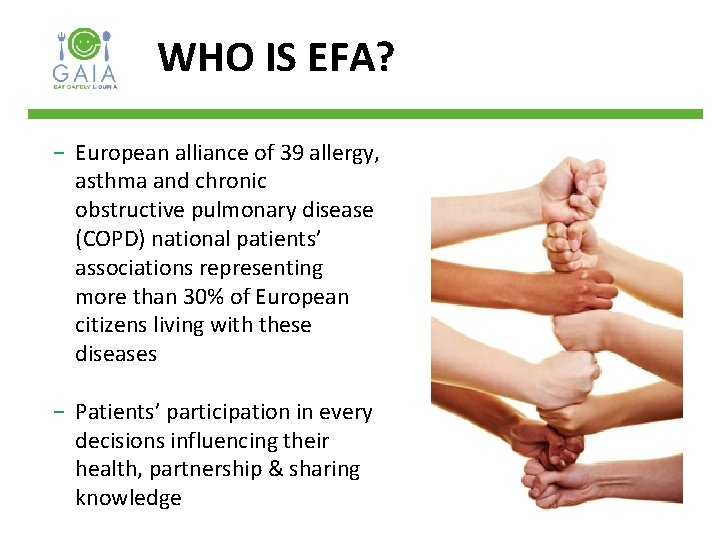
WHO IS EFA? − European alliance of 39 allergy, asthma and chronic obstructive pulmonary disease (COPD) national patients’ associations representing more than 30% of European citizens living with these diseases − Patients’ participation in every decisions influencing their health, partnership & sharing knowledge
FOOD ALLERGY ACROSS EUROPE − Up to 25% of European population reacts to food − About 17 million Europeans suffer from food allergies, 3. 5 million aged less than 25 − 8% of allergic patients produce acute anaphylaxis considered potentially fatal − Over the past ten years, number of allergic children younger than 5 years has redoubled + emergency room visits for anaphylactic reactions have increased seven-fold * * Source: European Academy of Allergy and Clinical Immunology (EAACI)
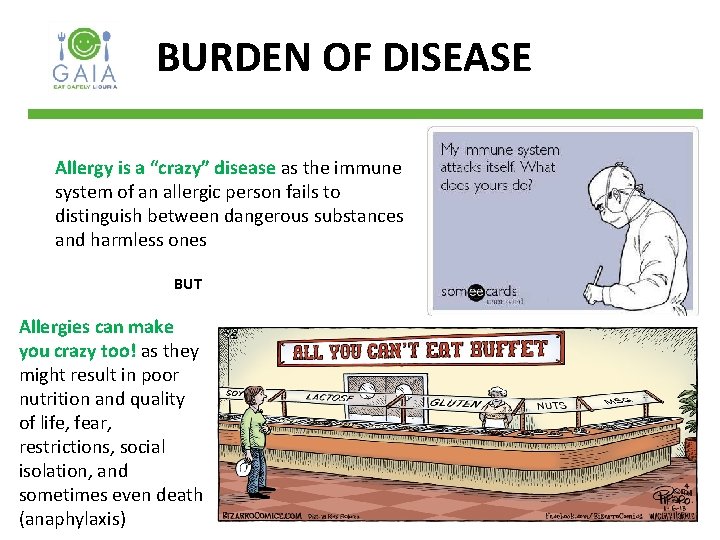
BURDEN OF DISEASE Allergy is a “crazy” disease as the immune system of an allergic person fails to distinguish between dangerous substances and harmless ones BUT Allergies can make you crazy too! as they might result in poor nutrition and quality of life, fear, restrictions, social isolation, and sometimes even death (anaphylaxis)
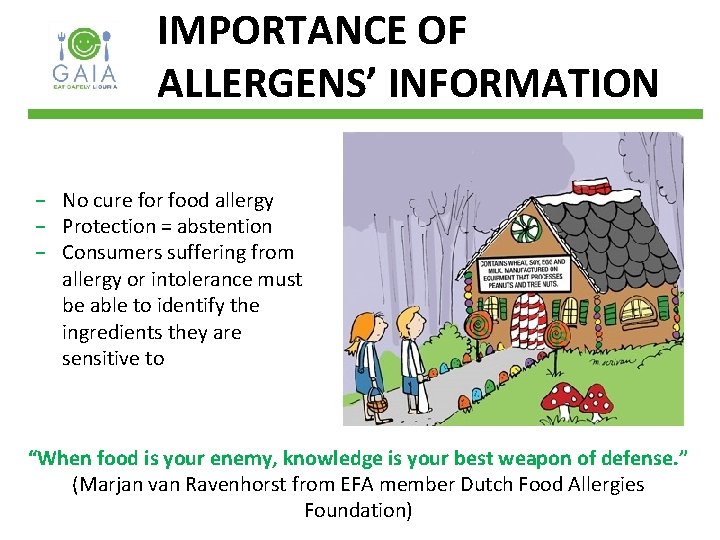
IMPORTANCE OF ALLERGENS’ INFORMATION − No cure for food allergy − Protection = abstention − Consumers suffering from allergy or intolerance must be able to identify the ingredients they are sensitive to “When food is your enemy, knowledge is your best weapon of defense. ” (Marjan van Ravenhorst from EFA member Dutch Food Allergies Foundation)

MAIN ISSUES WITH FOOD LABELLING − Information not available or inaccurate − Readability → too small font, poor contrast − Cross-contamination, precautionary labelling → not trustworthy, no common practice − Changes in recipe and introduction of novel ingredients (e. g. : lupine) → new allergies − Complicated and processed food containing unnecessary ingredients − Not in national language → complicating travelling
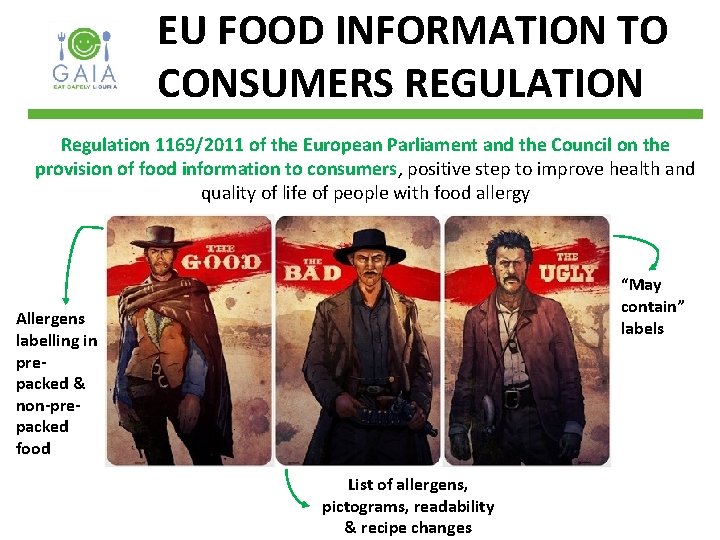
EU FOOD INFORMATION TO CONSUMERS REGULATION Regulation 1169/2011 of the European Parliament and the Council on the provision of food information to consumers, positive step to improve health and quality of life of people with food allergy “May contain” labels Allergens labelling in prepacked & non-prepacked food List of allergens, pictograms, readability & recipe changes
THE GOOD I: ALLERGENS IN PRE-PACKED FOOD − Emphasising 14 listed allergens within the ingredients’ list through a typeset that clearly distinguishes them (novelty as of December 2014) EFA position: → Bolding allergens, the best way to highlight them and attract allergic consumers’ attention → Need to label also consumption units − Where no list of ingredients is required, label on the package with the wording “it contains” followed by the name of the allergen EFA position: → Ingredients’ list always compulsory (irrespective of the size of the pack) as people may be allergic to other substances than those listed in the regulation − Information on allergens should be given also in case of food distance selling before the purchase is concluded
THE GOOD II: ALLERGENS IN NON-PRE-PACKED FOOD 7 out of 10 severe reactions happen when people eat out * − Compulsory information on allergens, Member States can decide how it should be made available to consumers and its form of expression and presentation (novelty as of December 2014) EFA position: → Written information is the most reliable means of ensuring the provision of detailed information to the allergic consumer, unless it is possible to talk directly to the person that prepared the food → Need to share best practices on EU Member States’ legislations → Necessity to draft and implement EU-wide guidelines → In the long-term, compulsory list of all ingredients * Source: European Commission
BEST PRACTICE: PATIENTS TRAINING RESTAURANTS Allergy Aware Scheme by EFA member Allergy UK Hooray an allergic guest! by EFA member Swedish Asthma and Allergy Association − Endorsement training for allergen management for restaurants − Accreditation with allergy-friendly label
THE BAD I: ALLERGENS & PICTOGRAMS List of allergens − No change in the list of 14 main allergens: it can be updated by Commission’s delegated acts (novelty as of December 2014) EFA position: → Need to review prevalence of food allergy in Europe with the possibility of identifying “emerging” allergens → Avoid precautionary approaches for novel foods Pictograms − No harmonised set of pictograms: symbols can be used in addition to words via Commission’s implementing acts EFA position: → Consistent pictograms across Europe are crucial for travellers “Whilst we are in our home country, food labelling is a daily activity to keep our son alive; but when we go overseas, things become a lot more difficult. ” (David Supple, father of a severe allergic child, from EFA member Asthma UK)
THE BAD II: READABILITY & RECIPE CHANGE Readability − Information on allergens should be provided in 1, 2 mm font size; possibility to reduce the minimum font size to 0, 9 mm EFA position: → Minimum 3 mm font size to guarantee clear legibility and safe choices → Need to develop a comprehensive approach to take into account all aspects related to legibility, including font, colour and contrast Changes of recipe − Nothing is mentioned regarding labelling allergen changes/additions in products EFA position: → Clearly mention the change in the package as consumers may feel safe due to previous consumption of the product and not check properly the list of ingredients
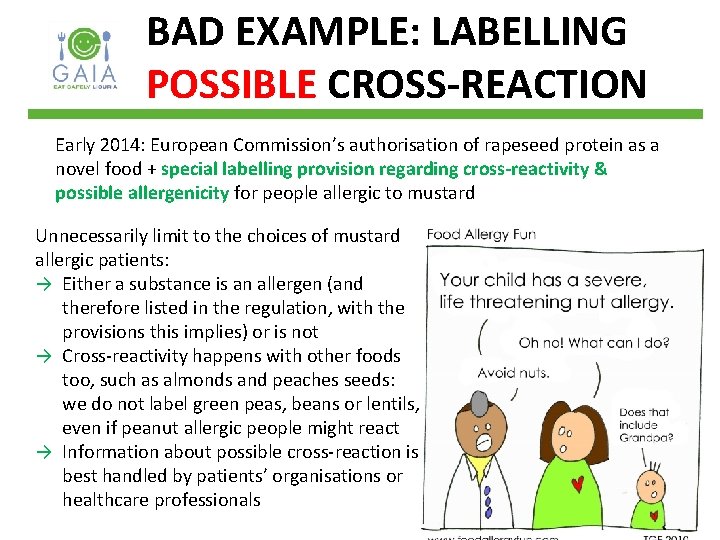
BAD EXAMPLE: LABELLING POSSIBLE CROSS-REACTION Early 2014: European Commission’s authorisation of rapeseed protein as a novel food + special labelling provision regarding cross-reactivity & possible allergenicity for people allergic to mustard Unnecessarily limit to the choices of mustard allergic patients: → Either a substance is an allergen (and therefore listed in the regulation, with the provisions this implies) or is not → Cross-reactivity happens with other foods too, such as almonds and peaches seeds: we do not label green peas, beans or lentils, even if peanut allergic people might react → Information about possible cross-reaction is best handled by patients’ organisations or healthcare professionals
THE UGLY: PRECAUTIONARY LABELLING − Voluntary Member States’ information on the unintentional presence of allergens, harmonised rules to be set by the Commission through implementing acts (no deadline) EFA position: → Long-term: abolishment (complete and accurate information, establishment of “safe thresholds”) → Short-term: ultimate solution after implementation of bestpractices to avoid cross-contamination → Allergen management as part of hygiene/safety manual → Awareness and practical training on food allergy for workers → Responsibility of food business operators at each step of the distribution chain → European guidelines on food allergen management
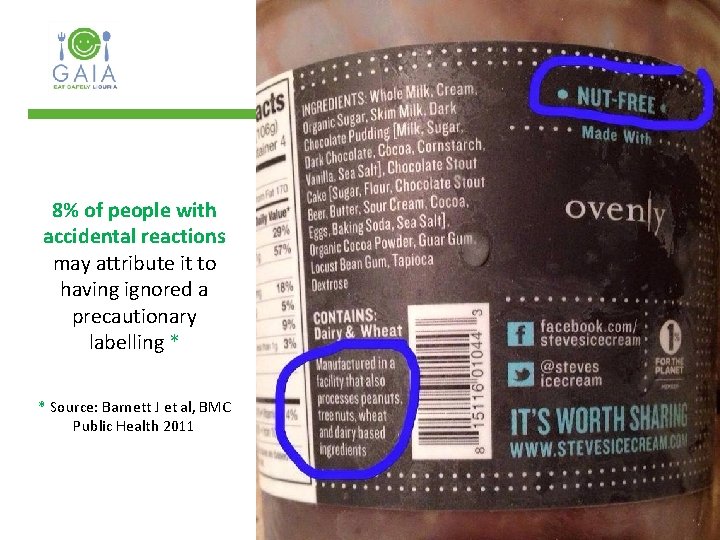
8% of people with accidental reactions may attribute it to having ignored a precautionary labelling * * Source: Barnett J et al, BMC Public Health 2011
(AVOIDANCE OF) WORST PRACTICE – EFA’S SUCCESS Early 2014: company’s decision to end outsourcing production of nutsbased products & start producing them in own production lines together with soya products + introduction of nuts precautionary labelling for soya products Severely impacting health and quality of life of allergic people: → Hugh number of people with milk allergy, often children, have accompanying nut allergy → “Default” soya products in most supermarkets and highly recommended by dieticians, negligible alternatives especially in many non-urban areas Raising awareness & social media campaigns Summer 2014: company announces the arrangement of current production lines to exclude risk of crosscontamination & remove “may contain” claims
Thank you for your attention! 35, rue du Congrès B-1000, Brussels www. efanet. org @EFA_Patients www. facebook. com/EFAPatients
- Slides: 17