
Food in the UK Lesson objectives To investigate
Food in the UK Lesson objectives: To investigate the impacts of all-year demand for seasonal food To describe the impact this has on LICs To understand the impact of food imports on the UK’s carbon footprint
What do AQA say… An overview of resources in relation to the UK Food - The growing demand for high-value food exports from low income countries and all-year demand for seasonal food and organic produce. - Larger carbon footprints due to the increasing number of ‘food miles’ travelled, and moves towards local sourcing of food. - The trend towards agribusiness.
Think… If you were asked the following question(s)…what ideas could you come up with? Discuss with your partner for two minutes. How has the demand for food in the UK changed? (What was it like in the past? What is it like now? )

How has demand for food in the UK changed? Seasonal and sourced in the UK Food grown according to the seasons In the past… Food also preserved (frozen, bottled, jams, pickles) Now eat fruit and veg all year round including exotic fruit not grown in the UK In the present… 47% of food in the UK is imported Local meat produced – Welsh lamb, Scottish beef Even seasonal goods are imported as it is cheaper than growing in the UK
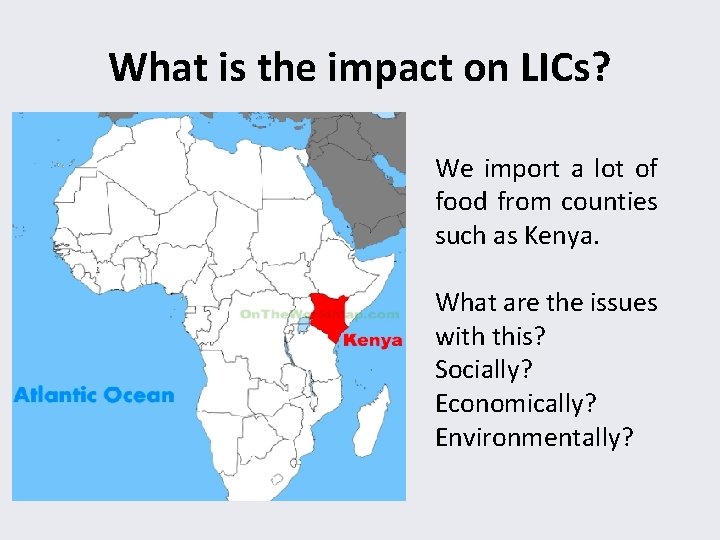
What is the impact on LICs? We import a lot of food from counties such as Kenya. What are the issues with this? Socially? Economically? Environmentally?
What is the impact on LICs? High-value foods and ingredients can fetch retail prices that are up to five times those of similar products. The high value may be due to the product itself, such as Madagascan vanilla, specialist honeys and gourmet coffees, or because they are luxury items available out of season that are in high demand. The cost of these products to the UK consumer is high, but there also costs for the people in Kenya.
What is the impact on LICs? Sometimes the people growing the crops are exposed to chemicals such as pesticides without protective clothing Less land is available for locals to grow food and eat Jobs are created, for example in farming, packaging and transport Often these crops need huge amounts of water in areas where the supply is unreliable or poor From the wages, taxes are paid to the government, which can then fund things such as schools and hospitals Jobs supply wages for local people
Think… Over the past decade we have seen more and more products being produced with this label/logo. What does it mean?
What is organic farming? Organic farming is…. . . a type of farming which does not include the use of chemicals such as pesticides and fertilisers.
What is organic farming? - The aim is to protect the environment and wildlife by using natural predators to control pests, for example using ladybirds to eat blackfly. - Farmers maintain the fertility of the soil by rotating crops and using a variety of natural fertilisers, including manure and compost. - Weeds are controlled by mechanical weeding rather than using chemical weed killers. - Animals are farmed without the use of antibiotics and the regular use of drugs such as hormones to increase growth.

Task Complete the activities from the worksheet provided. Answer ALL questions in full sentences.
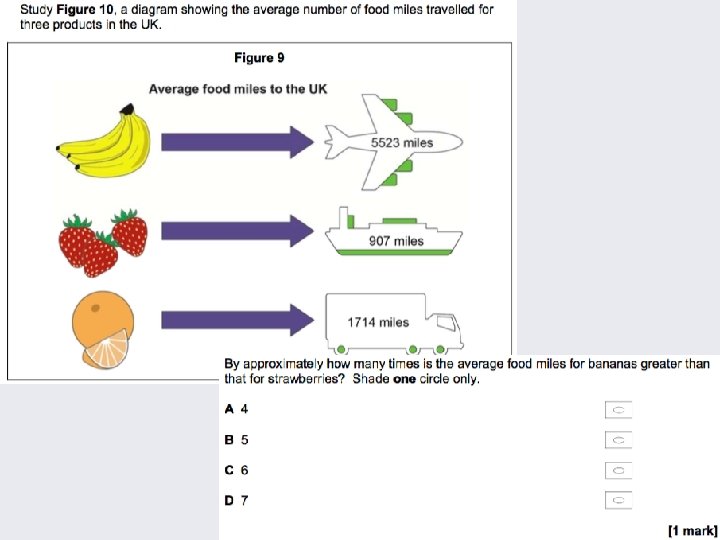
Food miles and carbon footprints Food miles… …are the distance that food travels from producer to consumer. E. g. green beans from Kenya travel 6, 818 km to reach the UK. A carbon footprint is… …the measure of the impact that human activities have on the environment in terms of the amount of greenhouse gases they produce.
Food in the UK Lesson objectives: To investigate the impacts of all-year demand for seasonal food To describe the impact this has on LICs To understand the impact of food imports on the UK’s carbon footprint
- Slides: 14