
Food hygiene and safety in the primary classroom
- Slides: 24
Food hygiene and safety in the primary classroom Frances Meek British Nutrition Foundation www. foodafactoflife. org. uk © Food – a fact of life 2019
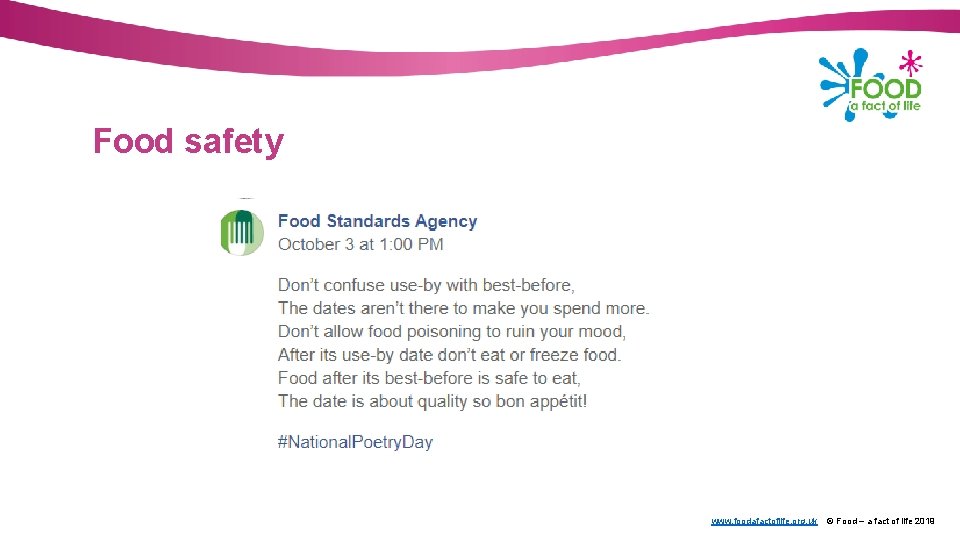
Food safety www. foodafactoflife. org. uk © Food – a fact of life 2019
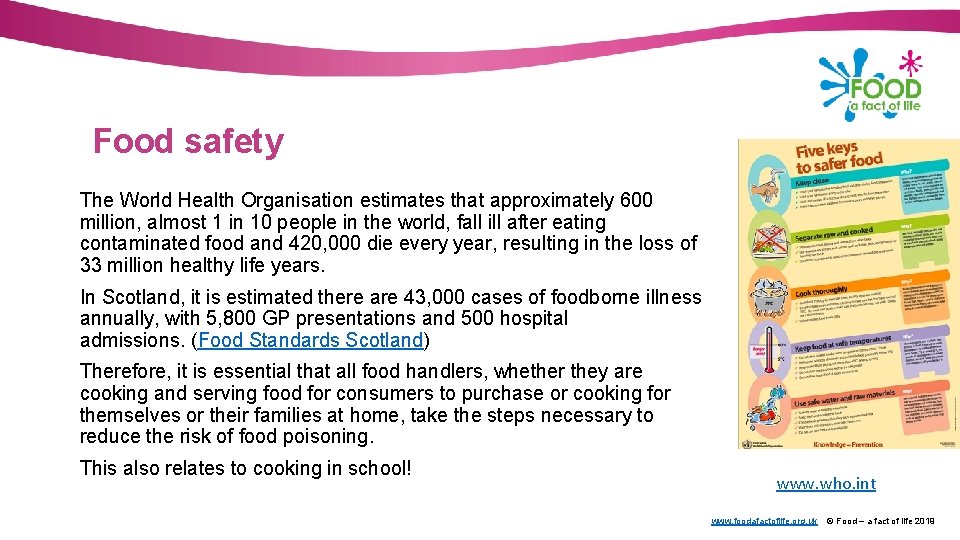
Food safety The World Health Organisation estimates that approximately 600 million, almost 1 in 10 people in the world, fall ill after eating contaminated food and 420, 000 die every year, resulting in the loss of 33 million healthy life years. In Scotland, it is estimated there are 43, 000 cases of foodborne illness annually, with 5, 800 GP presentations and 500 hospital admissions. (Food Standards Scotland) Therefore, it is essential that all food handlers, whether they are cooking and serving food for consumers to purchase or cooking for themselves or their families at home, take the steps necessary to reduce the risk of food poisoning. This also relates to cooking in school! www. who. int www. foodafactoflife. org. uk © Food – a fact of life 2019
Why is good food hygiene and safety important to you? • To prevent food poisoning – pupils, parents and staff. • Teacher’s own indemnity. How good is our school? Self evaluation framework 1. 5 Management of resources to promote equity (quality indicator) Features of highly effective practice: ü Resources across the school are well maintained and organised to enable effective and efficient use. ü School facilities are safe and secure for all. Level 5 illustration: We diligently implement relevant health and safety legislation and are vigilant in ensuring the security and safety of all users and visitors. As a result, our buildings are secure and any health and safety issues are identified and addressed promptly. How good is our school? (4 th edition) page 29 www. foodafactoflife. org. uk © Food – a fact of life 2019
Curriculum for Excellence Food hygiene and safety is also part of the Curriculum for Excellence. Health and wellbeing (Food and Health) First level Keeping safe and hygienic Second level Keeping safe and hygienic I am becoming aware of how cleanliness, hygiene and safety can affect health and wellbeing and I apply this knowledge in my everyday routines such as taking care of my teeth. HWB 1 -33 a Having learned about cleanliness, hygiene and safety, I can apply these principles to my everyday routines, understanding their importance to health and wellbeing. HWB 2 -33 a www. foodafactoflife. org. uk © Food – a fact of life 2019
Legal requirements When considering food safety in the classroom, teachers and schools must take into account: • • For further information see the Food Standards Scotland website. The Food Safety Act 1990; Health and safety at Work Regulations 1999; General Food Hygiene Regulations 1995 onwards; The Control of Substances Hazardous to Health Regulations 2002 (as amended) - Approved Code of Practice and Guidance. www. foodafactoflife. org. uk © Food – a fact of life 2019
Legal requirements Legally, a ‘food business’ must demonstrate due diligence. In the business world this would mean: A food business must be able to demonstrate that it has done everything within its power to safeguard consumer health. This equates to the classroom: A …………. must be able to demonstrate it has done everything in it’s power to safeguard ………… health. www. foodafactoflife. org. uk © Food – a fact of life 2019
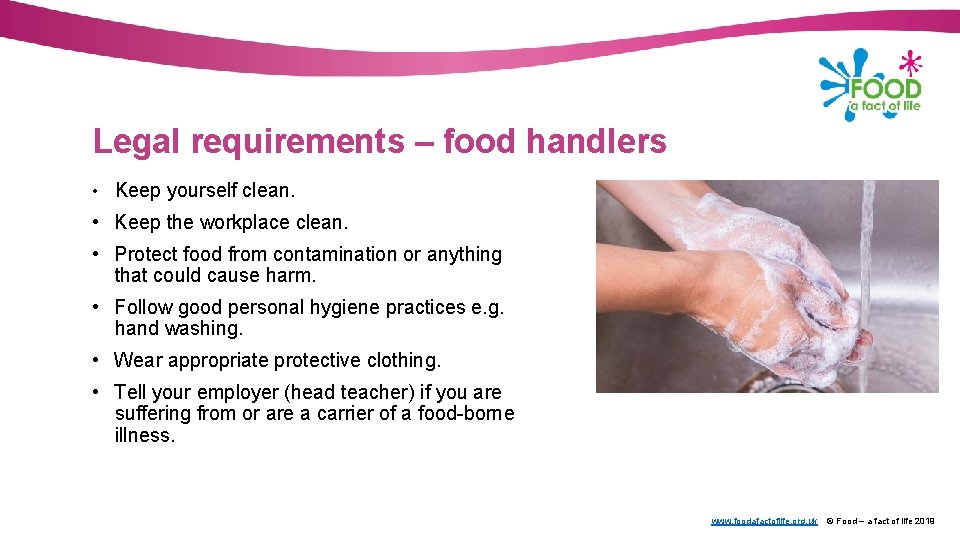
Legal requirements – food handlers • Keep yourself clean. • Keep the workplace clean. • Protect food from contamination or anything that could cause harm. • Follow good personal hygiene practices e. g. hand washing. • Wear appropriate protective clothing. • Tell your employer (head teacher) if you are suffering from or are a carrier of a food-borne illness. www. foodafactoflife. org. uk © Food – a fact of life 2019
Food hygiene and safety qualifications It is not a legal requirement for a primary food teacher to hold a recognised and up to date food hygiene/safety qualification. However, some LAs (or a school’s own policy) may ask their teachers or a teacher in the school to have this. Having a food safety certificate can: • make you feel more confident about cooking safely in • • your classroom; help ensure you have considered all possible risks; help ensure you demonstrate best practice; be useful to include in your risk assessment; add to your CPD. Contact www. rehis. com for more information www. foodafactoflife. org. uk © Food – a fact of life 2019
Food safety policies and risk assessments – why are these necessary? Whilst carrying out a risk assessment for food activities is not a requirement in primary schools in Scotland, it is strongly advised. Risk assessments help to minimise the risks in practical work and can focus attention on what the hazards might be and how they can be prevented or reduced. In addition, poor hygiene and safety would be considered/noticed in an education inspection and drawn to the school’s attention. Food safety policies and risk assessments would help to ensure effective procedures are in place. Risk assessments could be for recipes, lessons and equipment. www. foodafactoflife. org. uk © Food – a fact of life 2019
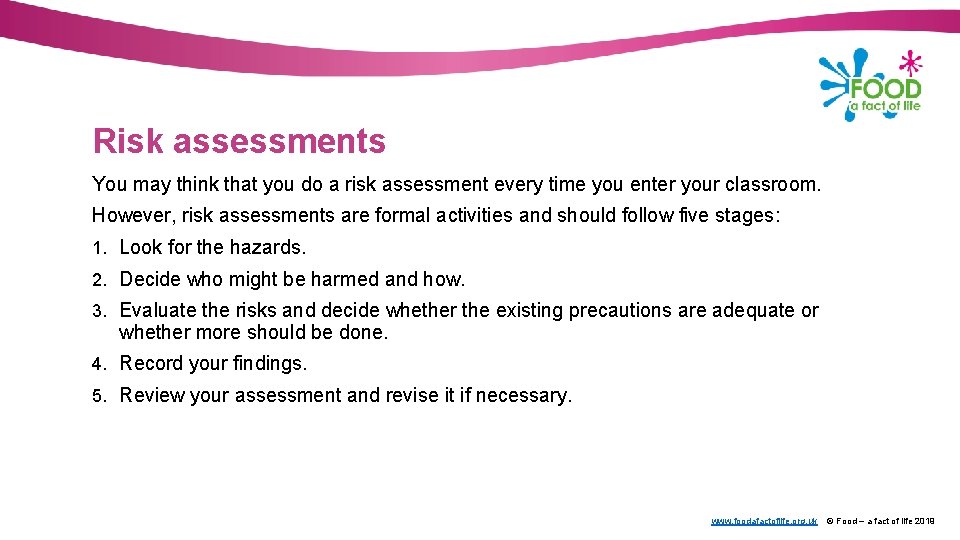
Risk assessments You may think that you do a risk assessment every time you enter your classroom. However, risk assessments are formal activities and should follow five stages: 1. Look for the hazards. 2. Decide who might be harmed and how. 3. Evaluate the risks and decide whether the existing precautions are adequate or whether more should be done. 4. Record your findings. 5. Review your assessment and revise it if necessary. www. foodafactoflife. org. uk © Food – a fact of life 2019
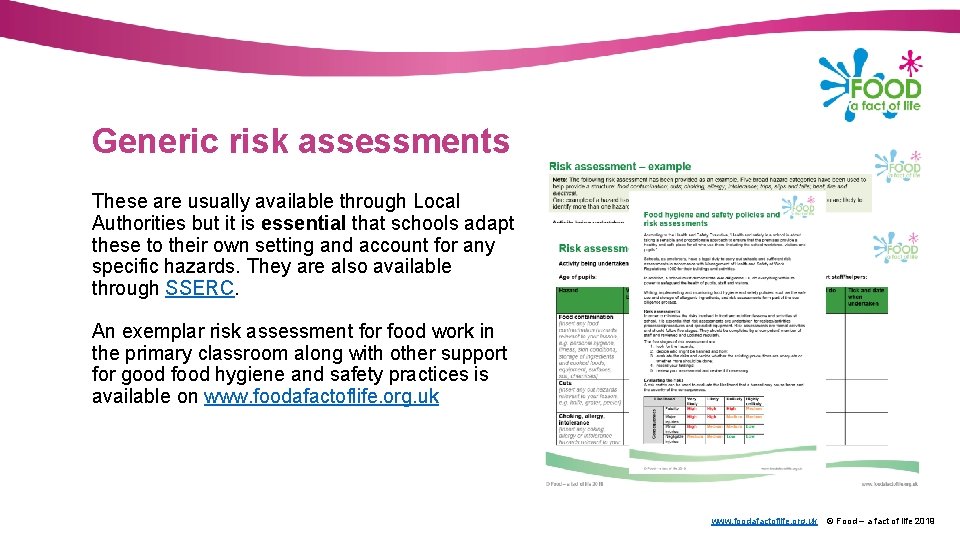
Generic risk assessments These are usually available through Local Authorities but it is essential that schools adapt these to their own setting and account for any specific hazards. They are also available through SSERC. An exemplar risk assessment for food work in the primary classroom along with other support for good food hygiene and safety practices is available on www. foodafactoflife. org. uk © Food – a fact of life 2019
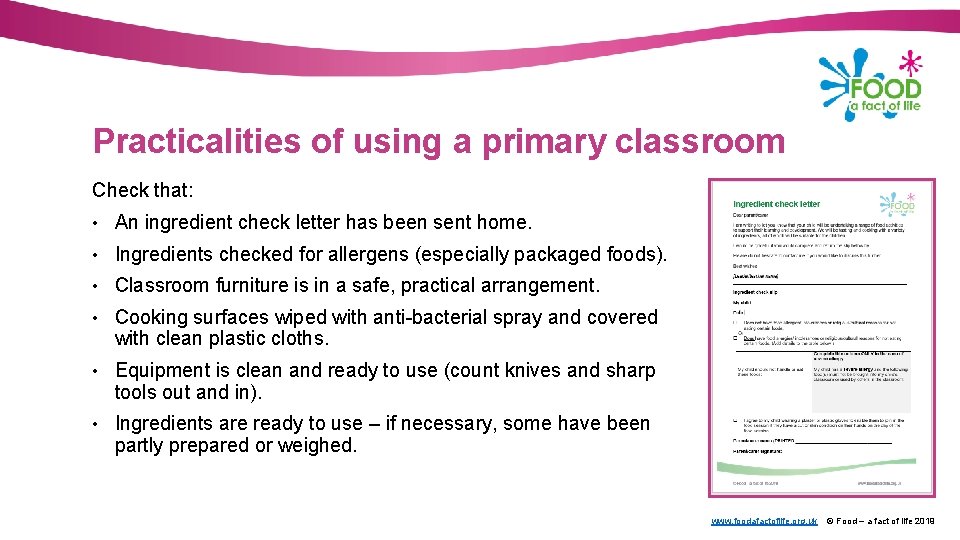
Practicalities of using a primary classroom Check that: • An ingredient check letter has been sent home. • Ingredients checked for allergens (especially packaged foods). • Classroom furniture is in a safe, practical arrangement. • Cooking surfaces wiped with anti-bacterial spray and covered with clean plastic cloths. • Equipment is clean and ready to use (count knives and sharp tools out and in). • Ingredients are ready to use – if necessary, some have been partly prepared or weighed. www. foodafactoflife. org. uk © Food – a fact of life 2019
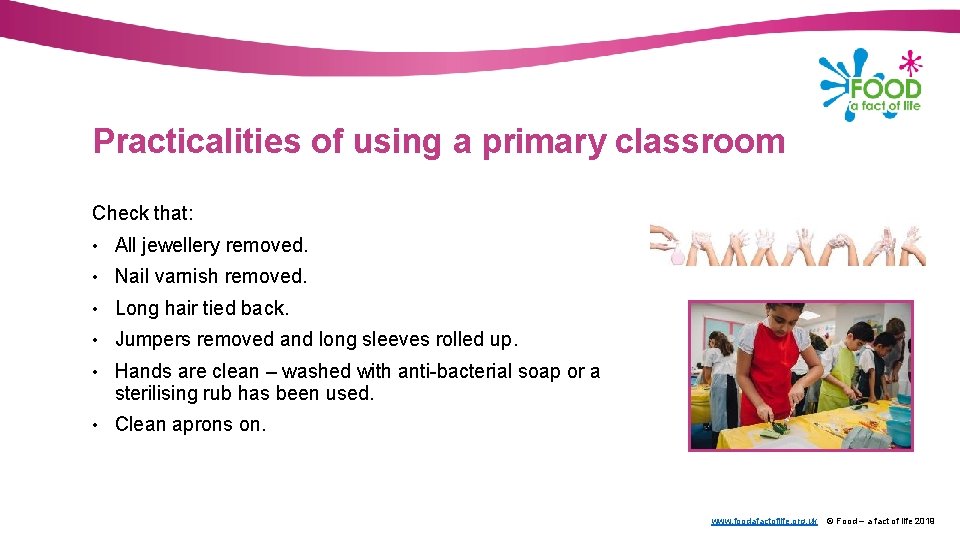
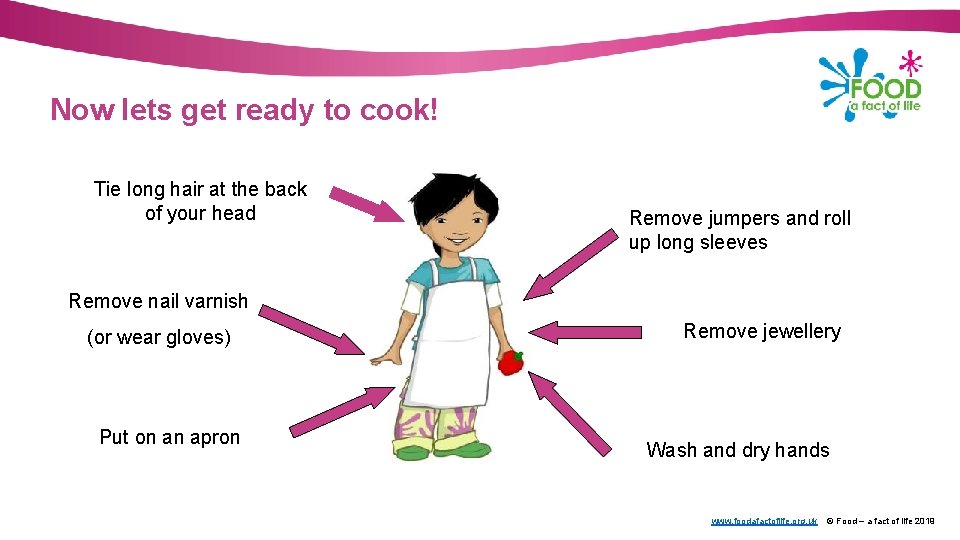
Practicalities of using a primary classroom Check that: • All jewellery removed. • Nail varnish removed. • Long hair tied back. • Jumpers removed and long sleeves rolled up. • Hands are clean – washed with anti-bacterial soap or a sterilising rub has been used. • Clean aprons on. www. foodafactoflife. org. uk © Food – a fact of life 2019
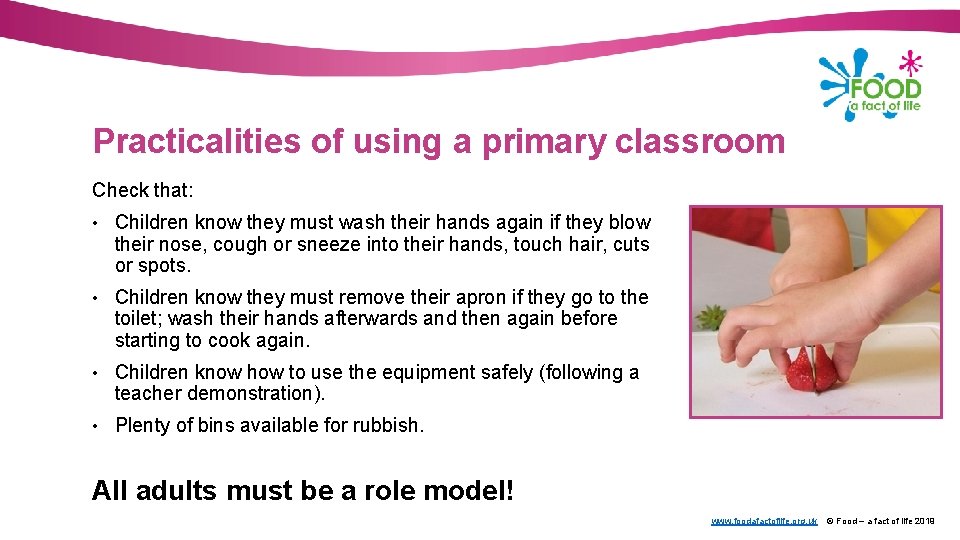
Practicalities of using a primary classroom Check that: • Children know they must wash their hands again if they blow their nose, cough or sneeze into their hands, touch hair, cuts or spots. • Children know they must remove their apron if they go to the toilet; wash their hands afterwards and then again before starting to cook again. • Children know how to use the equipment safely (following a teacher demonstration). • Plenty of bins available for rubbish. All adults must be a role model! www. foodafactoflife. org. uk © Food – a fact of life 2019
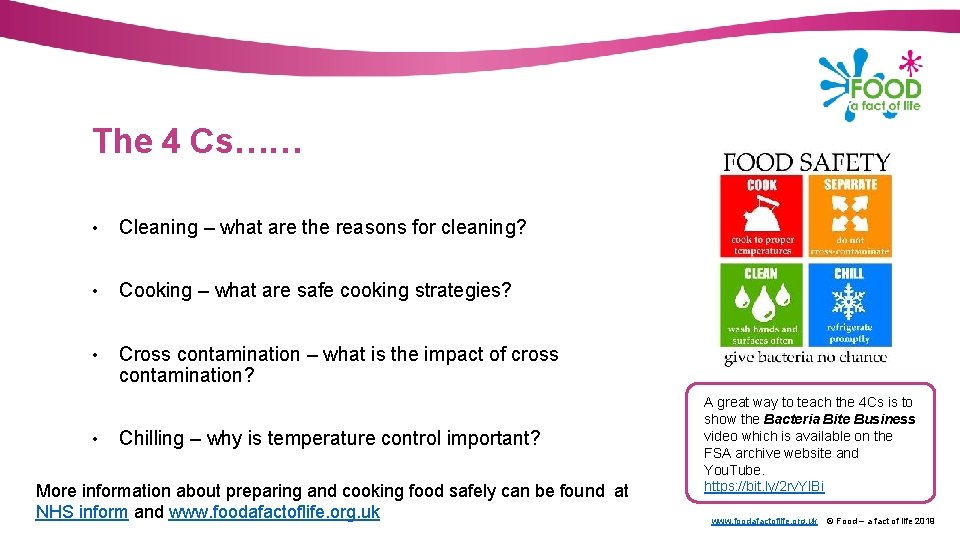
The 4 Cs…… • Cleaning – what are the reasons for cleaning? • Cooking – what are safe cooking strategies? • Cross contamination – what is the impact of cross contamination? • Chilling – why is temperature control important? More information about preparing and cooking food safely can be found at NHS inform and www. foodafactoflife. org. uk A great way to teach the 4 Cs is to show the Bacteria Bite Business video which is available on the FSA archive website and You. Tube. https: //bit. ly/2 rv. YIBi www. foodafactoflife. org. uk © Food – a fact of life 2019
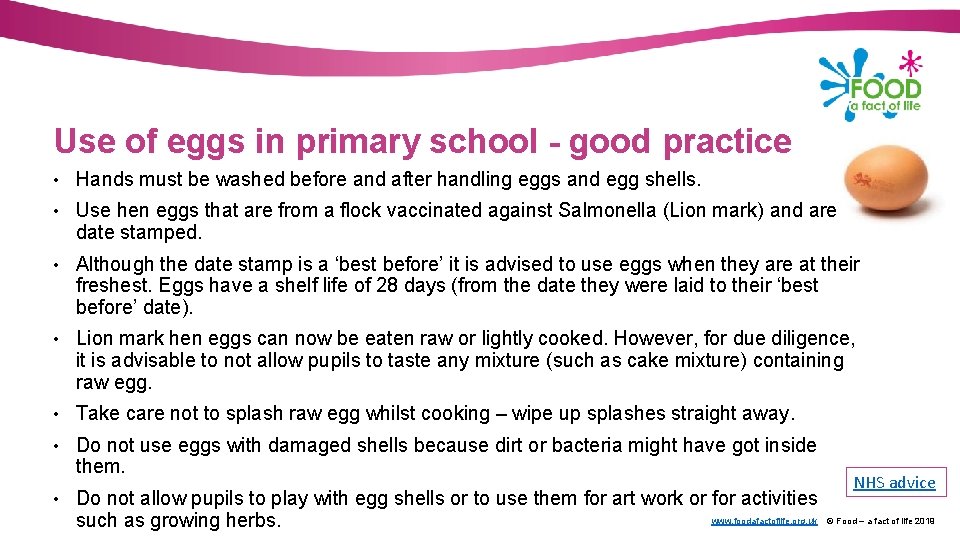
Use of eggs in primary school - good practice • Hands must be washed before and after handling eggs and egg shells. • Use hen eggs that are from a flock vaccinated against Salmonella (Lion mark) and are date stamped. • Although the date stamp is a ‘best before’ it is advised to use eggs when they are at their freshest. Eggs have a shelf life of 28 days (from the date they were laid to their ‘best before’ date). • Lion mark hen eggs can now be eaten raw or lightly cooked. However, for due diligence, it is advisable to not allow pupils to taste any mixture (such as cake mixture) containing raw egg. • Take care not to splash raw egg whilst cooking – wipe up splashes straight away. • Do not use eggs with damaged shells because dirt or bacteria might have got inside them. • Do not allow pupils to play with egg shells or to use them for art work or for activities such as growing herbs. www. foodafactoflife. org. uk NHS advice © Food – a fact of life 2019
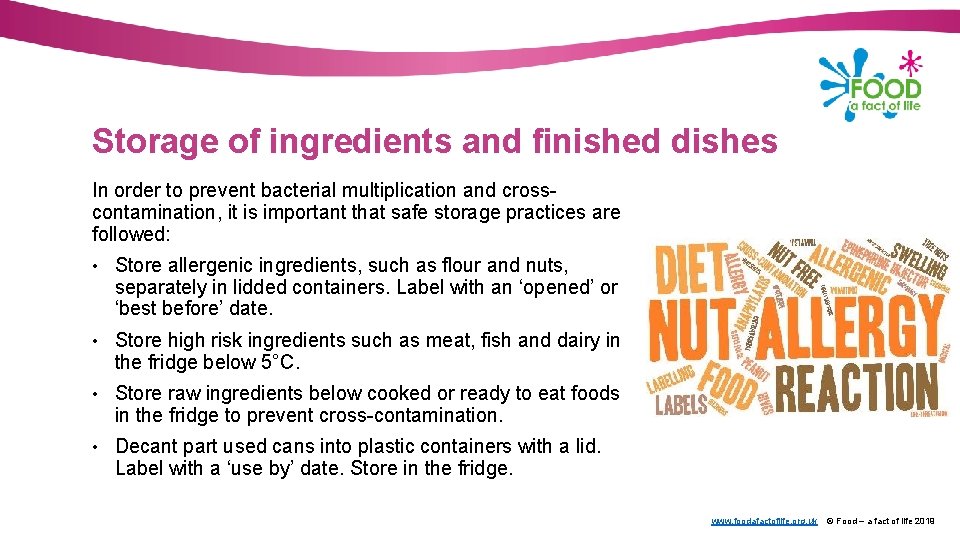
Storage of ingredients and finished dishes In order to prevent bacterial multiplication and crosscontamination, it is important that safe storage practices are followed: • Store allergenic ingredients, such as flour and nuts, separately in lidded containers. Label with an ‘opened’ or ‘best before’ date. • Store high risk ingredients such as meat, fish and dairy in the fridge below 5°C. • Store raw ingredients below cooked or ready to eat foods in the fridge to prevent cross-contamination. • Decant part used cans into plastic containers with a lid. Label with a ‘use by’ date. Store in the fridge. www. foodafactoflife. org. uk © Food – a fact of life 2019
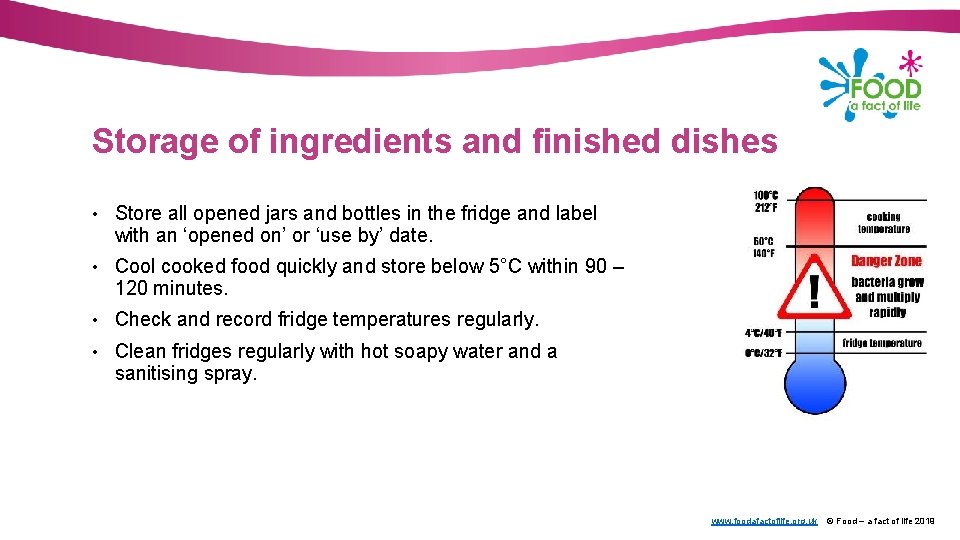
Storage of ingredients and finished dishes • Store all opened jars and bottles in the fridge and label with an ‘opened on’ or ‘use by’ date. • Cool cooked food quickly and store below 5°C within 90 – 120 minutes. • Check and record fridge temperatures regularly. • Clean fridges regularly with hot soapy water and a sanitising spray. www. foodafactoflife. org. uk © Food – a fact of life 2019
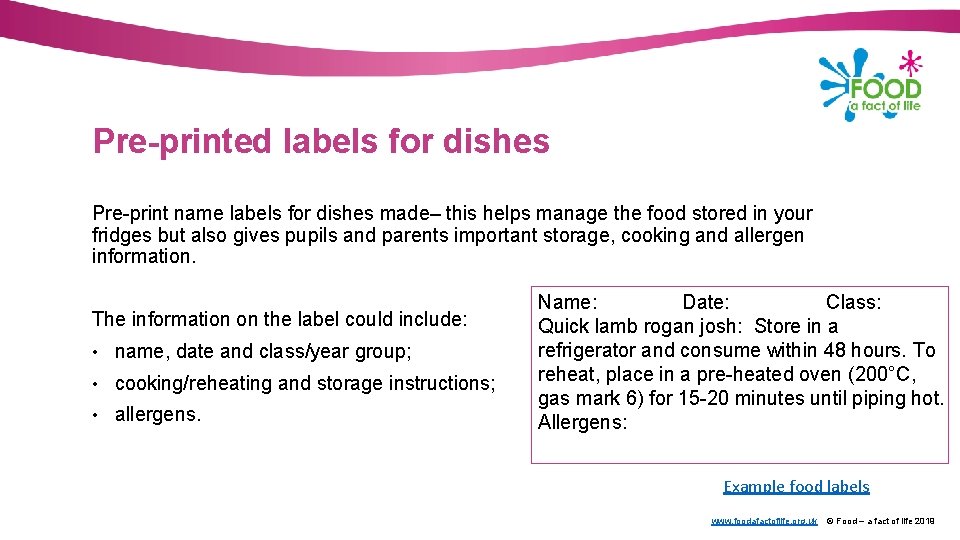
Pre-printed labels for dishes Pre-print name labels for dishes made– this helps manage the food stored in your fridges but also gives pupils and parents important storage, cooking and allergen information. The information on the label could include: • name, date and class/year group; • cooking/reheating and storage instructions; • allergens. Name: Date: Class: Quick lamb rogan josh: Store in a refrigerator and consume within 48 hours. To reheat, place in a pre-heated oven (200°C, gas mark 6) for 15 -20 minutes until piping hot. Allergens: Example food labels www. foodafactoflife. org. uk © Food – a fact of life 2019
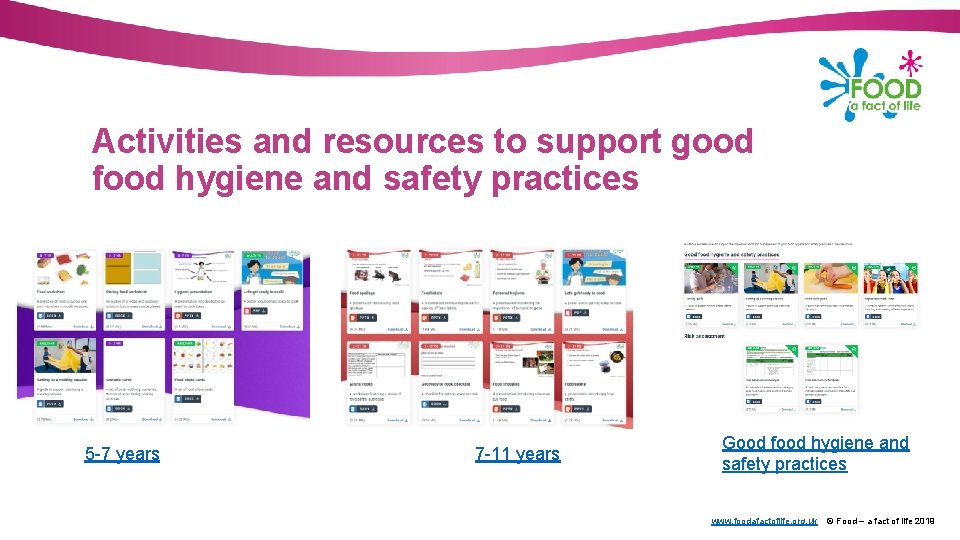
Activities and resources to support good food hygiene and safety practices 5 -7 years 7 -11 years Good food hygiene and safety practices www. foodafactoflife. org. uk © Food – a fact of life 2019
Further sources of information Education Scotland - Good Food Skills resources www. education. gov. scot Education Scotland - How good is our school? www. education. gov. scot Education Scotland – Summary of Food Education resources www. education. gov. scot Food Standards Scotland – www. foodstandards. gov. scot Food Standards Scotland education resources – www. foodstandards. gov. scot Health and Safety Executive – www. hse. gov. uk/scotland NHS inform – www. nhsinform. scot SSERC – https: //www. sserc. org. uk The Royal Environmental Health Institute of Scotland www. rehis. com www. foodafactoflife. org. uk © Food – a fact of life 2019
Now lets get ready to cook! Tie long hair at the back of your head Remove jumpers and roll up long sleeves Remove nail varnish (or wear gloves) Put on an apron Remove jewellery Wash and dry hands www. foodafactoflife. org. uk © Food – a fact of life 2019
Food hygiene and safety in the primary classroom For further information, go to: www. foodafactoflife. org. uk © Food – a fact of life 2019