
FOOD EATING INVENTORY 1 What is the one
- Slides: 16
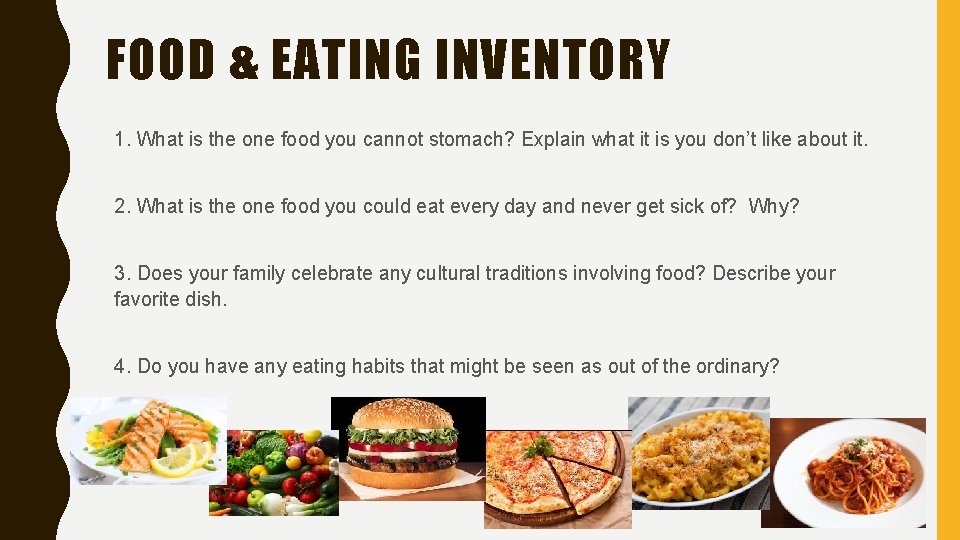
FOOD & EATING INVENTORY 1. What is the one food you cannot stomach? Explain what it is you don’t like about it. 2. What is the one food you could eat every day and never get sick of? Why? 3. Does your family celebrate any cultural traditions involving food? Describe your favorite dish. 4. Do you have any eating habits that might be seen as out of the ordinary?
HUNGER & EATING CHAPTER 11: MOTIVATION
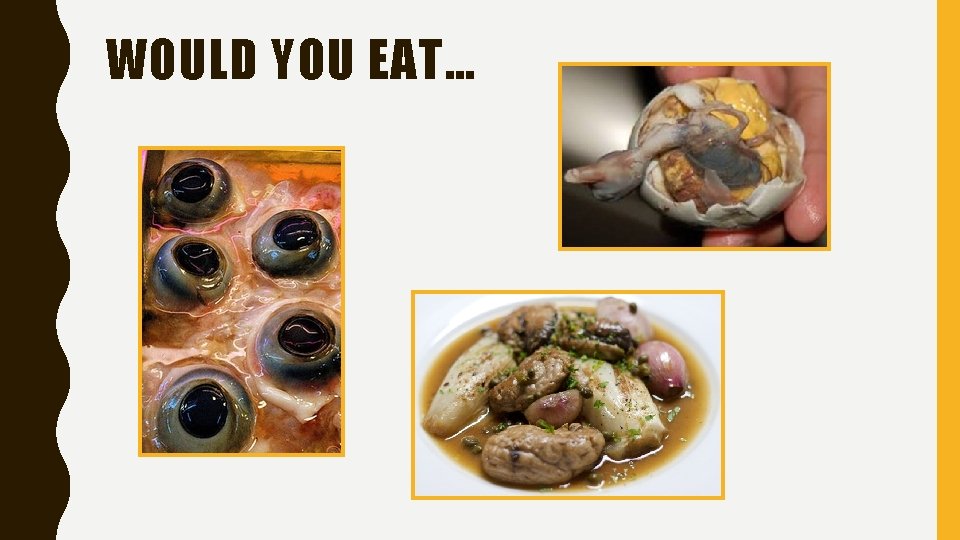
WOULD YOU EAT…
MOTIVATIONS TO EAT INVENTORY • To cope with negative affect (emotions) Add the numbers you placed in response to items 5, 7, 9, 10, and 11. • To be social Add the numbers you placed in response to items 4, 12, 13, 14, and 18. • To comply with others’ expectations Add the numbers you placed in response to items 15, 16, 17, 19, and 20. • To enhance pleasure Add the numbers in response to items 1, 2, 3, 6, and 8.
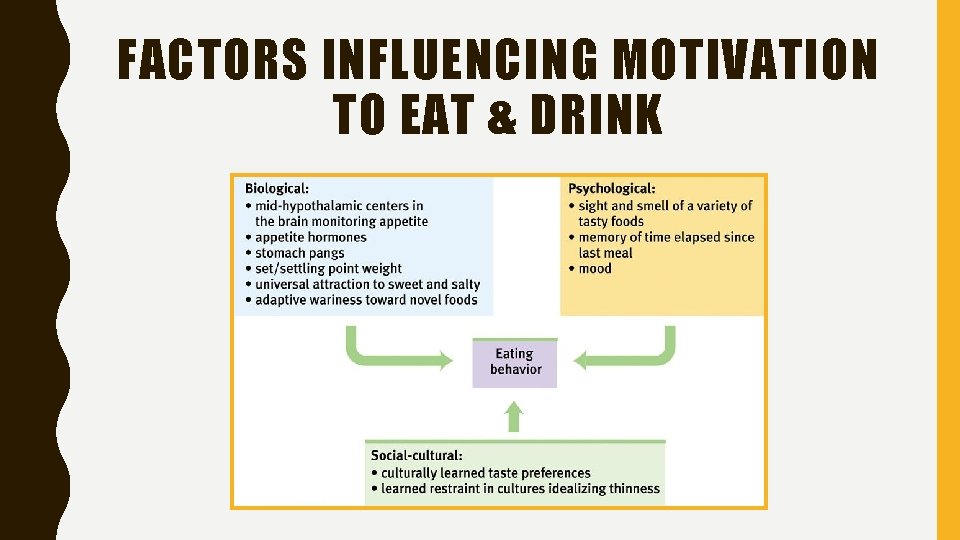
FACTORS INFLUENCING MOTIVATION TO EAT & DRINK
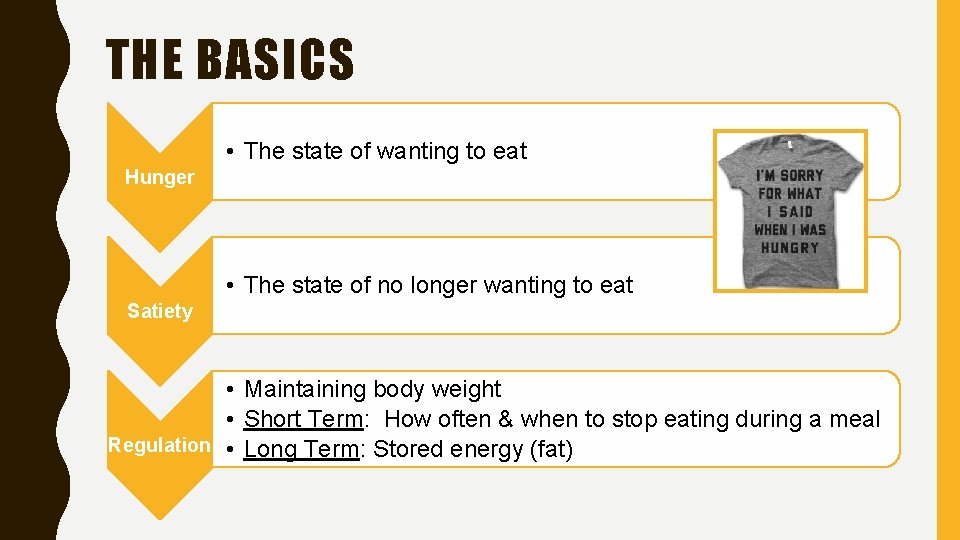
THE BASICS • The state of wanting to eat Hunger • The state of no longer wanting to eat Satiety • Maintaining body weight • Short Term: How often & when to stop eating during a meal Regulation • Long Term: Stored energy (fat)
BIOLOGICAL BASES OF HUNGER
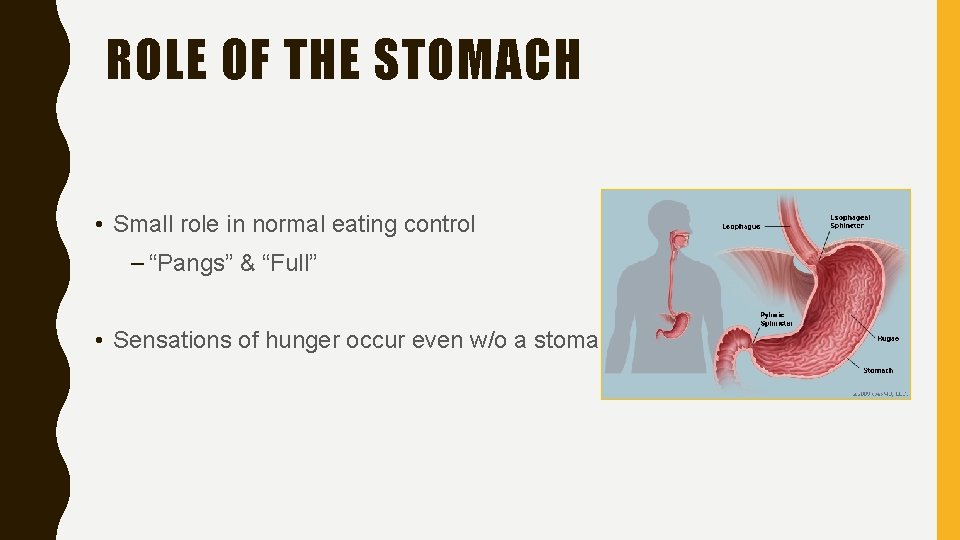
ROLE OF THE STOMACH • Small role in normal eating control – “Pangs” & “Full” • Sensations of hunger occur even w/o a stomach
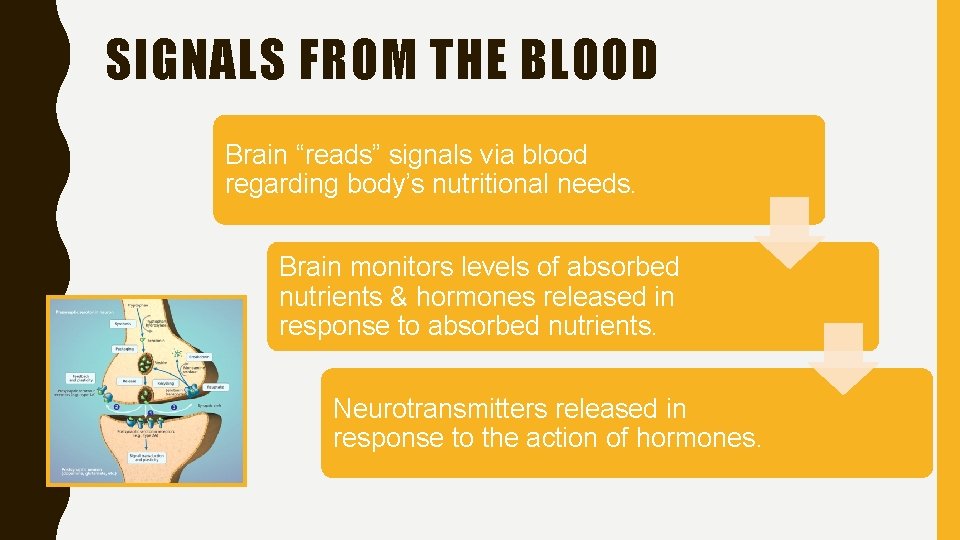
SIGNALS FROM THE BLOOD Brain “reads” signals via blood regarding body’s nutritional needs. Brain monitors levels of absorbed nutrients & hormones released in response to absorbed nutrients. Neurotransmitters released in response to the action of hormones.
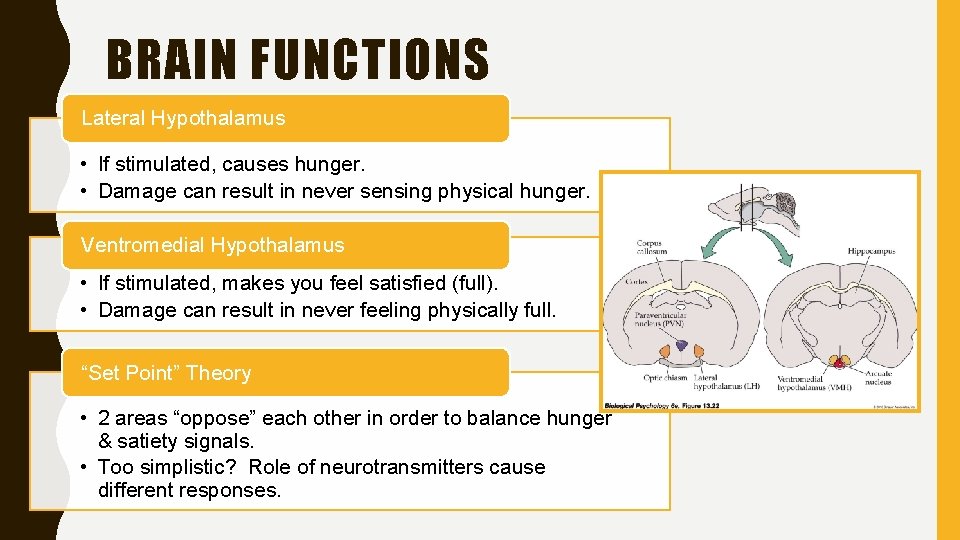
BRAIN FUNCTIONS Lateral Hypothalamus • If stimulated, causes hunger. • Damage can result in never sensing physical hunger. Ventromedial Hypothalamus • If stimulated, makes you feel satisfied (full). • Damage can result in never feeling physically full. “Set Point” Theory • 2 areas “oppose” each other in order to balance hunger & satiety signals. • Too simplistic? Role of neurotransmitters cause different responses.
PSYCHOLOGICAL BASES OF HUNGER
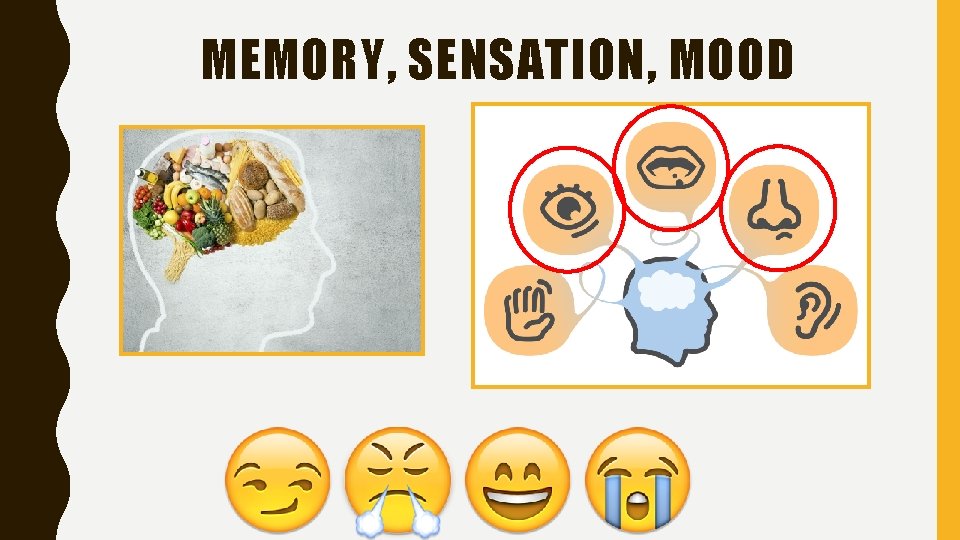
MEMORY, SENSATION, MOOD
SOCIAL/CULTURAL FACTORS
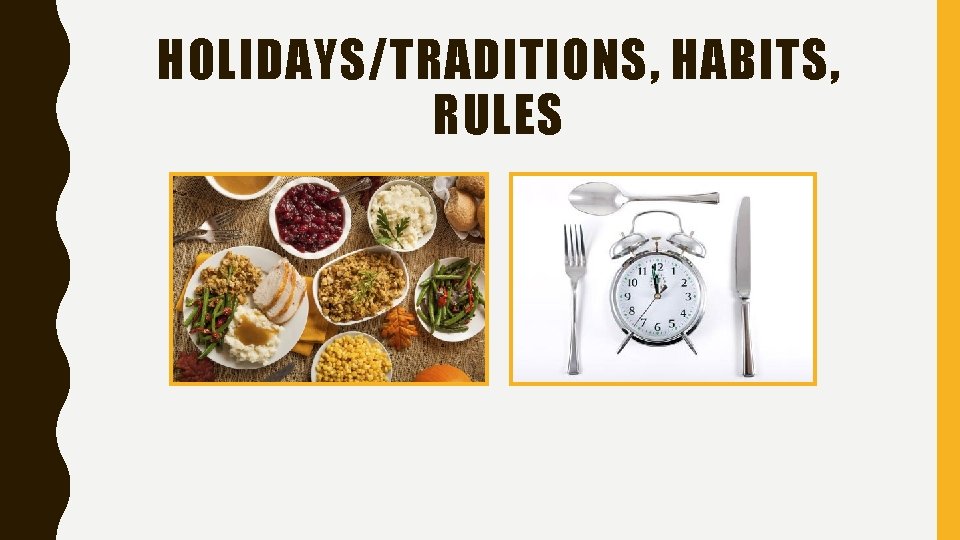
HOLIDAYS/TRADITIONS, HABITS, RULES
EATING DISORDERS REVIEW OBJECTIVE 10
“ACCOUNTING FOR TASTE” • Applying evolutionary theory, what practices of our early ancestors impacted our current eating habits? • What is neophobia and what are the potential causes? • Describe how personality & learning play a role in food selection. • Explain how someone can change the way they taste food.