
Food Costing Pricing of Food Why is one
- Slides: 12
Food Costing
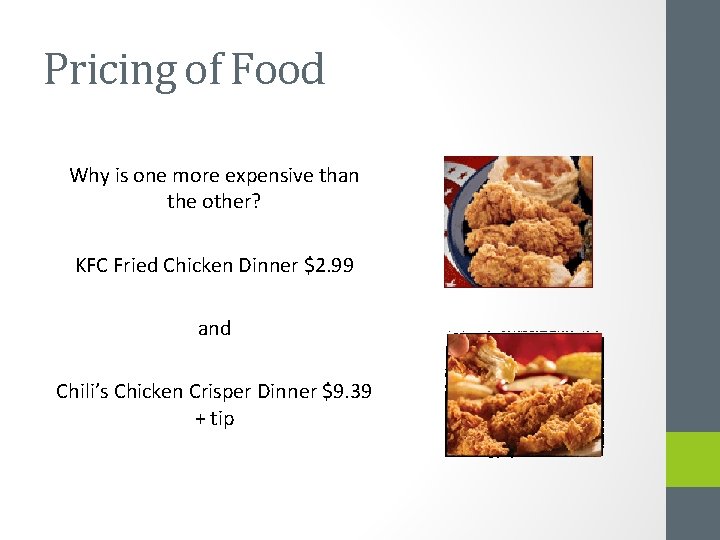
Pricing of Food Why is one more expensive than the other? KFC Fried Chicken Dinner $2. 99 and Chili’s Chicken Crisper Dinner $9. 39 + tip
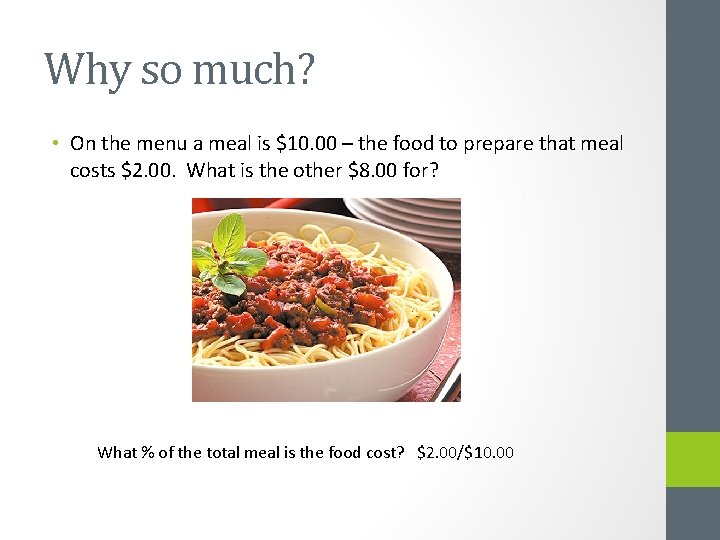
Why so much? • On the menu a meal is $10. 00 – the food to prepare that meal costs $2. 00. What is the other $8. 00 for? What % of the total meal is the food cost? $2. 00/$10. 00
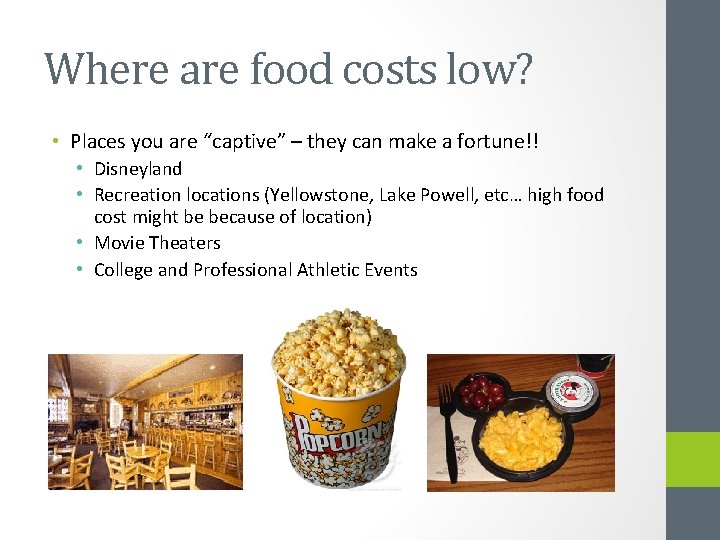
Where are food costs low? • Places you are “captive” – they can make a fortune!! • Disneyland • Recreation locations (Yellowstone, Lake Powell, etc… high food cost might be because of location) • Movie Theaters • College and Professional Athletic Events
Where are food costs high? • Places where they make more money other ways but they need to get you to come – so the food is cheap. They make little or no money from the food, but when you’re there you’ll spend money in other ways. • Las Vegas • Ikea
Food Cost Average • What is food cost percentage? It is the percentage of sales an operation budgets to spend on food products. • Why does it matter? You want to make a profit so you have to charge the correct price to insure you don’t lose money. • The Average Food Cost is 28 -35% and depends on the food establishment, location, and so many other factors. • Most restaurants have a specific percent and manager and chefs must work hard to meet that percent and not exceed it. • Some meals like pasta might be less than 28% and some with lots of protein like steak might be higher than 42%, but it will average out.
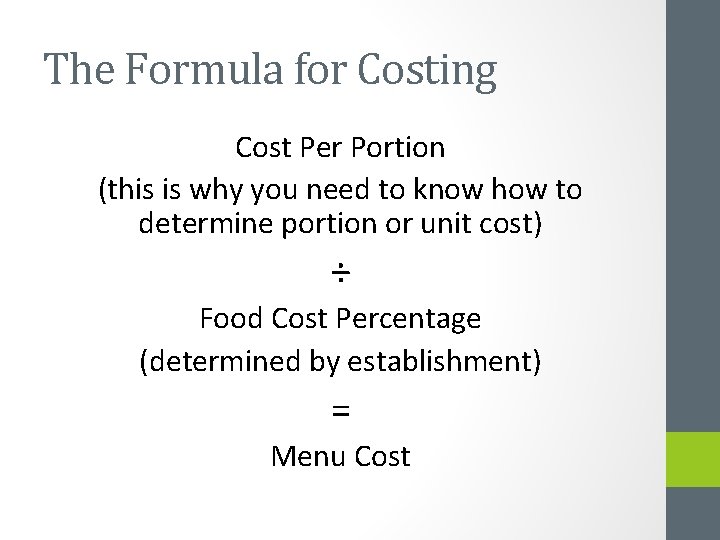
The Formula for Costing Cost Per Portion (this is why you need to know how to determine portion or unit cost) ÷ Food Cost Percentage (determined by establishment) = Menu Cost
Other factors that impact food cost • Spoilage is a major factor in purchasing, receiving, and storage. How can it happen at each of the above mentioned steps in the flow of food. • Employee theft. Is it always malicious or apparent? How to check it? • When preparing food you can cut down on food cost. What are some things you can be mindful of? • Waste. Can you use some waste in other ways? • Employee training. What do employees need to know? • In food service restaurant learn to forecast sales. How does proper forecasting save a restaurant money?
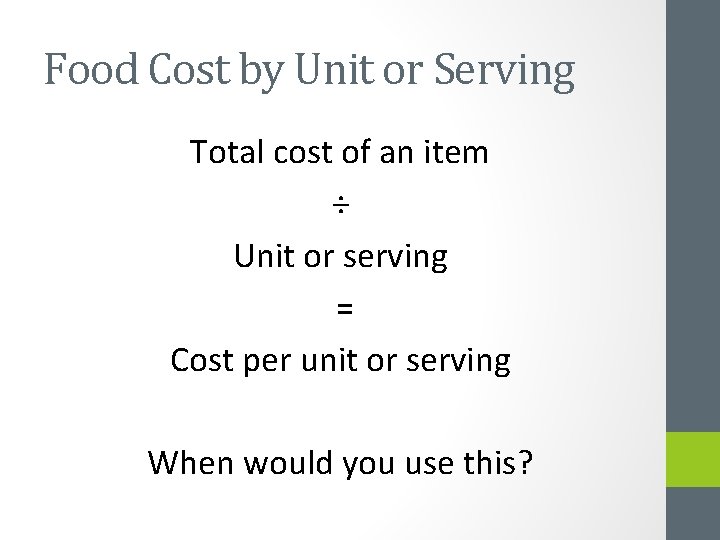
Food Cost by Unit or Serving Total cost of an item ÷ Unit or serving = Cost per unit or serving When would you use this?
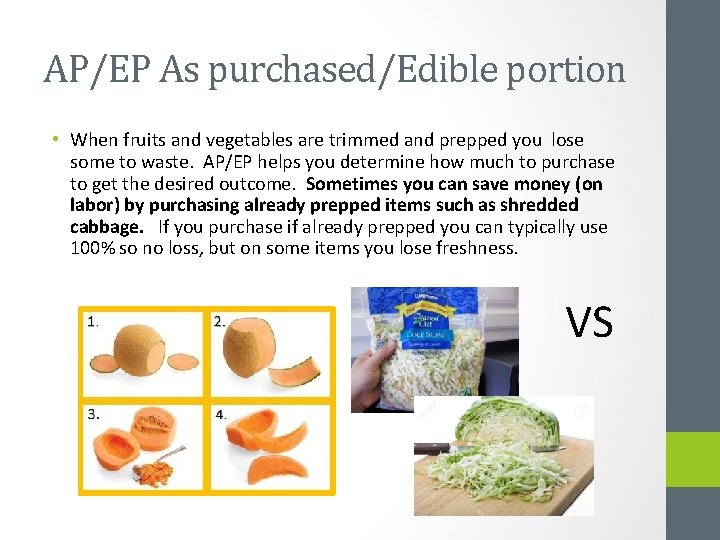
AP/EP As purchased/Edible portion • When fruits and vegetables are trimmed and prepped you lose some to waste. AP/EP helps you determine how much to purchase to get the desired outcome. Sometimes you can save money (on labor) by purchasing already prepped items such as shredded cabbage. If you purchase if already prepped you can typically use 100% so no loss, but on some items you lose freshness. VS
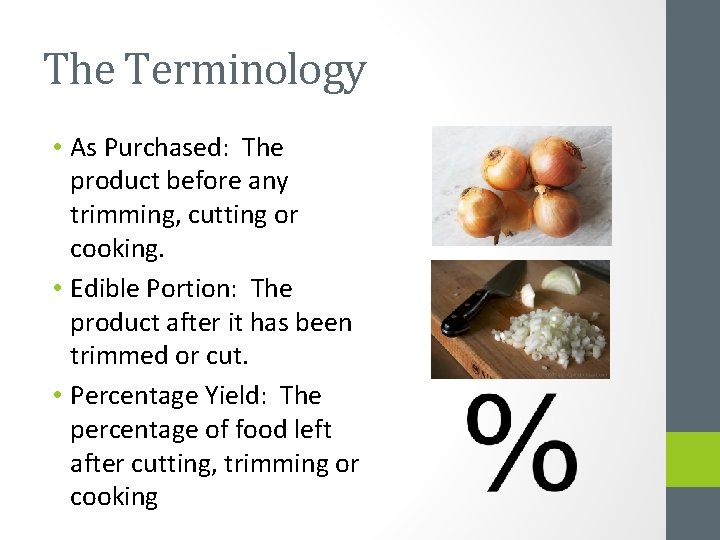
The Terminology • As Purchased: The product before any trimming, cutting or cooking. • Edible Portion: The product after it has been trimmed or cut. • Percentage Yield: The percentage of food left after cutting, trimming or cooking
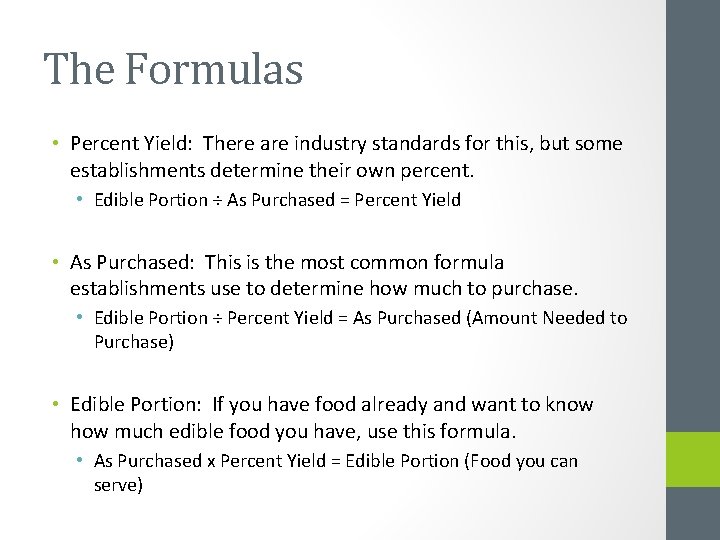
The Formulas • Percent Yield: There are industry standards for this, but some establishments determine their own percent. • Edible Portion ÷ As Purchased = Percent Yield • As Purchased: This is the most common formula establishments use to determine how much to purchase. • Edible Portion ÷ Percent Yield = As Purchased (Amount Needed to Purchase) • Edible Portion: If you have food already and want to know how much edible food you have, use this formula. • As Purchased x Percent Yield = Edible Portion (Food you can serve)