
Food Chains On the slides that follow notes

- Slides: 26
Food Chains On the slides that follow notes will be written in Red and should be copied down
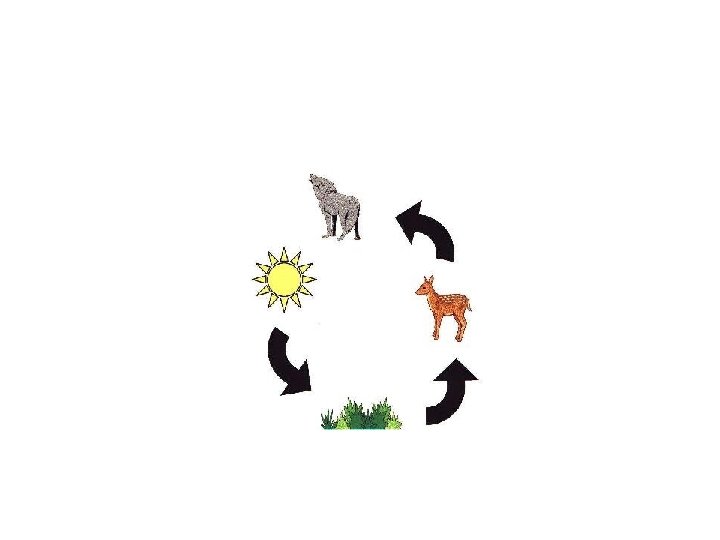
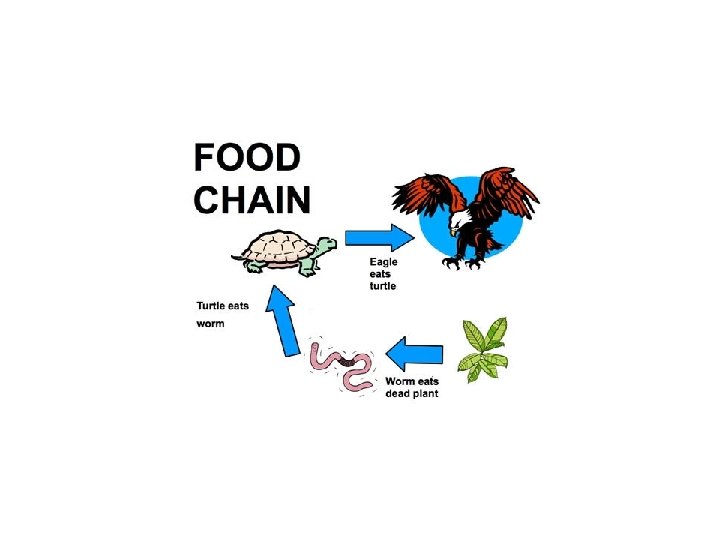
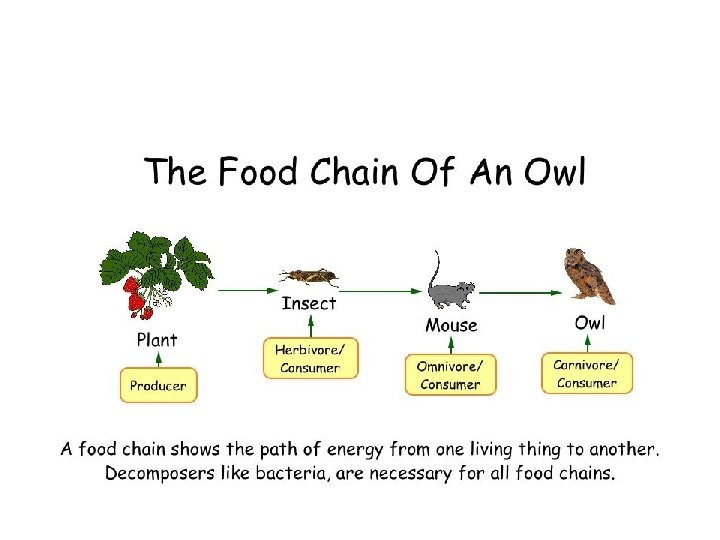
Food Chains • Show the movement of energy through a system. • Usually start with the producer (leave out the sun) • Must include at least 3 organisms • Multiple labels can be applied • Organisms can be eating at multiple levels
• Each step in a food chain is called a trophic level • When counting trophic levels, count all living organisms but not the sun!
Create a food chain for: • Deer • Grass • Wolf
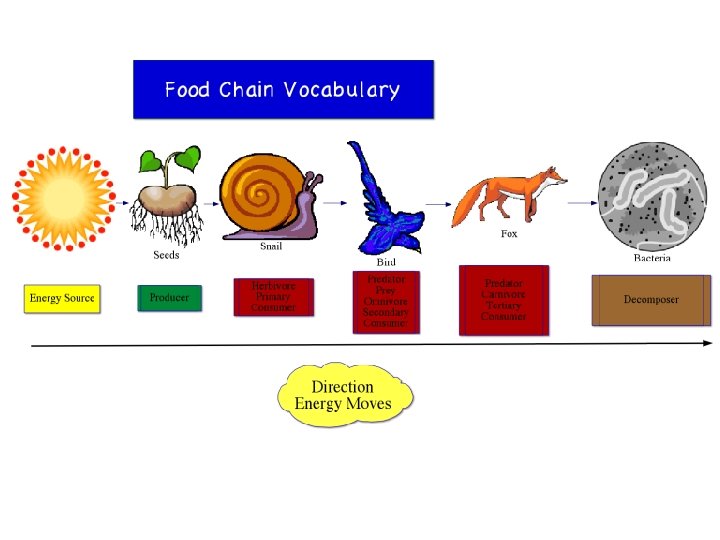
Terms to describe members • Producer=Autotroph= organisms that can use sunlight or chemicals to produce food for themselves and others • Consumer=Heterotroph=organisms that must obtain food by eating another organism (can eat producer or another consumer)
More terms • Herbivore=organism that only eats producers • Carnivore=organism that only eats other consumers • Omnivore=organism that eats both consumers and producers • Decomposer=organism that breaks down organic material (poop, dead body) usually bacteria and fungus (make soil when done) • Detritivores=organisms that feed on dead matter (make poop when done)
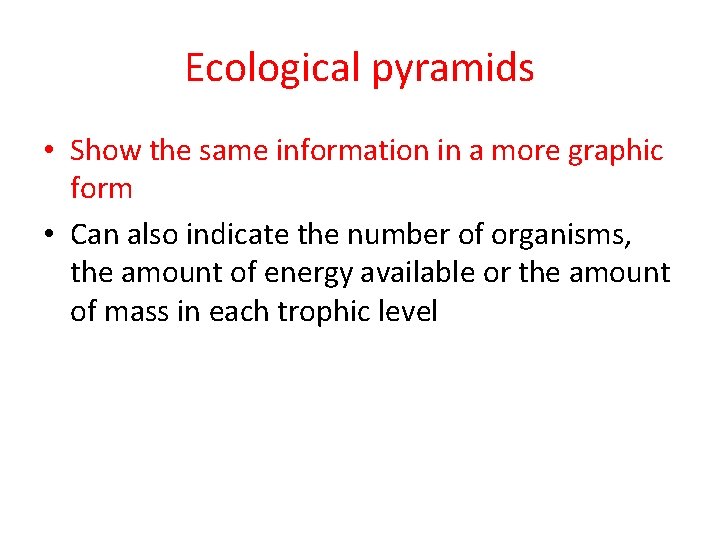
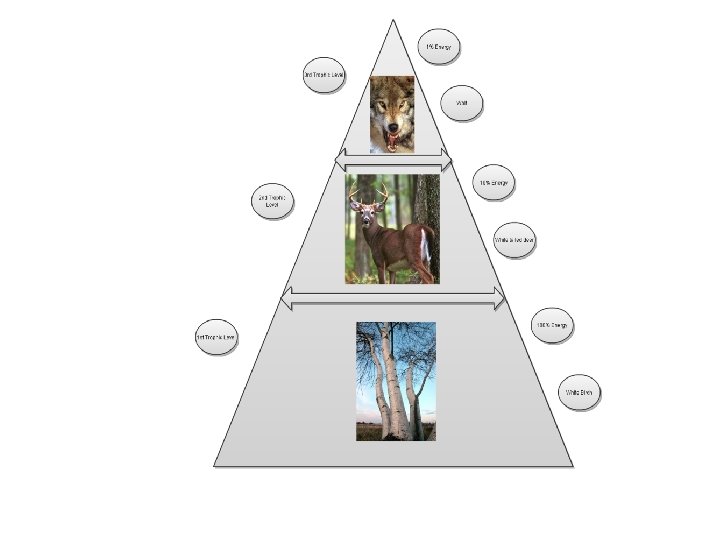
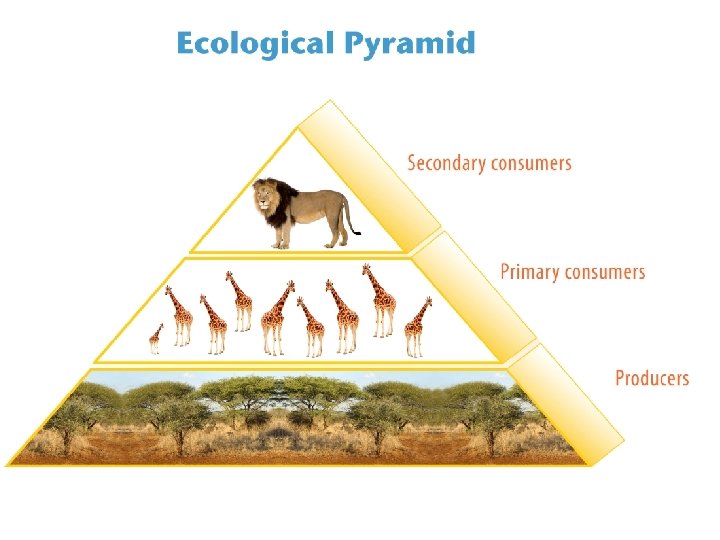
Ecological pyramids • Show the same information in a more graphic form • Can also indicate the number of organisms, the amount of energy available or the amount of mass in each trophic level
Create a food chain for: • • • Green plant Lady Bug insect Lizard Lynx Spider
Create a food chain for: • • Hawk Plant Turtle Worm
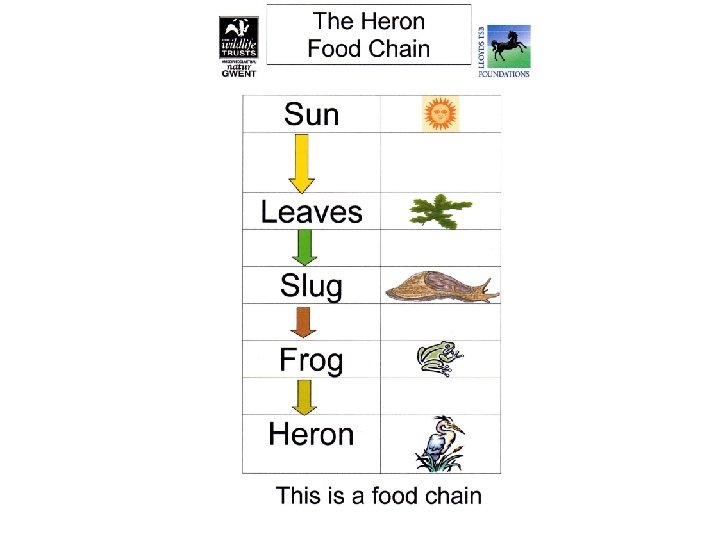
Create a food chain for: • • Frog Heron Leaves Slug
Create a food chain for: • • Grasshopper Mouse Owl Strawberry
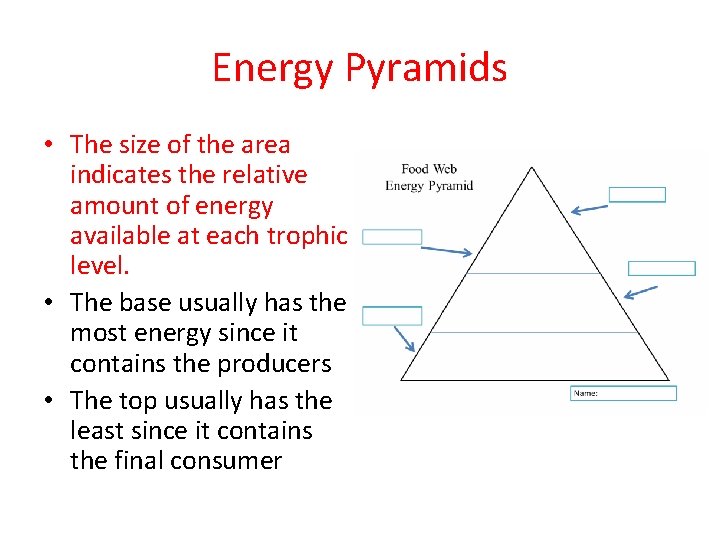
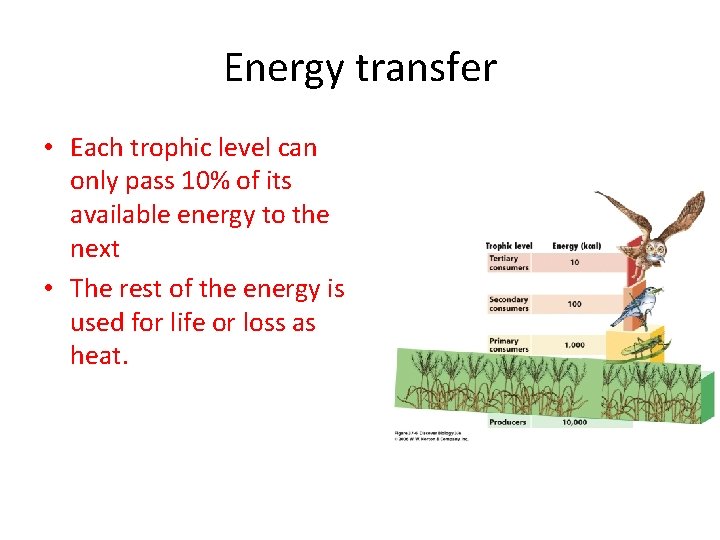
Energy Pyramids • The size of the area indicates the relative amount of energy available at each trophic level. • The base usually has the most energy since it contains the producers • The top usually has the least since it contains the final consumer
Create a ecological pyramid for: • Giraffe • Lion • Tree
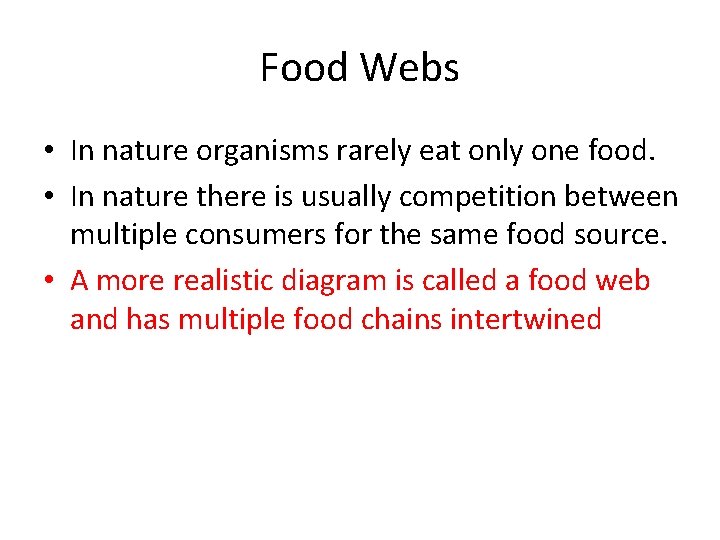
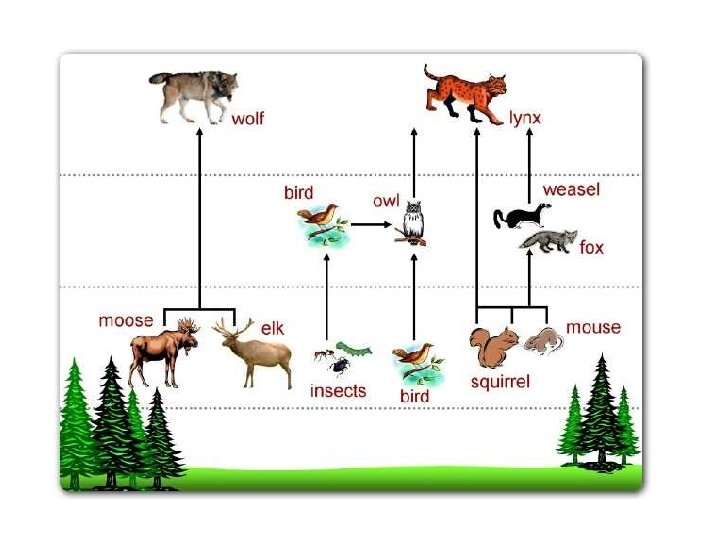
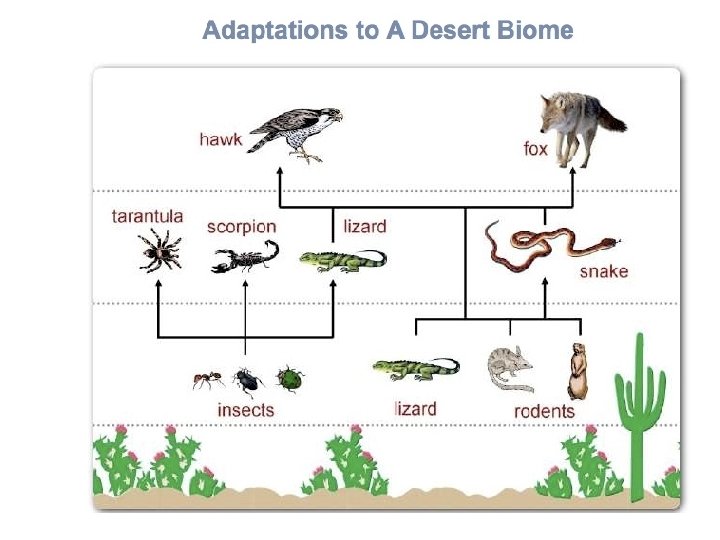
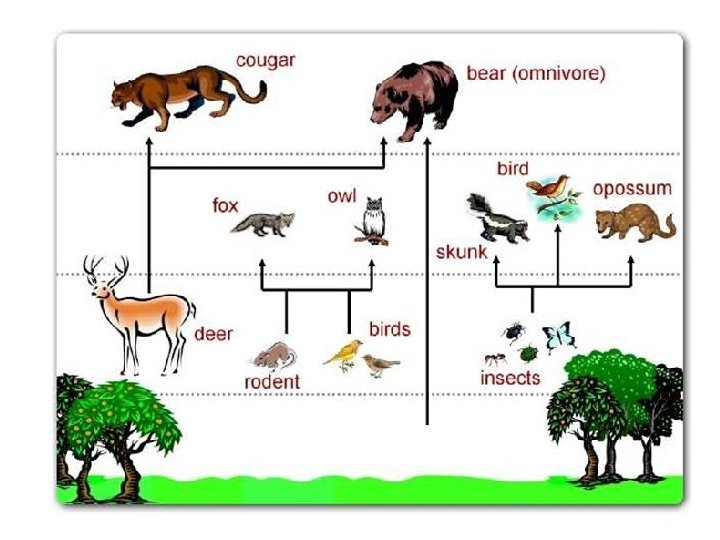
Food Webs • In nature organisms rarely eat only one food. • In nature there is usually competition between multiple consumers for the same food source. • A more realistic diagram is called a food web and has multiple food chains intertwined
Energy transfer • Each trophic level can only pass 10% of its available energy to the next • The rest of the energy is used for life or loss as heat.