
Food Chains Food Webs and the Transfer of
Food Chains, Food Webs, and the Transfer of Energy Symbiosis and Succession too!
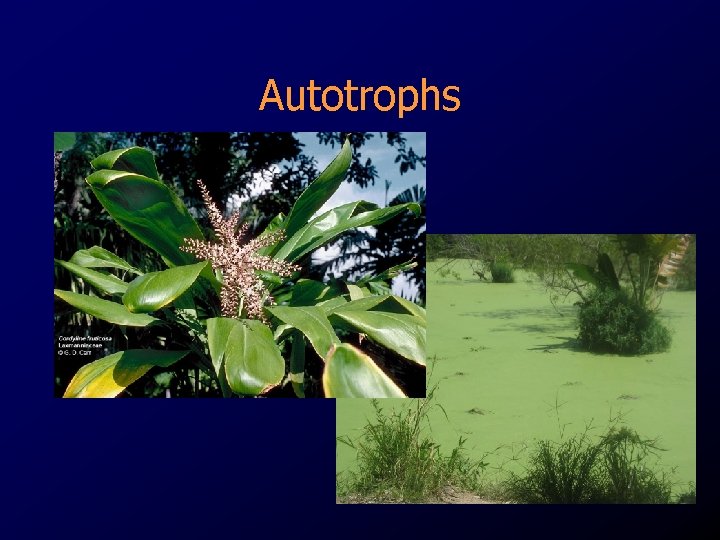
Autotrophs • A groups of organisms that can use the energy in sunlight to convert water and carbon dioxide into Glucose (food) • Autotrophs are also called Producers because they produce all of the food that heterotrophs use • Without autotrophs, there would be no life on this planet • Ex. Plants and Algae
Autotrophs
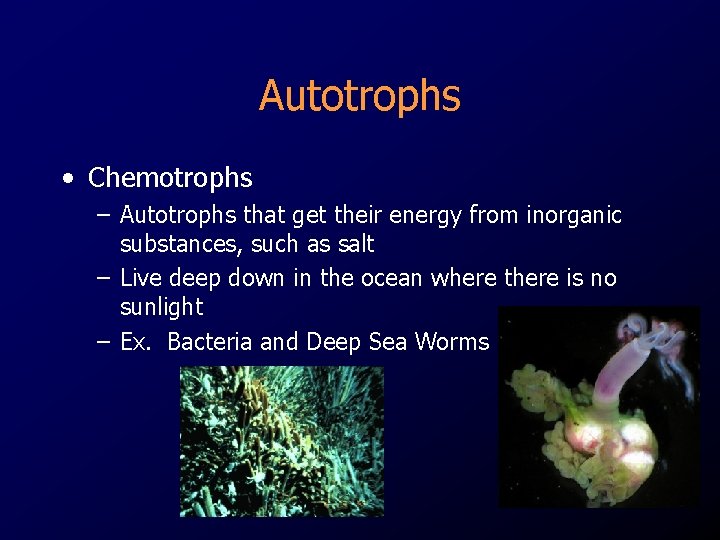
Autotrophs • Chemotrophs – Autotrophs that get their energy from inorganic substances, such as salt – Live deep down in the ocean where there is no sunlight – Ex. Bacteria and Deep Sea Worms
Heterotrophs • Organisms that do not make their own food • Another term for Heterotroph is consumer because they consume other organisms in order to live • Ex. Rabbits, Deer, Mushrooms
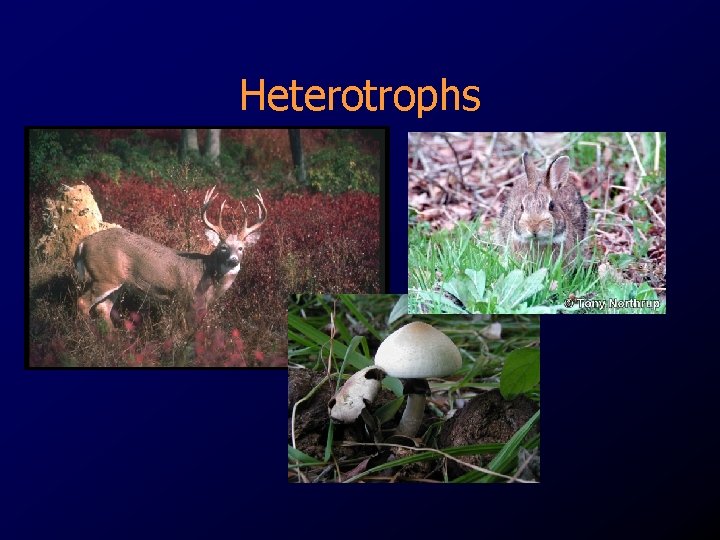
Heterotrophs
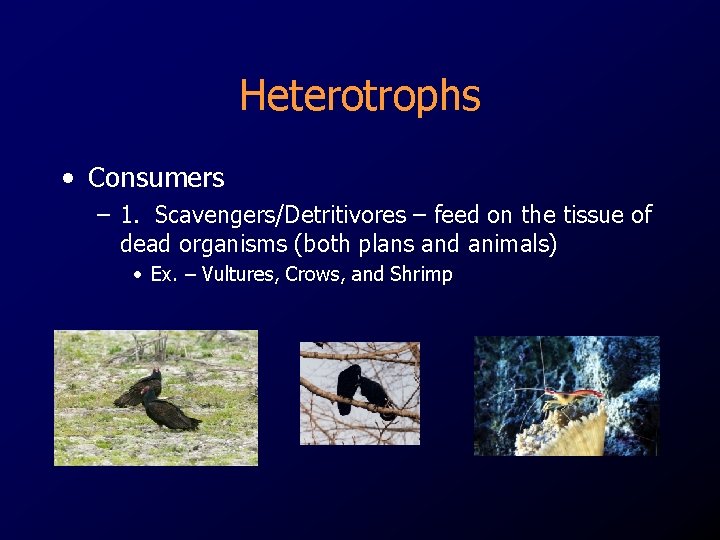
Heterotrophs • Consumers – 1. Scavengers/Detritivores – feed on the tissue of dead organisms (both plans and animals) • Ex. – Vultures, Crows, and Shrimp
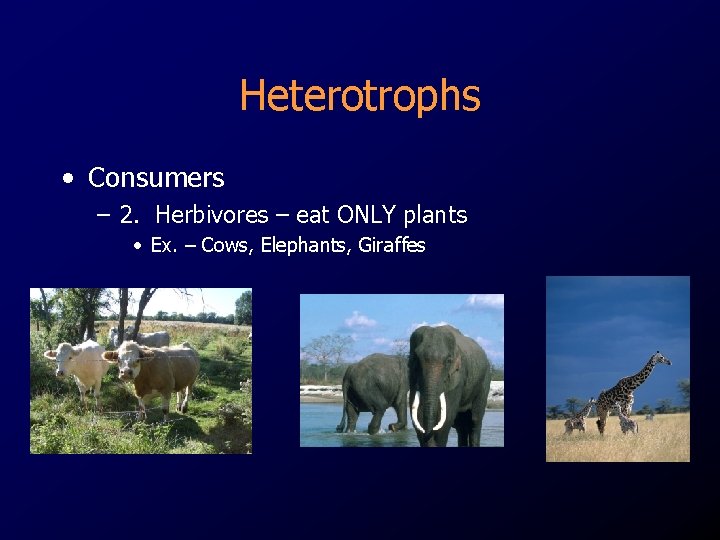
Heterotrophs • Consumers – 2. Herbivores – eat ONLY plants • Ex. – Cows, Elephants, Giraffes
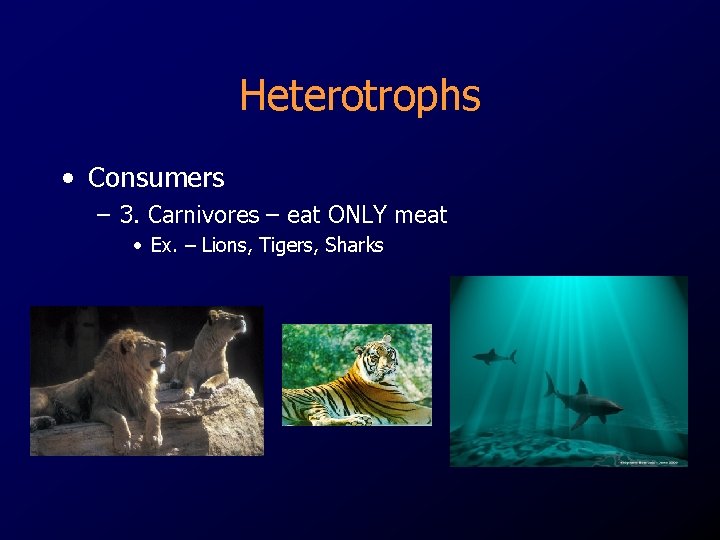
Heterotrophs • Consumers – 3. Carnivores – eat ONLY meat • Ex. – Lions, Tigers, Sharks
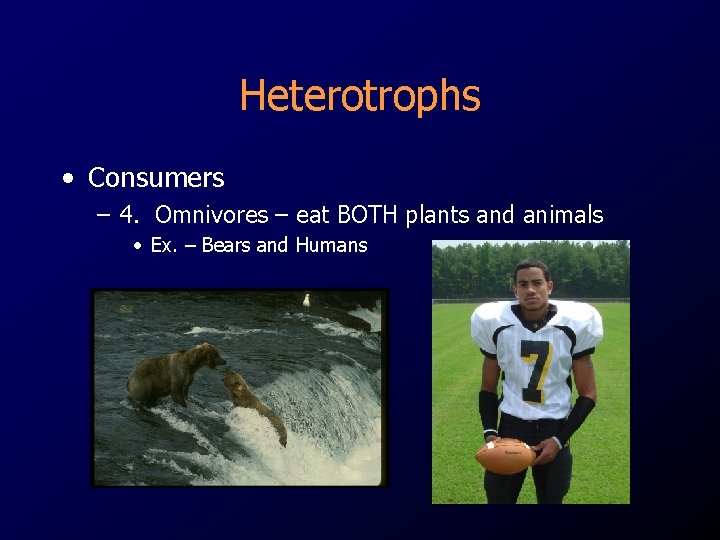
Heterotrophs • Consumers – 4. Omnivores – eat BOTH plants and animals • Ex. – Bears and Humans
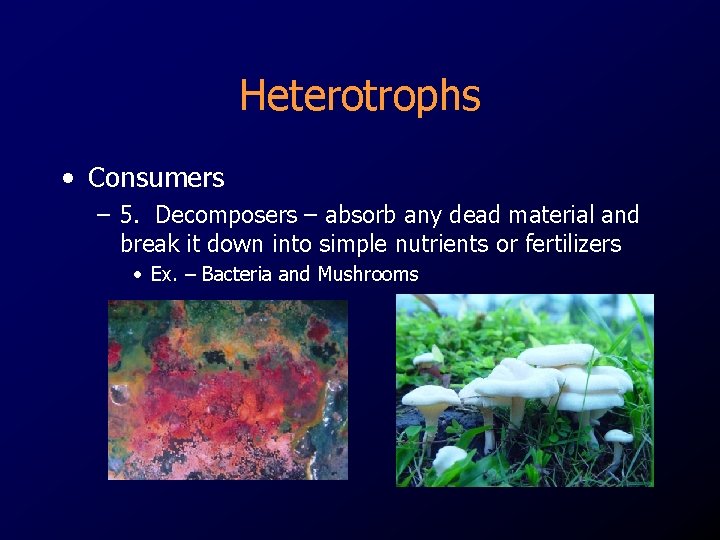
Heterotrophs • Consumers – 5. Decomposers – absorb any dead material and break it down into simple nutrients or fertilizers • Ex. – Bacteria and Mushrooms
Transfer of Energy • When a zebra eats the grass, it does not obtain all of the energy the grass has (much of it is not eaten) • When a lion eats a zebra, it does not get all of the energy from the zebra (much of it is lost as heat)
Transfer of Energy • The two (2) previous examples of energy transfer show that no organism EVER receives all of the energy from the organism they just ate • Only 10% of the energy from one trophic level is transferred to the next – this is called the 10% law
Trophic Levels • Energy moves from one organisms to another when it is eaten • Each step in this transfer of energy is know as a trophic level – The main trophic levels are producers, consumers, and decomposers
Food Chains • The energy flow from one trophic level to the other is know as a food chain • A food chain is simple and direct • It involves one organism at each trophic level – – Primary Consumers – eat autotrophs (producers) Secondary Consumers – eat the primary consumers Tertiary Consumers – eat the secondary consumers Decomposers – bacteria and fungi that break down dead organisms and recycle the material back into the environment
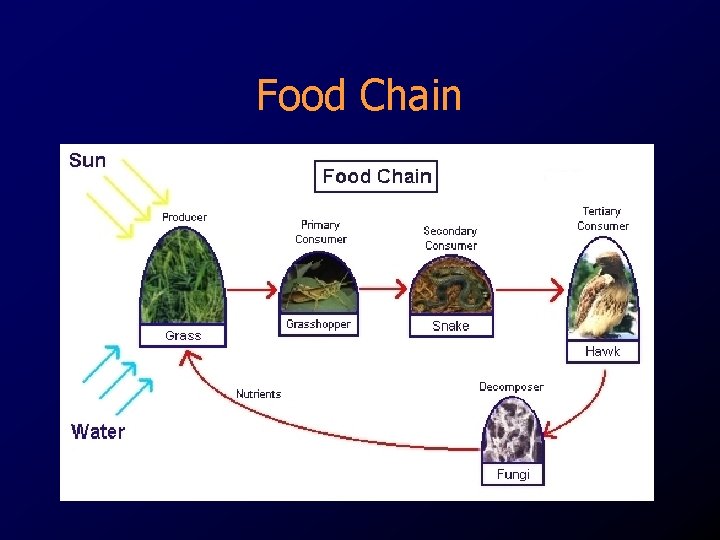
Food Chain
Food Web • Most organisms eat more than JUST one organism • When more organisms are involved it is known as a FOOD WEB • Food webs are more complex and involve lots of organisms
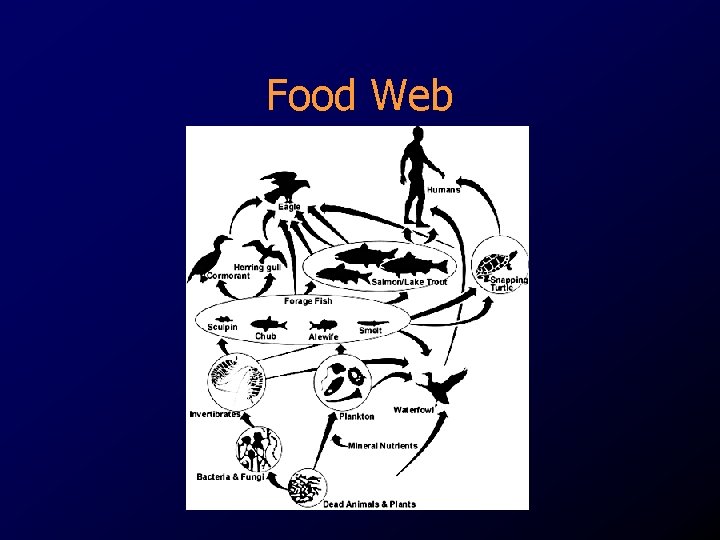
Food Web
Food Web • Notice that the arrow points in the direction of the energy transfer, NOT “what ate what”
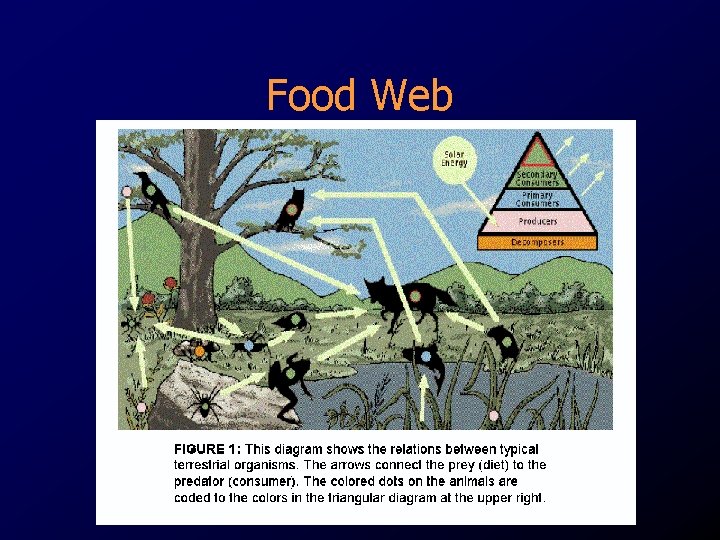
Food Web
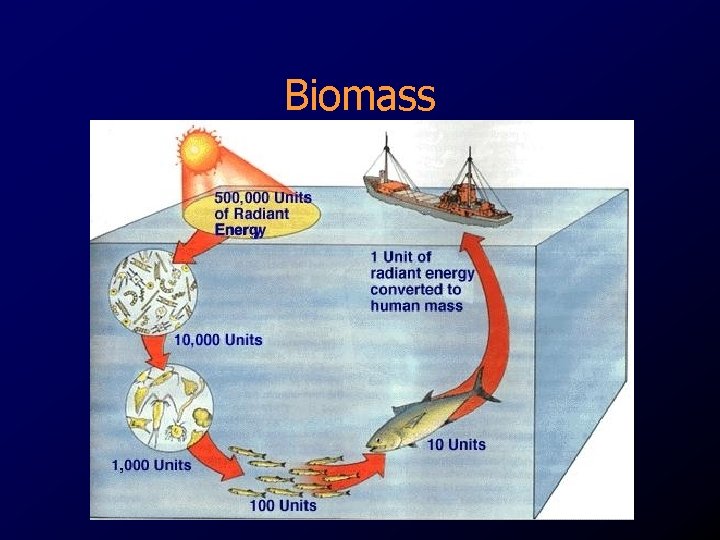
Biomass • The total mass of the organic matter at each trophic level is called biomass • Biomass is just another term for potential energy – energy that is to be eaten and used. • The transfer of energy from one level to another is very inefficient (10% Law)
Biomass
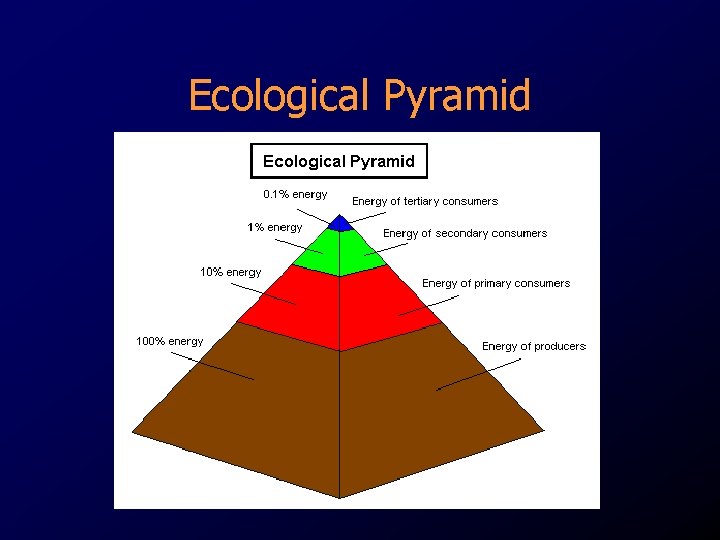
Ecological Pyramid • An ecological pyramid shows the relationship between consumers and producers at different trophic levels in an ecosystem • Shows the relative amounts of energy or matter contained at each trophic level • The Pyramid shows which level has the most energy and the highest number of organisms
Ecological Pyramid
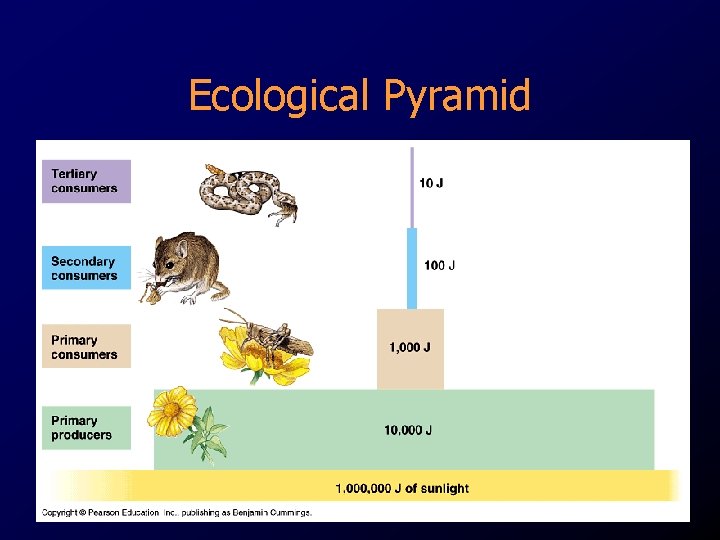
Ecological Pyramid
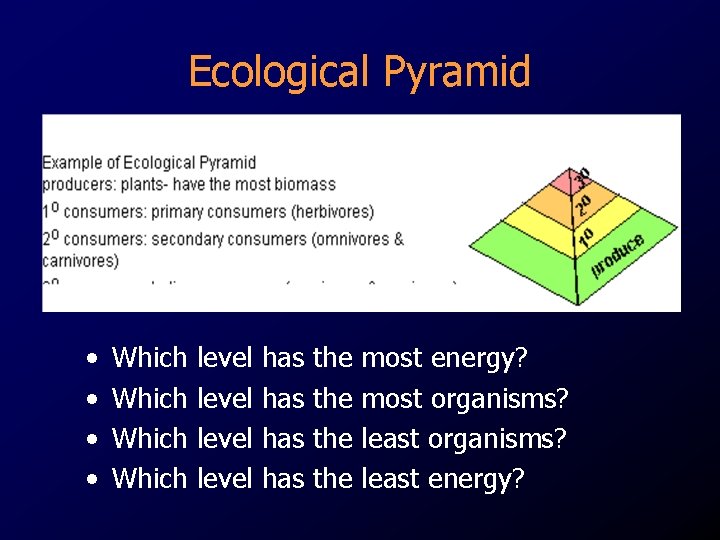
Ecological Pyramid • • Which level has has the the most energy? most organisms? least energy?
Symbiosis • A close and permanent association between organisms of different species – Mutualism – a relationship in which both organisms benefit from each other • Example: Birds eating pest off a rhino’s back – Commensalism – a relationship in which one organism benefits and the other is not affected • Example: Barnacles on a whale – Parasitism – A relationship in which one organism benefits and the other is harmed • Example: Ticks on a dog
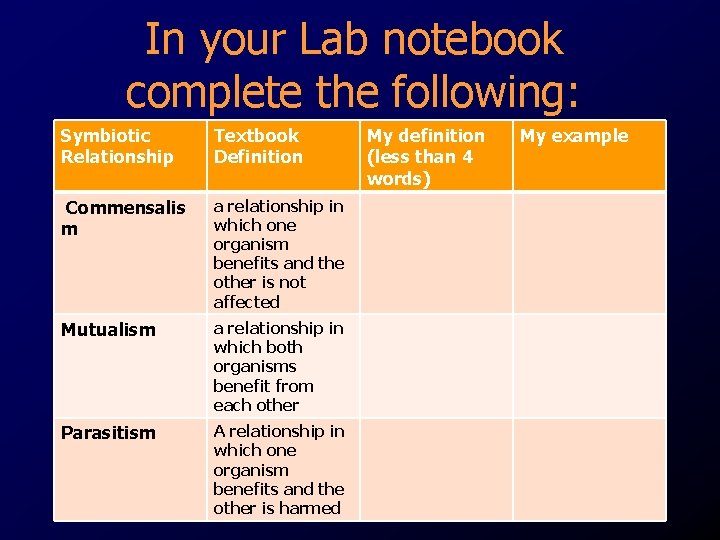
In your Lab notebook complete the following: Symbiotic Relationship Textbook Definition Commensalis m a relationship in which one organism benefits and the other is not affected Mutualism a relationship in which both organisms benefit from each other Parasitism A relationship in which one organism benefits and the other is harmed My definition (less than 4 words) My example
Ecological Succession: Some Definitions • the gradual and directional process of species change in a community • biotic communities change through time in response to many influences: – climatic change – disturbances – invasion of species from other areas • Eventually, succession leads to a climax community
Primary Succession • the processes and progress involved in changing an area from one lacking any community (no plants, no animals, no insects, no seeds, etc. ) to one consisting of individuals, populations, communities, and ecosystems. • the arrival of life in an area where no community previously existed.
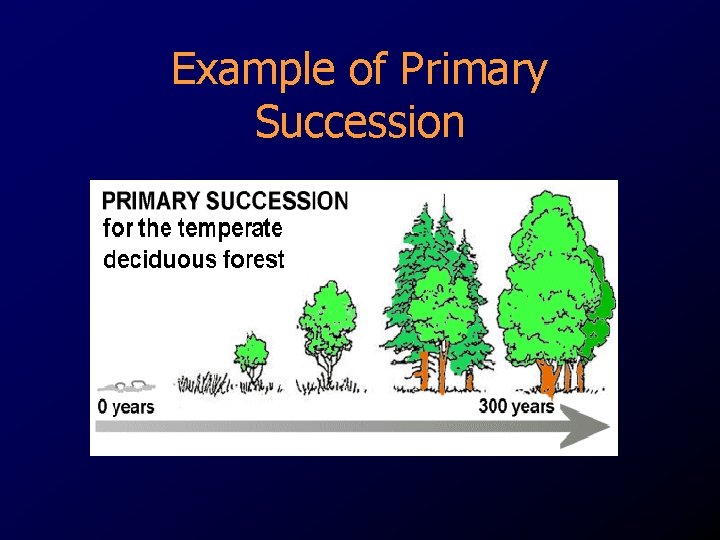
Example of Primary Succession
Secondary Succession • The arrival of new species in an area that already has life. • Results in the transition of a community from pioneer species to climax species. • Because soil may already be present, the rate of secondary succession is faster than primary succession. • Secondary succession also indicates changes in community composition following disturbances.
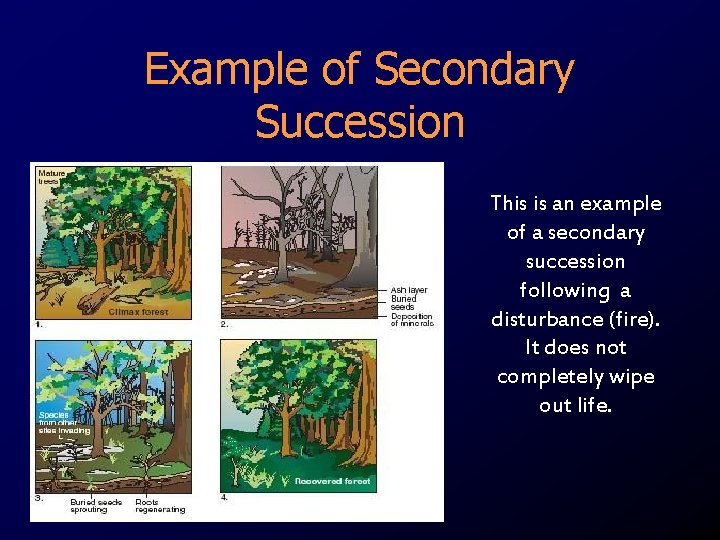
Example of Secondary Succession This is an example of a secondary succession following a disturbance (fire). It does not completely wipe out life.
What is a Pioneer Species? • The first species to colonize an area (usually lichens and mosses but sometimes higher plants), beginning the process of soil formation.
What is Climax Community? A community that remains fairly constant in species composition if the land climate are undisturbed. These are the communities that characterize the various biomes.
A summary of changes that occur during succession: • Pioneer species colonize a bare or disturbed site. Soil building. • Changes in the physical environment occur (e. g. , light, moisture). • New species of plants displace existing plants because their seedlings are better able to become established in the changed environment. • Newly arriving species alter the physical conditions, often in ways that enable other species to become established. • Animals come in with or after the plants they need to survive. • Eventually a climax community that is more or less stable will become established and have the ability to reproduce itself. • Disturbances will start the process of succession again.
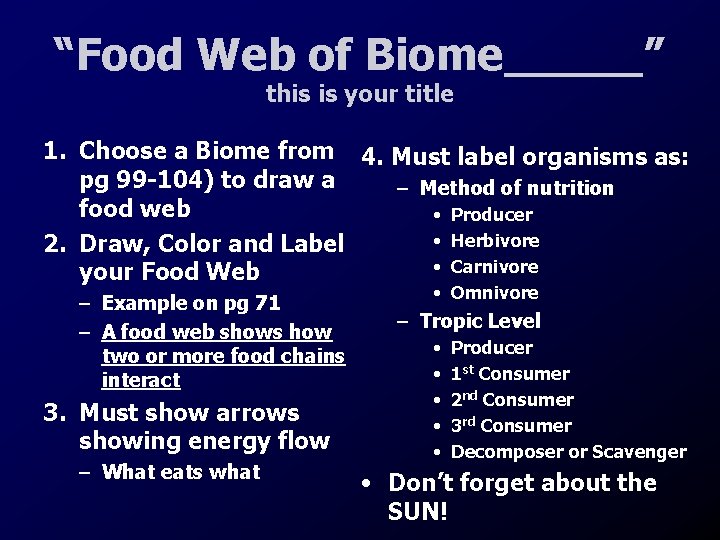
“Food Web of Biome_____” this is your title 1. Choose a Biome from 4. Must label organisms as: pg 99 -104) to draw a – Method of nutrition food web • Producer • Herbivore 2. Draw, Color and Label • Carnivore your Food Web – Example on pg 71 – A food web shows how two or more food chains interact 3. Must show arrows showing energy flow – What eats what • Omnivore – Tropic Level • • • Producer 1 st Consumer 2 nd Consumer 3 rd Consumer Decomposer or Scavenger • Don’t forget about the SUN!
- Slides: 37