
Food Chain Flow of energy in an ecosystem
- Slides: 31
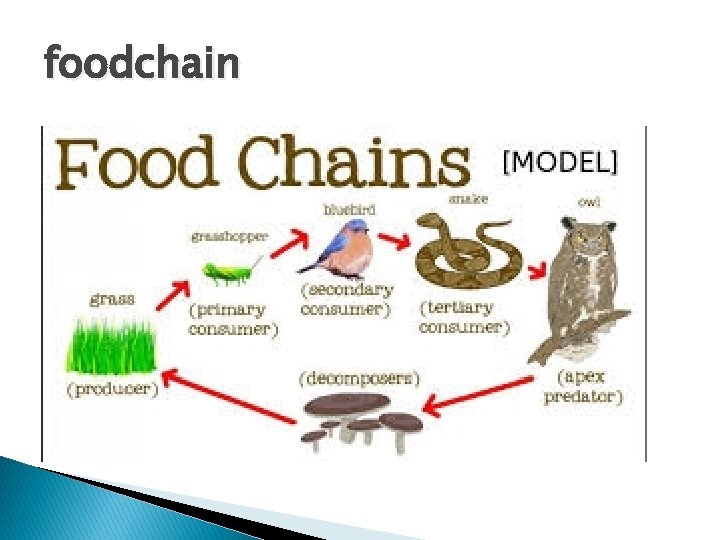
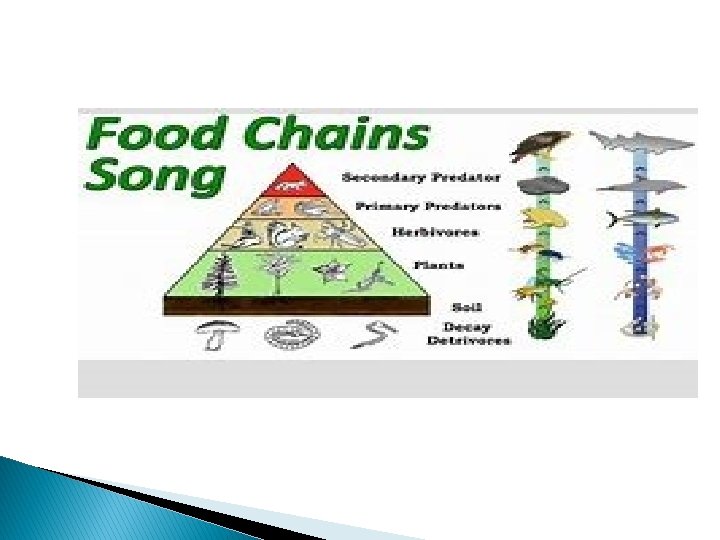
Food Chain � Flow of energy in an ecosystem is one way process. The sequence of organism through which the energy flows, is known as food chain. Food chain begin with plant life and end with Animal life. A foodchain is a linear network of links in a foodweb starting from producer organisms and ending at apex predator species
foodchain
Important factor • In a food chain each organism obtains energy from the one at the level below. • Plants are called producers because they create their own food through photosynthesis • Animals are consumers because they cannot create their own food, they must eat plants or other animals to get the energy that they need.
Tropical level in food chain 1. Producers 2. Consumers (i) Primary consumers (ii) Secondary consumers (iii) Tertiary consumers (iv) Quaternary consumers 3. Decomposers
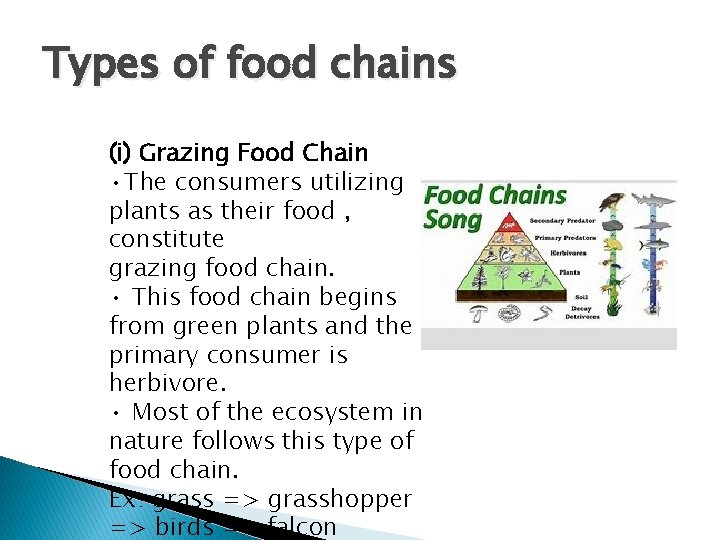
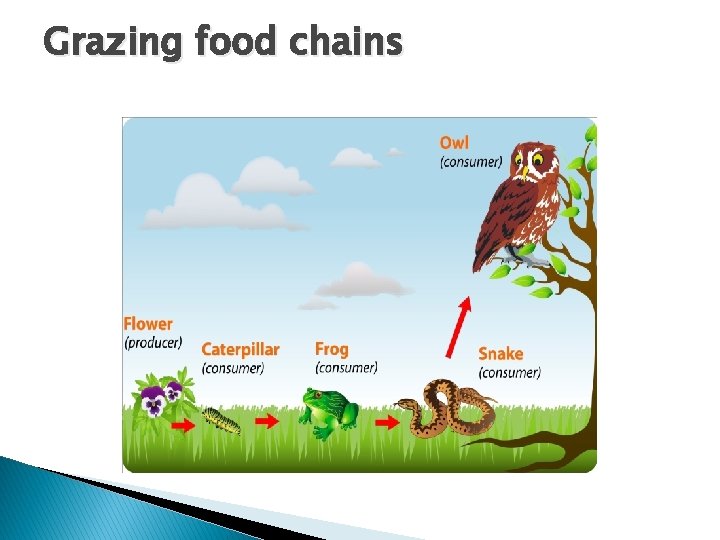
Types of food chains (i) Grazing Food Chain • The consumers utilizing plants as their food , constitute grazing food chain. • This food chain begins from green plants and the primary consumer is herbivore. • Most of the ecosystem in nature follows this type of food chain. Ex: grass => grasshopper => birds => falcon
Grazing food chains
Detritus food chains � This type of food chain starts from dead organic matter ofdecaying animals and plant bodies to the micro-organismsand then to detritus feeding organism and to other predators. The food chain depends mainly on the influx organic matter produced in another system. The organism of the food chain includes algae, , bacteria, fungi, protozoa, insects, nematodes etc.
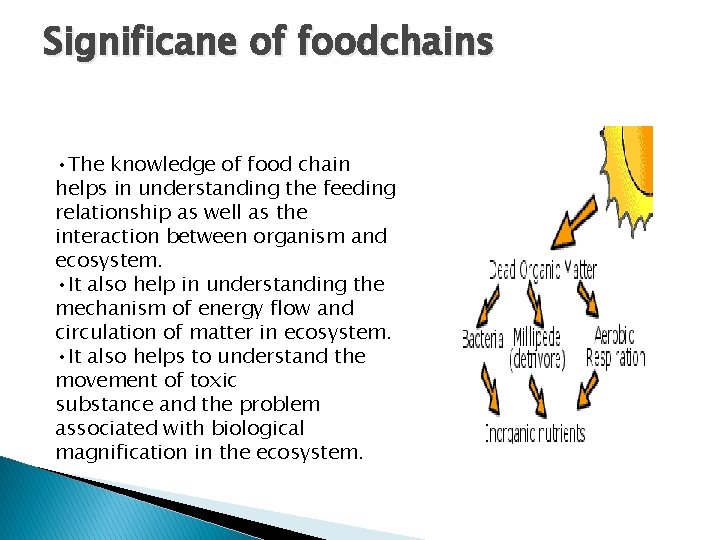
Significane of foodchains • The knowledge of food chain helps in understanding the feeding relationship as well as the interaction between organism and ecosystem. • It also help in understanding the mechanism of energy flow and circulation of matter in ecosystem. • It also helps to understand the movement of toxic substance and the problem associated with biological magnification in the ecosystem.
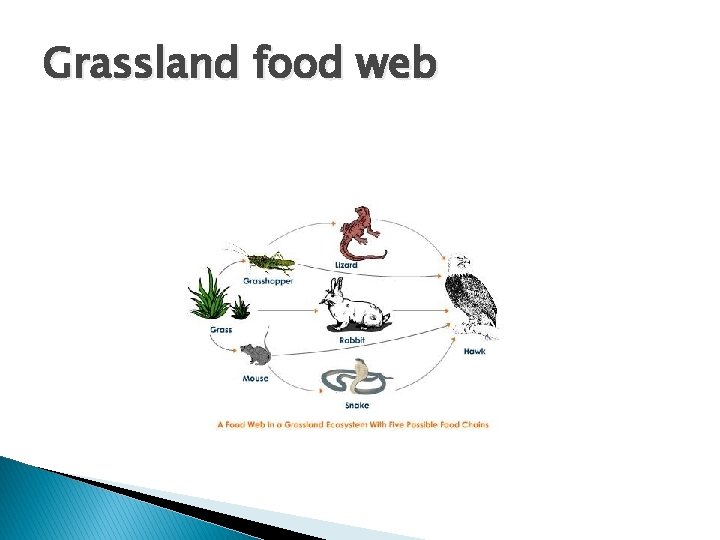
Food web � What is food web? � Food web can be defined as, "a network of foodchain which are interconnected at various tropic levels, so as to form a number of feeding connections among diff. organisms of a biotic community". � It is also known as consumer-resource system.
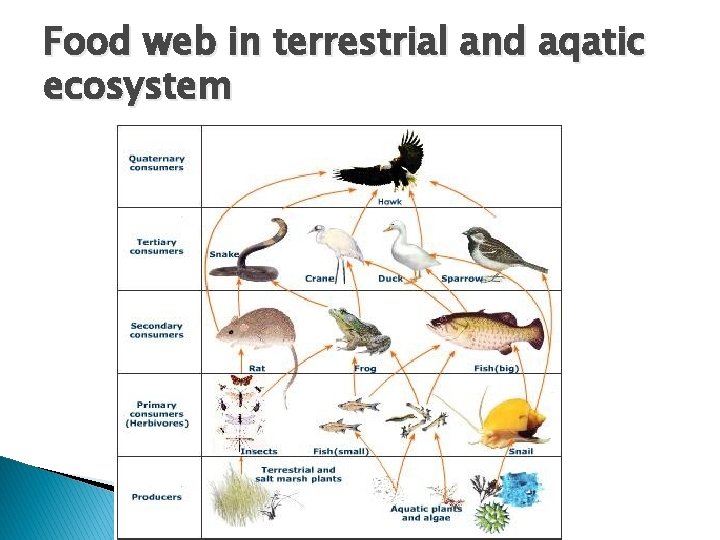
Important facts • A node represents an individual species, or a group of related species. • A link connects two nodes. Arrows represent links, and always go from prey to predator. The lowest tropic level are called basall speciies. The highest tropic level are called top predators. Movement of nutrients is cyclic but of energy is unidirectional and non-cyclic.
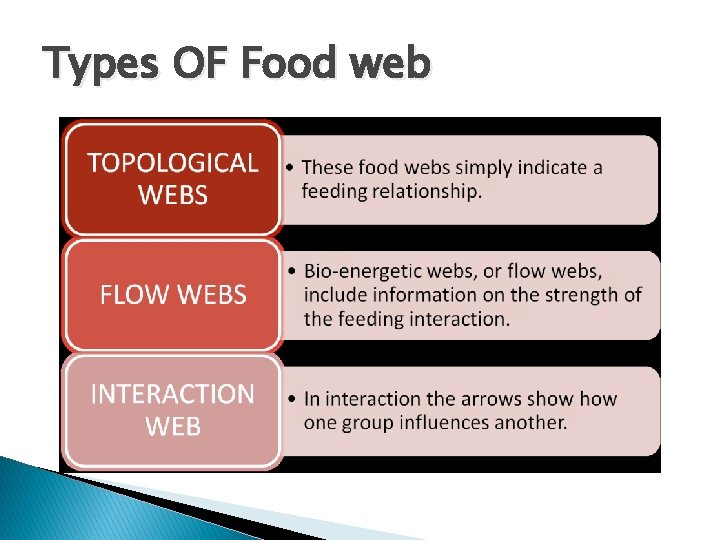
Types OF Food web
Different food web � Soil food web • Aquatic food web • Food web in forest • Food web of grassland • Food web in terrestrial and aquatic ecosystem
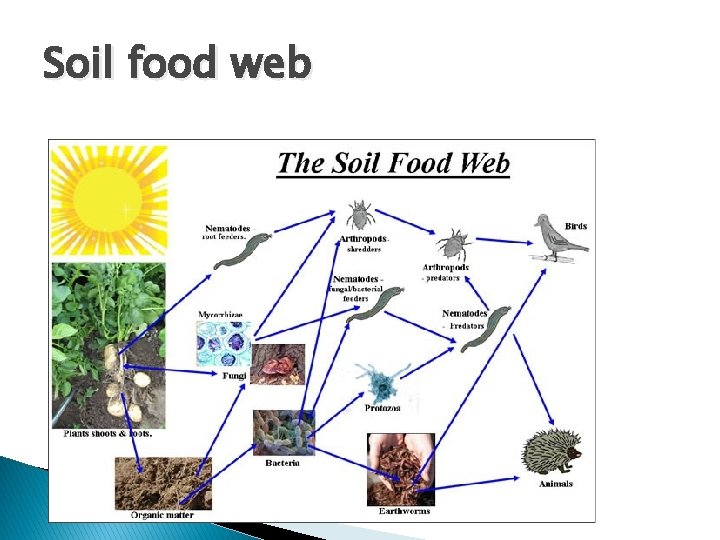
Soil food web
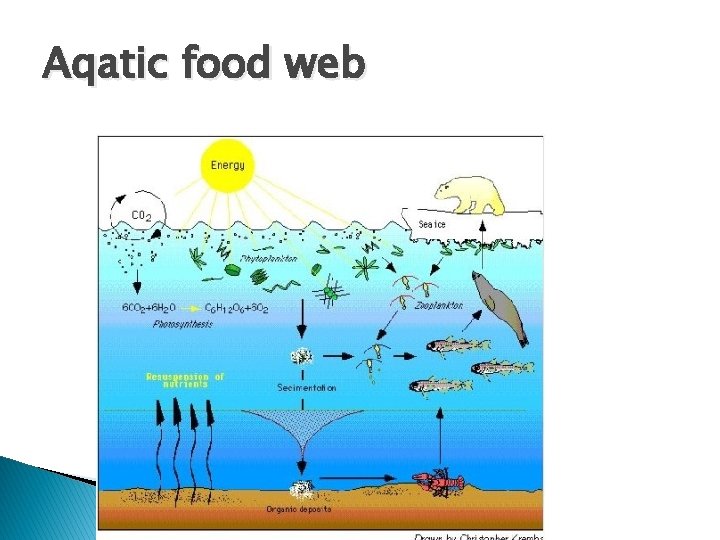
Aqatic food web
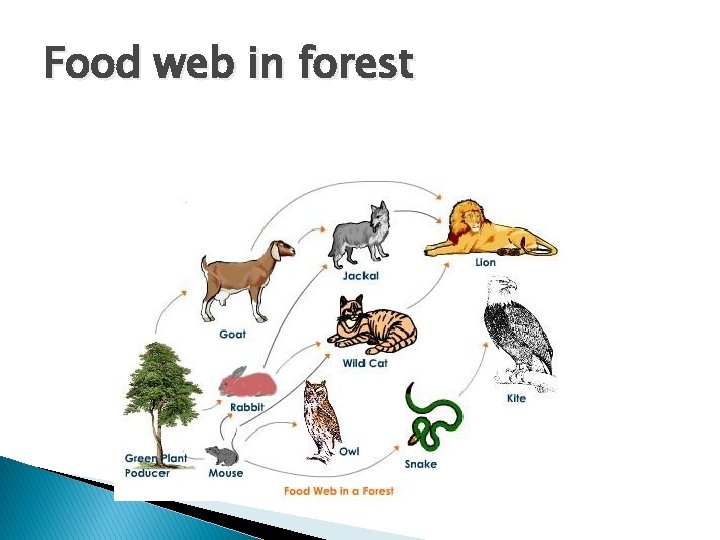
Food web in forest
Grassland food web
Food web in terrestrial and aqatic ecosystem
Significance of food web • Food webs distinguish levels of producers and consumers by identifying and defining the imp of animal relationship and food sources, beginning with primary producers such as , insects and herbivores. • Food webs are imp tools in understanding that plants are the foundation of all ecosystems and food chains, sustaining life by providing nourishment and oxygen needed for survival reproduction. • The food web provide stability to the ecosystem.
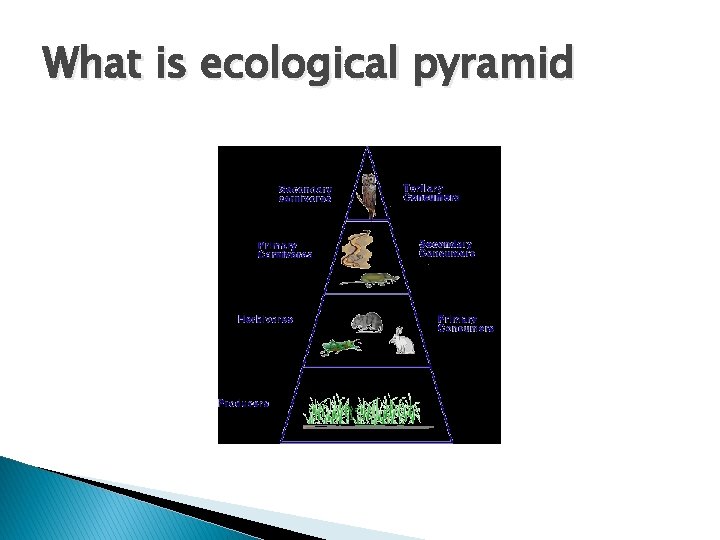
Ecological pyramids
What is ecological pyramid
Ecological pyramid � Ecological pyramid are graphical reprentation of trophic structure ecosystem. � Trophic level are the fedding position in foodchain primary producer, herbivores , secondary carnivores etc.
Types of ecological pyramid 1 2 3 Pyramid of numbers Pyramid of biomass Pyramid of productivity
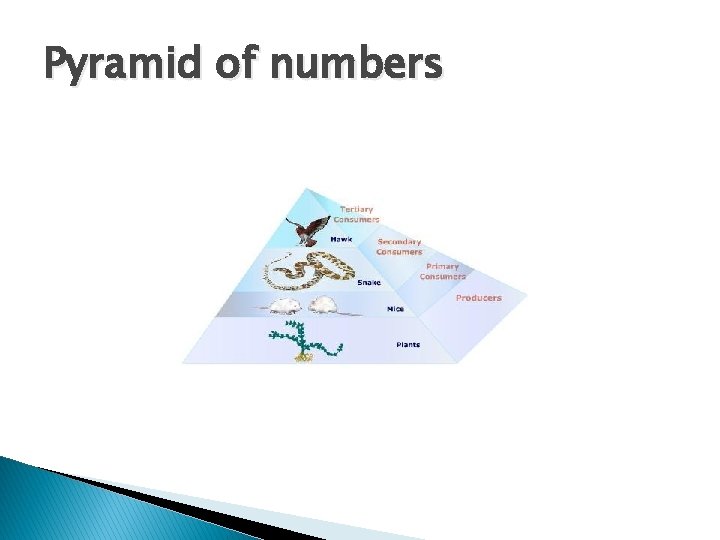
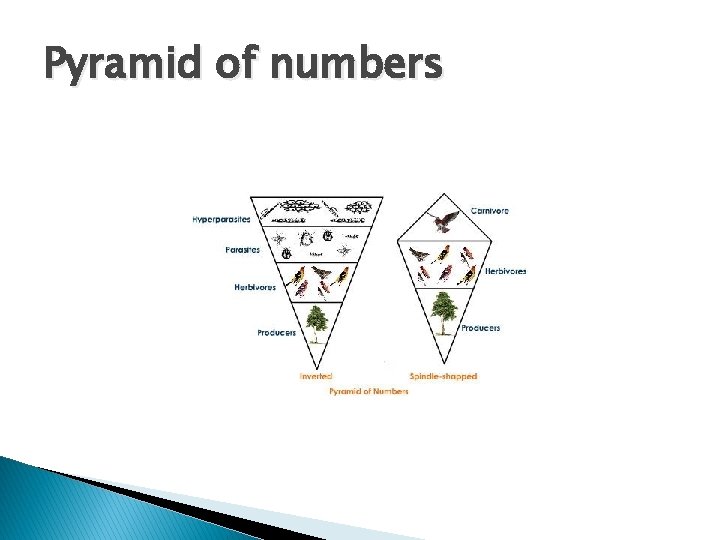
Pyramid of numbers � • It is the graphic representation of number of individuals per unit area of various tropic levels. • Large number of producers tend to form the base. • Lower numbers of top carnivores occupy the tip
Pyramid of numbers
Pyramid of numbers
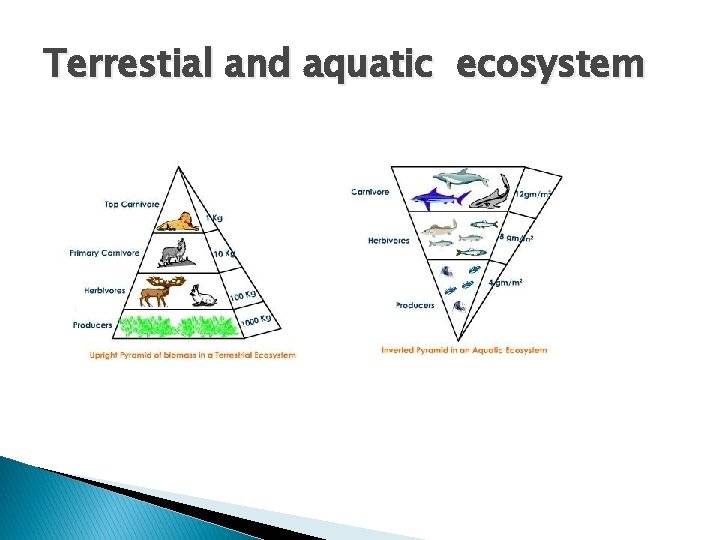
Pyramid of biomass � It is the graphical representation of biomass present per unit area at different tropic levels, with producers at the base and carnivores at the top. • Biomass is calculated as mass of each individual X no. of individual at tropic levels
Terrestial and aquatic ecosystem
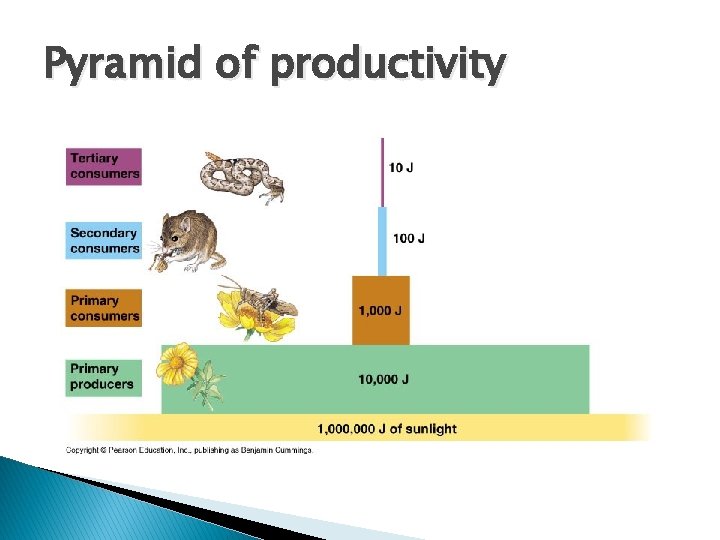
Pyramid of productivity • Pyramid of productivity is a graphical representation of the flow of energy through each tropic level of a food chain over a fixed time period. • The input of solar energy may be indicated by adding an extra to the base.
Pyramid of productivity
Disturbances of ecosystem • Bioaccumulation - When plants / animals take up a chemical from the environment and do not excrete it, the chemical builds up in the organism over time to a potentially lethal level. • Biomagnification - Refers to the sequence of processes that results in higher concentrations of the chemical in organisms at higher levels in the food chain. The concentration of the chemical may not affect lower levels of the food chain but the top levels take in so much it can cause disease or death. • Extinction of species – Due to decrease in population of various species the balance of various tropic levels is disturbed as a result some levels have more accumulation of species while others have very less population.