
FOOD BORNE BACTERIAL TOXINS OVERVIEW OF PRESENTATION INTRODUCTION
FOOD BORNE BACTERIAL TOXINS
OVERVIEW OF PRESENTATION § INTRODUCTION § CHARACTERISTICS OF BACTERIAL ENDOTOXINS AND CLASSIC EXOTOXIN § PATHOGENESIS BASED EXOTOXINS CLASSIFICATION § EVENTS OF FOOD BORNE DISEASES § FOOD BORNE ILLNESS § ENTEROTOXINS § PROPERTIES OF HEAT LABILE AND HEAT STABLE ENEROTOXINS § HEMOLYTIC EXOTOXINS § NEUROTOXIN § METHODS FOR DETECTION OF TOXINS. § SUMMARY
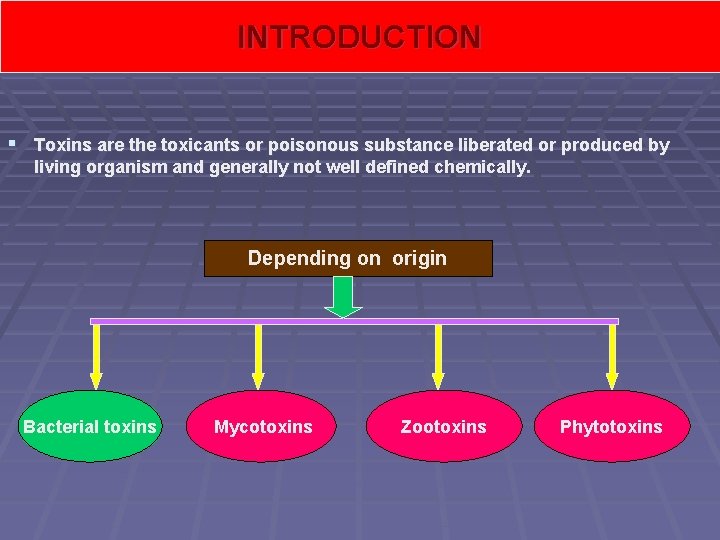
INTRODUCTION § Toxins are the toxicants or poisonous substance liberated or produced by living organism and generally not well defined chemically. Depending on origin Bacterial toxins Mycotoxins Zootoxins Phytotoxins
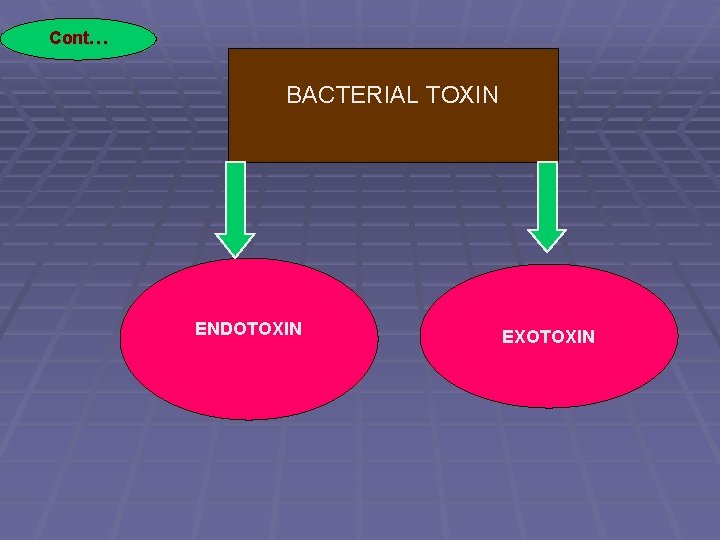
Cont… BACTERIAL TOXIN ENDOTOXIN EXOTOXIN
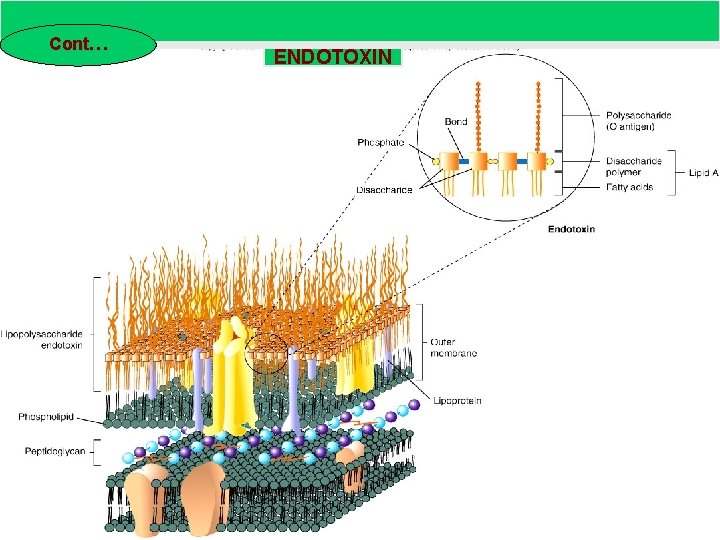
Cont… ENDOTOXIN
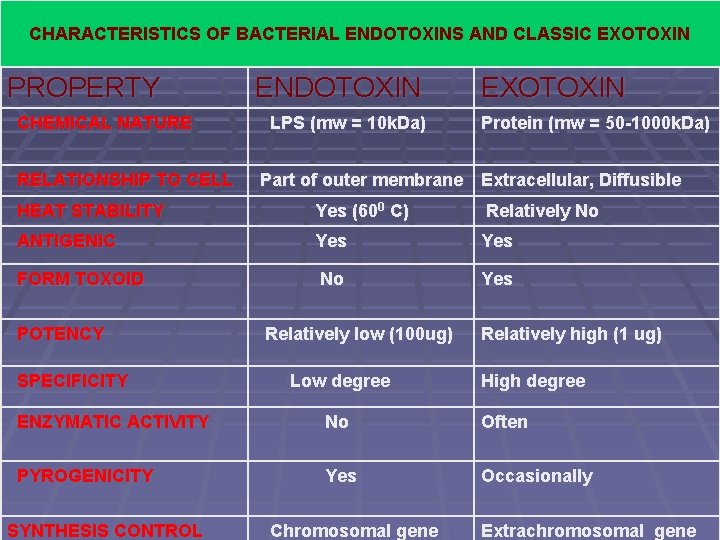
CHARACTERISTICS OF BACTERIAL ENDOTOXINS AND CLASSIC EXOTOXIN PROPERTY CHEMICAL NATURE RELATIONSHIP TO CELL ENDOTOXIN LPS (mw = 10 k. Da) EXOTOXIN Protein (mw = 50 -1000 k. Da) Part of outer membrane Extracellular, Diffusible HEAT STABILITY Yes (600 C) Relatively No ANTIGENIC Yes FORM TOXOID No Yes POTENCY SPECIFICITY Relatively low (100 ug) Low degree Relatively high (1 ug) High degree ENZYMATIC ACTIVITY No Often PYROGENICITY Yes Occasionally SYNTHESIS CONTROL Chromosomal gene Extrachromosomal gene
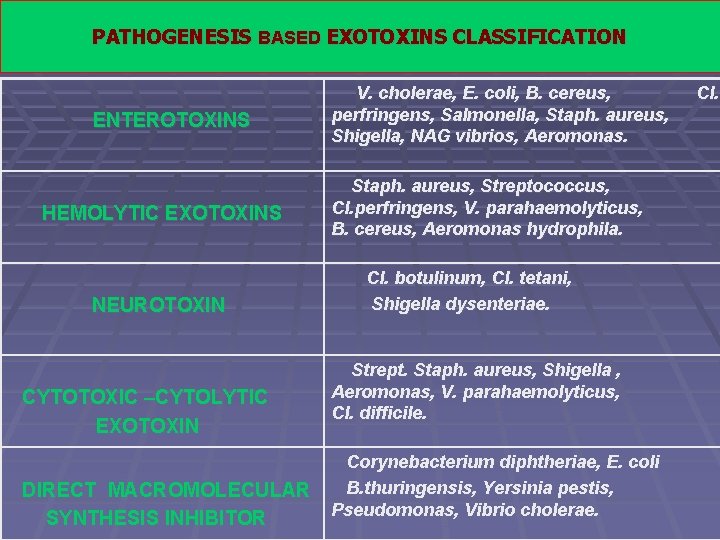
PATHOGENESIS BASED EXOTOXINS CLASSIFICATION ENTEROTOXINS HEMOLYTIC EXOTOXINS NEUROTOXIN CYTOTOXIC –CYTOLYTIC EXOTOXIN DIRECT MACROMOLECULAR SYNTHESIS INHIBITOR V. cholerae, E. coli, B. cereus, perfringens, Salmonella, Staph. aureus, Shigella, NAG vibrios, Aeromonas. Staph. aureus, Streptococcus, Cl. perfringens, V. parahaemolyticus, B. cereus, Aeromonas hydrophila. Cl. botulinum, Cl. tetani, Shigella dysenteriae. Strept. Staph. aureus, Shigella , Aeromonas, V. parahaemolyticus, Cl. difficile. Corynebacterium diphtheriae, E. coli B. thuringensis, Yersinia pestis, Pseudomonas, Vibrio cholerae. Cl.
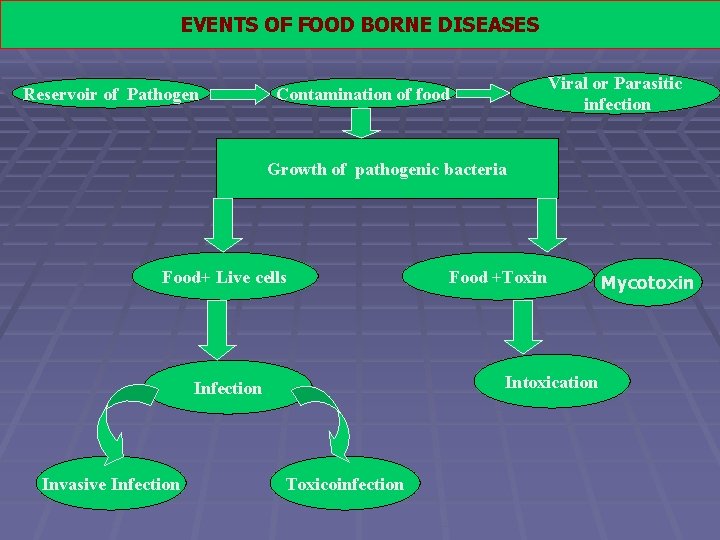
EVENTS OF FOOD BORNE DISEASES Reservoir of Pathogen Viral or Parasitic infection Contamination of food Growth of pathogenic bacteria Food+ Live cells Intoxication Infection Invasive Infection Food +Toxin Toxicoinfection Mycotoxin
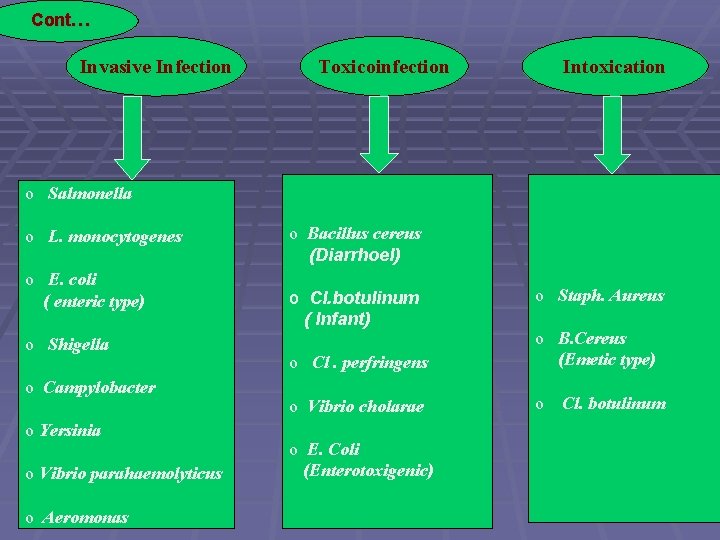
Cont… Invasive Infection Toxicoinfection Intoxication o Salmonella o L. monocytogenes o E. coli ( enteric type) o Shigella o Campylobacter o Yersinia o Vibrio parahaemolyticus o Aeromonas o Bacillus cereus (Diarrhoel) o Cl. botulinum ( Infant) o Staph. Aureus o Cl. perfringens o B. Cereus (Emetic type) o Vibrio cholarae o Cl. botulinum o E. Coli (Enterotoxigenic)
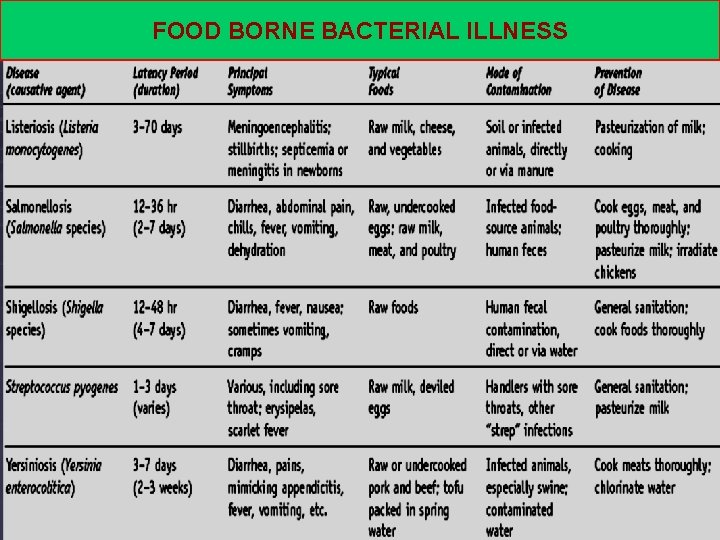
BACTERIAL FOOD BORNE FOOD BACTERIAL BORNE INFECTION ILLNESS
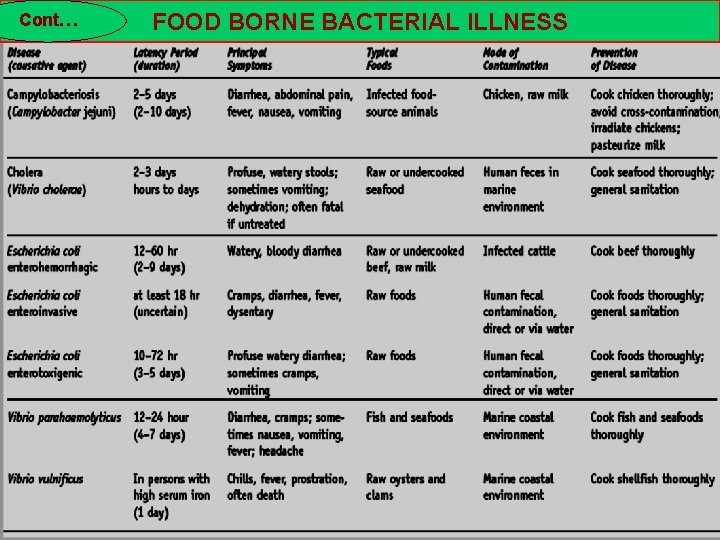
Cont… FOOD BORNE BACTERIAL ILLNESS
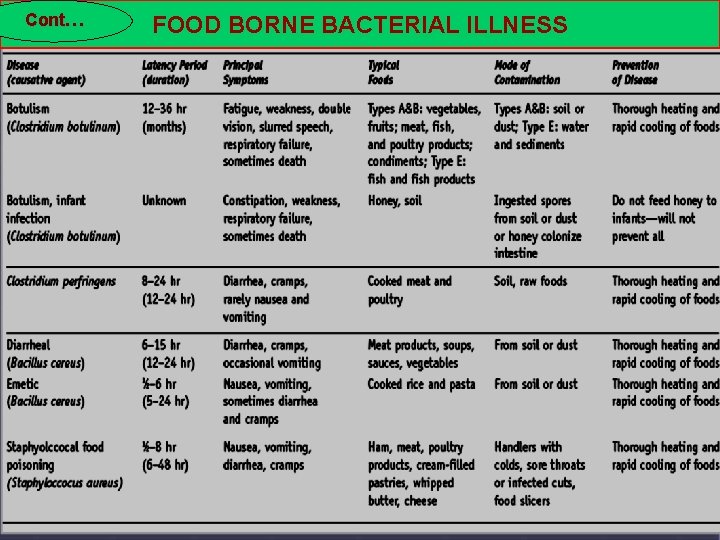
Cont… FOOD BORNE BACTERIAL ILLNESS
ENTEROTOXINS § Bacterial toxins that exert some deleterious effect and host response exclusively in the small or large intestine. § Alteration in intestinal cell structure or function by o A diversity of mode of action, o Target cell types, o Receptors. Salmonella § Protein associated with cell wallo Produces fluid loss in infant mice. § Heat stable and rapid in action. § Heat labile and delayed response : - o Mol. Wt. of 25 k. Da, o Increases in c. AMP and PGE 2 levels. o Stimulate secretion in 18 -h
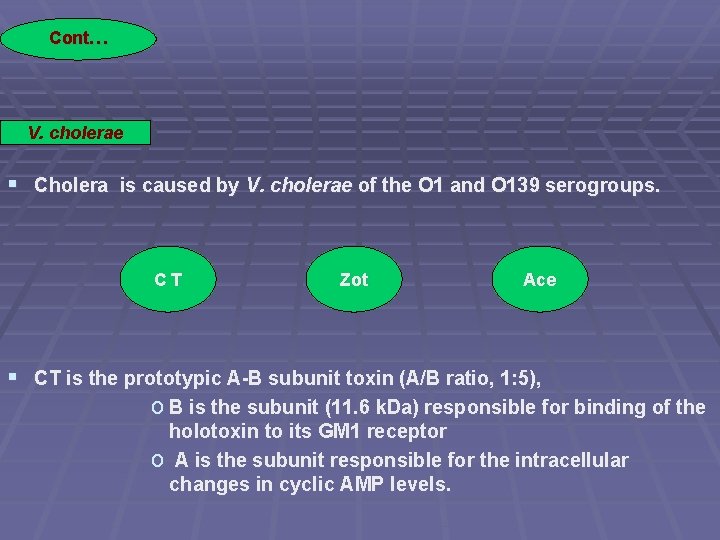
Cont… V. cholerae § Cholera is caused by V. cholerae of the O 1 and O 139 serogroups. CT Zot Ace § CT is the prototypic A-B subunit toxin (A/B ratio, 1: 5), o B is the subunit (11. 6 k. Da) responsible for binding of the holotoxin to its GM 1 receptor o A is the subunit responsible for the intracellular changes in cyclic AMP levels.
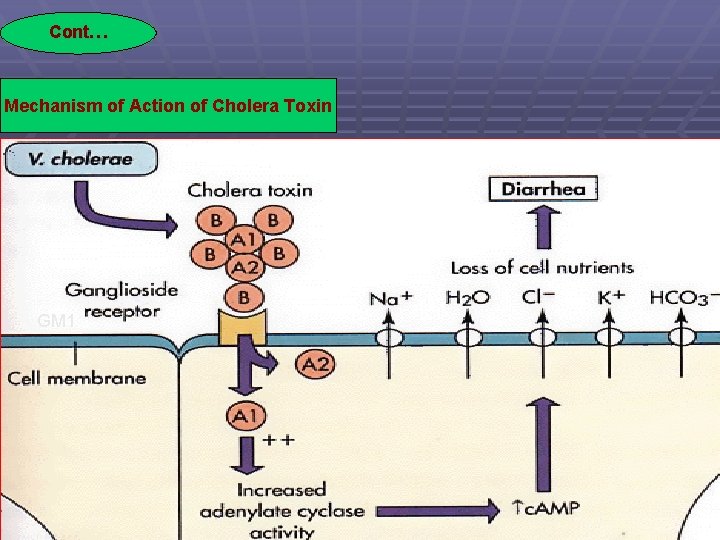
Cont… Mechanism of Action of Cholera Toxin GM 1
Cont… § If a strain is CT positive, it is almost always zot positive (48 KDa peptide). § The onset of action of crude Zot is immediate and reversible. § Zot may contribute to diarrhea in cholera by altering the permeability of intestinal tissue. § Ace 11. 3 -k. Da protein. stimulate electrogenic chloride secretion & contribute, to the pathogenicity of V. cholerae O 1. NAG Vibrio § Produce a 17 -a. a. NAG-ST that shares 50% sequence homology with the STa of ETEC. § This toxin is found only in a minority of non-O 1/non-O 139 V. cholerae strains.
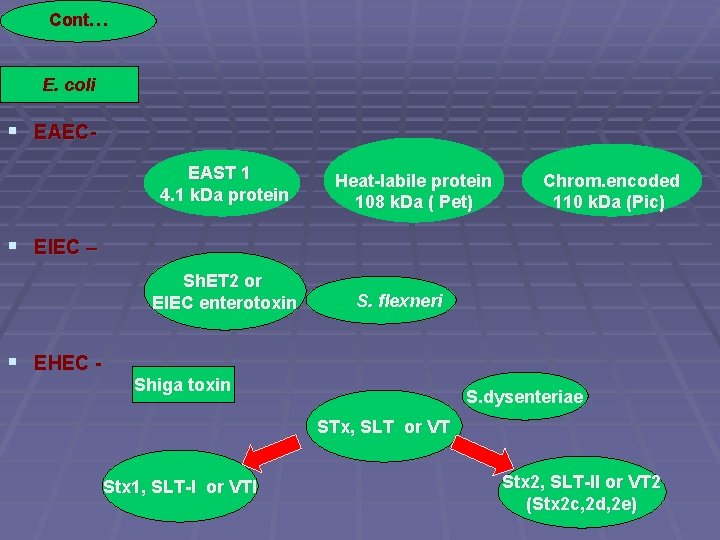
Cont… E. coli § EAECEAST 1 4. 1 k. Da protein Heat-labile protein 108 k. Da ( Pet) Chrom. encoded 110 k. Da (Pic) § EIEC – Sh. ET 2 or EIEC enterotoxin § EHEC - S. flexneri Shiga toxin S. dysenteriae STx, SLT or VT Stx 1, SLT-I or VTI Stx 2, SLT-II or VT 2 (Stx 2 c, 2 d, 2 e)
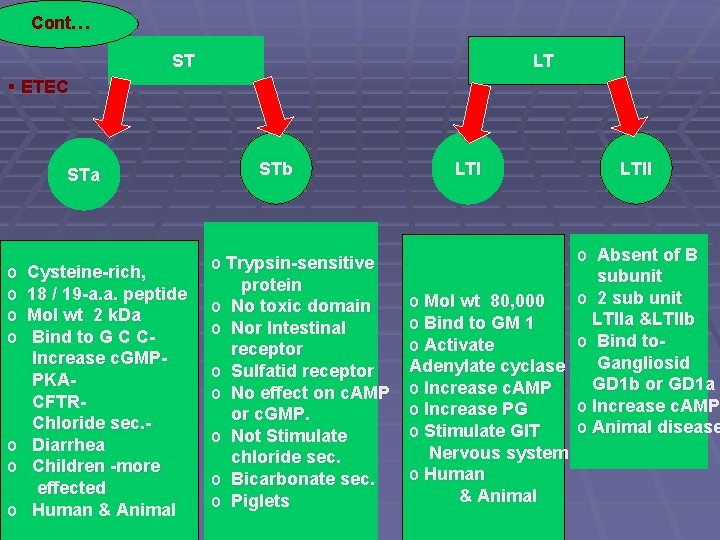
Cont… ST LT § ETEC STa o o Cysteine-rich, 18 / 19 -a. a. peptide Mol wt 2 k. Da Bind to G C CIncrease c. GMPPKACFTRChloride sec. o Diarrhea o Children -more effected o Human & Animal STb o Trypsin-sensitive protein o No toxic domain o Nor Intestinal receptor o Sulfatid receptor o No effect on c. AMP or c. GMP. o Not Stimulate chloride sec. o Bicarbonate sec. o Piglets LTII o Absent of B subunit o 2 sub unit o Mol wt 80, 000 LTIIa <IIb o Bind to GM 1 o Bind too Activate Gangliosid Adenylate cyclase GD 1 b or GD 1 a o Increase c. AMP o Increase PG o Animal disease o Stimulate GIT Nervous system o Human & Animal
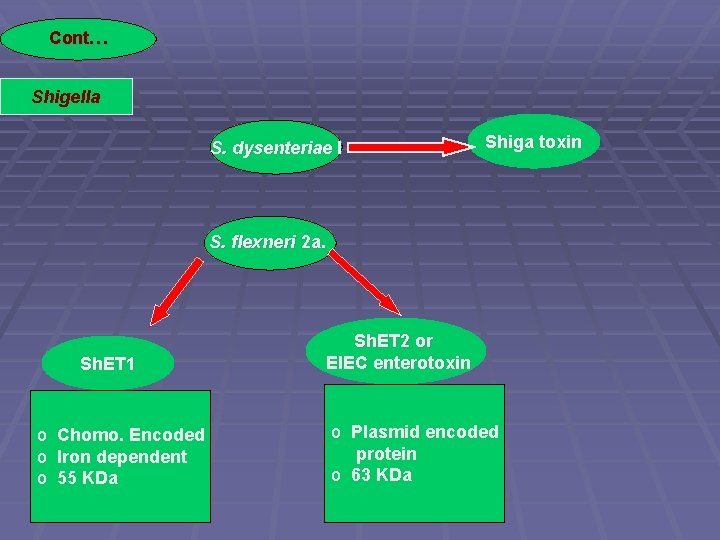
Cont… Shigella S. dysenteriae I Shiga toxin S. flexneri 2 a. Sh. ET 1 o Chomo. Encoded o Iron dependent o 55 KDa Sh. ET 2 or EIEC enterotoxin o Plasmid encoded protein o 63 KDa
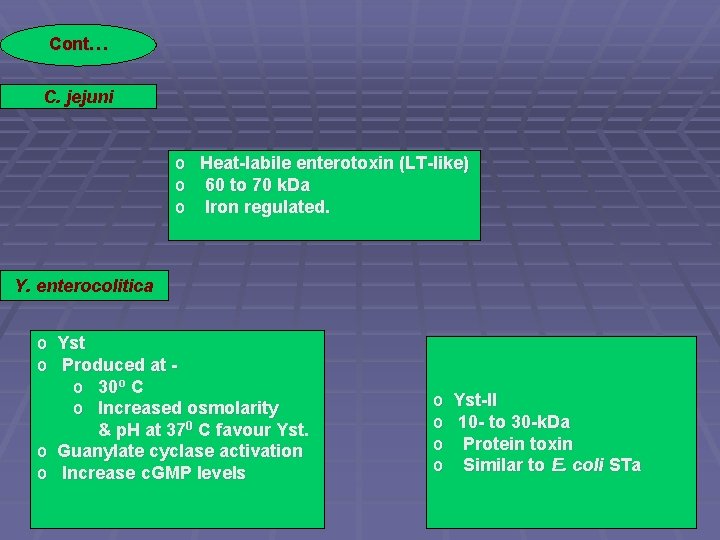
Cont… C. jejuni o Heat-labile enterotoxin (LT-like) o 60 to 70 k. Da o Iron regulated. Y. enterocolitica o Yst o Produced at o 30 o C o Increased osmolarity & p. H at 370 C favour Yst. o Guanylate cyclase activation o Increase c. GMP levels o Yst-II o 10 - to 30 -k. Da o Protein toxin o Similar to E. coli STa
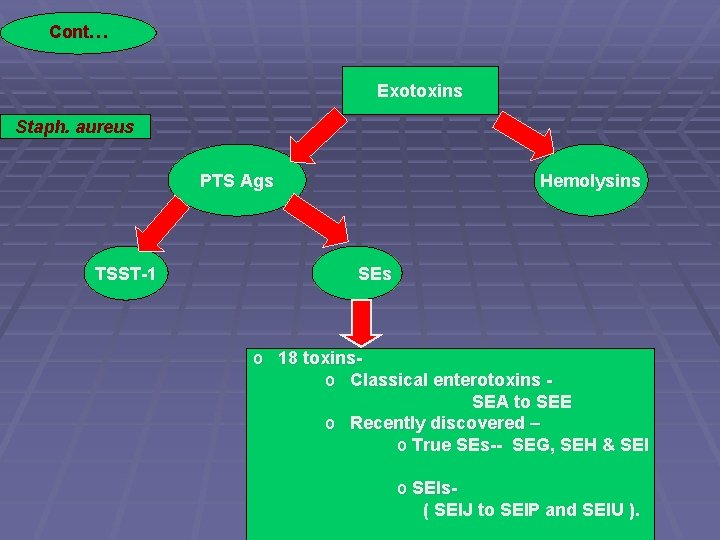
Cont… Exotoxins Staph. aureus PTS Ags TSST-1 Hemolysins SEs o 18 toxinso Classical enterotoxins SEA to SEE o Recently discovered – o True SEs-- SEG, SEH & SEI o SEls( SEl. J to SEl. P and SEl. U ).
Cont… § SEs - thermostable , resistant to GIT enzymes. Heat stability depend on the environmental factors - aw & p. H. (Balaban et al. , 2000) § SEA and SED, the most frequently involved in food poisoning. (Balaban et al. , 2000 ; Le et al. , 2003 ) § 5% cases attributed to new enterotoxins & SEH most commonly reported. (Jorgensen et al. , 2005) § SEs are potent emetic agents whereas the other PTSAgs are not. § The conc. of SE from 0. 5 to 1. 0 ng/ml and depends on the susceptibility of the individual.
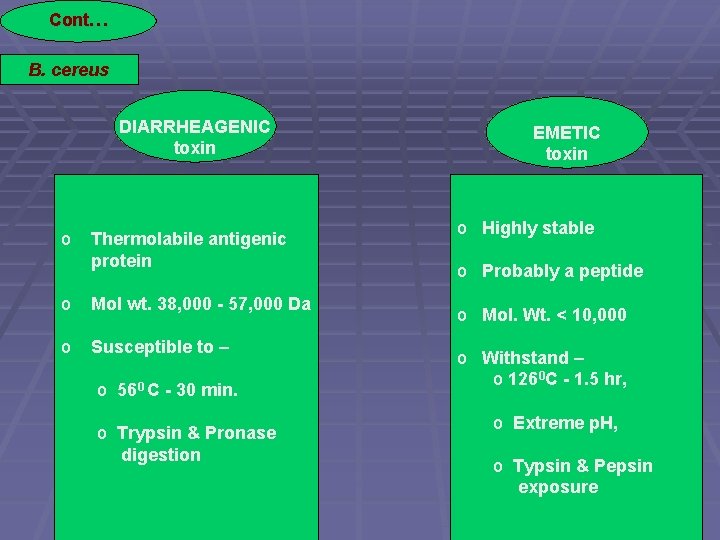
Cont… B. cereus DIARRHEAGENIC toxin o Thermolabile antigenic protein o Mol wt. 38, 000 - 57, 000 Da o Susceptible to – o 560 C - 30 min. o Trypsin & Pronase digestion EMETIC toxin o Highly stable o Probably a peptide o Mol. Wt. < 10, 000 o Withstand – o 1260 C - 1. 5 hr, o Extreme p. H, o Typsin & Pepsin exposure
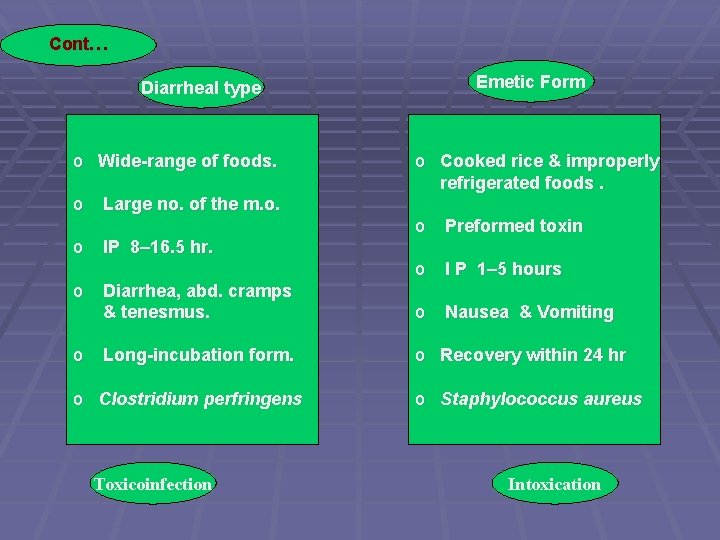
Cont… Emetic Form Diarrheal type o Wide-range of foods. o o o Cooked rice & improperly refrigerated foods. Large no. of the m. o. o Preformed toxin o I P 1– 5 hours Diarrhea, abd. cramps & tenesmus. o Nausea & Vomiting Long-incubation form. o Recovery within 24 hr IP 8– 16. 5 hr. o Clostridium perfringens Toxicoinfection o Staphylococcus aureus Intoxication
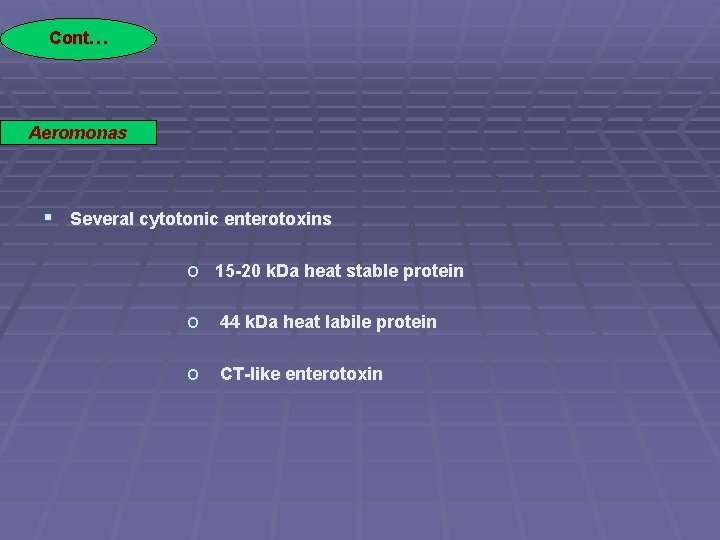
Cont… Aeromonas § Several cytotonic enterotoxins o 15 -20 k. Da heat stable protein. o 44 k. Da heat labile protein o CT-like enterotoxin
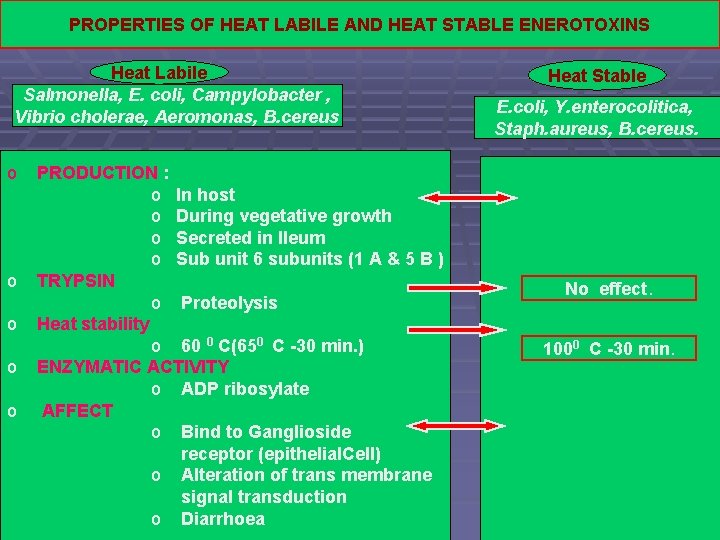
PROPERTIES OF HEAT LABILE AND HEAT STABLE ENEROTOXINS Heat Labile Salmonella, E. coli, Campylobacter , Vibrio cholerae, Aeromonas, B. cereus o o o PRODUCTION : o In host o During vegetative growth o Secreted in Ileum o Sub unit 6 subunits (1 A & 5 B ) TRYPSIN o Proteolysis Heat stability o 60 0 C(650 C -30 min. ) ENZYMATIC ACTIVITY o ADP ribosylate AFFECT o Bind to Ganglioside receptor (epithelial. Cell) o Alteration of trans membrane signal transduction o Diarrhoea Heat Stable E. coli, Y. enterocolitica, Staph. aureus, B. cereus. No effect. 1000 C -30 min.
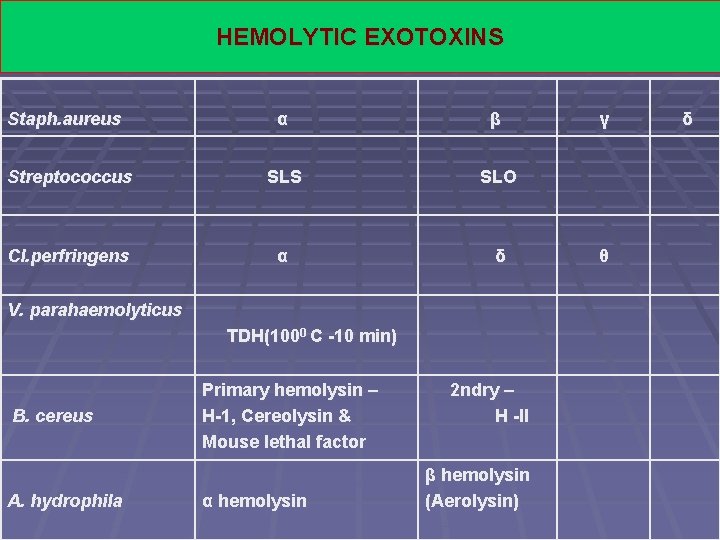
HEMOLYTIC EXOTOXINS Staph. aureus α β Streptococcus SLS SLO Cl. perfringens α δ V. parahaemolyticus TDH(1000 C -10 min) B. cereus A. hydrophila Primary hemolysin – H-1, Cereolysin & Mouse lethal factor α hemolysin 2 ndry – H -II β hemolysin (Aerolysin) γ θ δ
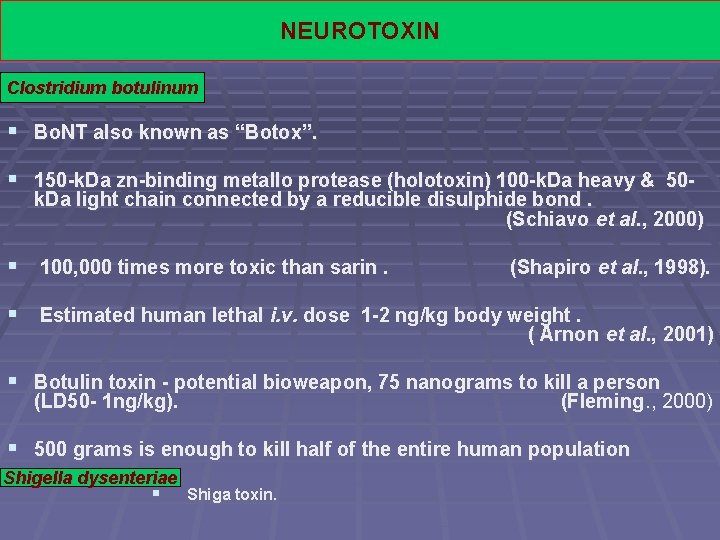
NEUROTOXIN : Clostridium botulinum § Bo. NT also known as “Botox”. § 150 -k. Da zn-binding metallo protease (holotoxin) 100 -k. Da heavy & 50 - k. Da light chain connected by a reducible disulphide bond. (Schiavo et al. , 2000) § 100, 000 times more toxic than sarin. (Shapiro et al. , 1998). § Estimated human lethal i. v. dose 1 -2 ng/kg body weight. ( Arnon et al. , 2001) § Botulin toxin - potential bioweapon, 75 nanograms to kill a person (LD 50 - 1 ng/kg). (Fleming. , 2000) § 500 grams is enough to kill half of the entire human population Shigella dysenteriae § Shiga toxin.
METHODS FOR DETECTION OF TOXINS § BIOASSAY METHOD. § IMMUNOLOGICAL ASSAYS. § MOLECULAR TECHNIQUES. § CELL CULTURES.
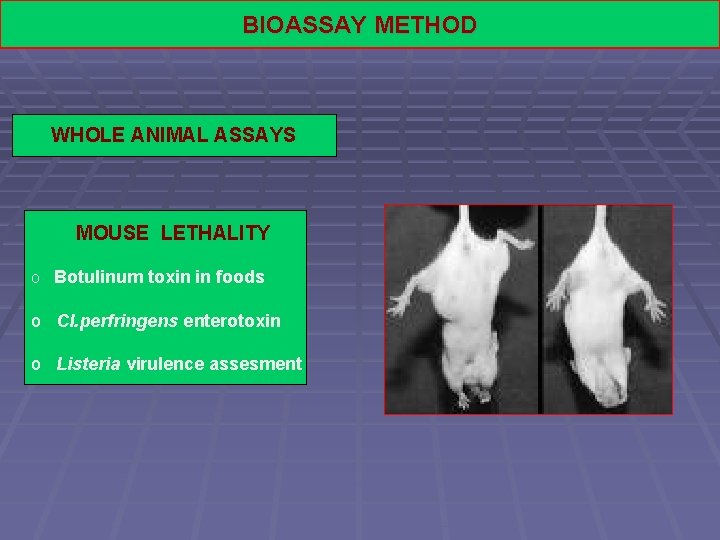
BIOASSAY METHOD WHOLE ANIMAL ASSAYS MOUSE LETHALITY o Botulinum toxin in foods o Cl. perfringens enterotoxin o Listeria virulence assesment
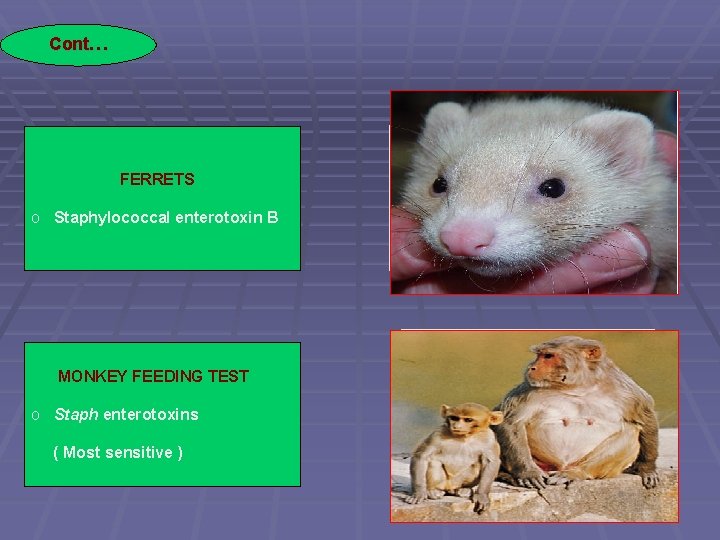
Cont… FERRETS o Staphylococcal enterotoxin B MONKEY FEEDING TEST o Staph enterotoxins ( Most sensitive )
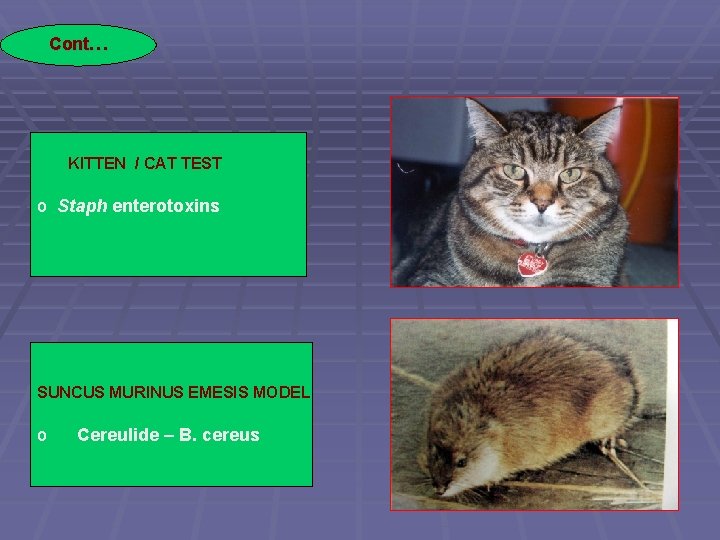
Cont… KITTEN / CAT TEST o Staph enterotoxins SUNCUS MURINUS EMESIS MODEL o Cereulide – B. cereus
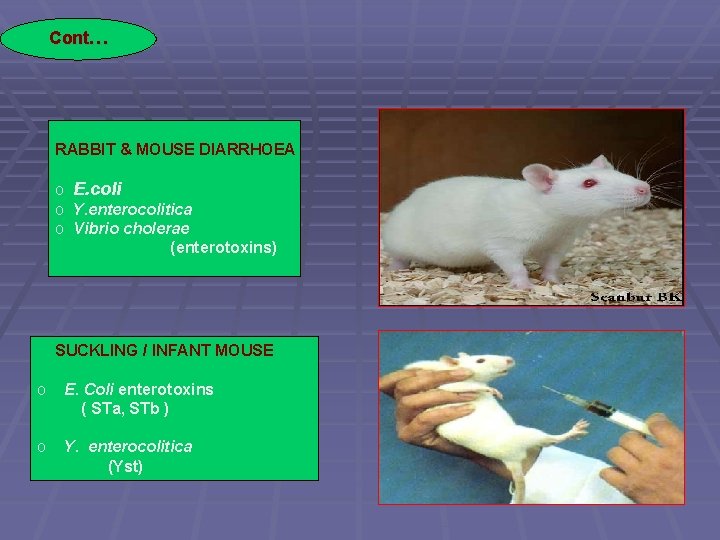
Cont… RABBIT & MOUSE DIARRHOEA o E. coli o Y. enterocolitica o Vibrio cholerae (enterotoxins) SUCKLING / INFANT MOUSE o E. Coli enterotoxins ( STa, STb ) o Y. enterocolitica (Yst)
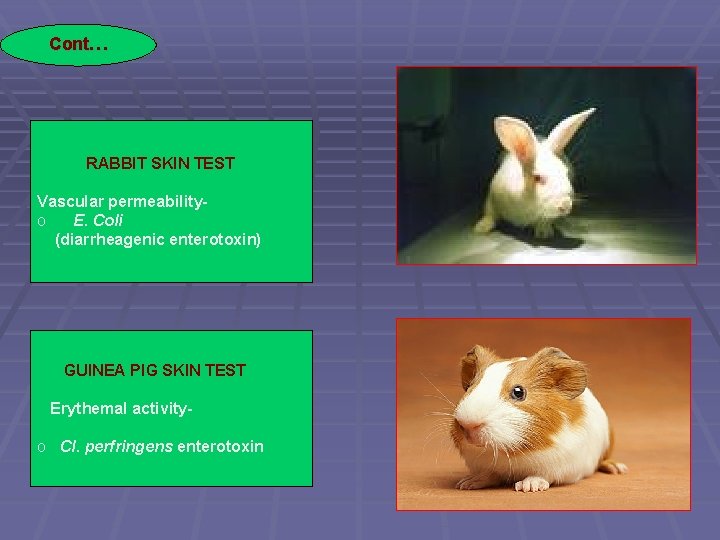
Cont… RABBIT SKIN TEST Vascular permeabilityo E. Coli (diarrheagenic enterotoxin) GUINEA PIG SKIN TEST Erythemal activity- o Cl. perfringens enterotoxin
Cont… SERENY & ANTON TEST Guinea pig, Mouse & Rabbit o Shigella o EIEC o Listeria
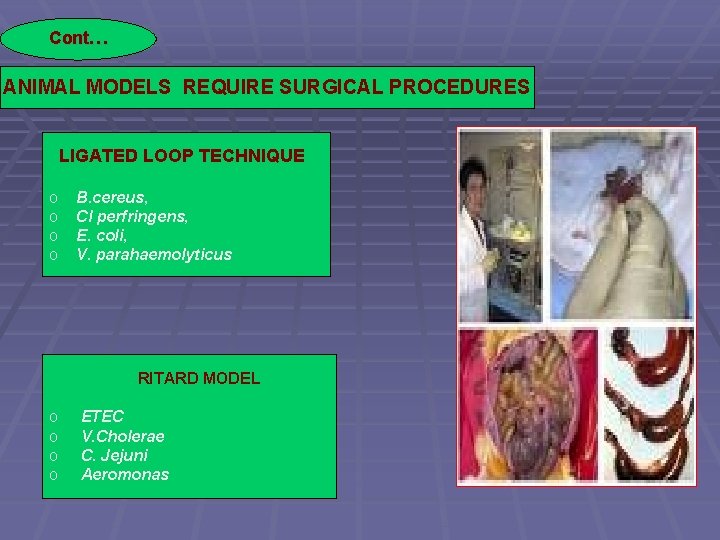
Cont… ANIMAL MODELS REQUIRE SURGICAL PROCEDURES LIGATED LOOP TECHNIQUE o o B. cereus, Cl perfringens, E. coli, V. parahaemolyticus RITARD MODEL o o ETEC V. Cholerae C. Jejuni Aeromonas
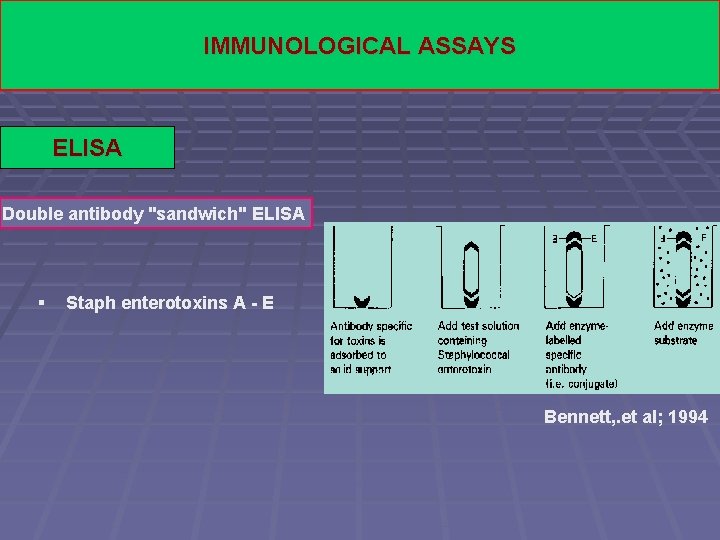
IMMUNOLOGICAL ASSAYS ELISA Double antibody "sandwich" ELISA § Staph enterotoxins A - E Bennett, . et al; 1994
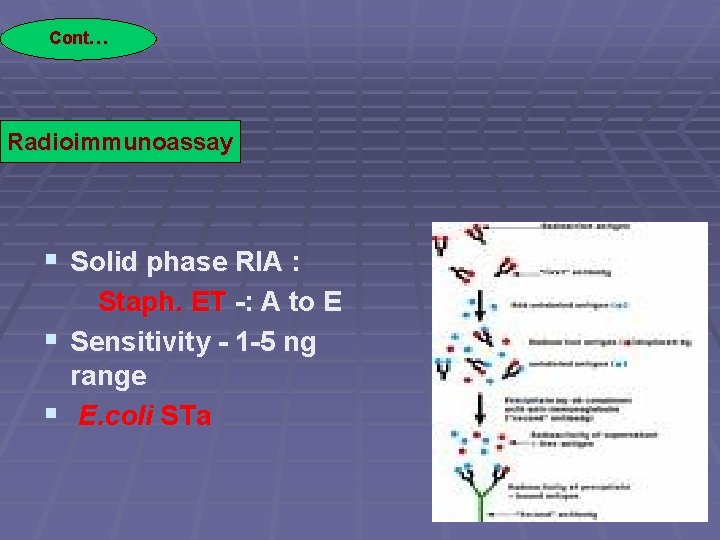
Cont… Radioimmunoassay § Solid phase RIA : Staph. ET -: A to E § Sensitivity - 1 -5 ng range § E. coli STa
Cont… Reverse passive haemagglutination § Antibody coupled to sheep RBCs § Agglutination if toxin present § Sensitivity for SE–B : 1. 5 ng /ml VIDAS SET Assay § Staph. enterotoxins A - E § Sensitivity of at least 1 ng/ml. Immunoenzymatic test. § Specific for Staph enterotoxin A - E.
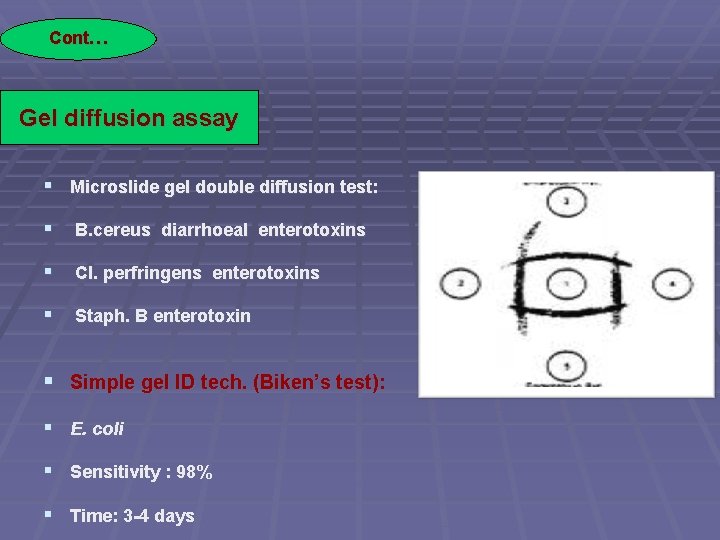
Cont… Gel diffusion assay § Microslide gel double diffusion test: § B. cereus diarrhoeal enterotoxins § Cl. perfringens enterotoxins § Staph. B enterotoxin § Simple gel ID tech. (Biken’s test): § E. coli § Sensitivity : 98% § Time: 3 -4 days
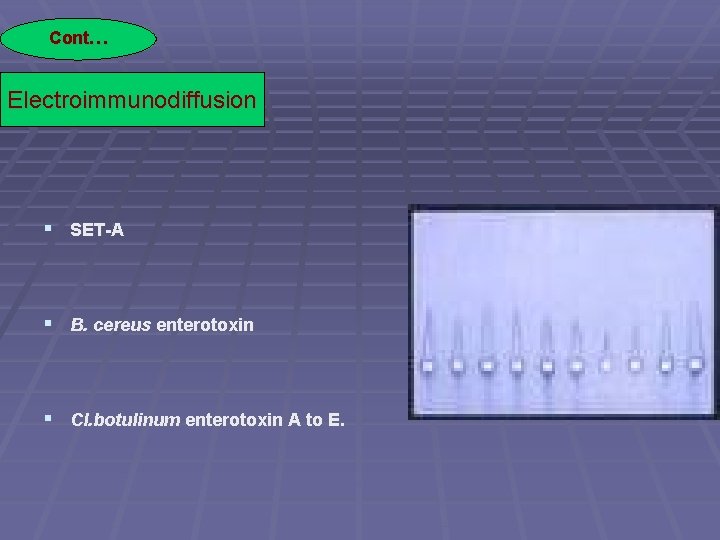
Cont… Electroimmunodiffusion § SET-A § B. cereus enterotoxin § Cl. botulinum enterotoxin A to E.
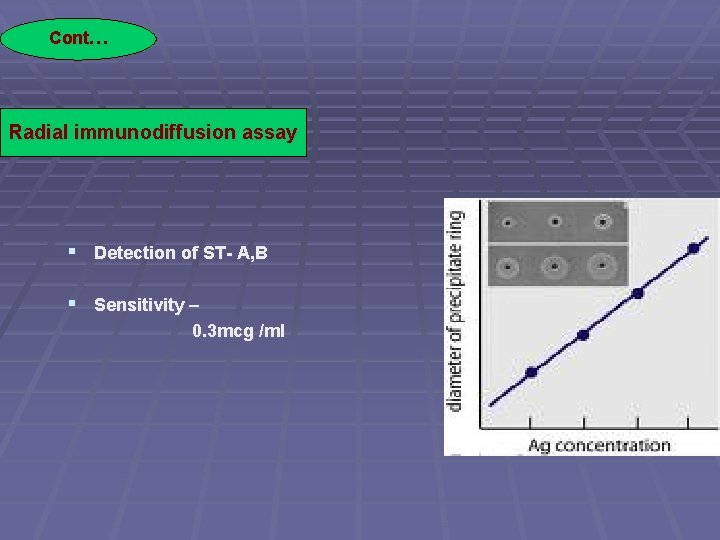
Cont… Radial immunodiffusion assay § Detection of ST- A, B § Sensitivity – 0. 3 mcg /ml
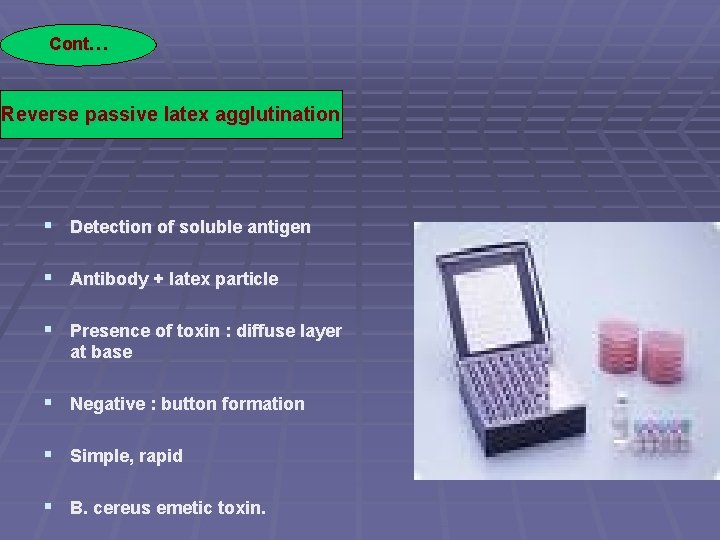
Cont… Reverse passive latex agglutination § Detection of soluble antigen § Antibody + latex particle § Presence of toxin : diffuse layer at base § Negative : button formation § Simple, rapid § B. cereus emetic toxin.
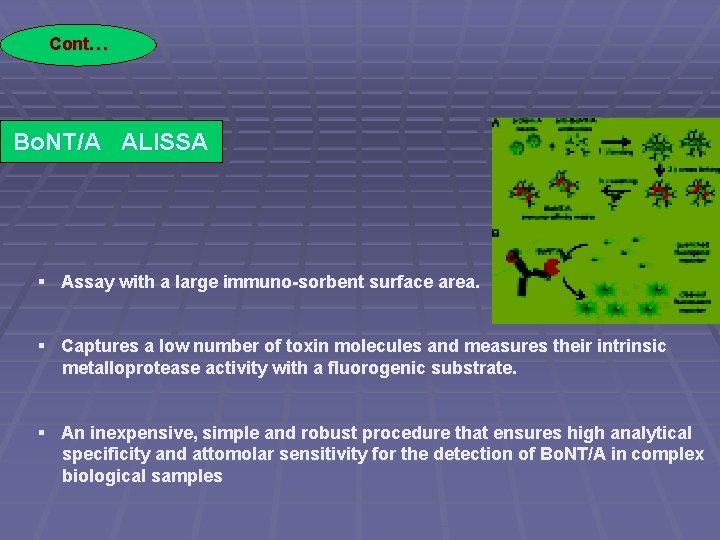
Cont… Bo. NT/A ALISSA § Assay with a large immuno-sorbent surface area. § Captures a low number of toxin molecules and measures their intrinsic metalloprotease activity with a fluorogenic substrate. § An inexpensive, simple and robust procedure that ensures high analytical specificity and attomolar sensitivity for the detection of Bo. NT/A in complex biological samples
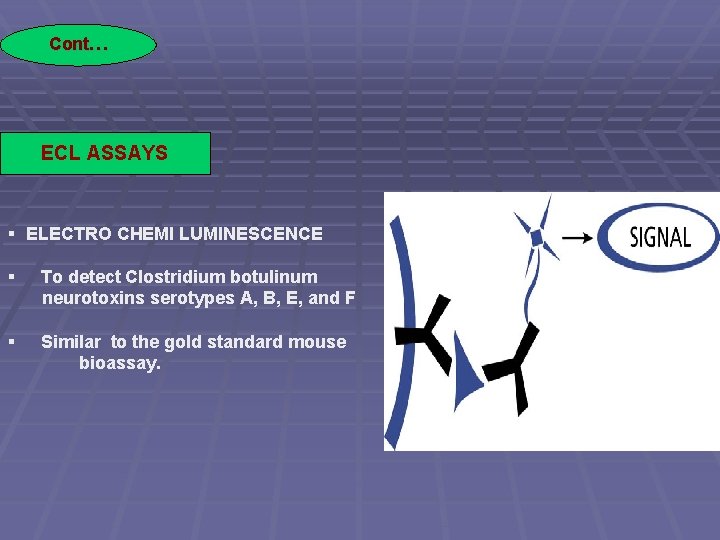
Cont… ECL ASSAYS § ELECTRO CHEMI LUMINESCENCE § To detect Clostridium botulinum neurotoxins serotypes A, B, E, and F § Similar to the gold standard mouse bioassay.
MOLECULAR TECHNIQUES PCR § Duplex SYBR green I real-time PCR assayfor one-step differentiation between emetic B. cereus and S. aureus. (Mackay. , 2004) § Real-time PCR-based assays Bo. NT A, B, E and F gene fragments (Akbulut. , 2005)
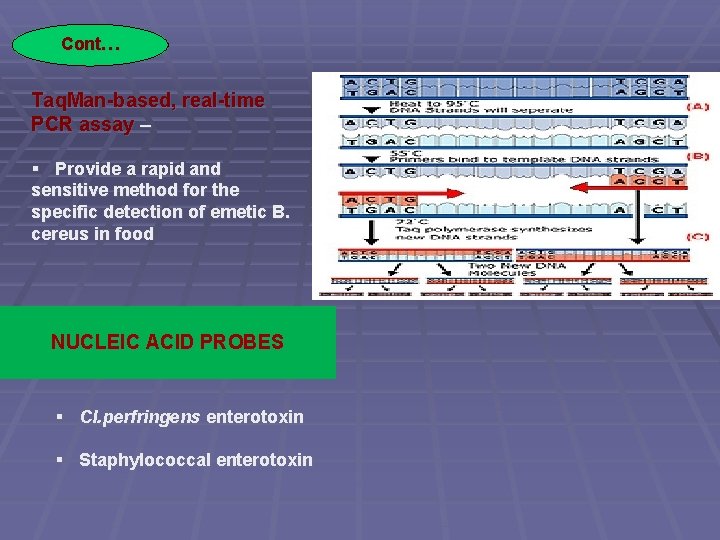
Cont… Taq. Man-based, real-time PCR assay – § Provide a rapid and sensitive method for the specific detection of emetic B. cereus in food NUCLEIC ACID PROBES § Cl. perfringens enterotoxin § Staphylococcal enterotoxin
CELL CULTURES Human foetal intestine § V. parahaemolyticus CHO monolayer § E. coli LT § V. cholerae ET § Salmonella ET
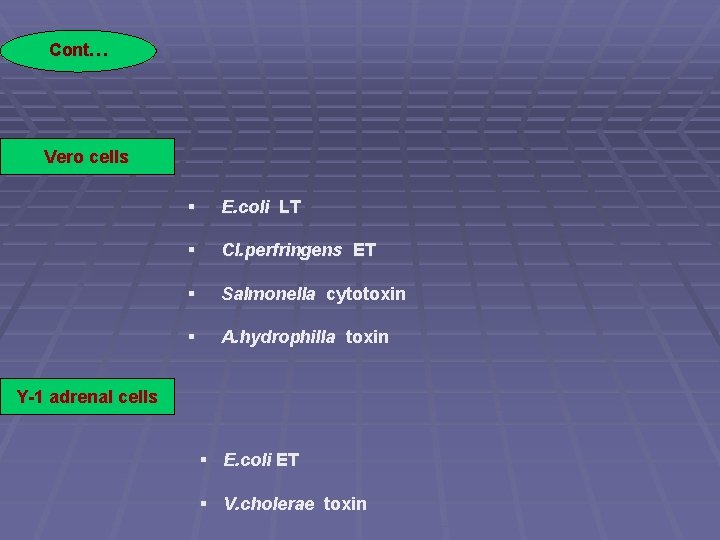
Cont… Vero cells § E. coli LT § Cl. perfringens ET § Salmonella cytotoxin § A. hydrophilla toxin Y-1 adrenal cells § E. coli ET § V. cholerae toxin
SUMMARY § Both Gram positive and Gram negative bactera are resposible for most of the outbreak of the food poisining. § Bacterial exotoxins have enterotoxic, cytotoxic, hemolytic and neurotoxic effect. § It is the bacterial enterotoxins which are responsible for production of various type of gastrointestinal manifestations like diarrhea and vomiting during different food borne bacterial illness. § Some bacterial toxins are very potent and relatively easy to produce and classified As bio-threat agents. Eg. . Botulinum neurotoxins. § Bioassay method, Immunological assays, Molecular techniques & Cell cultures are used to detect the bacterial toxin.


References: www. slideshare. net
- Slides: 52