
Food Biotechnology YOGURT Group B Aroma Jannat Hira
Food Biotechnology YOGURT Group B • Aroma Jannat • Hira Rehman • Izara Jamil • Saneea Imran • Sarah Waseem • Sumaiya Gul • Syed Haris Hussain Date: 10 November’ 2014
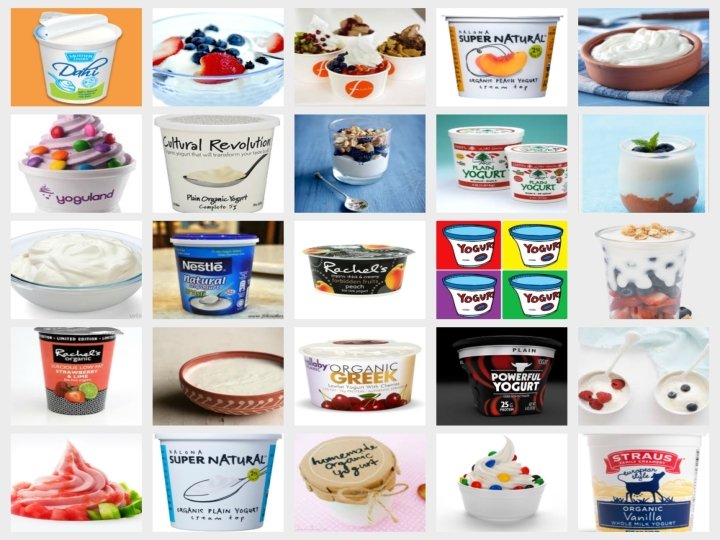
Yougurt YOGURT According to the Standards of Identity CFR. • Fermented milk that has characteristic Lactobacillus bulgaricus & Streptococcus thermophilus cultures. • Should at least have 8. 25% solids
Ingredients. . ? • Milk The main ingredient, determines the type of yogurt. • Cream Adjusts the fat content • Non-fat dry milk Adjusts the solid content • Bacterial cultures Lactobacillus bulgaricus, Streptococcus thermophilus: convert lactose in milk to lactic acid
• Stabilizers • To improve body and firmness, prevent separation of whey e. g. pectin, starch, gelatin, gum, alginate. • Sweeteners, Flavors, Fruits • To provide variety to the consumer
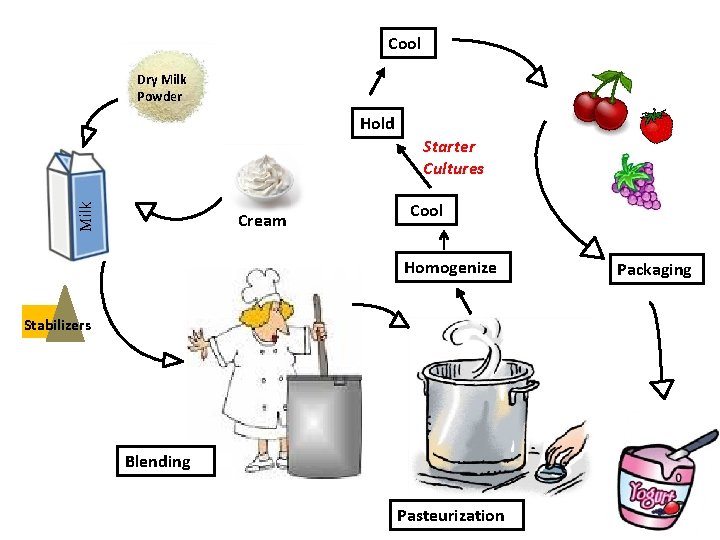
Cool Dry Milk Powder Hold Milk Starter Cultures Cream Cool Homogenize Stabilizers Blending Pasteurization Packaging
The manufacturing Manufacturing process 1. Adjusting Milk composition and blending 2. Pasteurization: The milk is heated at 85 C for 30 min or at 95 C for 10 min. 3. Homogenization: Improves the consistency, performed at 2000 -2500 psi. 4. Cooling: The milk is cooled at 42 C to bring yogurt to ideal temperature for bacterial growth.
Cont. . 5. Inoculation: Starter cultures are added. 6. Holding: The milk is held at 42 C until 4. 5 p. H is reached (takes several hours). This allows fermentation to progress which forms a softer gel like structure-the yogurt!! 7. Cooling: The yogurt is cooled at 7 C to stop fermentation. 8. Adding fruits and flavors. 9. Packaging.
Microbes Streptococcus thermophilus Lactobacillus delbrueckii ssp. bulgaricus
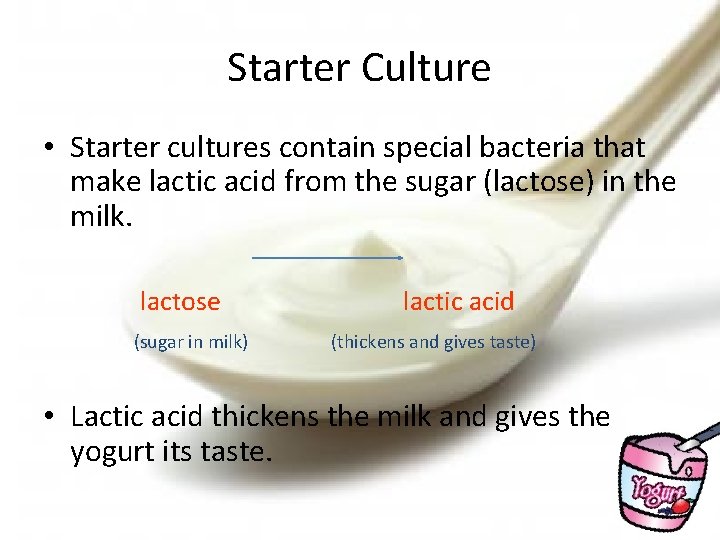
Starter Culture • Starter cultures contain special bacteria that make lactic acid from the sugar (lactose) in the milk. lactose (sugar in milk) lactic acid (thickens and gives taste) • Lactic acid thickens the milk and gives the yogurt its taste.
Cont… • The yogurt starter culture is a mixed population of S. thermophilus and L. bulgaricus • Ratio 1: 1
Symbiotic relationship • • Greater bacterial concentration Acid production Flavor development Improved texture
Additonal cultures as Probiotics • Lactobacillus acidophilus • L. casei, L. reuteri • Bifidobacterium bifidum (Bifidus)
Starter • Natural yogurt can be used as ‘starter cultures’ to make yogurt.
Importance of Fermentation in Yogurt Production q. Lower p. H • Distinctive Taste and Aroma • Microbiological Stability • Safety q. Casein Denaturation and Exopolysacharides • Texture
Cont… • Providing Incompatible Environment to Harmful bacteria and Pathogens • K. B Chauncey et. al studied effects of Yogurt on Vaginal Candida Infection
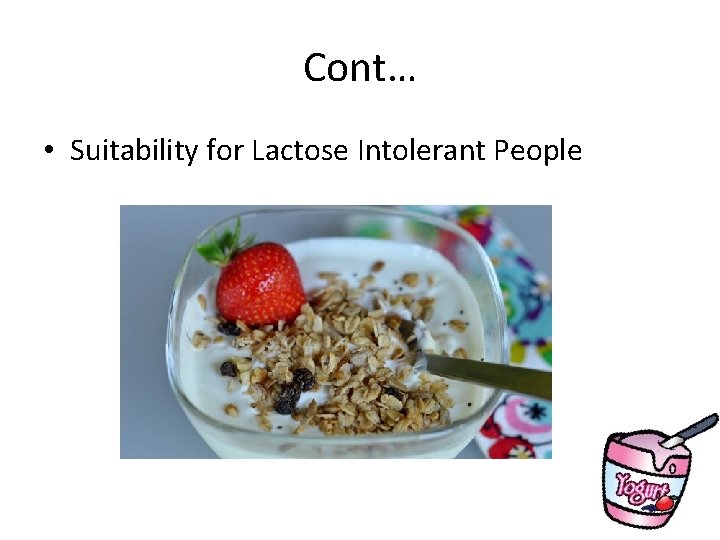
Cont… • Suitability for Lactose Intolerant People
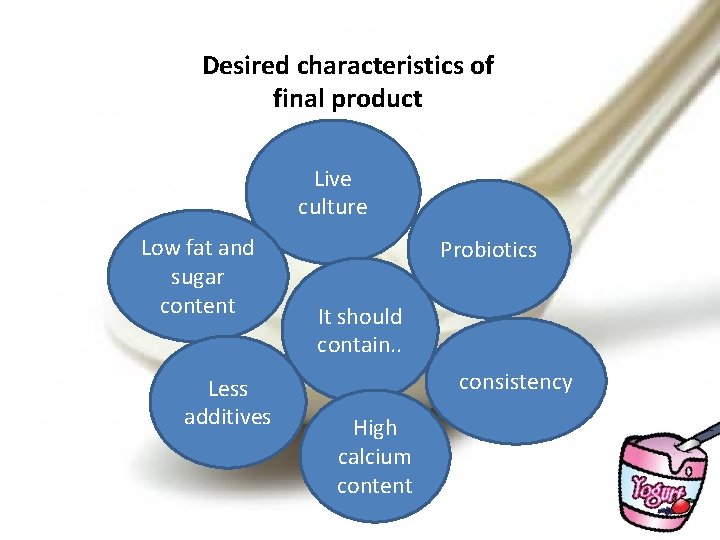
Desired characteristics of final product Live culture Low fat and sugar content Less additives Probiotics It should contain. . consistency High calcium content
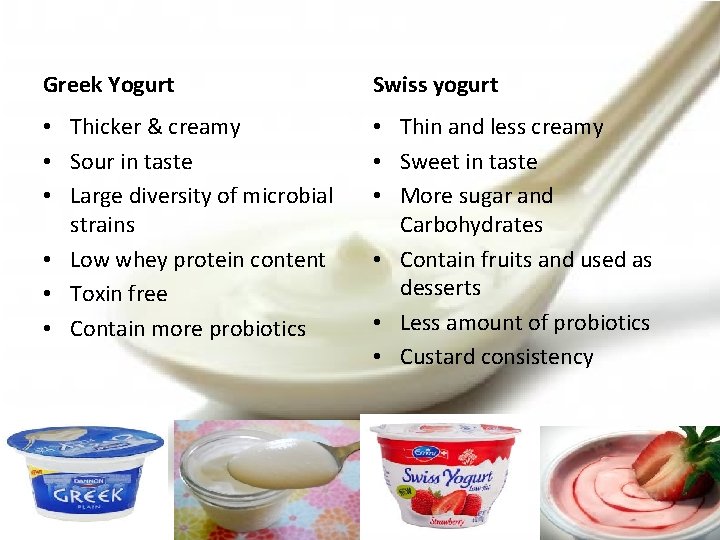
Greek Yogurt Swiss yogurt • Thicker & creamy • Sour in taste • Large diversity of microbial strains • Low whey protein content • Toxin free • Contain more probiotics • Thin and less creamy • Sweet in taste • More sugar and Carbohydrates • Contain fruits and used as desserts • Less amount of probiotics • Custard consistency
Factors that alter the end product • Slow acid formation rate. • The upsetting of ratios between the two strains of bacteria. • Incubation temperature if kept low can further lead towards the slow acidification of milk. • Quality of yogurt is affected in consideration with the type of milk used.
Factors that alter the end product (cont. ) • Viscosity of yogurt depends upon the amount of protein present in milk. • The characteristics of milk vary within species and this imparts different flavors to the end product.
Anti-microbial activity of yogurt • Probiotics: – Considered as friendly bacteria. – Lactose adsorption in lactose intolerant people. – Boast the immune system. – Folic acid and vitamin B 12 synthesis. – Bioavailability of nutrients/compounds. – Breakdown of environmental hostile compounds.
Cont…. • Bioyogurt: – Yogurt produced from Lactobacillus acidophilus or bifidobacterium spp. – Friendly for gut or elementary canal.
Biochemical Pathway • Greek and Swiss style yogurts take a combination of two bacterial strains as starter cultures. • Streptococcus thermophilus and Lactobacillusus delbrueckii subsp. Bulgaricus. • Lactobacillus bulgaricus has an in born PEP dependent phosphotransferase system which is absent in S. thermophilus.
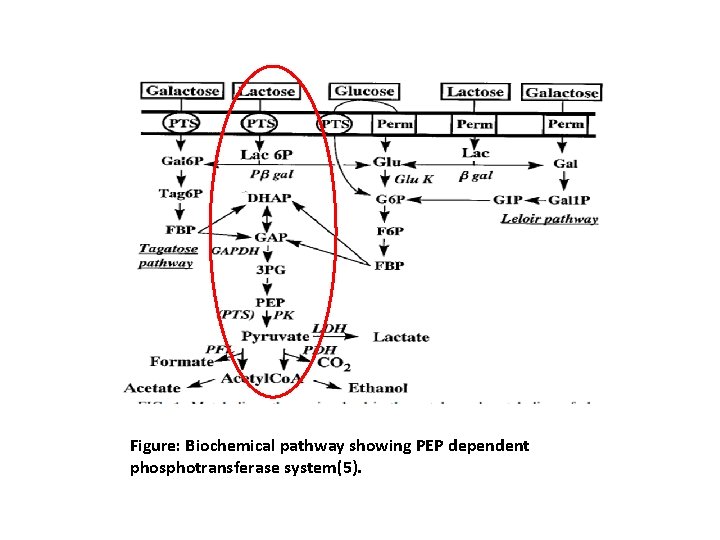
Figure: Biochemical pathway showing PEP dependent phosphotransferase system(5).
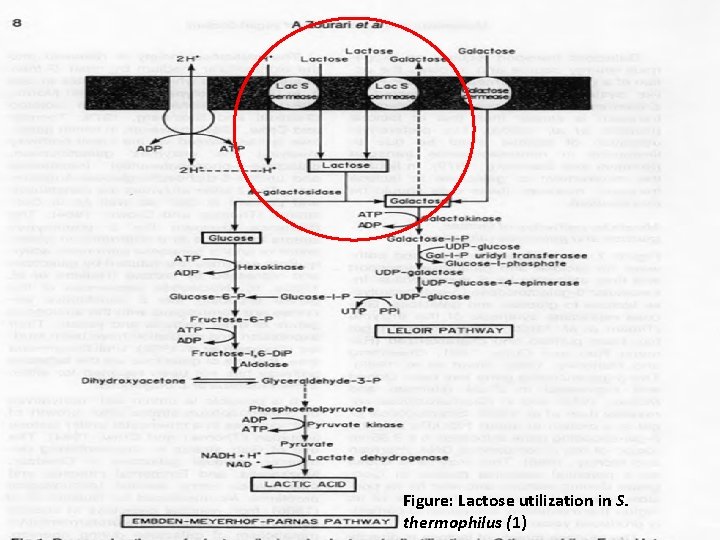
Figure: Lactose utilization in S. thermophilus (1)
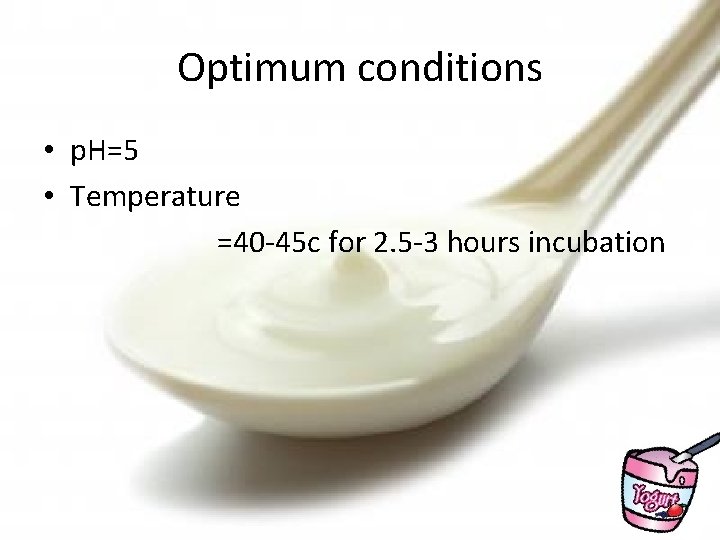
Optimum conditions • p. H=5 • Temperature =40 -45 c for 2. 5 -3 hours incubation
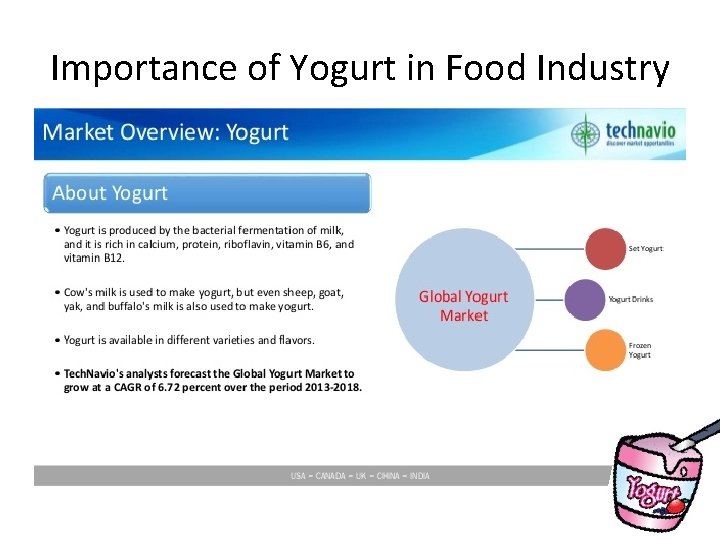
Importance of Yogurt in Food Industry
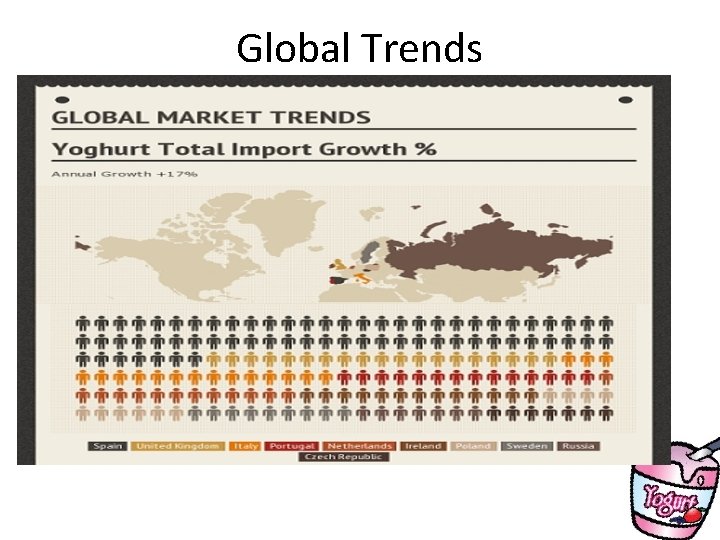
Global Trends
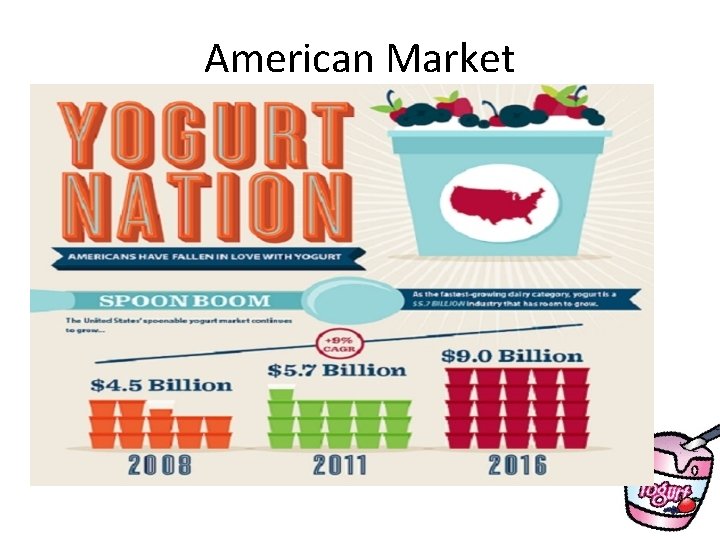
American Market
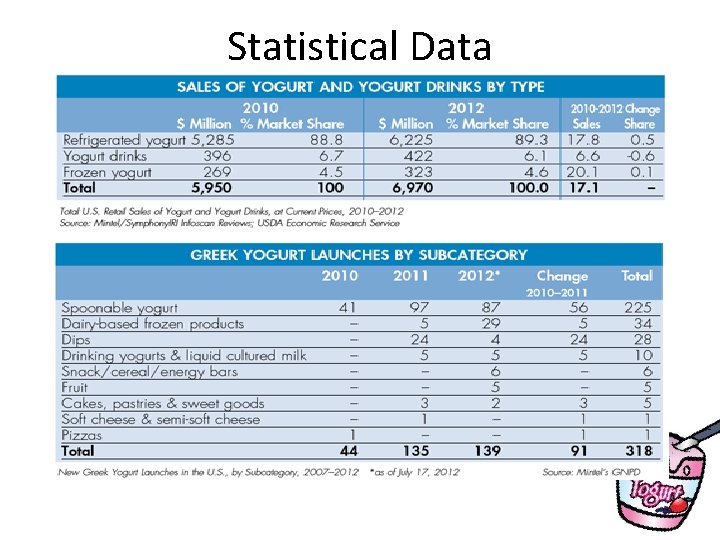
Statistical Data
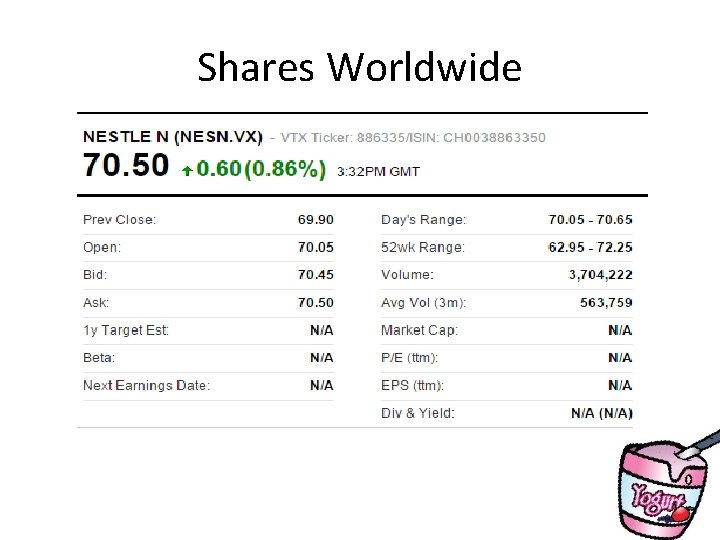
Shares Worldwide

Pakistani Shares
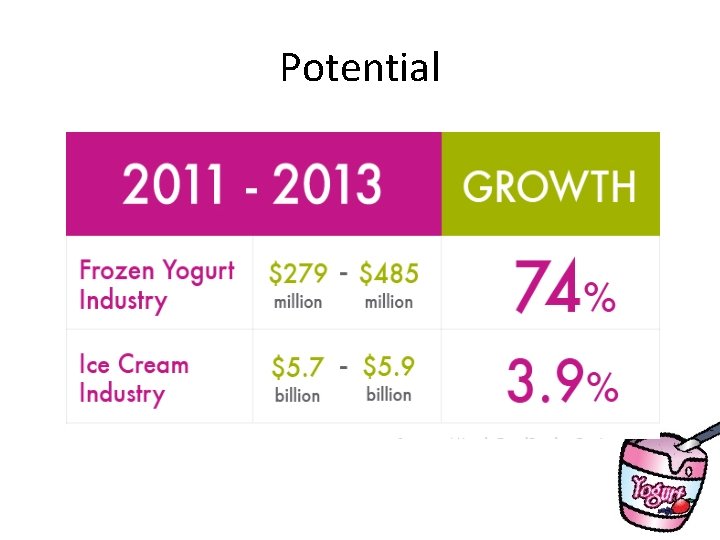
Potential
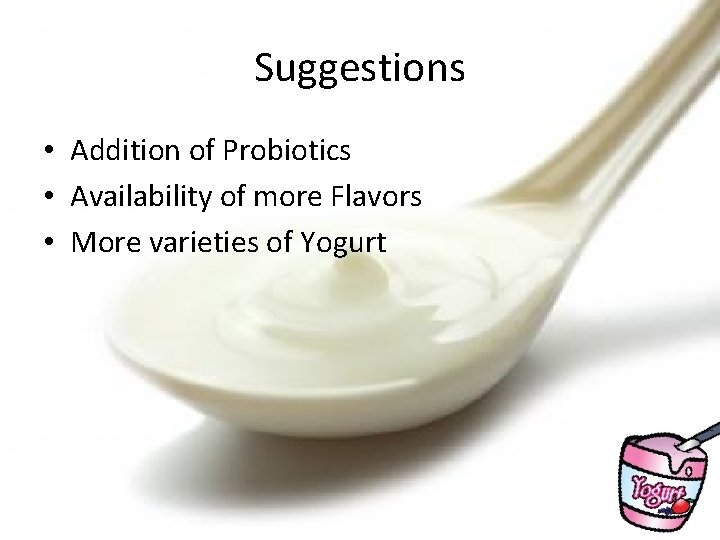
Suggestions • Addition of Probiotics • Availability of more Flavors • More varieties of Yogurt
References US Code of Federal Regulations-CFR, Milk Facts. 2. A. Y. Tamime, R. K. Robinson, Yogurt Science and Technology 3 rd edition, Woodhead Publishing in Food Science, Technology and Nutrition 2007. 3. Frédéric Leroy, Luc De Vuyst: “Lactic acid bacteria as functional starter cultures for the food fermentation industry”, Trends in Food Science and Technology; 15(2): 67 -78, Febraury 2004. 4. L De Vuyst, B Degeest: “Heteropolysaccharides from lactic acid bacteria”; FEMS Microbiology Reviews, 23: 153– 177, April 1999. 5. K. B. Chauncey, L. M. Boylan, L. Thompson, R. M. Ragain, R. Cook: “Effects of yogurt with and without active cultures on vaginal Candidal infection in women with diabetes mellitus”; Journal of the American Dietetic Association, 99: A-100, September 1999. 6. Joseph C. Kolars, M. D. , Michael D. Levitt, M. D. , Mostafa Aouji, D. A. G. , and Dennis A. Savaiano, Ph. D: "Yogurt — an Autodigesting Source of Lactose"; The New England Journal of Medicine 310 (1): 1– 3, January 1984. 7. Influences of exopolysaccharide producing cultures on the quality of plain set type yogurt. Zeynep B. Guzel-Seydima, Emel Sezginb, Atif C. Seydima. 3, 2005, Vol. 16. 8. Control of the Shift from Homolactic Acid to Mixed-Acid Fermentation in Lactococcus lactis: Predominant Role of the NADH/NAD 1 Ratio. CHRISTEL GARRIGUES, PASCAL LOUBIERE, * NIC D. LINDLEY, AND MURIEL COCAIGN-BOUSQUET. 1997. 9. https: //www. specialtyfood. com/news/article/yogurt-current-culture/ 10. http: //brandongaille. com/23 -frozen-yogurt-industry-statistics-and-trends/ 1.

THANKYOU! Eat healthy
- Slides: 37