
Food and Nutrition Chapter 8 Body Needs Food
Food and Nutrition Chapter 8
Body Needs Food • Food you eat affects your health • How you look and feel • How you resist and fight disease • How you perform mentally and physically • Food provides your body with nutrients
Nutrients • Substances that the body needs to regulate bodily functions, promote growth, repair body tissues, and obtain energy • Nutrition- the process by which the body takes in and uses these nutrients • 6 classes of nutrients • Carbohydrates, fats, protein, vitamins, minerals and water
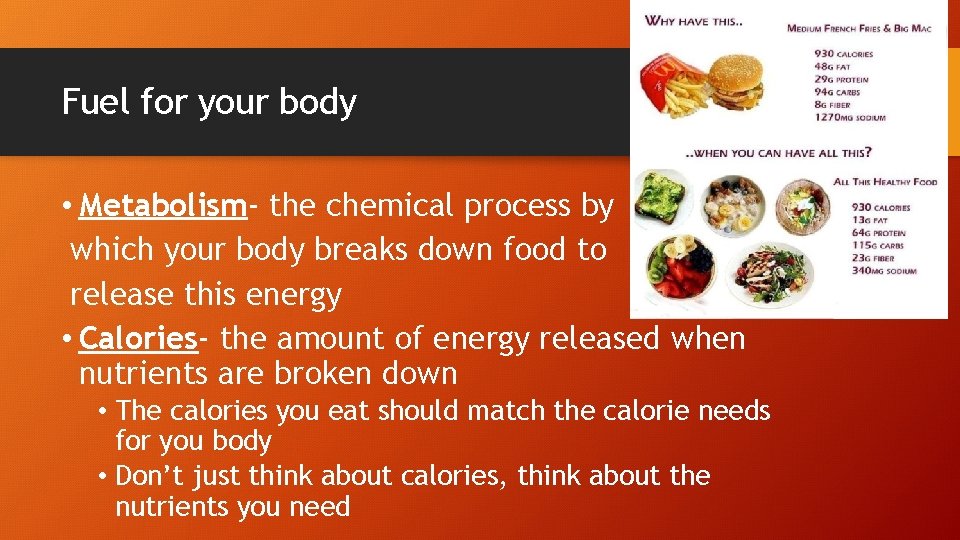
Fuel for your body • Metabolism- the chemical process by which your body breaks down food to release this energy • Calories- the amount of energy released when nutrients are broken down • The calories you eat should match the calorie needs for you body • Don’t just think about calories, think about the nutrients you need
Carbohydrates • Supply energy for your body • Two types • Simple • Sugars • Body converts sugar to glucose • Fruits, vegetables and milk • Complex • Starches • Body breaks down to simple sugars to be absorbed in the blood stream • Rice, potatoes, bread • 45 -65% of your diet should be carbohydrates • 1 gram of carb = 4 calories
Fiber • Complex carb found in plants • However not able to be broken down in the body • Helps prevent constipation • Reduce risk of colon cancer • Prevent heart disease
Fats • Supply your body with energy, form your cells, maintain body temperature, and protect your nerves • Types • Unsaturated • Liquid at room temperature • Oils, nuts, seeds • Saturated • Solid at room temperature • Animal fats, dairy products • 20 -35% of your diet should be fat • 1 gram fat = 9 calories
Fats cont’d • Cholesterol- a waxy, fatlike substance found in animal products • Make cell membranes, nerve tissue, hormones, help with digestion of fat • Liver can make all the cholesterol you need, you do not need it in your diet • Trans fat • Keep food fresh longer • Not healthy
Proteins • Growth and repair of your body’s tissues • Types • Complete protein • Animal sources • Incomplete protein • Plant sources; beans, lentils, nuts • Amino acids • Broken down from proteins by your digestive system • 10 -35% of your diet should be protein • 1 gram protein= 4 calories
Myth or Fact? ? ? • As part of a healthy diet, people need to take dietary supplements?
Vitamins • Made by living things, required in small amounts and assist many chemical reactions • Blood clotting • Types • Fat soluble (p. 203) • Dissolve in fatty materials • Water soluble (p. 204) • Dissolve in water
Minerals • Body only requires small amounts, occur naturally in rocks and soil • 24 essential minerals (page 207) • 7 you need in significant amounts • Calcium, sodium, potassium, magnesium, phosphorus, chlorine, sulfur
Water • 65% body made up of water • Homeostasis- the process of maintaining a steady state inside your body • Regulates body temperature • Electrolytes- help nervous and muscular system • Dehydration- a serious reduction in the body’s water content • Weakness, rapid breathing, weak heartbeat • How much water do you need to drink a day? ?
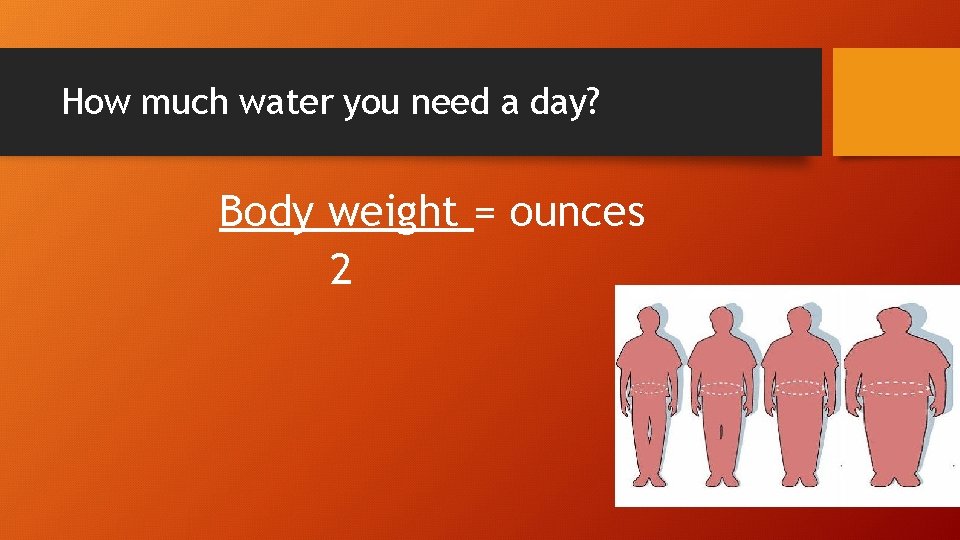
How much water you need a day? Body weight = ounces 2
Practice the skill • Page 200 -201
- Slides: 15