
FOOD AND HEALTH 123 FOOD NUTRITION SCIENCES DEPARTMENT

- Slides: 58
FOOD AND HEALTH 123 FOOD & NUTRITION SCIENCES DEPARTMENT Dr. Nayef Bumaryoum 1
Nutrition and Health Key-Words Diet: the customary amount and kind of food and drink taken by a person from day to day; more narrowly, a diet planned to meet specific requirements of the individual, including or excluding certain food dietary Balanced diet: a diet that contains adequate amounts of all the necessary nutrients required for healthy growth and activity Malnutrition: a state in which prolonged lack of one or more nutrients retards physical development or causes the appearance of specific clinical conditions. 2
• Deficiency disease: is a disease resulting from the lack of on or more essential nutrients in the diet, it may be related to dietary intake, digestive problems or malabsorption. • Communicable disease: a disease carried from one person to or animal to another by direct or indirect contact. • Infection: invasion of the body by pathogenic agents (bacteria/virus. • Infestation: invasion of the body by parasites. • Food born infection diseases: disease transmitted through the ingestion of contaminated food or water or by infected handlers 3 or contaminated hands.
Nutrition and Health • Nutrition is the science of foods, the nutrients and other substances therein, their action, interaction and balance in relationship to health and disease; the processes by which the organism ingests, digests, absorbs, transports and utilises nutrients and disposes of their end products. In addition, nutrition is concerned with social, economic, cultural and psychological implications of food and eating. In short, nutrition science is the area of knowledge regarding the role of food in the maintenance of health. 4
Nutritional status • Nutritional status is the condition of health of the individual influenced by the utilisation of the nutrients. It can be determined only by the correlation of information obtained through a careful medical and dietary history, a thorough physical examination and appropriate laboratory investigation. 5
Health • Health is defined by the World Health Organisation as the “State of complete physical, mental and social well being and not merely the absence of disease and infirmity. ” The essential requisites (or dimensions) of “health” include the following: 6
NUTRITION IN RELATION TO HEALTH • Health is related to the food consumed. To maintain good health, ingesting a diet containing the nutrients in correct amount is essential. A balanced diet is one which contains different types of food in such quantities and proportions so that the need for calories, proteins, fats, minerals and vitamins is adequately met and a small provision is made for extra nutrients to withstand short duration of leanness. Deficiency of any nutrient affects health of an individual. Food has not only nutrients but also nutraceuticals which prevent degenerative diseases. Overnutrition also affects health. Obesity is a nutritional problem. The incidence of heart disease, hypertension, diabetes and cancer is high among obese individuals. 7
FACTORS INFLUENCING HEALTH • Some of these factors are beyond the control of the individual, such as their – – – Age Sex Genetic make up. • Many other factors are controllable to some degree, for instance, lifestyle behaviours such as • • • – – smoking Diet physical activity Alcohol consumption The health status of an individual may also be influenced by The social The economic The physical environments in which they live. War (Factors affecting health can interact with one another. ) 8
CLASSIFICATION OF NUTRIENTS Nutrients are the constituents in food that must be supplied to the body in suitable amounts. These include carbohydrates, fats, proteins, minerals, vitamins and water. Chemical substances obtained from food are used in the body to provide energy, as structural materials and regulating agents to support growth, maintenance and repair of the body’s tissues. Nutrients may also reduce the risks of some degenerative diseases. 9
Malnutrition • Malnutrition results from imbalance between the body's needs and the intake of nutrients, which can lead to syndromes of deficiency. • Condition related to malnutrition • Overnutrition : Consumption of excessive food or nutrient, as occurs in obesity, megadoses of vitamins leading to toxicity. • Undernutrition : inadequate ingestion of nutrients as in PEM, Vit. Deficiencies 10
Malnutrition • Malnutrition may be caused by endogenous factors, such as faulty metabolism, or exogenous factors, such as inadequate dietary intake • it may be classified as primary resulting from inadequate or excessive intake of one or more essential nutrients “or secondary” resulting from altered body functions such as malabsorption syndrome. 11
Risk factors associated with malnutrition • • Low education Poverty Mental/physical disabilities Old age Alcoholism Drug addiction Food fadism Institutionalization “prisons” 12
Secondary malnutrition. Risk factors predisposing to S. M. • 1 - Failure to meet the excess nutritional need during, fast growing period, lactation, pregnancy and physical stress • 2 - Problem involving ingestion, digestion, absorption and metabolism, pathological conditions as in • Anorexia loss of appetite, nausea and vomiting, fever, poor dentition. • Gastrectomy, cholicystitis or pancreatic insufficiency • Achlorhydria, liver and gall bladder diseases, diarrhea, colitis, malabsorption. 13
• Excessive loss of nutrients via execration as • • • an high sweating or polyuria. Excessive loss of nutrients via hemorrhage, diarrhea and parasites Abnormal metabolism as in DM, liver failure, alcoholism and in some leukemia’s prolonged usage of antibiotics which destroys the natural flora causing vits. Deficiency (B and K) 14
Prevention • 1 - Adequate and well-balanced diet emphasizing the deficient nutrient(s) • 2 - Alleviating the patho. Cause and provide supplement if necessary. 15
Dietary Recommendations • All dietary recommendations should be considered within the framework of a nutritionally balanced diet. The goal for each and every patient is healthy eating primarily achieved by consumption of a combination of low fat, high fiber foods, and exercise. 16
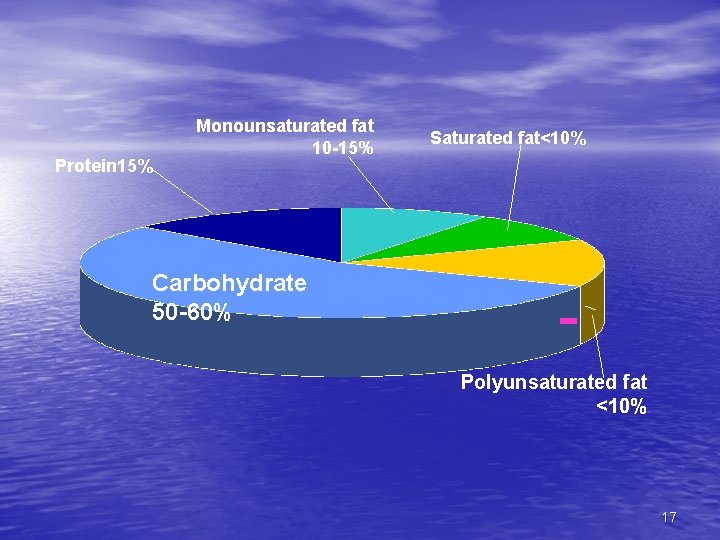
Protein 15% Monounsaturated fat 10 -15% Saturated fat<10% Carbohydrate 50 -60% Polyunsaturated fat <10% 17
PROTEIN • RDA: for a healthy adult is 0. 8 -1. 0 gm/kg IBW/d. • Children require 1 -2 gm/kg/d 18
Protein • Excess • High ptn. Intake is wasteful “economically” • High ptn. Intake is a burden for diseased liver or kidney. • High Ca loss in urine • Sources of animal ptn. Are sources of saturated fat too, which will lead to undesirable levels of fat intake if ptn. Intake is high ﺯ 19
20
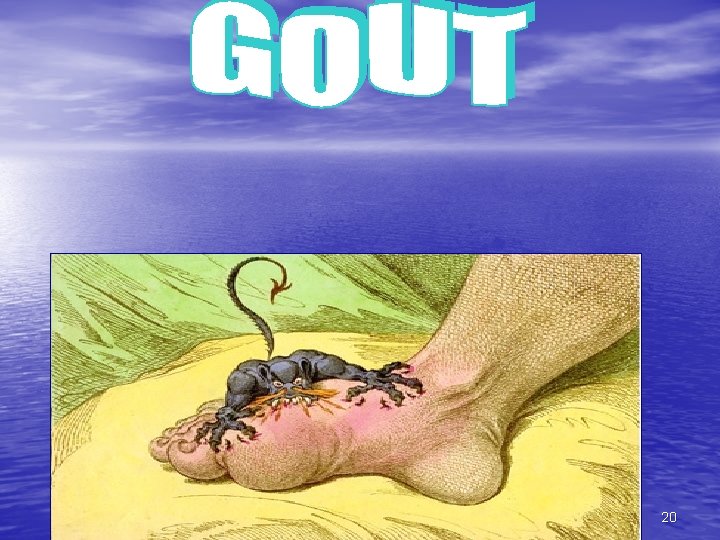
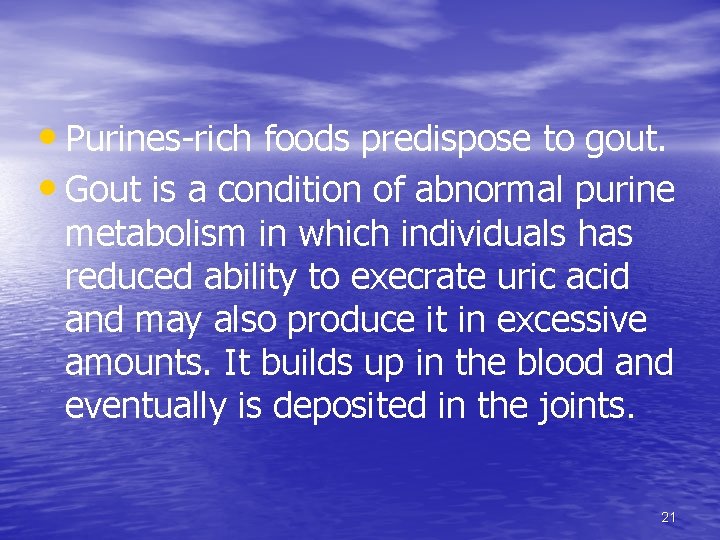
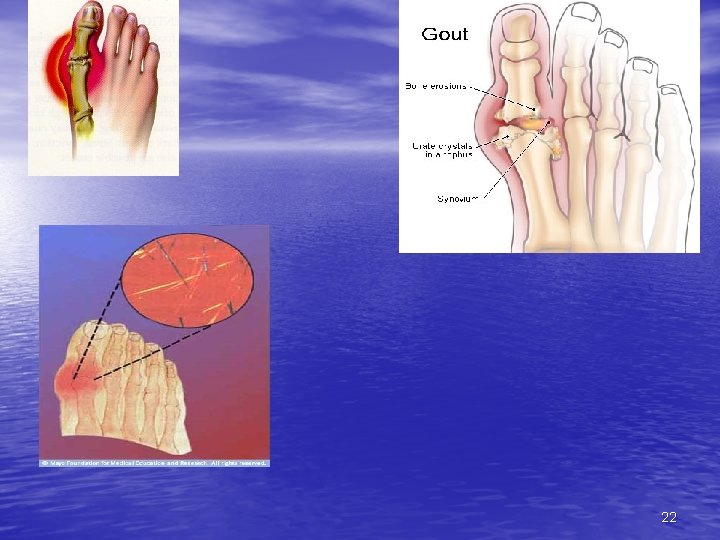
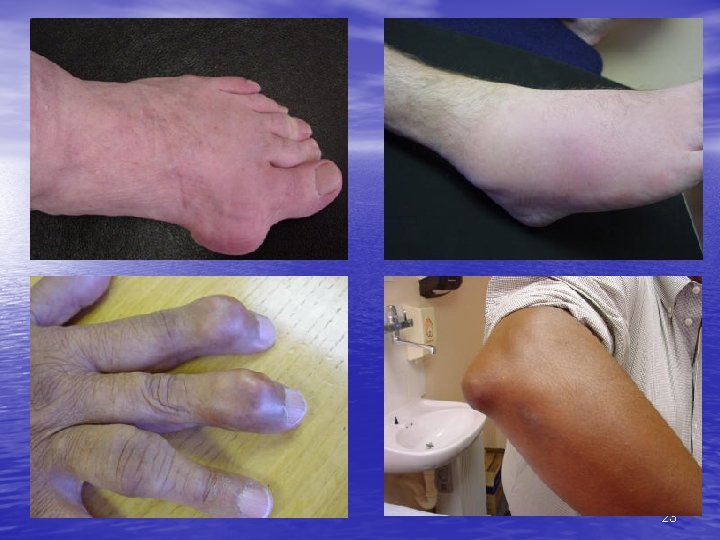
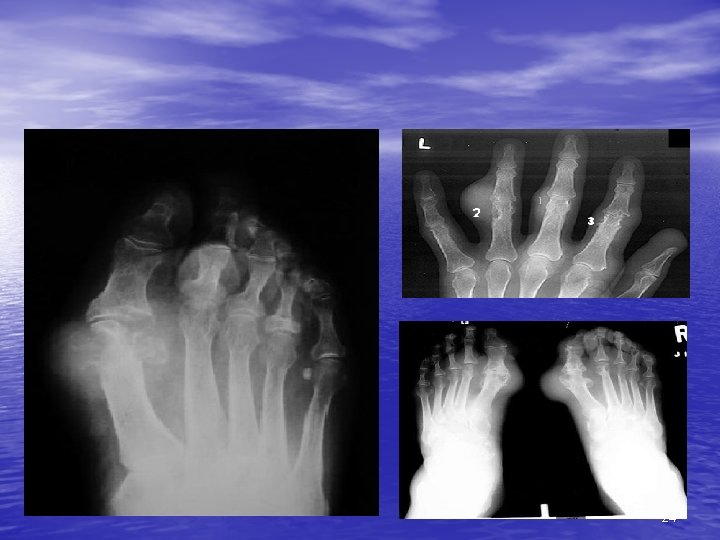
• Purines-rich foods predispose to gout. • Gout is a condition of abnormal purine metabolism in which individuals has reduced ability to execrate uric acid and may also produce it in excessive amounts. It builds up in the blood and eventually is deposited in the joints. 21
22
23
24
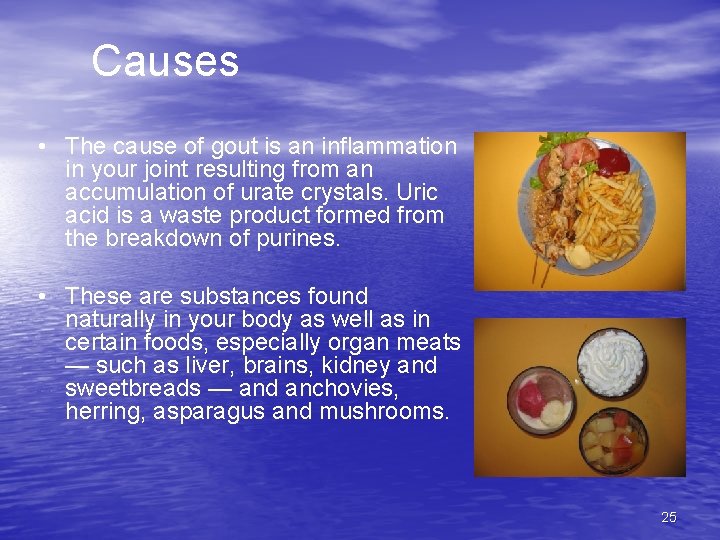
Causes • The cause of gout is an inflammation in your joint resulting from an accumulation of urate crystals. Uric acid is a waste product formed from the breakdown of purines. • These are substances found naturally in your body as well as in certain foods, especially organ meats — such as liver, brains, kidney and sweetbreads — and anchovies, herring, asparagus and mushrooms. 25
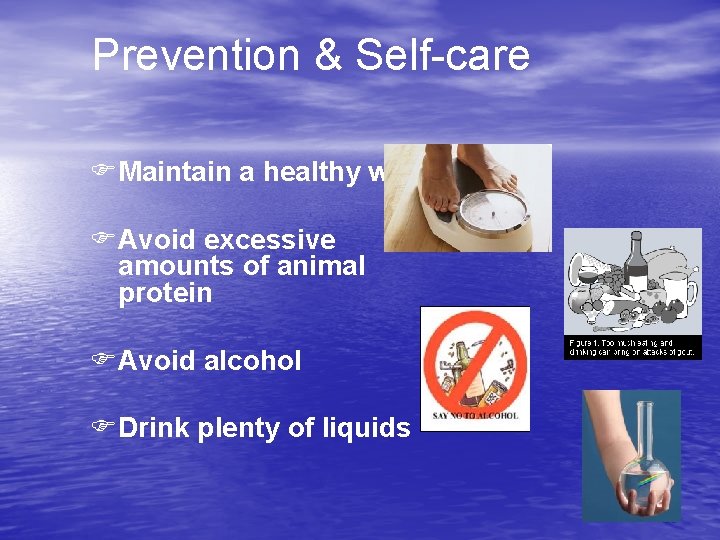
Prevention & Self-care FMaintain a healthy weight FAvoid excessive amounts of animal protein FAvoid alcohol FDrink plenty of liquids 26
Protein deficiency • Occur when individual dose not eat enough ptn. Foods of low biological value, or obtain insufficient calories 27
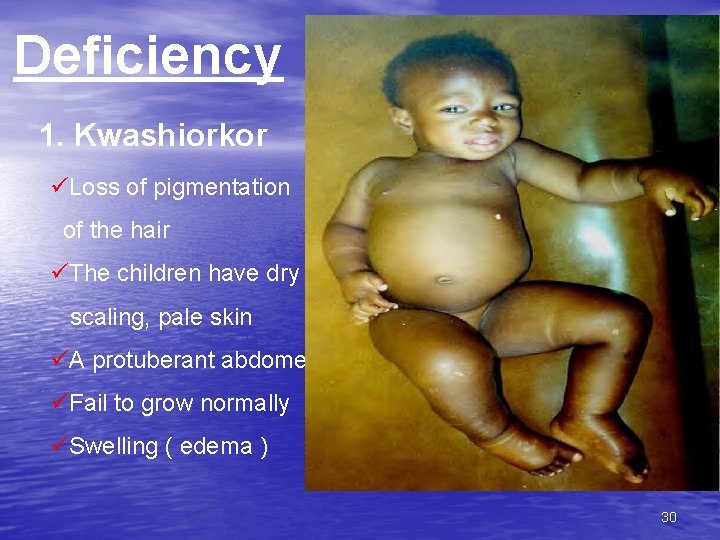
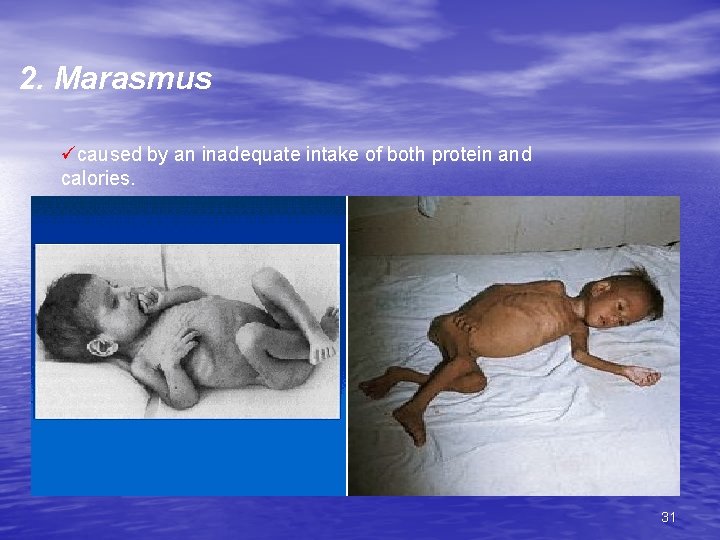
Protein energy malnutrition • Kwashiorkor, and marasmus, are major health problems for infants and young children in Africa, or after the infant is weaned 28
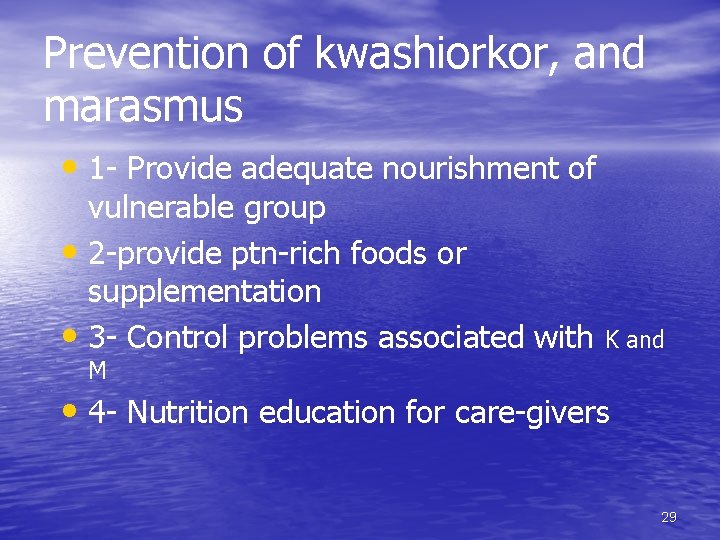
Prevention of kwashiorkor, and marasmus • 1 - Provide adequate nourishment of vulnerable group • 2 -provide ptn-rich foods or supplementation • 3 - Control problems associated with K and M • 4 - Nutrition education for care-givers 29
Deficiency 1. Kwashiorkor üLoss of pigmentation of the hair üThe children have dry scaling, pale skin üA protuberant abdomen üFail to grow normally üSwelling ( edema ) 30
2. Marasmus ücaused by an inadequate intake of both protein and calories. 31
FAT A- Excess: lead to Obesity and related problem Excess intake of fat-soluble vitamins B- Deficiency: lead to • 1 - Lack of essential fatty acids and fatsoluble vitamins • 2 - Weight loss • 3 -Inefficient utilization of Protein and CHO 32
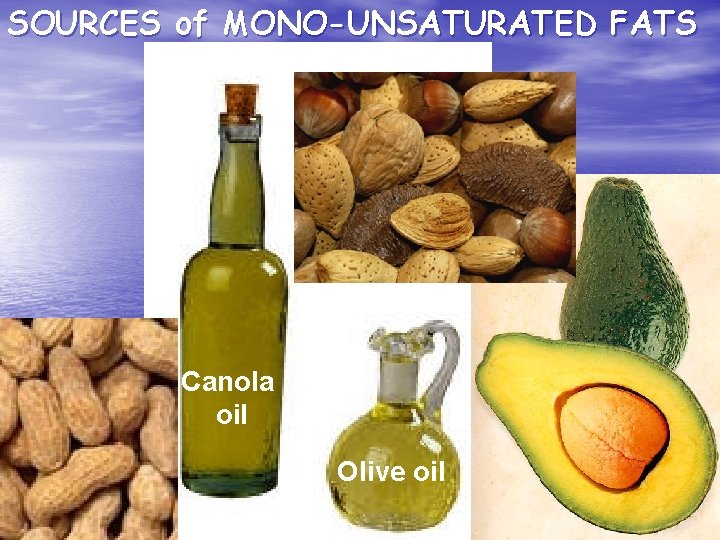
Monounsaturated Fatty Acids • Appear to lower LDL (“bad”) cholesterol and help raise levels of HDL (“good”) cholesterol. – Food sources: olives, olive oil, avocados, peanuts oil and canola oil. 33
SOURCES of MONO-UNSATURATED FATS Canola oil Olive oil 34
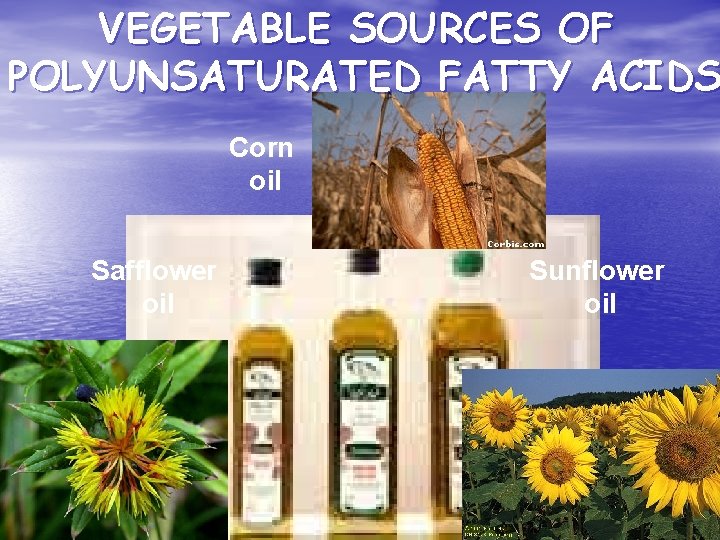
Polyunsaturated Fatty Acids • Fats that seem to lower total cholesterol levels. – Food sources: many vegetable oils, such as corn oil, soybean oil and safflower oil, sunflower oil. 35
VEGETABLE SOURCES OF POLYUNSATURATED FATTY ACIDS Corn oil Safflower oil Sunflower oil 36
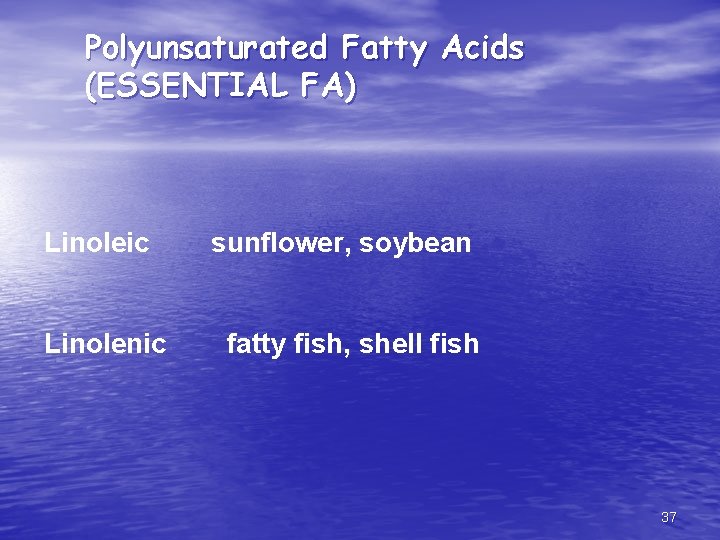
Polyunsaturated Fatty Acids (ESSENTIAL FA) Linoleic Linolenic sunflower, soybean fatty fish, shell fish 37
High fat diets are linked to… • Heart Disease • Obesity • Cardiovascular Related Problems 38
Lowering Fat and Cholesterol in the Diet • Exercise • Replace saturated fats with unsaturated fats in the diet • Choose lean cuts of meat • Steam, boil or bake foods instead of cooking them in oil or fat • (See the last page of your handout for more tips) 39
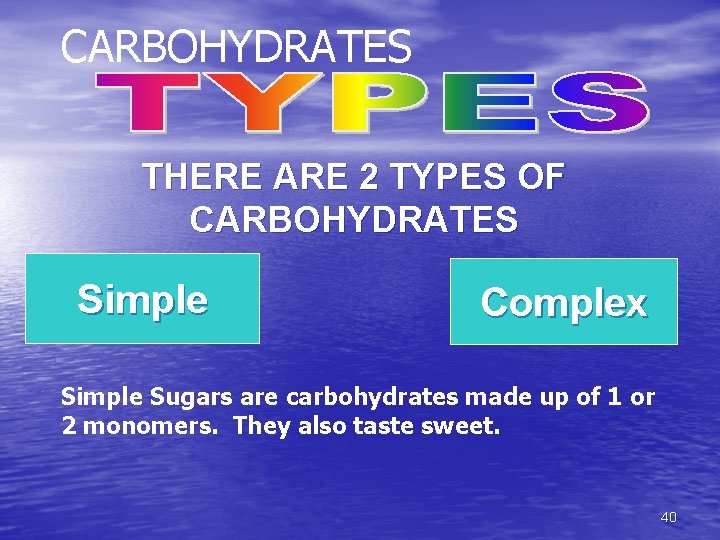
CARBOHYDRATES THERE ARE 2 TYPES OF CARBOHYDRATES Simple Complex Simple Sugars are carbohydrates made up of 1 or 2 monomers. They also taste sweet. 40
Simple Sugars 41
Carbohydrates: • Sugars (saccharides), – Monosaccharides (single sugars) • Glucose – • Fructose – • Galactose – • In the body, fructose and galactose are converted to glucose. 42
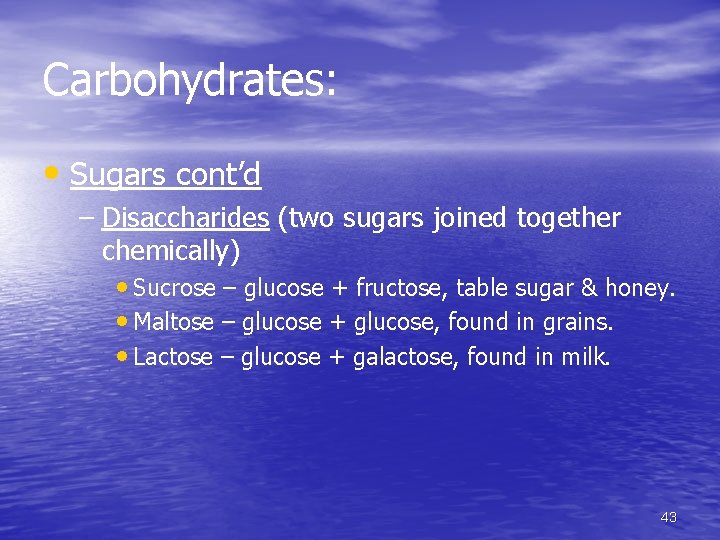
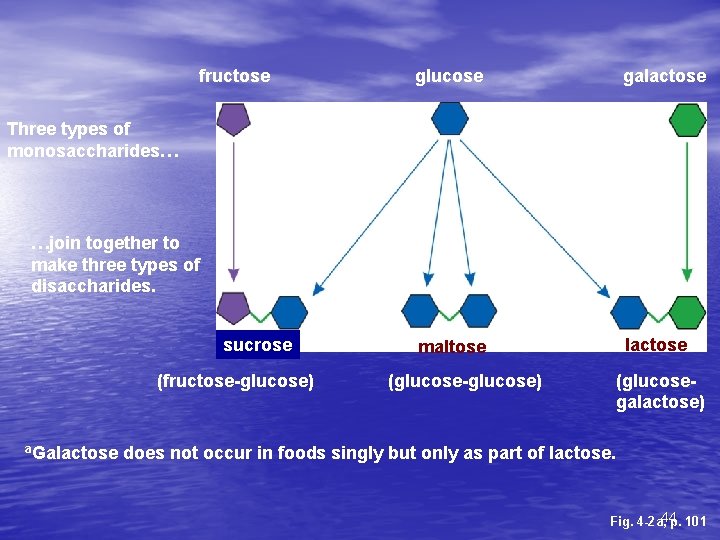
Carbohydrates: • Sugars cont’d – Disaccharides (two sugars joined together chemically) • Sucrose – glucose + fructose, table sugar & honey. • Maltose – glucose + glucose, found in grains. • Lactose – glucose + galactose, found in milk. 43
fructose glucose galactose maltose lactose Three types of monosaccharides… …join together to make three types of disaccharides. sucrose (fructose-glucose) a. Galactose (glucose-glucose) (glucosegalactose) does not occur in foods singly but only as part of lactose. Fig. 4 -2 a, 44 p. 101
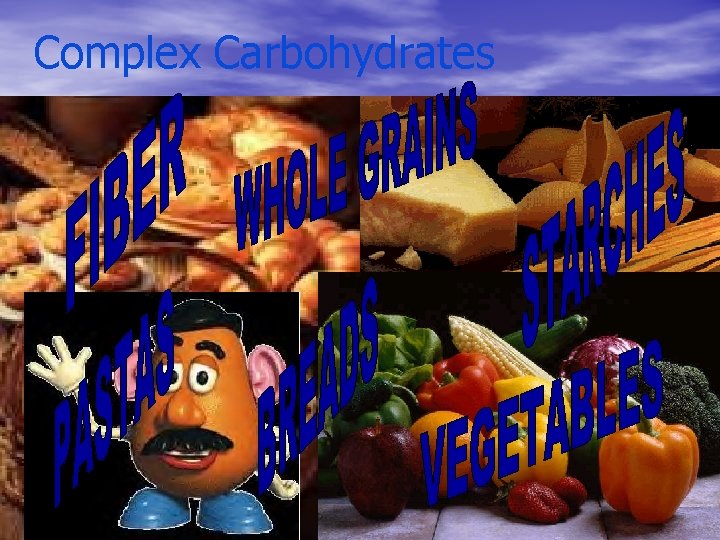
Complex Carbohydrates… Complex Cabohydrates made up of many monomers. Most also taste starchy. 45
Carbohydrates: • Polysaccharides (means many sugars or 3 or more sugars) – Starch – Glycogen 46
Complex Carbohydrates 47
Carbohydrates: • Polysacchrides cont’d – Fiber - is a type of complex carbohydrate that is found in plants. • Soluble fiber – dissolves in water and is digestable. Pectin, gums, mucilages • Insoluble fiber – does not dissolve in water, less digestable. Cellulose, hemicellulose 48
Fiber • Fiber is a type of complex carbohydrate that is found in plants. • A high-fiber diet • helps prevent constipation • may reduce the risk of colon cancer • may help prevent heart disease 49
How do our bodies use glucose? • Extra amounts of glucose are stored as glycogen. Excess amounts of glucose are converted into fat! 50
Digestion and Absorption of Carbohydrates • Blood carries monosaccharides to the liver. – All are converted to glucose. – Glucose travels to other cells via the blood. – Extra glucose is stored as glycogen in the liver and skeletal muscles. 51
CARBOHYDRATES A- Excess: lead to Obesity and related problem B- Deficiency : lead to 1 - Abnormal energy metabolism 2 - Weight loss 3 -Inefficient utilization of Protein and Fat 52
Carbohydrate intolerance • Carbohydrate intolerance (Lactose intolerance) the inability to digest the sugar found in milk, is widespread and affects up to 70% of the world's adult population. usually because of the deficiency of an enzyme needed for digestion Types of intolerance • • Primary deficiency is caused by an enzyme defect • present at birth or developed over time. Secondary deficiencies are caused by a disease or disorder of the intestinal tract, and disappear when the disease is treated. 53
Symptoms • nausea, cramps, bloating, and diarrhea. • Food intolerance can be confused with food allergies, • • since both of them have the same symptoms In a growing child, the main symptoms are diarrhea and a failure to gain weight. In an individual with lactase deficiency, gastrointestinal distress begins about 30 minutes to two hours after eating or drinking foods containing lactose ﺯ 54
Treatment • In primary conditions, no treatment exists to improve the body's ability to produce the enzymes, but symptoms can be controlled by diet. • Secondary deficiencies (temporary intestinal diseases disappears when the condition is successfully treated. 55
Celiac disease • Celiac disease is a disease of the digestive system that damages the small intestine and interferes with the absorption of nutrients from food. • Celiac disease occurs when the body reacts abnormally to gluten, a protein found in wheat, rye, barley, and possibly oats. 56
Celiac disease • damages the tissues and results in impaired ability to absorb nutrients from foods. The inflammation and malabsorption create wide-ranging problems in many systems of the body • celiac disease is called multifactorial (caused by many factors, both genetic and environmental 57
Celiac disease • The only treatment for celiac disease is a gluten-free diet. • Gluten is present in any product that contains wheat, rye, barley, or oats 58