
Food and Fuel fuel value the energy released
- Slides: 9
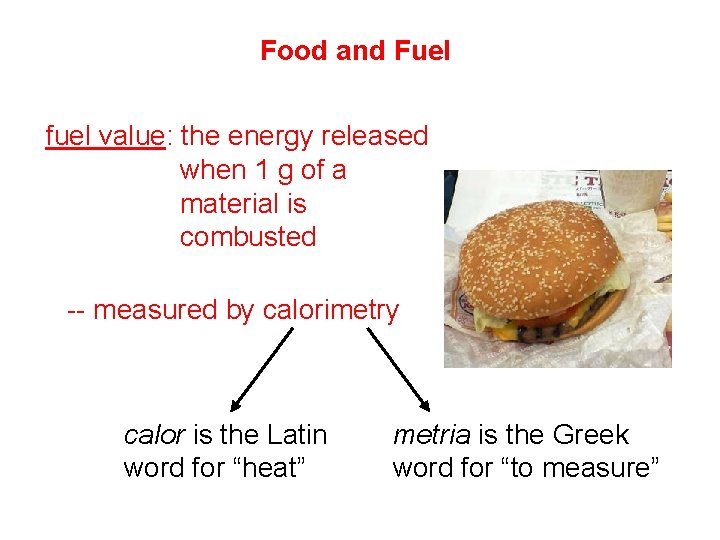
Food and Fuel fuel value: the energy released when 1 g of a material is combusted -- measured by calorimetry calor is the Latin word for “heat” metria is the Greek word for “to measure”
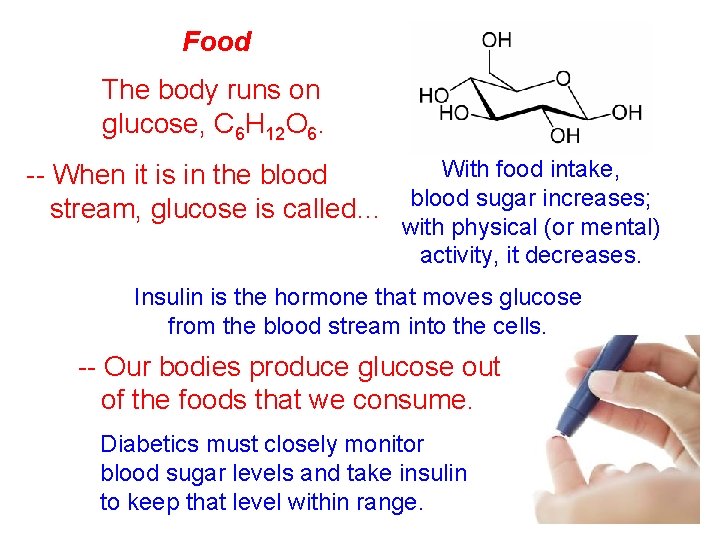
Food The body runs on glucose, C 6 H 12 O 6. With food intake, -- When it is in the blood stream, glucose is called… blood sugar increases; with physical (or mental) “blood sugar. ” activity, it decreases. Insulin is the hormone that moves glucose from the blood stream into the cells. -- Our bodies produce glucose out of the foods that we consume. Diabetics must closely monitor blood sugar levels and take insulin to keep that level within range.
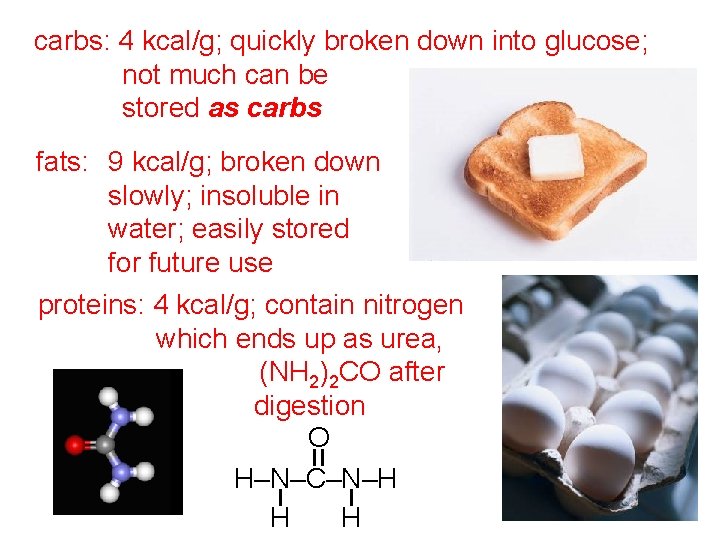
carbs: 4 kcal/g; quickly broken down into glucose; not much can be stored as carbs fats: 9 kcal/g; broken down slowly; insoluble in water; easily stored for future use proteins: 4 kcal/g; contain nitrogen which ends up as urea, (NH 2)2 CO after digestion O H–N–C–N–H H H
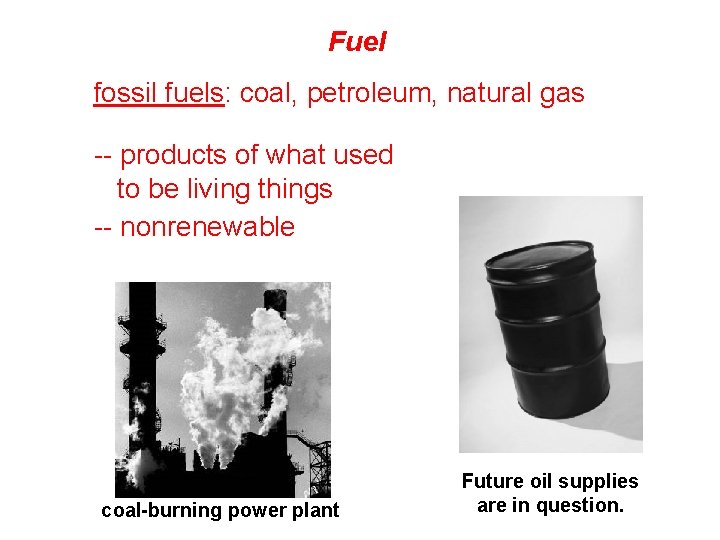
Fuel fossil fuels: coal, petroleum, natural gas -- products of what used to be living things -- nonrenewable coal-burning power plant Future oil supplies are in question.
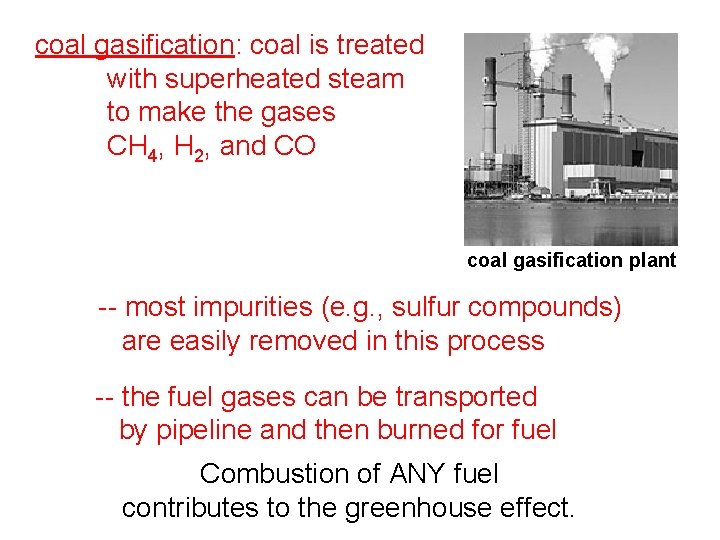
coal gasification: coal is treated with superheated steam to make the gases CH 4, H 2, and CO coal gasification plant -- most impurities (e. g. , sulfur compounds) are easily removed in this process -- the fuel gases can be transported by pipeline and then burned for fuel Combustion of ANY fuel contributes to the greenhouse effect.
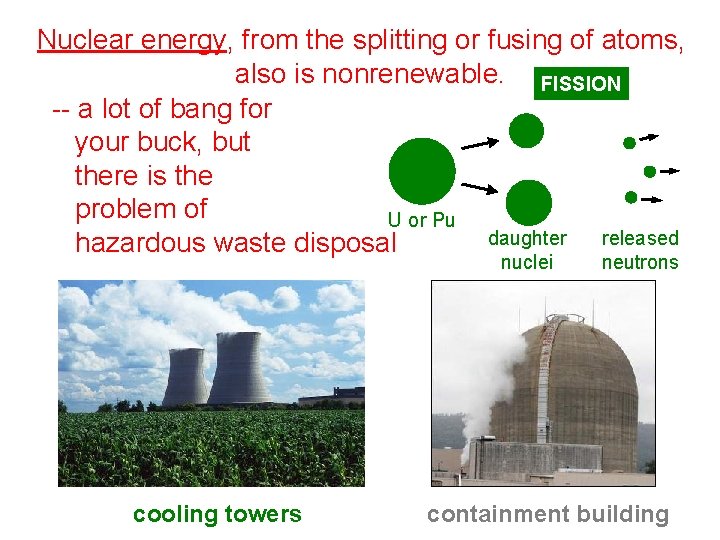
Nuclear energy, from the splitting or fusing of atoms, also is nonrenewable. FISSION -- a lot of bang for your buck, but there is the problem of U or Pu daughter released hazardous waste disposal nuclei cooling towers neutrons containment building
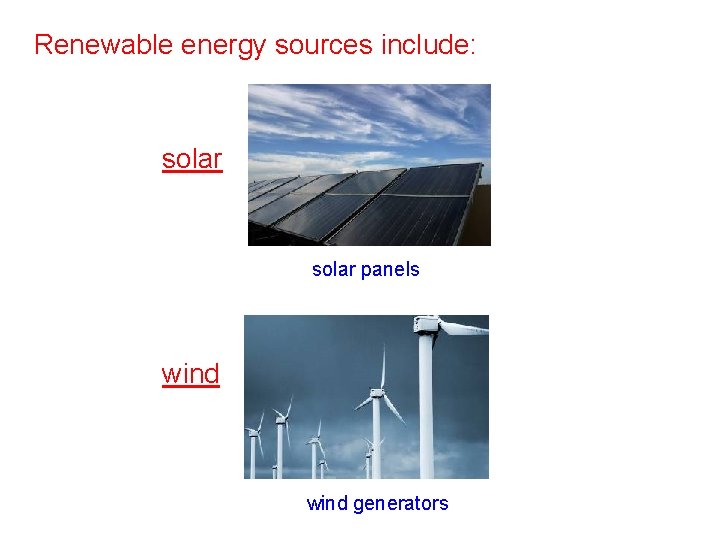
Renewable energy sources include: solar panels wind generators
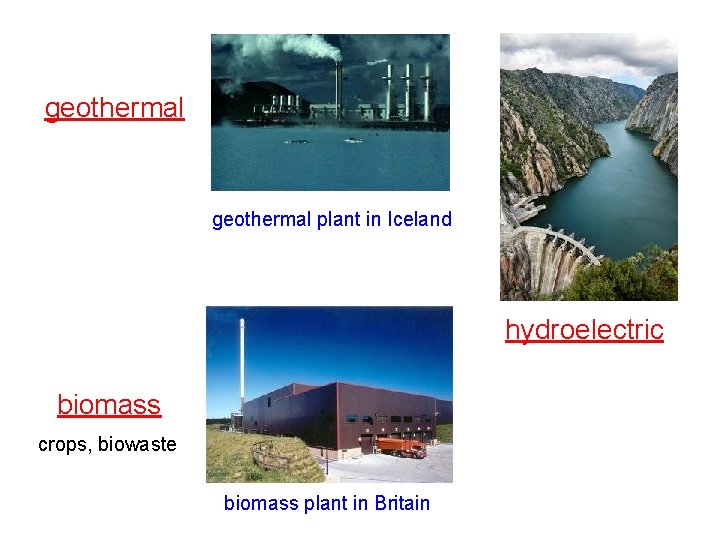
geothermal plant in Iceland hydroelectric biomass crops, biowaste biomass plant in Britain
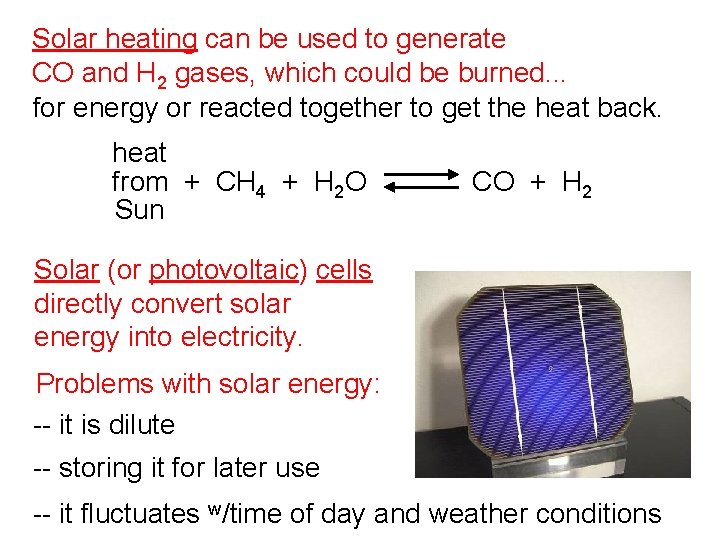
Solar heating can be used to generate CO and H 2 gases, which could be burned. . . for energy or reacted together to get the heat back. heat from + CH 4 + H 2 O Sun CO + H 2 Solar (or photovoltaic) cells directly convert solar energy into electricity. Problems with solar energy: -- it is dilute -- storing it for later use -- it fluctuates w/time of day and weather conditions