
Food and beverages Coffee Industry Focused Amber Liang
Food and beverages Coffee Industry Focused Amber Liang Anna Jiang Chris zhang Steven Xiao 301275649 301244568 301296638 301215889 Bus 419 D-100 Simon Fraser University
Table of content The coffee market Smucker’s Starbucks Nestle
Some coffee market facts ● Coffee is the second most traded commodity after oil ● People consume over 500 billion cups of coffee every year ● Coffee exporting industry alone is a 20 billion dollar industry ● There are only two types of coffee Arabica and robusta
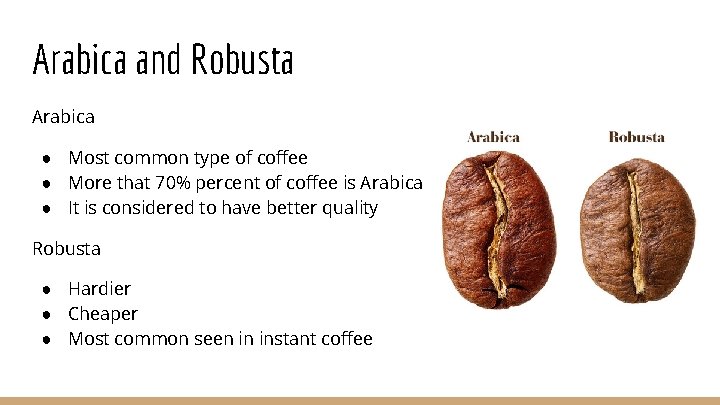
Arabica and Robusta Arabica ● Most common type of coffee ● More that 70% percent of coffee is Arabica ● It is considered to have better quality Robusta ● Hardier ● Cheaper ● Most common seen in instant coffee
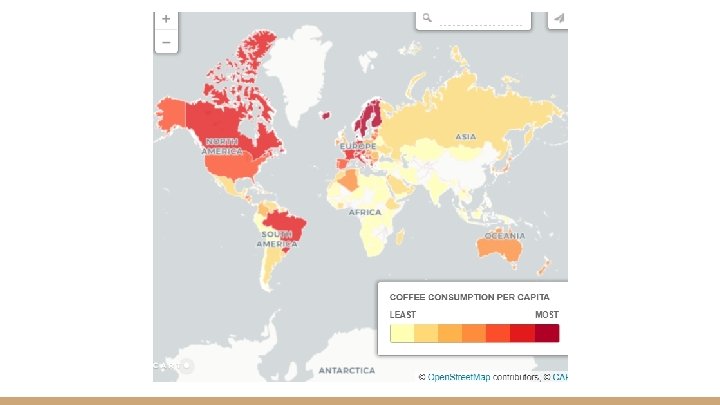
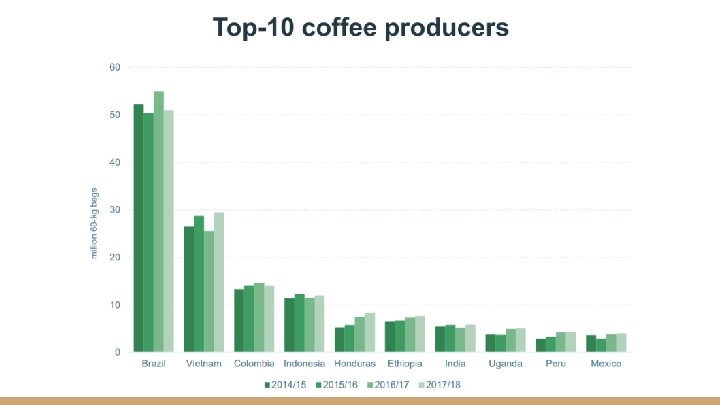
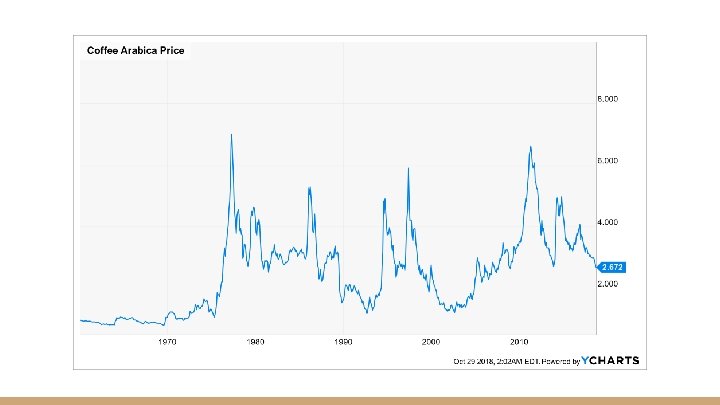
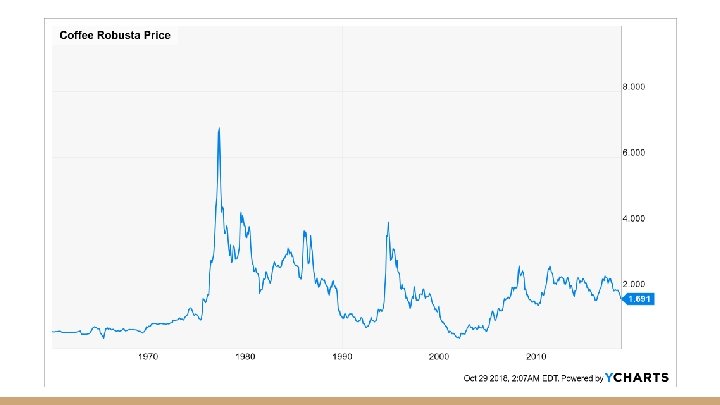
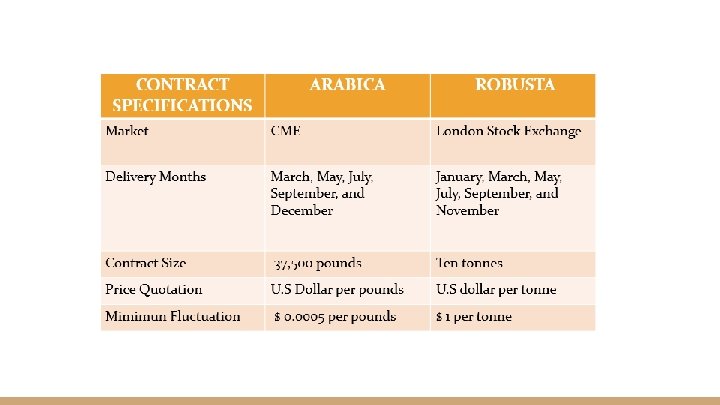
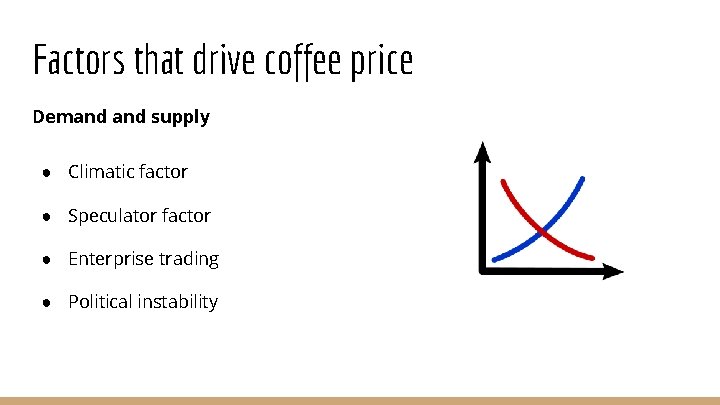
Factors that drive coffee price Demand supply ● Climatic factor ● Speculator factor ● Enterprise trading ● Political instability
Climatic Factor Coffee output is highly depends on the weather condition Rain has to fall just the right time Sun has to shine just the right time
Speculator factor coffee is the second largest traded commodity the market activities of traders could cause significant effect on coffee price
Enterprise Trading largest four companies purchase more than 50% share of the coffee produced worldwide If those companies decide to buy arabica coffee, the price of the arabica coffee will increase
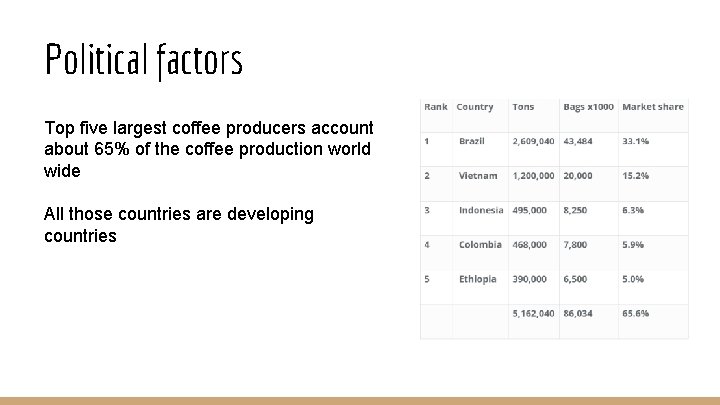
Political factors Top five largest coffee producers account about 65% of the coffee production world wide All those countries are developing countries
JM Smuckers Company
Company Overview • • The J. M. Smucker Company, also known as Smucker and Smucker's, is an American manufacturer of fruit spreads, ice cream toppings, beverages, shortening, peanut butter, oils, and other products in North America. Smucker's headquarters are located in Orrville, Ohio. It was founded in 1897. CEO: Mark T. Smucker (May 1, 2016–)
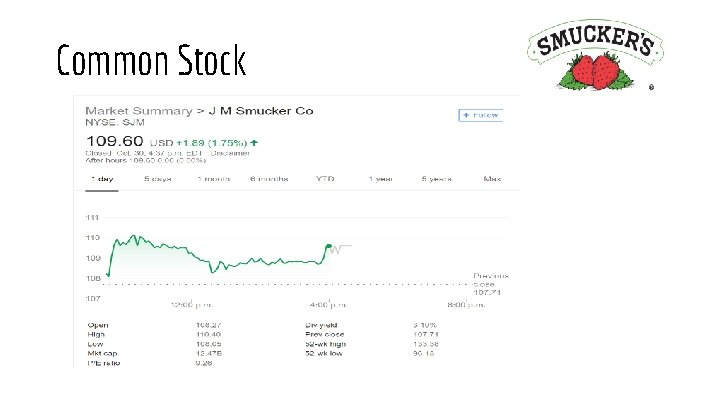
Common Stock
Business Segment • • U. S. Retail Coffee, U. S. Retail Consumer Foods, U. S. Retail Pet Foods, International and Away From Home. Segments as a percentage of total net Revenues in 2018: • • U. S. Retail Coffee -28% U. S. Retail Consumer Foods - 27% U. S. Retail Pet Foods - 30% International and Away From Home - 15%
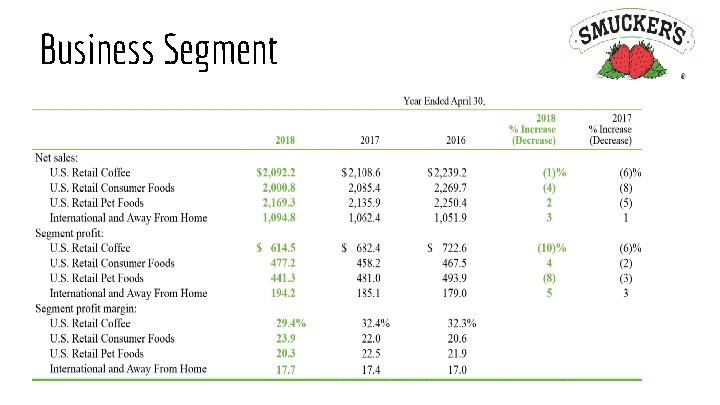
Business Segment
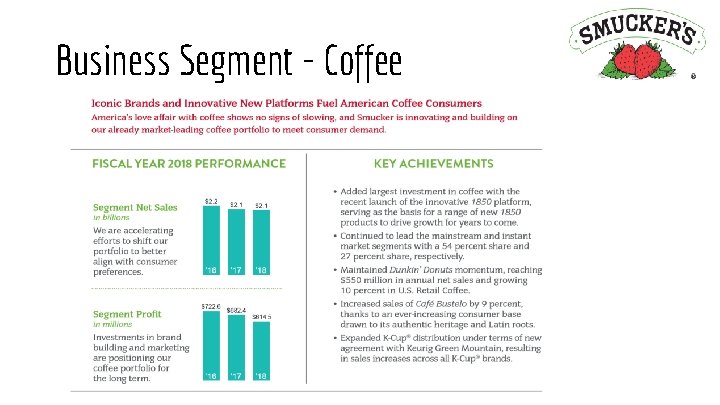
Business Segment - Coffee
Financial Statement • Consolidated Statements of Comprehensive Income • Consolidated Balance Sheets • Consolidated Statements of Cash Flows
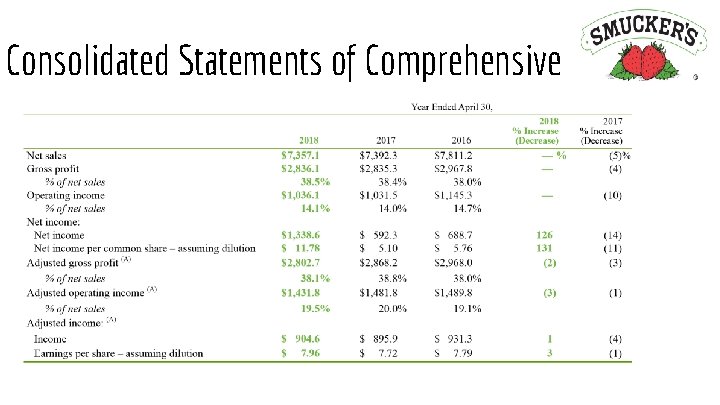
Consolidated Statements of Comprehensive
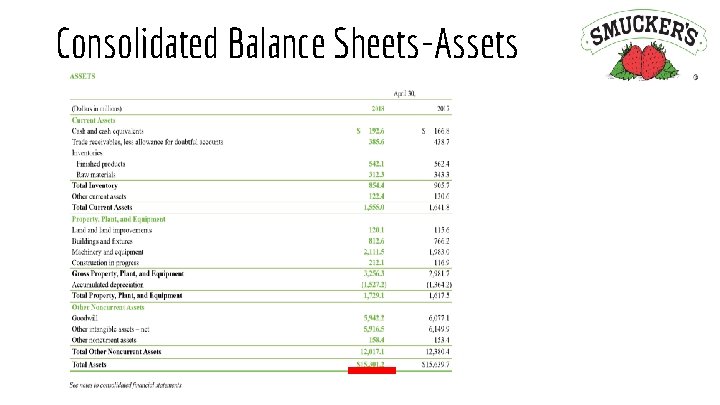
Consolidated Balance Sheets-Assets
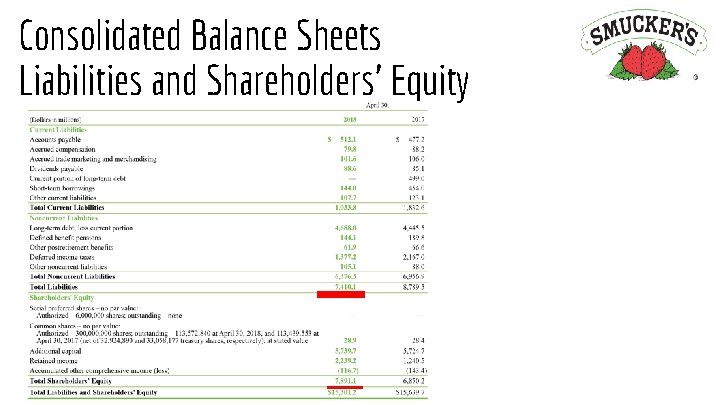
Consolidated Balance Sheets Liabilities and Shareholders’ Equity
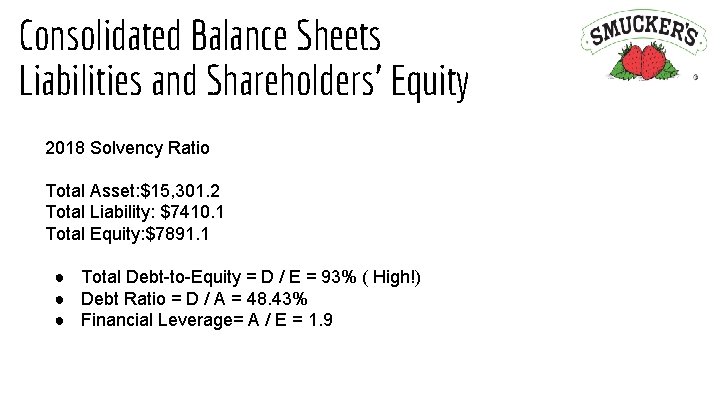
Consolidated Balance Sheets Liabilities and Shareholders’ Equity 2018 Solvency Ratio Total Asset: $15, 301. 2 Total Liability: $7410. 1 Total Equity: $7891. 1 ● Total Debt-to-Equity = D / E = 93% ( High!) ● Debt Ratio = D / A = 48. 43% ● Financial Leverage= A / E = 1. 9
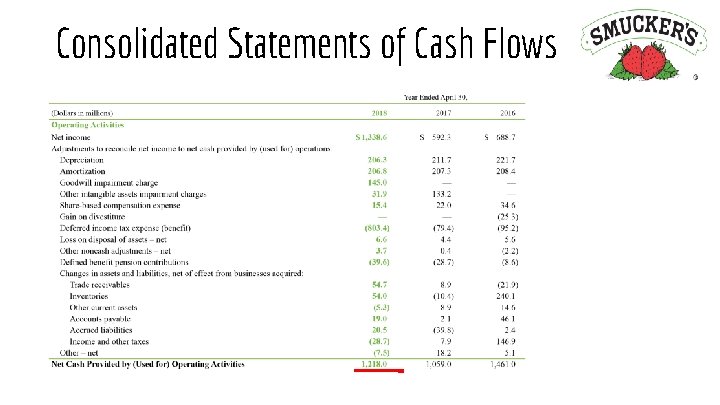
Consolidated Statements of Cash Flows
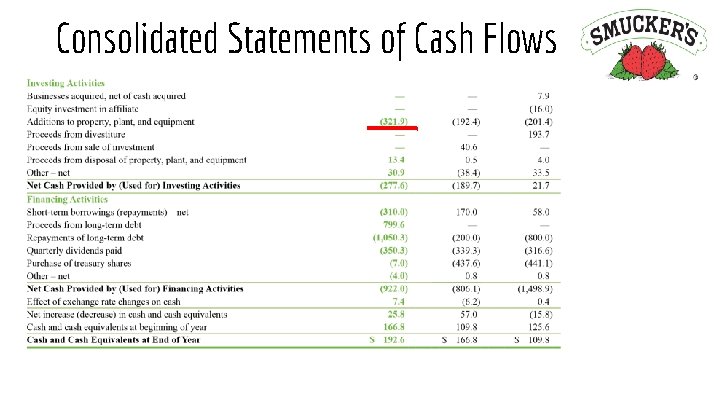
Consolidated Statements of Cash Flows
DERIVATIVE FINANCIAL INSTRUMENTS AND MARKET RISK JM Smucker is exposed to market risk related to changes in ● interest rates, ● foreign currency exchange rates, ● commodity prices.
Interest Rate Risk ● Exposed to interest rate risk with regarding existing debt consisting of fixedand variable-rate maturities. ● Interest rate exposure primarily includes U. S. Treasury rates, LIBOR, and commercial paper rates in the U. S.
Foreign Currency Exchange Rates Risk ● JM Smucker has operations outside the U. S. with foreign currency denominated assets and liabilities, primarily denominated in Canadian currency. ● JM Smucker exposure primarily includes the timing of transactions and the movement of exchange rates. ● The fluctuations of foreign currency may affect operating results
Commodity Price Risk ● Raw materials are primarily commodities such as green coffee, peanuts, oils and fats, protein meals, and plastic containers. ● Green coffee, certain oils, and certain protein meals are traded on active regulated exchanges, and commodities price fluctuation is based on market conditions, including ○ ○ ○ the supply and demand conditions political and economic variables weather investor speculation other unpredictable factors
Risk Management Relative to Interest rate ● Interest Rate Hedging ● Use derivative instruments to manage the changes of market value of existing debt. Interest rate contracts, such as interest rate swap contract can mitigate the risk associated with the underlying hedged item. ● Contract are designated for cash flow hedge and fair value hedge.
Risk Management Relative to Foreign Currency Exchange Rates ● Foreign Currency Exchange Rate Hedging: ● Use foreign currency derivatives to manage the effect of foreign currency exchange fluctuations on future cash payments in Canada, primarily related to purchases of certain raw materials and finished goods. ● The contracts generally have maturities of less than one year.
Risk Management Relative to Commodity Price ● Commodity derivatives, including futures and options, to manage the price volatility and reduce the variability of future cash flows related to anticipated inventory purchases of key raw materials such as green coffee, oils, corn, wheat, and soybean meal. ● The company also enters into commodity derivatives to manage price risk for energy input costs, such as natural gas. ● Uses derivatives with maturities of generally less than one year.
Other Risk Factors and Uncertainties in Operation ● ● To generate sufficient cash flow to meet; The availability of reliable transportation on acceptable terms; To implement and realize the full benefit of price changes; The impact of the timing of the price changes to profits and cash flow in a particular period;
Other Risk Factors and Uncertainties in Market ● The success and cost of marketing and sales programs and strategies intended for product innovation; ● Competitive activity in the market, including competitors’ pricing practices and promotional spending levels; ● The impact of accidents, extreme weather, and natural disasters; ● The concentration of certain of the businesses with key customers and suppliers, including single-source suppliers of certain key raw materials and finished goods, and the ability to manage and maintain key relationships;
Summary JM Smucker is exposed to market risk related to changes in ● interest rates, ● foreign currency exchange rates, ● commodity prices. Risk Management related to risks: ● Interest rates hedging, contract such as swap, cash flow hedge & fair value hedge ● Foreign currency exchange hedging ● Commodities derivative with contracts and options
Starbucks Coffee
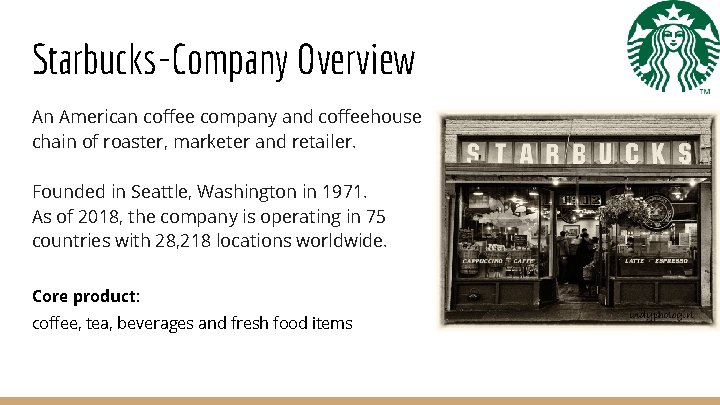
Starbucks-Company Overview An American coffee company and coffeehouse chain of roaster, marketer and retailer. Founded in Seattle, Washington in 1971. As of 2018, the company is operating in 75 countries with 28, 218 locations worldwide. Core product: coffee, tea, beverages and fresh food items
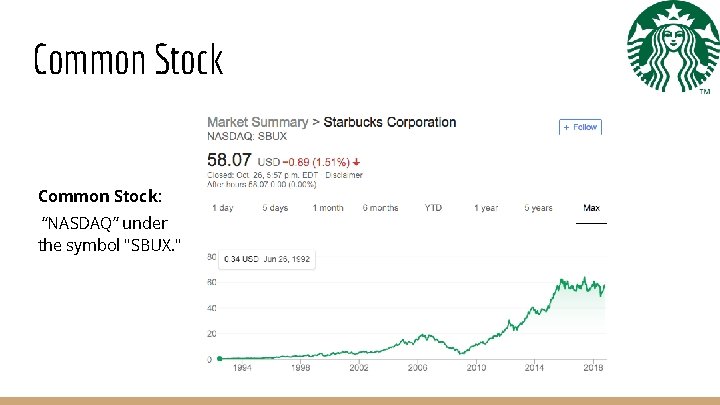
Common Stock: “NASDAQ” under the symbol "SBUX. "
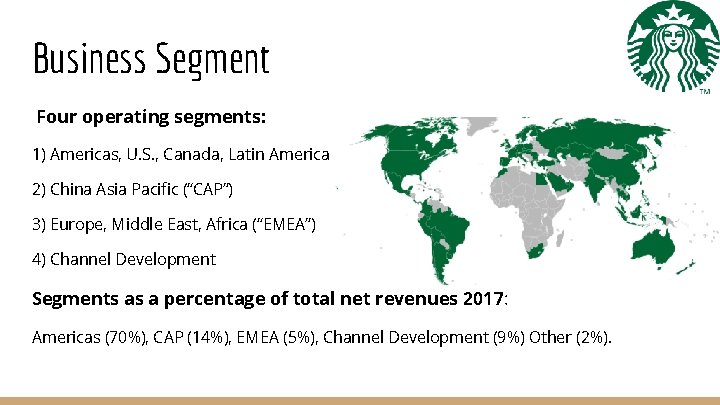
Business Segment Four operating segments: 1) Americas, U. S. , Canada, Latin America 2) China Asia Pacific (“CAP”) 3) Europe, Middle East, Africa (“EMEA”) 4) Channel Development Segments as a percentage of total net revenues 2017: Americas (70%), CAP (14%), EMEA (5%), Channel Development (9%) Other (2%).
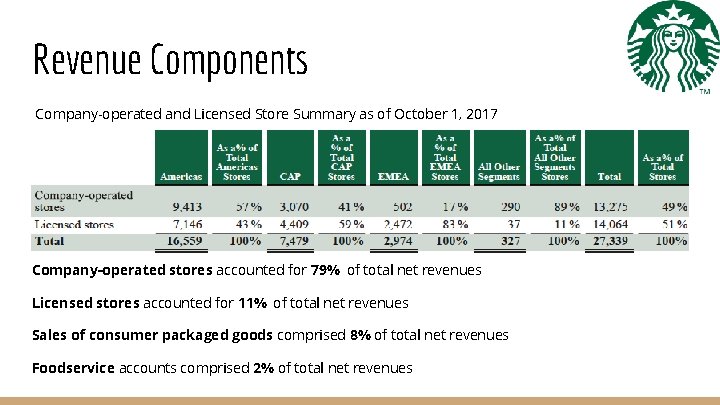
Revenue Components Company-operated and Licensed Store Summary as of October 1, 2017 Company-operated stores accounted for 79% of total net revenues Licensed stores accounted for 11% of total net revenues Sales of consumer packaged goods comprised 8% of total net revenues Foodservice accounts comprised 2% of total net revenues
Financial Statements ● Consolidated Statements of Comprehensive Income ● Consolidated Balance Sheets ● Consolidated Statements of Cash Flows
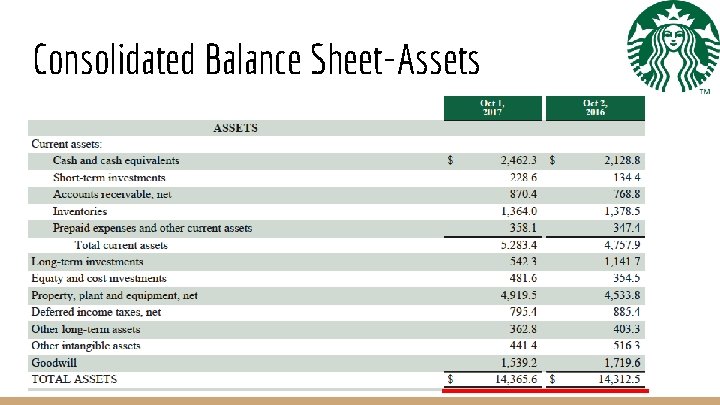
Consolidated Balance Sheet-Assets
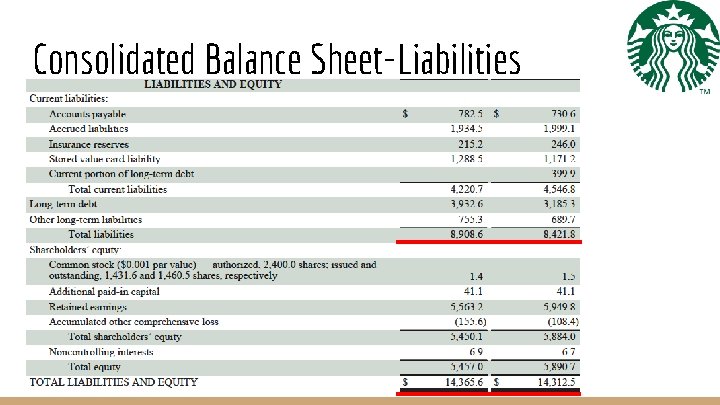
Consolidated Balance Sheet-Liabilities
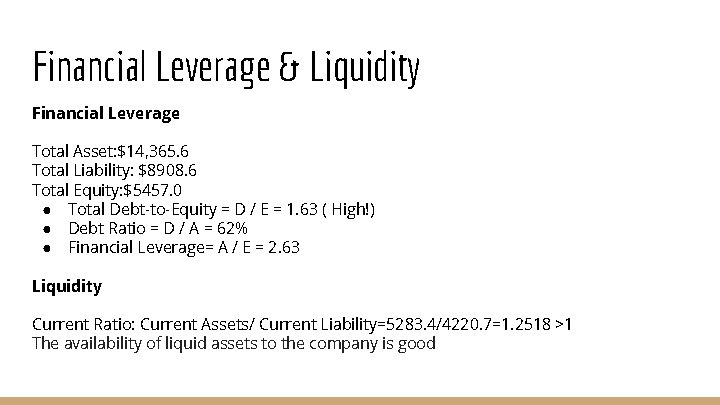
Financial Leverage & Liquidity Financial Leverage Total Asset: $14, 365. 6 Total Liability: $8908. 6 Total Equity: $5457. 0 ● Total Debt-to-Equity = D / E = 1. 63 ( High!) ● Debt Ratio = D / A = 62% ● Financial Leverage= A / E = 2. 63 Liquidity Current Ratio: Current Assets/ Current Liability=5283. 4/4220. 7=1. 2518 >1 The availability of liquid assets to the company is good
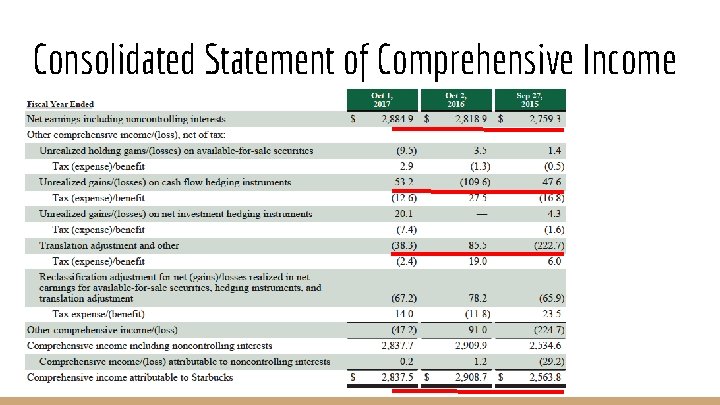
Consolidated Statement of Comprehensive Income
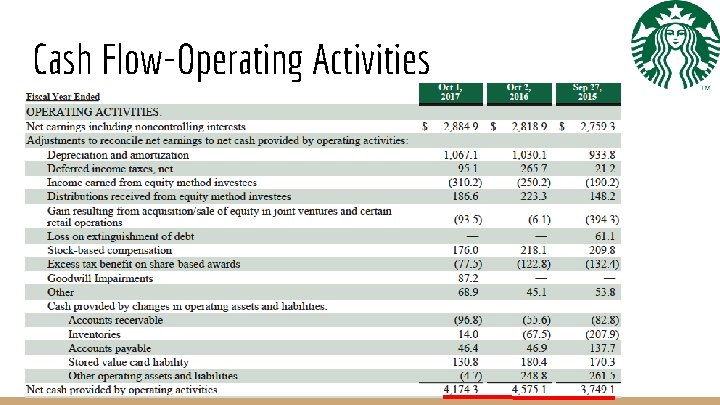
Cash Flow-Operating Activities
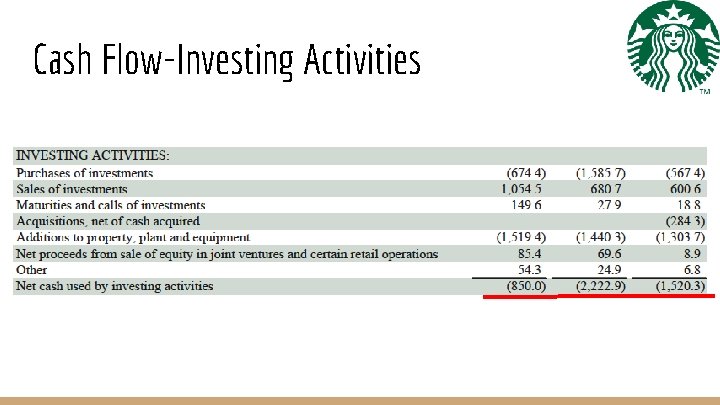
Cash Flow-Investing Activities
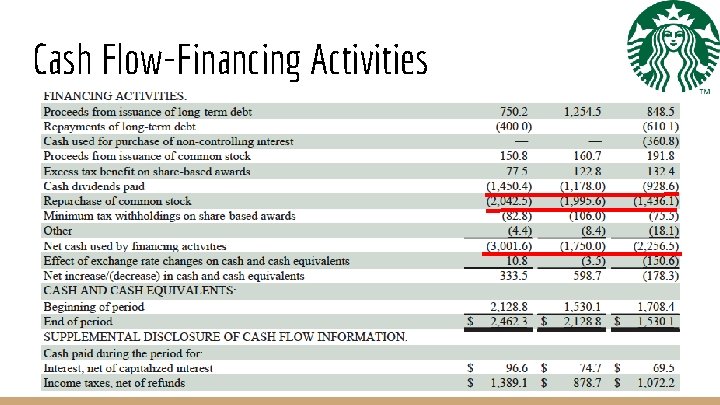
Cash Flow-Financing Activities
Risk Factors ● Economic conditions in the U. S. and international markets ● Failure to preserve the Brand value ○ Starbucks success depends substantially on the value of the brands ● Incidents involving food or beverage-borne illnesses, tampering, contamination or mislabeling ○ whether or not accurate, as well as adverse public or medical opinions about the health effects of consuming our products, could harm the business.
Risk Factors ● Unauthorized access, use or theft of information data Starbucks has of customer or employee ○ Starbucks proprietary or confidential information that is stored in information systems or by third parties on their behalf could impact the reputation and brand expose Starbucks to potential liability and loss of revenues. ● Material failure, inadequacy, interruption or security failure of technology ○ Starbucks rely heavily on information technology in operations, failure could harm their ability to effectively operate the business
Foregoing Risks ● Not being successful in implementing important strategic initiatives or effectively managing growth ● Increases in the cost of high-quality arabica coffee beans or other commodities ○ Or decreases in the availability of high quality arabica coffee beans or other commodities ● Outside of control factors ○ Real estate costs, adverse outcomes of litigation, natural or man-made disasters, etc.
Foregoing Risks ● Interruption of supply chain ○ could affect our ability to produce or deliver the products ● Failure to meet market expectations for financial performance and fluctuations in the stock market ● The loss of key personnel or difficulties recruiting and retaining qualified personnel ● Failure to comply with applicable laws and changing legal and regulatory requirements
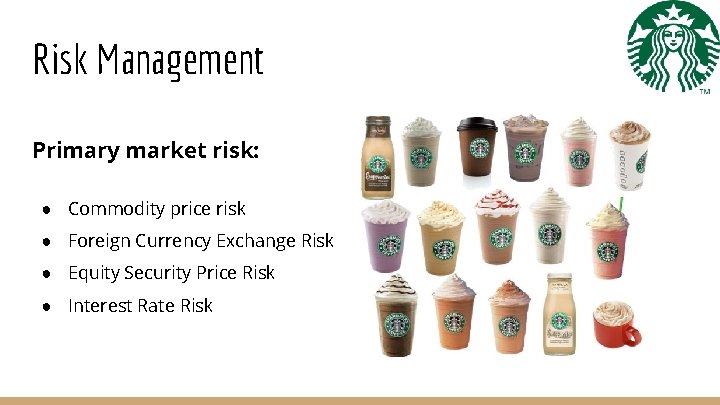
Risk Management Primary market risk: ● Commodity price risk ● Foreign Currency Exchange Risk ● Equity Security Price Risk ● Interest Rate Risk
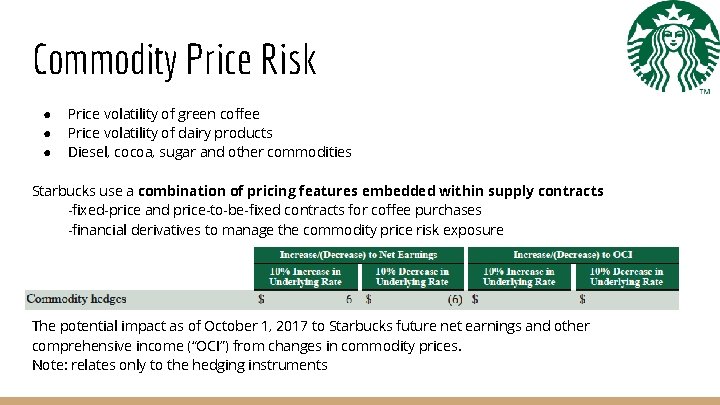
Commodity Price Risk ● ● ● Price volatility of green coffee Price volatility of dairy products Diesel, cocoa, sugar and other commodities Starbucks use a combination of pricing features embedded within supply contracts -fixed-price and price-to-be-fixed contracts for coffee purchases -financial derivatives to manage the commodity price risk exposure The potential impact as of October 1, 2017 to Starbucks future net earnings and other comprehensive income (“OCI”) from changes in commodity prices. Note: relates only to the hedging instruments
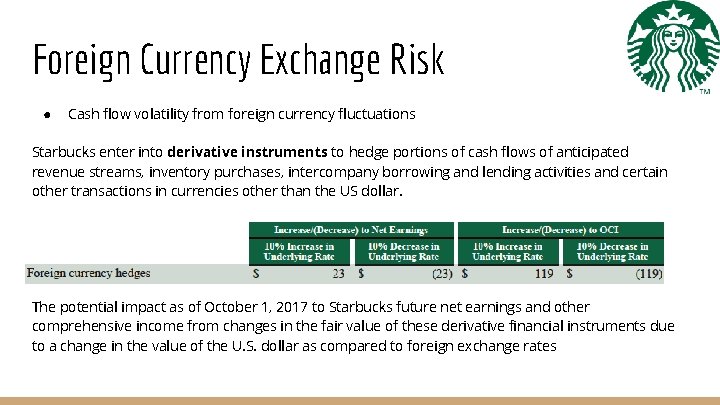
Foreign Currency Exchange Risk ● Cash flow volatility from foreign currency fluctuations Starbucks enter into derivative instruments to hedge portions of cash flows of anticipated revenue streams, inventory purchases, intercompany borrowing and lending activities and certain other transactions in currencies other than the US dollar. The potential impact as of October 1, 2017 to Starbucks future net earnings and other comprehensive income from changes in the fair value of these derivative financial instruments due to a change in the value of the U. S. dollar as compared to foreign exchange rates
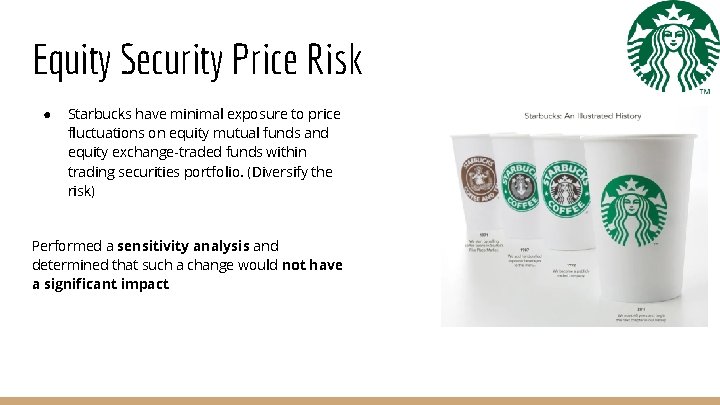
Equity Security Price Risk ● Starbucks have minimal exposure to price fluctuations on equity mutual funds and equity exchange-traded funds within trading securities portfolio. (Diversify the risk) Performed a sensitivity analysis and determined that such a change would not have a significant impact
Interest Rate Risk ● Long term debt ○ ○ Starbucks utilize short-term and long-term financing Use interest rate hedges to manage overall interest expense related to existing fixed-rate debt, and to hedge the variability in cash flows due to changes in benchmark interest rates related to anticipated debt issuances. ● Available for sale securities ○ ○ They Comprise a diversified portfolio consisting mainly of investment-grade debt securities. The primary objective of these investments is to preserve capital and liquidity. Starbucks do not hedge the interest rate exposure on available-for-sale securities ■ performed a sensitivity analysis and determined that such a change would not have a significant impact on the fair value of these instruments.
Risk Management ● Market price risk management policy. ● Monitor and limit the amount of associated counterparty credit risk ○ Which consider to be low risk for Starbucks.
Summary ● ● ● Interest Rates ○ Interest rate swap agreements to hedge the variability in cash flows Foreign Currency ○ Forward and swap contracts to hedge position of cash flow ○ Forward contracts to hedge the foreign currency exposure Commodities ○ Futures contracts (Fixed price contract, to be fixed) and collars to hedge the risk of commodity price
Nestlé
Nestlé - Company Overview ● Nestlé S. A. is a Swiss transnational food and drink company formed in 1905 by the merger of two big companies ● Nestlé is the world largest food company, measured by revenues since 2004 ● Nestlé has 29 brands, 447 factories, operated in 189 countries and employs around 339, 000 people
Brand Through Nestlé’s products and brands, Nestlé connects with people and their pets millions of times a day and throughout their lives. Nestlé has more than 2000 brands, ranging from global icons like Nescafé and Nespresso to local favourites like Häagen-Dazs.
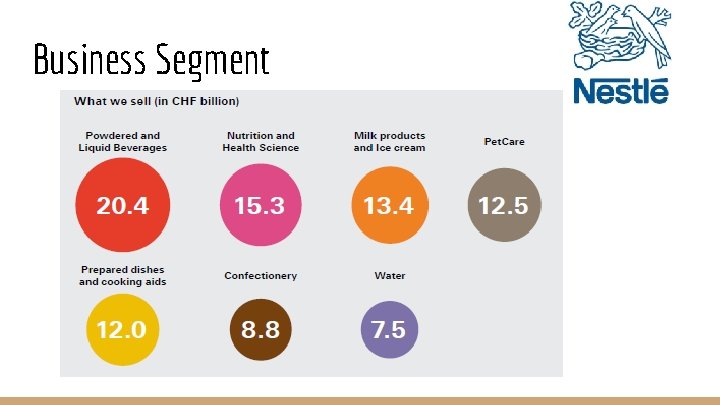
Business Segment
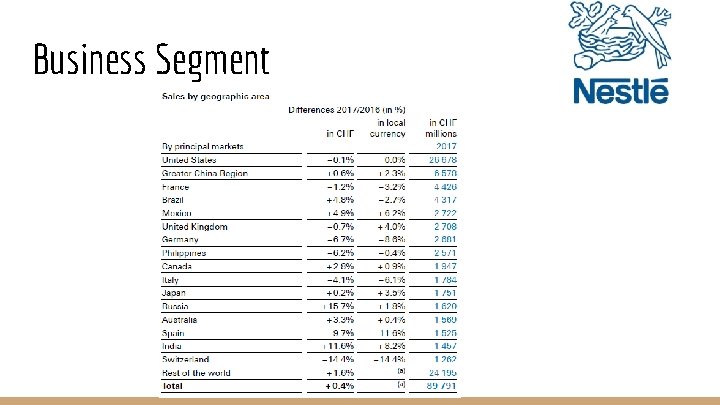
Business Segment
Financial Statements ● Consolidated Balance Sheets ● Consolidated Statements of Comprehensive Income ● Consolidated Statements of Cash Flows
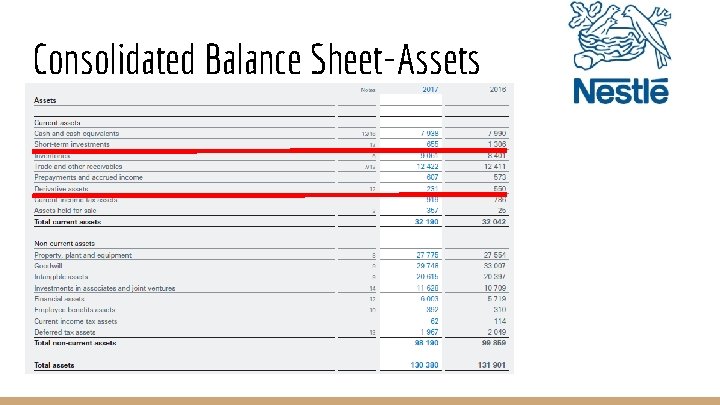
Consolidated Balance Sheet-Assets
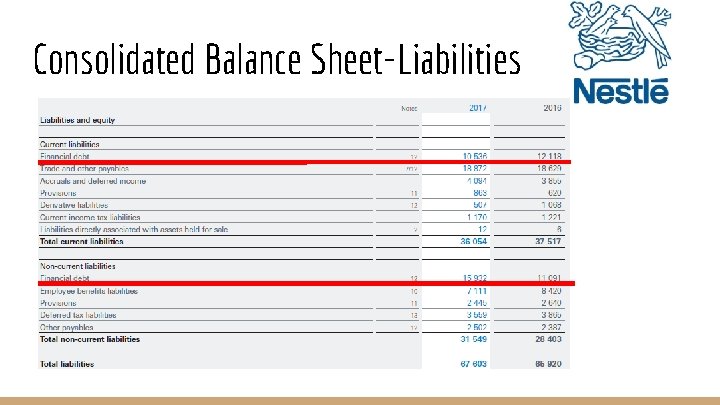
Consolidated Balance Sheet-Liabilities
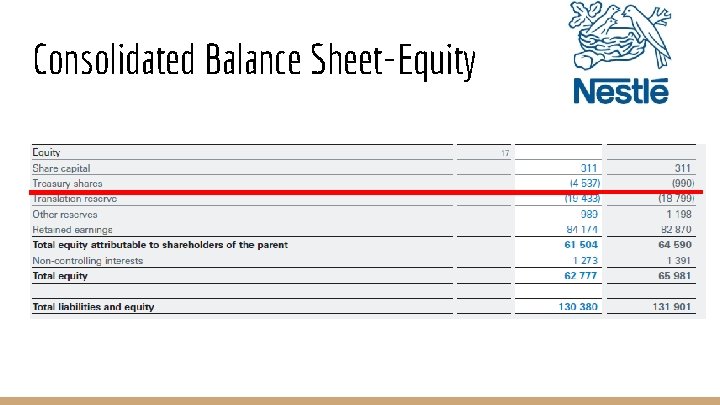
Consolidated Balance Sheet-Equity
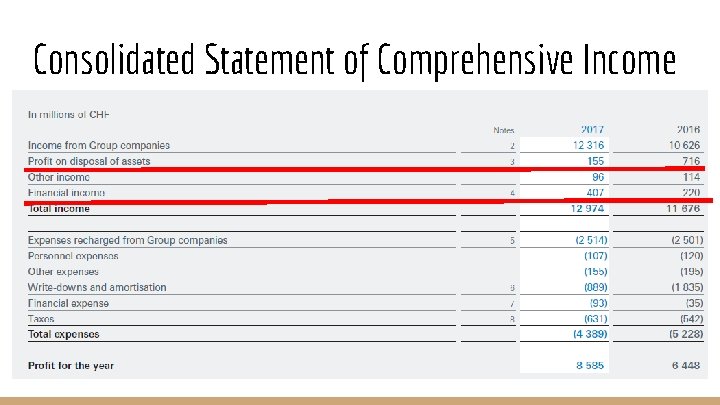
Consolidated Statement of Comprehensive Income
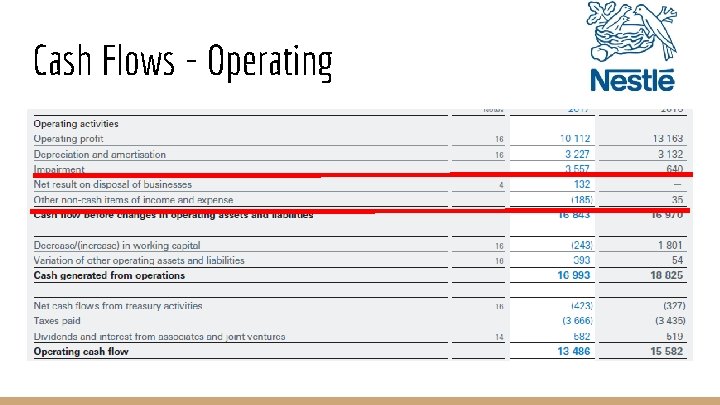
Cash Flows - Operating
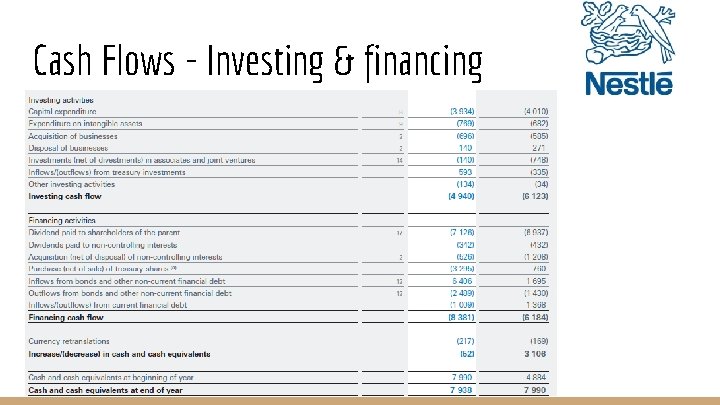
Cash Flows - Investing & financing
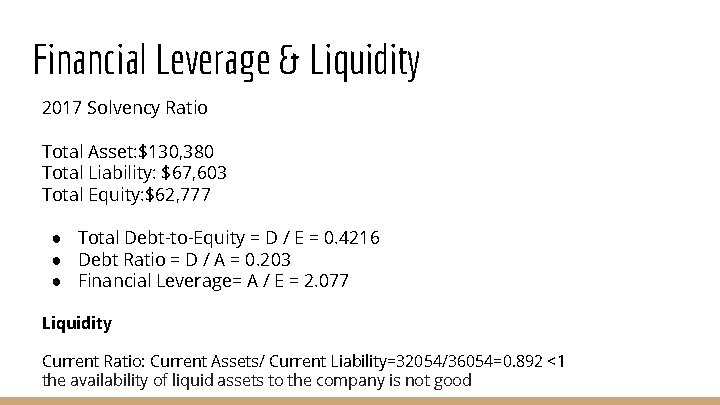
Financial Leverage & Liquidity 2017 Solvency Ratio Total Asset: $130, 380 Total Liability: $67, 603 Total Equity: $62, 777 ● Total Debt-to-Equity = D / E = 0. 4216 ● Debt Ratio = D / A = 0. 203 ● Financial Leverage= A / E = 2. 077 Liquidity Current Ratio: Current Assets/ Current Liability=32054/36054=0. 892 <1 the availability of liquid assets to the company is not good
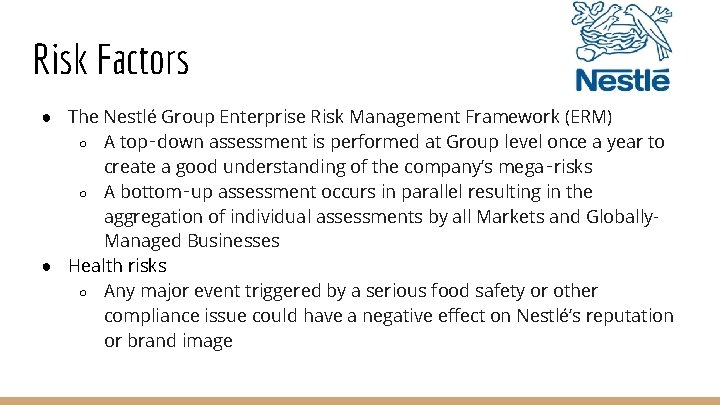
Risk Factors ● The Nestlé Group Enterprise Risk Management Framework (ERM) ○ A top‑down assessment is performed at Group level once a year to create a good understanding of the company’s mega‑risks ○ A bottom‑up assessment occurs in parallel resulting in the aggregation of individual assessments by all Markets and Globally. Managed Businesses ● Health risks ○ Any major event triggered by a serious food safety or other compliance issue could have a negative effect on Nestlé’s reputation or brand image
Risks related to defined benefit plans ● Mortality risk: ○ the assumptions adopted by the Group make allowance for future improvements in life expectancy. In order to minimise this risk, mortality assumptions are reviewed on a regular basis ● Market and liquidity risks: ○ These are the risks that the investments do not meet the expected returns over the medium to long-term. In order to minimise this risk, the structure of the portfolios is reviewed and asset-liability matching analyses are performed on a regular basis
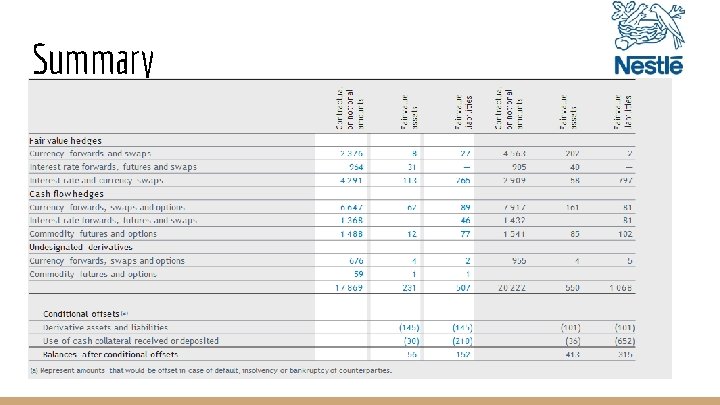
Financial risks Nestlé is exposed to a number of financial risks: credit risk, liquidity risk, market risk (including foreign currency risk and interest rate risk, commodity price risk and equity price risk).
Financial risks ● Credit risk ○ The methodology used to set the credit limit considers the counterparty’s balance sheet, credit ratings, risk ratios and default probabilities ● Liquidity risk ○ manage this risk by limiting exposures in financial instruments that may be affected by liquidity problems and by maintaining sufficient backup facilities
Financial risks ● Foreign currency risk ○ Transactional exposures arise from transactions in foreign currency. They are managed through the use of currency forwards, futures, swaps and options ○ Translation exposure arises from the consolidation of the financial statements of foreign operations in Swiss francs, which is in principle, not hedged.
Financial risks ● Interest rate risk ○ Exposed primarily to fluctuation in USD and EUR interest rates. ○ Managed based on duration and interest management targets set by the ALMC through the use of fixed rate debt and interest rate swaps. ● Price risk ○ Price of green coffee, cocoa beans and other commodities necessary for the manufacture ○ managed using a combination of derivatives (mainly futures and options) and executory contracts
Financial risks ● Equity price risk ○ Exposed to equity price risk on investments ○ Diversifies its portfolios
Summary

Thank you!
- Slides: 84