
FON 241 Principles of Human Nutrition Chapter 1


- Slides: 41
FON 241 Principles of Human Nutrition Chapter 1 Lori Zienkewicz, MS. RD. Instructor FON 241 Principles of Human Nutrition, L. Zienkewicz
What does it mean to you? FON 241 Principles of Human Nutrition, L. Zienkewicz
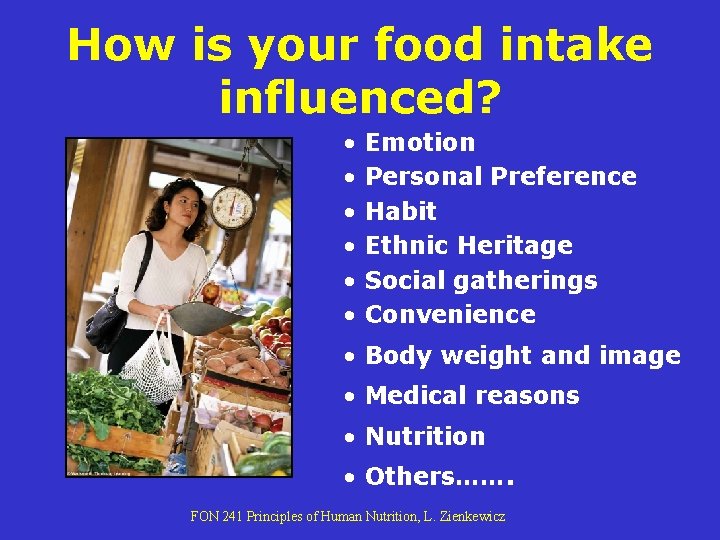
How is your food intake influenced? • • • Emotion Personal Preference Habit Ethnic Heritage Social gatherings Convenience • Body weight and image • Medical reasons • Nutrition • Others……. FON 241 Principles of Human Nutrition, L. Zienkewicz
Carbohydrate Fat Protein Vitamins Minerals Water FON 241 Principles of Human Nutrition, L. Zienkewicz
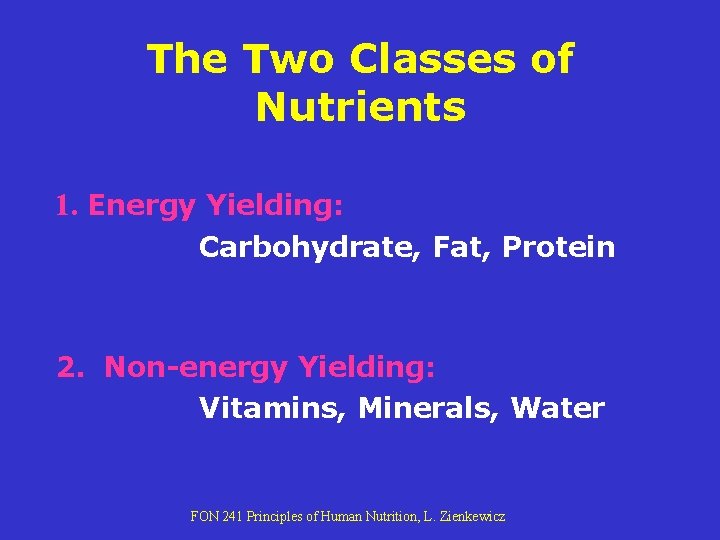
The Two Classes of Nutrients 1. Energy Yielding: Carbohydrate, Fat, Protein 2. Non-energy Yielding: Vitamins, Minerals, Water FON 241 Principles of Human Nutrition, L. Zienkewicz
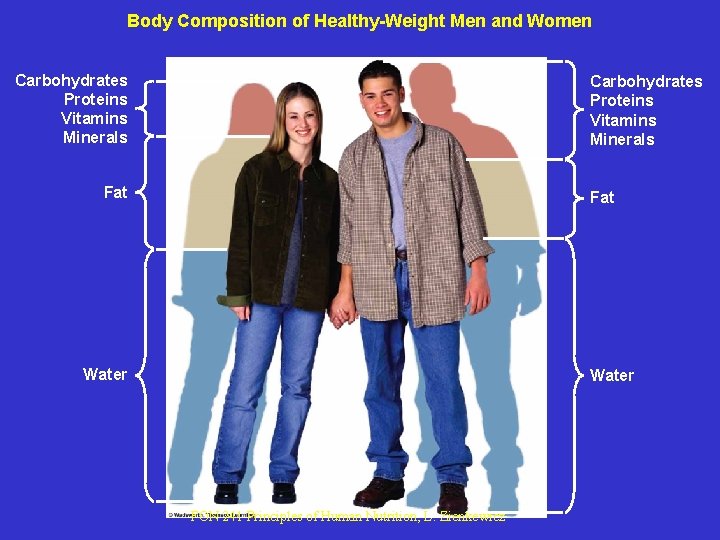
Body Composition of Healthy-Weight Men and Women Carbohydrates Proteins Vitamins Minerals Fat Water FON 241 Principles of Human Nutrition, L. Zienkewicz
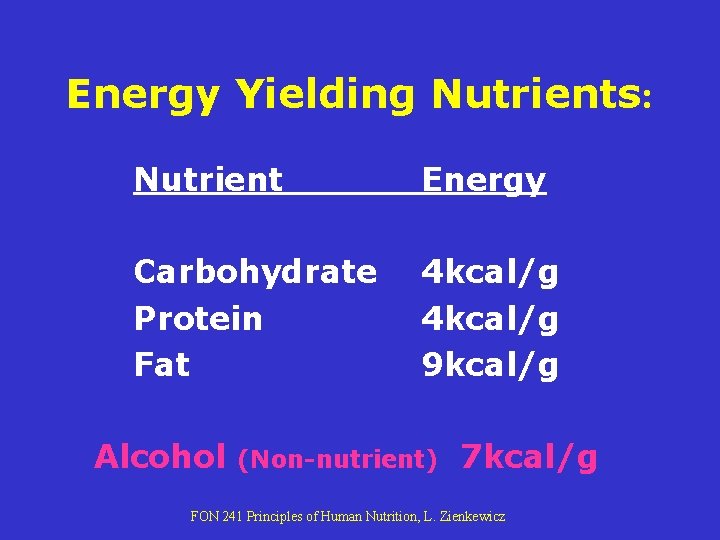
Energy Yielding Nutrients: Nutrient Energy Carbohydrate Protein Fat 4 kcal/g 9 kcal/g Alcohol (Non-nutrient) 7 kcal/g FON 241 Principles of Human Nutrition, L. Zienkewicz
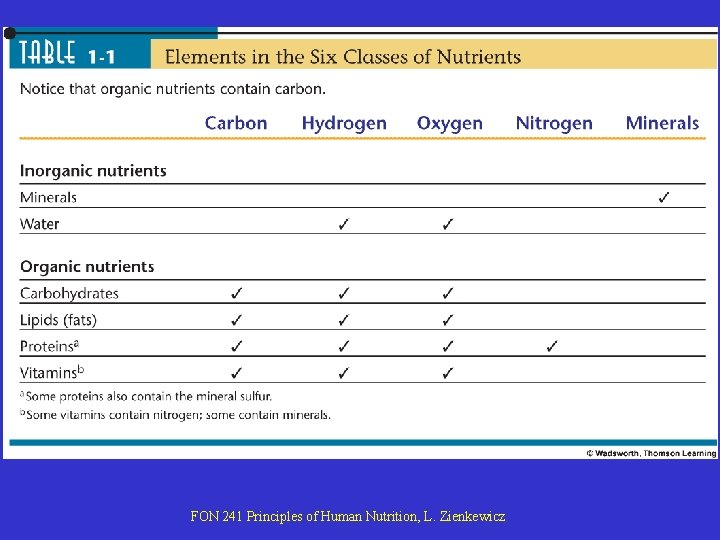
Table 1 -1 Page 7 FON 241 Principles of Human Nutrition, L. Zienkewicz
Energy, defined: • Calorie- a unit of energy that food provides the body. • 1 calorie is the amount of energy required to raise the temperature of 1 g water by 1 o. C. • 1 kilocalorie (kcal) = 1000 calories FON 241 Principles of Human Nutrition, L. Zienkewicz
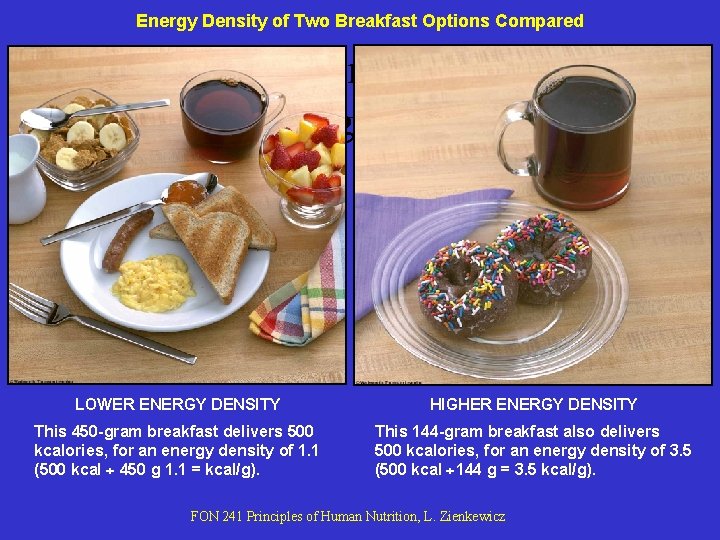
Energy Density of Two Breakfast Options Compared Figure 1 -2 Page 10 LOWER ENERGY DENSITY HIGHER ENERGY DENSITY This 450 -gram breakfast delivers 500 kcalories, for an energy density of 1. 1 (500 kcal ¸ 450 g 1. 1 = kcal/g). This 144 -gram breakfast also delivers 500 kcalories, for an energy density of 3. 5 (500 kcal ¸ 144 g = 3. 5 kcal/g). FON 241 Principles of Human Nutrition, L. Zienkewicz
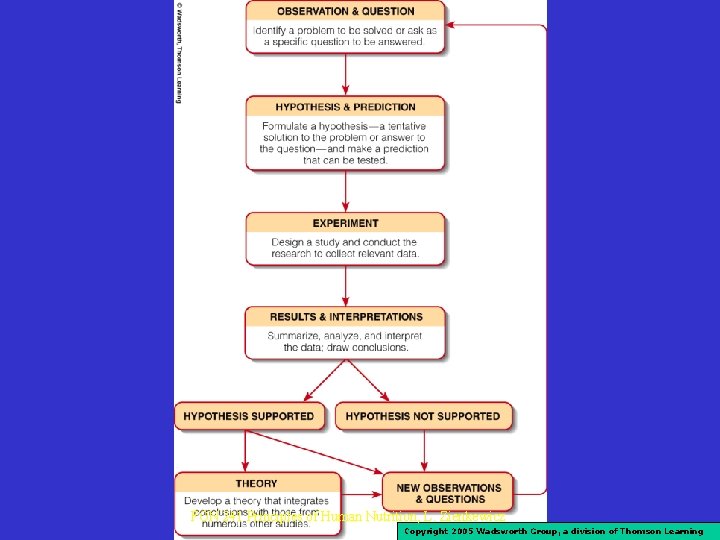
Nutrition Research • The Scientific Method – Hypothesis vs. Theory – Experimental group vs. control group – Randomization – Sample size FON 241 Principles of Human Nutrition, L. Zienkewicz Copyright 2005 Wadsworth Group, a division of Thomson Learning
FON 241 Principles of Human Nutrition, L. Zienkewicz Copyright 2005 Wadsworth Group, a division of Thomson Learning
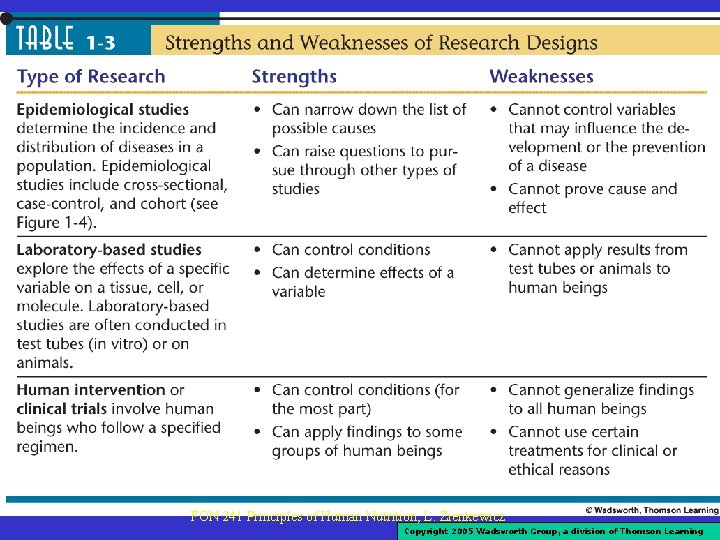
Nutrition Research • The Scientific Method Epidemiological studies Determine factors in a population Laboratory-based studies Conducted in test-tubes or on animals Human intervention or clinical trials • Involve human beings who follow a specific regimen FON 241 Principles of Human Nutrition, L. Zienkewicz
FON 241 Principles of Human Nutrition, L. Zienkewicz Copyright 2005 Wadsworth Group, a division of Thomson Learning
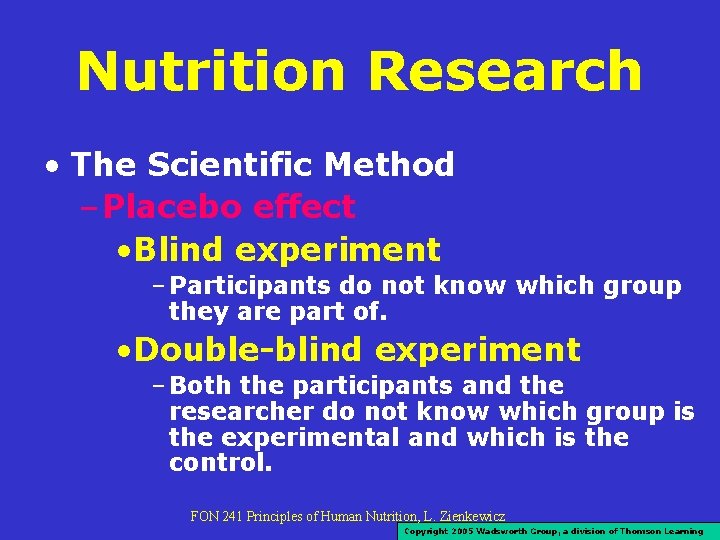
Nutrition Research • The Scientific Method – Placebo effect • Blind experiment – Participants do not know which group they are part of. • Double-blind experiment – Both the participants and the researcher do not know which group is the experimental and which is the control. FON 241 Principles of Human Nutrition, L. Zienkewicz Copyright 2005 Wadsworth Group, a division of Thomson Learning
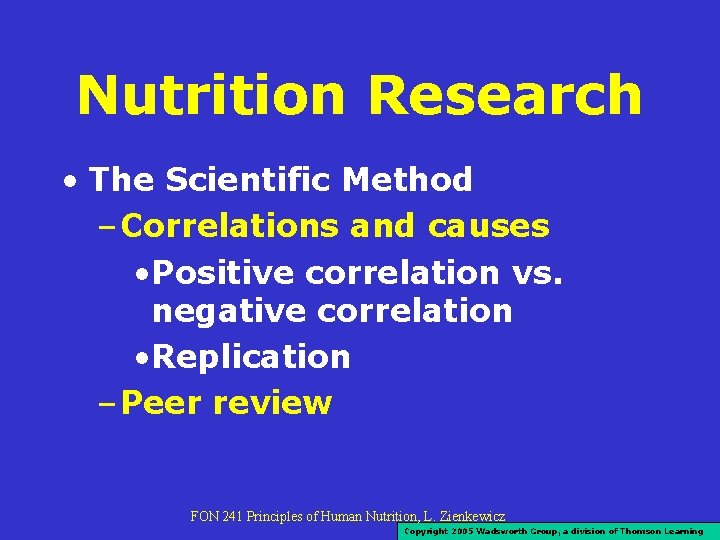
Nutrition Research • The Scientific Method – Correlations and causes • Positive correlation vs. negative correlation • Replication – Peer review FON 241 Principles of Human Nutrition, L. Zienkewicz Copyright 2005 Wadsworth Group, a division of Thomson Learning
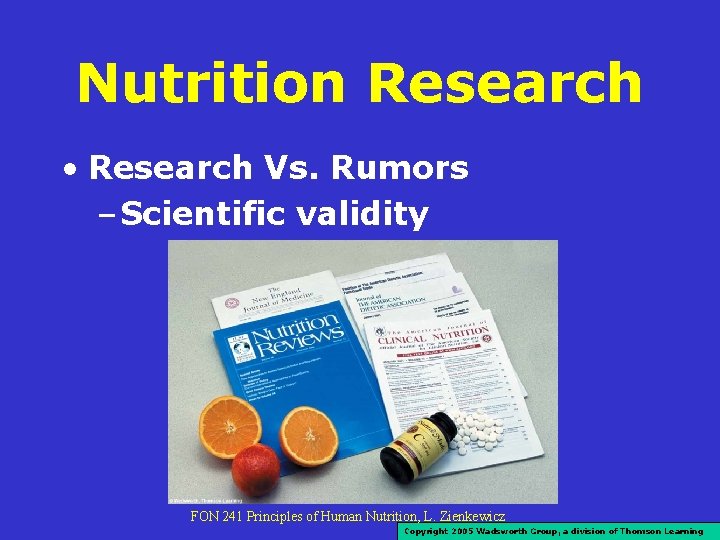
Nutrition Research • Research Vs. Rumors – Scientific validity FON 241 Principles of Human Nutrition, L. Zienkewicz Copyright 2005 Wadsworth Group, a division of Thomson Learning
How much do I need? The Daily Reference Intakes • Information gathered from expert scientists who studied nutrient needs. • Needs are set high above the recommended range to meet the needs of most healthy people. • Recommendations are made based on scientific research. FON 241 Principles of Human Nutrition, L. Zienkewicz
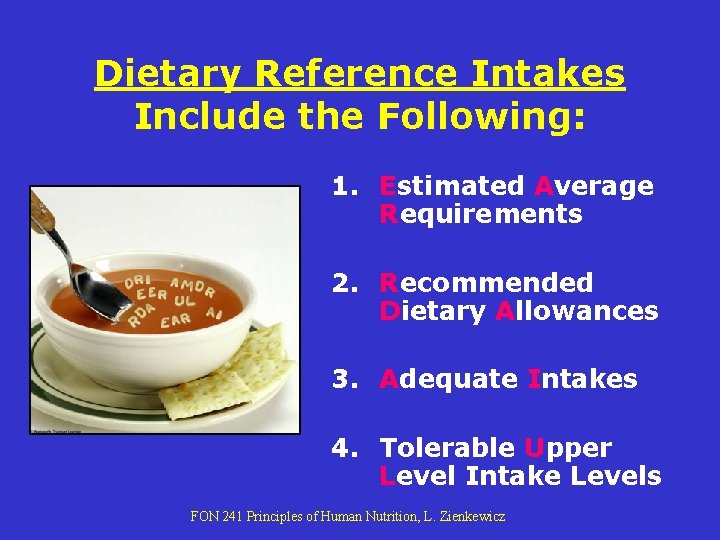
Dietary Reference Intakes Include the Following: 1. Estimated Average Requirements 2. Recommended Dietary Allowances 3. Adequate Intakes 4. Tolerable Upper Level Intake Levels FON 241 Principles of Human Nutrition, L. Zienkewicz
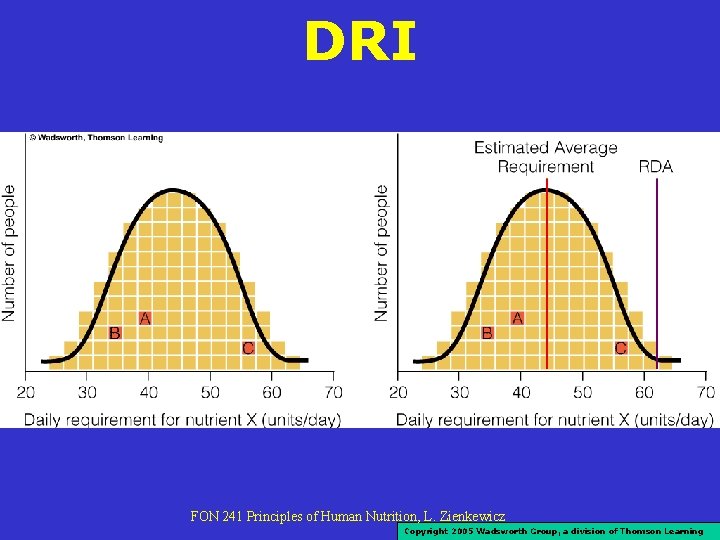
DRI FON 241 Principles of Human Nutrition, L. Zienkewicz Copyright 2005 Wadsworth Group, a division of Thomson Learning
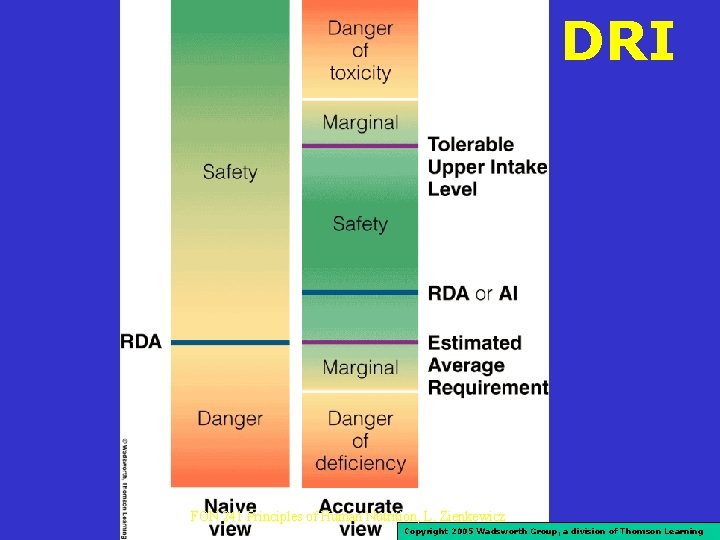
DRI FON 241 Principles of Human Nutrition, L. Zienkewicz Copyright 2005 Wadsworth Group, a division of Thomson Learning
Why is intake important? 1. Meet nutritional needs. 2. Avoid nutrient deficiencies. 3. Prevent nutrient toxicity. FON 241 Principles of Human Nutrition, L. Zienkewicz
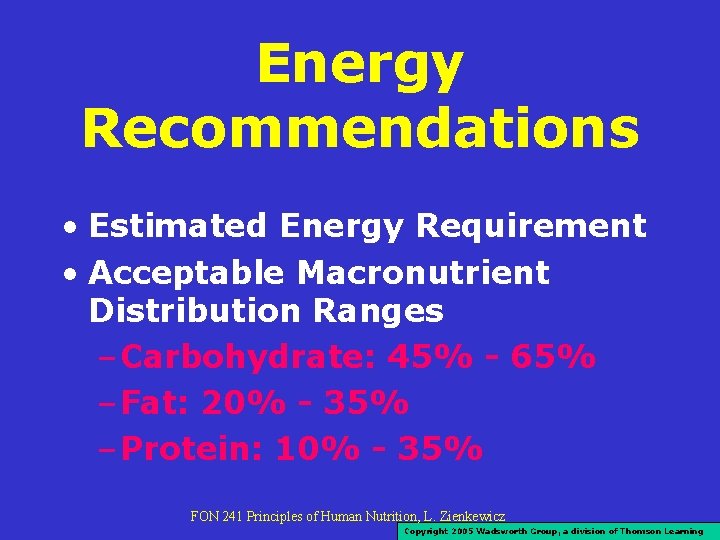
Energy Recommendations • Estimated Energy Requirement • Acceptable Macronutrient Distribution Ranges – Carbohydrate: 45% - 65% – Fat: 20% - 35% – Protein: 10% - 35% FON 241 Principles of Human Nutrition, L. Zienkewicz Copyright 2005 Wadsworth Group, a division of Thomson Learning
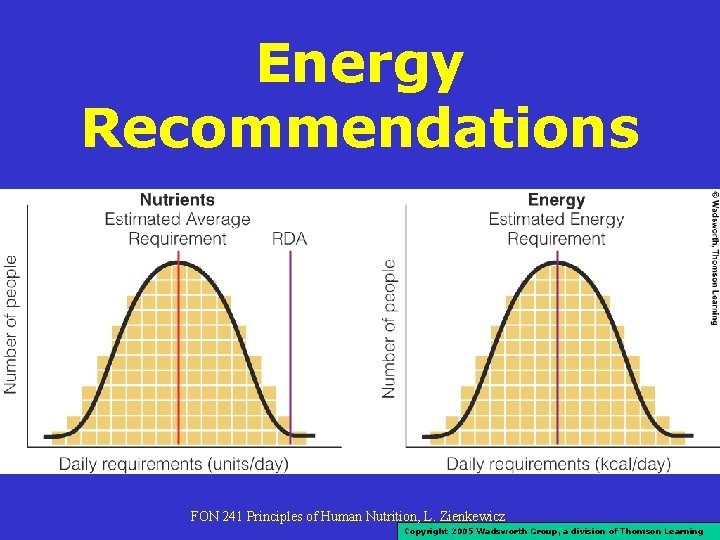
Energy Recommendations FON 241 Principles of Human Nutrition, L. Zienkewicz Copyright 2005 Wadsworth Group, a division of Thomson Learning
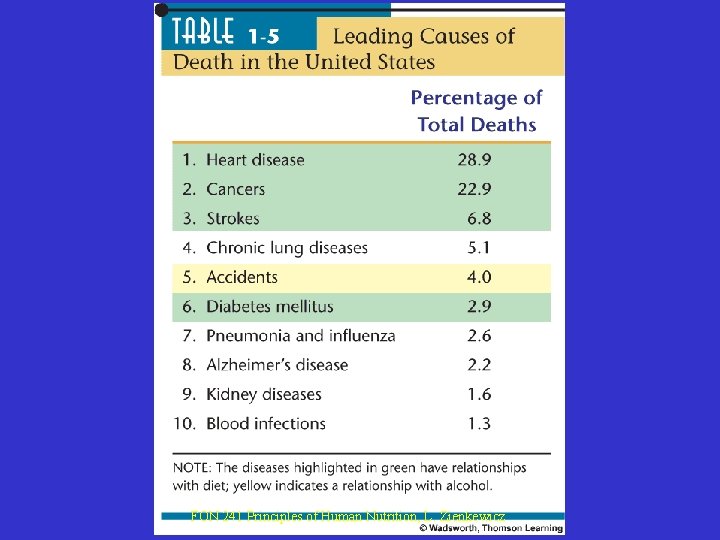
Table 1 -5 Page 24 FON 241 Principles of Human Nutrition, L. Zienkewicz
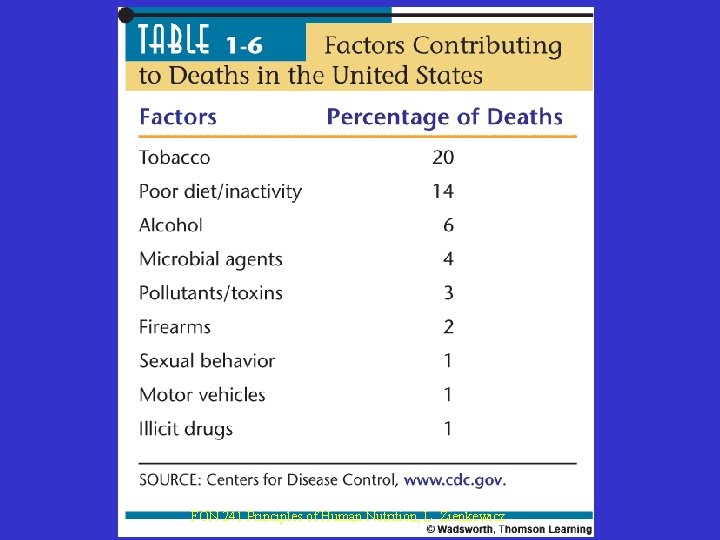
Table 1 -6 Page 25 FON 241 Principles of Human Nutrition, L. Zienkewicz
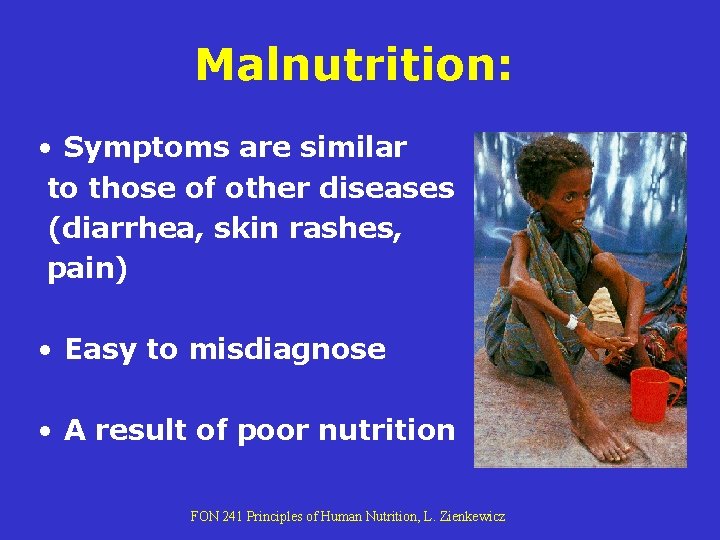
Malnutrition: • Symptoms are similar to those of other diseases (diarrhea, skin rashes, pain) • Easy to misdiagnose • A result of poor nutrition FON 241 Principles of Human Nutrition, L. Zienkewicz
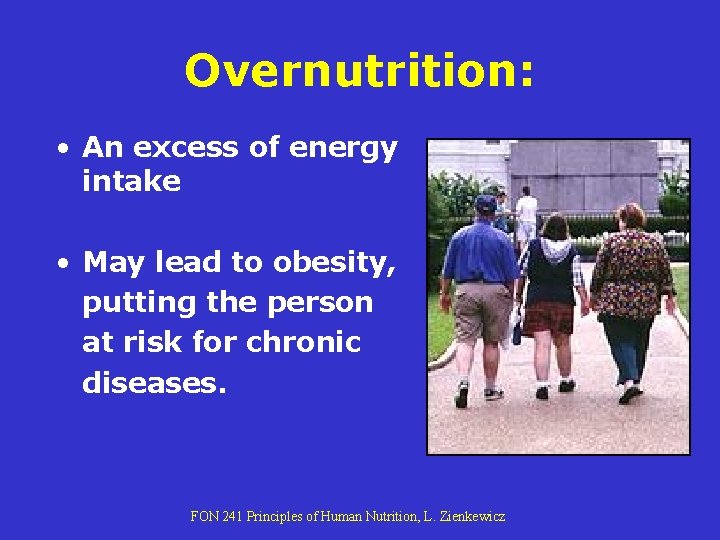
Overnutrition: • An excess of energy intake • May lead to obesity, putting the person at risk for chronic diseases. FON 241 Principles of Human Nutrition, L. Zienkewicz
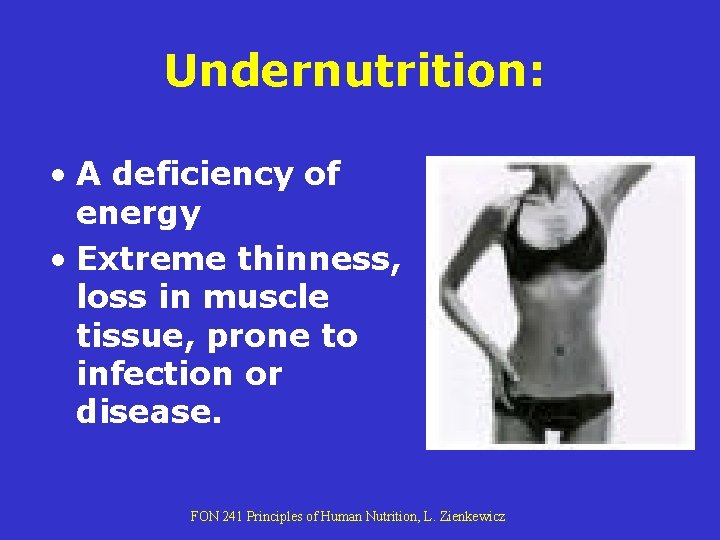
Undernutrition: • A deficiency of energy • Extreme thinness, loss in muscle tissue, prone to infection or disease. FON 241 Principles of Human Nutrition, L. Zienkewicz
Nutrition Research Why all the Confusion? ? • What information should I believe? • Who is telling the truth? • Why is there so much controversy? FON 241 Principles of Human Nutrition, L. Zienkewicz
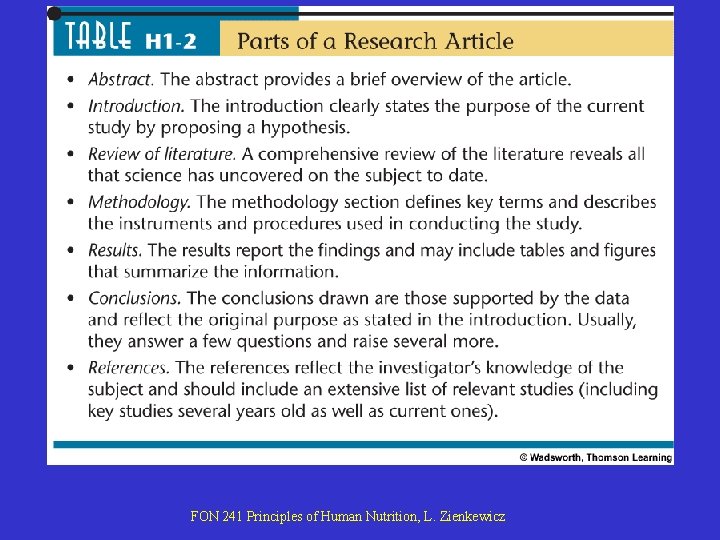
Table H 1 -2 Page 34 FON 241 Principles of Human Nutrition, L. Zienkewicz
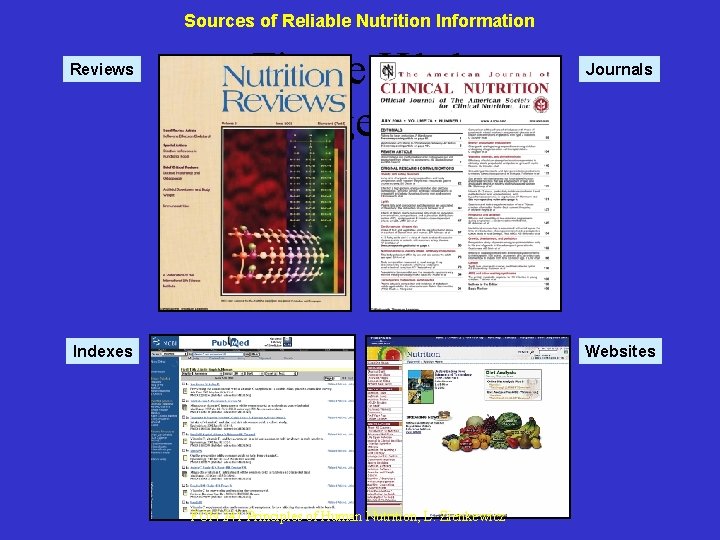
Sources of Reliable Nutrition Information Reviews Figure H 1 -1 Page 35 Indexes Journals Websites FON 241 Principles of Human Nutrition, L. Zienkewicz
Registered Dietitians • Undergraduate degrees in Human Nutrition, Dietetics or related field. • Must complete an America Dietetic Association approved one-year clinical internship. • Must pass a national registration exam in nutrition and maintain continuing education to keep credential (R. D. ) • Registered Dietitians are the Nutrition Experts. FON 241 Principles of Human Nutrition, L. Zienkewicz
Fake Credentials? ? • Nutrimedicine • Nutritionist • Board Certified Clinical Nutritionist FON 241 Principles of Human Nutrition, L. Zienkewicz
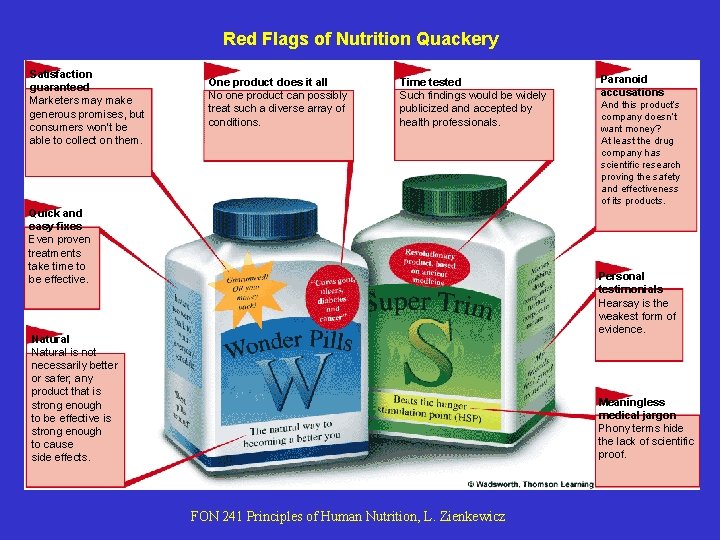
Red Flags of Nutrition Quackery Satisfaction guaranteed Marketers may make generous promises, but consumers won’t be able to collect on them. One product does it all No one product can possibly treat such a diverse array of conditions. Time tested Such findings would be widely publicized and accepted by health professionals. Quick and easy fixes Even proven treatments take time to be effective. Paranoid accusations And this product’s company doesn’t want money? At least the drug company has scientific research proving the safety and effectiveness of its products. Personal testimonials Hearsay is the weakest form of evidence. Natural is not necessarily better or safer; any product that is strong enough to be effective is strong enough to cause side effects. Meaningless medical jargon Phony terms hide the lack of scientific proof. FON 241 Principles of Human Nutrition, L. Zienkewicz
Ask Yourself…. . • Is this person qualified to be giving nutrition information or advice? • What is his/her level of education • Be cautious and always seek the advice of a Registered Dietitian. FON 241 Principles of Human Nutrition, L. Zienkewicz
FON 241 Principles of Human Nutrition, L. Zienkewicz
Self check: 1. What are the 6 nutrients? 2. Which nutrients yield energy? 3. Which nutrients do NOT yield energy? FON 241 Principles of Human Nutrition, L. Zienkewicz
Self check: 1. How many calories are obtained from the following nutrients? Carbohydrate Protein Fat Vitamins Minerals Water FON 241 Principles of Human Nutrition, L. Zienkewicz
Self check: Give an example of each of the following: • Malnutrition • Overnutrition • Undernutrition FON 241 Principles of Human Nutrition, L. Zienkewicz
Self check: 1. How do you find credible nutrition information? 2. What is the difference between a nutritionist and a registered dietitian? FON 241 Principles of Human Nutrition, L. Zienkewicz