
FollowUp of the NICU Graduate Janell Fuller MD






- Slides: 64
Follow-Up of the NICU Graduate Janell Fuller, MD Associate Professor of Pediatrics University of New Mexico Health Sciences Center
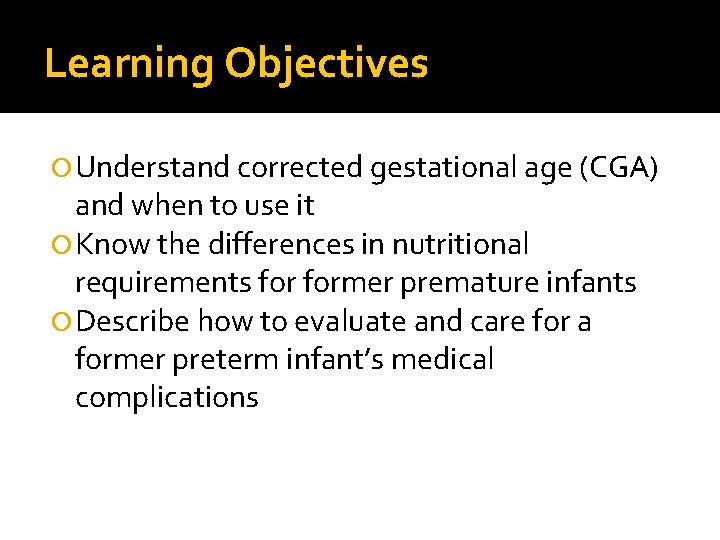
Learning Objectives Understand corrected gestational age (CGA) and when to use it Know the differences in nutritional requirements former premature infants Describe how to evaluate and care for a former preterm infant’s medical complications
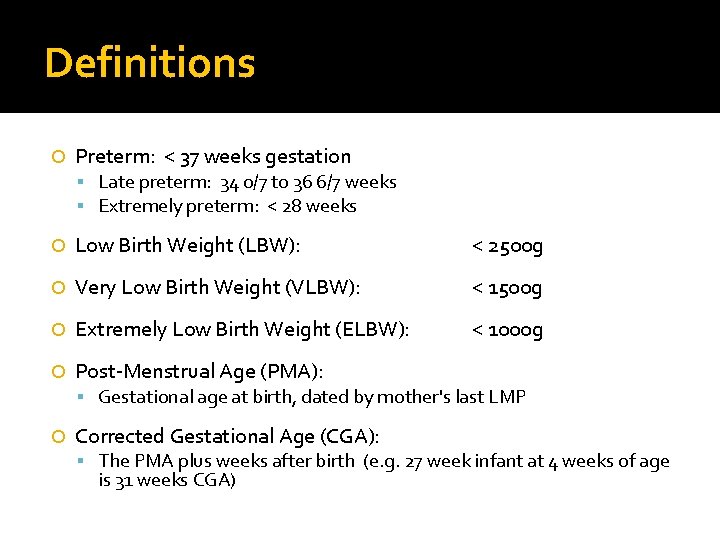
Definitions Preterm: < 37 weeks gestation Late preterm: 34 0/7 to 36 6/7 weeks Extremely preterm: < 28 weeks Low Birth Weight (LBW): < 2500 g Very Low Birth Weight (VLBW): < 1500 g Extremely Low Birth Weight (ELBW): < 1000 g Post-Menstrual Age (PMA): Gestational age at birth, dated by mother's last LMP Corrected Gestational Age (CGA): The PMA plus weeks after birth (e. g. 27 week infant at 4 weeks of age is 31 weeks CGA)
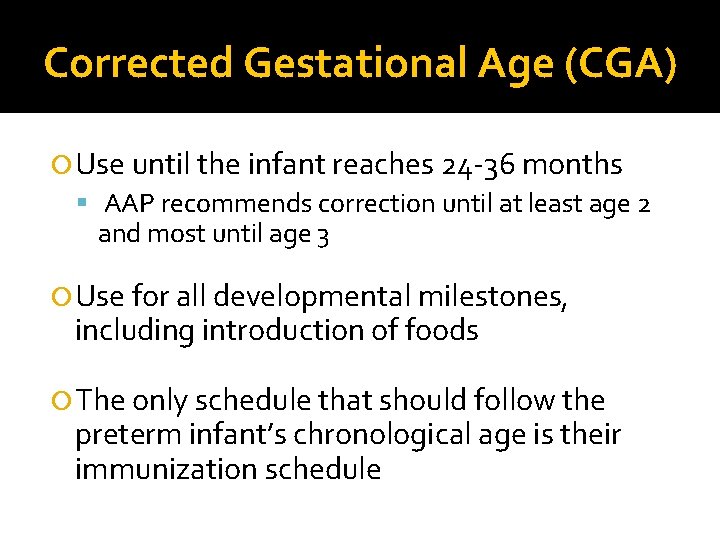
Corrected Gestational Age (CGA) Use until the infant reaches 24 -36 months AAP recommends correction until at least age 2 and most until age 3 Use for all developmental milestones, including introduction of foods The only schedule that should follow the preterm infant’s chronological age is their immunization schedule
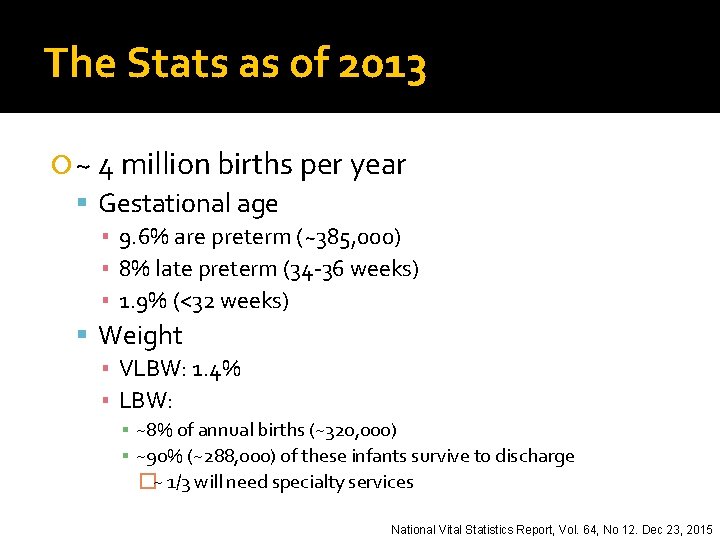
The Stats as of 2013 ~ 4 million births per year Gestational age ▪ 9. 6% are preterm (~385, 000) ▪ 8% late preterm (34 -36 weeks) ▪ 1. 9% (<32 weeks) Weight ▪ VLBW: 1. 4% ▪ LBW: ▪ ~8% of annual births (~320, 000) ▪ ~90% (~288, 000) of these infants survive to discharge �~ 1/3 will need specialty services National Vital Statistics Report, Vol. 64, No 12. Dec 23, 2015
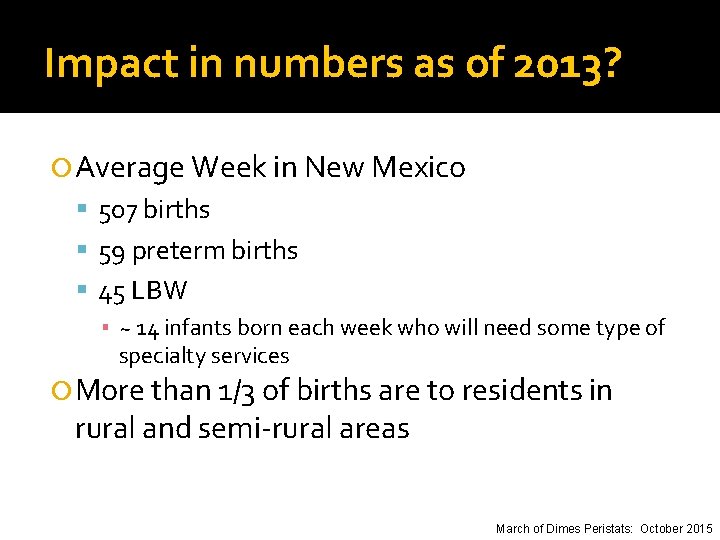
Impact in numbers as of 2013? Average Week in New Mexico 507 births 59 preterm births 45 LBW ▪ ~ 14 infants born each week who will need some type of specialty services More than 1/3 of births are to residents in rural and semi-rural areas March of Dimes Peristats: October 2015
Discharge Criteria Overall goal: to discharge a stable baby, NOT a term healthy baby Infant Readiness Family and Home Environmental Readiness Community and Health Care System Readiness AAP, Committee on Fetus and Newborn. Hospital Discharge of the High-Risk Neonate. Pediatrics. 2008; 122(5): 1119 -1126.
Medical Home The primary care provider who provides the family of a premature infant with Routine healthcare maintenance Anticipatory guidance Coordination of multiple specialty evaluations Family advocacy and support Assessment of neurodevelopment or behavioral issues
Outpatient Management Evaluation of Growth and Nutrition Ongoing Preventative Care Vision and Hearing Screening Developmental Progress Close Monitoring of Common Medical Problems of the Preterm Infant
Evaluation of Growth and Nutrition
Goal of Growth and Nutrition To approximate the rate of growth and body composition of a healthy fetus of the same gestational age while avoiding nutritional excesses or deficiencies
Growth Poor postnatal growth is a major cause of morbidity in the preterm population Most develop a significant nutrient deficit in the first weeks of life that is not replaced before hospital discharge (even when recommended dietary intakes are met) Little is known about the nutritional status of these infants post-discharge ▪ Best practice is still largely unknown Catch-up growth can occur by 3 years CGA, but it can take longer (8 -14 years) May not be achieved at all Lemons et al. Pediatrics. 2001 Embleton et al. Pediatrics 2001 Carlson SE: Nutrition of the preterm infant: scientific basis and practical guidelines, ed 3. 2005
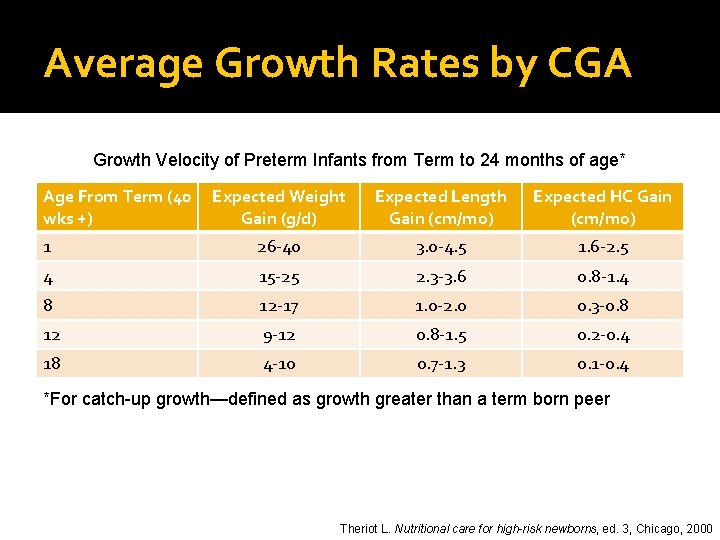
Growth and Nutrition Weight, length, weight/length and HC must be plotted for CGA until 3 years of age Any infant not approaching the lower percentiles of the curve, has a flattening or decelerating growth pattern needs an assessment Weight will falter first Weight/length measurements may indicate a loss in growth velocity prior to major changes in HC or length velocity
Growth Patterns Head growth frequently exceeds weight gain and linear growth Many have a disproportionate increase in weight for length in the early months after discharge, especially VLBW THIS SHOULD NOT BE USED AS EVIDENCE FOR RESTRICTION OF INTAKE Accelerated growth patterns usually normalize between 1 & 2 years of age
Average Growth Rates by CGA Growth Velocity of Preterm Infants from Term to 24 months of age* Age From Term (40 wks +) Expected Weight Gain (g/d) Expected Length Gain (cm/mo) Expected HC Gain (cm/mo) 1 26 -40 3. 0 -4. 5 1. 6 -2. 5 4 15 -25 2. 3 -3. 6 0. 8 -1. 4 8 12 -17 1. 0 -2. 0 0. 3 -0. 8 12 9 -12 0. 8 -1. 5 0. 2 -0. 4 18 4 -10 0. 7 -1. 3 0. 1 -0. 4 *For catch-up growth—defined as growth greater than a term born peer Theriot L. Nutritional care for high-risk newborns, ed. 3, Chicago, 2000
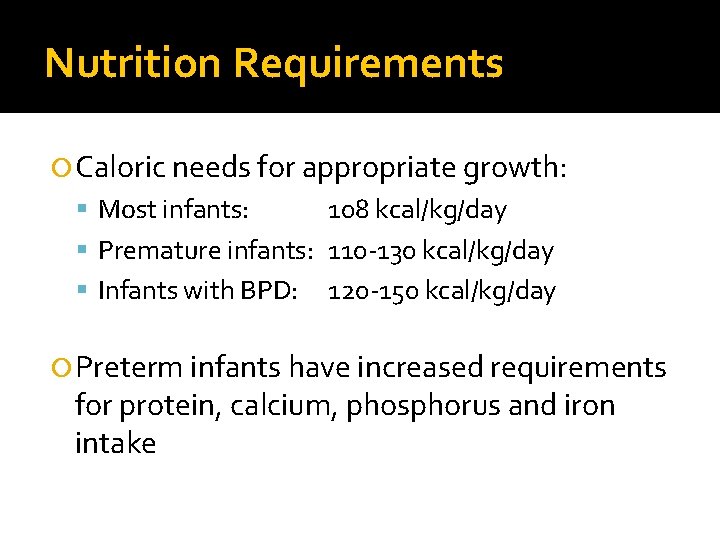
Nutrition Requirements Caloric needs for appropriate growth: Most infants: 108 kcal/kg/day Premature infants: 110 -130 kcal/kg/day Infants with BPD: 120 -150 kcal/kg/day Preterm infants have increased requirements for protein, calcium, phosphorus and iron intake
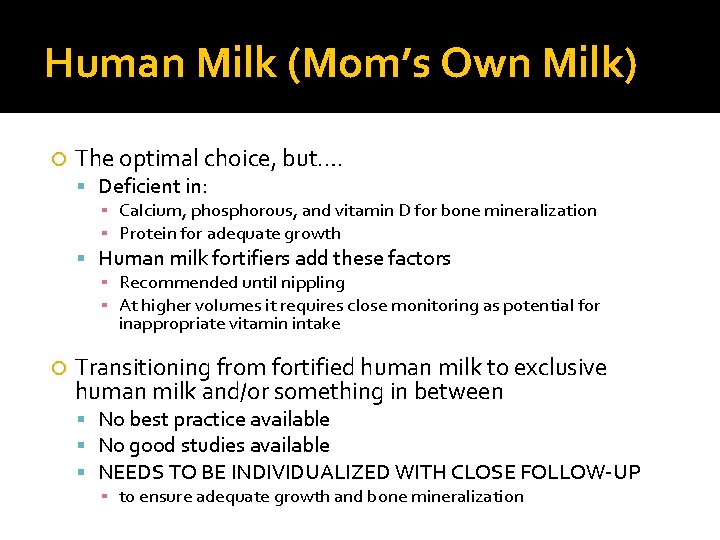
Human Milk (Mom’s Own Milk) The optimal choice, but…. Deficient in: ▪ Calcium, phosphorous, and vitamin D for bone mineralization ▪ Protein for adequate growth Human milk fortifiers add these factors ▪ Recommended until nippling ▪ At higher volumes it requires close monitoring as potential for inappropriate vitamin intake Transitioning from fortified human milk to exclusive human milk and/or something in between No best practice available No good studies available NEEDS TO BE INDIVIDUALIZED WITH CLOSE FOLLOW-UP ▪ to ensure adequate growth and bone mineralization
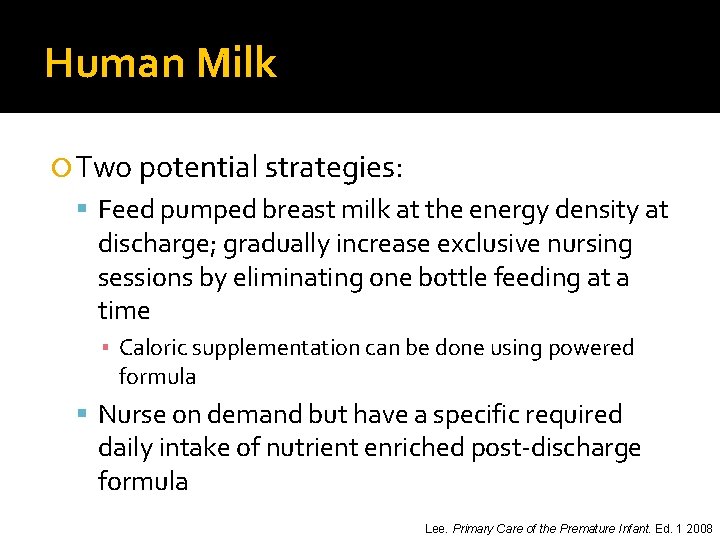
Human Milk Two potential strategies: Feed pumped breast milk at the energy density at discharge; gradually increase exclusive nursing sessions by eliminating one bottle feeding at a time ▪ Caloric supplementation can be done using powered formula Nurse on demand but have a specific required daily intake of nutrient enriched post-discharge formula Lee. Primary Care of the Premature Infant. Ed. 1 2008
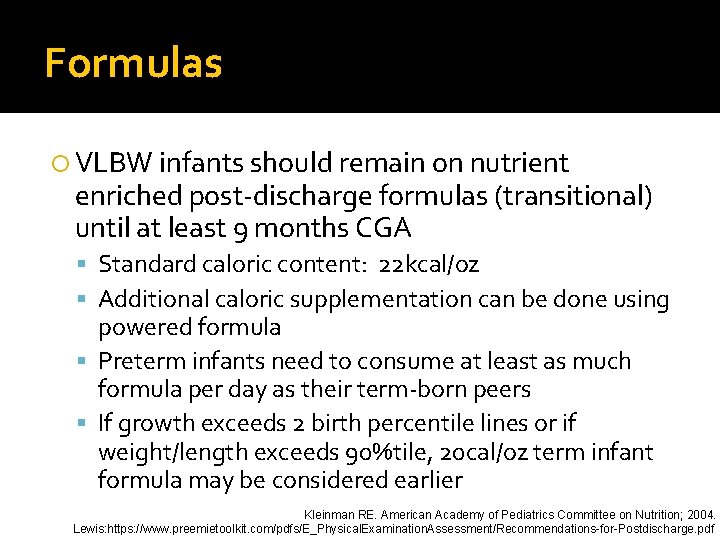
Formulas VLBW infants should remain on nutrient enriched post-discharge formulas (transitional) until at least 9 months CGA Standard caloric content: 22 kcal/oz Additional caloric supplementation can be done using powered formula Preterm infants need to consume at least as much formula per day as their term-born peers If growth exceeds 2 birth percentile lines or if weight/length exceeds 90%tile, 20 cal/oz term infant formula may be considered earlier Kleinman RE. American Academy of Pediatrics Committee on Nutrition; 2004. Lewis: https: //www. preemietoolkit. com/pdfs/E_Physical. Examination. Assessment/Recommendations-for-Postdischarge. pdf
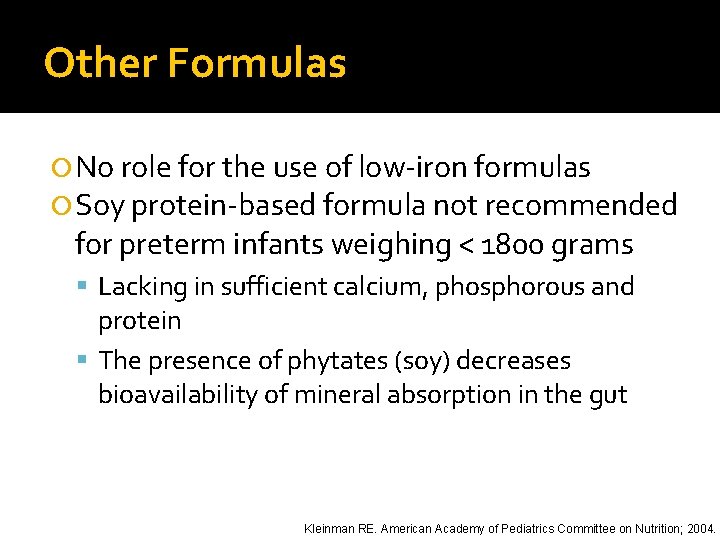
Other Formulas No role for the use of low-iron formulas Soy protein-based formula not recommended for preterm infants weighing < 1800 grams Lacking in sufficient calcium, phosphorous and protein The presence of phytates (soy) decreases bioavailability of mineral absorption in the gut Kleinman RE. American Academy of Pediatrics Committee on Nutrition; 2004.
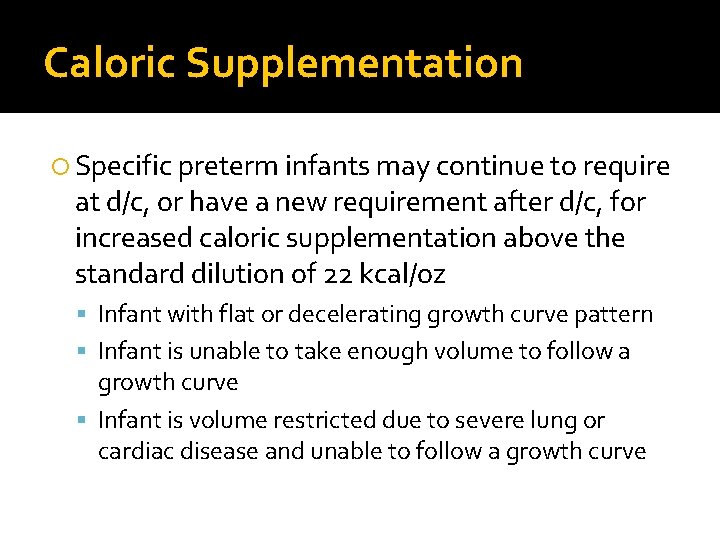
Caloric Supplementation Specific preterm infants may continue to require at d/c, or have a new requirement after d/c, for increased caloric supplementation above the standard dilution of 22 kcal/oz Infant with flat or decelerating growth curve pattern Infant is unable to take enough volume to follow a growth curve Infant is volume restricted due to severe lung or cardiac disease and unable to follow a growth curve
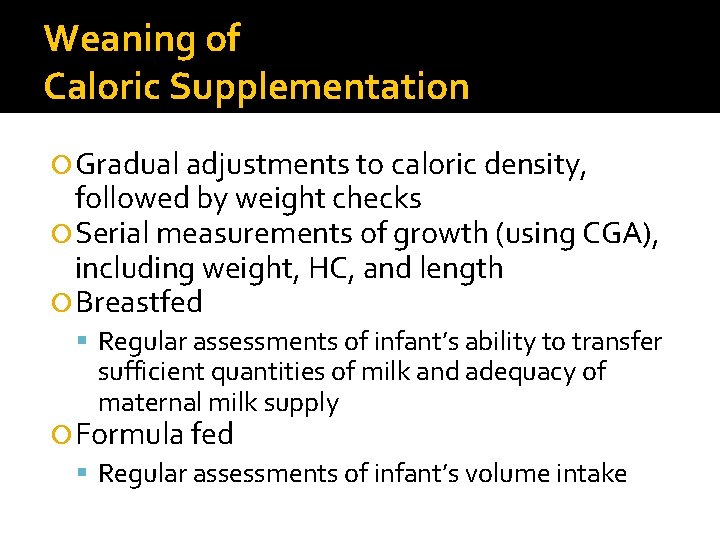
Weaning of Caloric Supplementation Gradual adjustments to caloric density, followed by weight checks Serial measurements of growth (using CGA), including weight, HC, and length Breastfed Regular assessments of infant’s ability to transfer sufficient quantities of milk and adequacy of maternal milk supply Formula fed Regular assessments of infant’s volume intake
Food Introduction of foods should occur at a schedule consistent with a term baby, using the infant’s CGA VLBW infant’s should wait until 6 months CGA
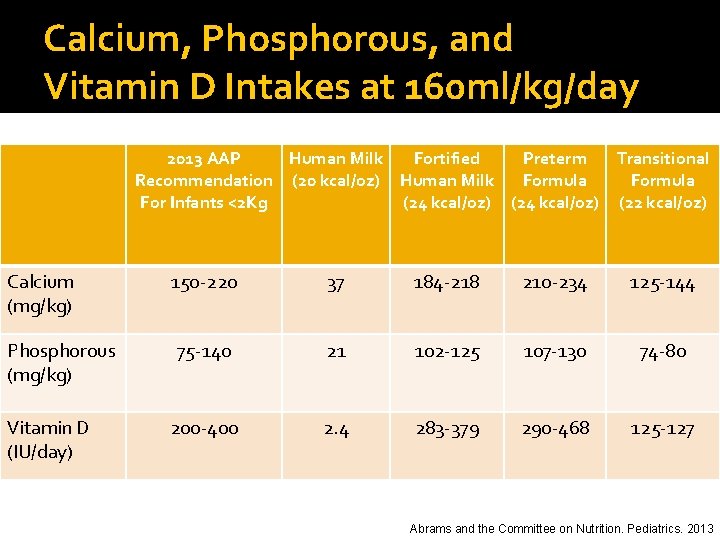
Calcium, Phosphorous, and Vitamin D Intakes at 160 ml/kg/day 2013 AAP Human Milk Fortified Preterm Transitional Recommendation (20 kcal/oz) Human Milk Formula For Infants <2 Kg (24 kcal/oz) (22 kcal/oz) Calcium (mg/kg) 150 -220 37 184 -218 210 -234 125 -144 Phosphorous (mg/kg) 75 -140 21 102 -125 107 -130 74 -80 200 -400 2. 4 283 -379 290 -468 125 -127 Vitamin D (IU/day) Abrams and the Committee on Nutrition. Pediatrics. 2013
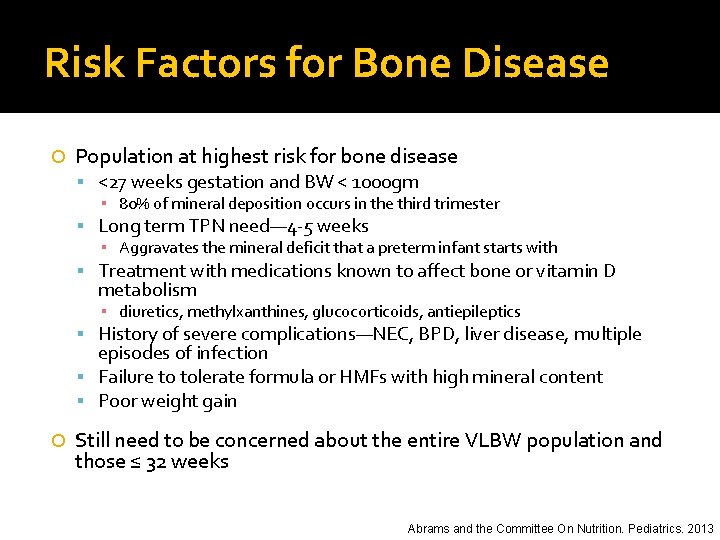
Risk Factors for Bone Disease Population at highest risk for bone disease <27 weeks gestation and BW < 1000 gm ▪ 80% of mineral deposition occurs in the third trimester Long term TPN need— 4 -5 weeks ▪ Aggravates the mineral deficit that a preterm infant starts with Treatment with medications known to affect bone or vitamin D metabolism ▪ diuretics, methylxanthines, glucocorticoids, antiepileptics History of severe complications—NEC, BPD, liver disease, multiple episodes of infection Failure to tolerate formula or HMFs with high mineral content Poor weight gain Still need to be concerned about the entire VLBW population and those ≤ 32 weeks Abrams and the Committee On Nutrition. Pediatrics. 2013
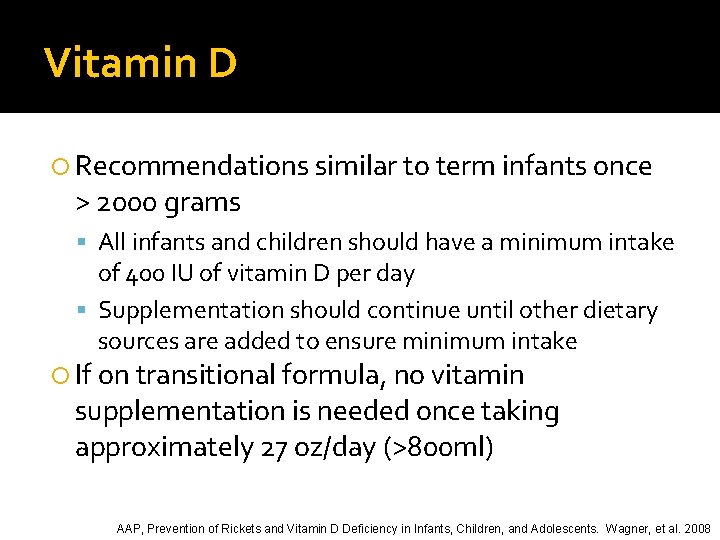
Vitamin D Recommendations similar to term infants once > 2000 grams All infants and children should have a minimum intake of 400 IU of vitamin D per day Supplementation should continue until other dietary sources are added to ensure minimum intake If on transitional formula, no vitamin supplementation is needed once taking approximately 27 oz/day (>800 ml) AAP, Prevention of Rickets and Vitamin D Deficiency in Infants, Children, and Adolescents. Wagner, et al. 2008
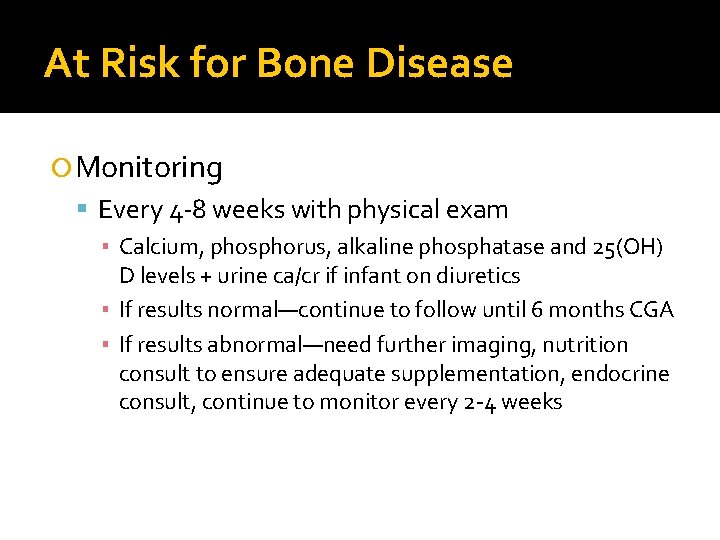
At Risk for Bone Disease Monitoring Every 4 -8 weeks with physical exam ▪ Calcium, phosphorus, alkaline phosphatase and 25(OH) D levels + urine ca/cr if infant on diuretics ▪ If results normal—continue to follow until 6 months CGA ▪ If results abnormal—need further imaging, nutrition consult to ensure adequate supplementation, endocrine consult, continue to monitor every 2 -4 weeks
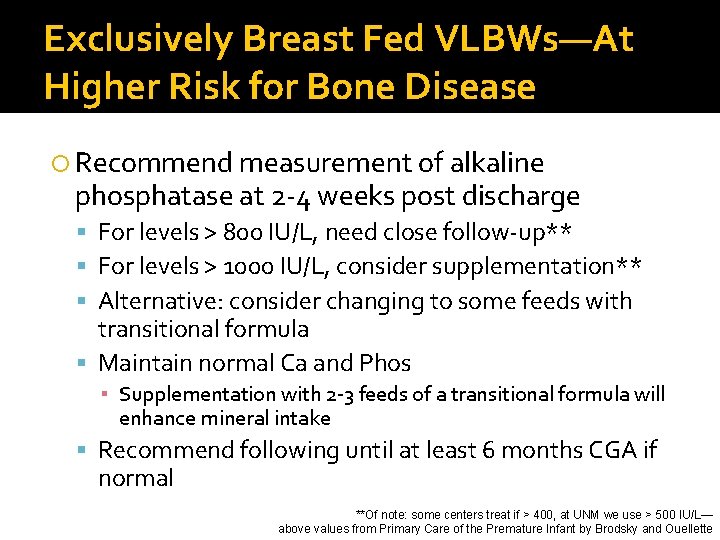
Exclusively Breast Fed VLBWs—At Higher Risk for Bone Disease Recommend measurement of alkaline phosphatase at 2 -4 weeks post discharge For levels > 800 IU/L, need close follow-up** For levels > 1000 IU/L, consider supplementation** Alternative: consider changing to some feeds with transitional formula Maintain normal Ca and Phos ▪ Supplementation with 2 -3 feeds of a transitional formula will enhance mineral intake Recommend following until at least 6 months CGA if normal **Of note: some centers treat if > 400, at UNM we use > 500 IU/L— above values from Primary Care of the Premature Infant by Brodsky and Ouellette
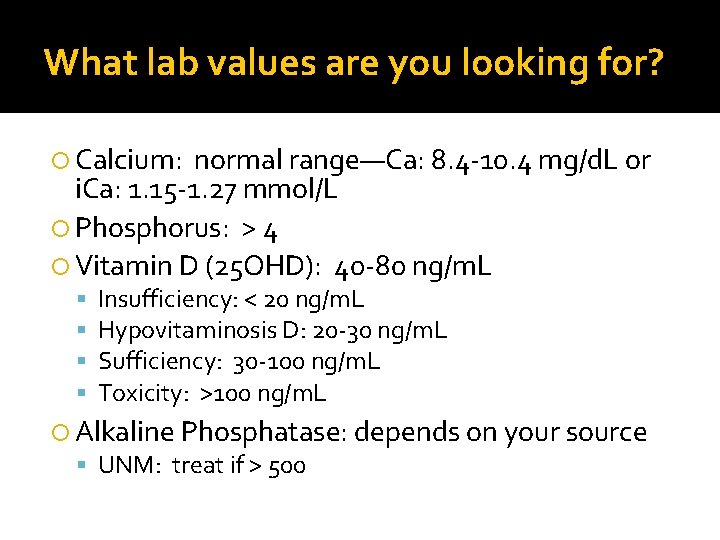
What lab values are you looking for? Calcium: normal range—Ca: 8. 4 -10. 4 mg/d. L or i. Ca: 1. 15 -1. 27 mmol/L Phosphorus: > 4 Vitamin D (25 OHD): 40 -80 ng/m. L Insufficiency: < 20 ng/m. L Hypovitaminosis D: 20 -30 ng/m. L Sufficiency: 30 -100 ng/m. L Toxicity: >100 ng/m. L Alkaline Phosphatase: depends on your source UNM: treat if > 500
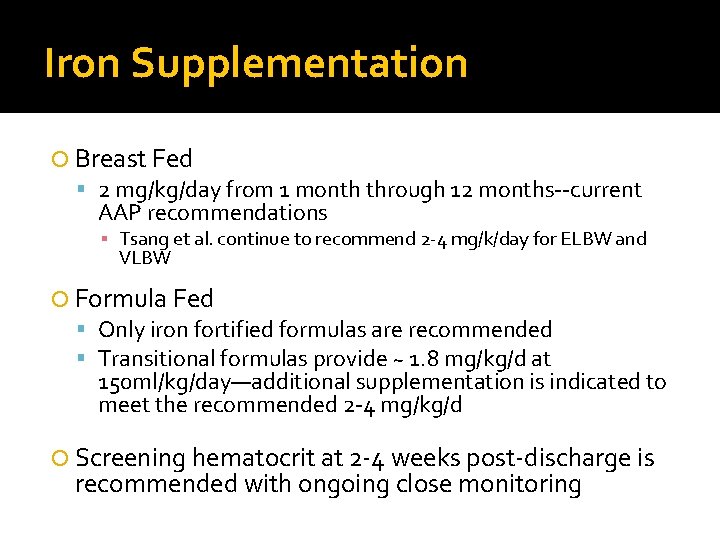
Iron Supplementation Breast Fed 2 mg/kg/day from 1 month through 12 months--current AAP recommendations ▪ Tsang et al. continue to recommend 2 -4 mg/k/day for ELBW and VLBW Formula Fed Only iron fortified formulas are recommended Transitional formulas provide ~ 1. 8 mg/kg/d at 150 ml/kg/day—additional supplementation is indicated to meet the recommended 2 -4 mg/kg/d Screening hematocrit at 2 -4 weeks post-discharge is recommended with ongoing close monitoring
Close Follow-Up At discharge the preterm infant is usually just meeting a set growth guideline Typically 3 -5 days of good weight gain while on ad lib feeds First follow-up appointment is usually arranged for 48 -72 hours after discharge Our goal is to discharge a stable baby, NOT a term healthy newborn
Ongoing Preventative Care
Standard Immunizations Preterm infants should receive full immunizations based upon their chronological age consistent with the schedule and dose recommended for normal full-term infants AAP Committee on Infectious Diseases: Red Book 2012
Synagis (Palivizumab) New guidelines as of July 2014 Who gets it this season? All infants born at 29 0/7 weeks or less who are younger than 12 months at start of season Any preterm infant less than 32 0/7 weeks with CLD, defined as: ▪ Requirement of >21% oxygen for at least the first 28 days after birth In the 2 nd year of life with ongoing CLD of prematurity, <32 weeks at birth, plus steroids, diuretic OR O 2 need during 6 months prior to RSV season 12 months or younger with hemodynamically significant heart disease Committee on Infectious Diseases and Bronchiolitis Guidelines Committee. Pediatrics 2014
Rotavirus AAP recommends initial vaccination at or following discharge if clinically stable and between 6 and 15 weeks of (chronological) age Live vaccine Need to know your NICU’s policy More than half of ELBW infants are ineligible due to age at discharge Recent study suggests it may be safe to give in the NICU AAP Committee on Infectious Diseases: Immunization in special circumstances. Red Book 2012 Stumpf et al. Pediatrics 2013 Monk et al. Pediatrics 2014
Other Immunizations Influenza vaccine Should be given after 6 months of age Given as two doses one month apart Household contacts should be immunized Pertussis Booster (Tdap) All parents, siblings and care providers should be up to date ▪ Booster recommended at 11 -12 years of age and then every 10 years ▪ Expectant mothers should receive it with each pregnancy between 27 and 36 weeks
Vision and Hearing Screening
Retinopathy of Prematurity 2 nd most common cause of childhood blindness Affects up to 80% of VLBW, ELBW and sick premature infants Presents at 32 weeks CGA, peaks at 38 -40 weeks CGA, and begins to regress by 46 weeks CGA Infants with immature retinas at hospital d/c must be followed by ophthalmology until the retina is full vascularized: ~44 -48 weeks CGA If untreated, can lead to retinal detachment and blindness Good et al. Pediatrics 2005 American Academy of Pediatrics Policy Statement: Screening Examination of Premature Infants for Retinopathy of Prematurity. Pediatrics 2013
Vision Blindness ranges from 2 -6% of VLBW infants Incidence increases as birth weight declines Also at increased risk for: Myopia (16%) Strabismus (13 -25%) Amblyopia Recommended that all premature infants be evaluated by an ophthalmologist at 6 -12 months CGA and then yearly Quinn et al. Ophthalmology 1998 AAP. Eye examinations in infants, children, and young adults by pediatricians. Pediatrics. 2003
Hearing Risk of moderate to severe permanent hearing loss is up to 20 X higher in preterm infants Prevalence of severe sensorineural hearing loss for VLBW infants: 1 -10% 2 -4 per 100 infants <32 weeks’ gestation will develop some degree of hearing loss A normal hearing screen prior to hospital d/c DOES NOT preclude delayed onset or acquired hearing loss Infants who pass the neonatal screening but have a risk factor should have at least 1 diagnostic audiology assessment by 1 year of age Marlow et al. Archives of Diseases in Children. 2000
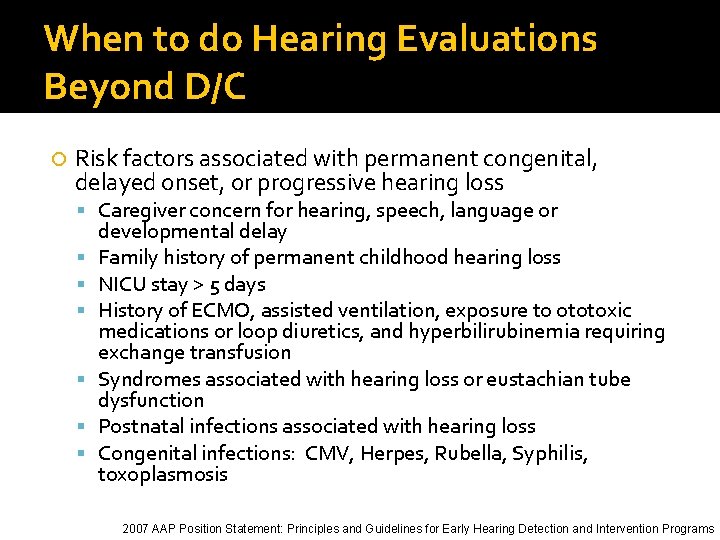
When to do Hearing Evaluations Beyond D/C Risk factors associated with permanent congenital, delayed onset, or progressive hearing loss Caregiver concern for hearing, speech, language or developmental delay Family history of permanent childhood hearing loss NICU stay > 5 days History of ECMO, assisted ventilation, exposure to ototoxic medications or loop diuretics, and hyperbilirubinemia requiring exchange transfusion Syndromes associated with hearing loss or eustachian tube dysfunction Postnatal infections associated with hearing loss Congenital infections: CMV, Herpes, Rubella, Syphilis, toxoplasmosis 2007 AAP Position Statement: Principles and Guidelines for Early Hearing Detection and Intervention Programs
Developmental Progress
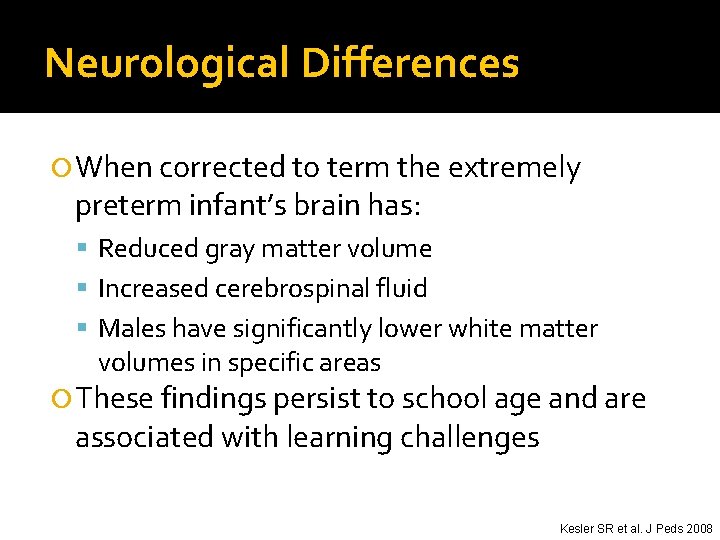
Neurological Differences When corrected to term the extremely preterm infant’s brain has: Reduced gray matter volume Increased cerebrospinal fluid Males have significantly lower white matter volumes in specific areas These findings persist to school age and are associated with learning challenges Kesler SR et al. J Peds 2008
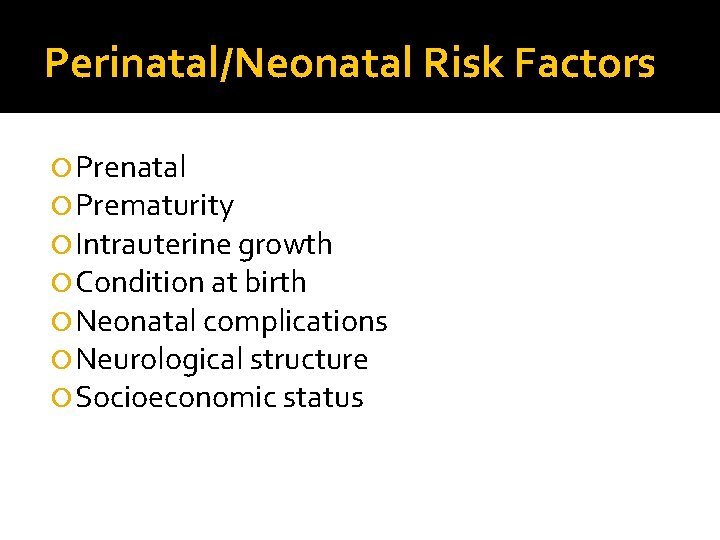
Perinatal/Neonatal Risk Factors Prenatal Prematurity Intrauterine growth Condition at birth Neonatal complications Neurological structure Socioeconomic status
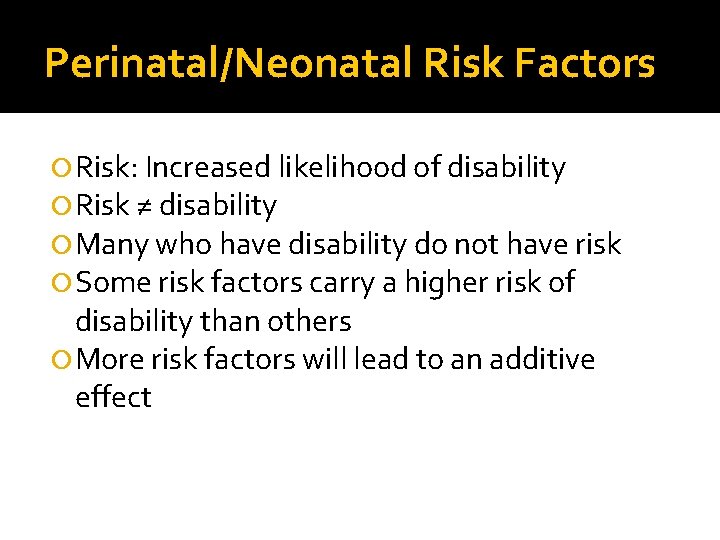
Perinatal/Neonatal Risk Factors Risk: Increased likelihood of disability Risk ≠ disability Many who have disability do not have risk Some risk factors carry a higher risk of disability than others More risk factors will lead to an additive effect
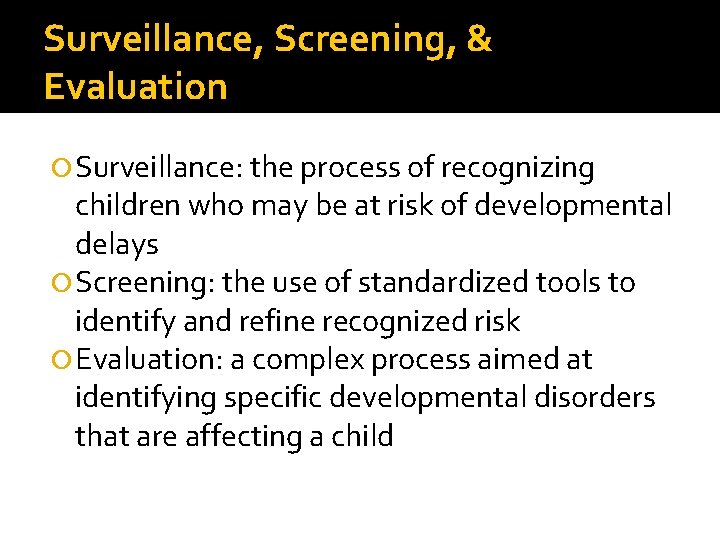
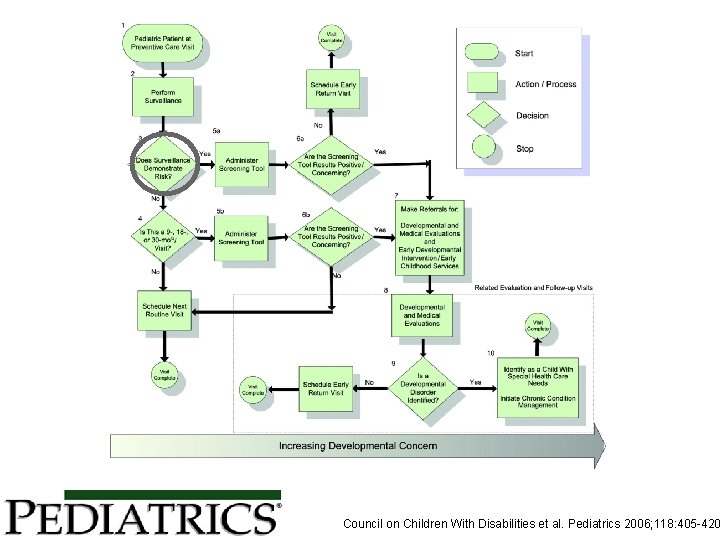
Surveillance, Screening, & Evaluation Surveillance: the process of recognizing children who may be at risk of developmental delays Screening: the use of standardized tools to identify and refine recognized risk Evaluation: a complex process aimed at identifying specific developmental disorders that are affecting a child
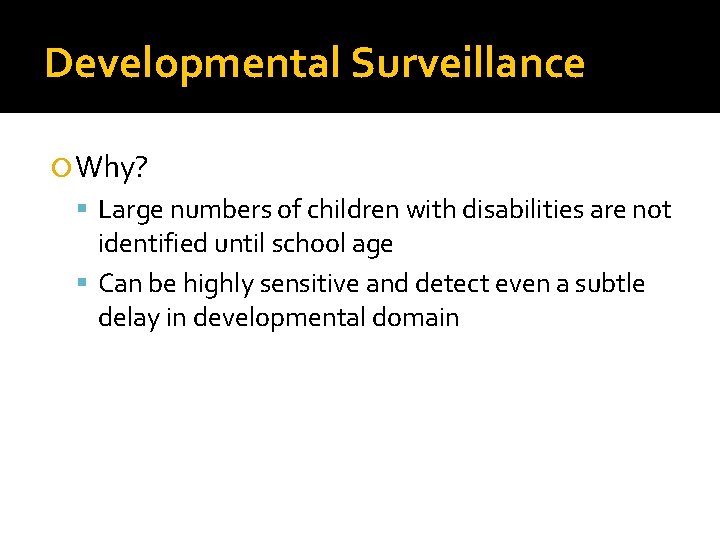
Developmental Surveillance Why? Large numbers of children with disabilities are not identified until school age Can be highly sensitive and detect even a subtle delay in developmental domain
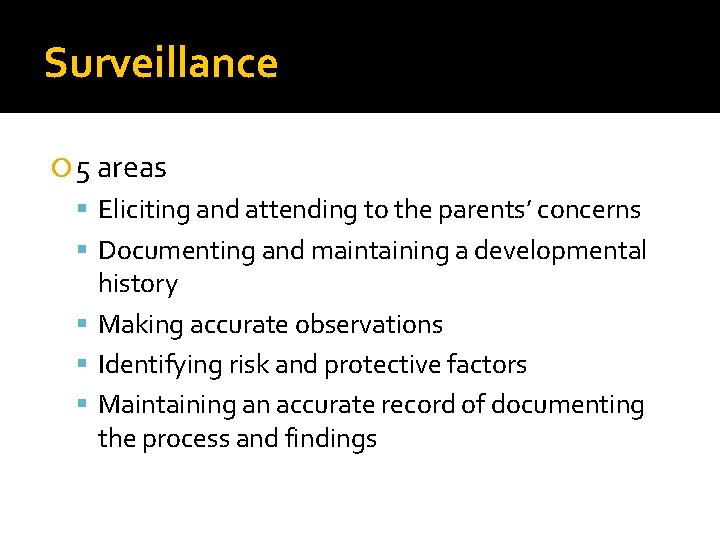
Surveillance 5 areas Eliciting and attending to the parents’ concerns Documenting and maintaining a developmental history Making accurate observations Identifying risk and protective factors Maintaining an accurate record of documenting the process and findings
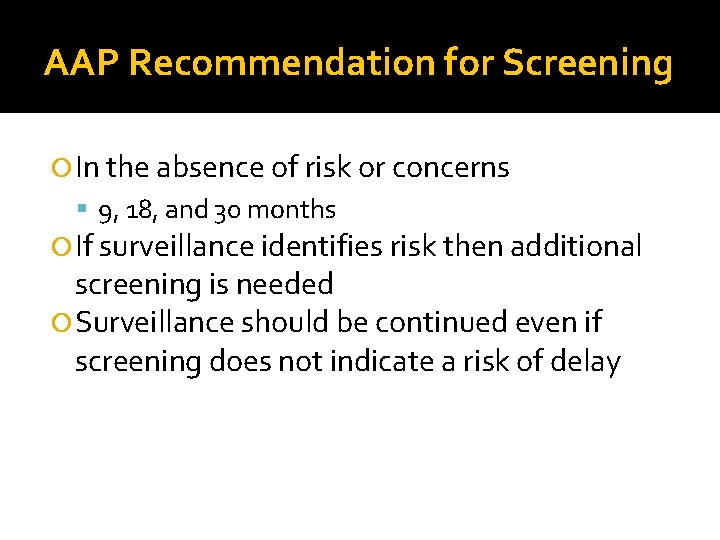
AAP Recommendation for Screening In the absence of risk or concerns 9, 18, and 30 months If surveillance identifies risk then additional screening is needed Surveillance should be continued even if screening does not indicate a risk of delay
Council on Children With Disabilities et al. Pediatrics 2006; 118: 405 -420
Early Intervention New Mexico’s EI eligibility criteria are based on: Established conditions Identified developmental delay, OR Risk ▪ Biomedical Risk ▪ Environmental Risk (NM FIT 2015)
Long-term Outcome? Complex interplay Biologic: serves as the strongest predictor of long- term function and development as the child recovers from perinatal and prenatal insults Genetic and Environmental: accounts for more of the variations seen in cognitive development In most preterm children a positive environment can ameliorate many biologic risk factors
Development Gross motor deficits manifest by 2 years of age Language deficits manifest in the pre-school years Behavioral and/or learning problems may not become apparent until school age New literature suggesting that prematurity is a risk factor for autism
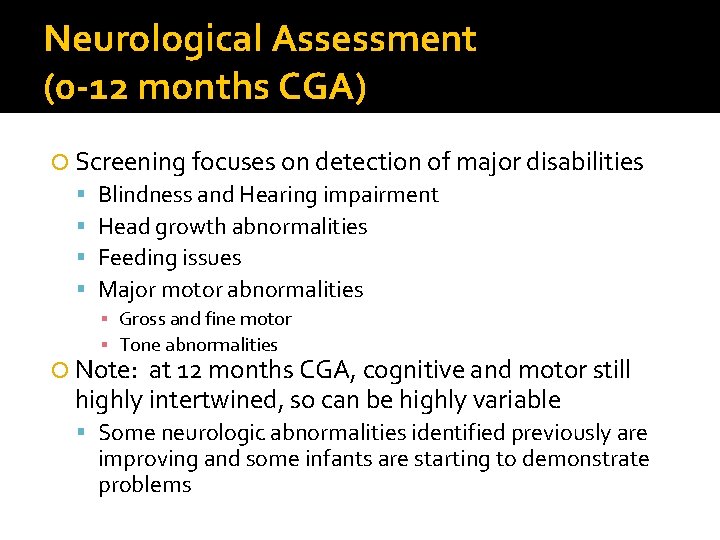
Neurological Assessment (0 -12 months CGA) Screening focuses on detection of major disabilities Blindness and Hearing impairment Head growth abnormalities Feeding issues Major motor abnormalities ▪ Gross and fine motor ▪ Tone abnormalities Note: at 12 months CGA, cognitive and motor still highly intertwined, so can be highly variable Some neurologic abnormalities identified previously are improving and some infants are starting to demonstrate problems
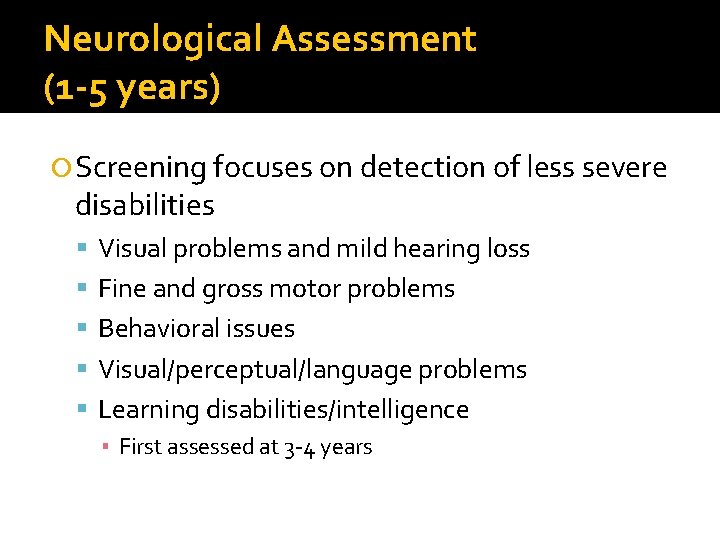
Neurological Assessment (1 -5 years) Screening focuses on detection of less severe disabilities Visual problems and mild hearing loss Fine and gross motor problems Behavioral issues Visual/perceptual/language problems Learning disabilities/intelligence ▪ First assessed at 3 -4 years
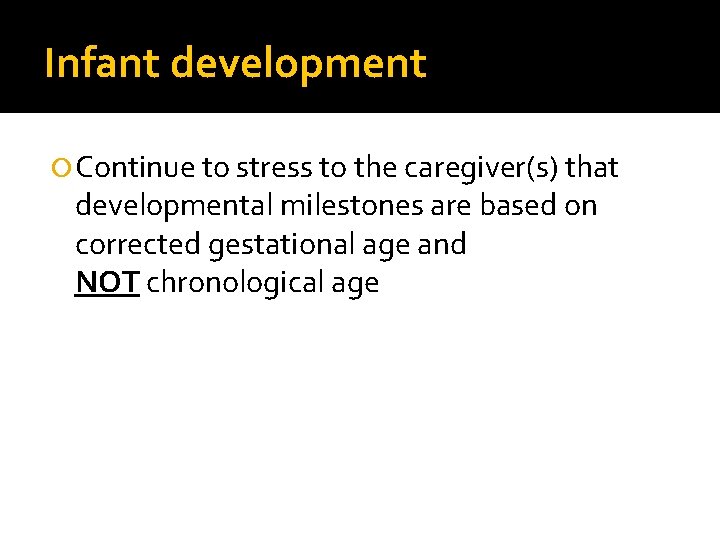
Infant development Continue to stress to the caregiver(s) that developmental milestones are based on corrected gestational age and NOT chronological age
Close Monitoring of Common Medical Problems of the Preterm Infant
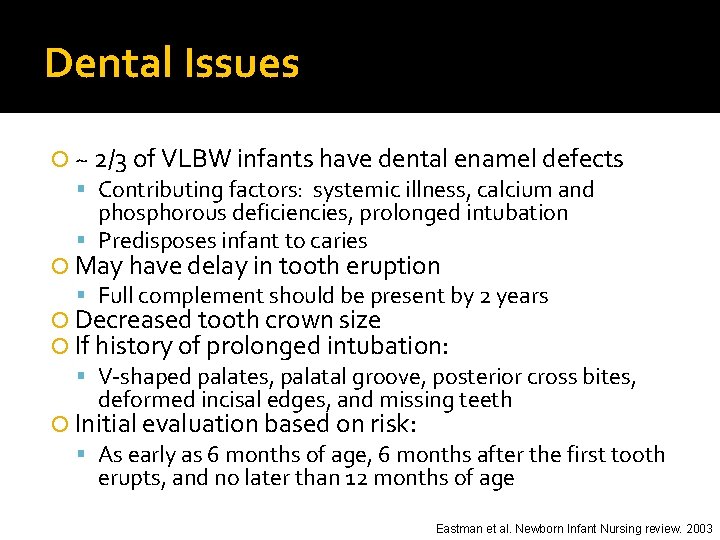
Dental Issues ~ 2/3 of VLBW infants have dental enamel defects Contributing factors: systemic illness, calcium and phosphorous deficiencies, prolonged intubation Predisposes infant to caries May have delay in tooth eruption Full complement should be present by 2 years Decreased tooth crown size If history of prolonged intubation: V-shaped palates, palatal groove, posterior cross bites, deformed incisal edges, and missing teeth Initial evaluation based on risk: As early as 6 months of age, 6 months after the first tooth erupts, and no later than 12 months of age Eastman et al. Newborn Infant Nursing review. 2003
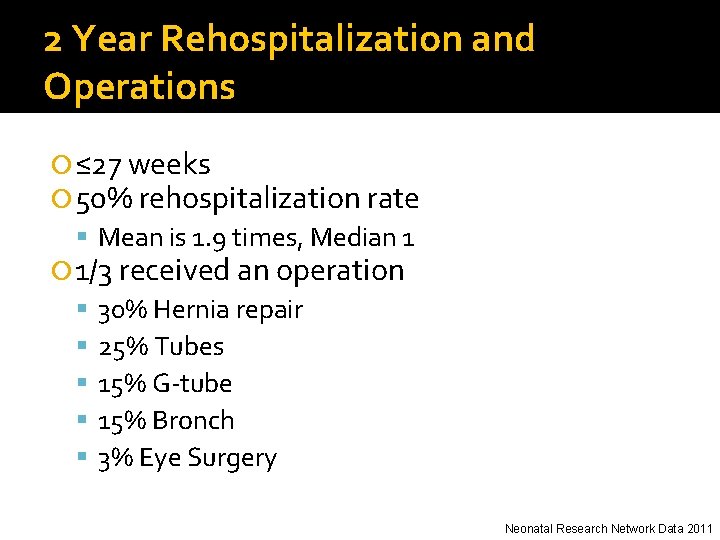
2 Year Rehospitalization and Operations ≤ 27 weeks 50% rehospitalization rate Mean is 1. 9 times, Median 1 1/3 received an operation 30% Hernia repair 25% Tubes 15% G-tube 15% Bronch 3% Eye Surgery Neonatal Research Network Data 2011
Special Equipment 7% with oxygen requirement at age 2 2% on Vent or CPAP Neonatal Research Network Data 2011
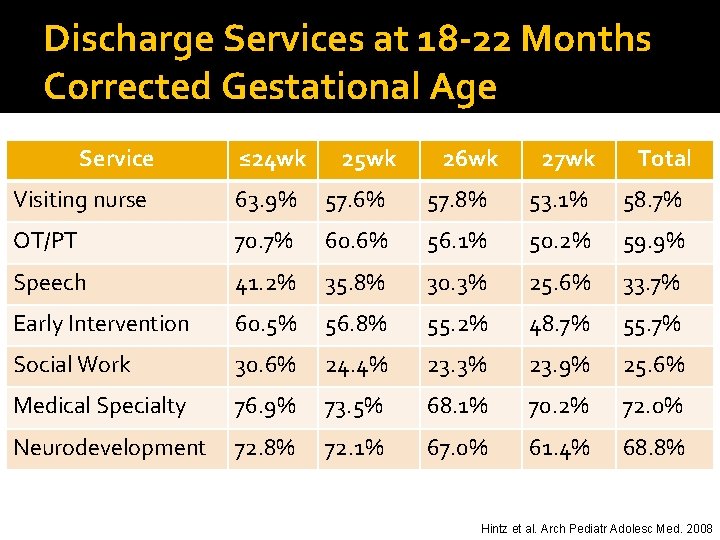
Discharge Services at 18 -22 Months Corrected Gestational Age Service ≤ 24 wk 25 wk 26 wk 27 wk Total Visiting nurse 63. 9% 57. 6% 57. 8% 53. 1% 58. 7% OT/PT 70. 7% 60. 6% 56. 1% 50. 2% 59. 9% Speech 41. 2% 35. 8% 30. 3% 25. 6% 33. 7% Early Intervention 60. 5% 56. 8% 55. 2% 48. 7% 55. 7% Social Work 30. 6% 24. 4% 23. 3% 23. 9% 25. 6% Medical Specialty 76. 9% 73. 5% 68. 1% 70. 2% 72. 0% Neurodevelopment 72. 8% 72. 1% 67. 0% 61. 4% 68. 8% Hintz et al. Arch Pediatr Adolesc Med. 2008
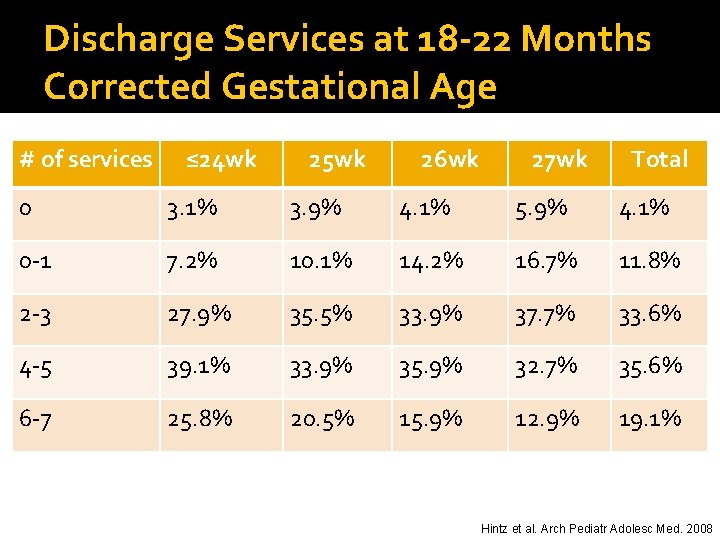
Discharge Services at 18 -22 Months Corrected Gestational Age # of services ≤ 24 wk 25 wk 26 wk 27 wk Total 0 3. 1% 3. 9% 4. 1% 5. 9% 4. 1% 0 -1 7. 2% 10. 1% 14. 2% 16. 7% 11. 8% 2 -3 27. 9% 35. 5% 33. 9% 37. 7% 33. 6% 4 -5 39. 1% 33. 9% 35. 9% 32. 7% 35. 6% 6 -7 25. 8% 20. 5% 15. 9% 12. 9% 19. 1% Hintz et al. Arch Pediatr Adolesc Med. 2008
Useful Resources www. preemietoolkit. com Primary Care of the Premature Infant, D Brodsky and MA Ouellette Nutritional Care of Preterm Infants AAP
THANK YOU