
FOLKLORE ORAL NARRATIVE A story that is told
- Slides: 16
FOLKLORE
ORAL NARRATIVE A story that is told, sung, or performed…Oral Narratives can be written down
HISTORICALLY SPEAKING… • Help to explain the natural world • Help to articulate fears/dreams • Provide order to a society • Provide understanding of a culture’s values, beliefs, mores, etc. • Entertainment
MOTIF Smallest meaningful unit of a story
VARIANT A deviation from standard text
CULTURAL VARIANTS Monogenesis Polygenesis One story created in one location and eventually spread to other cultures orally Cultures develop similar stories because these stories address needs/desires/etc. that are common to all people
PORQUOI TALES Etiological tales…how things come about/to be
FABLE A simple folktale that illustrates an ethical point. Often features animals but not animal tales Moral is stated
ANIMAL TALE A simple story in which animals play a major role Subgenre: Trickster Tale=animals that play tricks and behave mischievously
A sacred narrative set in the primordial past
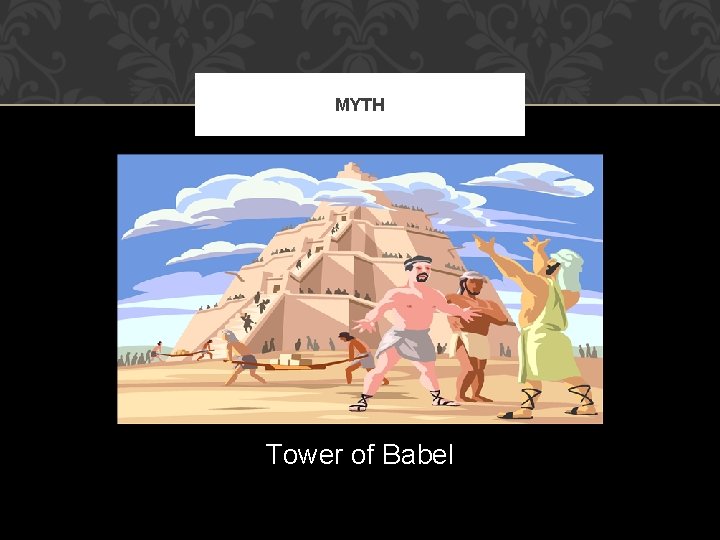
MYTH Tower of Babel
TALL TALE A deliberate, exaggerated lie told with a straight face for humorous effect.
LEGENDS Stories that people tell about events/people that are purportedly real/true. Told to inform, warn, advise, enlighten Distinctive beginning Real World, supernatural, realistic/well rounded characters
FAIRYTALES Stories that are fictional, created to entertain and sometimes instruct. 1 st collection of tales were collected and published by the Grimm Brothers in 1812 Distinctive and recognizable beginning and end
LITERARY TALES Modern adaptations of traditional folk literature
SUB-GENRES OF LITERARY TALES Traditional Style Fractures • Authors write in the traditional style of folktales or fairytales. • Authors create new tales by altering traditional tales • Hans Christian Anderson • Diane Stanley, John Scieszka, Donna Jo Napoli, Shannon Hale