
Folklore An Introduction Folklore Ive heard of that
- Slides: 20
Folklore An Introduction
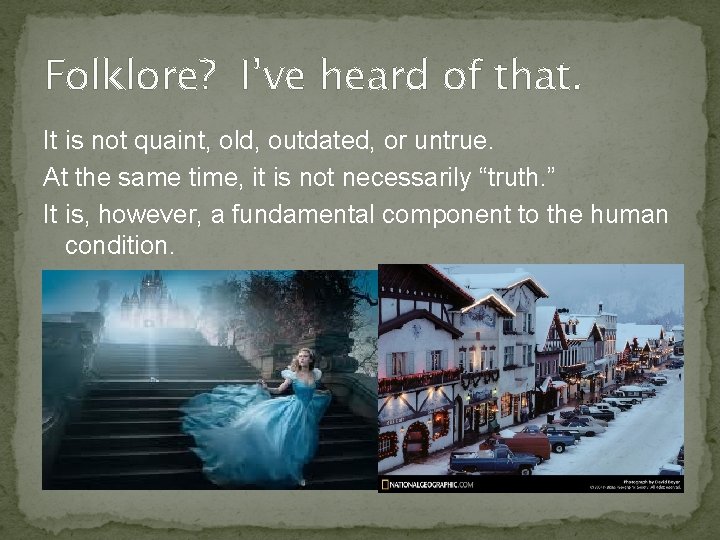
Folklore? I’ve heard of that. It is not quaint, old, outdated, or untrue. At the same time, it is not necessarily “truth. ” It is, however, a fundamental component to the human condition.
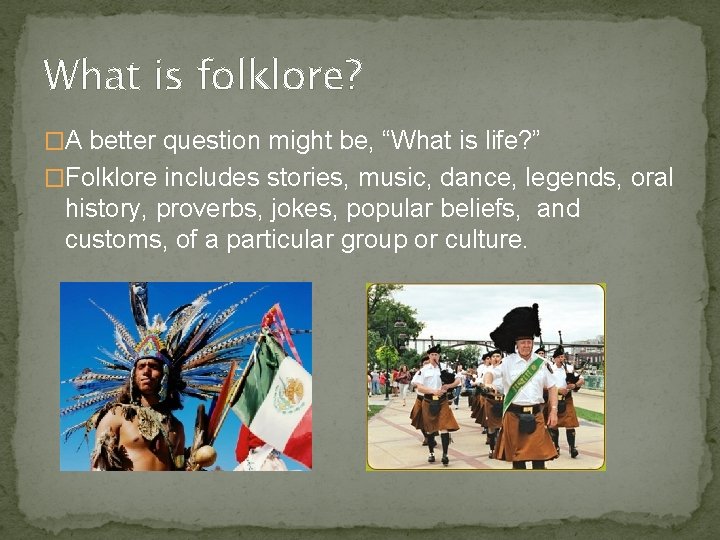
What is folklore? �A better question might be, “What is life? ” �Folklore includes stories, music, dance, legends, oral history, proverbs, jokes, popular beliefs, and customs, of a particular group or culture.
Three Cultural Levels �Popular or Mass Culture �Elite Culture �Folk Culture 3
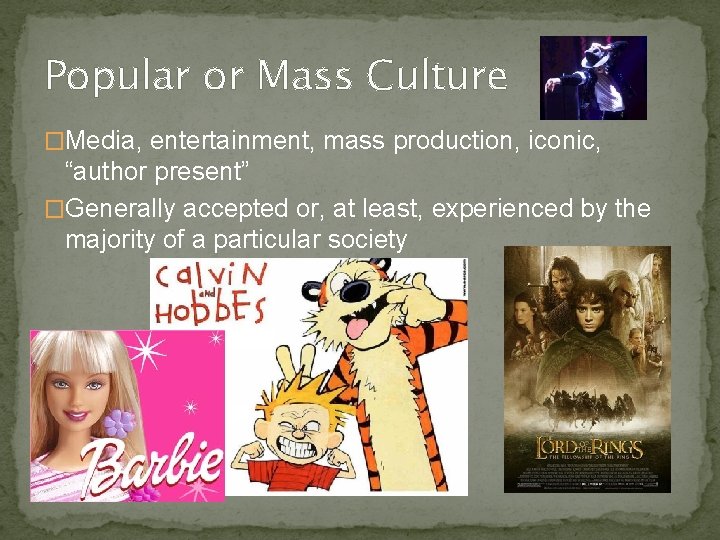
Popular or Mass Culture �Media, entertainment, mass production, iconic, “author present” �Generally accepted or, at least, experienced by the majority of a particular society
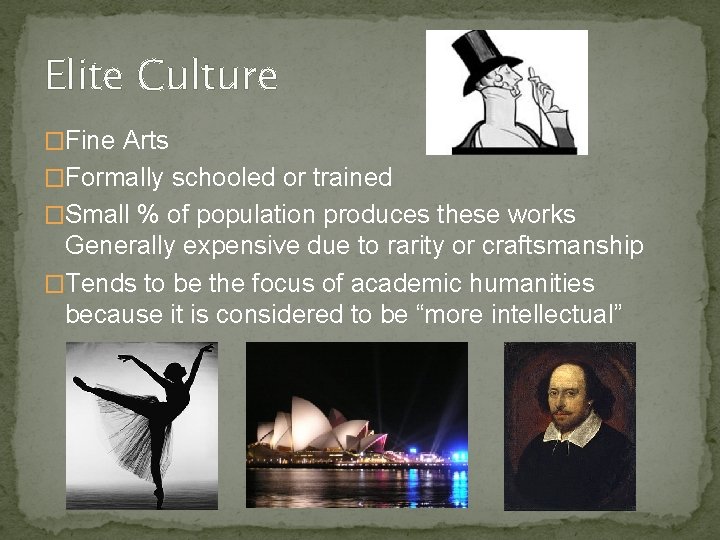
Elite Culture �Fine Arts �Formally schooled or trained �Small % of population produces these works Generally expensive due to rarity or craftsmanship �Tends to be the focus of academic humanities because it is considered to be “more intellectual”
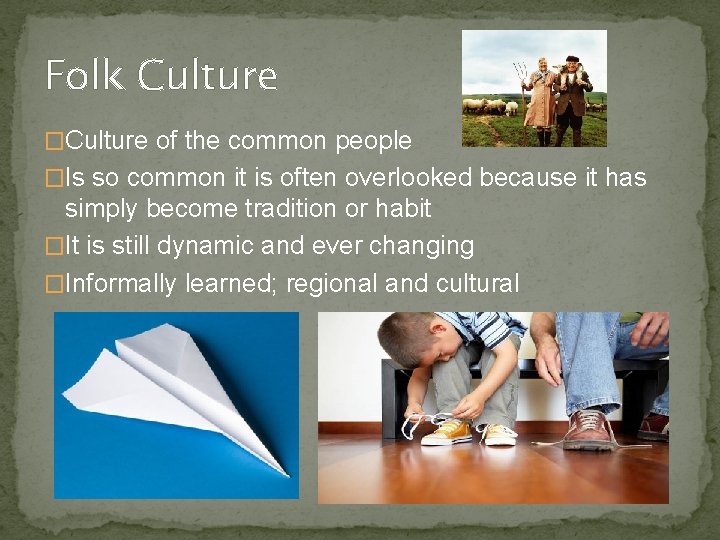
Folk Culture �Culture of the common people �Is so common it is often overlooked because it has simply become tradition or habit �It is still dynamic and ever changing �Informally learned; regional and cultural
Folklore: Common Characteristics �Learned in small groups �Traditional �Migrates with people or technology �Multiple versions (ex: print, electronic, verbal) �Meanings and versions change with context �Can be anonymous or bear the stamp of a particular community or group �Can be expressive (ex: jazz wedding/jazz funeral) �Can be functional (ex: BBQ, neighborhood watch)
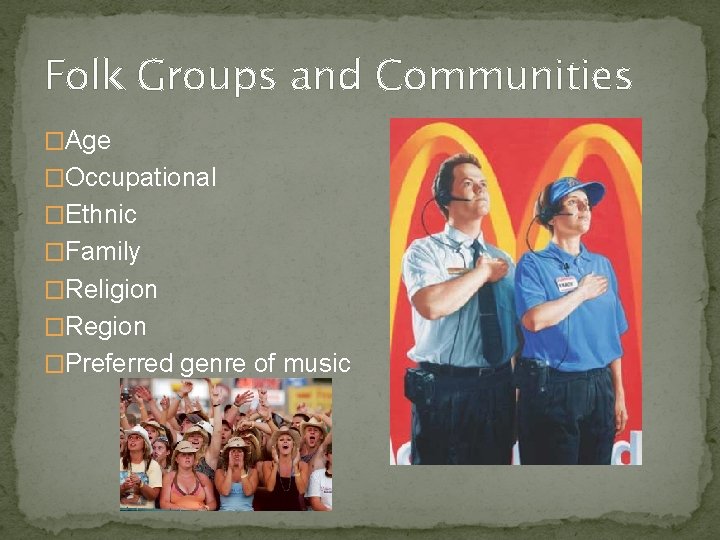
Folk Groups and Communities �Age �Occupational �Ethnic �Family �Religion �Region �Preferred genre of music
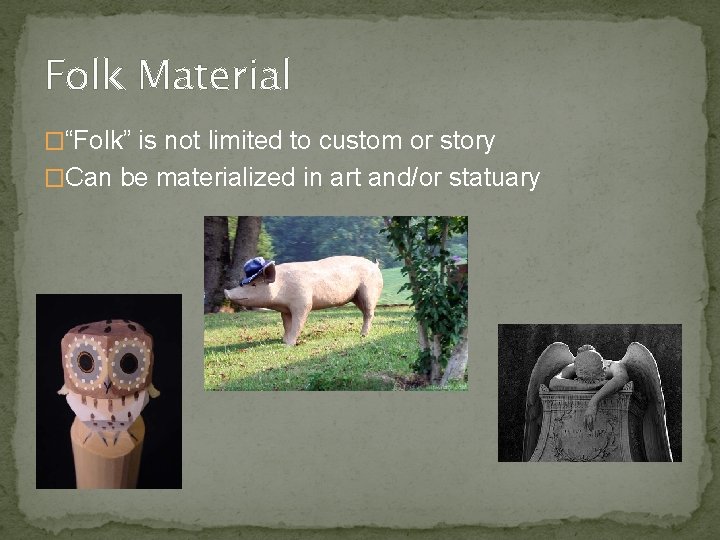
Folk Material �“Folk” is not limited to custom or story �Can be materialized in art and/or statuary
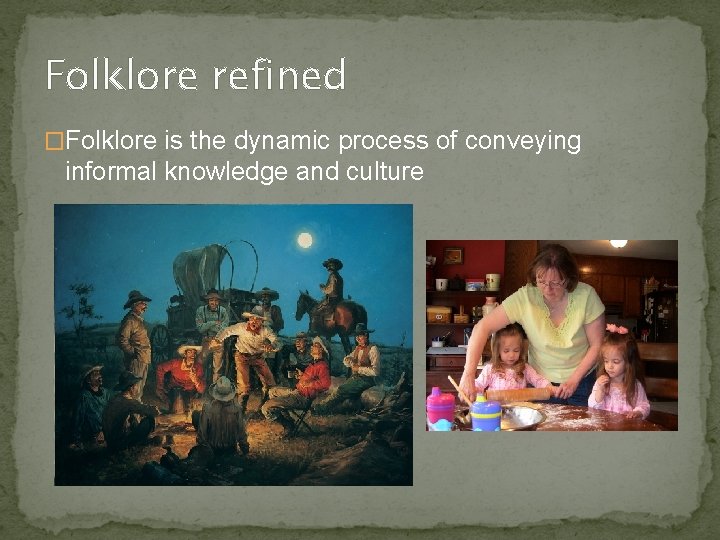
Folklore refined �Folklore is the dynamic process of conveying informal knowledge and culture
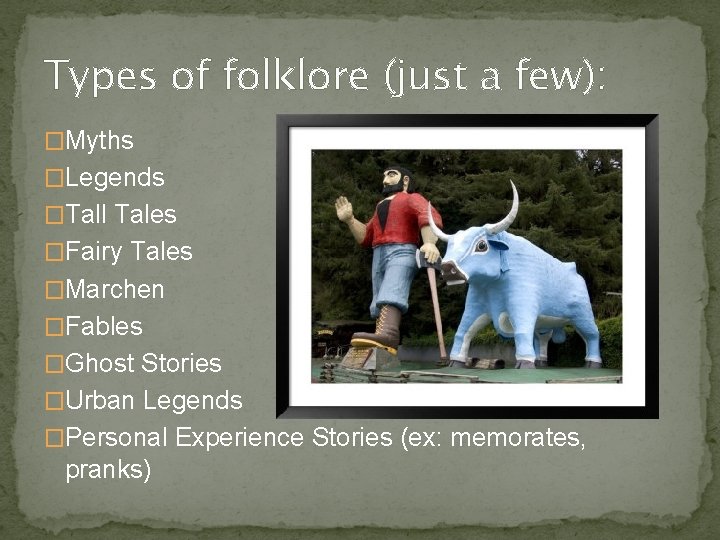
Types of folklore (just a few): �Myths �Legends �Tall Tales �Fairy Tales �Marchen �Fables �Ghost Stories �Urban Legends �Personal Experience Stories (ex: memorates, pranks)
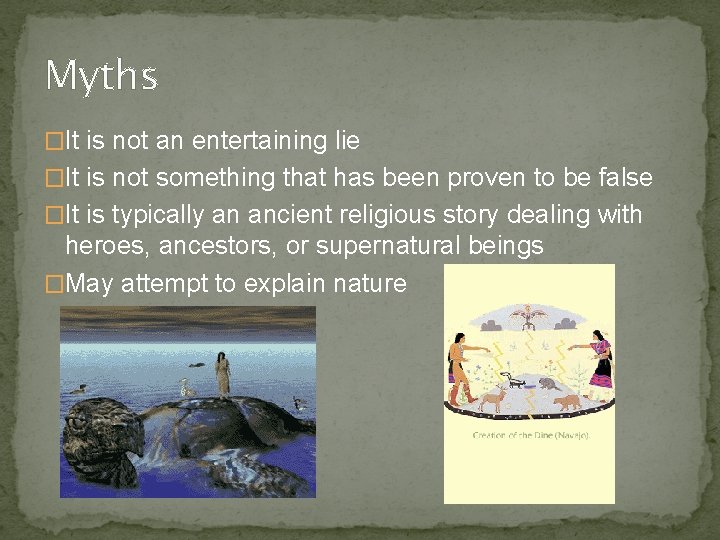
Myths �It is not an entertaining lie �It is not something that has been proven to be false �It is typically an ancient religious story dealing with heroes, ancestors, or supernatural beings �May attempt to explain nature
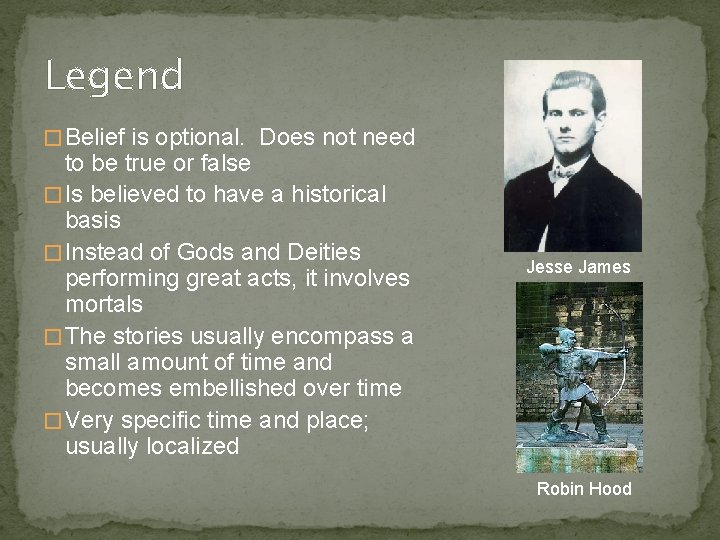
Legend � Belief is optional. Does not need to be true or false � Is believed to have a historical basis � Instead of Gods and Deities performing great acts, it involves mortals � The stories usually encompass a small amount of time and becomes embellished over time � Very specific time and place; usually localized Jesse James Robin Hood
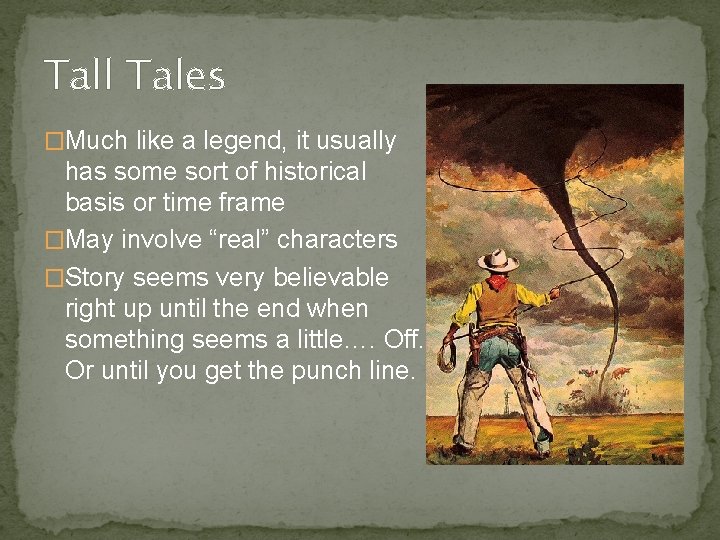
Tall Tales �Much like a legend, it usually has some sort of historical basis or time frame �May involve “real” characters �Story seems very believable right up until the end when something seems a little…. Off. Or until you get the punch line.
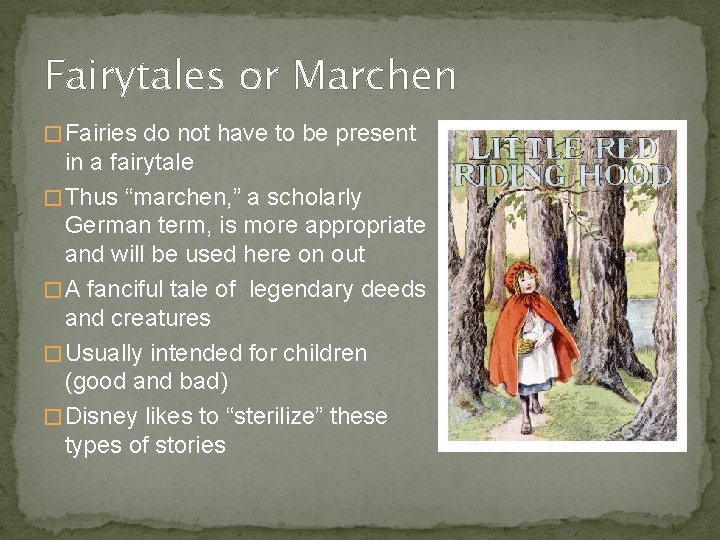
Fairytales or Marchen � Fairies do not have to be present in a fairytale � Thus “marchen, ” a scholarly German term, is more appropriate and will be used here on out � A fanciful tale of legendary deeds and creatures � Usually intended for children (good and bad) � Disney likes to “sterilize” these types of stories
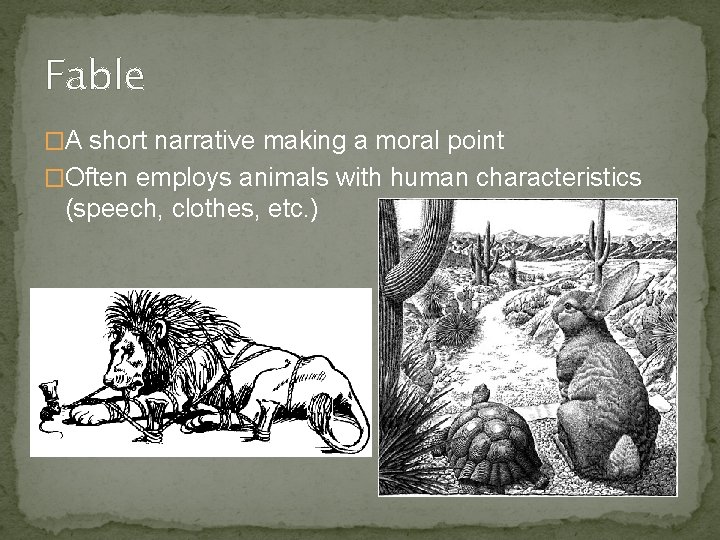
Fable �A short narrative making a moral point �Often employs animals with human characteristics (speech, clothes, etc. )
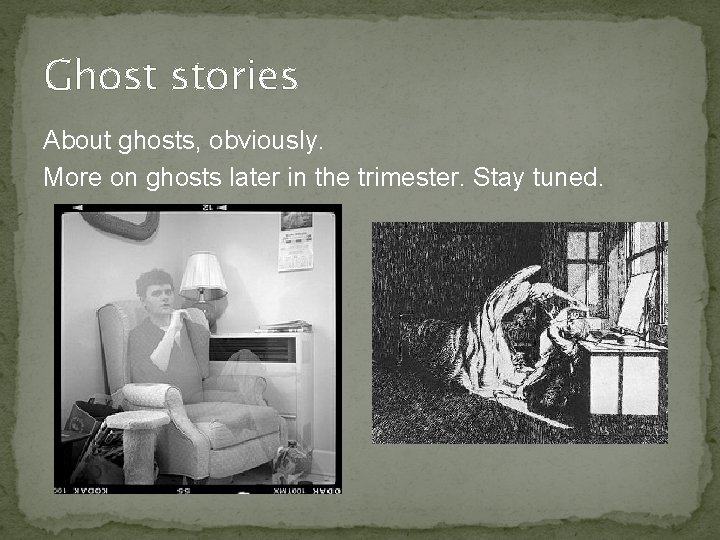
Ghost stories About ghosts, obviously. More on ghosts later in the trimester. Stay tuned.
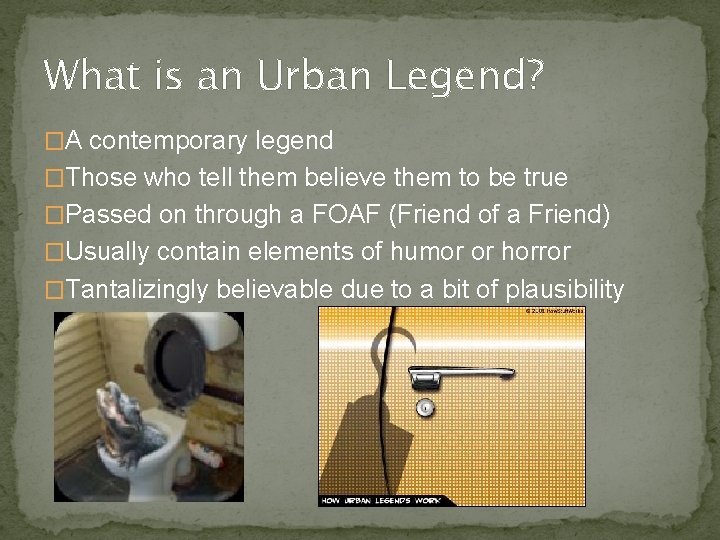
What is an Urban Legend? �A contemporary legend �Those who tell them believe them to be true �Passed on through a FOAF (Friend of a Friend) �Usually contain elements of humor or horror �Tantalizingly believable due to a bit of plausibility
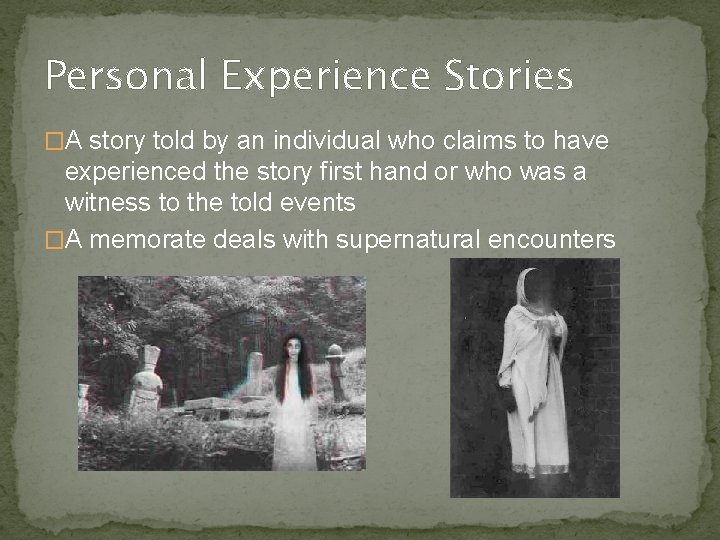
Personal Experience Stories �A story told by an individual who claims to have experienced the story first hand or who was a witness to the told events �A memorate deals with supernatural encounters