
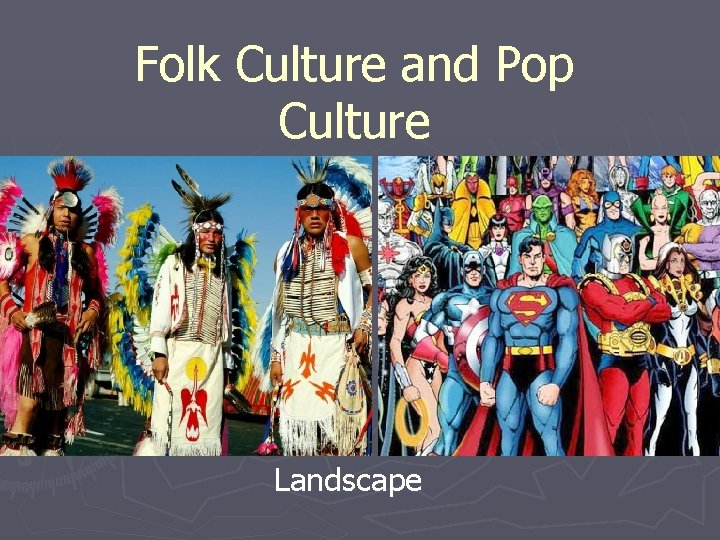
Folk Culture and Pop Culture Landscape Folk Popular


- Slides: 46
Folk Culture and Pop Culture Landscape
Folk & Popular Culture: Terms �� HABIT • “a repetitive act that a particular individual performs” �� CUSTOM • “a repetitive act of a group, performed to the extend that it becomes characteristic of the group” �� MATERIAL CULTURE • “a collection of social customs”
Folk vs. Popular �� Material culture falls into categories, mostly based on scale: • FOLK CULTURE Small, fairly homogenous groups Today, mostly isolated in rural areas • POPULAR CULTURE Large, heterogeneous groups Widespread, urban – maybe even “global culture”
Origins ► �� Every social custom develops in a particular place – a hearth. ► �� Folk customs usually have anonymous origins – they come from ► unknown places (sometimes more than one place), at unknown times. ► �� Popular customs are usually the product of developed countries, and their ► origins are often well known.
Origins: Folk Customs �� Folk Music • Every culture develops its own unique music. �� Folk Art • In many cultures the distinction between “art” and “everyday object” is unclear– decoration is “just the way things are done. ” �� Folk Housing • Must be made from locally available building materials. • Distinctive forms – there is no “perfect” house design. �� “Folk Food” • People adapt their food preferences based on the environment – BUT beliefs and values strongly influence diet. �� Folk Sports • People everywhere enjoy recreation – many places have developed unique forms of recreation and sports. �� Folk Beliefs • How does the world work? How should we behave?
Folk Music All known cultures have some form of music. ► Folk music is usually composed anonymously. ► Folk music is usually transmitted orally (not written down). ► The content and subject matter of folk music usually comes from everyday events in people’s lives. ►
Folk Art ► Usually, folk art pieces are “traditional”; there is no known designer, no “artist” – just craftspeople. • Often the “art” is just included as part of a traditional way of making something – not specifically made as “art. ”
Folk Housing �� Folk housing has several fundamental characteristics: • It must deal adequately with the physical environment (or else!). • It must be designed in such a way that people without special equipment or training can build it. • It must be constructed from locally available materials. ► Remember: there is no single “perfect” design.
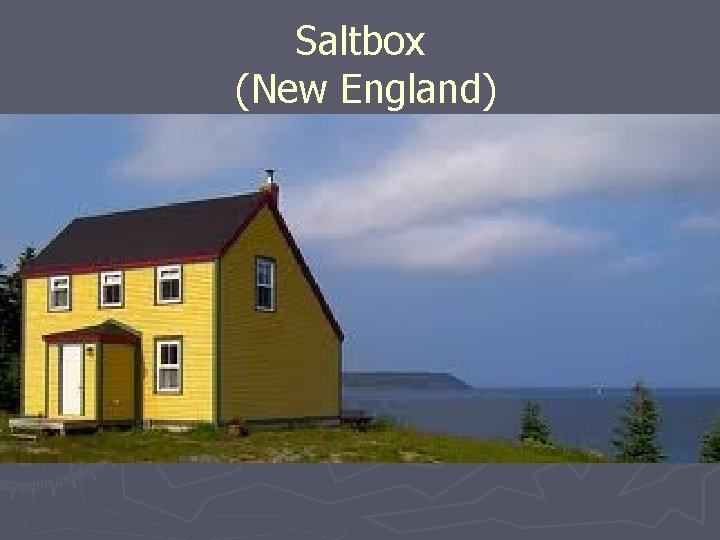
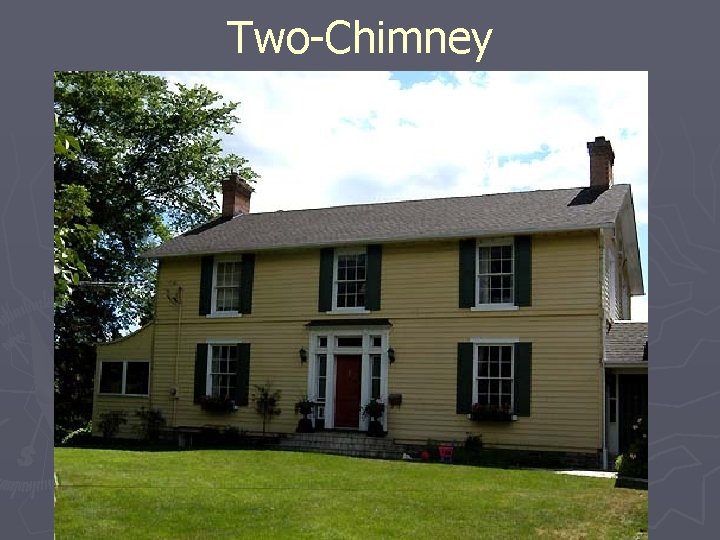
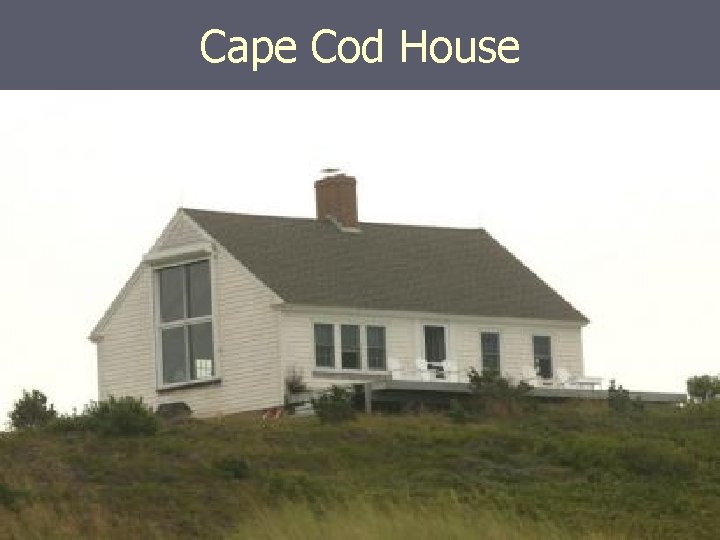
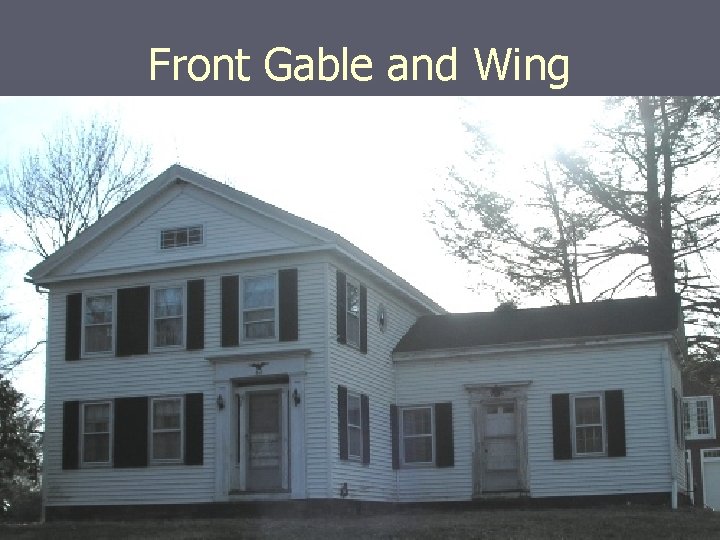
Folk Housing in America Regional Diffusion ► The various ethnic groups who migrated to America brought with them their traditional architectural designs. The imprint of those folk housing designs can be found where those groups settled. ex: New England Folk Housing styles: -Saltbox -Two Chimney -Cape Cod -Front Gable & Wing
Saltbox (New England)
Two-Chimney
Cape Cod House
Front Gable and Wing
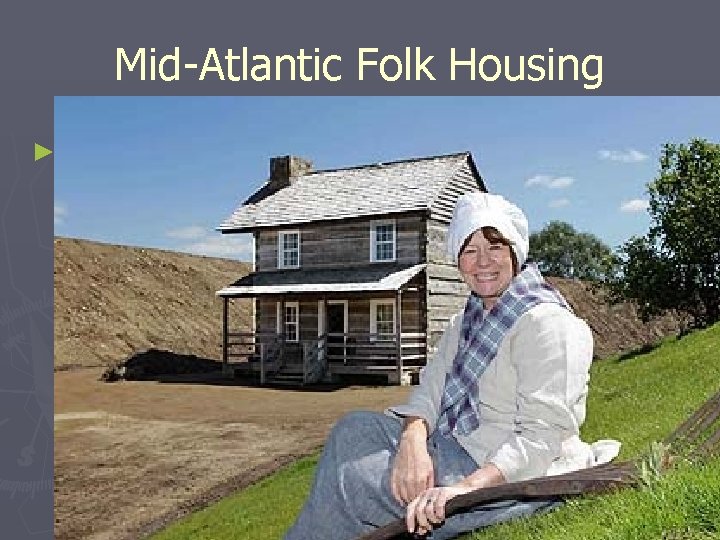
Mid-Atlantic Folk Housing ► The “I” House
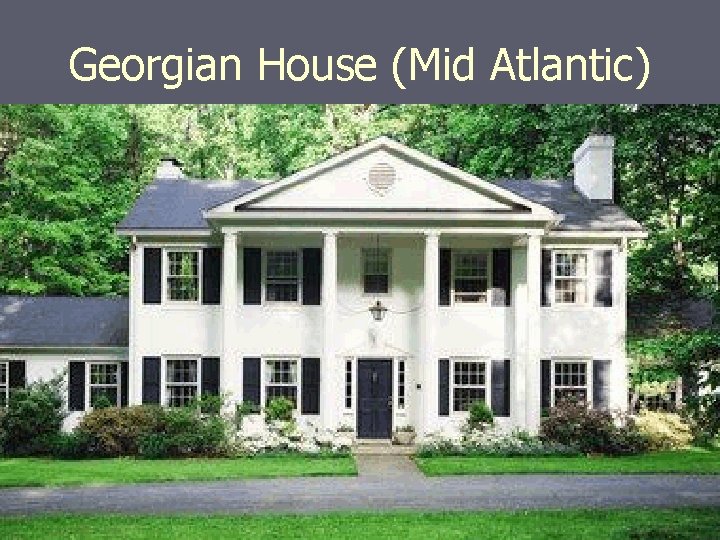
Georgian House (Mid Atlantic)
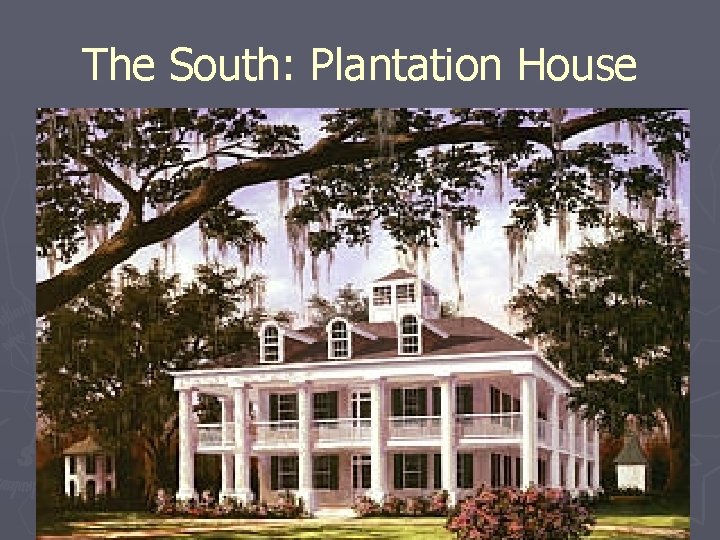
The South: Plantation House
Folk Food �� Folk customs are always affected by what’s available – but also by culture. �� What is acceptable for some cultures may be unacceptable – or even horrifying to others.
Folk Sports �� “Play is older than culture” (Johan Huizinga, Homo Ludens) �� As far we know, games are a fundamental part of every culture – playing games is part of what it means to be human. �� Every culture develops its own unique forms of recreation. �� Folk Sports: Examples: Cornish Hurling, Belarusian Hul'nia
Folk Belief �� How does the world work? How should you behave? What should you do when someone is born? Or marries? Or dies? How should you live your life? �� Every culture has had to come up with answers to questions like these --answers that (more or less) work for that culture. �� Folk beliefs are usually transmitted orally.
Folk Beliefs: Relocation Diffusion �� The Amish – originally a Swiss Mennonite group – have a distinctive culture and are now found in 17 US States. �� The Amish (and their beliefs) have spread by relocation diffusion – which is just about the only way folk cultures and their beliefs can spread.
Folk Masterpieces �� The United Nations Educational, Scientific and Cultural Organization (UNESCO) has officially designated 812 sites as “World Heritage Sites, ” places deserving of consideration and preservation. ► Many of these are natural or historical places, but some are examples of folk culture. �� Since 1997 UNESCO has also designated 47 masterpieces of “intangible cultural heritage, ” including traditional festivals and cultural practices. For more information see: http: //whc. unesco. org/en/about/
Popular Culture
Popular Music �� Unlike folk music, popular music is (usually) written or performed by known individuals who “own” it. This is true even for songs that many of us think are “public”: Happy Birthday to You belongs to Time Warner and won’t be in the public domain until 2030! �� Popular music is (usually) produced as a kind of commodity – it’s for sale. �� Popular music tends to vary a lot more over time than from place to place (the music of the 1990 s was very different from the music of the 1980 s – but you could hear it just about anywhere in the world). �� Modern popular music (as we think of it) began about 100 years ago: • Performed in English “music halls” and in American “vaudeville, ” and composed by professionals in places like “Tin Pan Alley. ” • Global-scale diffusion during the Second World Wars. • Continued and increasing diffusion by mass media (recorded and broadcast).
Popular Art �� As with popular music, popular art is usually created by known individuals as a commodity – produced by professionals, and made to be sold. �� Innovation (and even shock value) is highly prized.
Popular Housing �� Housing in popular culture is usually designed and built by professionals – not by the people who live in the houses. �� Popular housing is not limited to locally available building materials. �� Popular housing styles vary more over time than regionally – for example, houses built in the 1950 s tend to look alike, regardless of where they were built.
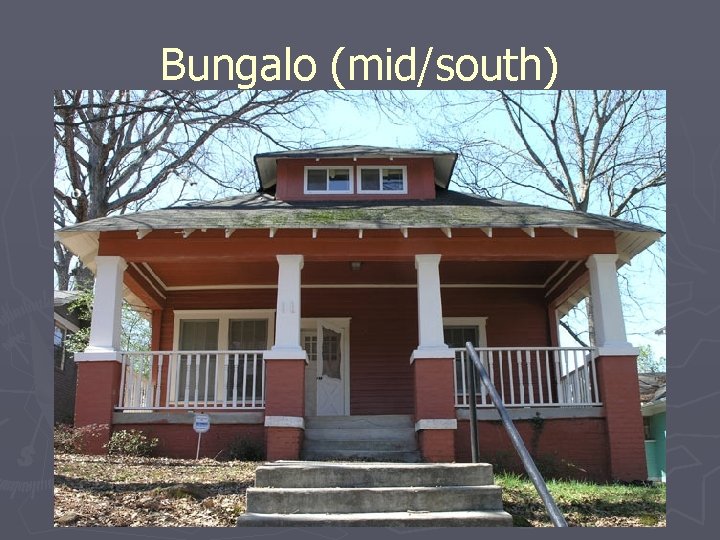
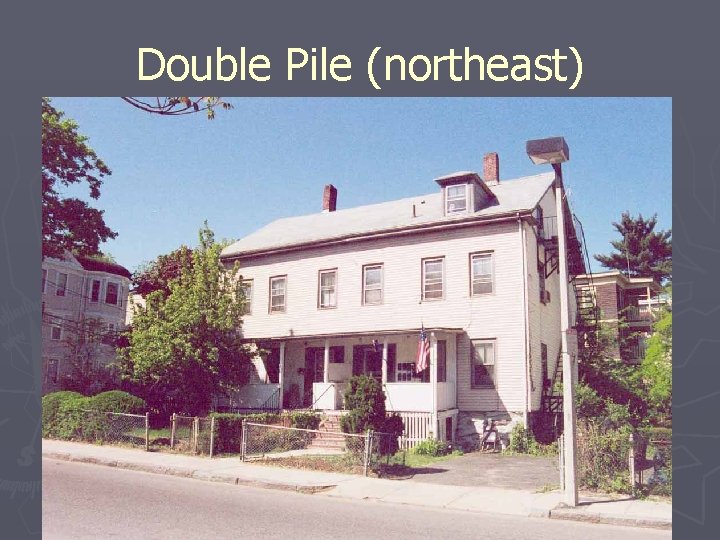
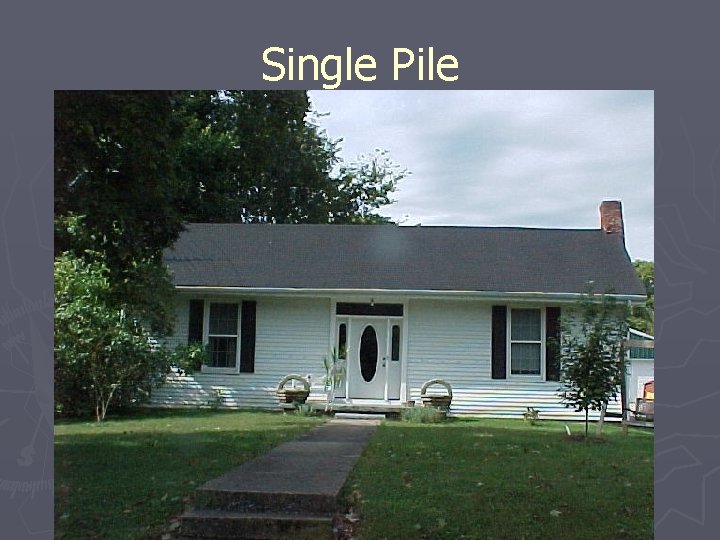
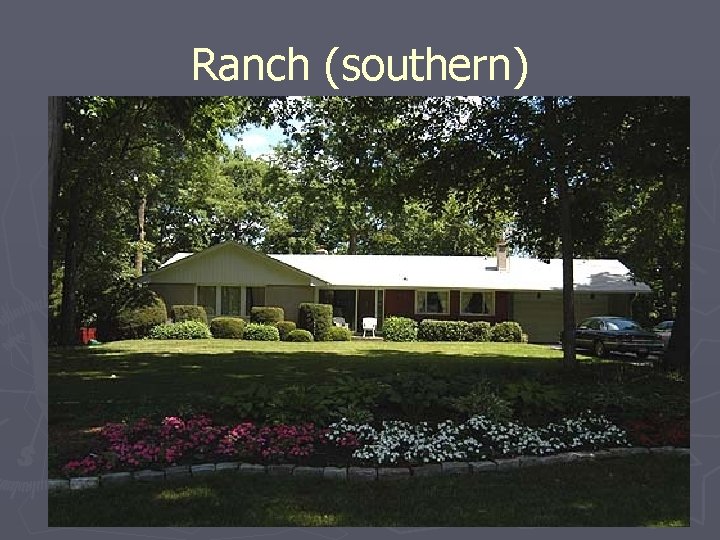
Popular Housing in America Regional Diffusion ► Bungalo ► Double Pile ► Irregular Massed ► Single Pile ► Ranch
Bungalo (mid/south)
Double Pile (northeast)
Irregular Massed
Single Pile
Ranch (southern)
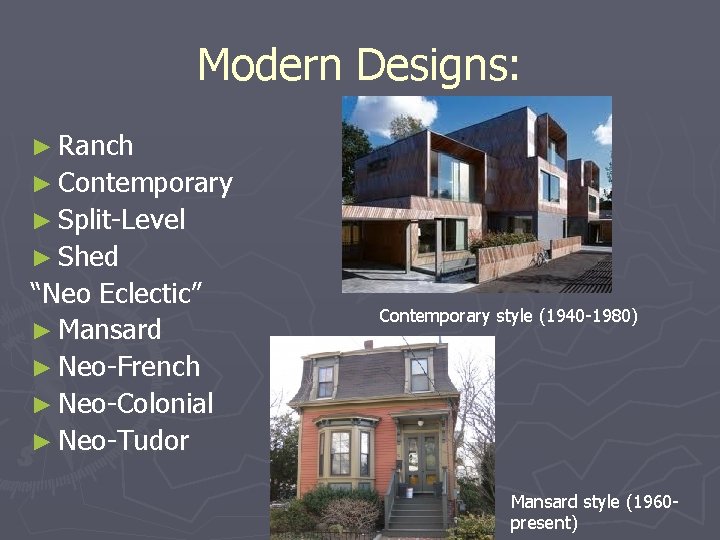
Modern Designs: ► Ranch ► Contemporary ► Split-Level ► Shed “Neo Eclectic” ► Mansard ► Neo-French ► Neo-Colonial ► Neo-Tudor Contemporary style (1940 -1980) Mansard style (1960 present)
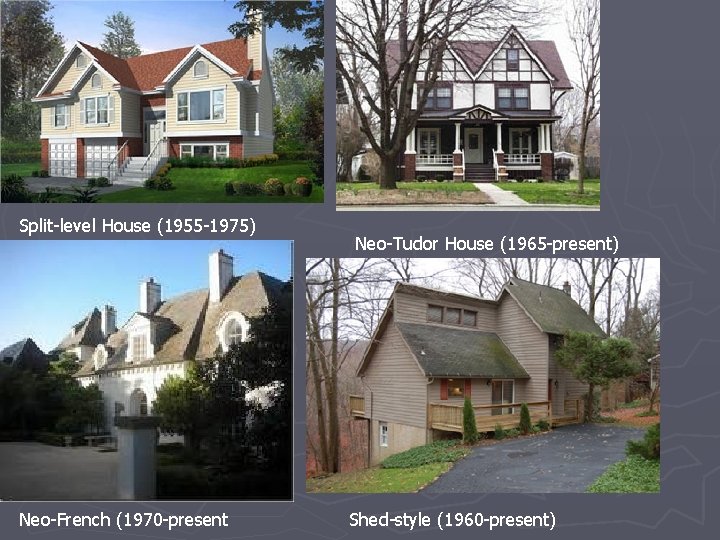
Split-level House (1955 -1975) Neo-French (1970 -present Neo-Tudor House (1965 -present) Shed-style (1960 -present)
Popular Food �� In popular culture modern transportation methods mean that a wide variety of different kinds of food are available year-round – people are not limited to locally available crops. �� Food fads and food trends can change diets, so that what people prefer tends to vary more over time than over space. �� However, there are variations in food preferences and consumption.
National Sports �� As with food, sports in popular culture are extremely widespread – but there are regional variations in popularity. Ex: American Football and Basketball, English Rugby, Scottish Highland Games (caper toss), Canadian Hockey… the list is very long.
Popular Beliefs �� Beliefs about the world and how people should live and behave are widely shared in popular culture. �� Widely shared concepts today: • Democracy; free markets; individualism; rule of law; private property; family; work; education; etc. �� Popular beliefs are spread by media -newspapers, magazines, radio, TELEVISION, INTERNET, & CELL PHONE!!!
The Diffusion of TV �� Category 1: Countries where most households (more than 50%) own at least one TV set (US, Japan). �� Category 2: Countries where TVs are common, but not universal (25%- 49%) (Mexico, Thailand). �� Category 3: Countries where television exists, but is uncommon (5%- 24%); few individuals own sets (Mongolia, Laos). �� Category 4: Countries where television is rare or non-existent (less than 5%); virtually no TV sets (Bhutan, Chad).
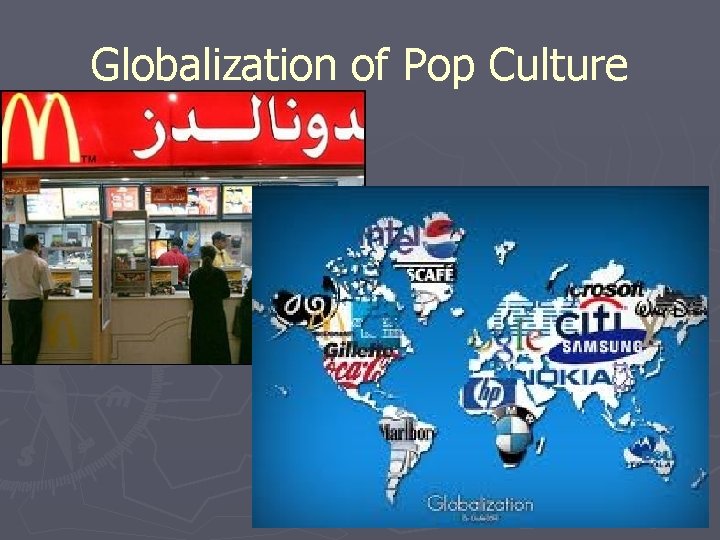
Globalization of Pop Culture
The Internet �� In 1995 less than 10% of American adults were online; today more than 2/3 have online access. �� Worldwide, more than a billion people have internet access today – but access is still very limited in less developed areas.
Threats to Folk Cultures �� Why worry? Why should we care? • When people turn away from traditional culture and customs, they may also turn away from a society’s traditional values. • The ways of living and behaving that work in popular culture may not work so well in other cultures. �� On the other hand – traditional ways of living are not necessarily ideal either!
Threats to Folk Culture �� # 1: Loss of Traditional Values – Changes in the Role of Women in many cultures: It is traditional for women to be subservient to men (this was true here until quite recently!) In some cases, awareness of popular culture has meant that women can seek advancement, education, and new roles. On the other hand, contact with popular culture almost always results in increased rates of prostitution and exploitation. Women who try to change their roles or status may be subject to harassment and violence – although that is hardly unique or unusual in many cultures.
#2 Threat: Foreign Media Imperialism Media from just three countries – the US, the UK and Japan dominate entertainment and news in much of the less developed world. What they show may be offensive to (or subversive of) traditional values. • Western news media dominate international news. News media within most less developed countries is largely government controlled. News networks tend to represent Western values and ideas – and may not present the points of view of less developed countries (or their governments). Western media are largely interested in disasters. • Note that newspapers and radio stations are usually locally owned and operated – not foreign owned or controlled. ►
#3 Threat: Adoption & Commodification ► Popular culture is constantly looking for new, exciting things and ideas. • Often, it takes them from folk cultures – but things are usually altered as part of the process, and the original meaning is often lost.
#4 Threat: The Environment • Folk cultures are dependent on the local environment. Although they may modify it, if they survive, they must be in some sense “in balance. ” • Popular culture is much more likely to create pollution – toxic chemicals, sewage, etc. ► Popular culture is far less dependent on local conditions. Food can be imported; air conditioning can keep things pleasant. So popular culture is far more likely to modify the natural environment – sometimes in ways that may be disastrous for people trying to live a traditional life.
#5 Threat: Placelessness • Popular culture is characterized by nearly universal styles of art, architecture, advertising, behavior, etc. • When every place is indistinguishable from every other place – then how can any place be special or unique? Why put any particular value on a place when it’s just like everywhere else?