
Folds Faults and Mountains Pencil Rubber band Gum
Folds, Faults, and Mountains Pencil Rubber band Gum Foam sediments Cardboard fault models Plastic box Food coloring Paper Begin Chewing Gum
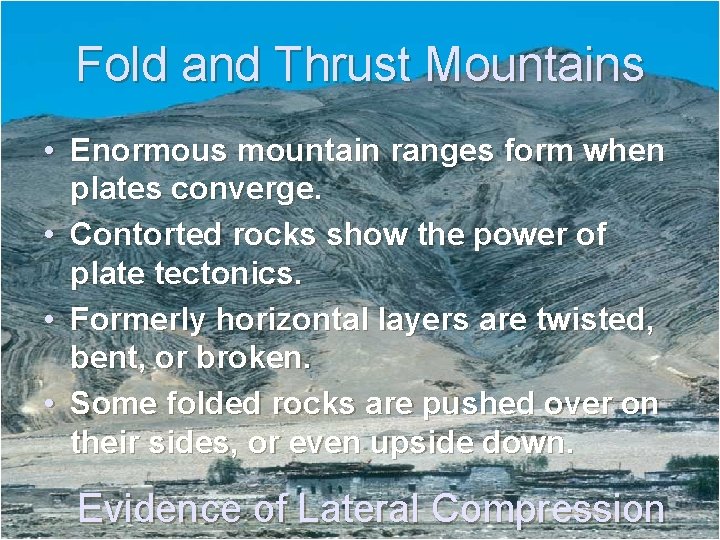
Fold and Thrust Mountains • Enormous mountain ranges form when plates converge. • Contorted rocks show the power of plate tectonics. • Formerly horizontal layers are twisted, bent, or broken. • Some folded rocks are pushed over on their sides, or even upside down. Evidence of Lateral Compression
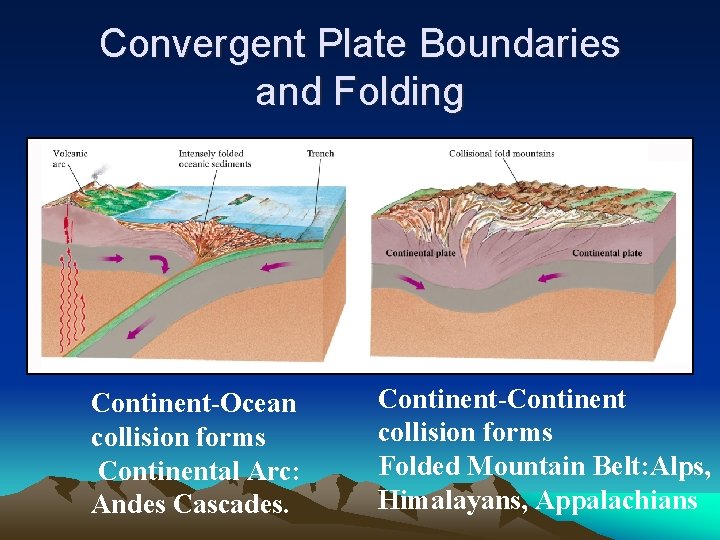
Convergent Plate Boundaries and Folding Continent-Ocean collision forms Continental Arc: Andes Cascades. Continent-Continent collision forms Folded Mountain Belt: Alps, Himalayans, Appalachians
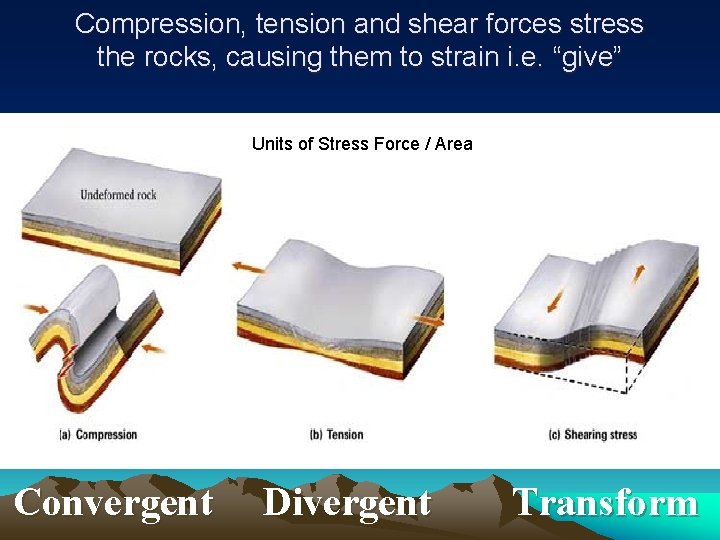
Compression, tension and shear forces stress the rocks, causing them to strain i. e. “give” Units of Stress Force / Area Convergent Divergent Transform
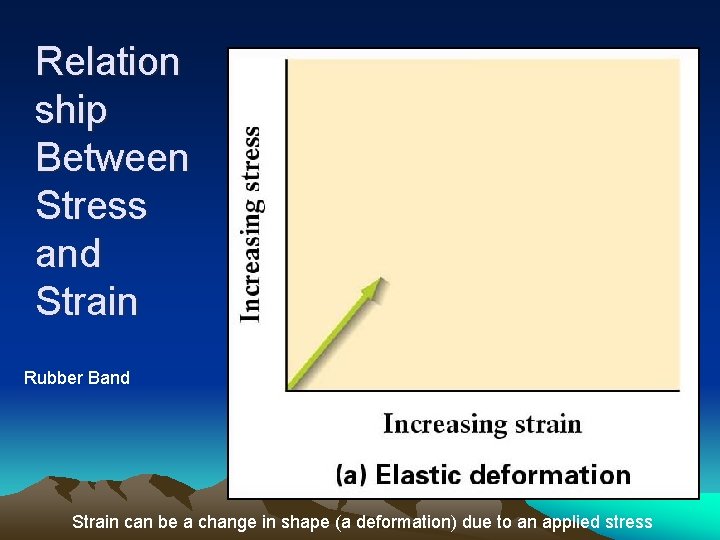
Relation ship Between Stress and Strain Rubber Band Strain can be a change in shape (a deformation) due to an applied stress
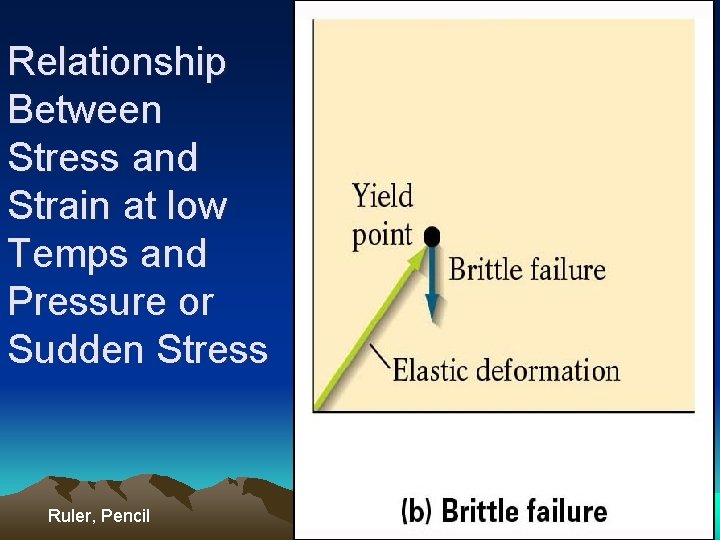
Relationship Between Stress and Strain at low Temps and Pressure or Sudden Stress Ruler, Pencil
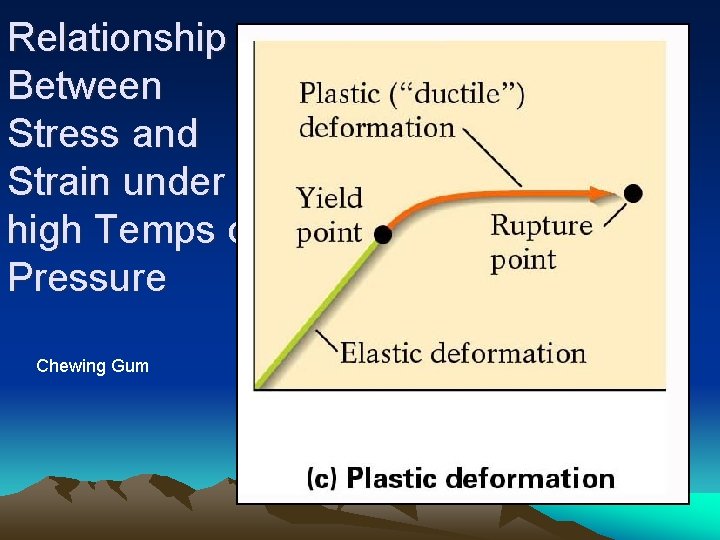
Relationship Between Stress and Strain under high Temps or Pressure Chewing Gum
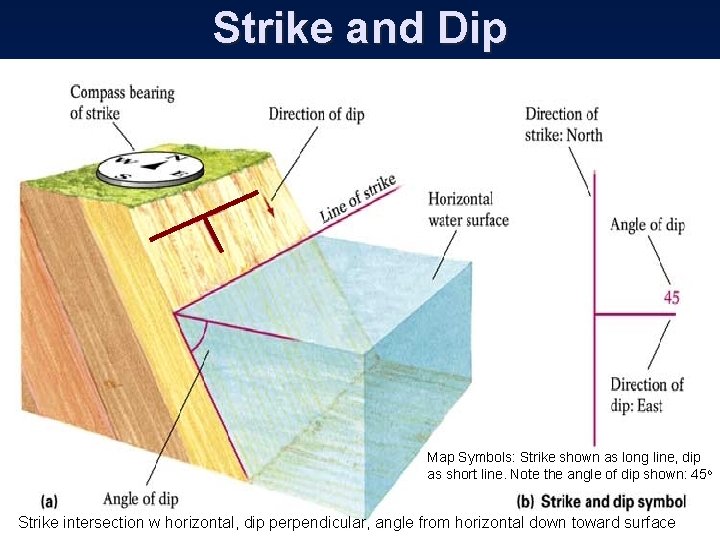
Strike and Dip Map Symbols: Strike shown as long line, dip as short line. Note the angle of dip shown: 45 o Strike intersection w horizontal, dip perpendicular, angle from horizontal down toward surface
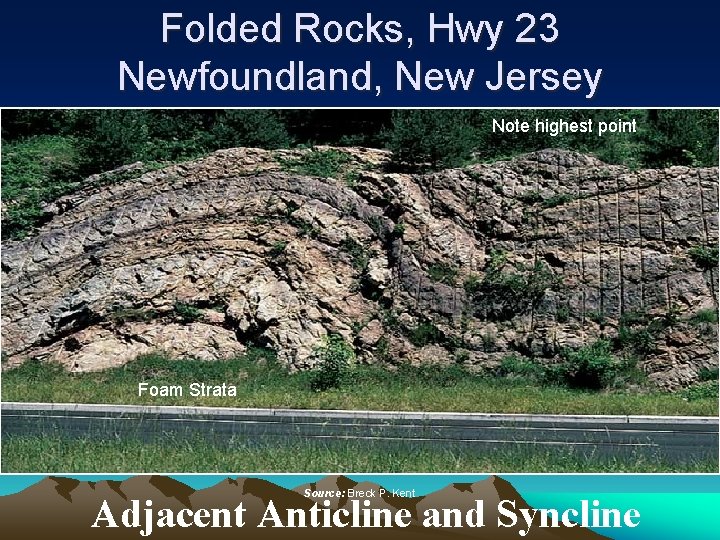
Folded Rocks, Hwy 23 Newfoundland, New Jersey Note highest point Foam Strata Source: Breck P. Kent Adjacent Anticline and Syncline
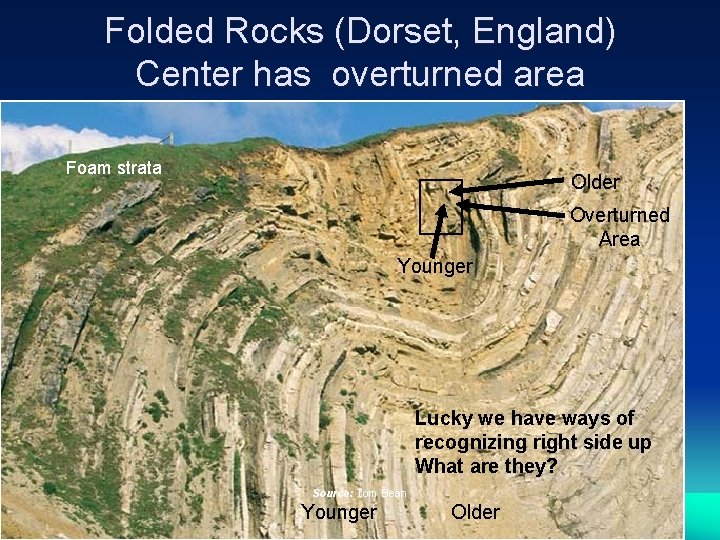
Folded Rocks (Dorset, England) Center has overturned area Foam strata Older Overturned Area Younger Lucky we have ways of recognizing right side up What are they? Source: Tom Bean Younger Older
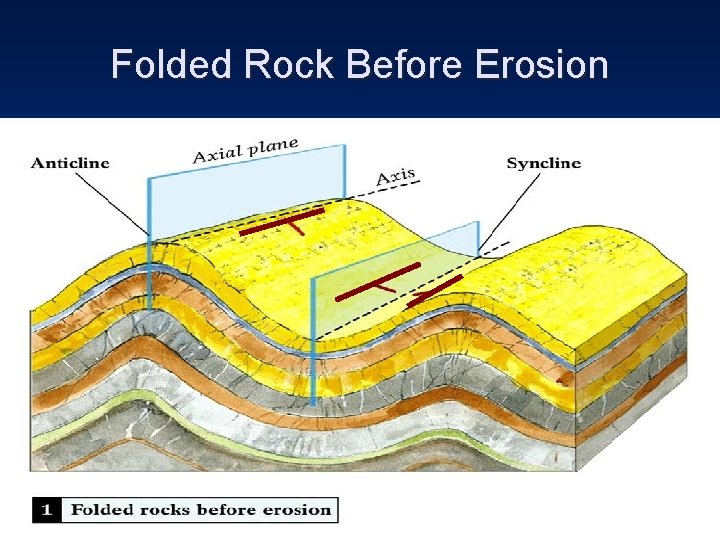
Folded Rock Before Erosion
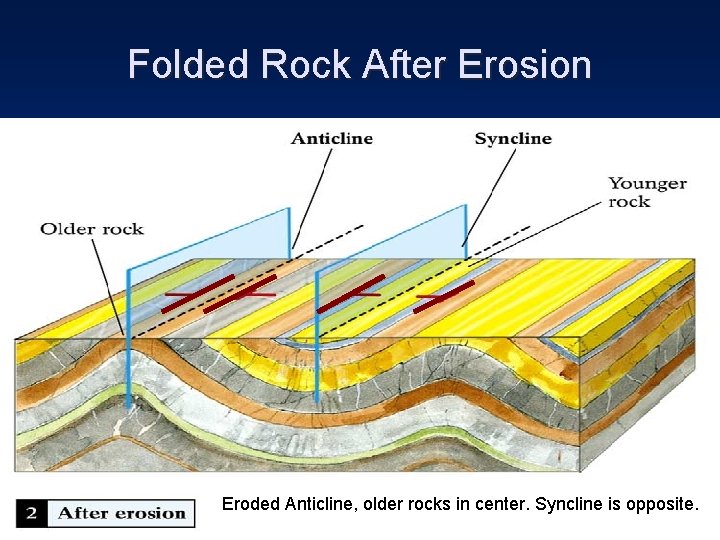
Folded Rock After Erosion Eroded Anticline, older rocks in center. Syncline is opposite.
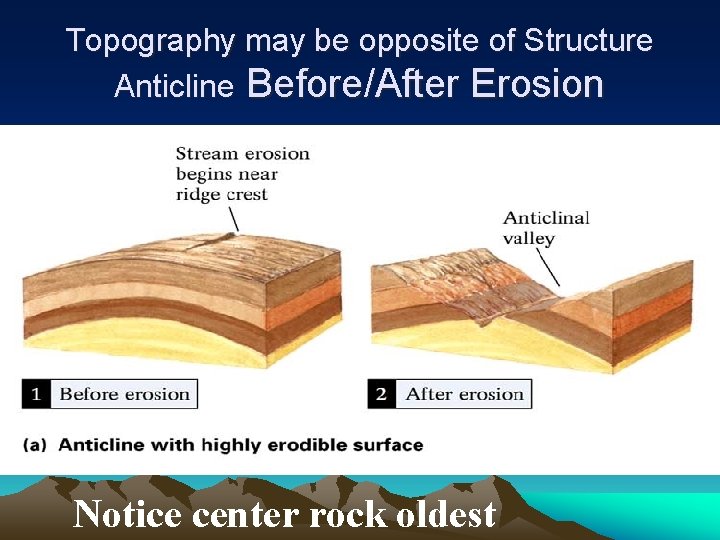
Topography may be opposite of Structure Anticline Before/After Erosion Notice center rock oldest
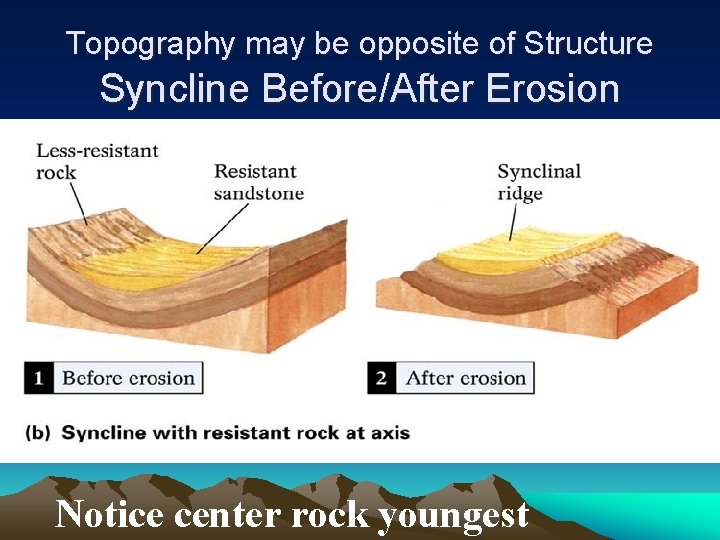
Topography may be opposite of Structure Syncline Before/After Erosion Notice center rock youngest
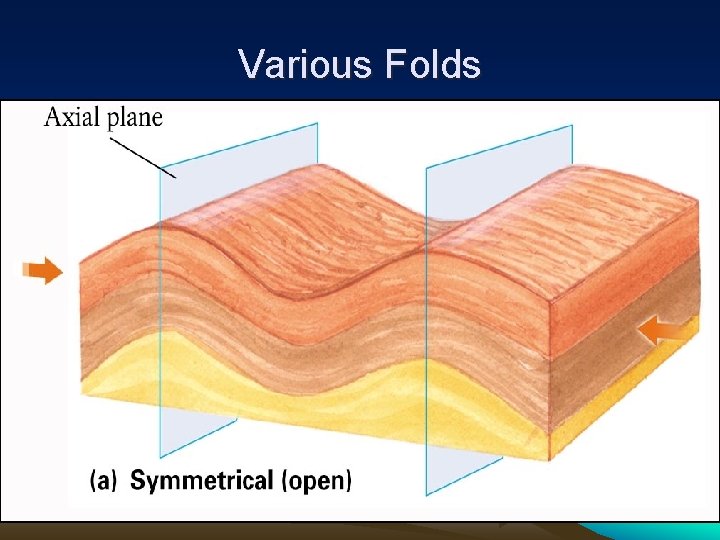
Various Folds
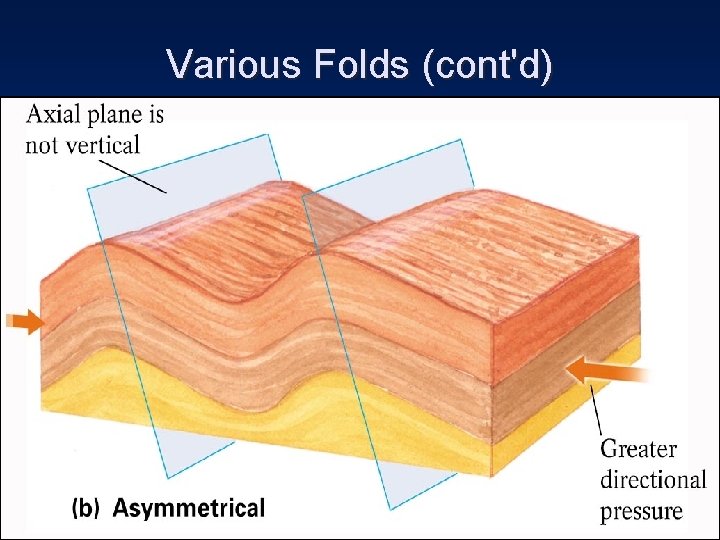
Various Folds (cont'd)
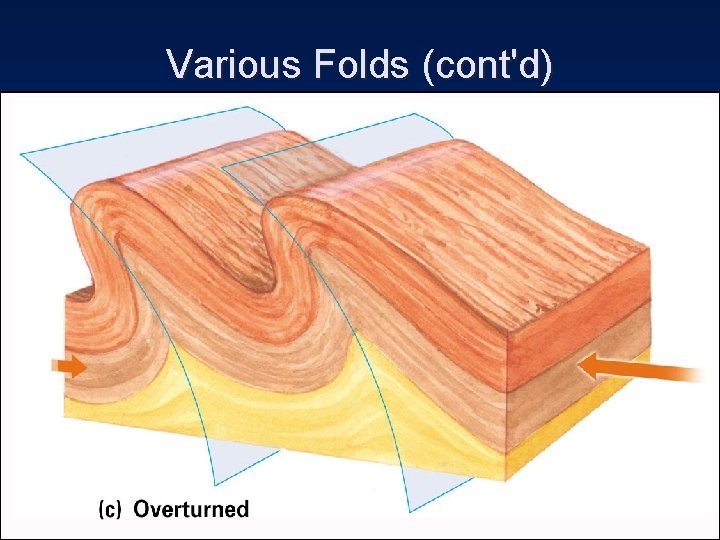
Various Folds (cont'd)
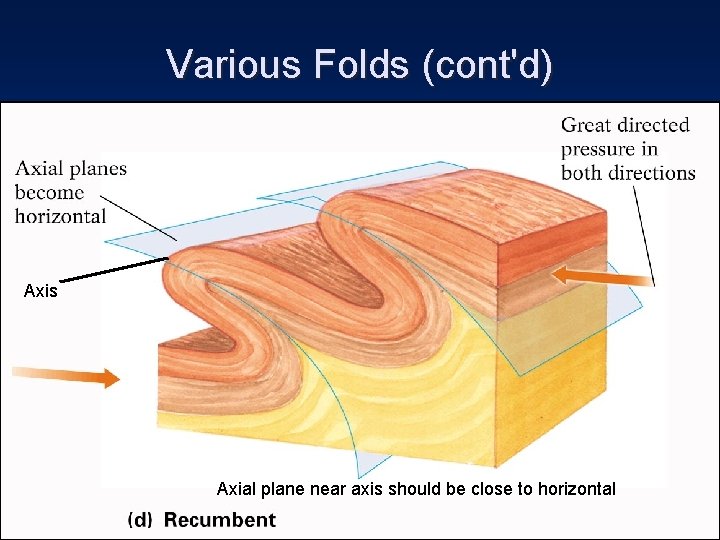
Various Folds (cont'd) Axis Axial plane near axis should be close to horizontal
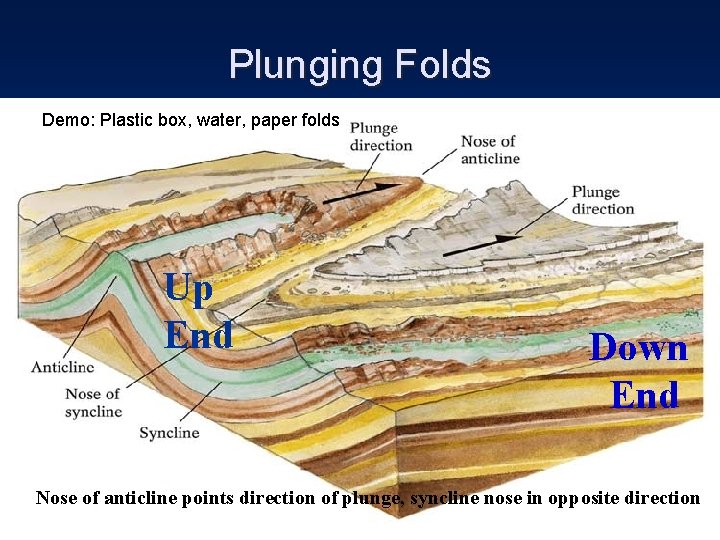
Plunging Folds Demo: Plastic box, water, paper folds Up End Down End Nose of anticline points direction of plunge, syncline nose in opposite direction
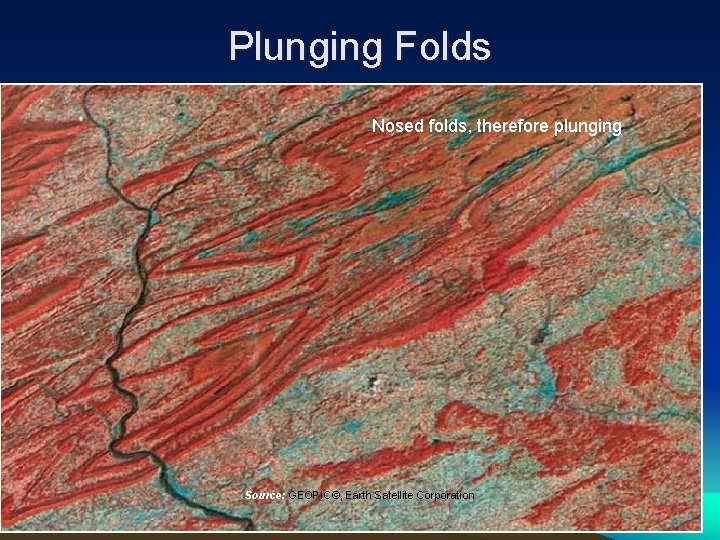
Plunging Folds Nosed folds, therefore plunging Source: GEOPIC©, Earth Satellite Corporation
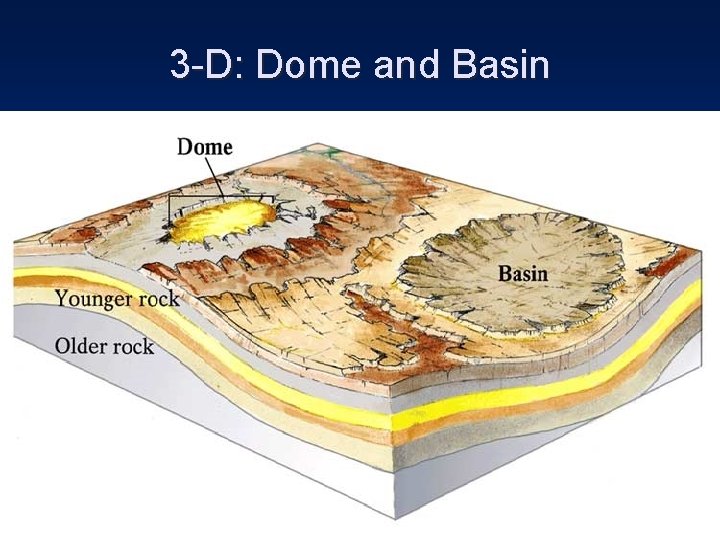
3 -D: Dome and Basin
Interpreting Folds • Determine if center rocks are older or younger than flanks: fossils, right side up clues (graded bedding and mudcracks) • Are limbs parallel or “Nosed”? • Determine limb dips from measurements, stream V’s. Strike and Dip • Use nose rules for anticlines and synclines
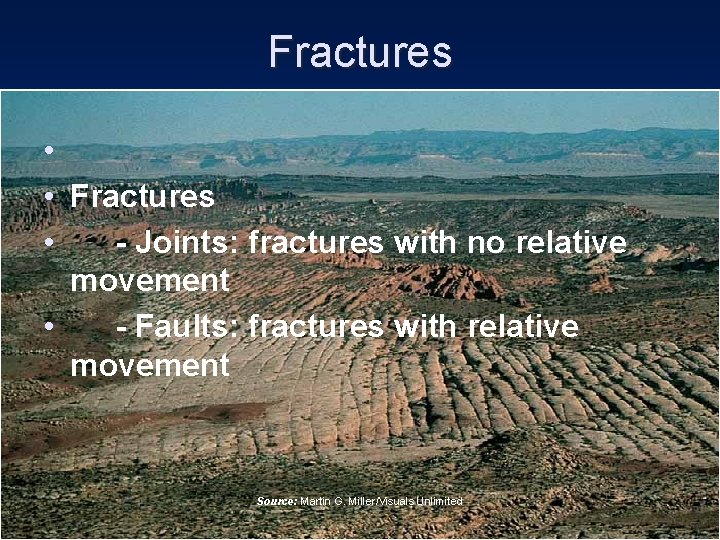
Fractures • • Fractures • - Joints: fractures with no relative movement • - Faults: fractures with relative movement Source: Martin G. Miller/Visuals Unlimited
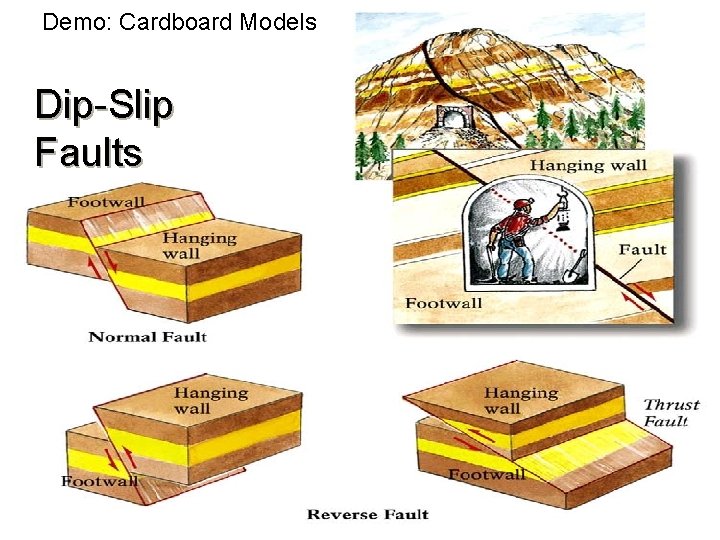
Demo: Cardboard Models Dip-Slip Faults
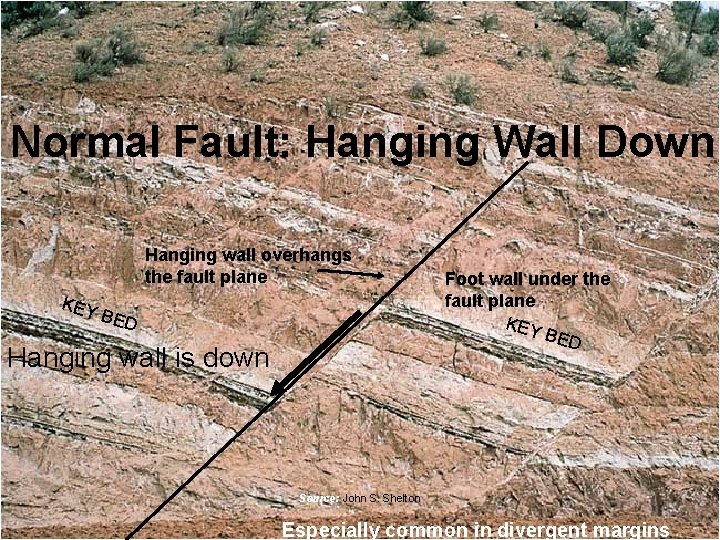
Normal Fault: Hanging Wall Down Hanging wall overhangs the fault plane KEY BED Hanging wall is down Foot wall under the fault plane KEY BED Source: John S. Shelton Especially common in divergent margins
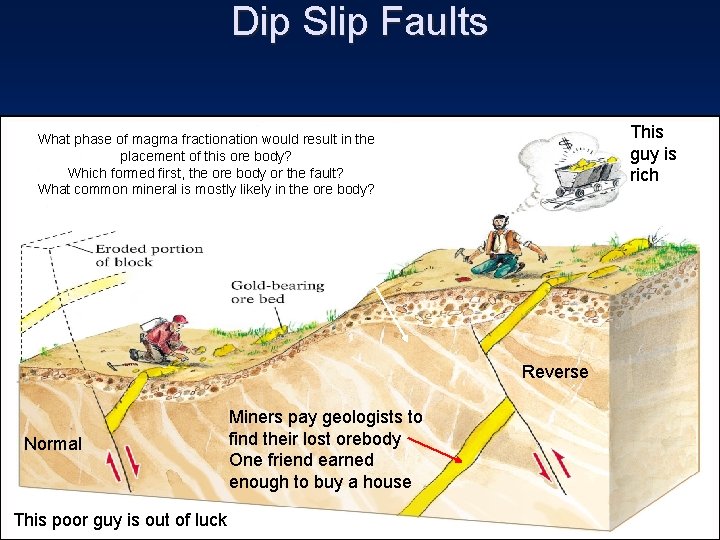
Dip Slip Faults This guy is rich Younger What phase of magma fractionation would result in the placement of this ore body? Which formed first, the ore body or the fault? What common mineral is mostly likely in the ore body? Reverse Normal This poor guy is out of luck Miners pay geologists to find their lost orebody One friend earned enough to buy a house
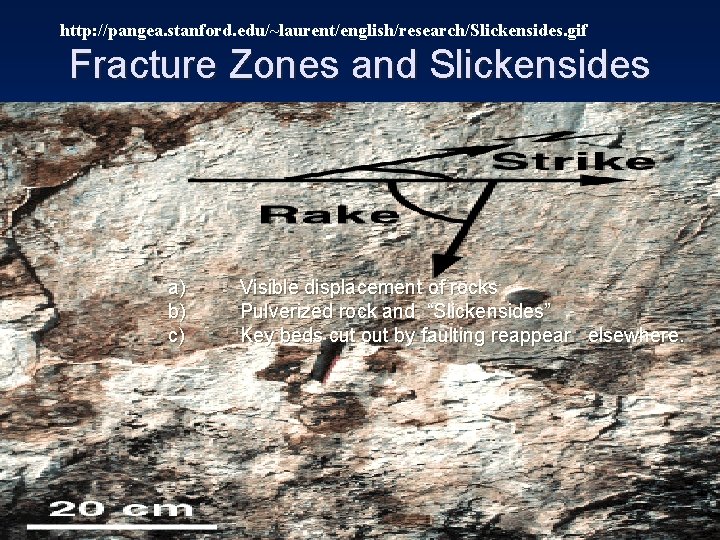
http: //pangea. stanford. edu/~laurent/english/research/Slickensides. gif Fracture Zones and Slickensides a) b) c) Visible displacement of rocks Pulverized rock and “Slickensides” Key beds cut out by faulting reappear elsewhere.
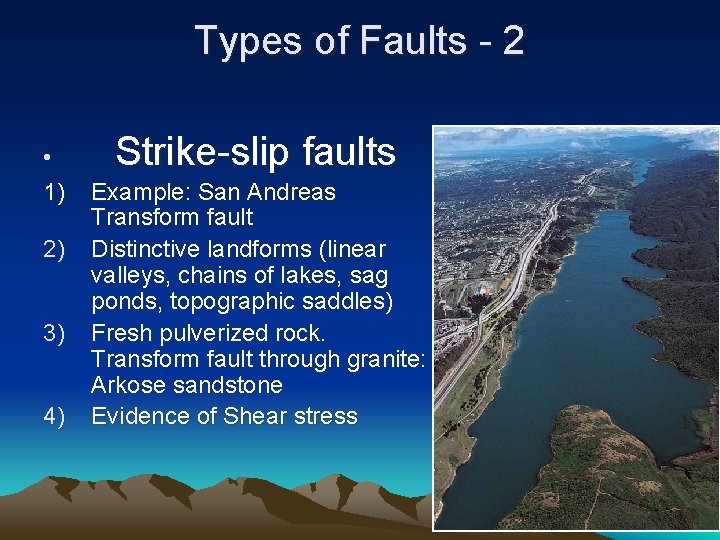
Types of Faults - 2 • 1) 2) 3) 4) Strike-slip faults Example: San Andreas Transform fault Distinctive landforms (linear valleys, chains of lakes, sag ponds, topographic saddles) Fresh pulverized rock. Transform fault through granite: Arkose sandstone Evidence of Shear stress
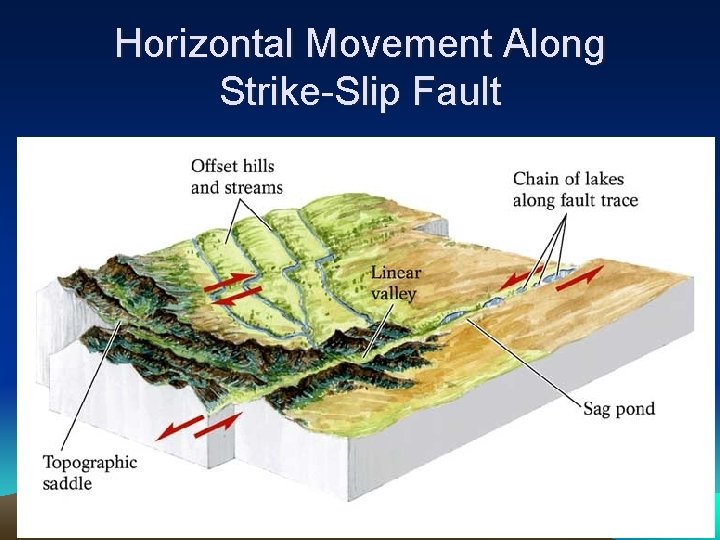
Horizontal Movement Along Strike-Slip Fault
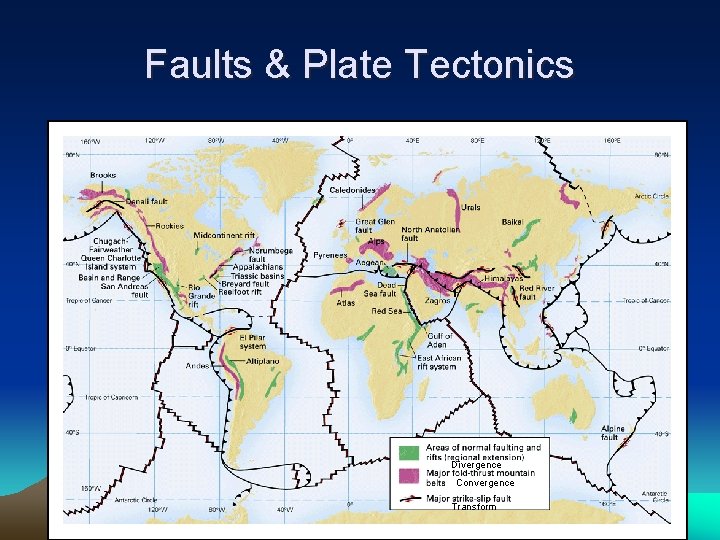
Faults & Plate Tectonics Divergence Convergence Transform
Plate tectonics and faulting • Normal faults: mid-ocean ridges and continental rifts are the same thing. • Divergent Margins – Surface rock is pulled apart – Hanging wall drops down
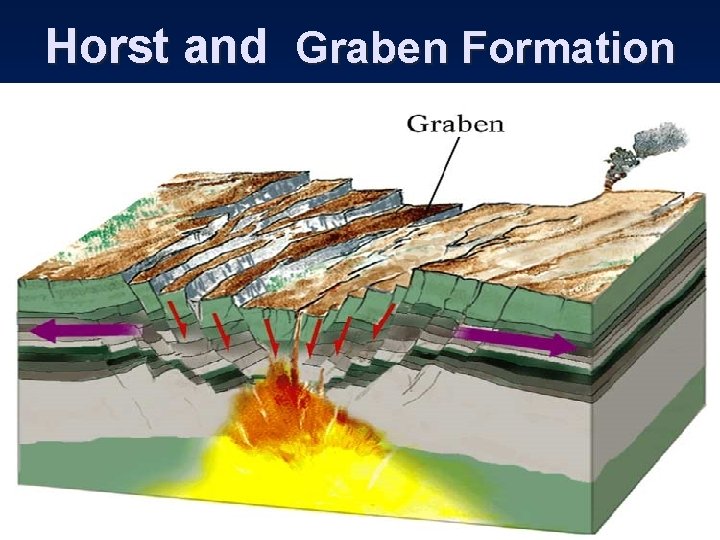
Horst and Graben Formation
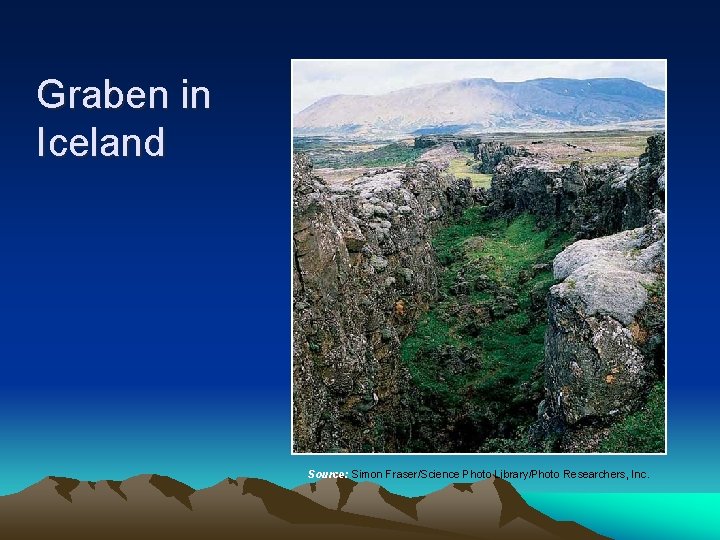
Graben in Iceland Source: Simon Fraser/Science Photo Library/Photo Researchers, Inc.
Plate tectonics and faulting • Shallow dipping Reverse Fault called a “Thrust Fault”. • Reverse and thrust faults: convergent plate boundaries • Hanging Wall is pushed up.
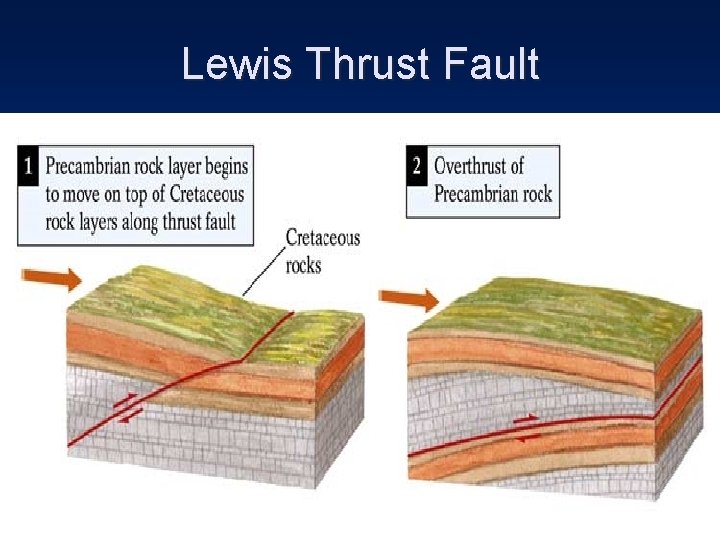
Lewis Thrust Fault
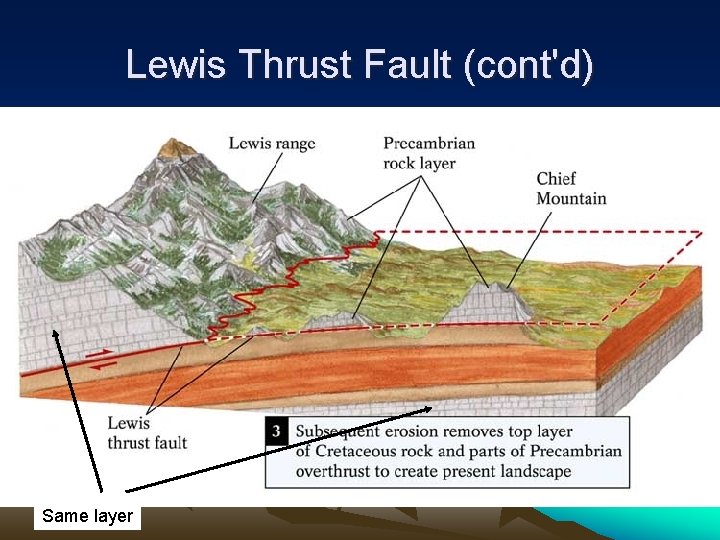
Lewis Thrust Fault (cont'd) Same layer
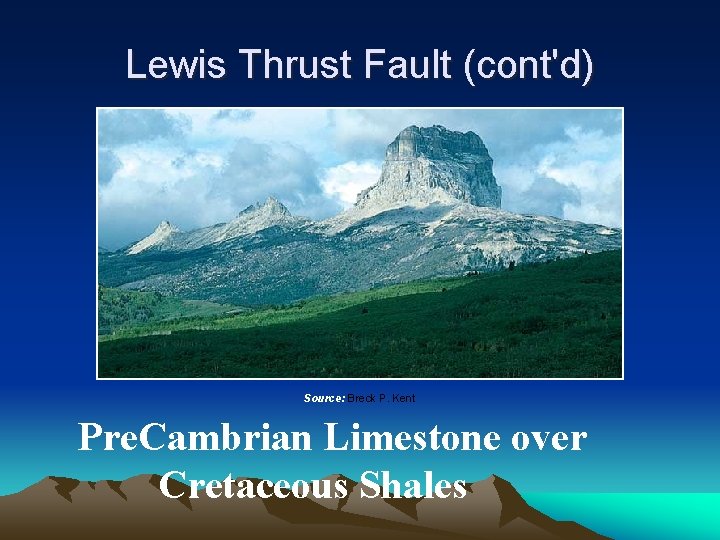
Lewis Thrust Fault (cont'd) Source: Breck P. Kent Pre. Cambrian Limestone over Cretaceous Shales
Plate tectonics and faulting • c) Strike-slip faults: Transform Boundaries
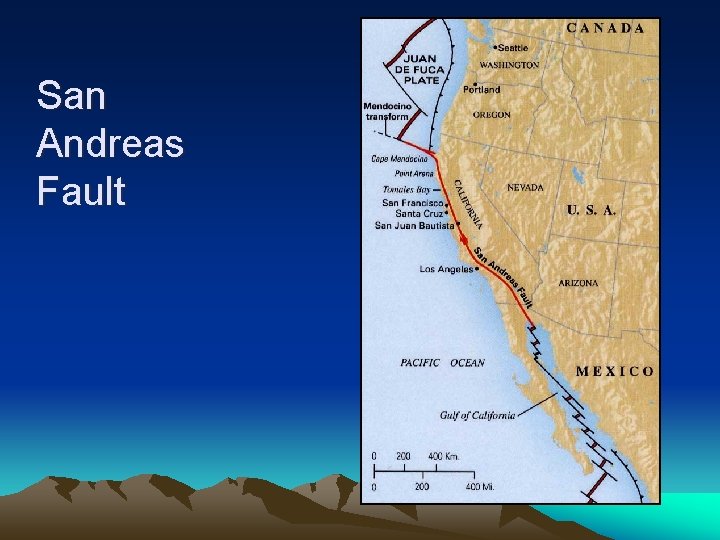
San Andreas Fault
Types and processes of mountainbuilding (Orogenesis) 1. 2. 3. 4. Volcanic mountains Fold-and-thrust mountains Fault-block mountains Upwarped mountains
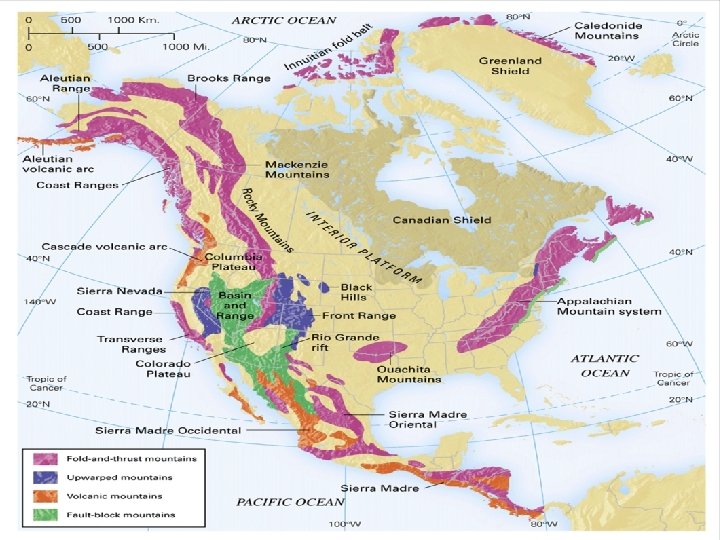
Types of Mountains • 2. Fold-and-thrust mountains – Formed by Continent-Continent Collisions
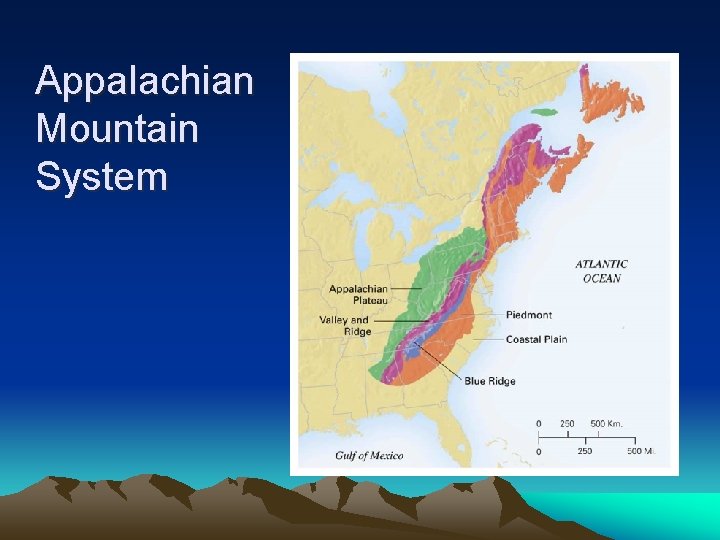
Appalachian Mountain System
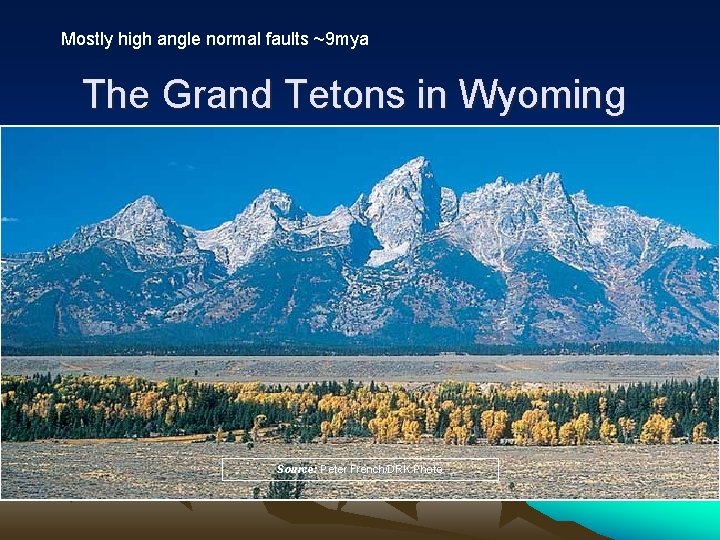
Mostly high angle normal faults ~9 mya The Grand Tetons in Wyoming Source: Peter French/DRK Photo
Fault-block mountains • Rift Valleys, Mid Ocean Ridges • Basin and Range province ? ? ? • Normal Fault Blocks as in East Africa • Divergent Margins? • Paradigm Shifts
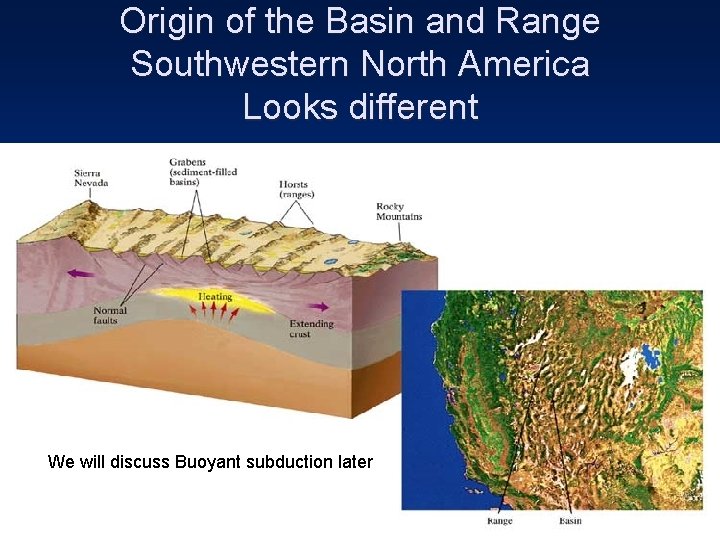
Origin of the Basin and Range Southwestern North America Looks different We will discuss Buoyant subduction later
Upwarped mountains a) Gently bent without much deformation b) Ascent of buoyant mantle material c) Far from plate boundaries d) Adirondack Mountains: Uplift of deep Pre. Cambrian Igneous and Metamorphic rocks
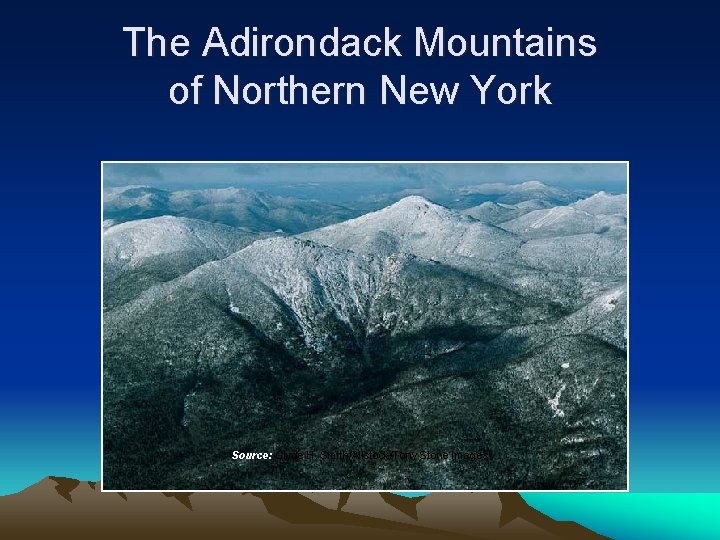
The Adirondack Mountains of Northern New York Source: Clyde H. Smith/Allstock/Tony Stone Images
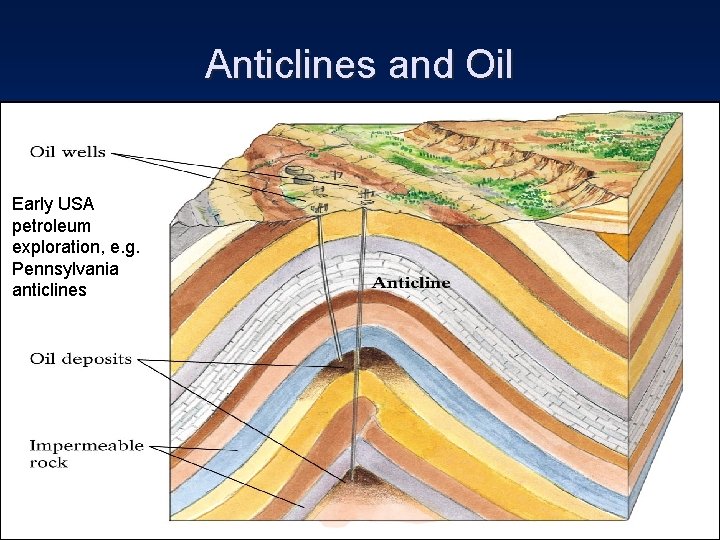
Anticlines and Oil Early USA petroleum exploration, e. g. Pennsylvania anticlines
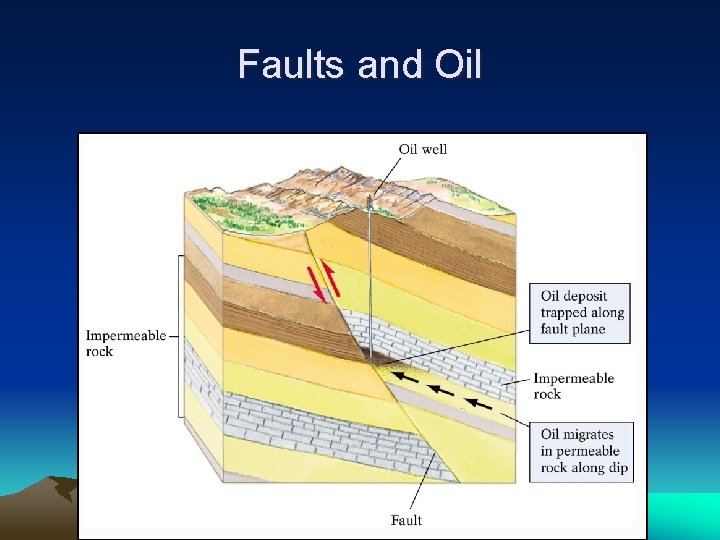
Faults and Oil
- Slides: 50