
Foie Gras Fattened liver of a goose or
- Slides: 22
Foie Gras Fattened liver of a goose or duck. Originates in Egypt.
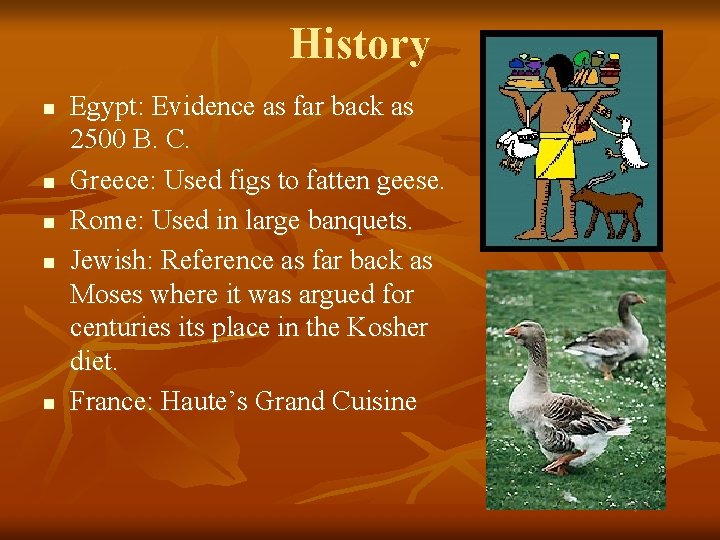
History n n n Egypt: Evidence as far back as 2500 B. C. Greece: Used figs to fatten geese. Rome: Used in large banquets. Jewish: Reference as far back as Moses where it was argued for centuries its place in the Kosher diet. France: Haute’s Grand Cuisine
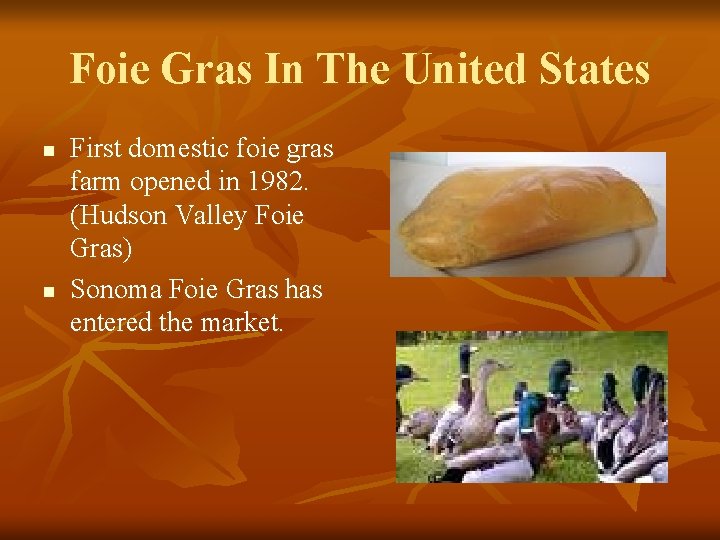
Foie Gras In The United States n n First domestic foie gras farm opened in 1982. (Hudson Valley Foie Gras) Sonoma Foie Gras has entered the market.
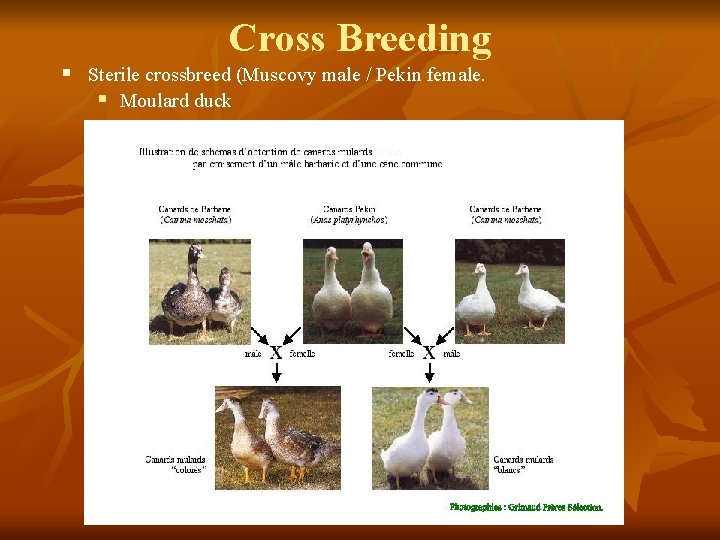
Cross Breeding § Sterile crossbreed (Muscovy male / Pekin female. § Moulard duck
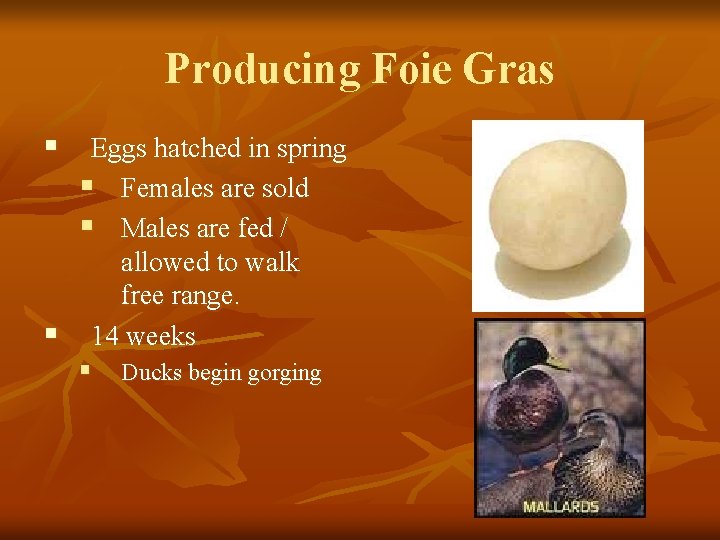
Producing Foie Gras § Eggs hatched in spring § Females are sold § Males are fed / § allowed to walk free range. 14 weeks § Ducks begin gorging
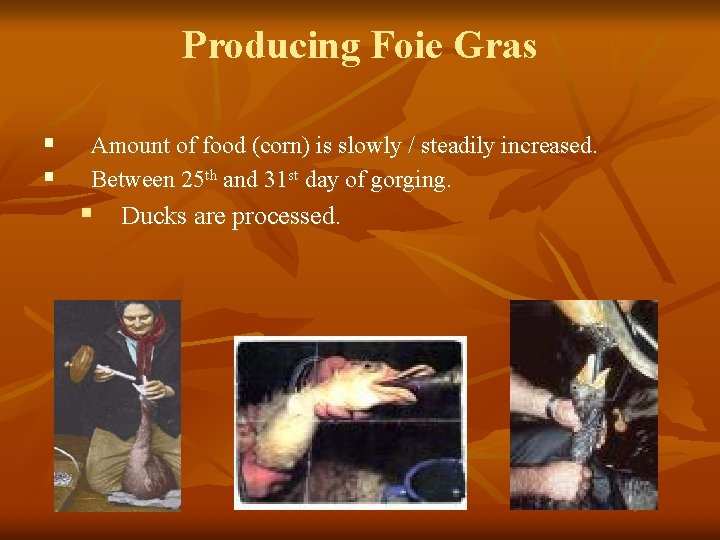
Producing Foie Gras § § Amount of food (corn) is slowly / steadily increased. Between 25 th and 31 st day of gorging. § Ducks are processed.
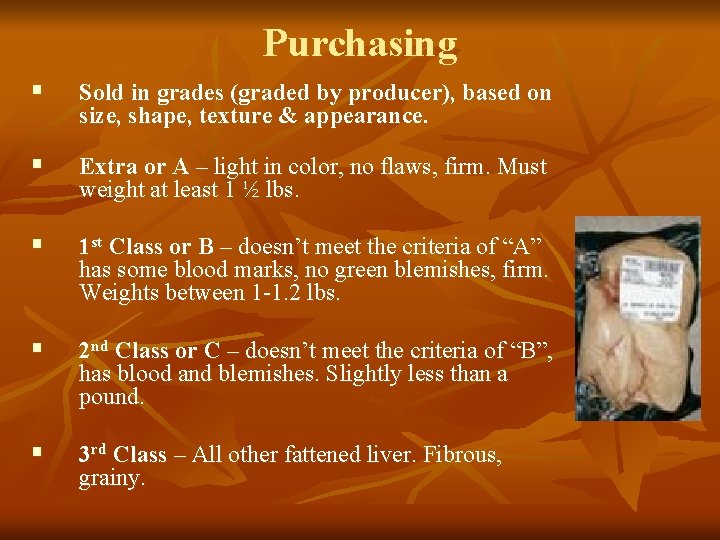
Purchasing § Sold in grades (graded by producer), based on size, shape, texture & appearance. § Extra or A – light in color, no flaws, firm. Must weight at least 1 ½ lbs. § 1 st Class or B – doesn’t meet the criteria of “A” has some blood marks, no green blemishes, firm. Weights between 1 -1. 2 lbs. § 2 nd Class or C – doesn’t meet the criteria of “B”, has blood and blemishes. Slightly less than a pound. § 3 rd Class – All other fattened liver. Fibrous, grainy.
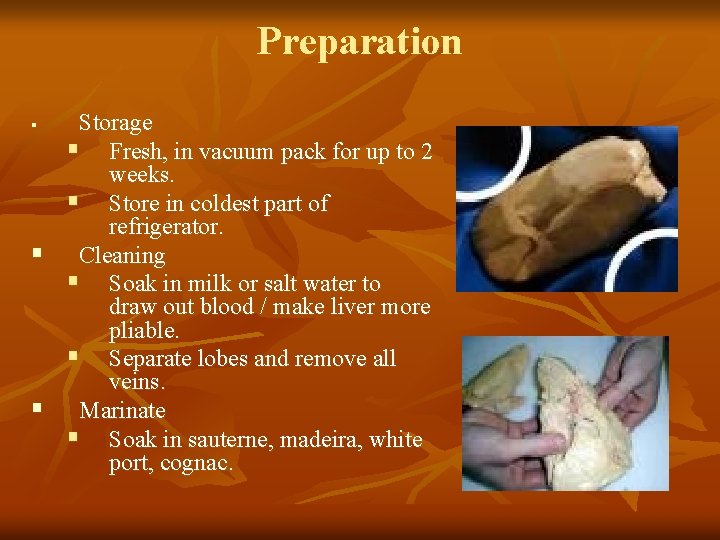
Preparation § § § Storage § Fresh, in vacuum pack for up to 2 weeks. § Store in coldest part of refrigerator. Cleaning § Soak in milk or salt water to draw out blood / make liver more pliable. § Separate lobes and remove all veins. Marinate § Soak in sauterne, madeira, white port, cognac.
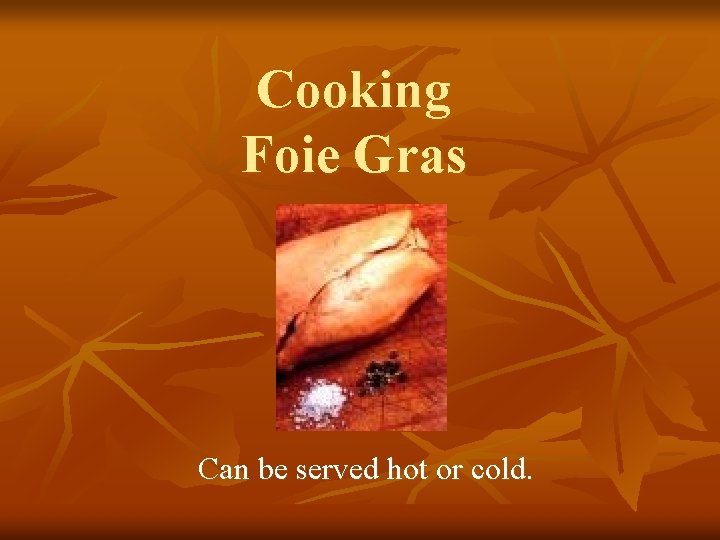
Cooking Foie Gras Can be served hot or cold.
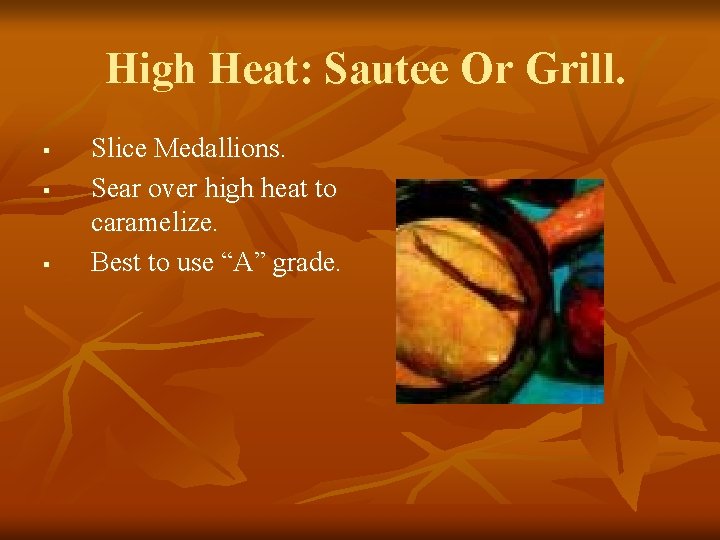
High Heat: Sautee Or Grill. § § § Slice Medallions. Sear over high heat to caramelize. Best to use “A” grade.
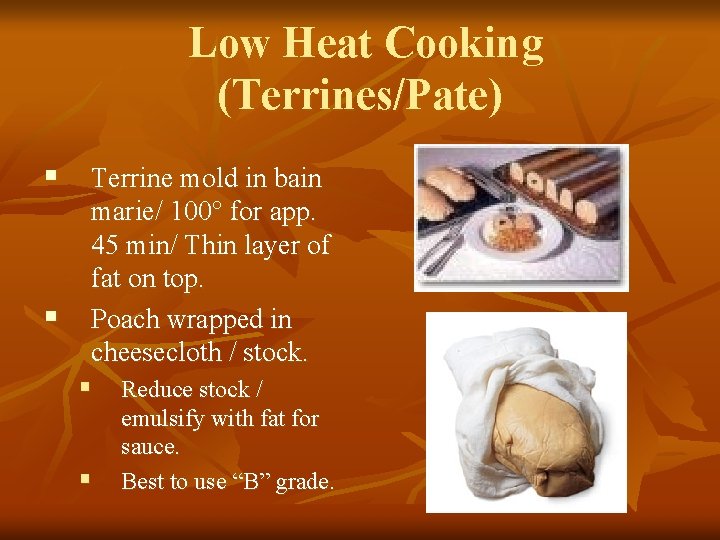
Low Heat Cooking (Terrines/Pate) § Terrine mold in bain § marie/ 100 for app. 45 min/ Thin layer of fat on top. Poach wrapped in cheesecloth / stock. § Reduce stock / § emulsify with fat for sauce. Best to use “B” grade.
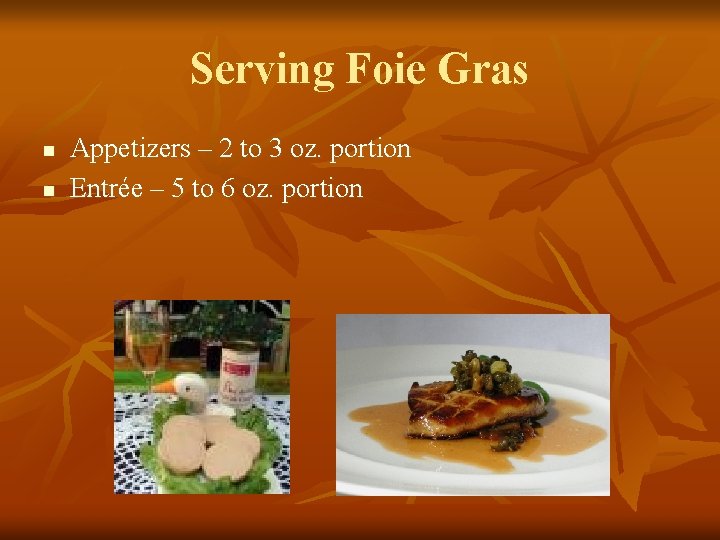
Serving Foie Gras n n Appetizers – 2 to 3 oz. portion Entrée – 5 to 6 oz. portion
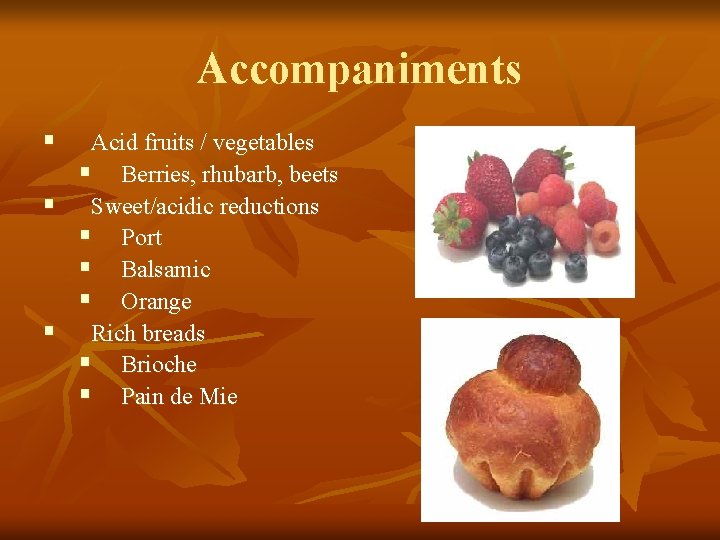
Accompaniments § § § Acid fruits / vegetables § Berries, rhubarb, beets Sweet/acidic reductions § Port § Balsamic § Orange Rich breads § Brioche § Pain de Mie
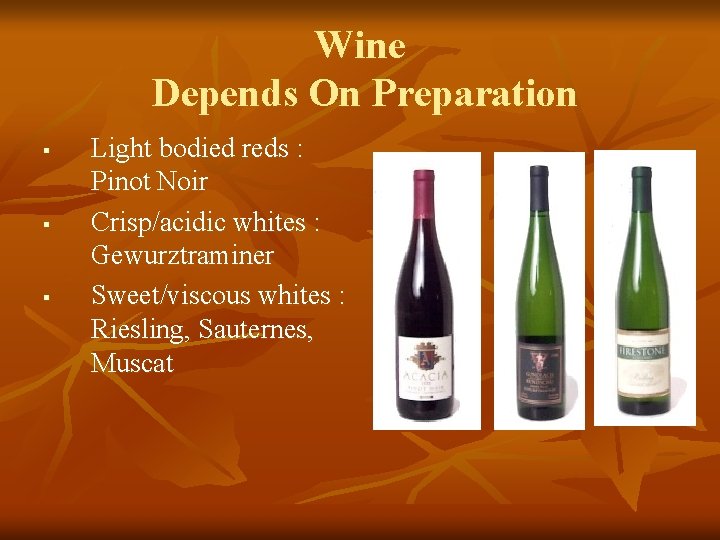
Wine Depends On Preparation § § § Light bodied reds : Pinot Noir Crisp/acidic whites : Gewurztraminer Sweet/viscous whites : Riesling, Sauternes, Muscat
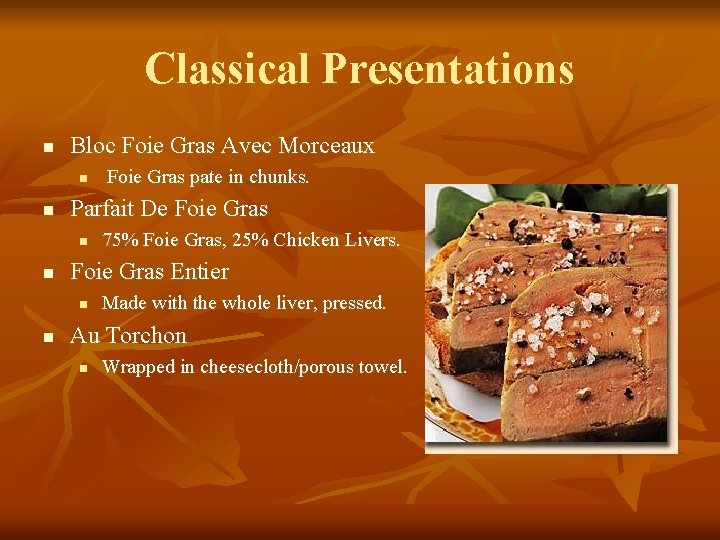
Classical Presentations n Bloc Foie Gras Avec Morceaux n n Parfait De Foie Gras n n 75% Foie Gras, 25% Chicken Livers. Foie Gras Entier n n Foie Gras pate in chunks. Made with the whole liver, pressed. Au Torchon n Wrapped in cheesecloth/porous towel.
Truffles
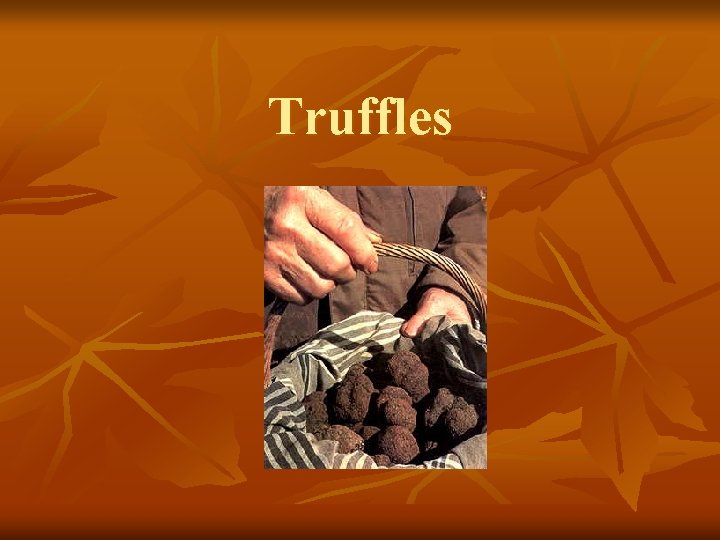
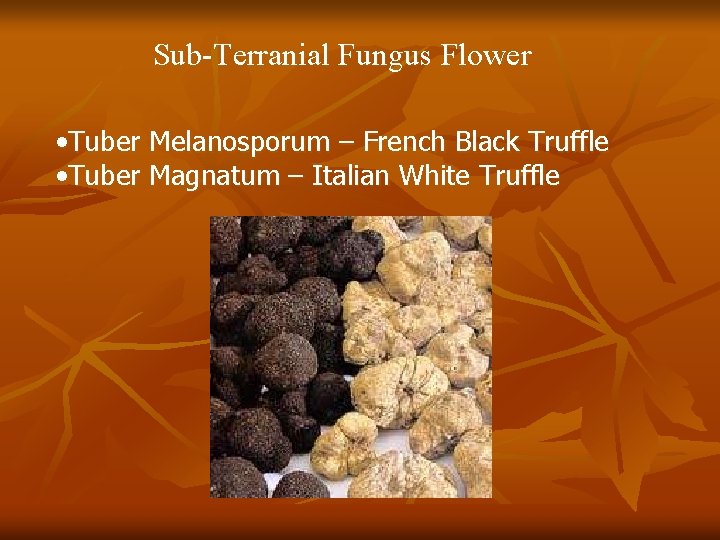
Sub-Terranial Fungus Flower • Tuber Melanosporum – French Black Truffle • Tuber Magnatum – Italian White Truffle
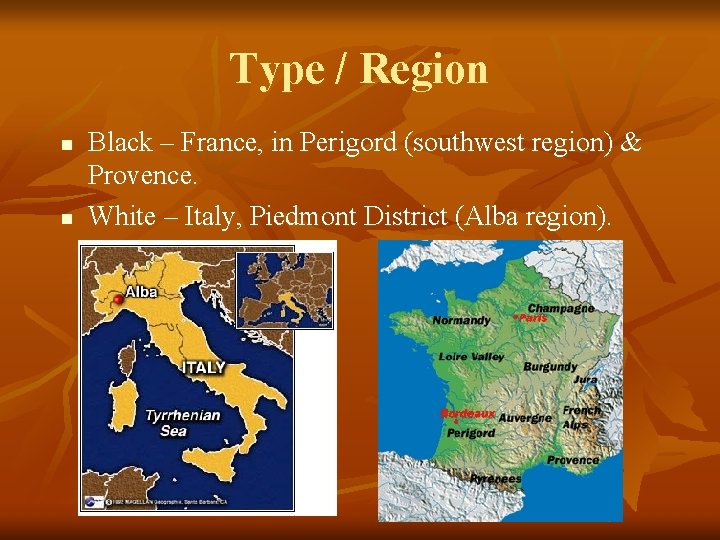
Type / Region n n Black – France, in Perigord (southwest region) & Provence. White – Italy, Piedmont District (Alba region).
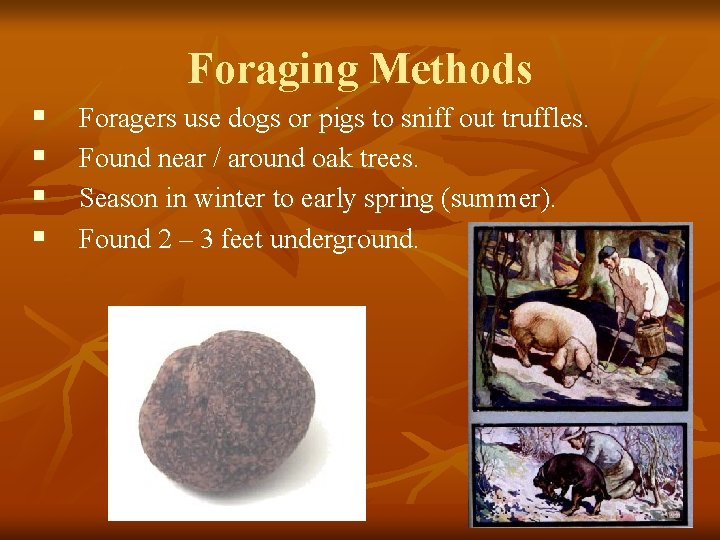
Foraging Methods § § Foragers use dogs or pigs to sniff out truffles. Found near / around oak trees. Season in winter to early spring (summer). Found 2 – 3 feet underground.
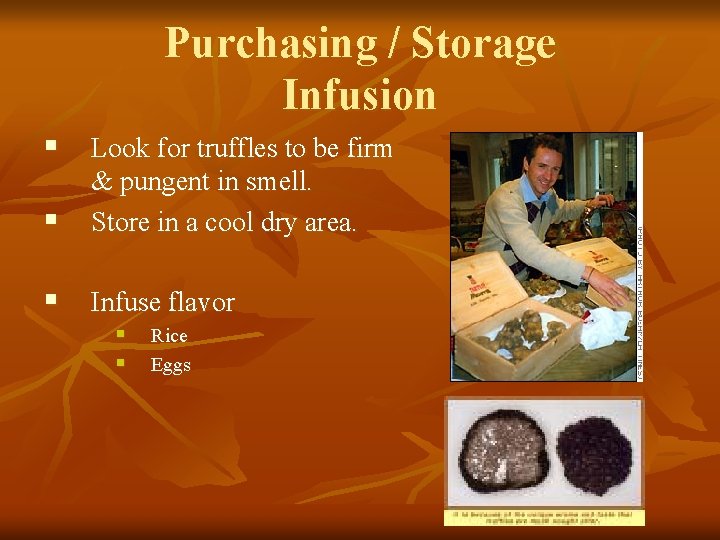
Purchasing / Storage Infusion § Look for truffles to be firm § & pungent in smell. Store in a cool dry area. § Infuse flavor § Rice § Eggs
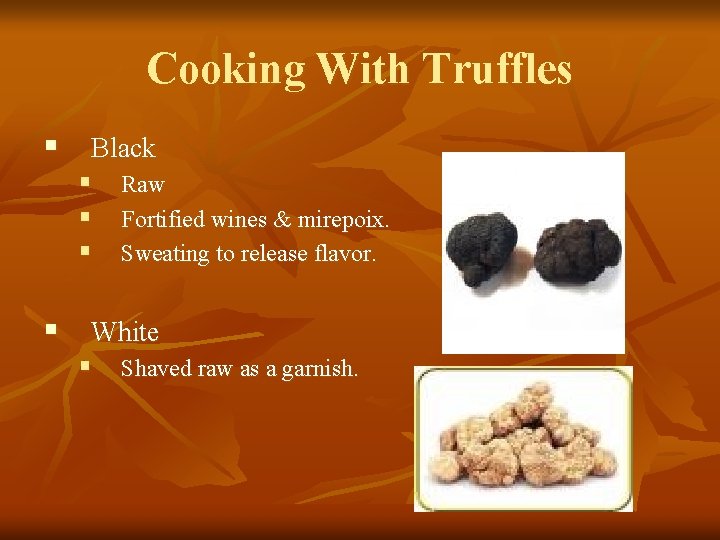
Cooking With Truffles § Black § Raw § Fortified wines & mirepoix. § Sweating to release flavor. § White § Shaved raw as a garnish.
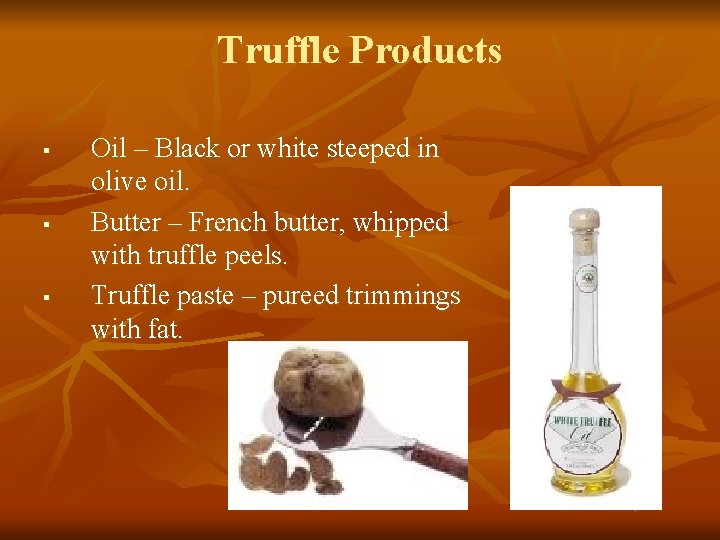
Truffle Products § § § Oil – Black or white steeped in olive oil. Butter – French butter, whipped with truffle peels. Truffle paste – pureed trimmings with fat.