
FOCUS ON THE BRAIN The Brain z Brainstem
FOCUS ON THE BRAIN
The Brain z. Brainstem ythe oldest part and central core of the brain, beginning where the spinal cord swells as it enters the skull yresponsible for automatic survival functions z. Medulla [muh-DUL-uh] ybase of the brainstem ycontrols heartbeat and breathing

The Brain
The Brain z. Reticular Formation ya nerve network in the brainstem that plays an important role in controlling arousal z. Thalamus [THAL-uh-muss] ythe brain’s sensory switchboard, located on top of the brainstem yit directs messages to the sensory receiving areas in the cortex and transmits replies to the cerebellum and medulla
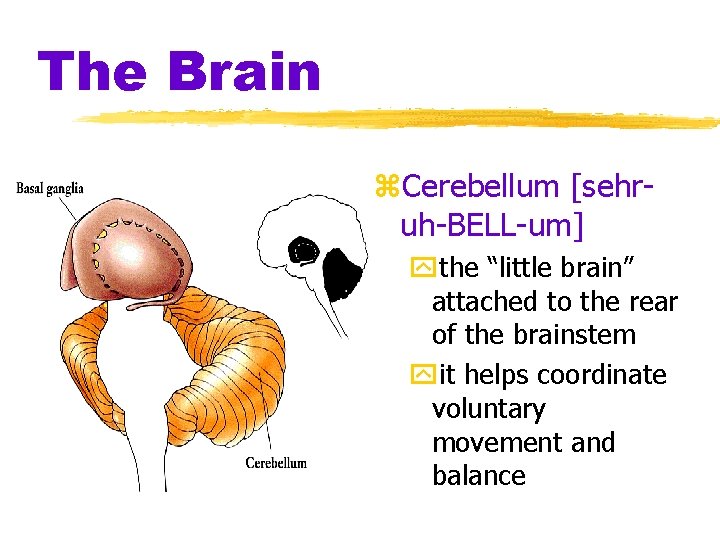
The Brain z. Cerebellum [sehruh-BELL-um] ythe “little brain” attached to the rear of the brainstem yit helps coordinate voluntary movement and balance
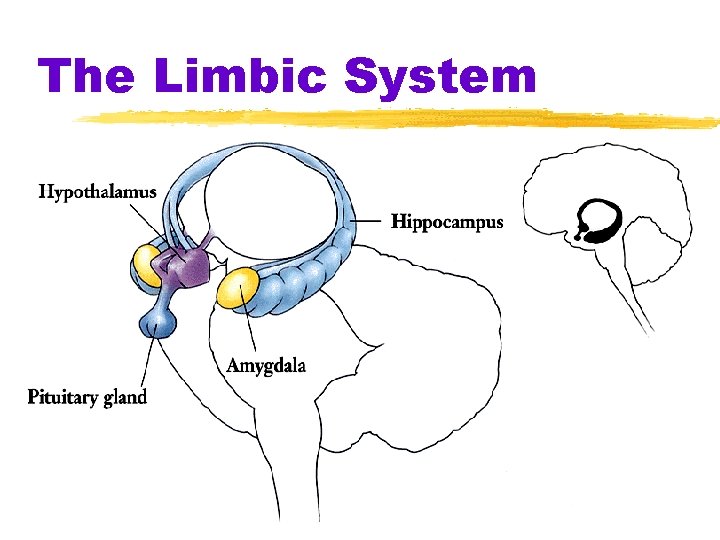
The Brain z Limbic System ya doughnut-shaped system of neural structures at the border of the brainstem and cerebral hemispheres yassociated with emotions such as fear and aggression and drives such as those for food and sex yincludes the hippocampus, amygdala, and hypothalamus. z Amygdala [ah-MIG-dah-la] ytwo almond-shaped neural clusters that are components of the limbic system and are linked to emotion

The Limbic System z. Hypothalamus yneural structure lying below (hypo) the thalamus ydirects several maintenance activities xeating xdrinking xbody temperature yhelps govern the endocrine system via the pituitary gland yis linked to emotion
The Limbic System
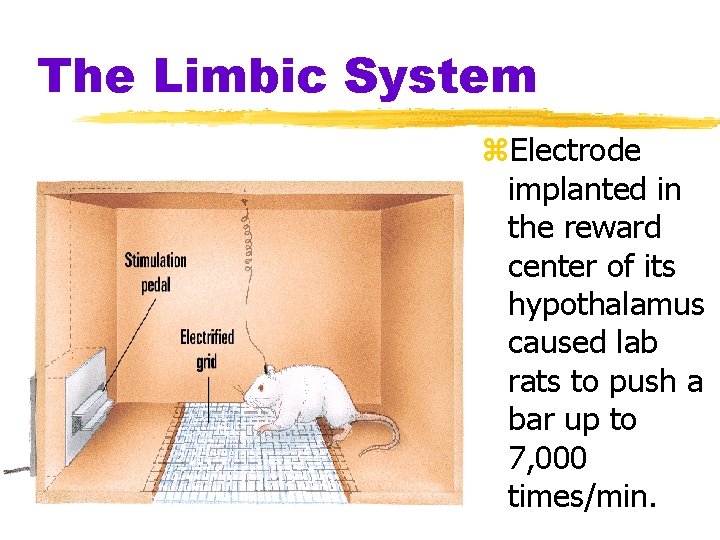
The Limbic System z. Electrode implanted in the reward center of its hypothalamus caused lab rats to push a bar up to 7, 000 times/min.
The Cerebral Cortex z. Cerebral Cortex ythe intricate fabric of interconnected neural cells that covers the cerebral hemispheres ythe body’s ultimate control and information processing center z. Glial Cells ycells in the nervous system that are not neurons but that support, nourish, and protect neurons
The Cerebral Cortex z Frontal Lobes yinvolved in speaking and muscle movements and in making plans and judgments z Parietal Lobes yinclude the sensory cortex z Occipital Lobes yinclude the visual areas, which receive visual information from the opposite visual field z Temporal Lobes yinclude the auditory areas
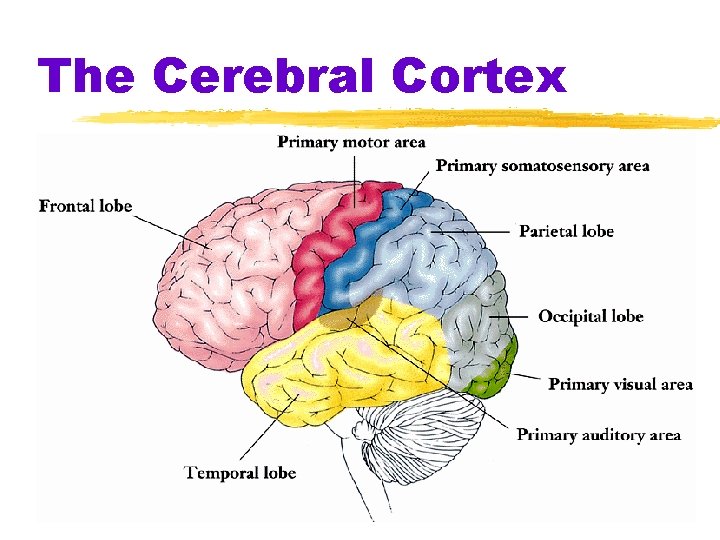
The Cerebral Cortex
The Cerebral Cortex z. Motor Cortex yarea at the rear of the frontal lobes that controls voluntary movements z. Sensory Cortex yarea at the front of the parietal lobes that registers and processes body sensations
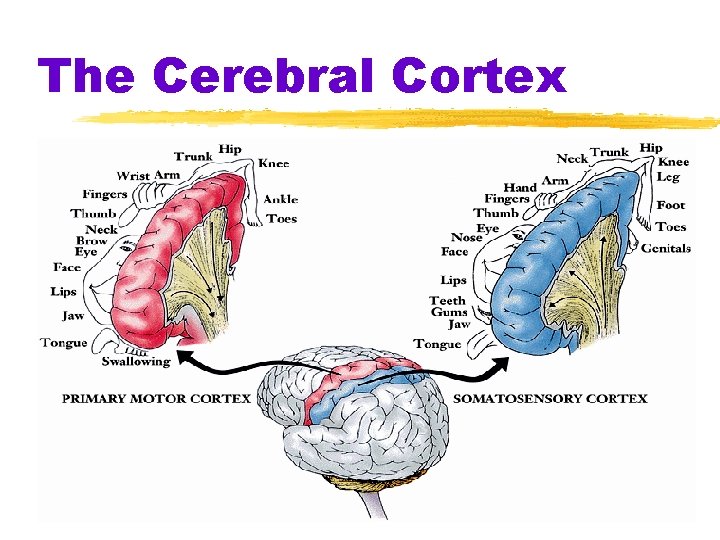
The Cerebral Cortex
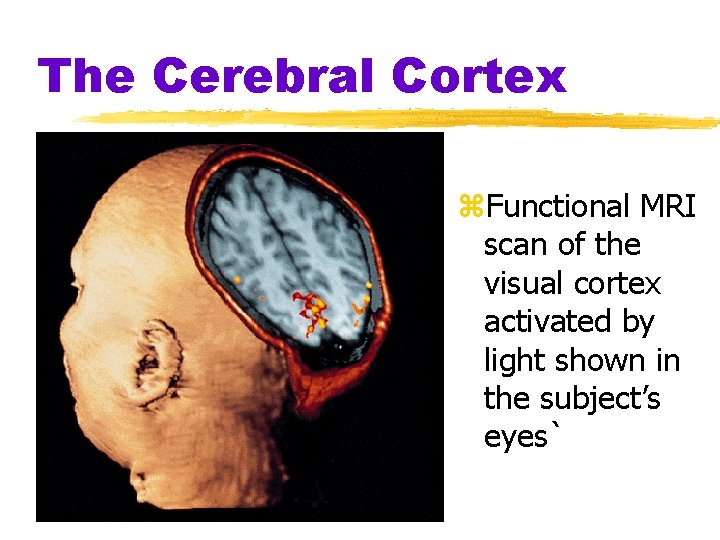
The Cerebral Cortex z. Functional MRI scan of the visual cortex activated by light shown in the subject’s eyes`
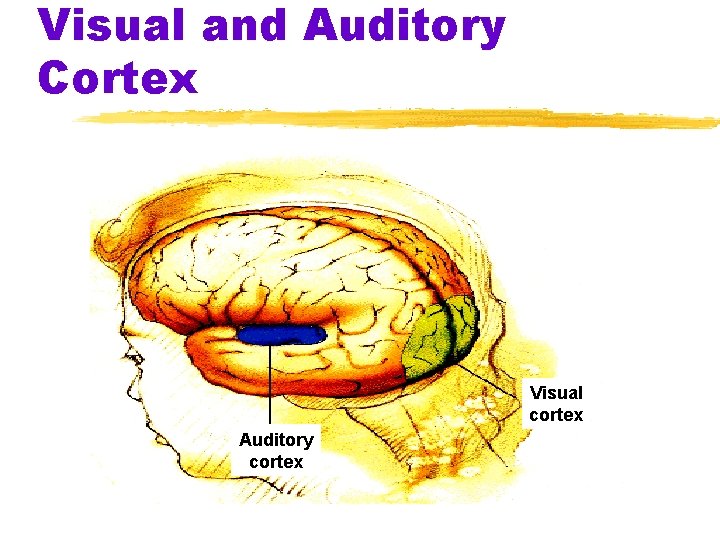
Visual and Auditory Cortex Visual cortex Auditory cortex
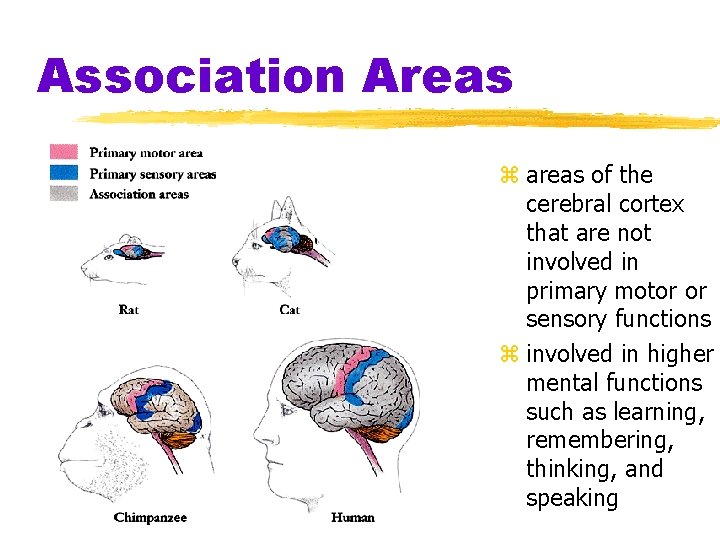
Association Areas z areas of the cerebral cortex that are not involved in primary motor or sensory functions z involved in higher mental functions such as learning, remembering, thinking, and speaking
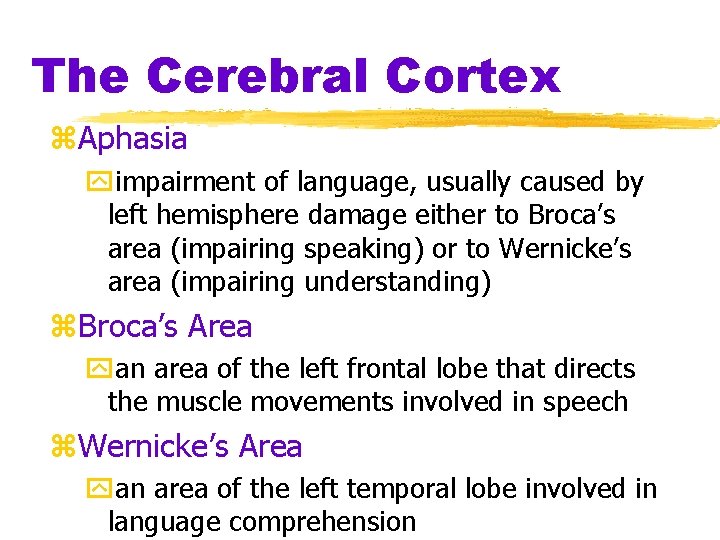
The Cerebral Cortex z. Aphasia yimpairment of language, usually caused by left hemisphere damage either to Broca’s area (impairing speaking) or to Wernicke’s area (impairing understanding) z. Broca’s Area yan area of the left frontal lobe that directs the muscle movements involved in speech z. Wernicke’s Area yan area of the left temporal lobe involved in language comprehension
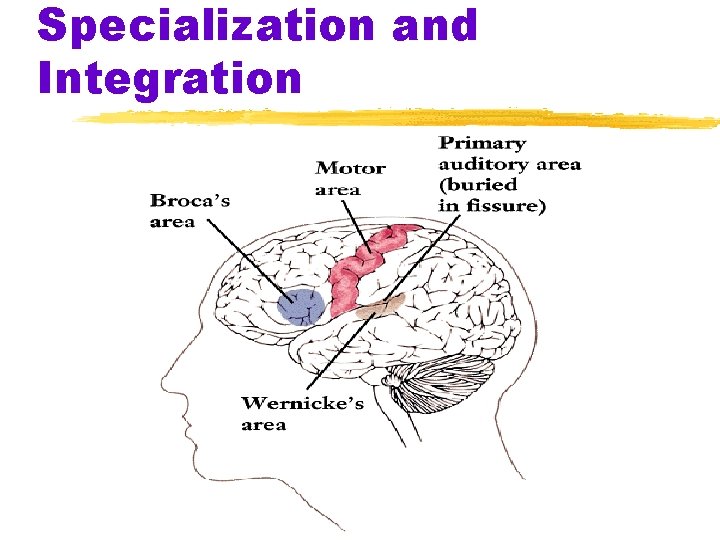
Specialization and Integration
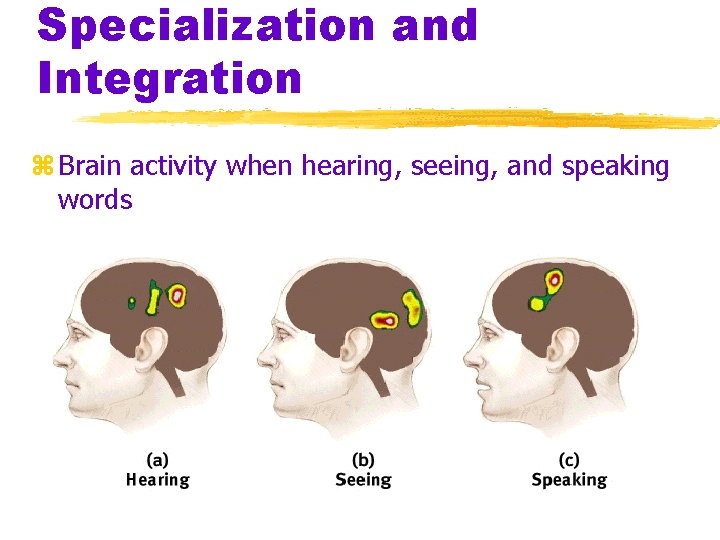
Specialization and Integration z Brain activity when hearing, seeing, and speaking words
Brain Reorganization z. Plasticity ythe brain’s capacity for modification as evident in brain reorganization following damage (especially in children) and in experiments on the effects of experience on brain development
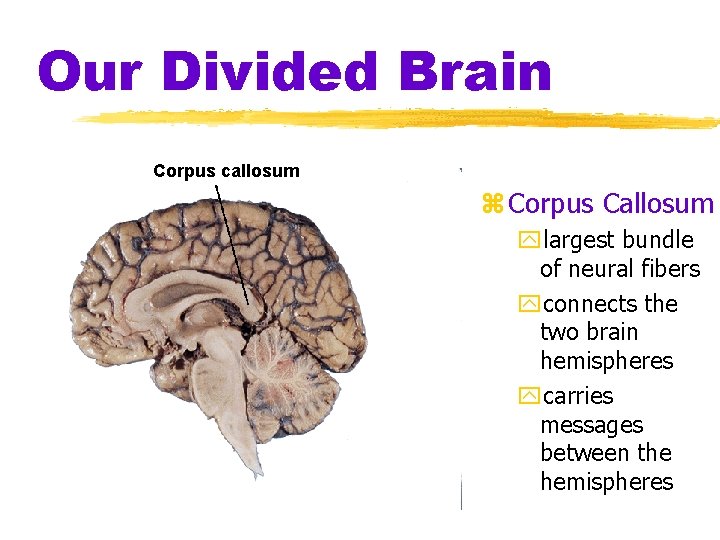
Our Divided Brain Corpus callosum z Corpus Callosum ylargest bundle of neural fibers yconnects the two brain hemispheres ycarries messages between the hemispheres
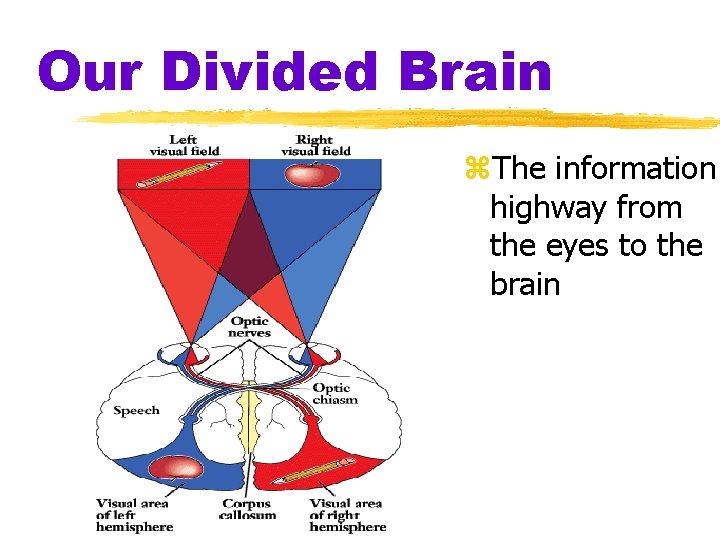
Our Divided Brain z. The information highway from the eyes to the brain
Split Brain za condition in which the two hemispheres of the brain are isolated by cutting the connecting fibers (mainly those of the corpus callosum) between them. z 1961 - Neurosurgeons Vogel and Bogen severed the corpus callosum of epilepsy patients to reduce seizures caused by abnormal brain activity that reverberated between the two brain hemispheres.
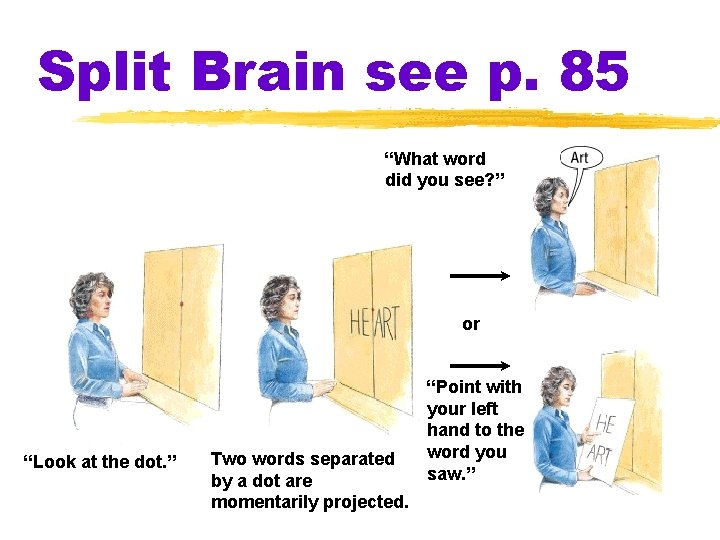
Split Brain see p. 85 “What word did you see? ” or “Look at the dot. ” Two words separated by a dot are momentarily projected. “Point with your left hand to the word you saw. ”
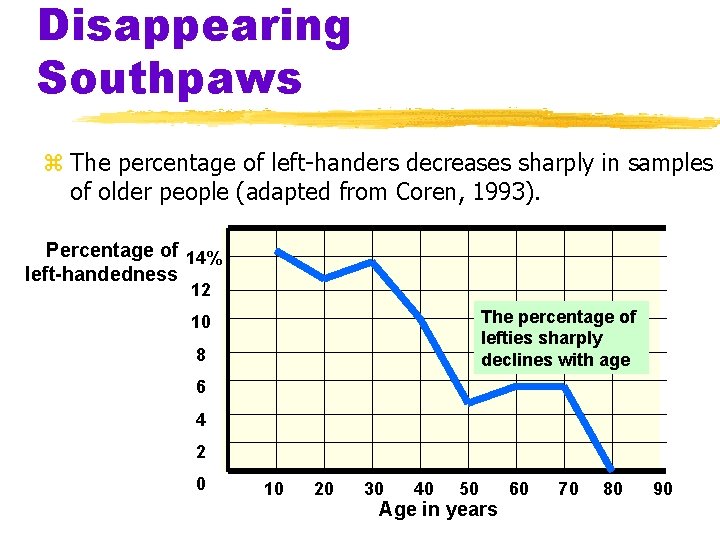
Disappearing Southpaws z The percentage of left-handers decreases sharply in samples of older people (adapted from Coren, 1993). Percentage of 14% left-handedness 12 The percentage of lefties sharply declines with age 10 8 6 4 2 0 10 20 30 40 50 Age in years 60 70 80 90
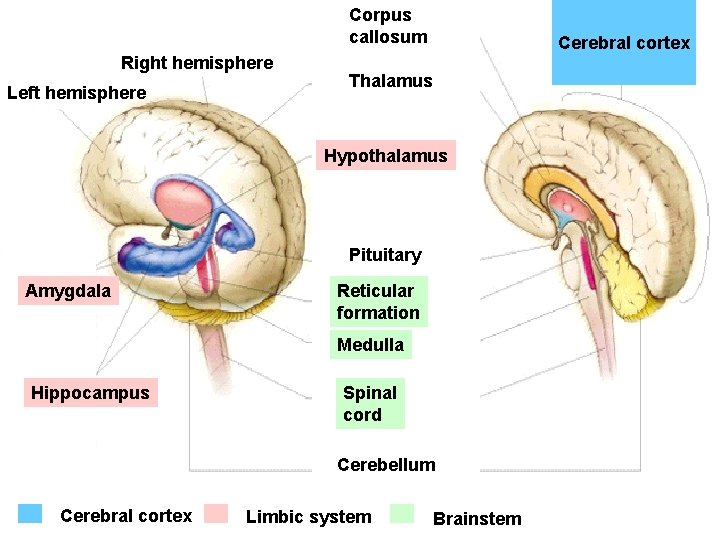
Corpus callosum Right hemisphere Left hemisphere Cerebral cortex Thalamus Hypothalamus Pituitary Amygdala Reticular formation Medulla Hippocampus Spinal cord Cerebellum Cerebral cortex Limbic system Brainstem
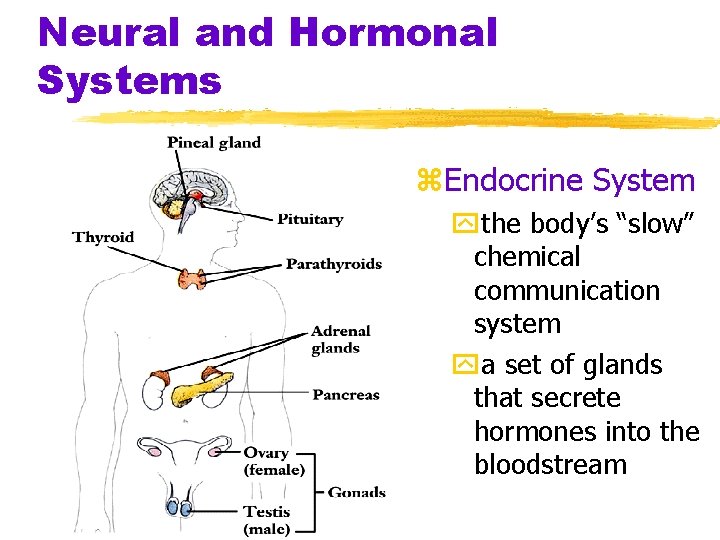
Neural and Hormonal Systems z. Endocrine System ythe body’s “slow” chemical communication system ya set of glands that secrete hormones into the bloodstream
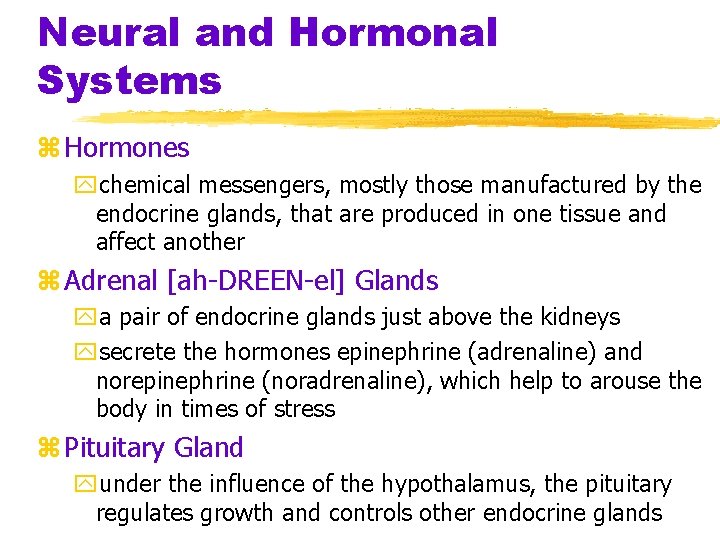
Neural and Hormonal Systems z Hormones ychemical messengers, mostly those manufactured by the endocrine glands, that are produced in one tissue and affect another z Adrenal [ah-DREEN-el] Glands ya pair of endocrine glands just above the kidneys ysecrete the hormones epinephrine (adrenaline) and norepinephrine (noradrenaline), which help to arouse the body in times of stress z Pituitary Gland yunder the influence of the hypothalamus, the pituitary regulates growth and controls other endocrine glands
- Slides: 29