
Focus on English grammar I The verb 1
Focus on English grammar
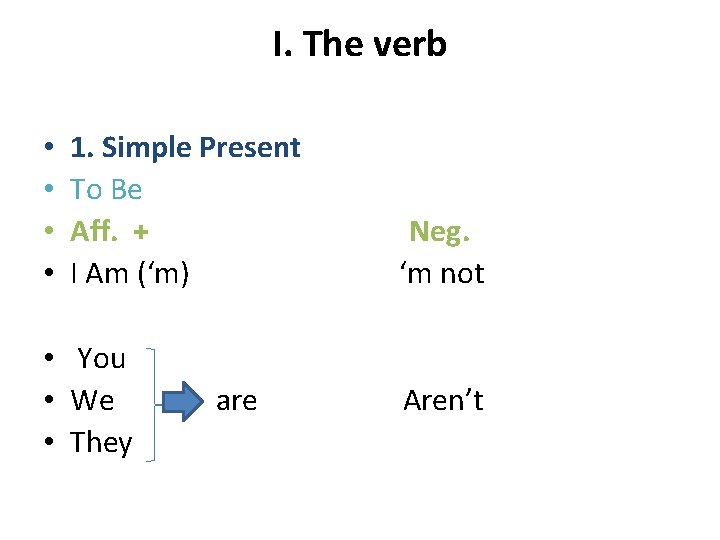
I. The verb • • 1. Simple Present To Be Aff. + Neg. I Am (‘m) ‘m not • You • We are Aren’t • They
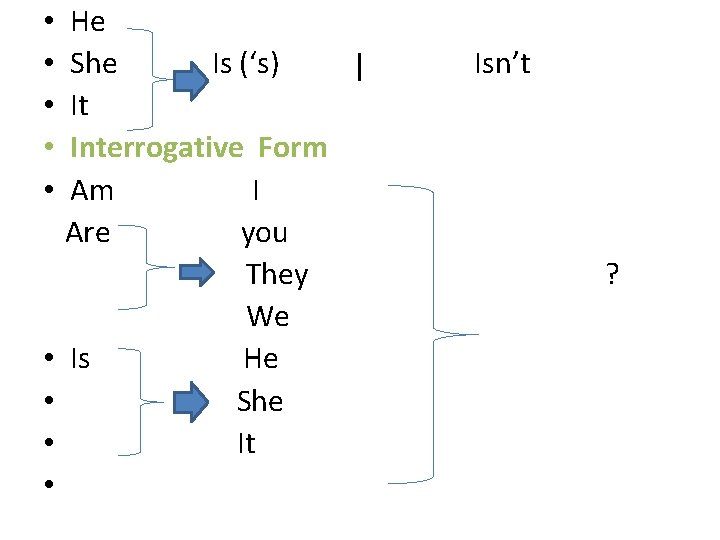
• He • She Is (‘s) Isn’t I • It • Interrogative Form • Am I Are you They ? We • Is He • She • It •
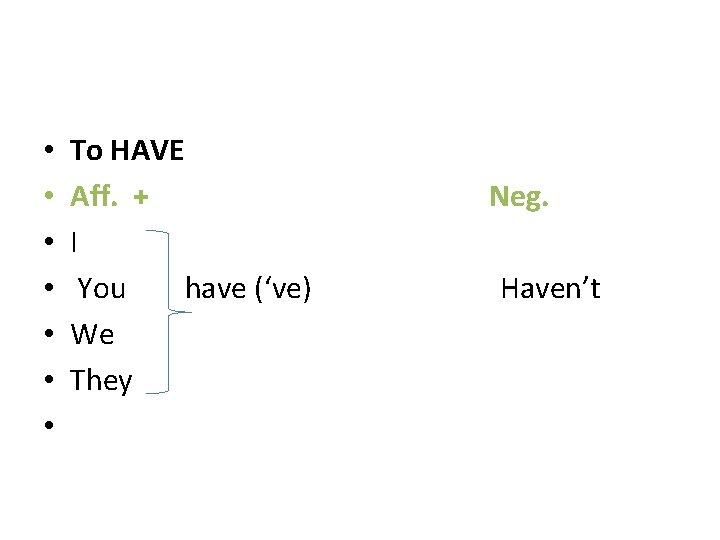
• • To HAVE Aff. + Neg. I You have (‘ve) Haven’t We They
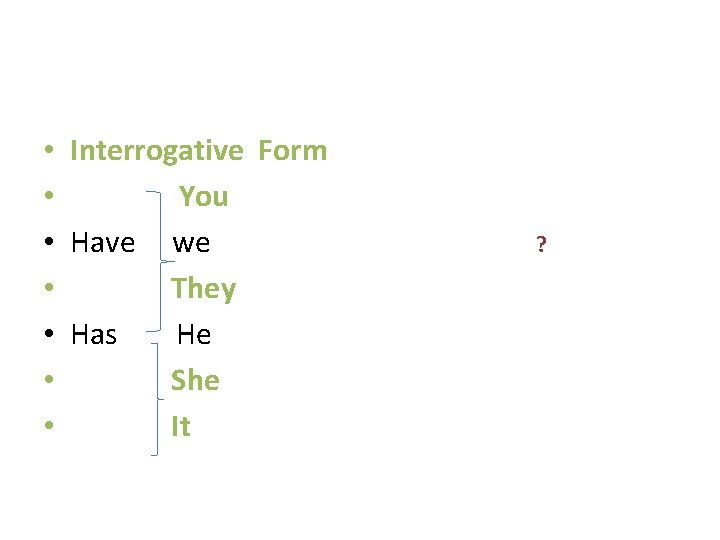
• Interrogative Form • You • Have we ? • They • Has He • She • It
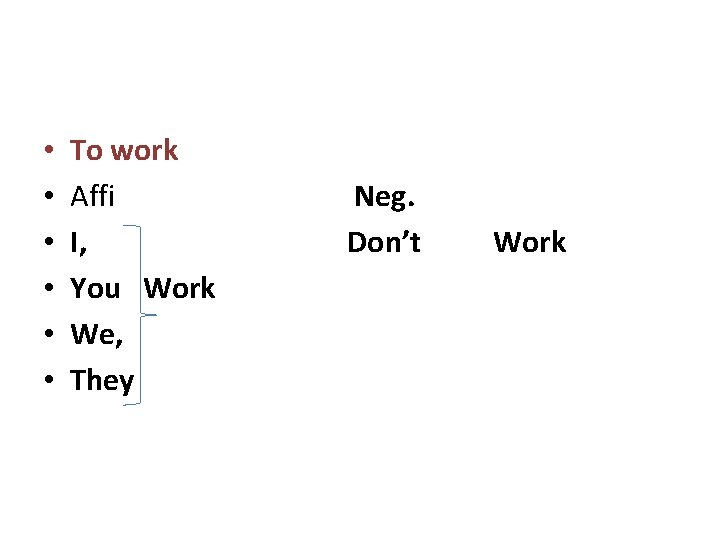
• • • To work Affi Neg. I, Don’t You Work We, They Work
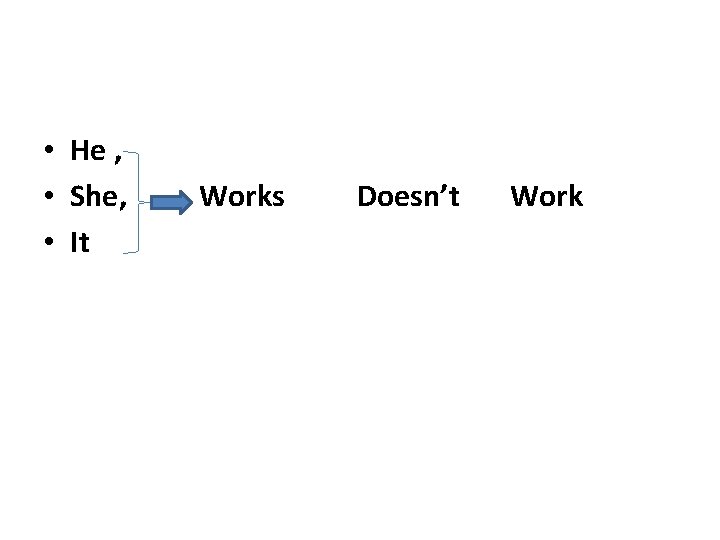
• He , • She, • It Works Doesn’t Work
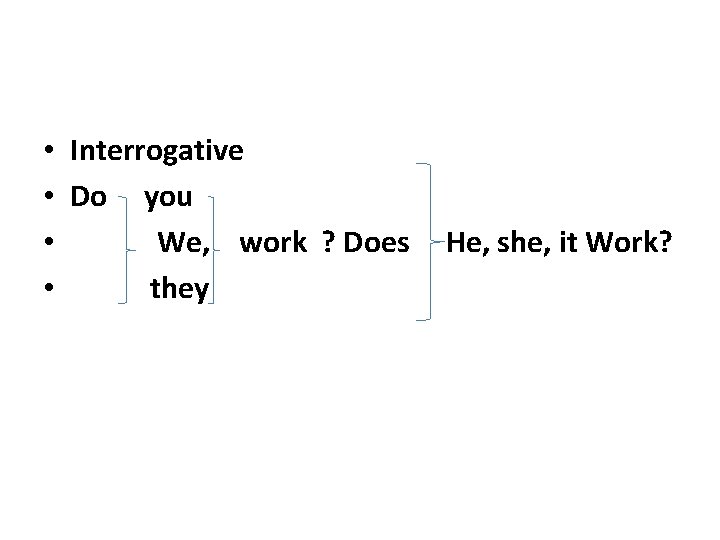
• Interrogative • Do you • We, work ? Does • they He, she, it Work?
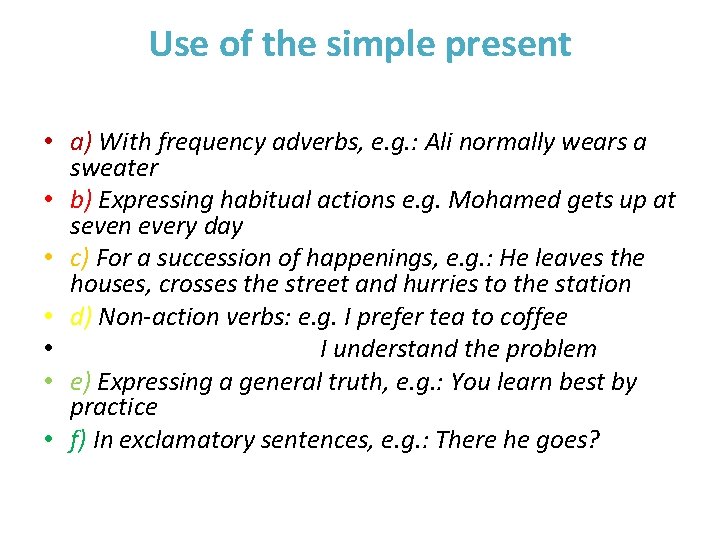
Use of the simple present • a) With frequency adverbs, e. g. : Ali normally wears a sweater • b) Expressing habitual actions e. g. Mohamed gets up at seven every day • c) For a succession of happenings, e. g. : He leaves the houses, crosses the street and hurries to the station • d) Non-action verbs: e. g. I prefer tea to coffee • I understand the problem • e) Expressing a general truth, e. g. : You learn best by practice • f) In exclamatory sentences, e. g. : There he goes?
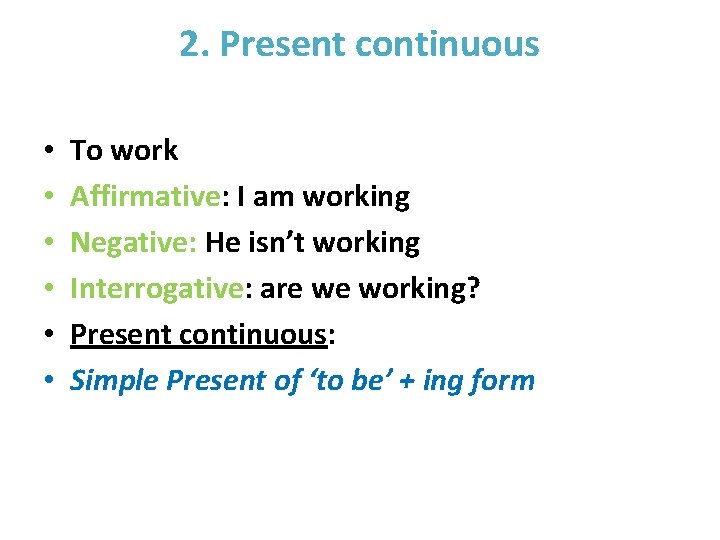
2. Present continuous • • • To work Affirmative: I am working Negative: He isn’t working Interrogative: are we working? Present continuous: Simple Present of ‘to be’ + ing form
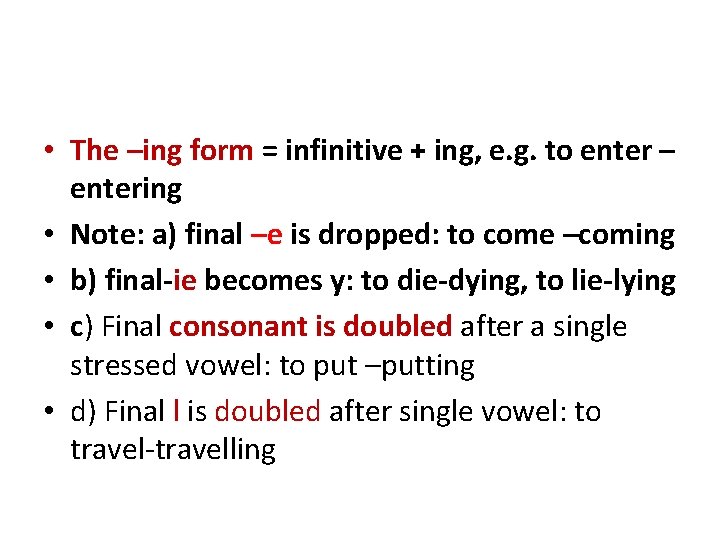
• The –ing form = infinitive + ing, e. g. to enter – entering • Note: a) final –e is dropped: to come –coming • b) final-ie becomes y: to die-dying, to lie-lying • c) Final consonant is doubled after a single stressed vowel: to put –putting • d) Final l is doubled after single vowel: to travel-travelling
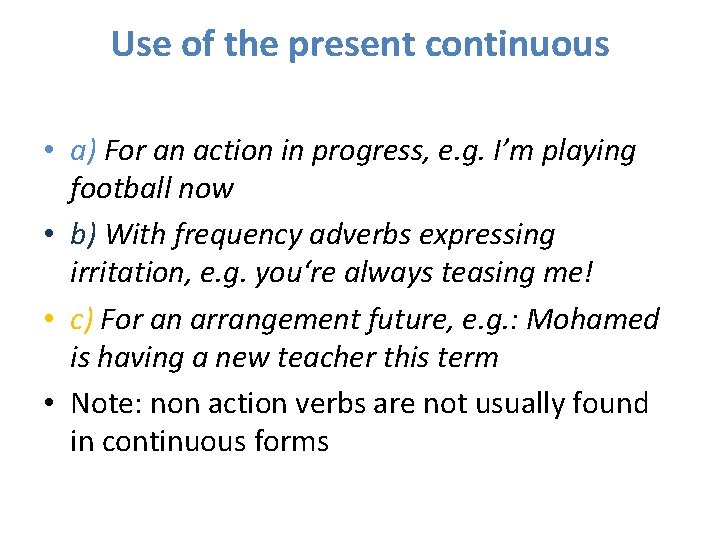
Use of the present continuous • a) For an action in progress, e. g. I’m playing football now • b) With frequency adverbs expressing irritation, e. g. you‘re always teasing me! • c) For an arrangement future, e. g. : Mohamed is having a new teacher this term • Note: non action verbs are not usually found in continuous forms
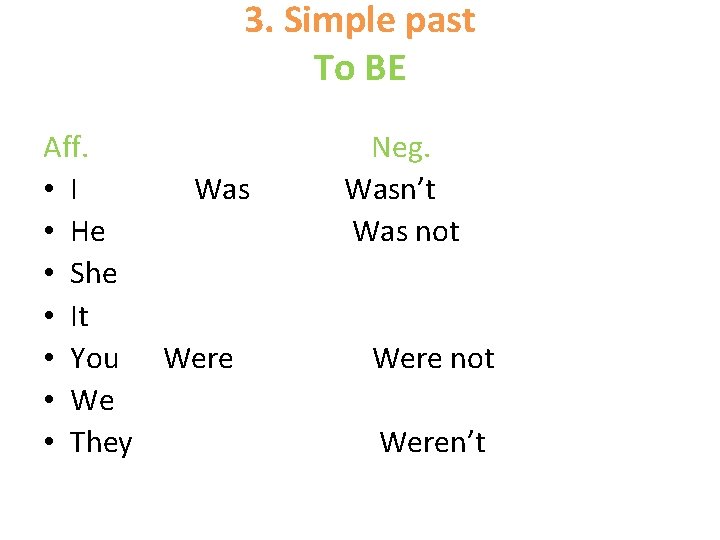
3. Simple past To BE Aff. Neg. • I Wasn’t • He Was not • She • It • You Were Were not • We • They Weren’t
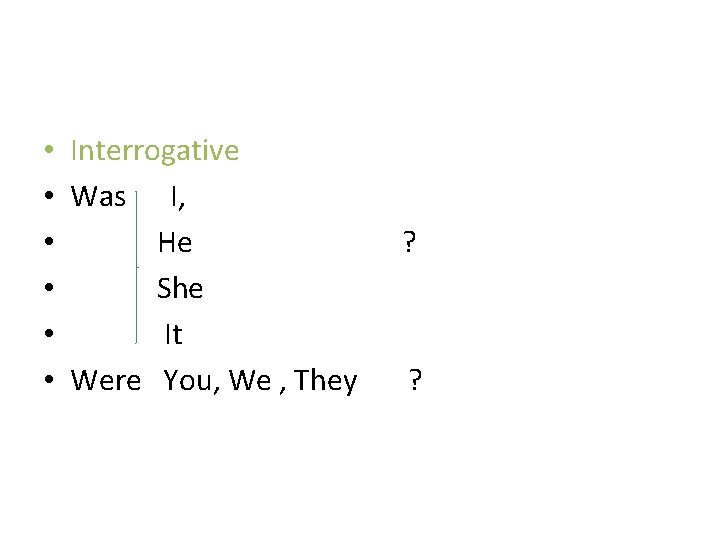
• • • Interrogative Was I, He ? She It Were You, We , They ?
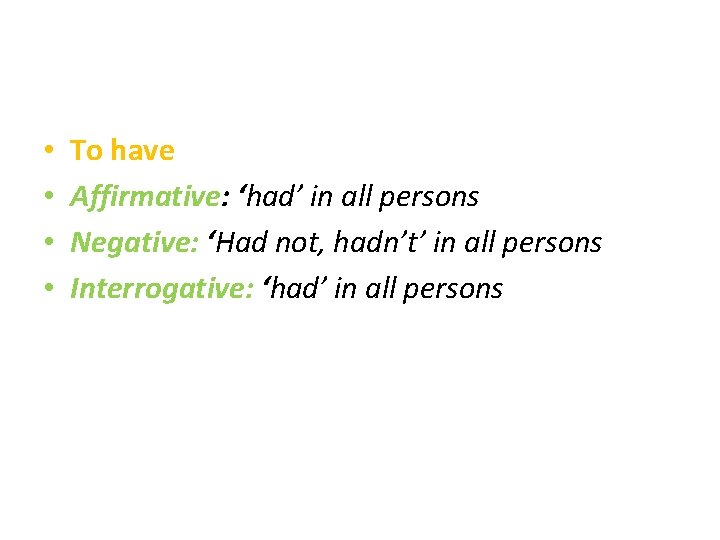
• • To have Affirmative: ‘had’ in all persons Negative: ‘Had not, hadn’t’ in all persons Interrogative: ‘had’ in all persons
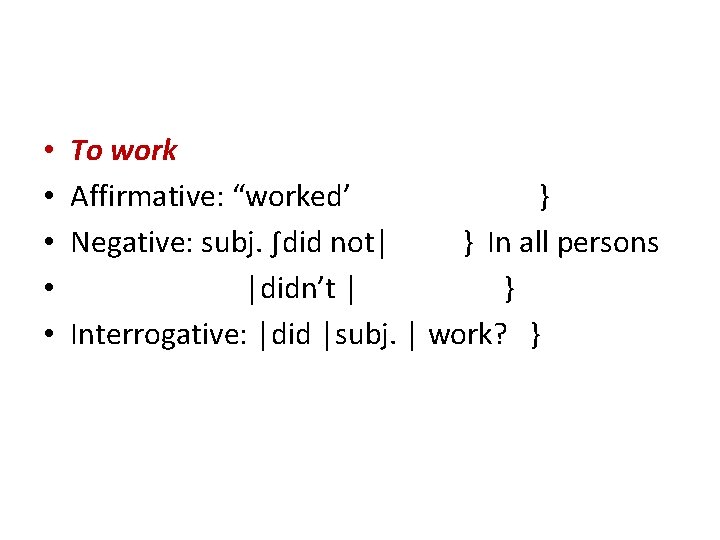
• • • To work Affirmative: “worked’ } Negative: subj. ∫did not│ } In all persons │didn’t │ } Interrogative: │did │subj. │ work? }
• Note: For the irregular verbs. • e. g. : to see – saw –seen • simple past: I saw, you saw, he saw, we saw, you saw, they saw
Use of the Simple past • a) When the period in which the action took place is completely over • e. g. We went to the pictures yesterday evening. • b) for an action in the past or a succession of actions in the past • e. g. He left the house, hurried to the station and caught his train. • c) for repeated or habitual actions in the past • e. g. when he was in at Stratford, he went to theatre every day.
• d) For definite time in the past and with ‘just now’ • e. g. : He never came here before the war. • Mohamed came in just now ¬¬ he’s probably upstairs. •
Past continuous • • • . Affirmative: I was working Negative: You weren’t working Interrogative: Were they working? Past continuous = Simple Past of ‘to be’ + ing form
Use of past continuous • a) For an action in progress in the past , e. g. : they were playing football yesterday afternoon. • b) Two simultaneous actions in progress in the past, e. g. : while they were marching they were looking straight ahead. • c) as a kind of background to another action in the past for which the Simple Past is used, e. g. : I was reading a novel when I heard a shot • d) for gradual developments, e. g. : Mohamed felt that the machine was becoming man’s enemy.
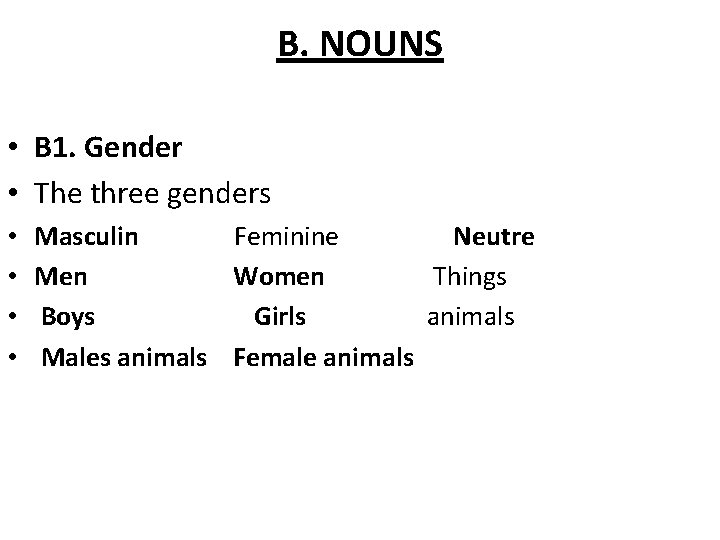
B. NOUNS • B 1. Gender • The three genders • • Masculin Feminine Neutre Men Women Things Boys Girls animals Males animals Female animals
• 2. Exceptions • (i) Ships and countries are often referred to as feminine • She’s a wonderful ship, isn’t she? • Yugoslavia mourned the loss of her leader
• (i) Animals are also referred to as neuter, with the pronoun • It, especially when referring to a species and when the sex is unimportant • This bird lays its eggs in sand • The mouse runback into its hole
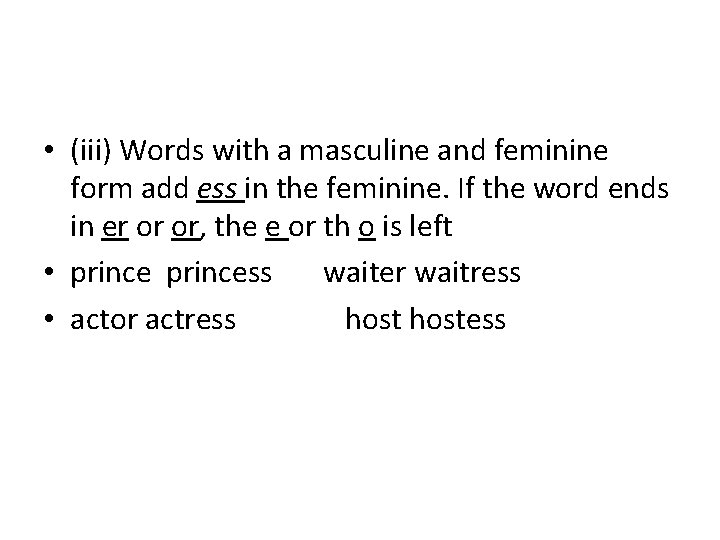
• (iii) Words with a masculine and feminine form add ess in the feminine. If the word ends in er or or, the e or th o is left • princess waiter waitress • actor actress hostess
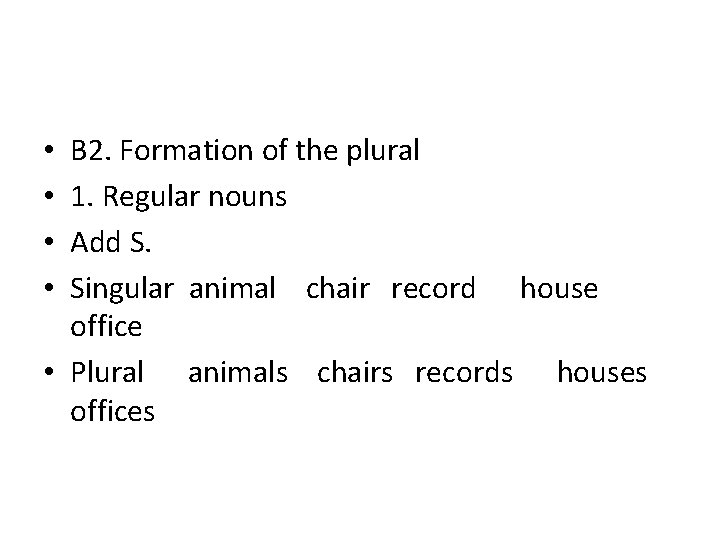
B 2. Formation of the plural 1. Regular nouns Add S. Singular animal chair record house office • Plural animals chairs records houses offices • •
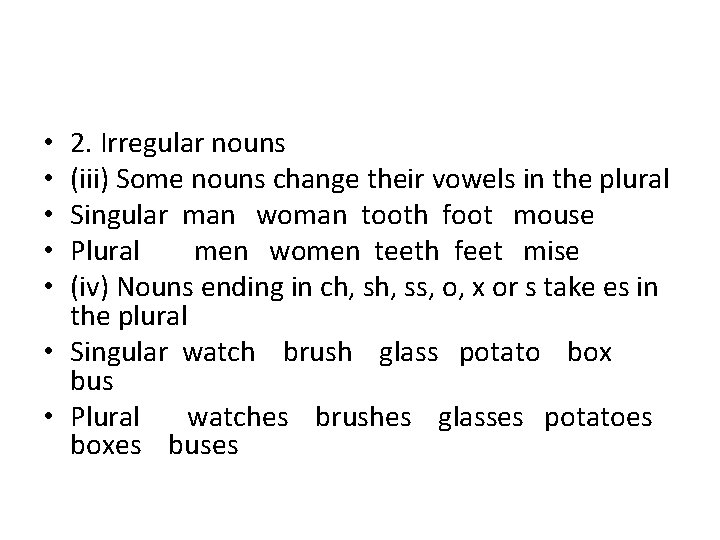
2. Irregular nouns (iii) Some nouns change their vowels in the plural Singular man woman tooth foot mouse Plural men women teeth feet mise (iv) Nouns ending in ch, ss, o, x or s take es in the plural • Singular watch brush glass potato box bus • Plural watches brushes glasses potatoes boxes buses • • •
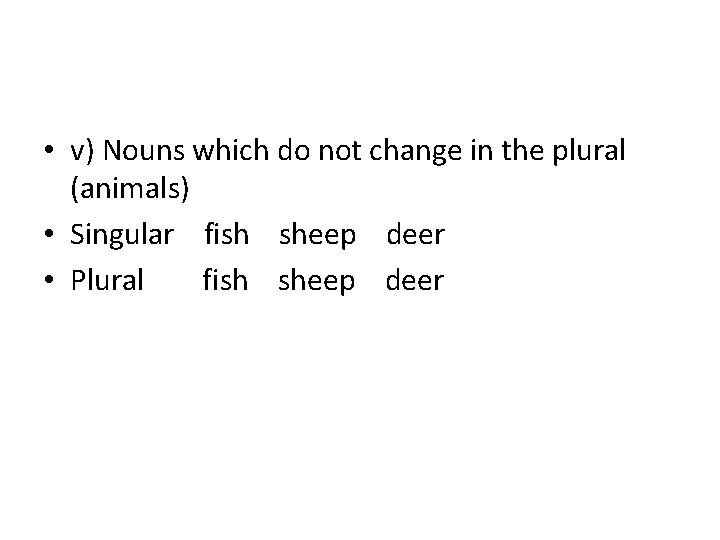
• v) Nouns which do not change in the plural (animals) • Singular fish sheep deer • Plural fish sheep deer
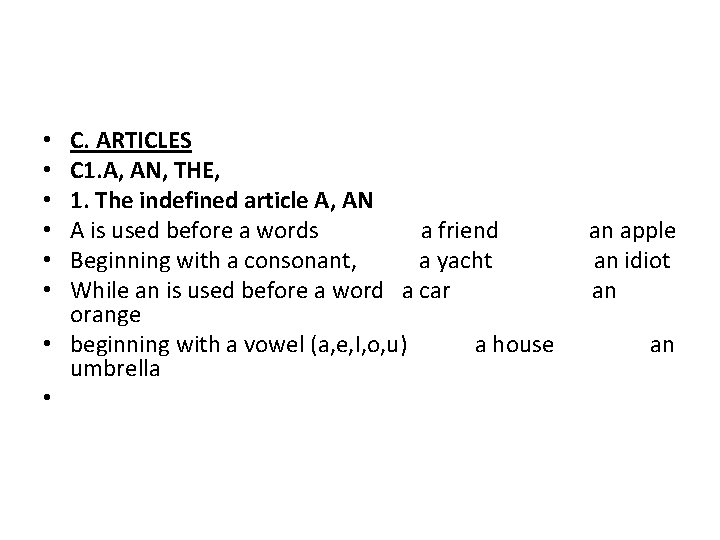
C. ARTICLES C 1. A, AN, THE, 1. The indefined article A, AN A is used before a words a friend an apple Beginning with a consonant, a yacht an idiot While an is used before a word a car an orange • beginning with a vowel (a, e, I, o, u) a house an umbrella • • • •
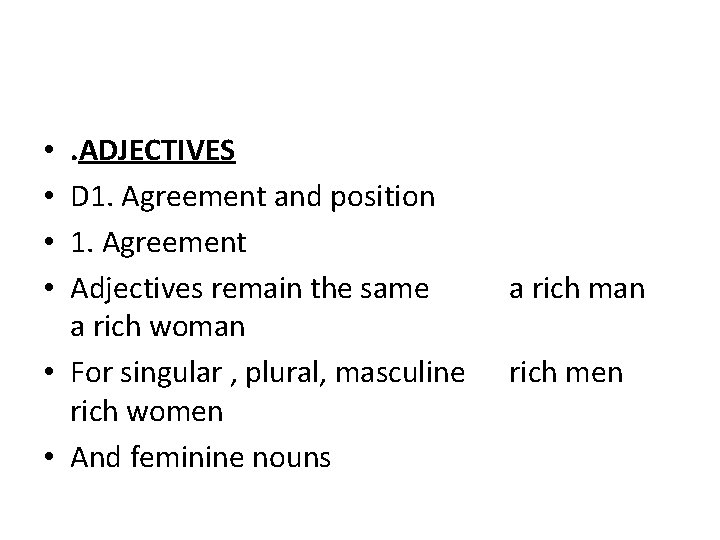
. ADJECTIVES D 1. Agreement and position 1. Agreement Adjectives remain the same a rich man a rich woman • For singular , plural, masculine rich men rich women • And feminine nouns • •
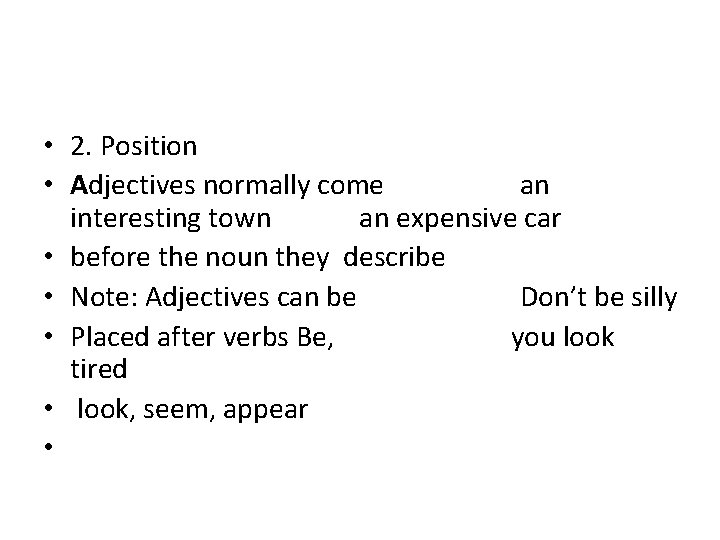
• 2. Position • Adjectives normally come an interesting town an expensive car • before the noun they describe • Note: Adjectives can be Don’t be silly • Placed after verbs Be, you look tired • look, seem, appear •
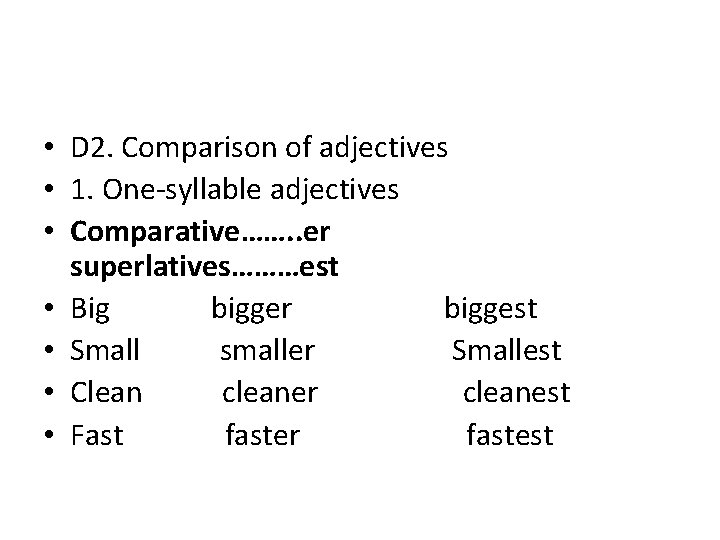
• D 2. Comparison of adjectives • 1. One-syllable adjectives • Comparative……. . er superlatives………est • Big bigger biggest • Small smaller Smallest • Clean cleaner cleanest • Fast faster fastest
- Slides: 32