
FOCUS LESSON FOOD WEBS INTRODUCTION The energy pyramid
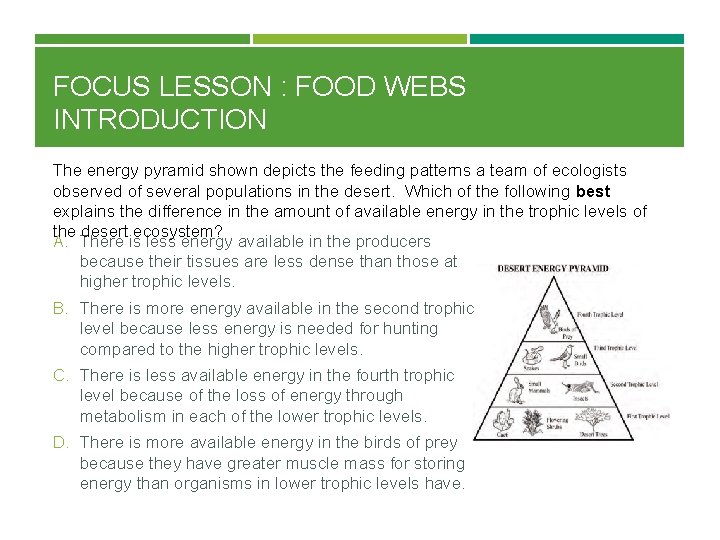
FOCUS LESSON : FOOD WEBS INTRODUCTION The energy pyramid shown depicts the feeding patterns a team of ecologists observed of several populations in the desert. Which of the following best explains the difference in the amount of available energy in the trophic levels of the desert ecosystem? A. There is less energy available in the producers because their tissues are less dense than those at higher trophic levels. B. There is more energy available in the second trophic level because less energy is needed for hunting compared to the higher trophic levels. C. There is less available energy in the fourth trophic level because of the loss of energy through metabolism in each of the lower trophic levels. D. There is more available energy in the birds of prey because they have greater muscle mass for storing energy than organisms in lower trophic levels have.
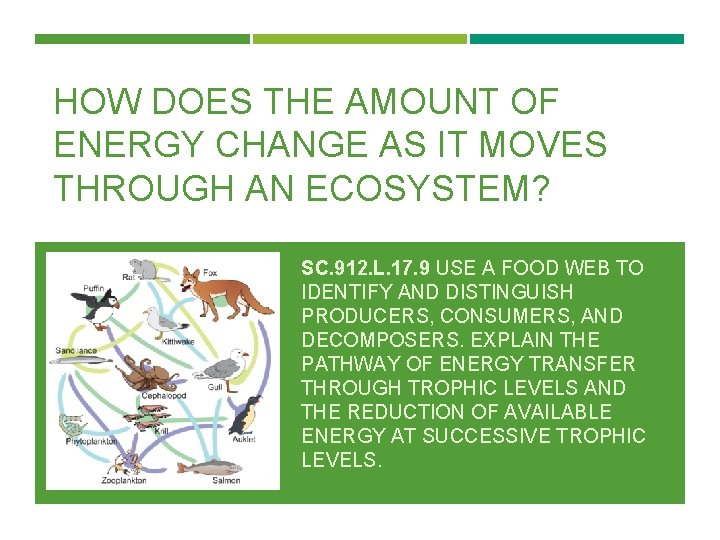
HOW DOES THE AMOUNT OF ENERGY CHANGE AS IT MOVES THROUGH AN ECOSYSTEM? SC. 912. L. 17. 9 USE A FOOD WEB TO IDENTIFY AND DISTINGUISH PRODUCERS, CONSUMERS, AND DECOMPOSERS. EXPLAIN THE PATHWAY OF ENERGY TRANSFER THROUGH TROPHIC LEVELS AND THE REDUCTION OF AVAILABLE ENERGY AT SUCCESSIVE TROPHIC LEVELS.
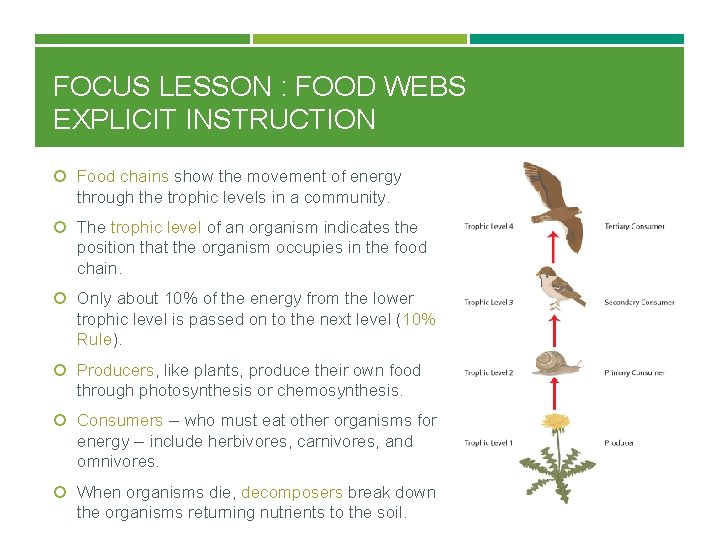
FOCUS LESSON : FOOD WEBS EXPLICIT INSTRUCTION Food chains show the movement of energy through the trophic levels in a community. The trophic level of an organism indicates the position that the organism occupies in the food chain. Only about 10% of the energy from the lower trophic level is passed on to the next level (10% Rule). Producers, like plants, produce their own food through photosynthesis or chemosynthesis. Consumers -- who must eat other organisms for energy -- include herbivores, carnivores, and omnivores. When organisms die, decomposers break down the organisms returning nutrients to the soil.
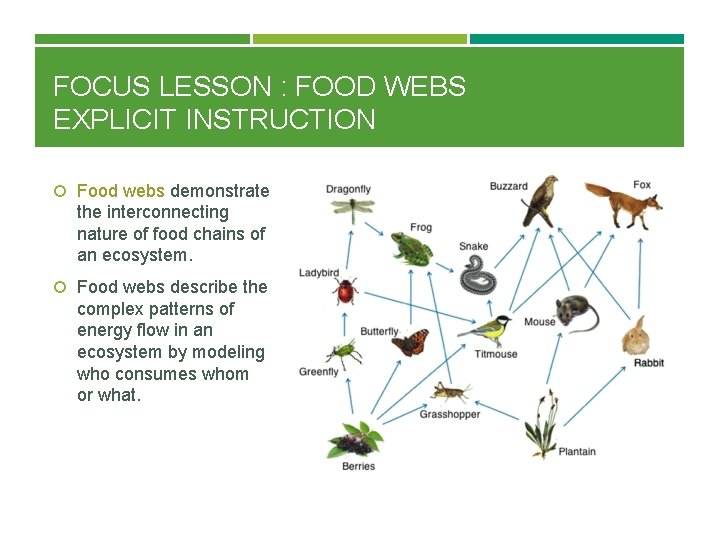
FOCUS LESSON : FOOD WEBS EXPLICIT INSTRUCTION Food webs demonstrate the interconnecting nature of food chains of an ecosystem. Food webs describe the complex patterns of energy flow in an ecosystem by modeling who consumes whom or what.
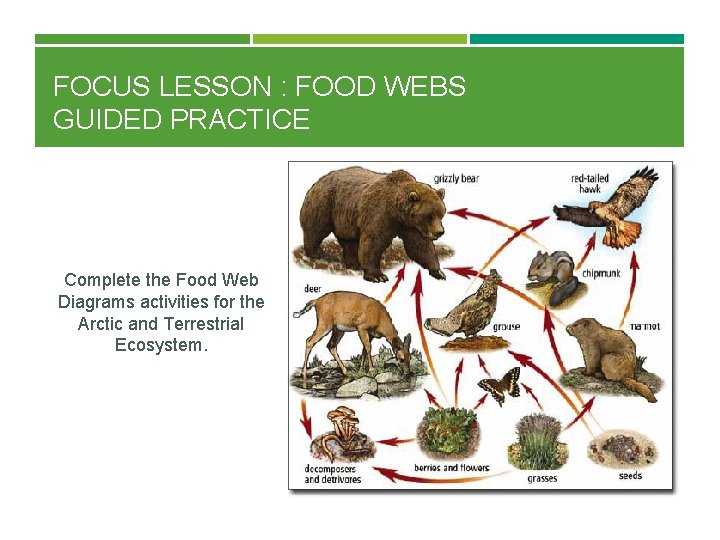
FOCUS LESSON : FOOD WEBS GUIDED PRACTICE Complete the Food Web Diagrams activities for the Arctic and Terrestrial Ecosystem.
FOCUS LESSON : FOOD WEBS INDEPENDENT PRACTICE Using SRE (statement, reason, & evidence), answer the following: (SRE) Statement – Reason - Explanation Statement State the correct answer in sentence format. Reason Provide a reason for why you selected the answer you chose. Provide a reason why you did not select the other answer option(s). Evidence What evidence was provided that helped you select the answer you chose or eliminate the other answer options (cite your source). How does the amount of energy change as it moves through an ecosystem?
FOCUS LESSON : FOOD WEBS QUIZ QUESTION #1 The Atlantic Ocean, which border’s Florida coastline, has many interconnecting food webs that link its marine life. Which of these organisms would MOST LIKELY be found at the top of an energy pyramid? A. Clams B. Kelp C. Sardines D. Sharks
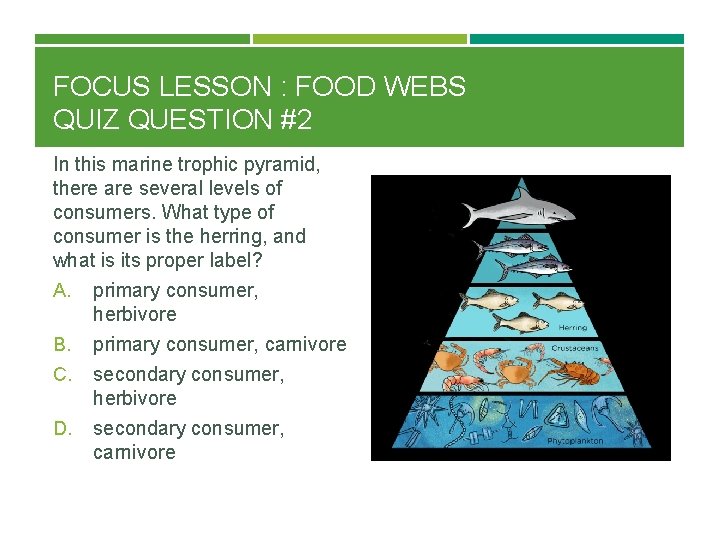
FOCUS LESSON : FOOD WEBS QUIZ QUESTION #2 In this marine trophic pyramid, there are several levels of consumers. What type of consumer is the herring, and what is its proper label? A. primary consumer, herbivore B. primary consumer, carnivore C. secondary consumer, herbivore D. secondary consumer, carnivore
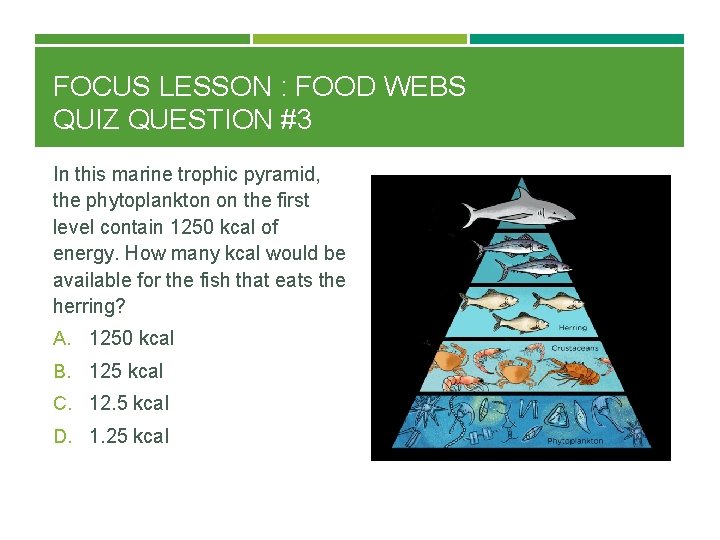
FOCUS LESSON : FOOD WEBS QUIZ QUESTION #3 In this marine trophic pyramid, the phytoplankton on the first level contain 1250 kcal of energy. How many kcal would be available for the fish that eats the herring? A. 1250 kcal B. 125 kcal C. 12. 5 kcal D. 1. 25 kcal
- Slides: 9