
FLUX CORED ARC WELDING FCAW SS Innershield Hobart

FLUX CORED ARC WELDING FCAW - SS Innershield® Hobart Fabshield FCAW - GS Outershield® Hobart Fab. Co

Principles of the FCAW-SS Process • Electric Arc Between Electrode & Work, Melts the Electrode & Fuses the Joint • Weld Metal & Slag Form • The Slag is Lighter than the Molten Metal & Rises to the Top • DC Polarity

Principles of the FCAW-GS Process • Electric Arc Between Electrode & Work, Melts the Electrode & Fuses the Joint • Weld Metal & Slag Form • The Slag is Lighter than the Molten Metal & Rises to the Top • DC Polarity
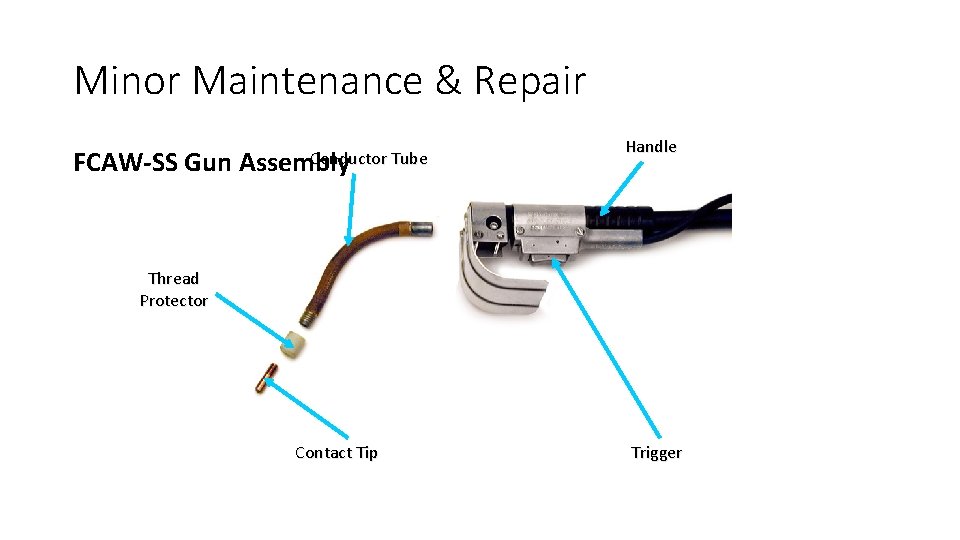
Minor Maintenance & Repair FCAW-SS Gun Conductor Tube Assembly Handle Thread Protector Contact Tip Trigger

FCAW-SS Electrodes

Electrodes • Characterized by Long Electrical Stick. Out (E. S. O. ) – Typically 3/4” - 3 3/4” with + 1/8” Tolerance • Too Long E. S. O. Causes an Unstable Arc, Increased Spatter, and Decreased Penetration • Too Short E. S. O. Causes Excessive Arc Length and Premature Melting & Activation of the Core Materials causing Porosity
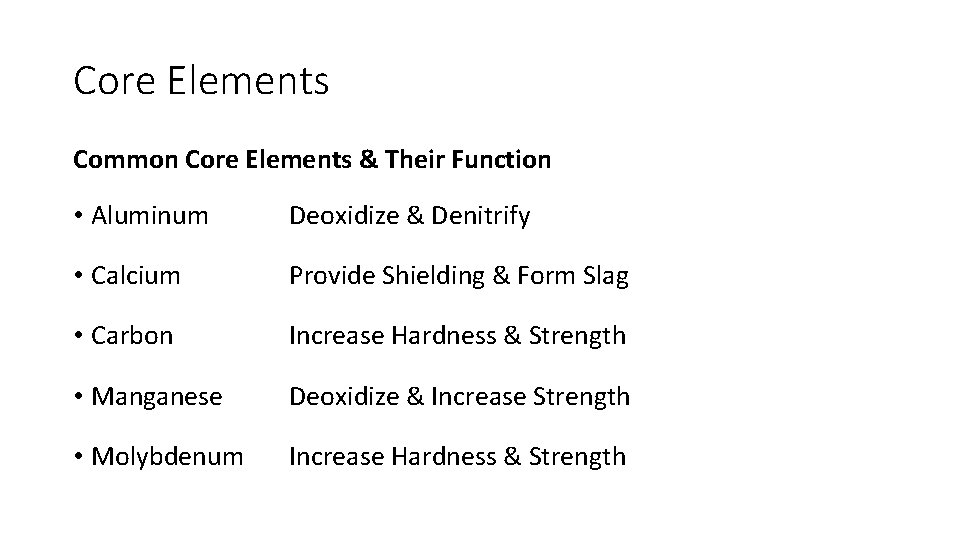
Core Elements Common Core Elements & Their Function • Aluminum Deoxidize & Denitrify • Calcium Provide Shielding & Form Slag • Carbon Increase Hardness & Strength • Manganese Deoxidize & Increase Strength • Molybdenum Increase Hardness & Strength
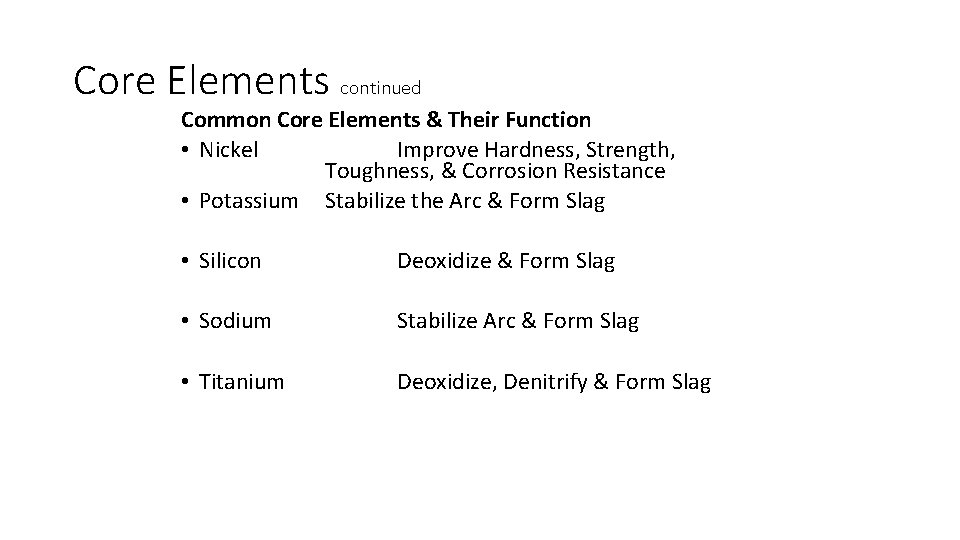
Core Elements continued Common Core Elements & Their Function • Nickel Improve Hardness, Strength, Toughness, & Corrosion Resistance • Potassium Stabilize the Arc & Form Slag • Silicon Deoxidize & Form Slag • Sodium Stabilize Arc & Form Slag • Titanium Deoxidize, Denitrify & Form Slag
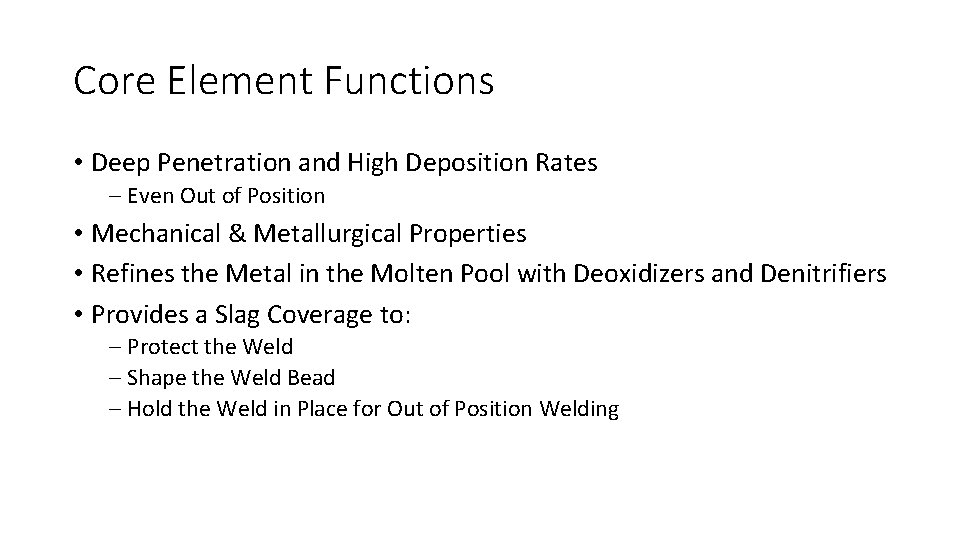
Core Element Functions • Deep Penetration and High Deposition Rates – Even Out of Position • Mechanical & Metallurgical Properties • Refines the Metal in the Molten Pool with Deoxidizers and Denitrifiers • Provides a Slag Coverage to: – Protect the Weld – Shape the Weld Bead – Hold the Weld in Place for Out of Position Welding
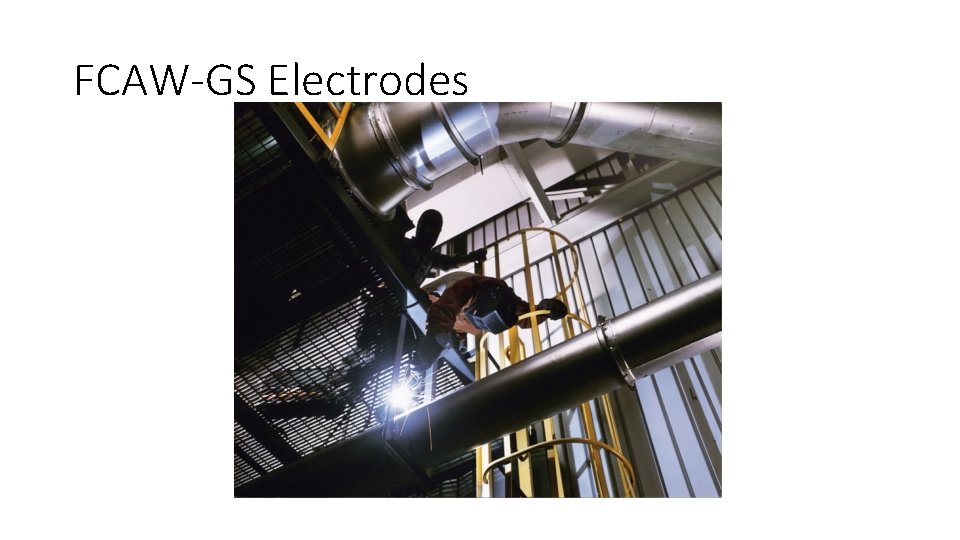
FCAW-GS Electrodes
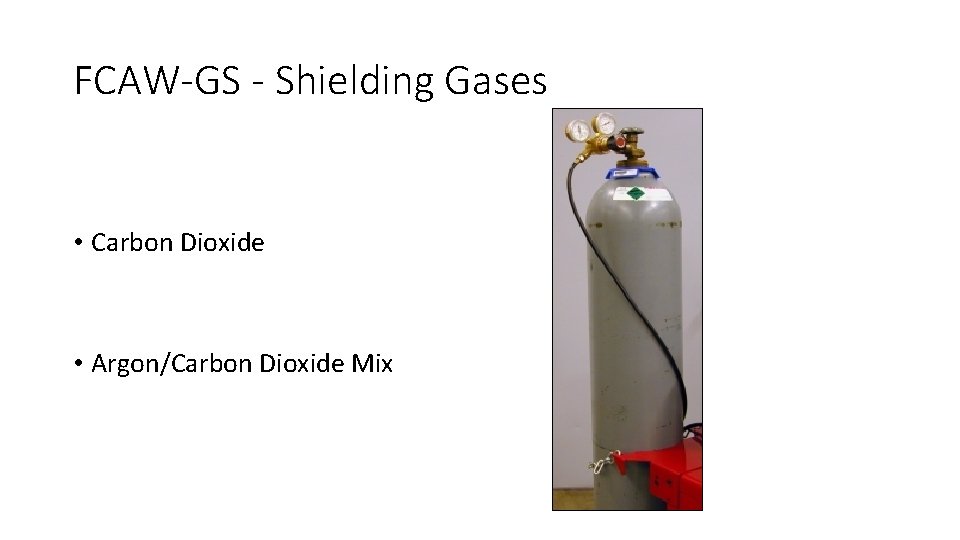
FCAW-GS - Shielding Gases • Carbon Dioxide • Argon/Carbon Dioxide Mix
CO 2 • Deeper Penetration • Lower Cost • Lower Strength Weld Metal • Less Spray Transfer • Less Susceptible to Gas Marks • Less Radiated Heat
AR / CO 2 Balances • 75/80/85/90 Ar/CO 2 Balance • Better Mechanical Properties • (Charpy, Tensile, Yield) • Lower Spatter • Better Arc Transfer • Lower Smoke Levels • Higher Deposition Rates • Especially Out of Position • Less Penetration
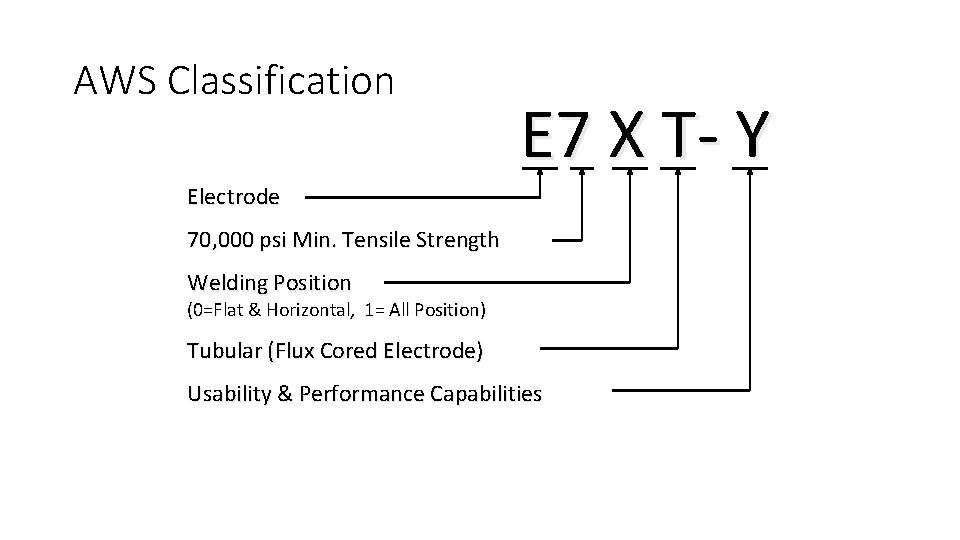
AWS Classification E 7 X T- Y Electrode 70, 000 psi Min. Tensile Strength Welding Position (0=Flat & Horizontal, 1= All Position) Tubular (Flux Cored Electrode) Usability & Performance Capabilities
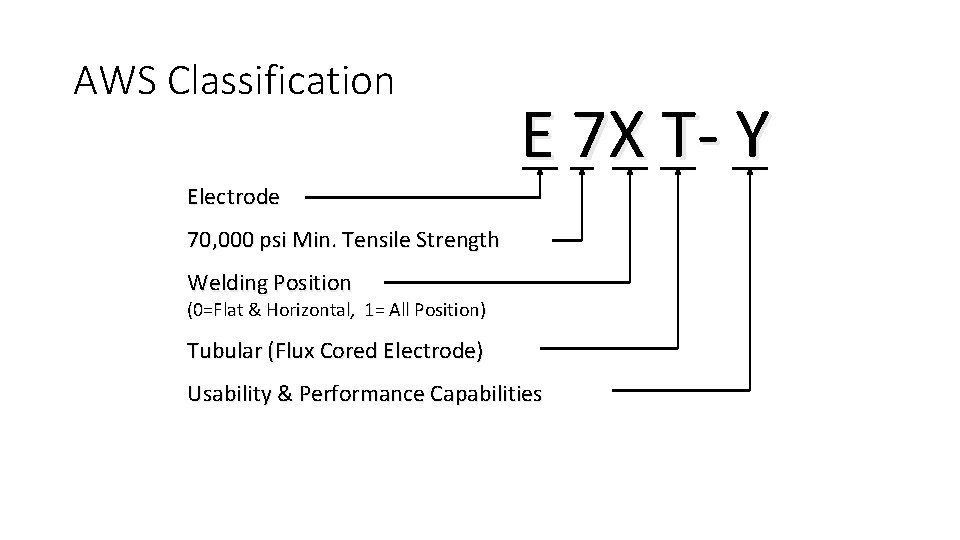
AWS Classification E 7 X T- Y Electrode 70, 000 psi Min. Tensile Strength Welding Position (0=Flat & Horizontal, 1= All Position) Tubular (Flux Cored Electrode) Usability & Performance Capabilities
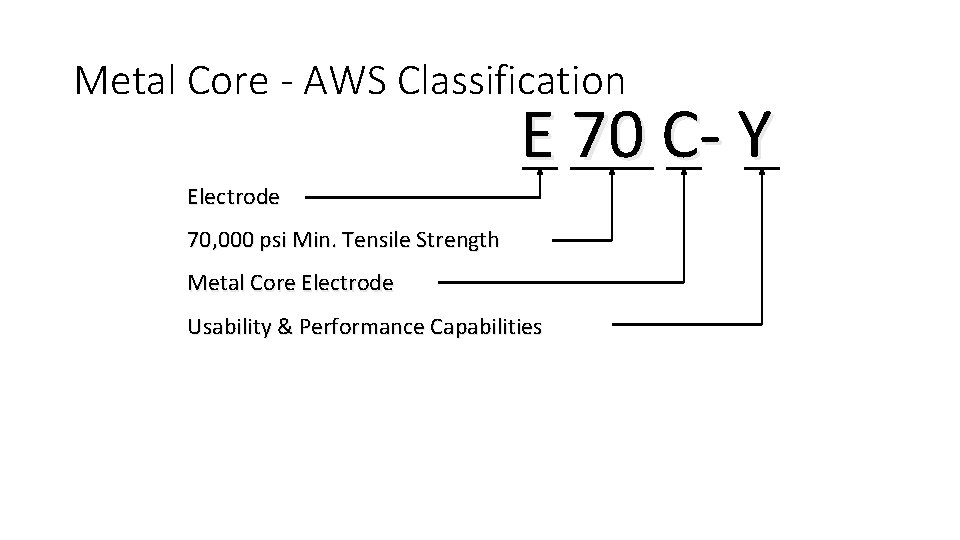
Metal Core - AWS Classification E 70 C- Y Electrode 70, 000 psi Min. Tensile Strength Metal Core Electrode Usability & Performance Capabilities
Flux Cored Arc Welding Summary
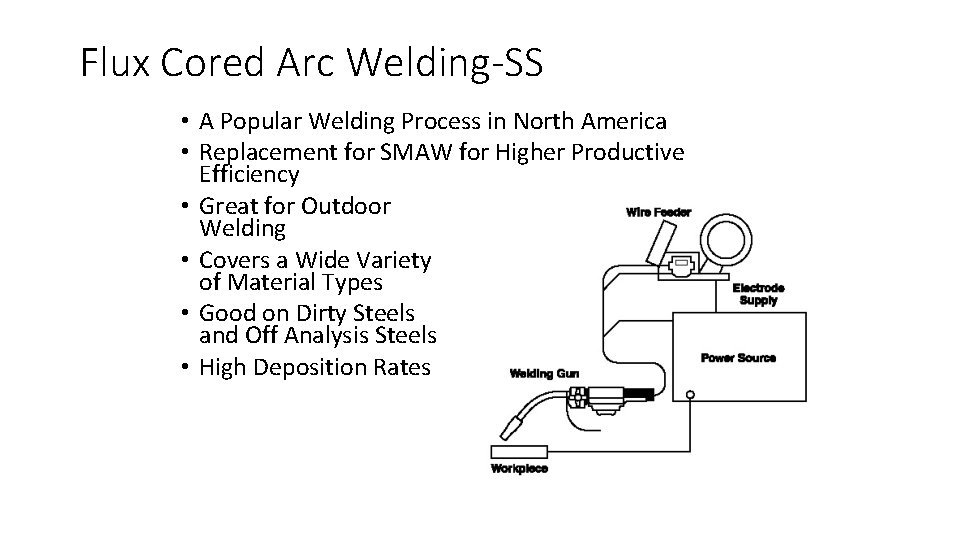
Flux Cored Arc Welding-SS • A Popular Welding Process in North America • Replacement for SMAW for Higher Productive Efficiency • Great for Outdoor Welding • Covers a Wide Variety of Material Types • Good on Dirty Steels and Off Analysis Steels • High Deposition Rates
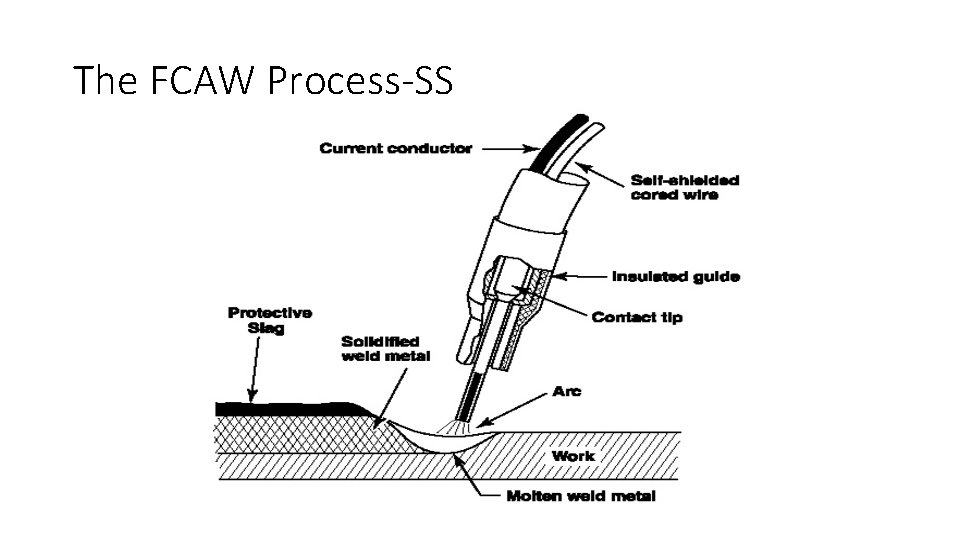
The FCAW Process-SS
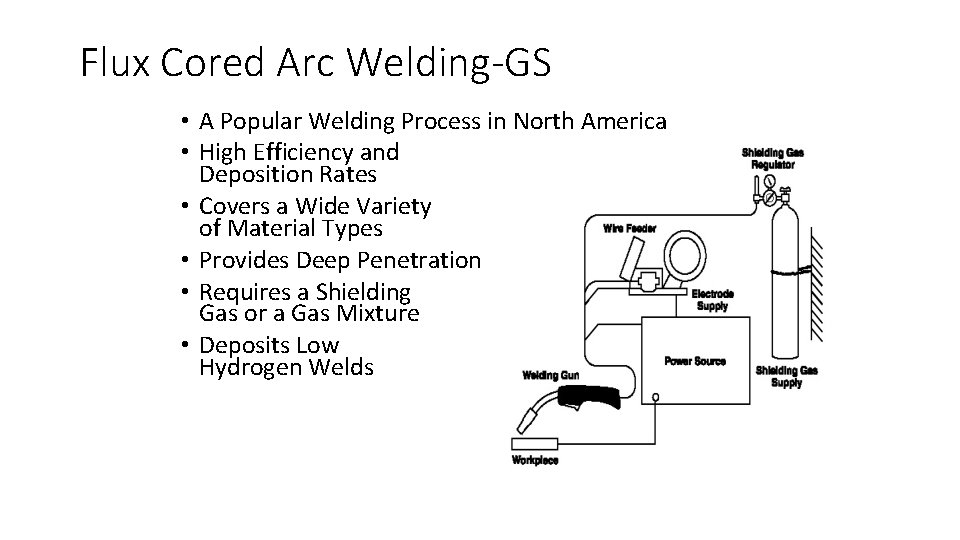
Flux Cored Arc Welding-GS • A Popular Welding Process in North America • High Efficiency and Deposition Rates • Covers a Wide Variety of Material Types • Provides Deep Penetration • Requires a Shielding Gas or a Gas Mixture • Deposits Low Hydrogen Welds

The FCAW Process-GS

Electrode Stickout

Contact Tip Position
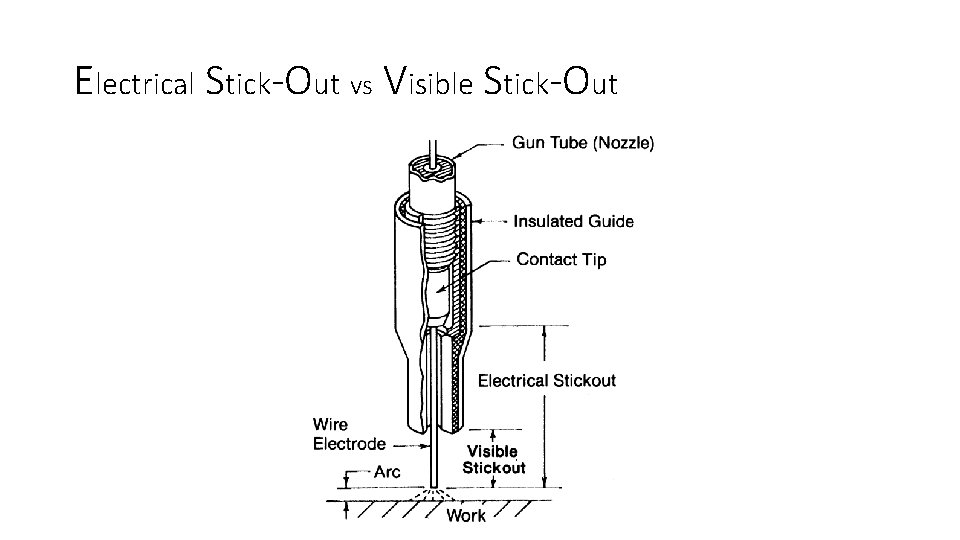
Electrical Stick-Out vs Visible Stick-Out
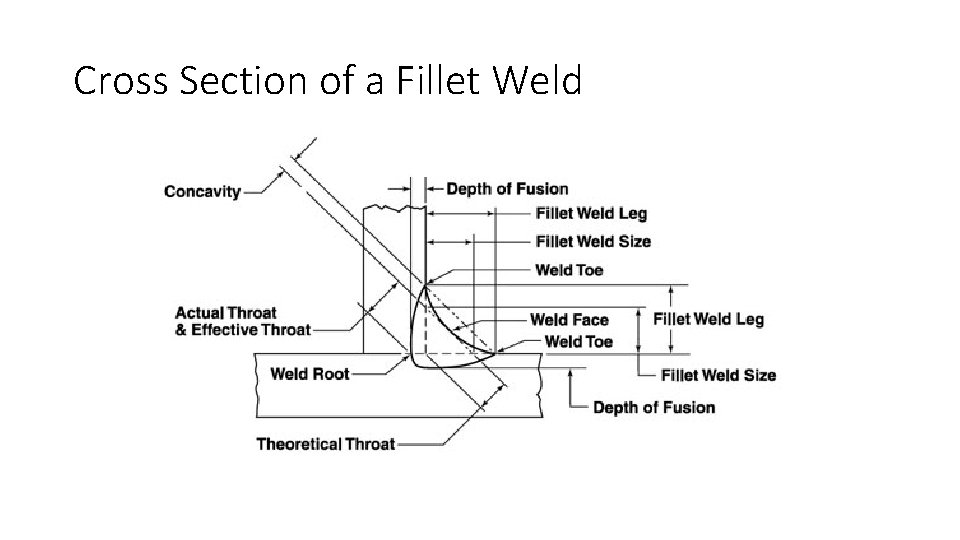
Cross Section of a Fillet Weld
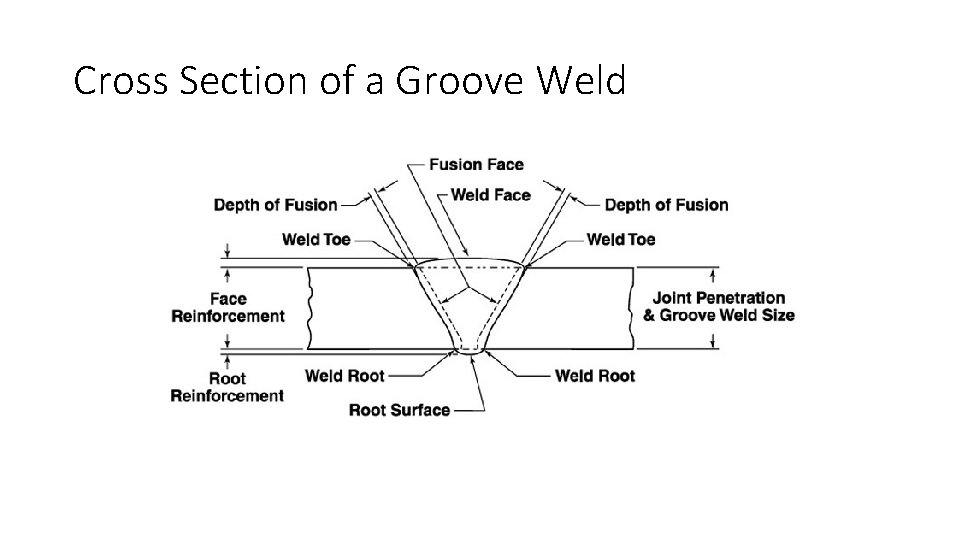
Cross Section of a Groove Weld
Flux Cored Arc Welding Definitions
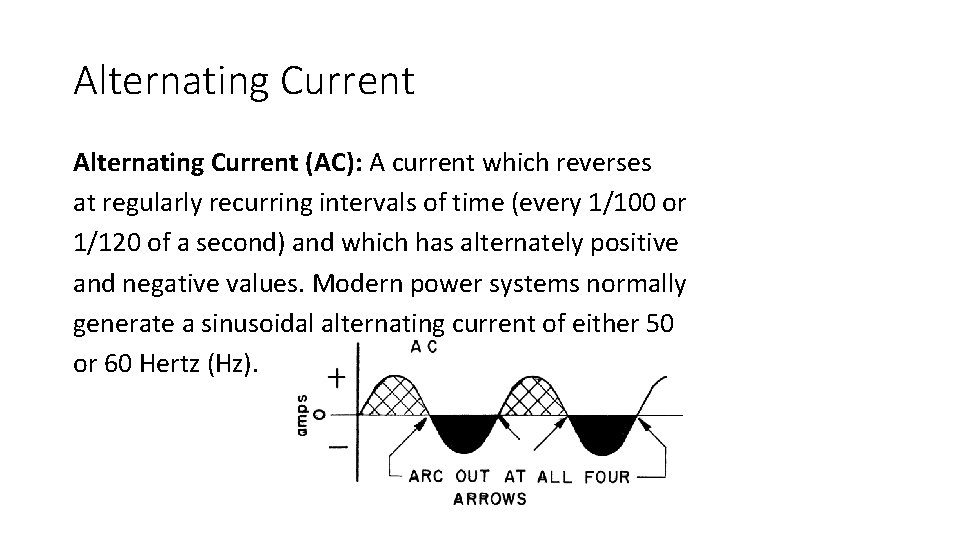
Alternating Current (AC): A current which reverses at regularly recurring intervals of time (every 1/100 or 1/120 of a second) and which has alternately positive and negative values. Modern power systems normally generate a sinusoidal alternating current of either 50 or 60 Hertz (Hz).
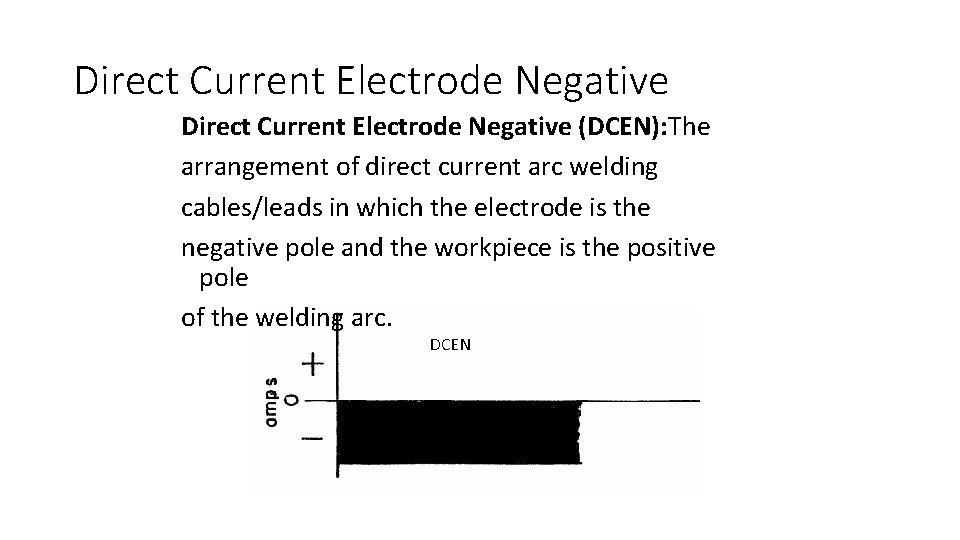
Direct Current Electrode Negative (DCEN): The arrangement of direct current arc welding cables/leads in which the electrode is the negative pole and the workpiece is the positive pole of the welding arc. DCEN
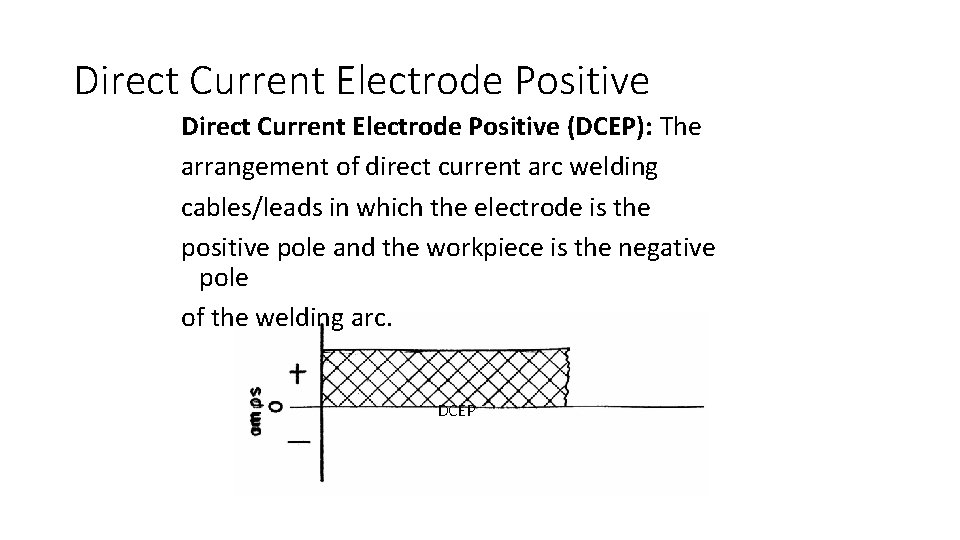
Direct Current Electrode Positive (DCEP): The arrangement of direct current arc welding cables/leads in which the electrode is the positive pole and the workpiece is the negative pole of the welding arc. DCEP
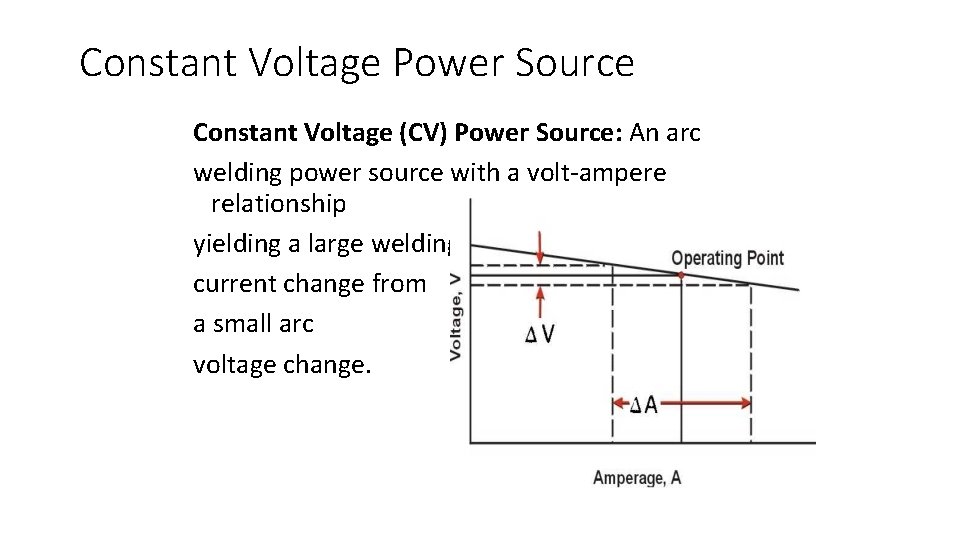
Constant Voltage Power Source Constant Voltage (CV) Power Source: An arc welding power source with a volt-ampere relationship yielding a large welding current change from a small arc voltage change.
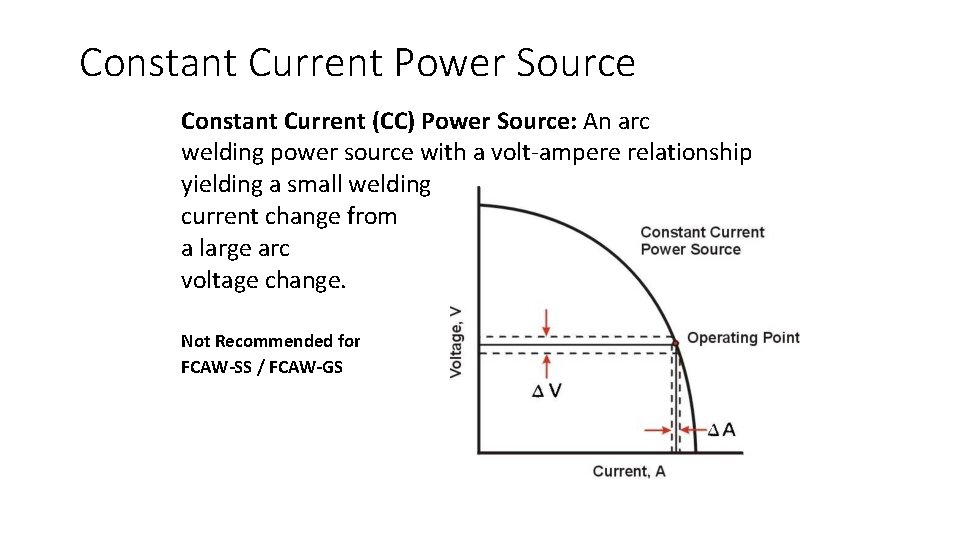
Constant Current Power Source Constant Current (CC) Power Source: An arc welding power source with a volt-ampere relationship yielding a small welding current change from a large arc voltage change. Not Recommended for FCAW-SS / FCAW-GS
- Slides: 32