
Fluvial Sequence Stratigraphy Base Level and Accommodation Aggradation
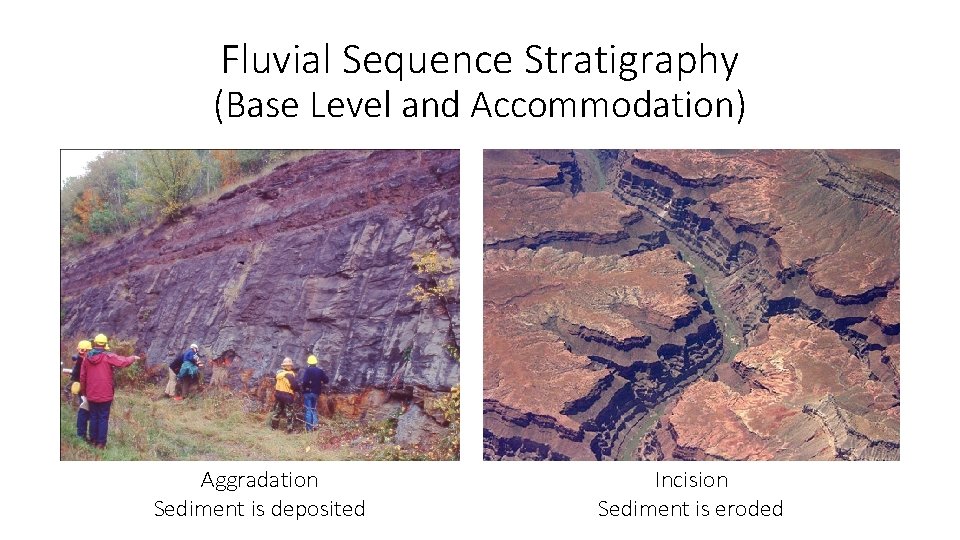
Fluvial Sequence Stratigraphy (Base Level and Accommodation) Aggradation Sediment is deposited Incision Sediment is eroded

At equilibrium, river follows graded profile controlled by elevation of source area and base level (approximately sea level) Climate (river discharge) transport capacity vs. sediment load Tectonism Eustasy Effect of eustasy decreases in upstream direction

Depositional Sequence: complete cycle of base level Initial equilibrium profile New equilibrium profile Base level fall Negative accommodation – river incises New equilibrium profile Initial equilibrium profile Base level rise Accommodation space – river aggrades

How do fluvial type, geometry, and facies differ at different parts of the base level cycle (sequence)? Fluvial type – braided or meandering? Channel geometry – isolated or amalgamated? Grain size – fine or coarse?
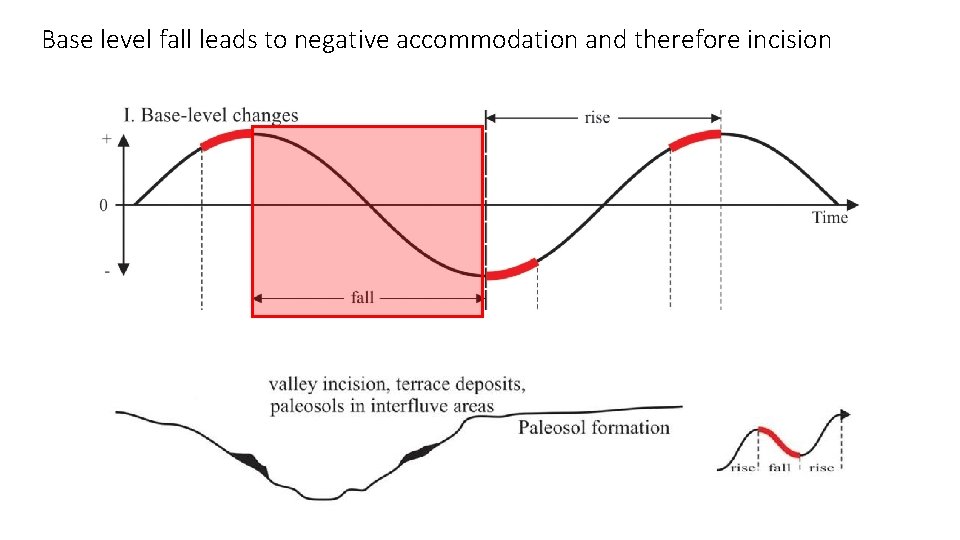
Base level fall leads to negative accommodation and therefore incision

Early parts of base level rise? Initial equilibrium profile New equilibrium profile Base level fall At the end of base level fall, equilibrium profile is at its steepest Coarse sediment available from erosion during incision
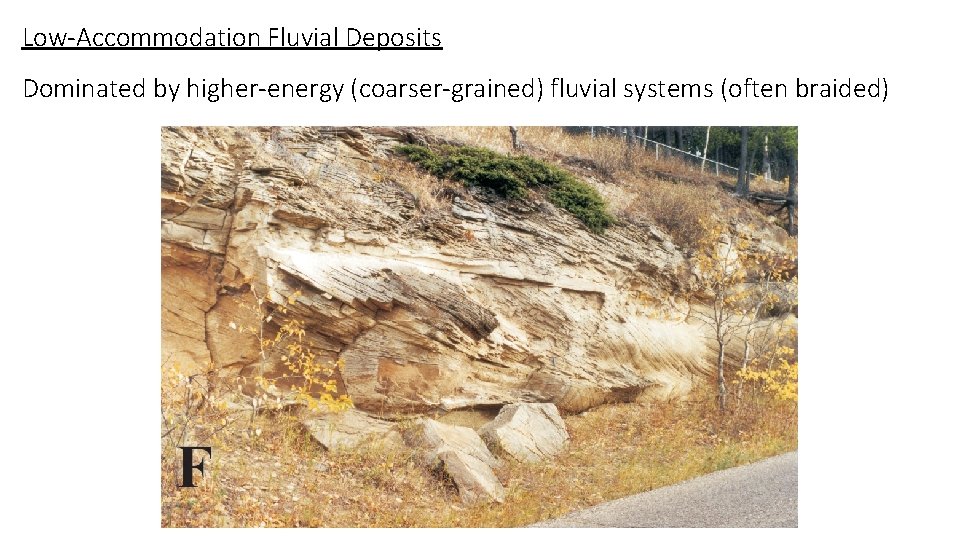
Low-Accommodation Fluvial Deposits Dominated by higher-energy (coarser-grained) fluvial systems (often braided)
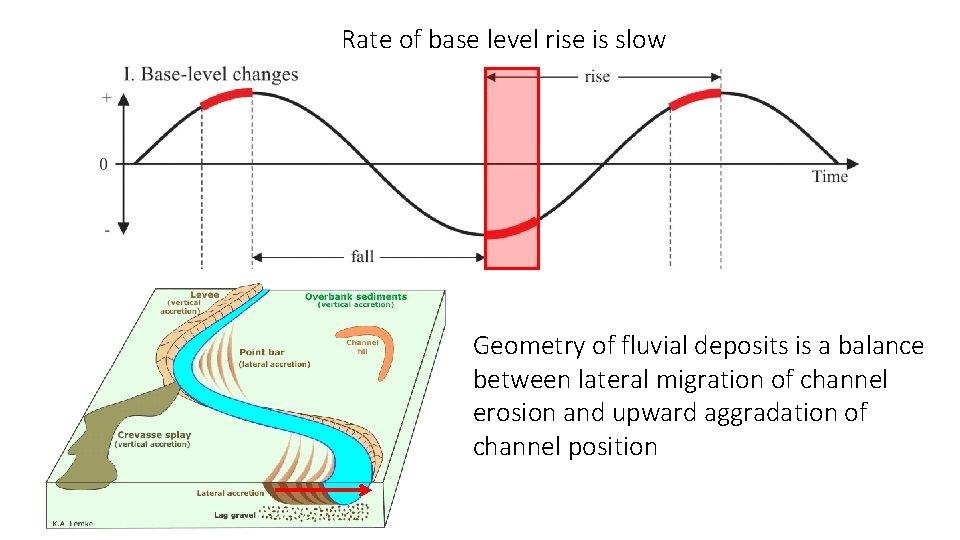
Rate of base level rise is slow Geometry of fluvial deposits is a balance between lateral migration of channel erosion and upward aggradation of channel position

Low-Accommodation Fluvial Deposits Dominated by amalgamated “multi-storey” channel-fill with few floodplain units

Rate of base level rise is fast High-Accommodation Fluvial Deposits Dominated by aggrading floodplain deposits with thin, isolated (“single storey”) channel sandstones
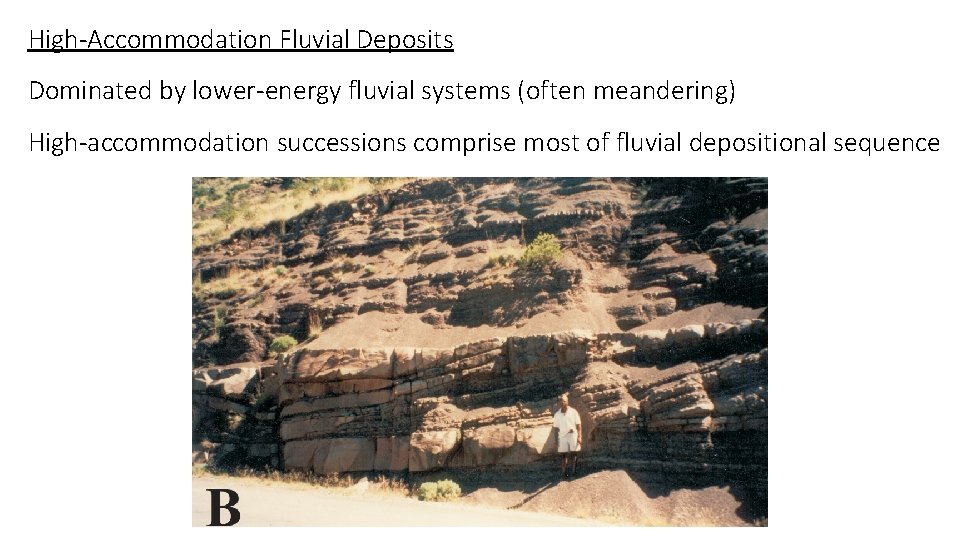
High-Accommodation Fluvial Deposits Dominated by lower-energy fluvial systems (often meandering) High-accommodation successions comprise most of fluvial depositional sequence

Equilibrium profile gradient small large Rate of accommodation 0 low high
- Slides: 12