
Fluvial Hydrology Fish Passage and Sedimentation Ryan Johnson


- Slides: 26
Fluvial Hydrology, Fish Passage, and Sedimentation Ryan Johnson Earth and Physical Science Department Western Oregon University Monmouth, Oregon Email: rjohnson 11@wou. edu
Outline �Introduction �River Hydrology § Stream Flow § Sediment Transportation �Salmonid in the Pacific Northwest § Life-Cycle �Passage Blockage �Summary
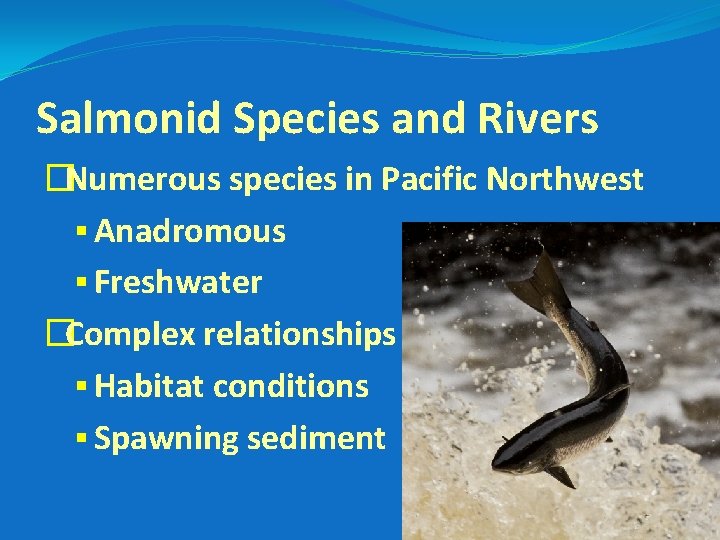
Salmonid Species and Rivers �Numerous species in Pacific Northwest § Anadromous § Freshwater �Complex relationships § Habitat conditions § Spawning sediment
RIVER HYDROLOGY
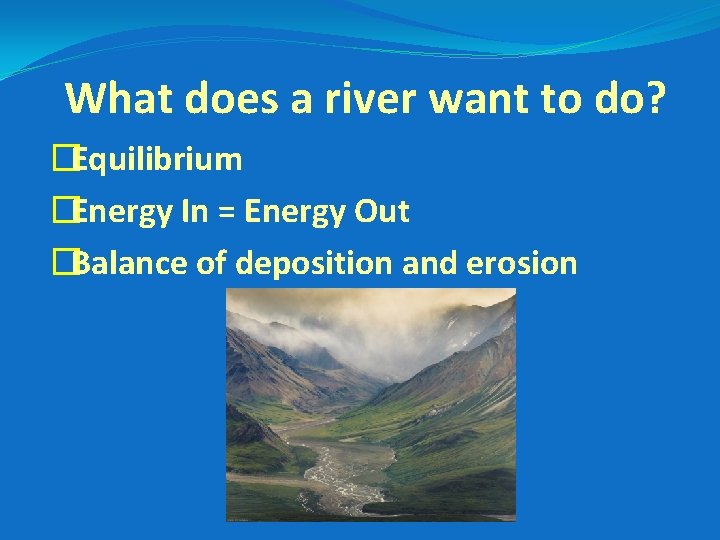
What does a river want to do? �Equilibrium �Energy In = Energy Out �Balance of deposition and erosion
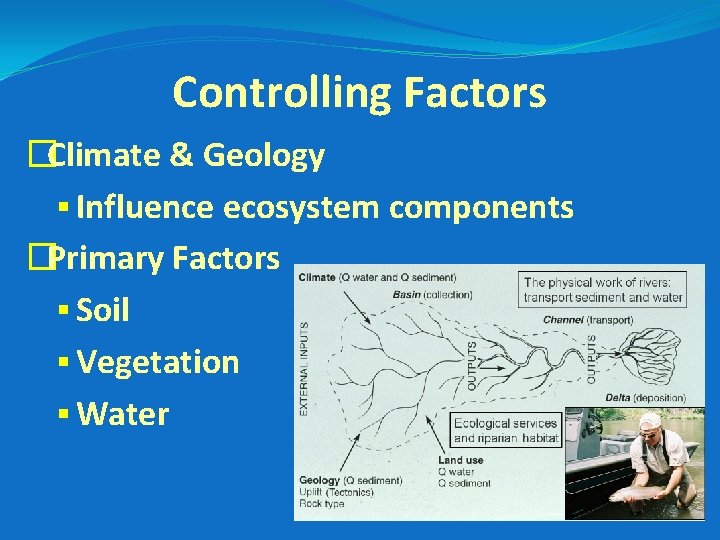
Controlling Factors �Climate & Geology § Influence ecosystem components �Primary Factors § Soil § Vegetation § Water
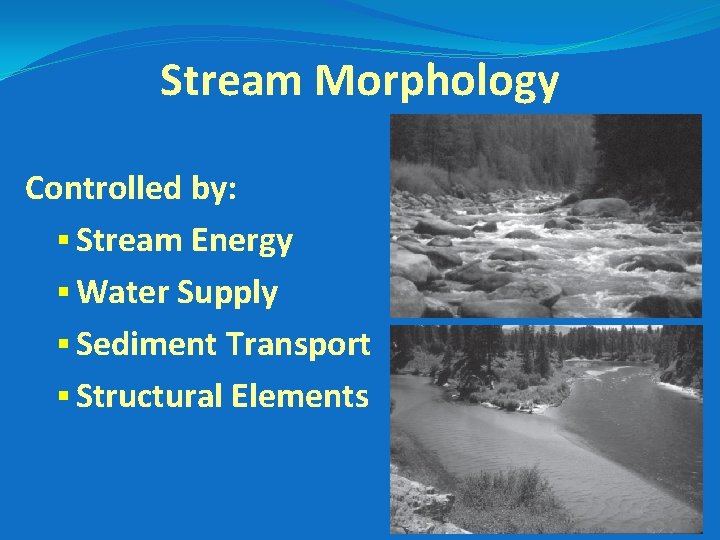
Stream Morphology Controlled by: § Stream Energy § Water Supply § Sediment Transport § Structural Elements
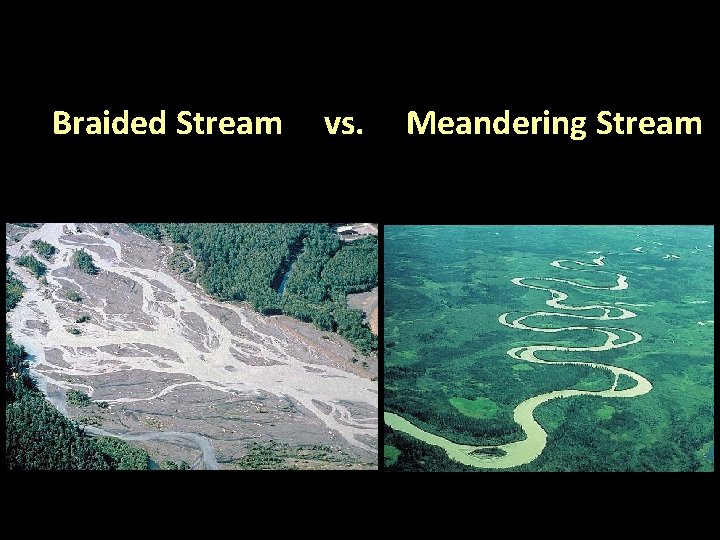
Braided Stream vs. Meandering Stream
Sediment Transport �More Energy -> Larger Caliber Sediment § Coarse gravel deposits �Less Energy -> Smaller Caliber Sediment § Fine sand/silt deposits �Sediment Traps § Creates complex energy environments
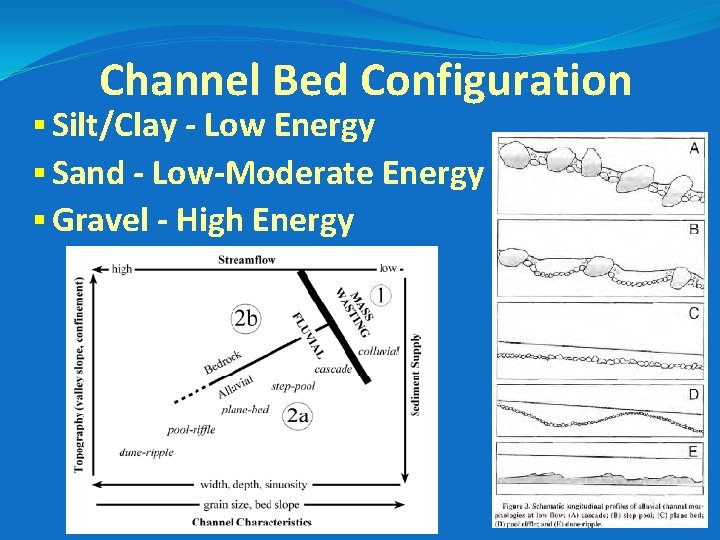
Channel Bed Configuration § Silt/Clay - Low Energy § Sand - Low-Moderate Energy § Gravel - High Energy
SALMONID IN THE PACIFIC NORTHWEST
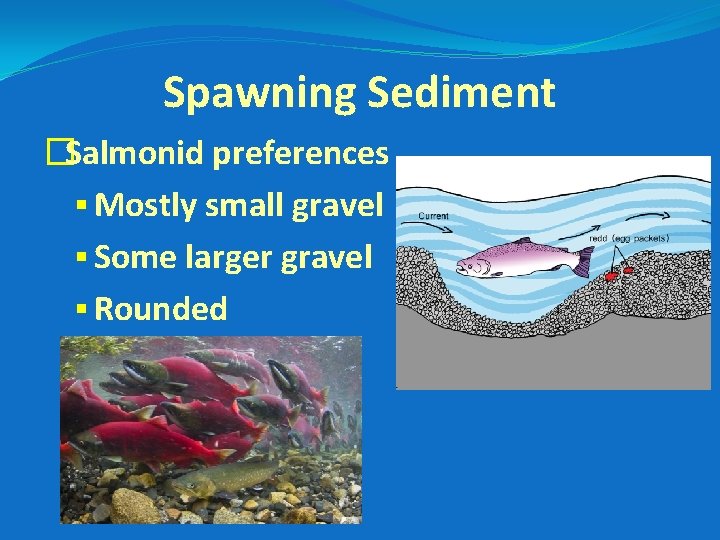
Spawning Sediment �Salmonid preferences § Mostly small gravel § Some larger gravel § Rounded
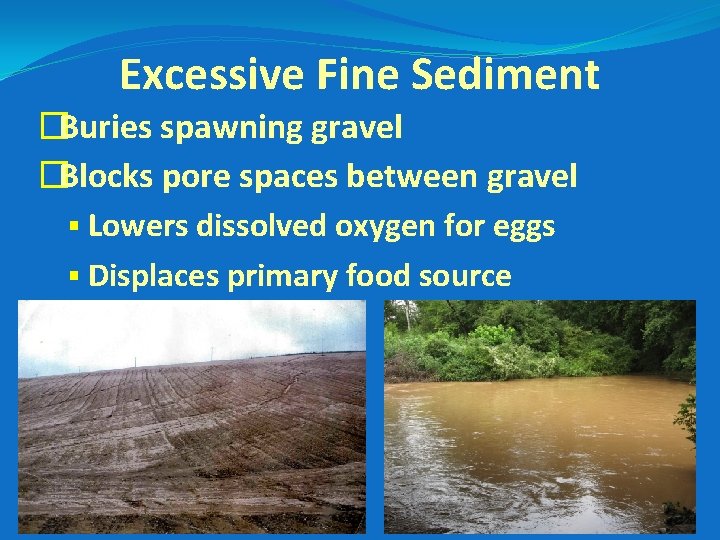
Excessive Fine Sediment �Buries spawning gravel �Blocks pore spaces between gravel § Lowers dissolved oxygen for eggs § Displaces primary food source
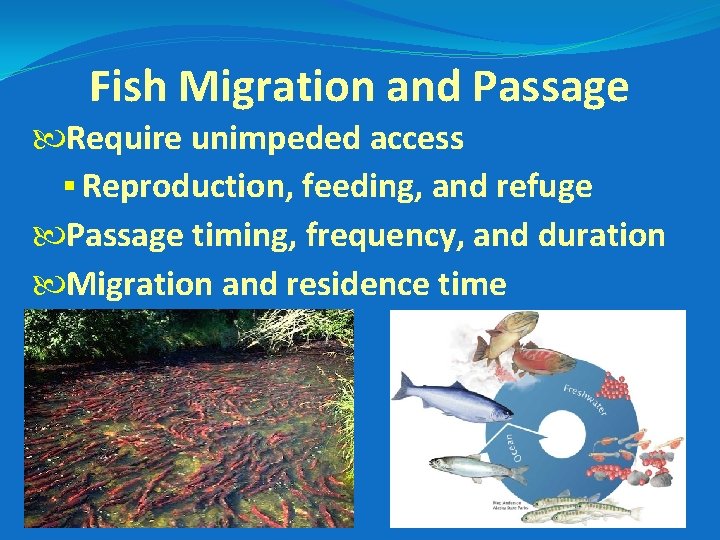
Fish Migration and Passage Require unimpeded access § Reproduction, feeding, and refuge Passage timing, frequency, and duration Migration and residence time
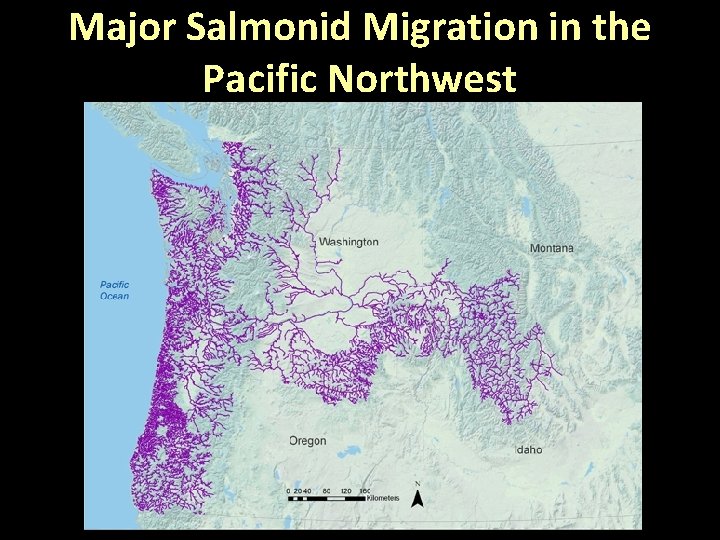
Major Salmonid Migration in the Pacific Northwest
MIGRATION BARRIERS
MIGRATION BARRIERS Stream Crossings �Humans like to traverse streams § Need to maintain river flow �Two primary solutions: § Bridges § Culverts
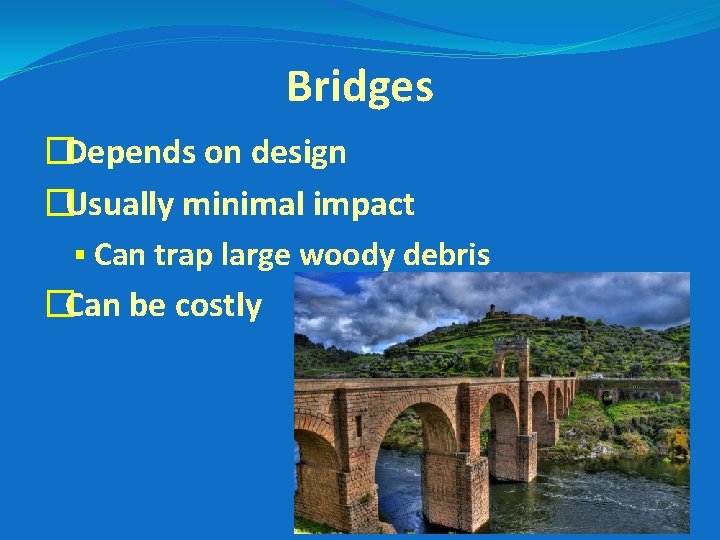
Bridges �Depends on design �Usually minimal impact § Can trap large woody debris �Can be costly
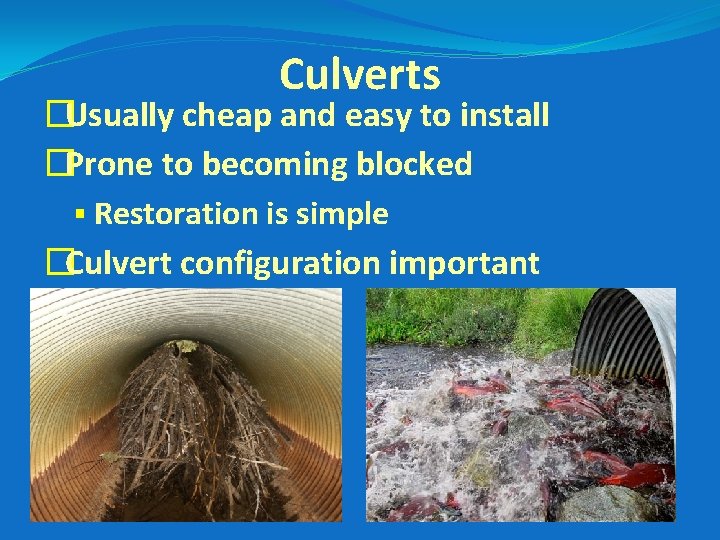
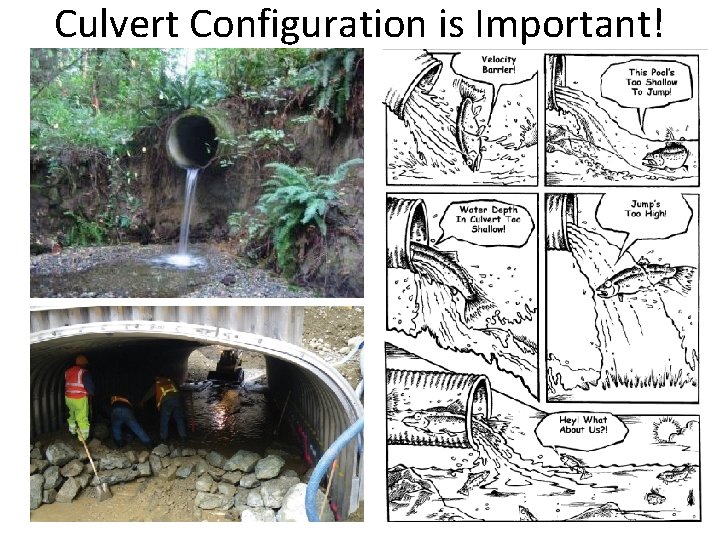
Culverts �Usually cheap and easy to install �Prone to becoming blocked § Restoration is simple �Culvert configuration important
Culvert Configuration is Important!
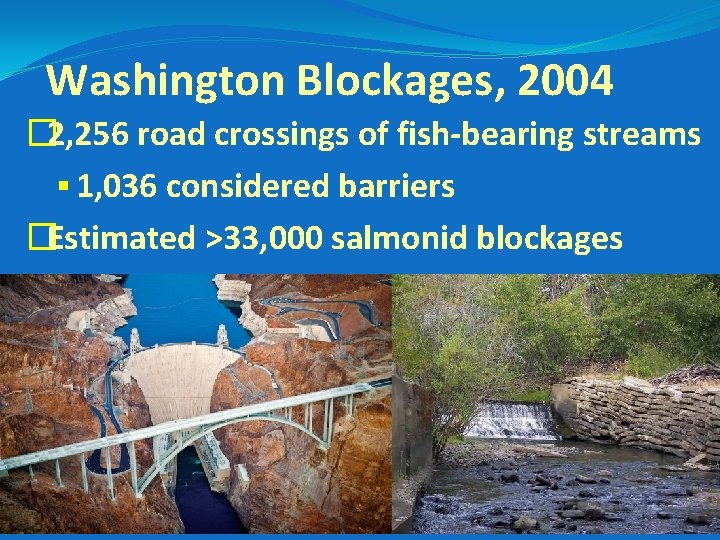
Washington Blockages, 2004 � 2, 256 road crossings of fish-bearing streams § 1, 036 considered barriers �Estimated >33, 000 salmonid blockages
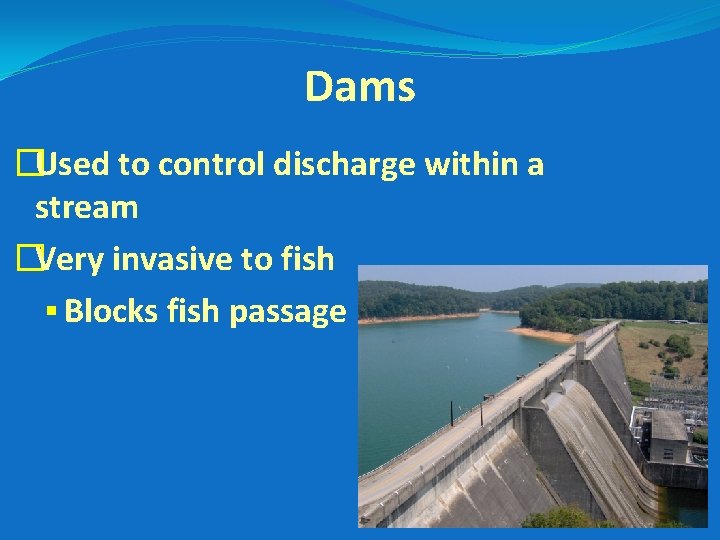
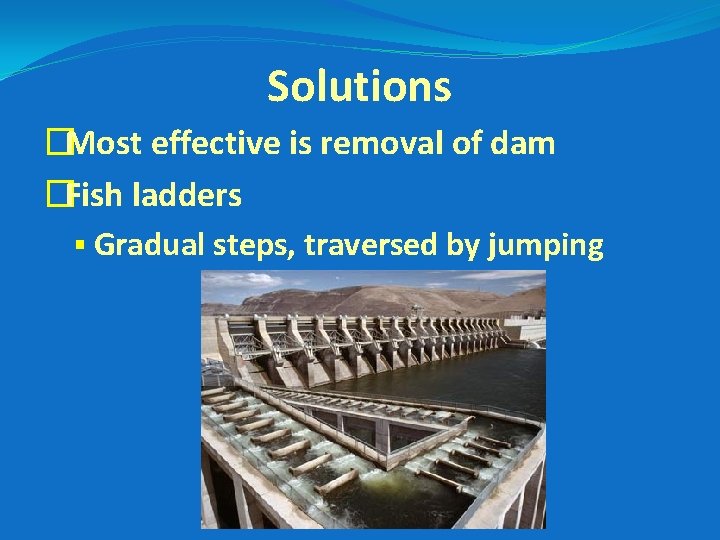
Dams �Used to control discharge within a stream �Very invasive to fish § Blocks fish passage
Solutions �Most effective is removal of dam �Fish ladders § Gradual steps, traversed by jumping
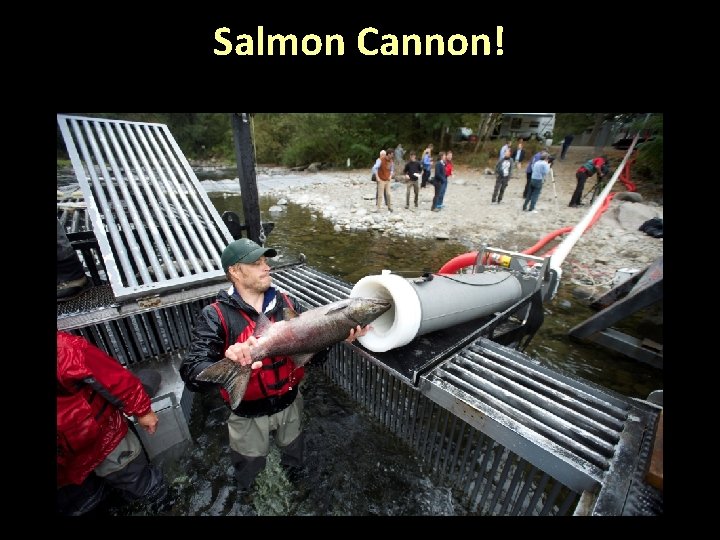
Salmon Cannon!
Summary �Stream Hydrology: energy in = energy out § Stream energy controls sedimentation �Salmonid require proper sediment for spawning �Salmonid need access to rivers and tributaries to complete life cycle �Human crossings can block fish passage if not maintained § Restoration required Youtube - Meet the Salmon Canon
Five-Minute River Interlude https: //www. youtube. com/watch? v=8 Jq 1 U 8 Jy. HW 4 Youtube - Salmon Spawning