
Fluvial Hydraulics CH3 Uniform Flow Flow in CurvesBendways
Fluvial Hydraulics CH-3 Uniform Flow – Flow in Curves/Bendways
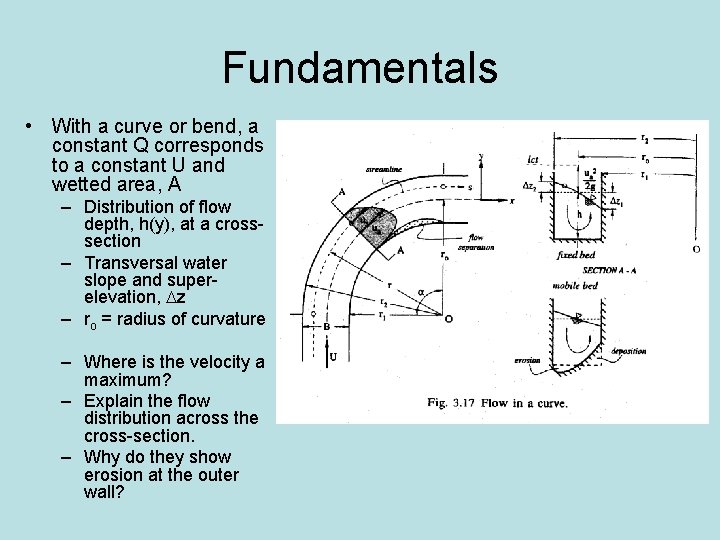
Fundamentals • With a curve or bend, a constant Q corresponds to a constant U and wetted area, A – Distribution of flow depth, h(y), at a crosssection – Transversal water slope and superelevation, Dz – ro = radius of curvature – Where is the velocity a maximum? – Explain the flow distribution across the cross-section. – Why do they show erosion at the outer wall?
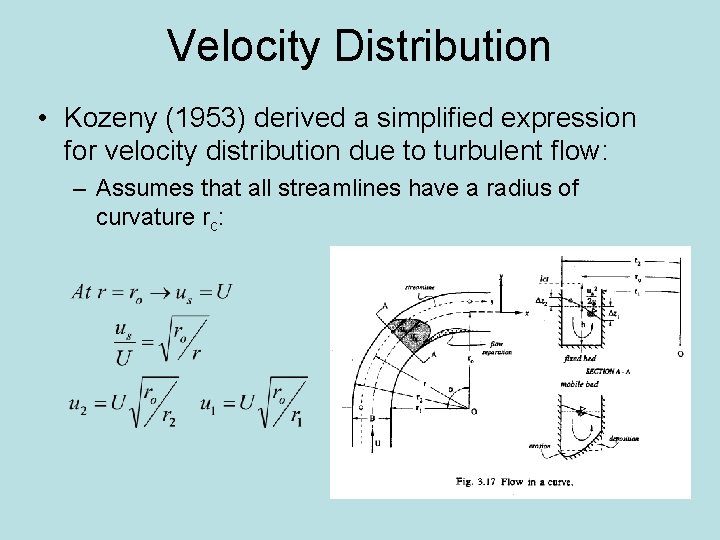
Velocity Distribution • Kozeny (1953) derived a simplified expression for velocity distribution due to turbulent flow: – Assumes that all streamlines have a radius of curvature rc:
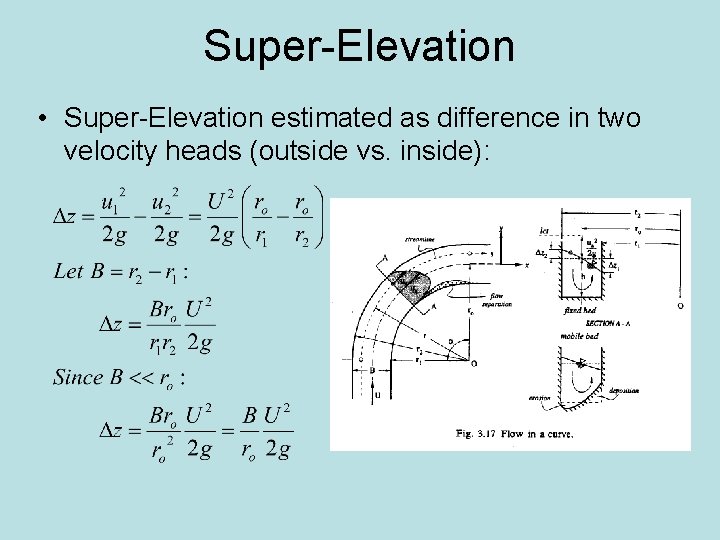
Super-Elevation • Super-Elevation estimated as difference in two velocity heads (outside vs. inside):
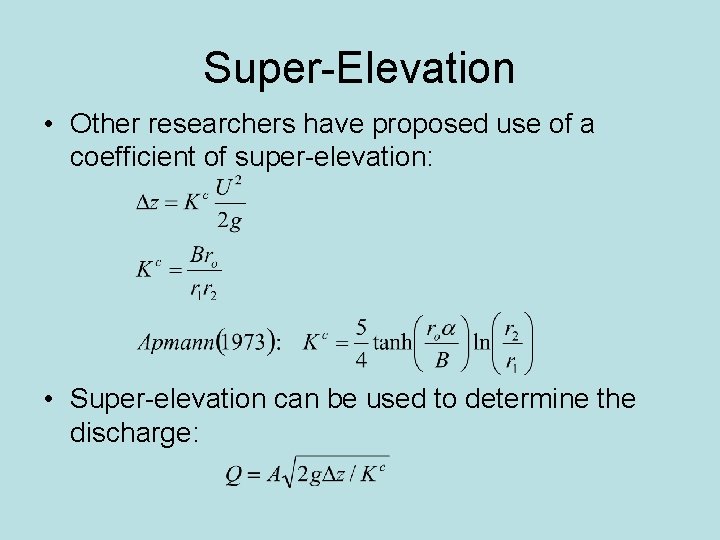
Super-Elevation • Other researchers have proposed use of a coefficient of super-elevation: • Super-elevation can be used to determine the discharge:
Cross-Waves • Usually found in supercritical flows • Caused by turning effect of the curved walls, which does not act equally on all streamlines – Outer wall turns inward to the flow – Inner wall turns away from the flow
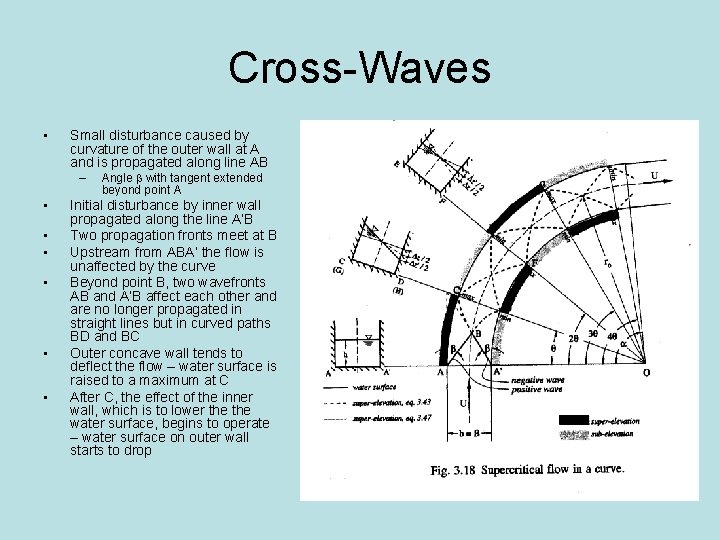
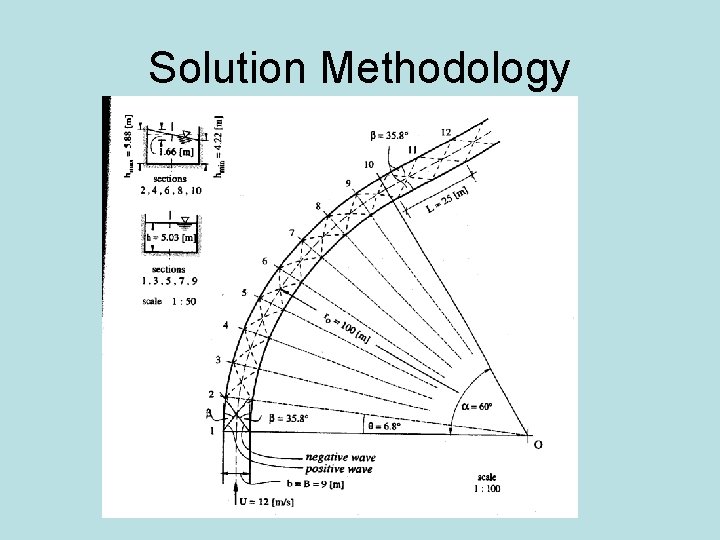
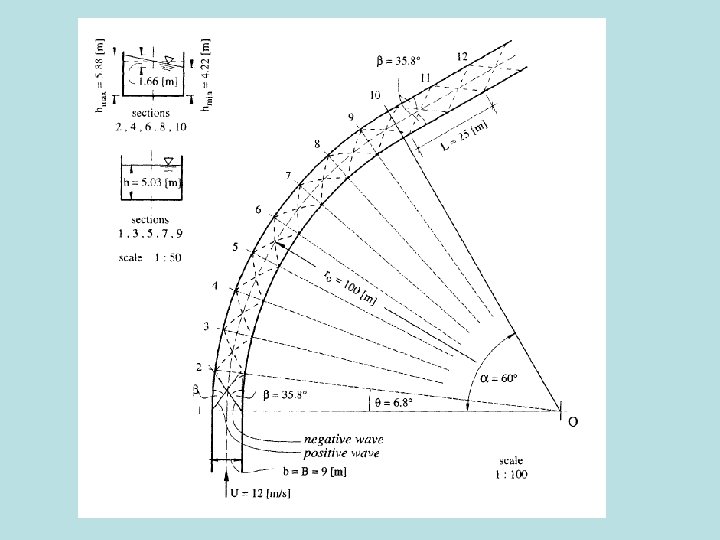
Cross-Waves • Small disturbance caused by curvature of the outer wall at A and is propagated along line AB – • • • Angle b with tangent extended beyond point A Initial disturbance by inner wall propagated along the line A’B Two propagation fronts meet at B Upstream from ABA’ the flow is unaffected by the curve Beyond point B, two wavefronts AB and A’B affect each other and are no longer propagated in straight lines but in curved paths BD and BC Outer concave wall tends to deflect the flow – water surface is raised to a maximum at C After C, the effect of the inner wall, which is to lower the water surface, begins to operate – water surface on outer wall starts to drop
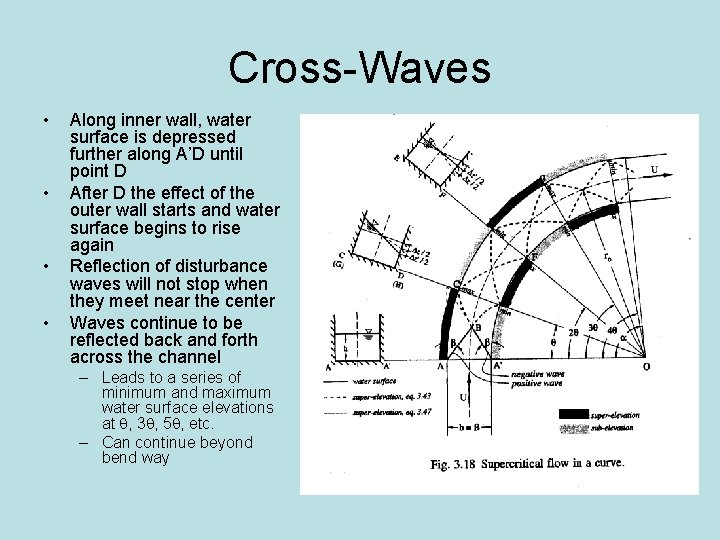
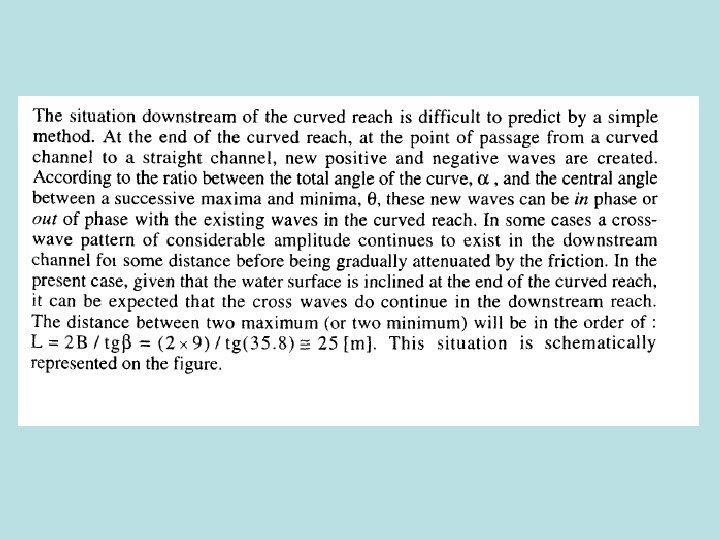
Cross-Waves • • Along inner wall, water surface is depressed further along A’D until point D After D the effect of the outer wall starts and water surface begins to rise again Reflection of disturbance waves will not stop when they meet near the center Waves continue to be reflected back and forth across the channel – Leads to a series of minimum and maximum water surface elevations at q, 3 q, 5 q, etc. – Can continue beyond bend way
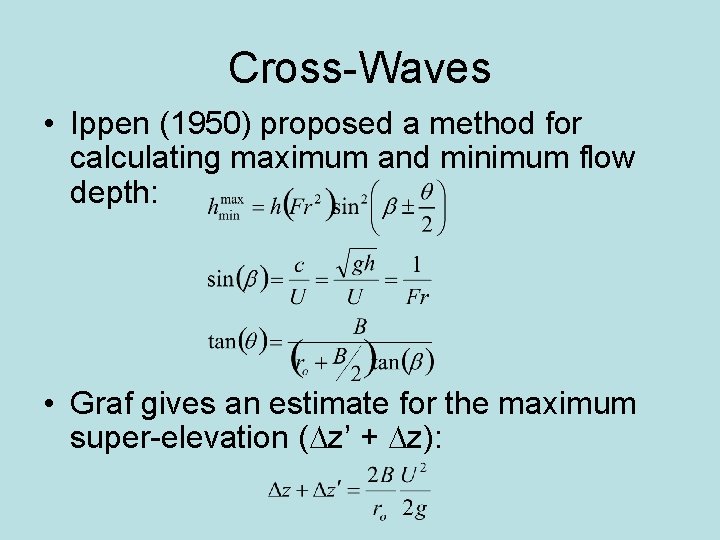
Cross-Waves • Ippen (1950) proposed a method for calculating maximum and minimum flow depth: • Graf gives an estimate for the maximum super-elevation (Dz’ + Dz):
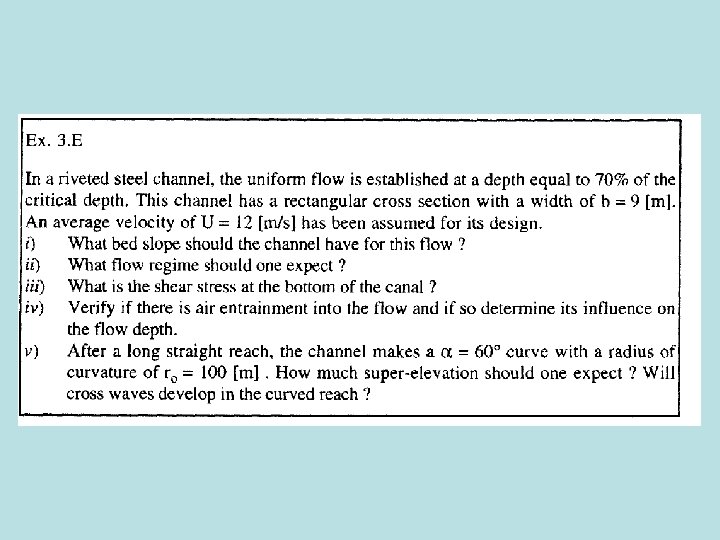
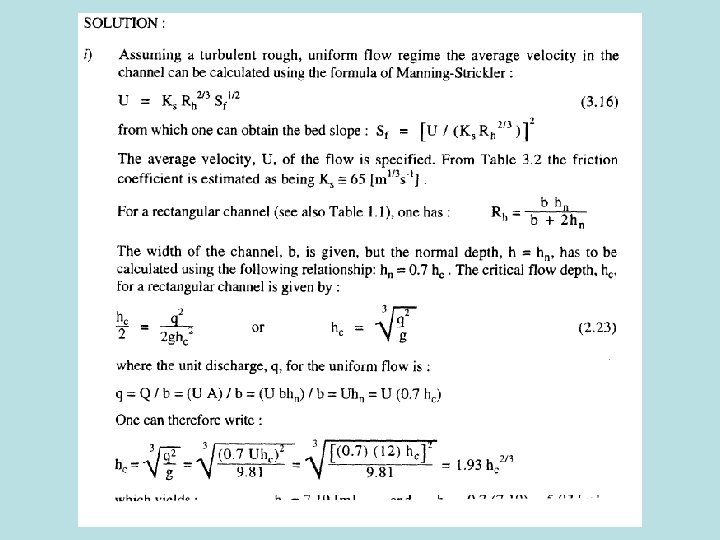
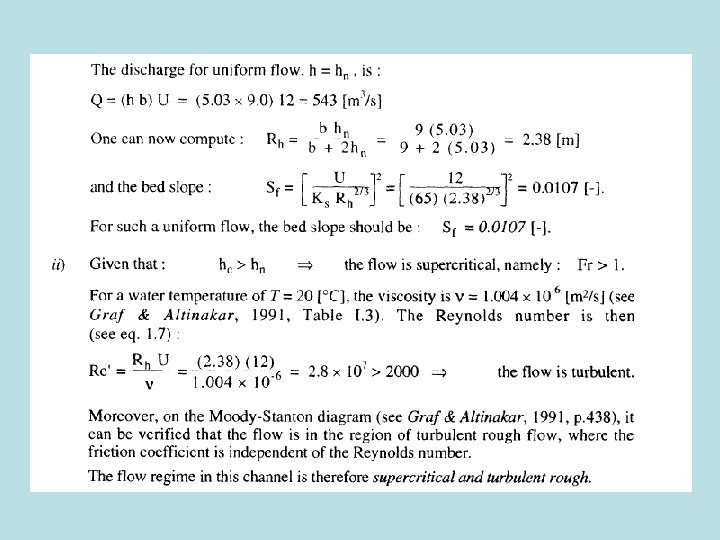
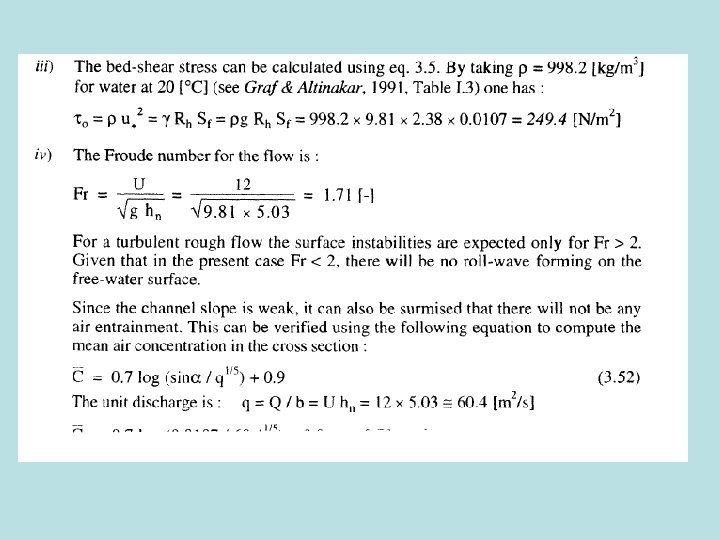
Example 3. E - Graf Assume a channel with uniform flow at a depth of 5. 03 m. Channel is rectangular with a width of 9 m and average velocity of 12 m/s. After a straight reach, the channel makes an a = 60 o curve with ro = 100 m. How much super-elevation is expected?
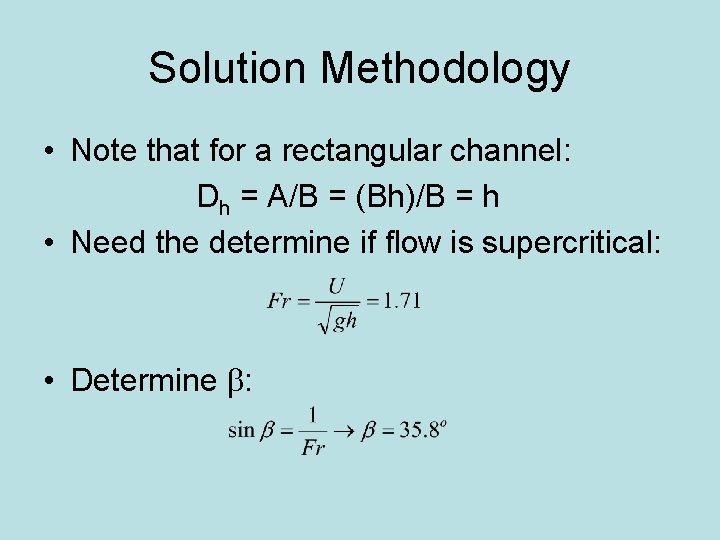
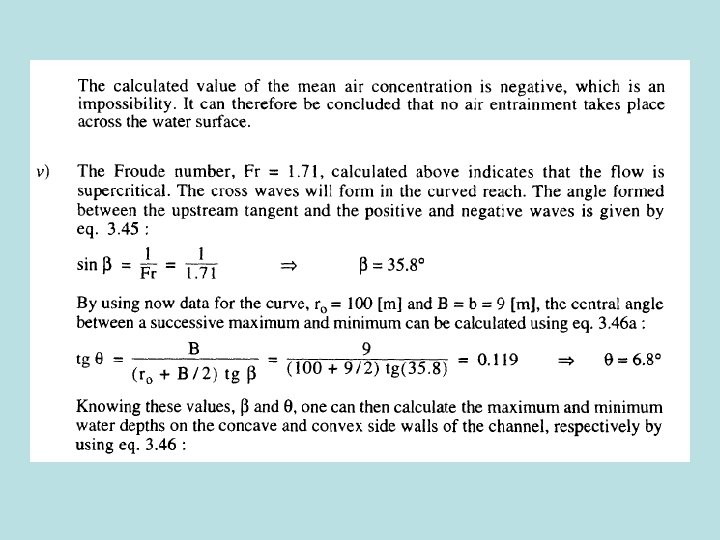
Solution Methodology • Note that for a rectangular channel: Dh = A/B = (Bh)/B = h • Need the determine if flow is supercritical: • Determine b:
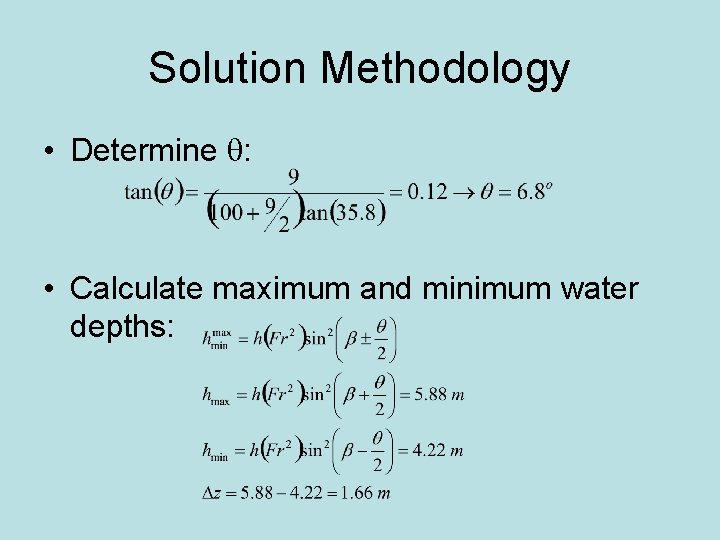
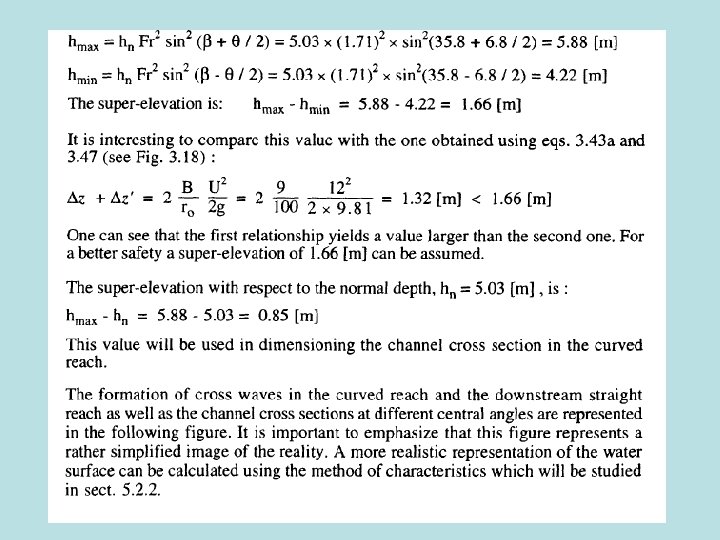
Solution Methodology • Determine q: • Calculate maximum and minimum water depths:
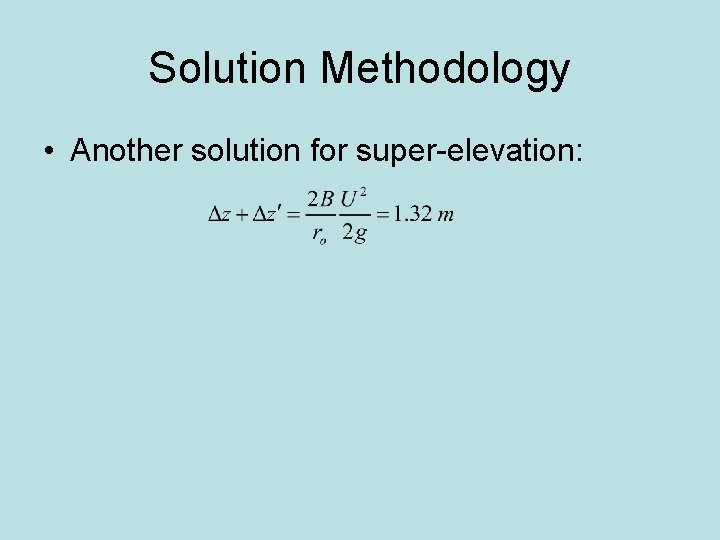
Solution Methodology • Another solution for super-elevation:
Solution Methodology
- Slides: 22