
Fluoroscopy Authorization and Inspection of Radiation Sources in
- Slides: 12
Fluoroscopy
Authorization and Inspection of Radiation Sources in Diagnostic and Interventional Radiology Module 2. 4 Objective • To become familiar with of fluoroscopy equipment; • To become familiar with specific radiation risks associated with this type of equipment. 2
Authorization and Inspection of Radiation Sources in Diagnostic and Interventional Radiology Module 2. 4 Contents • Description of fluoroscopy x-ray systems. • Equipment malfunction affecting radiation protection. 3
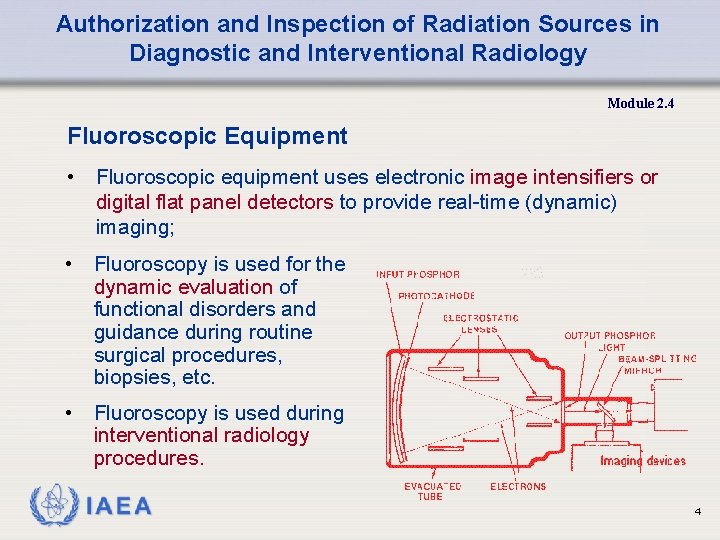
Authorization and Inspection of Radiation Sources in Diagnostic and Interventional Radiology Module 2. 4 Fluoroscopic Equipment • Fluoroscopic equipment uses electronic image intensifiers or digital flat panel detectors to provide real-time (dynamic) imaging; • Fluoroscopy is used for the dynamic evaluation of functional disorders and guidance during routine surgical procedures, biopsies, etc. • Fluoroscopy is used during interventional radiology procedures. 4
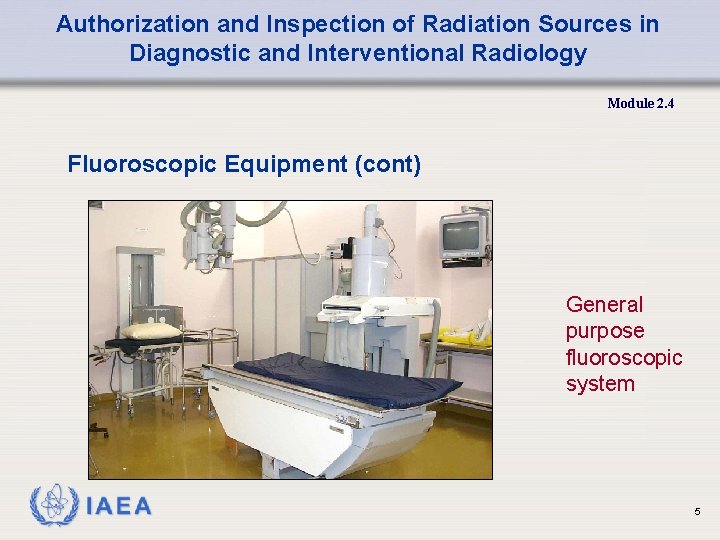
Authorization and Inspection of Radiation Sources in Diagnostic and Interventional Radiology Module 2. 4 Fluoroscopic Equipment (cont) General purpose fluoroscopic system 5
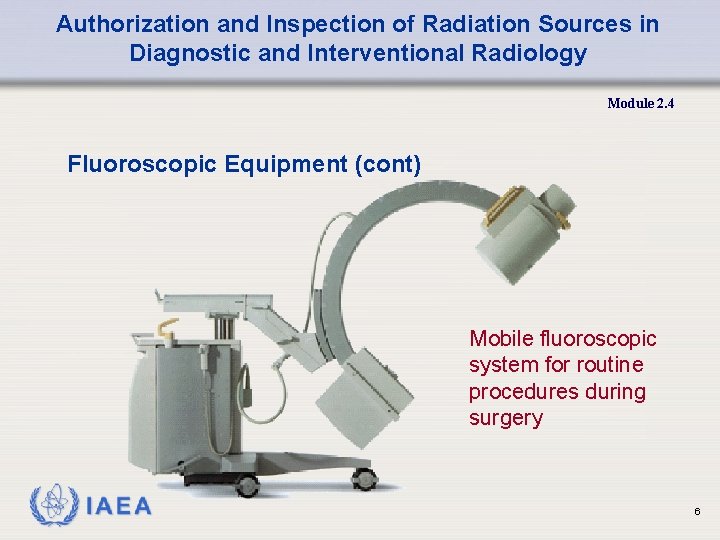
Authorization and Inspection of Radiation Sources in Diagnostic and Interventional Radiology Module 2. 4 Fluoroscopic Equipment (cont) Mobile fluoroscopic system for routine procedures during surgery 6
Authorization and Inspection of Radiation Sources in Diagnostic and Interventional Radiology Module 2. 4 Fluoroscopic Equipment (cont) All fluoroscopic units shall use an image intensifier or digital flat panel detector, and: • shall have an exposure control switch that energises the x-ray tube only when continually pressed (i. e. a dead man control); • should allow the user to choose between continuous or pulsed x-ray generation. 7
Authorization and Inspection of Radiation Sources in Diagnostic and Interventional Radiology Module 2. 4 Fluoroscopic Equipment (cont) Direct fluoroscopy should no longer be used. • “Direct” fluoroscopy does not use electronic image amplification. The real-time image is viewed on a fluorescent screen in a completely darkened room and requires the fluoroscopist to dark adapt for approximately 20 minutes before the examination. • Improper attention to these requirements can significantly increase the radiation dose to patients and users. 8
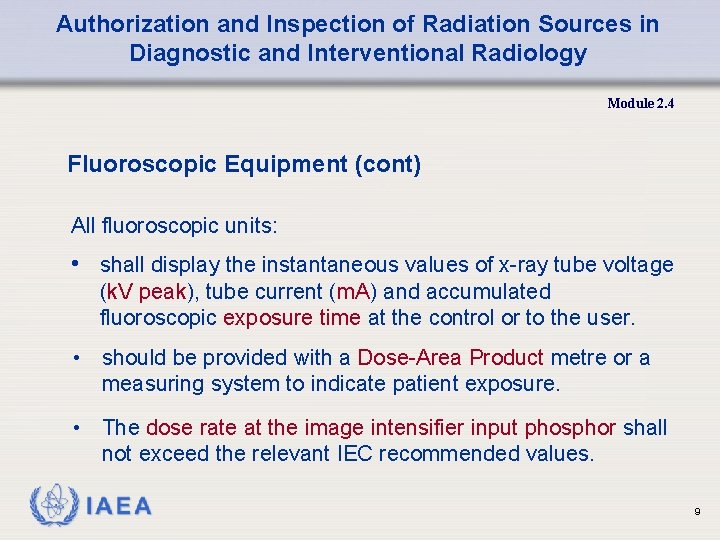
Authorization and Inspection of Radiation Sources in Diagnostic and Interventional Radiology Module 2. 4 Fluoroscopic Equipment (cont) All fluoroscopic units: • shall display the instantaneous values of x-ray tube voltage (k. V peak), tube current (m. A) and accumulated fluoroscopic exposure time at the control or to the user. • should be provided with a Dose-Area Product metre or a measuring system to indicate patient exposure. • The dose rate at the image intensifier input phosphor shall not exceed the relevant IEC recommended values. 9
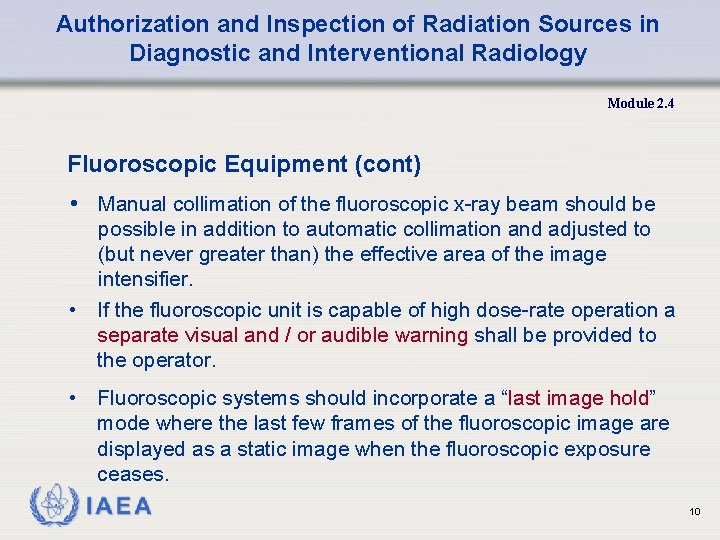
Authorization and Inspection of Radiation Sources in Diagnostic and Interventional Radiology Module 2. 4 Fluoroscopic Equipment (cont) • Manual collimation of the fluoroscopic x-ray beam should be possible in addition to automatic collimation and adjusted to (but never greater than) the effective area of the image intensifier. • If the fluoroscopic unit is capable of high dose-rate operation a separate visual and / or audible warning shall be provided to the operator. • Fluoroscopic systems should incorporate a “last image hold” mode where the last few frames of the fluoroscopic image are displayed as a static image when the fluoroscopic exposure ceases. 10
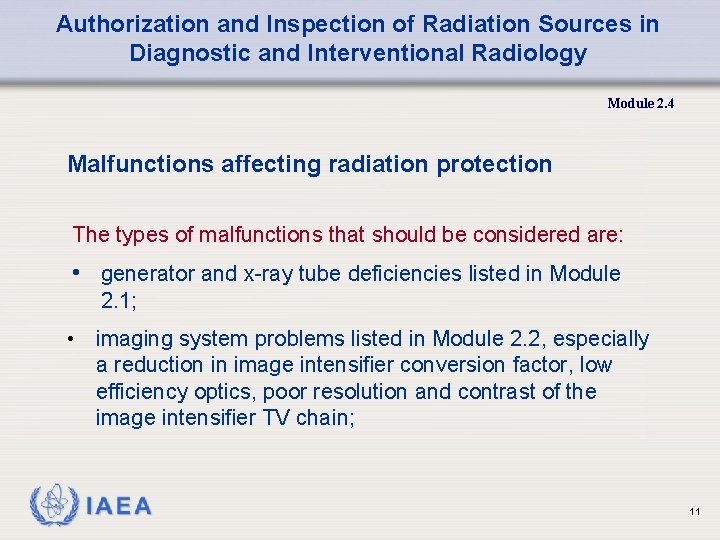
Authorization and Inspection of Radiation Sources in Diagnostic and Interventional Radiology Module 2. 4 Malfunctions affecting radiation protection The types of malfunctions that should be considered are: • generator and x-ray tube deficiencies listed in Module 2. 1; • imaging system problems listed in Module 2. 2, especially a reduction in image intensifier conversion factor, low efficiency optics, poor resolution and contrast of the image intensifier TV chain; 11
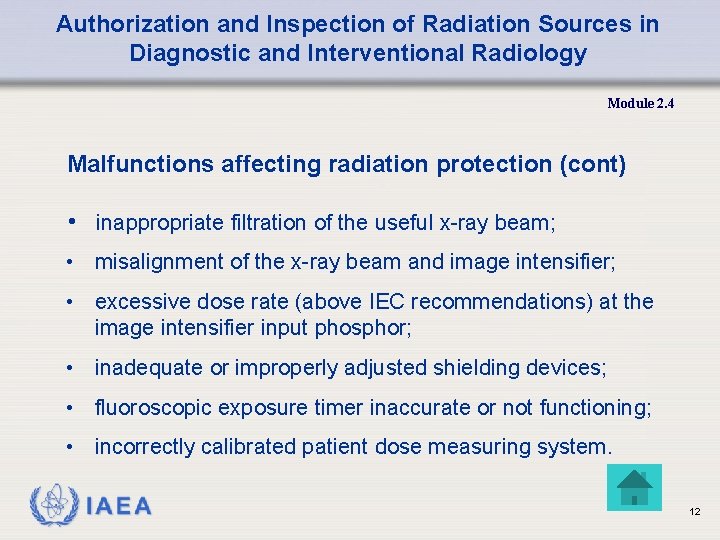
Authorization and Inspection of Radiation Sources in Diagnostic and Interventional Radiology Module 2. 4 Malfunctions affecting radiation protection (cont) • inappropriate filtration of the useful x-ray beam; • misalignment of the x-ray beam and image intensifier; • excessive dose rate (above IEC recommendations) at the image intensifier input phosphor; • inadequate or improperly adjusted shielding devices; • fluoroscopic exposure timer inaccurate or not functioning; • incorrectly calibrated patient dose measuring system. 12