
Fluid Statics Pressure is the force per unit

- Slides: 12
Fluid Statics
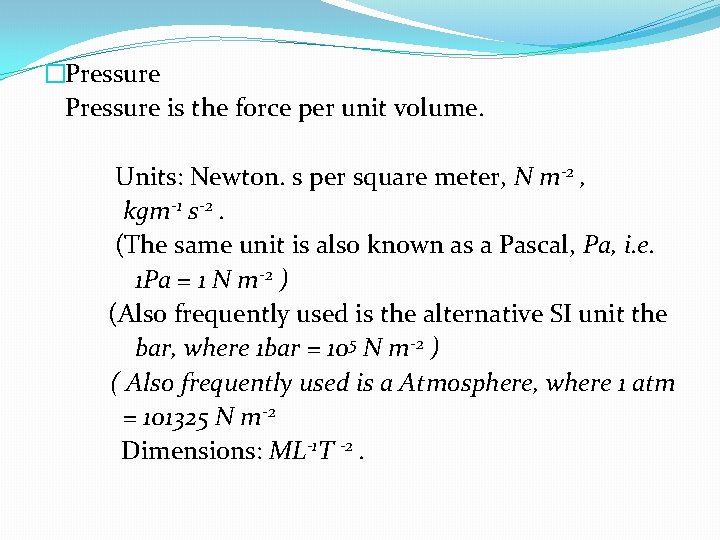
�Pressure is the force per unit volume. Units: Newton. s per square meter, N m-2 , kgm-1 s-2. (The same unit is also known as a Pascal, Pa, i. e. 1 Pa = 1 N m-2 ) (Also frequently used is the alternative SI unit the bar, where 1 bar = 105 N m-2 ) ( Also frequently used is a Atmosphere, where 1 atm = 101325 N m-2 Dimensions: ML-1 T -2.
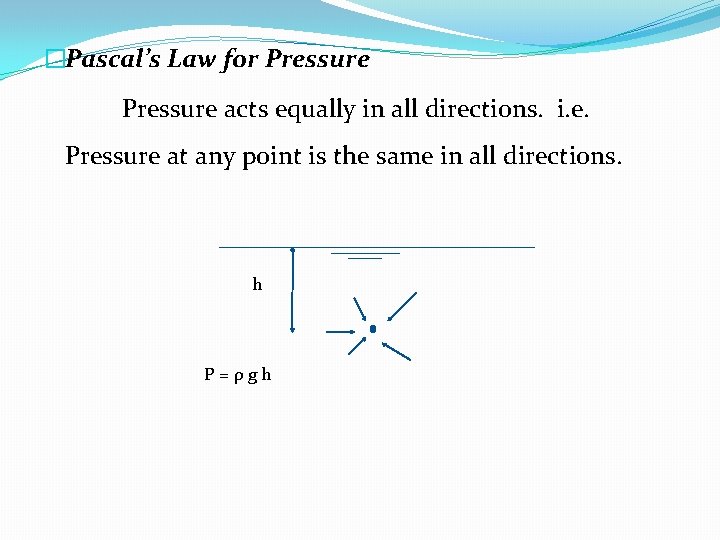
�Pascal’s Law for Pressure acts equally in all directions. i. e. Pressure at any point is the same in all directions. h P=ρgh
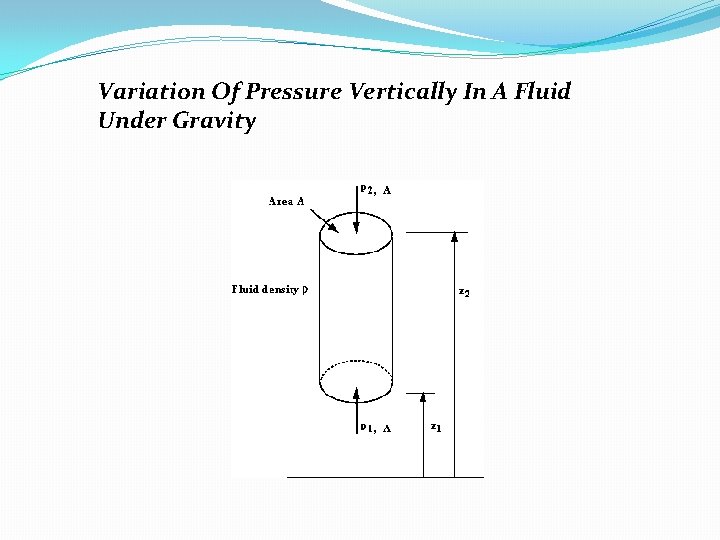
Variation Of Pressure Vertically In A Fluid Under Gravity
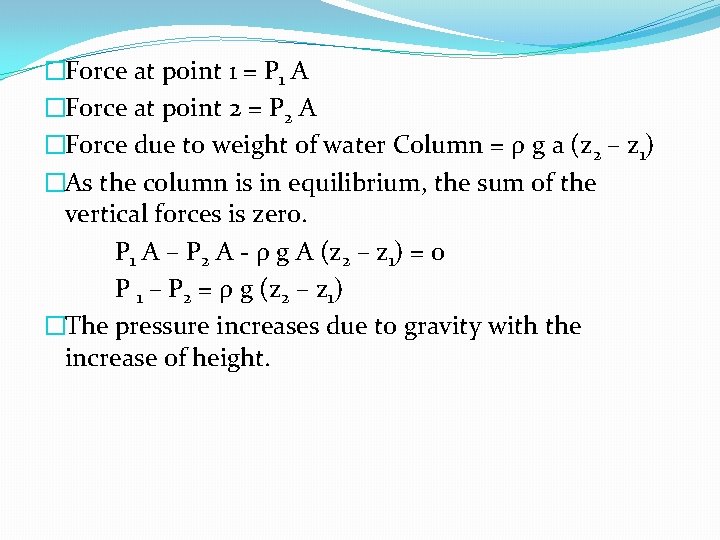
�Force at point 1 = P 1 A �Force at point 2 = P 2 A �Force due to weight of water Column = ρ g a (z 2 – z 1) �As the column is in equilibrium, the sum of the vertical forces is zero. P 1 A – P 2 A - ρ g A (z 2 – z 1) = 0 P 1 – P 2 = ρ g (z 2 – z 1) �The pressure increases due to gravity with the increase of height.
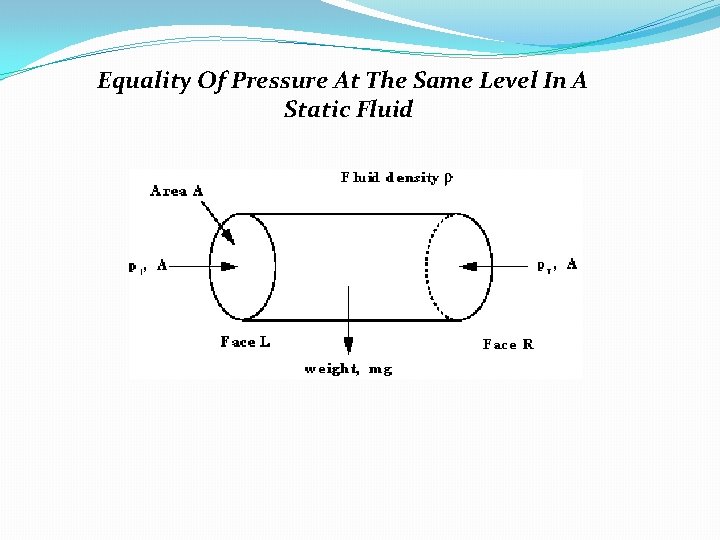
Equality Of Pressure At The Same Level In A Static Fluid
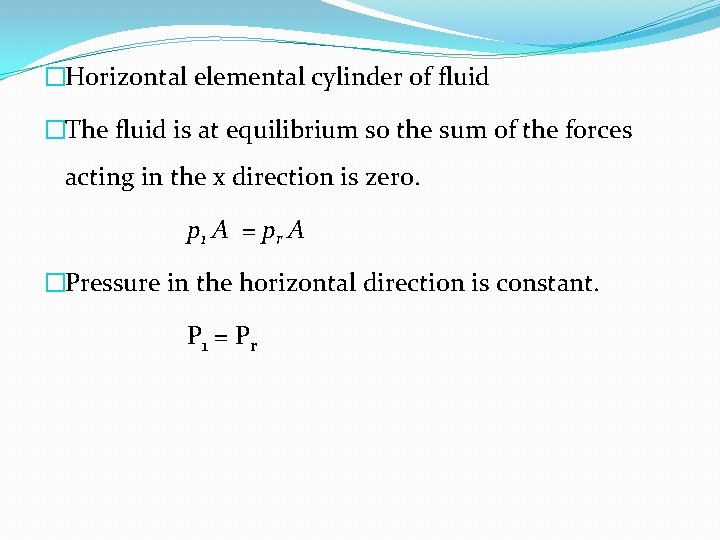
�Horizontal elemental cylinder of fluid �The fluid is at equilibrium so the sum of the forces acting in the x direction is zero. p 1 A = p r A �Pressure in the horizontal direction is constant. P 1 = P r
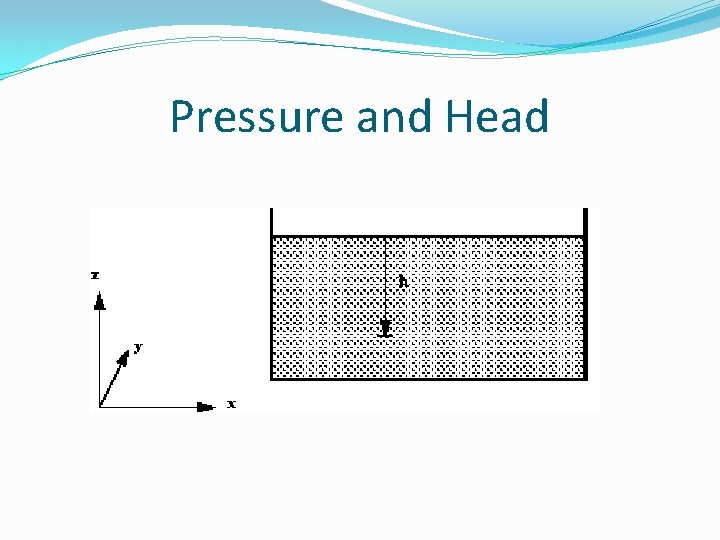
Pressure and Head
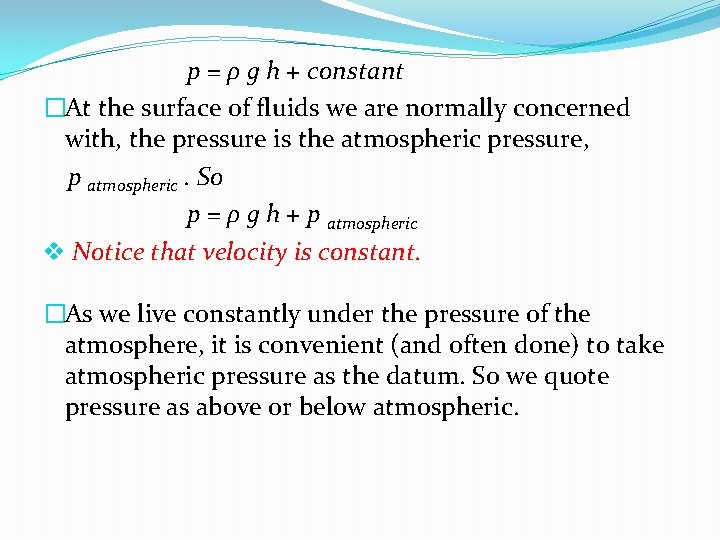
p = ρ g h + constant �At the surface of fluids we are normally concerned with, the pressure is the atmospheric pressure, p atmospheric. So p = ρ g h + p atmospheric v Notice that velocity is constant. �As we live constantly under the pressure of the atmosphere, it is convenient (and often done) to take atmospheric pressure as the datum. So we quote pressure as above or below atmospheric.
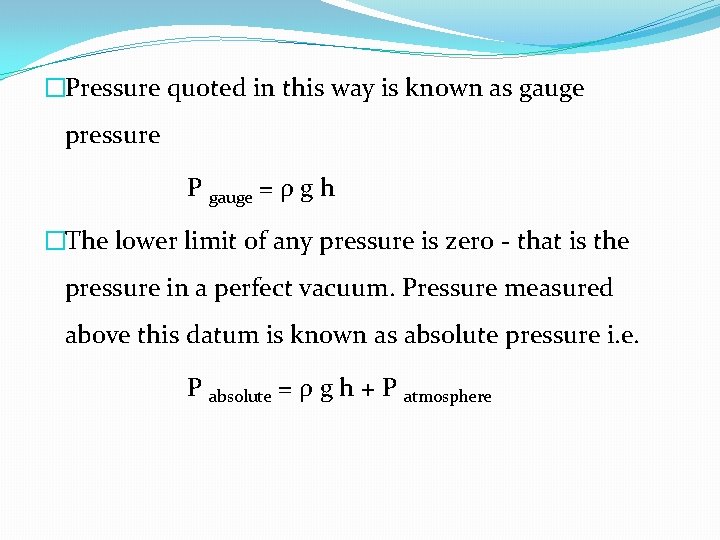
�Pressure quoted in this way is known as gauge pressure P gauge = ρ g h �The lower limit of any pressure is zero - that is the pressure in a perfect vacuum. Pressure measured above this datum is known as absolute pressure i. e. P absolute = ρ g h + P atmosphere
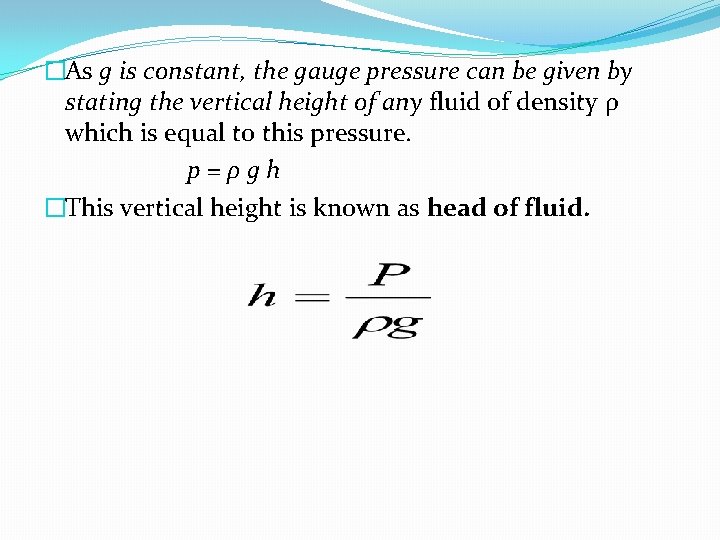
�As g is constant, the gauge pressure can be given by stating the vertical height of any fluid of density ρ which is equal to this pressure. p=ρgh �This vertical height is known as head of fluid.
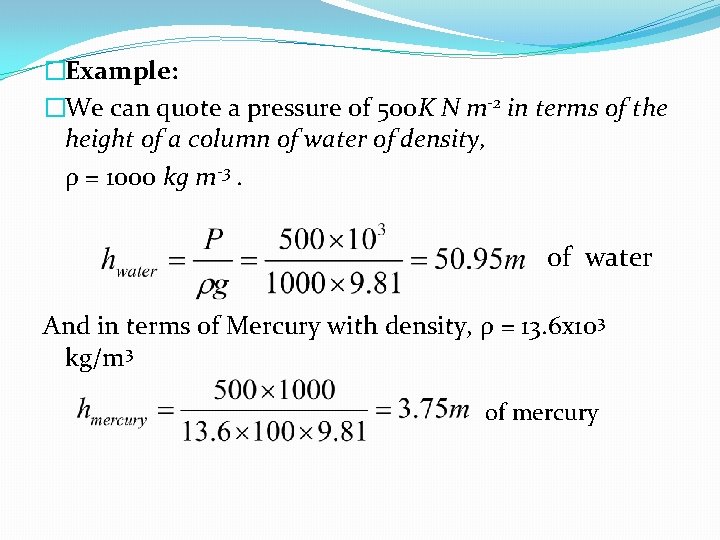
�Example: �We can quote a pressure of 500 K N m-2 in terms of the height of a column of water of density, ρ = 1000 kg m-3. of water And in terms of Mercury with density, ρ = 13. 6 x 10³ kg/m 3 of mercury