
Fluid mosaic model Chapter 4 Membrane Structure Function
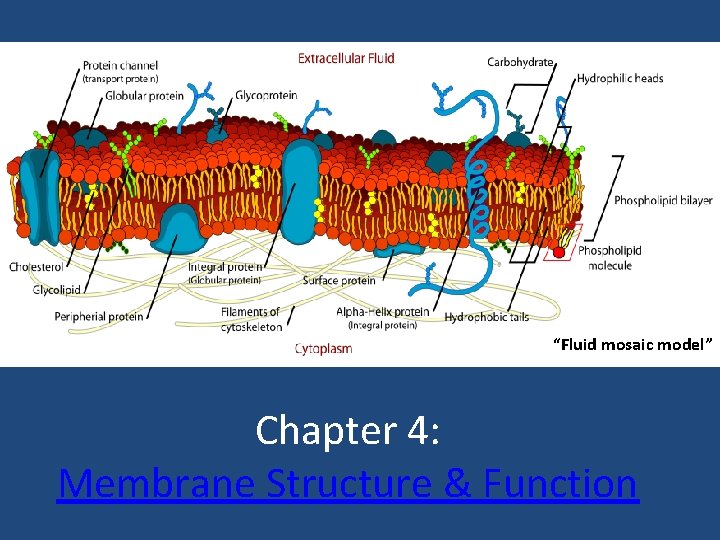
“Fluid mosaic model” Chapter 4: Membrane Structure & Function
Cell Membrane • Cell membrane controls movement of substances in/out of cell • acts as gatekeeper – “selectively permeable” • Also… – provides structural support – recognizes foreign material – communicates with other cells
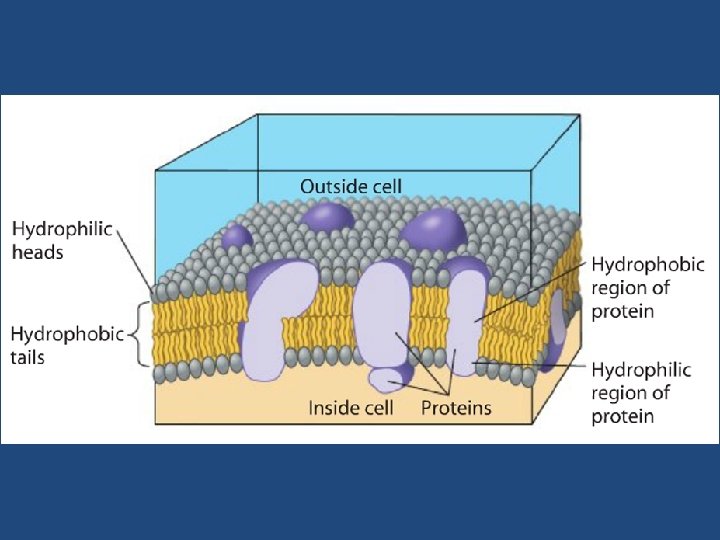
Structure • Phospholipid bilayer with imbedded or partially imbedded proteins • Only certain substances can pass through the lipid bilayer – For example: small, nonpolar substances • Ions & polar molecules repelled by nonpolar interior of lipid bilayer
Lipid Bilayer • The head is polar and is attracted to water (Note: there is water inside and outside the cell) Hydrophilic • The fatty acid tails are nonpolar and are repelled by water Hydrophobic
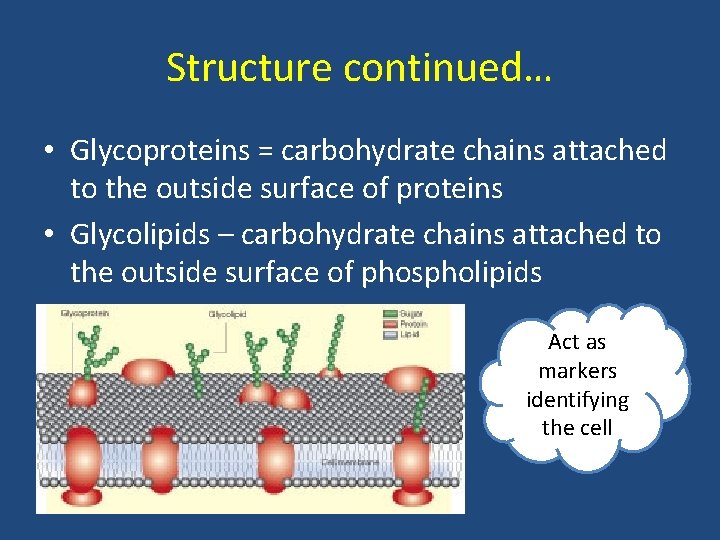
Structure continued… • Glycoproteins = carbohydrate chains attached to the outside surface of proteins • Glycolipids – carbohydrate chains attached to the outside surface of phospholipids Act as markers identifying the cell
Structure continued…. Membrane proteins: • Can face inside or outside the cell • Can stretch across membrane • Remember that proteins are made of amino acids • Some of these amino acids are polar and some are nonpolar
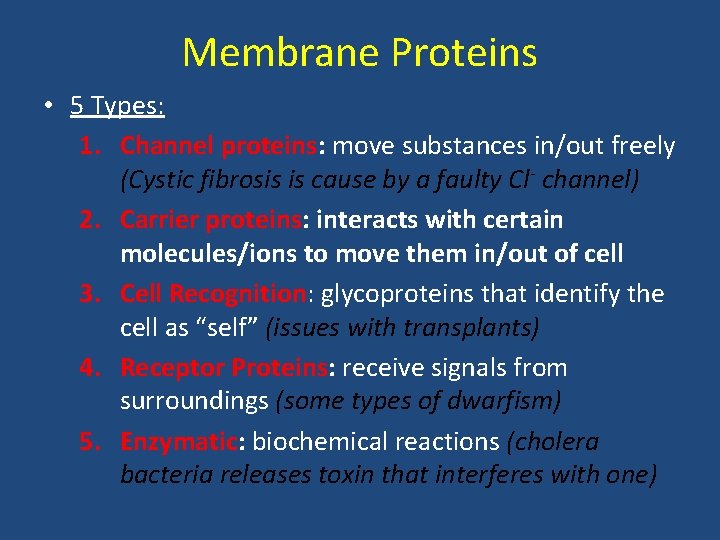
Membrane Proteins • 5 Types: 1. Channel proteins: move substances in/out freely (Cystic fibrosis is cause by a faulty Cl- channel) 2. Carrier proteins: interacts with certain molecules/ions to move them in/out of cell 3. Cell Recognition: glycoproteins that identify the cell as “self” (issues with transplants) 4. Receptor Proteins: receive signals from surroundings (some types of dwarfism) 5. Enzymatic: biochemical reactions (cholera bacteria releases toxin that interferes with one)
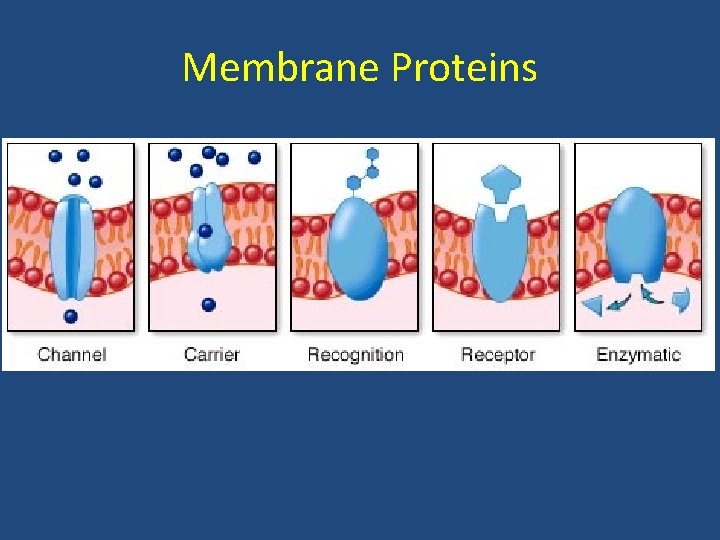
Membrane Proteins
Ways for Substance to Cross the Membrane 1. Passively • Requires NO energy • Includes: diffusion, osmosis, & faciliated transport 2. Actively • Requires ATP energy • Includes: active transport, exocytosis & endocytosis
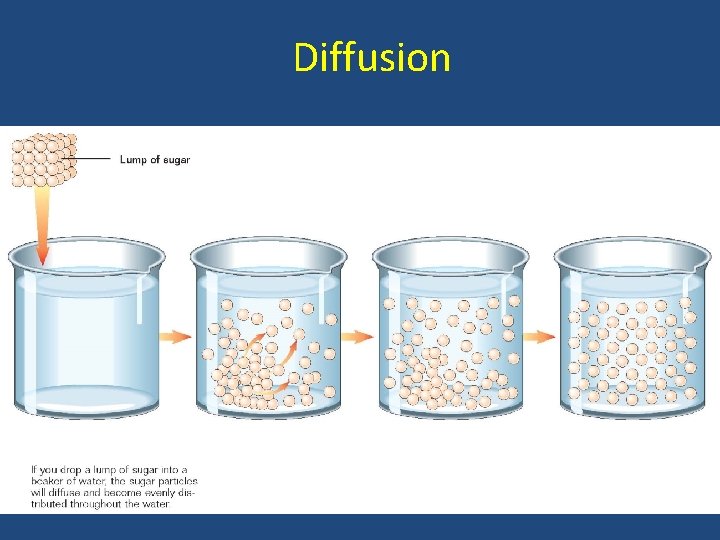
Diffusion
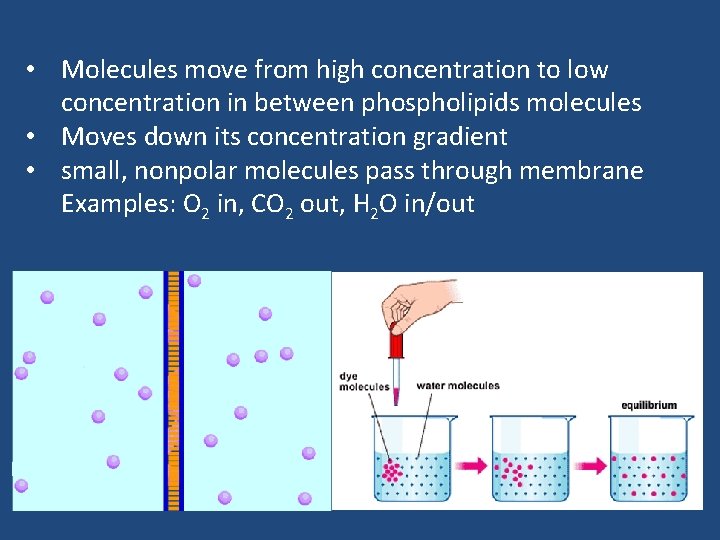
• Molecules move from high concentration to low concentration in between phospholipids molecules • Moves down its concentration gradient • small, nonpolar molecules pass through membrane Examples: O 2 in, CO 2 out, H 2 O in/out
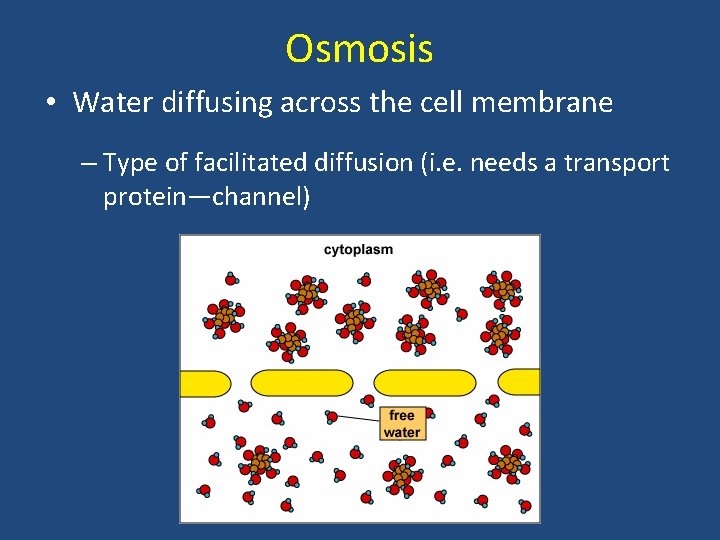
Osmosis • Water diffusing across the cell membrane – Type of facilitated diffusion (i. e. needs a transport protein—channel)
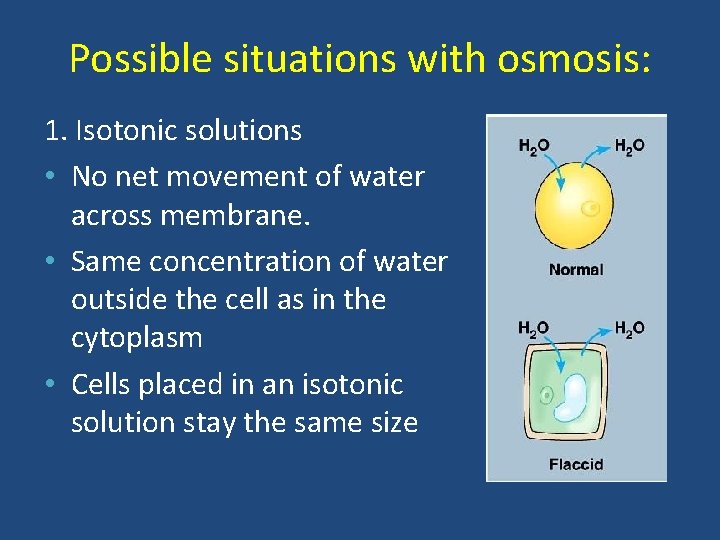
Possible situations with osmosis: 1. Isotonic solutions • No net movement of water across membrane. • Same concentration of water outside the cell as in the cytoplasm • Cells placed in an isotonic solution stay the same size
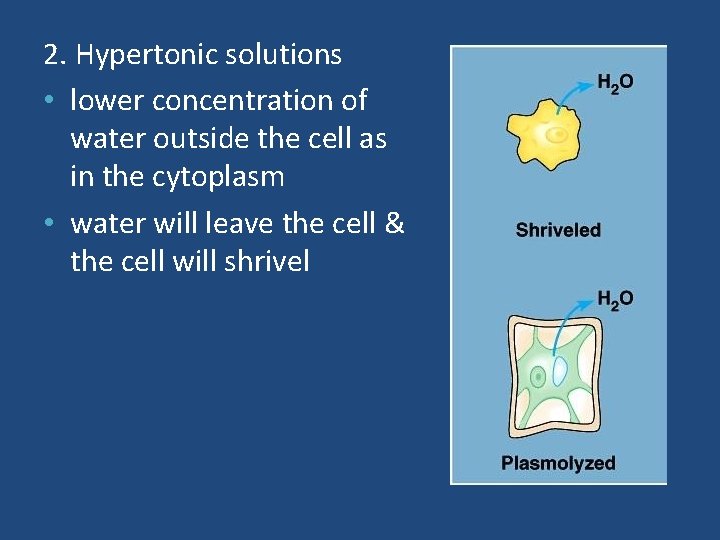
2. Hypertonic solutions • lower concentration of water outside the cell as in the cytoplasm • water will leave the cell & the cell will shrivel
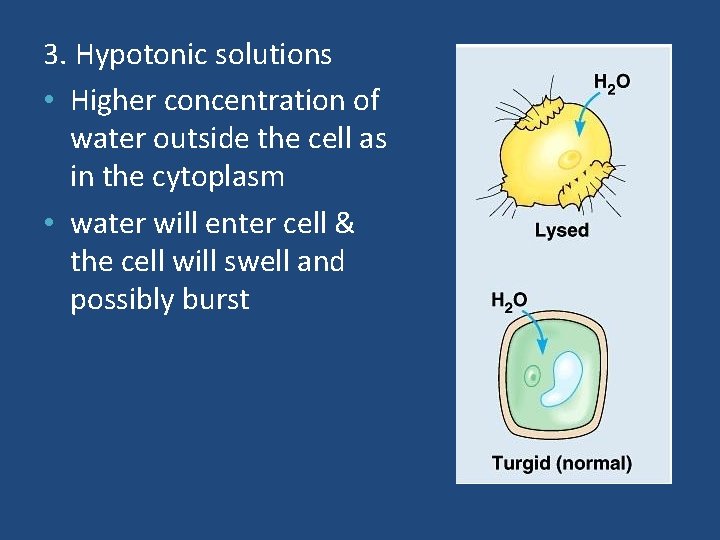
3. Hypotonic solutions • Higher concentration of water outside the cell as in the cytoplasm • water will enter cell & the cell will swell and possibly burst
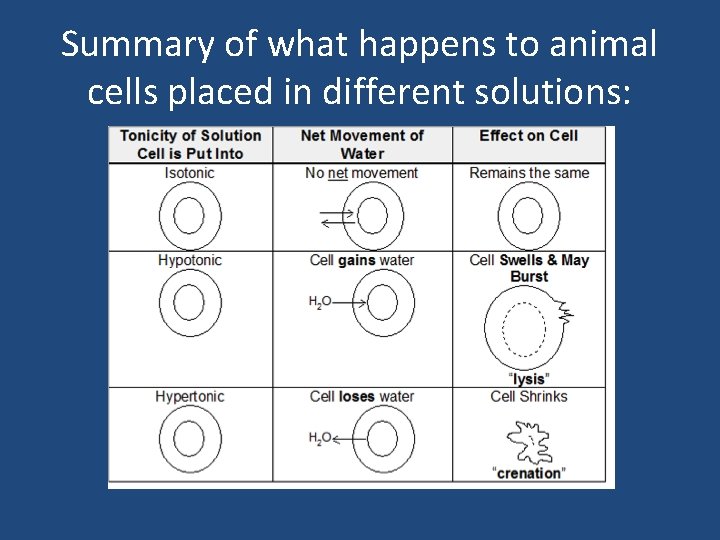
Summary of what happens to animal cells placed in different solutions:
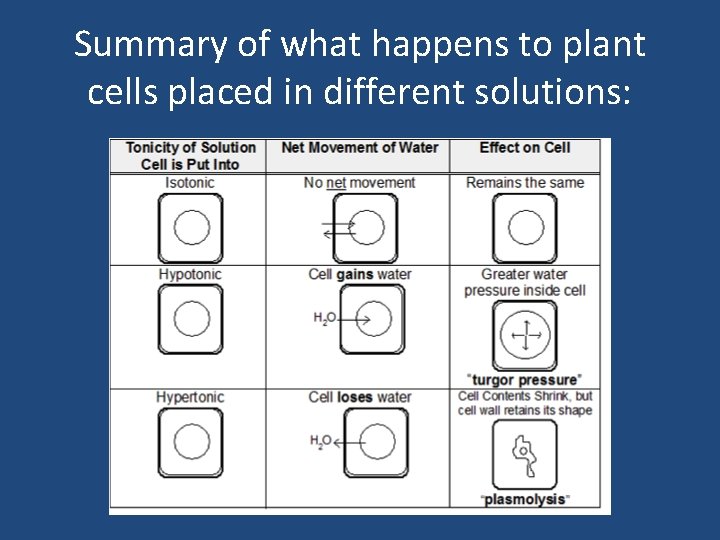
Summary of what happens to plant cells placed in different solutions:
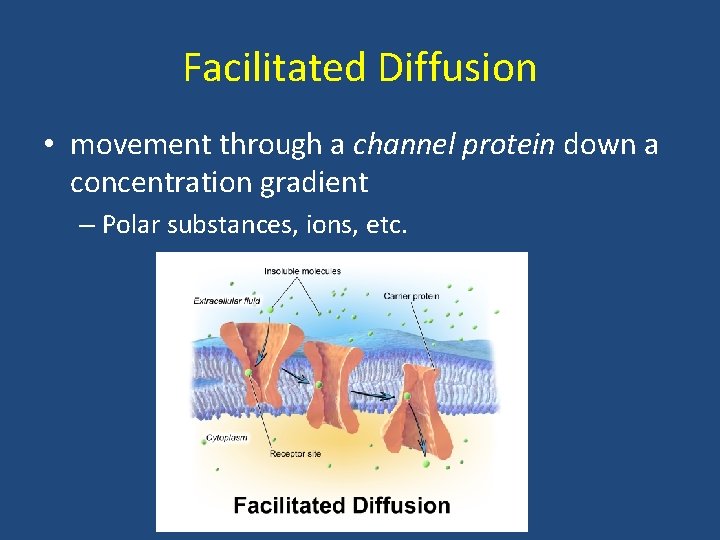
Facilitated Diffusion • movement through a channel protein down a concentration gradient – Polar substances, ions, etc.
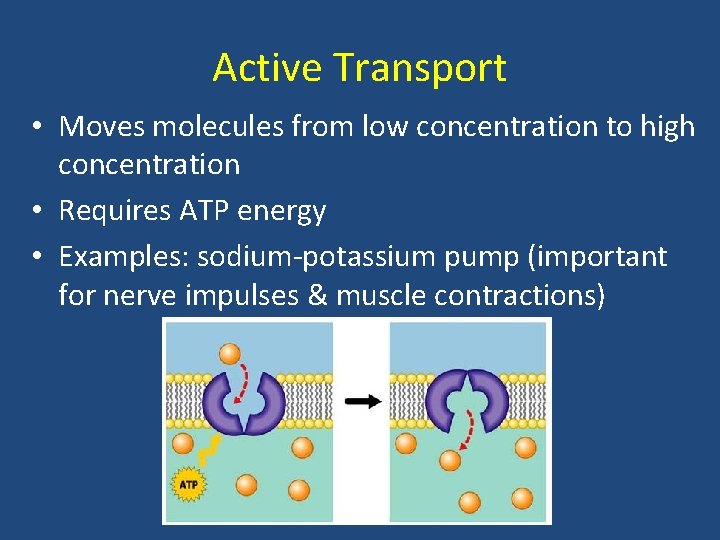
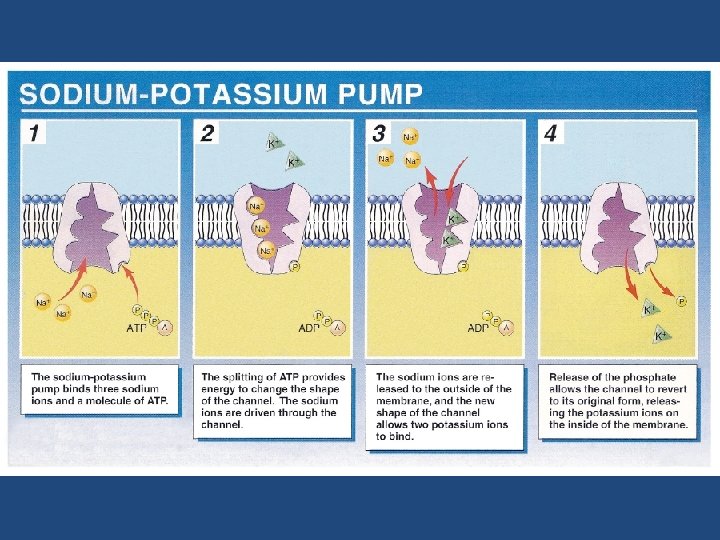
Active Transport • Moves molecules from low concentration to high concentration • Requires ATP energy • Examples: sodium-potassium pump (important for nerve impulses & muscle contractions)
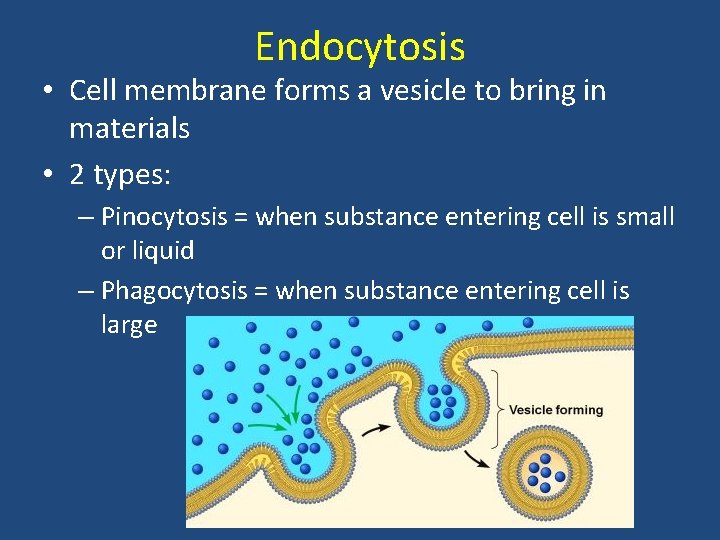
Endocytosis • Cell membrane forms a vesicle to bring in materials • 2 types: – Pinocytosis = when substance entering cell is small or liquid – Phagocytosis = when substance entering cell is large
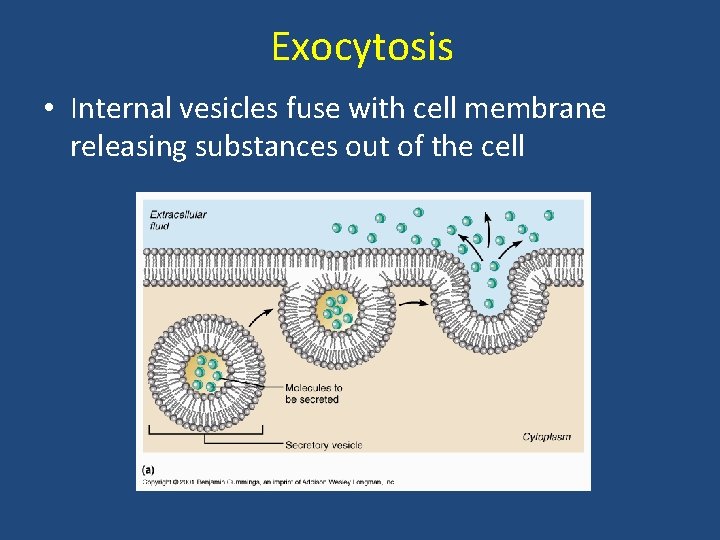
Exocytosis • Internal vesicles fuse with cell membrane releasing substances out of the cell
- Slides: 23