
FLUID MOSAIC MODEL 1 FLUID MOSAIC MODEL Model

- Slides: 32
FLUID MOSAIC MODEL 1
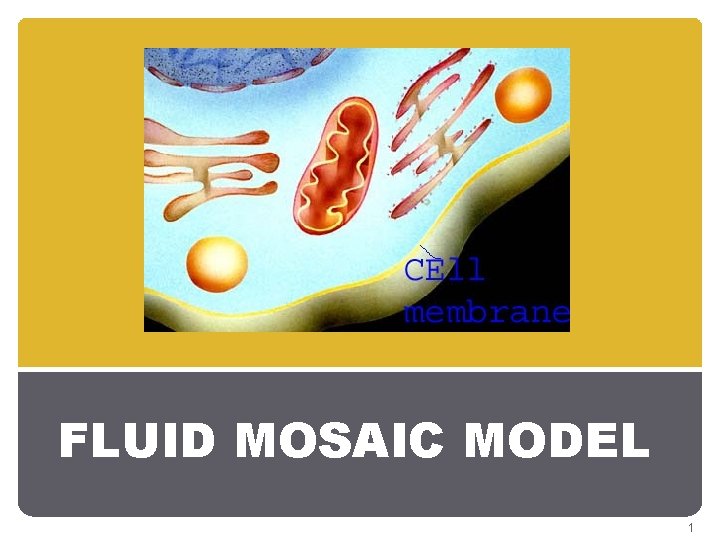
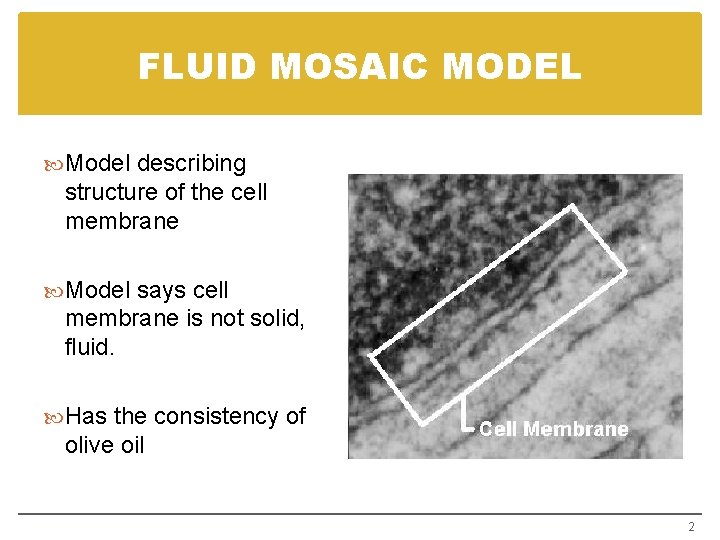
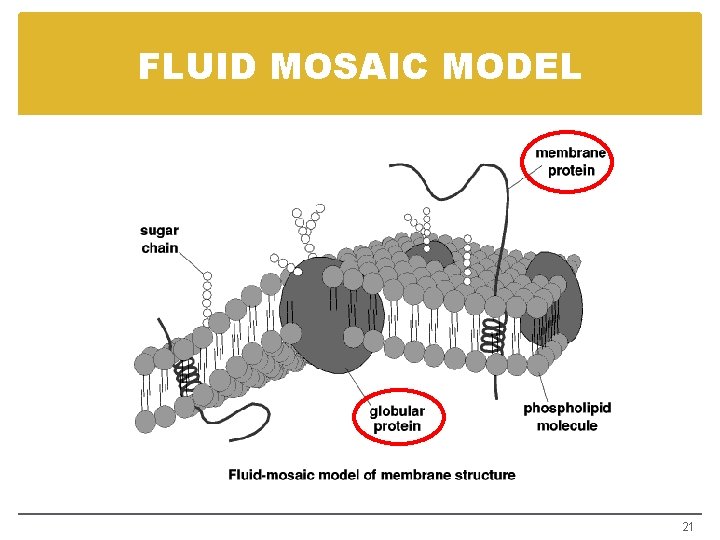
FLUID MOSAIC MODEL Model describing structure of the cell membrane Model says cell membrane is not solid, fluid. Has the consistency of olive oil 2
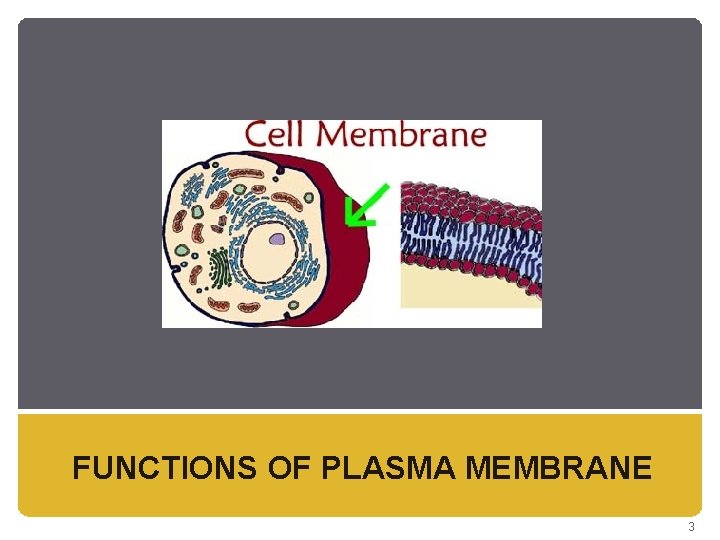
FUNCTIONS OF PLASMA MEMBRANE 3
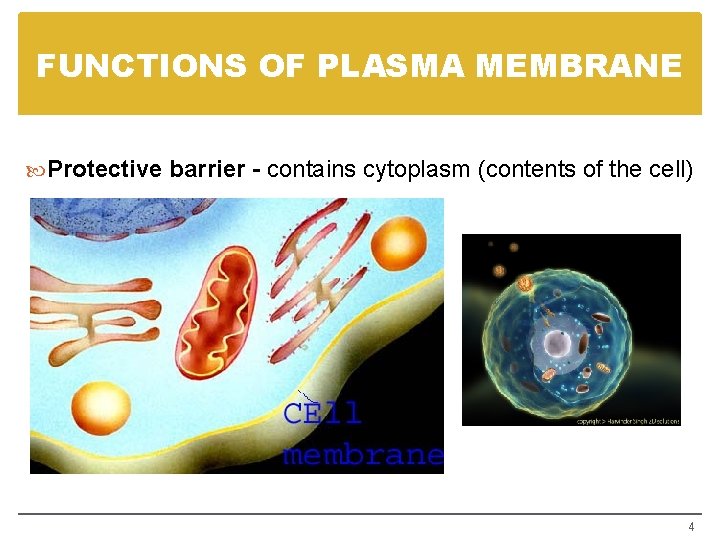
FUNCTIONS OF PLASMA MEMBRANE Protective barrier - contains cytoplasm (contents of the cell) 4
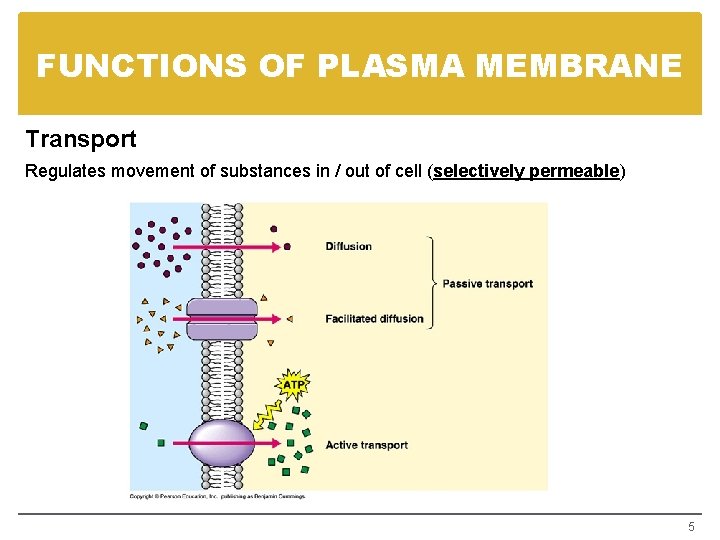
FUNCTIONS OF PLASMA MEMBRANE Transport Regulates movement of substances in / out of cell (selectively permeable) 5
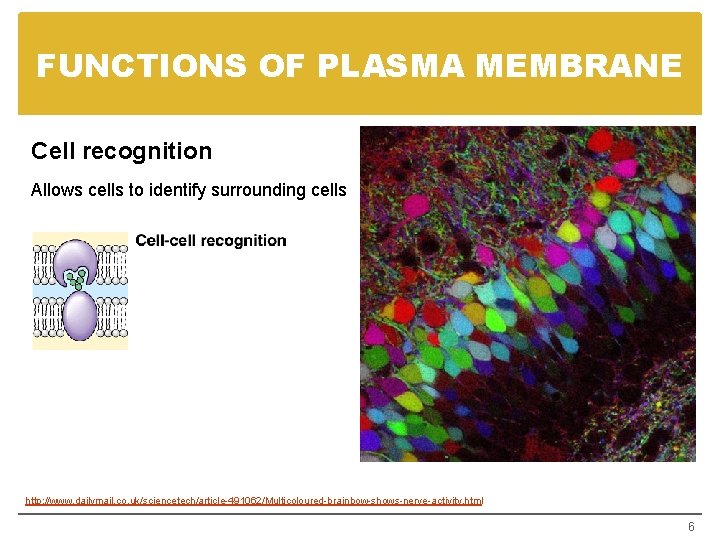
FUNCTIONS OF PLASMA MEMBRANE Cell recognition Allows cells to identify surrounding cells http: //www. dailymail. co. uk/sciencetech/article-491062/Multicoloured-brainbow-shows-nerve-activity. html 6
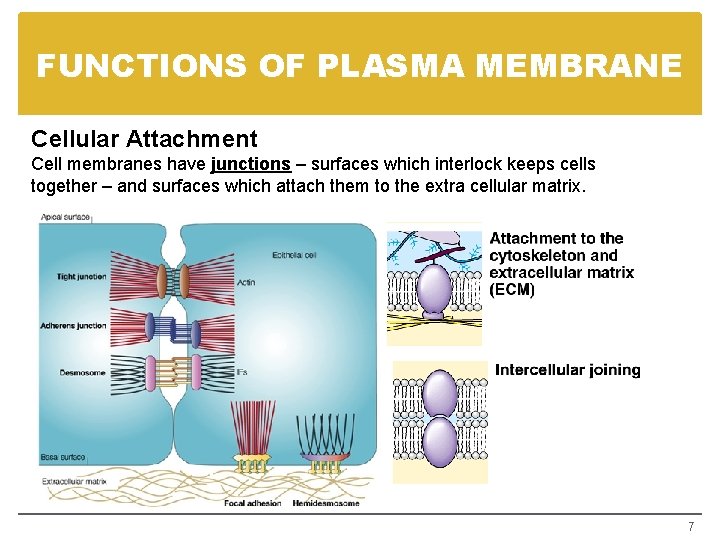
FUNCTIONS OF PLASMA MEMBRANE Cellular Attachment Cell membranes have junctions – surfaces which interlock keeps cells together – and surfaces which attach them to the extra cellular matrix. 7
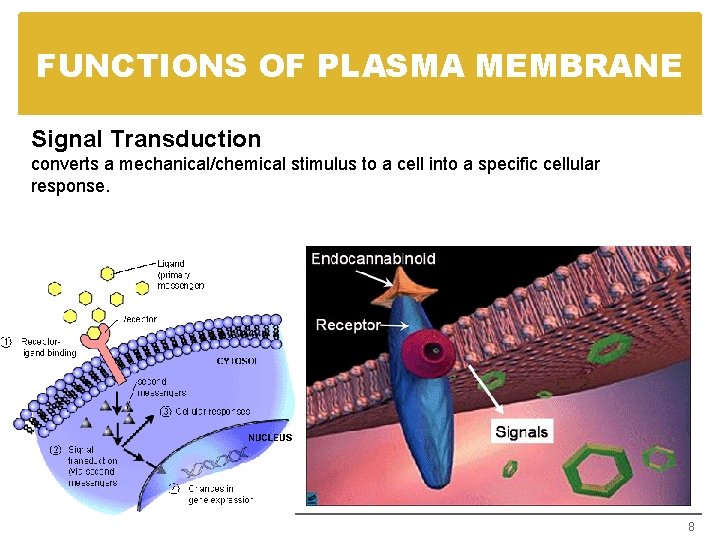
FUNCTIONS OF PLASMA MEMBRANE Signal Transduction converts a mechanical/chemical stimulus to a cell into a specific cellular response. 8
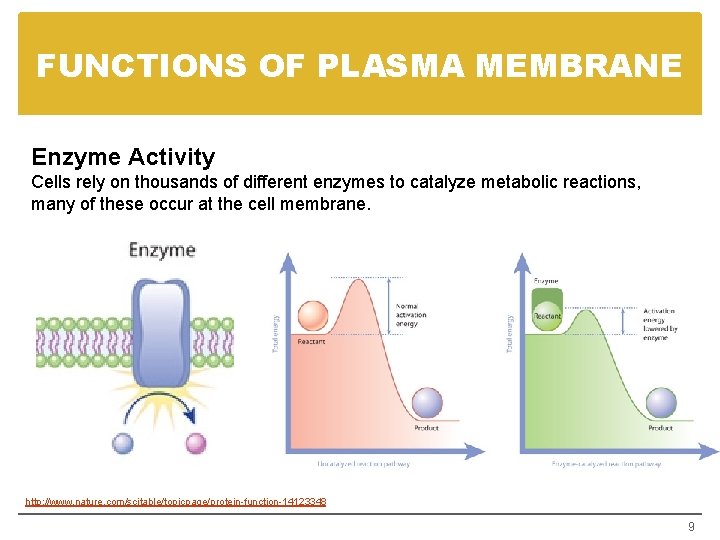
FUNCTIONS OF PLASMA MEMBRANE Enzyme Activity Cells rely on thousands of different enzymes to catalyze metabolic reactions, many of these occur at the cell membrane. http: //www. nature. com/scitable/topicpage/protein-function-14123348 9
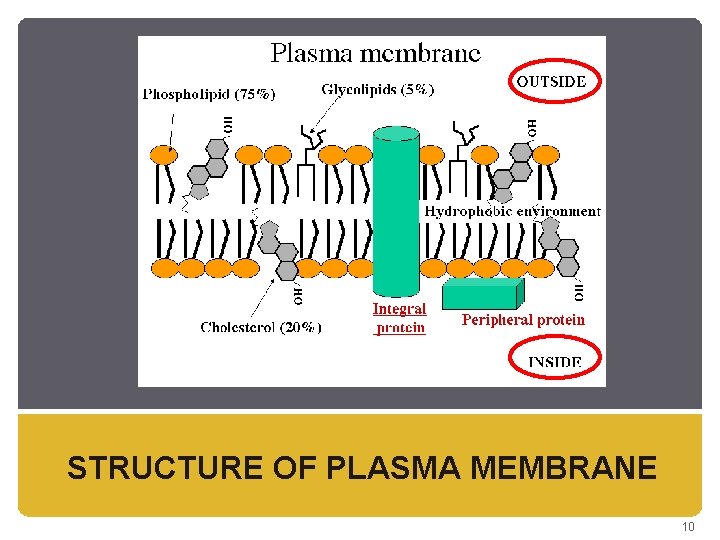
STRUCTURE OF PLASMA MEMBRANE 10
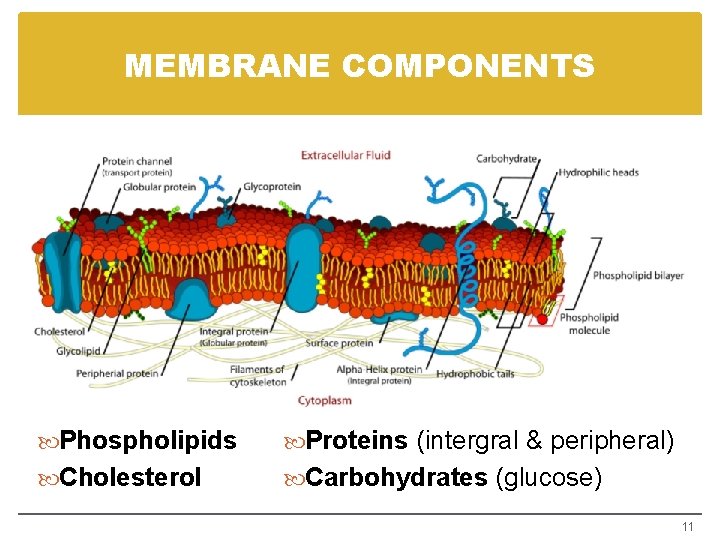
MEMBRANE COMPONENTS Phospholipids Proteins (intergral & peripheral) Cholesterol Carbohydrates (glucose) 11
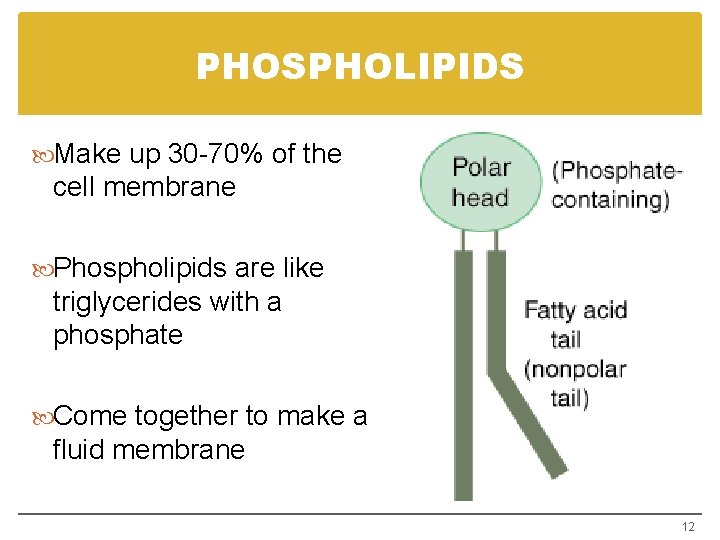
PHOSPHOLIPIDS Make up 30 -70% of the cell membrane Phospholipids are like triglycerides with a phosphate Come together to make a fluid membrane 12
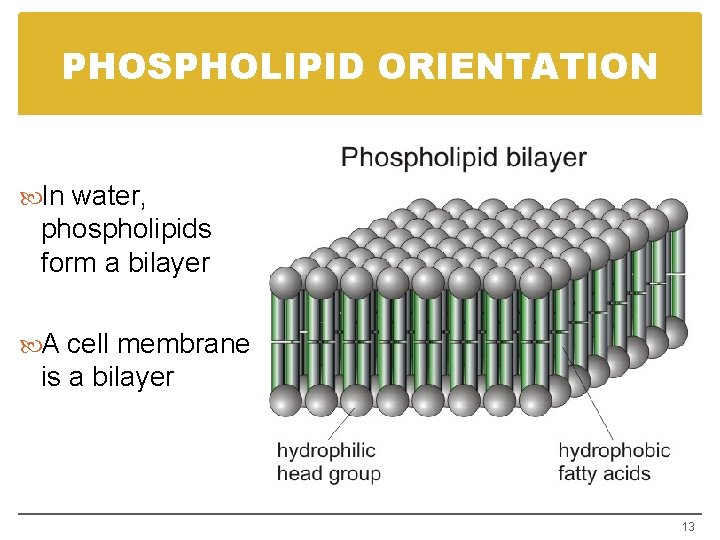
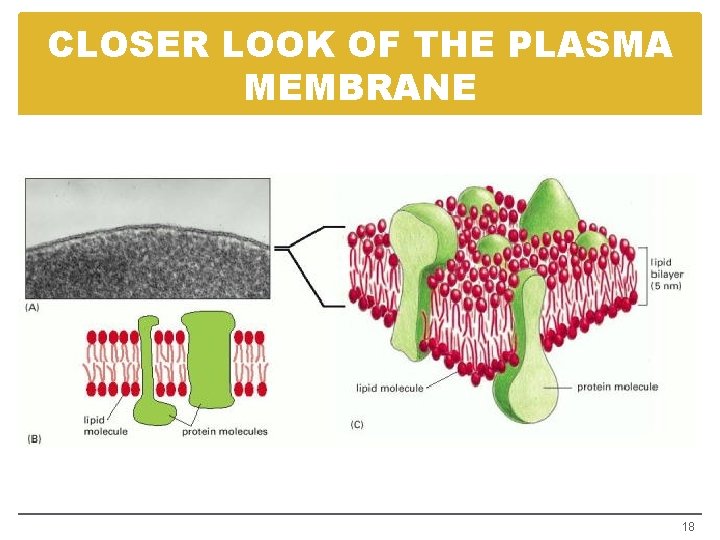
PHOSPHOLIPID ORIENTATION In water, phospholipids form a bilayer A cell membrane is a bilayer 13
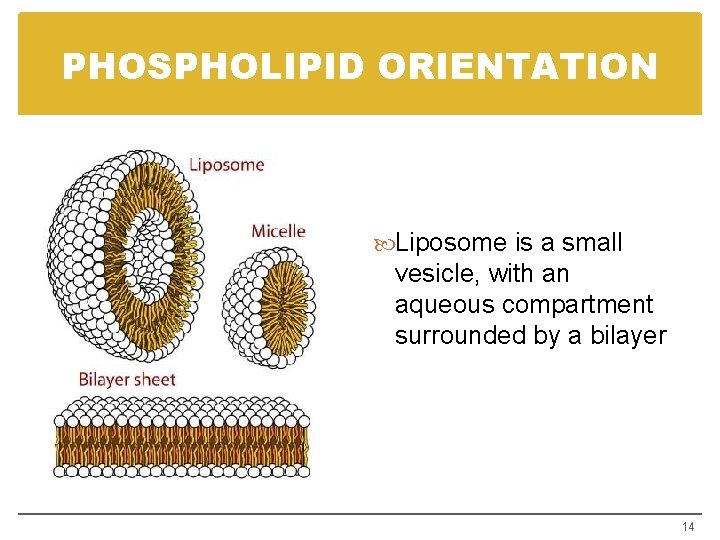
PHOSPHOLIPID ORIENTATION Liposome is a small vesicle, with an aqueous compartment surrounded by a bilayer 14
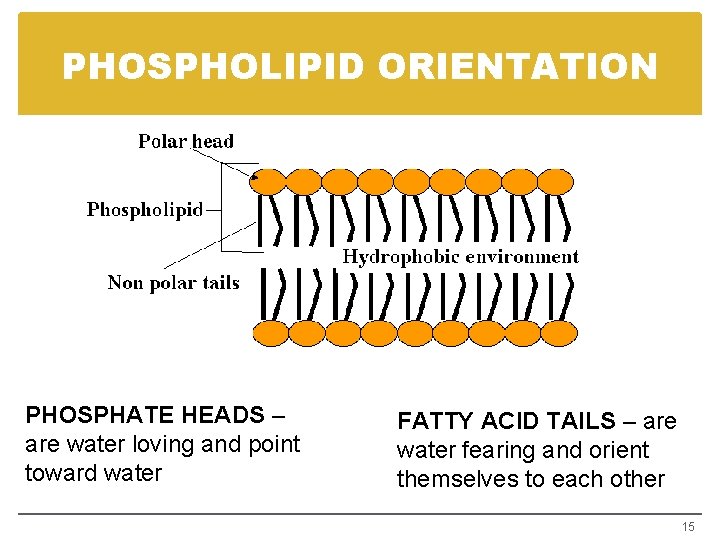
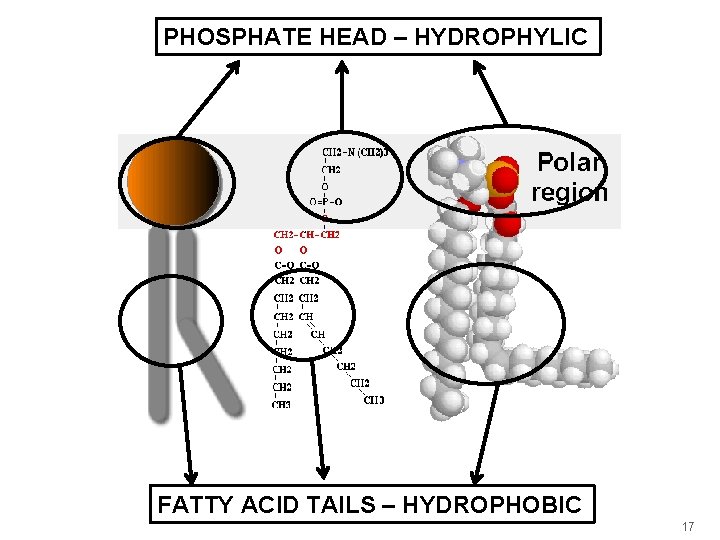
PHOSPHOLIPID ORIENTATION PHOSPHATE HEADS – are water loving and point toward water FATTY ACID TAILS – are water fearing and orient themselves to each other 15
16
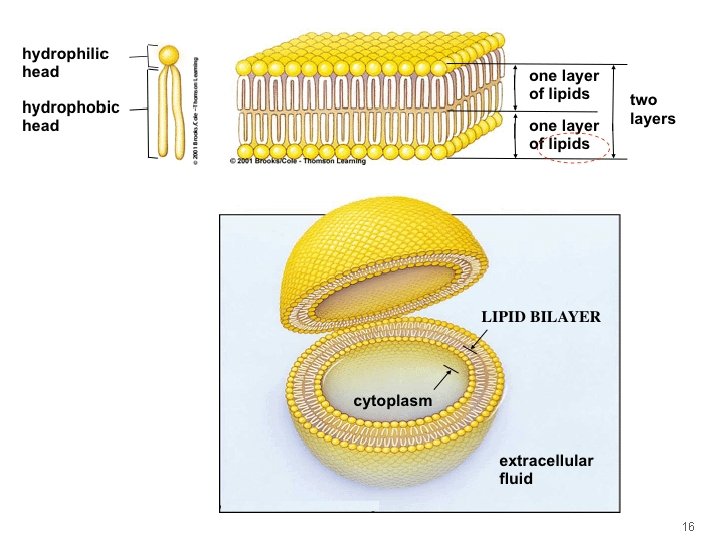
PHOSPHATE HEAD – HYDROPHYLIC FATTY ACID TAILS – HYDROPHOBIC 17
CLOSER LOOK OF THE PLASMA MEMBRANE 18
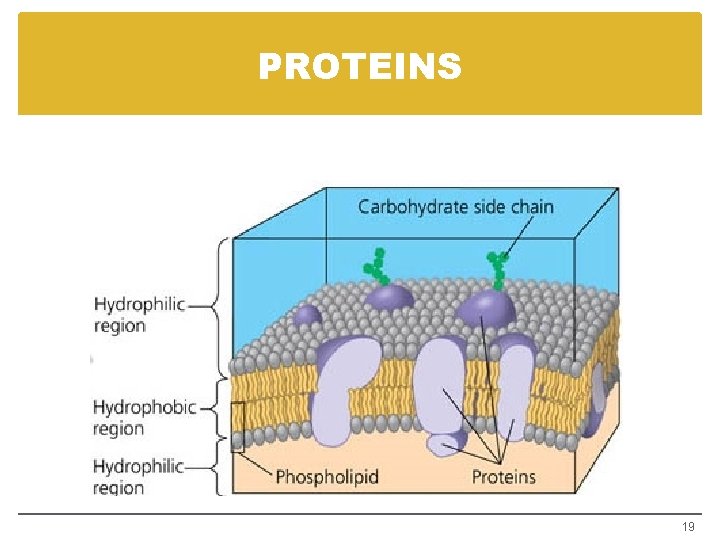
PROTEINS 19
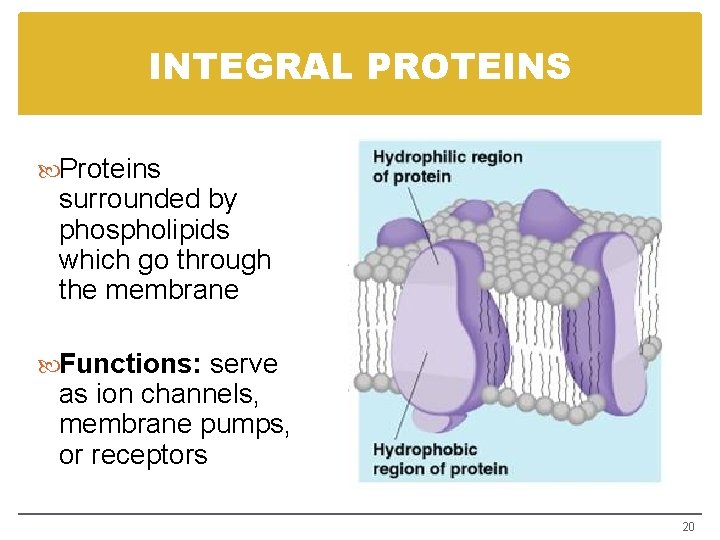
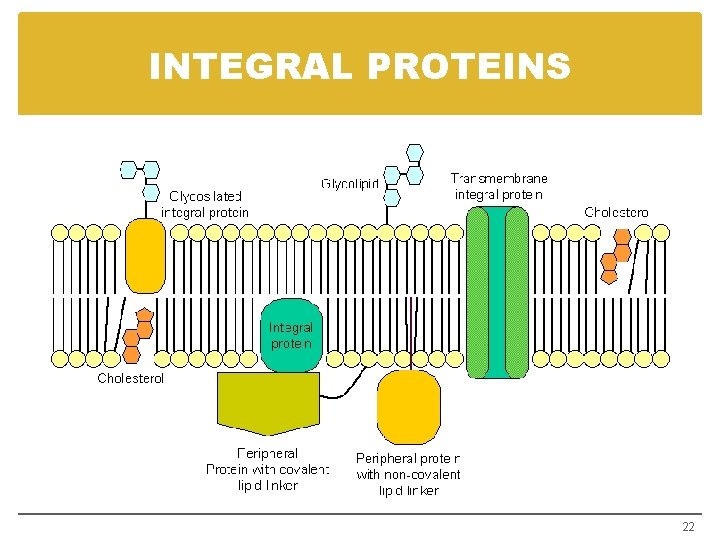
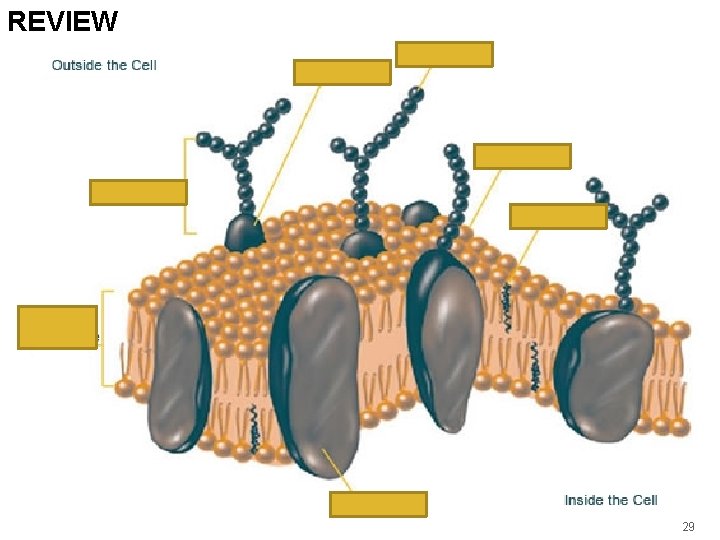
INTEGRAL PROTEINS Proteins surrounded by phospholipids which go through the membrane Functions: serve as ion channels, membrane pumps, or receptors 20
FLUID MOSAIC MODEL 21
INTEGRAL PROTEINS 22
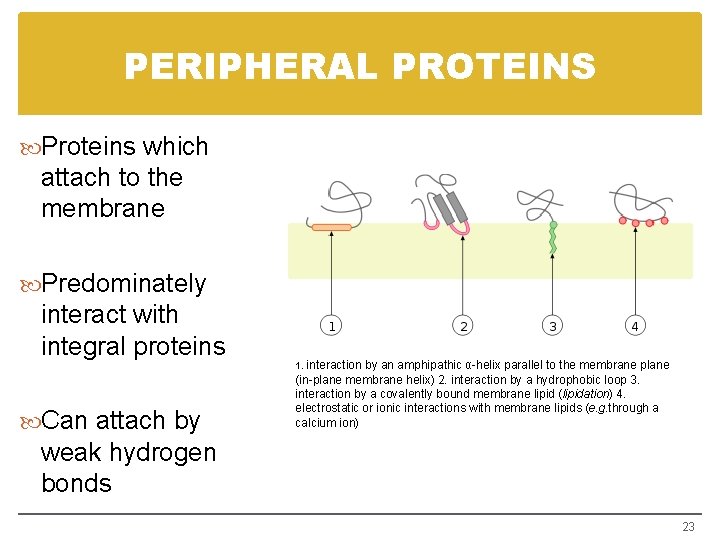
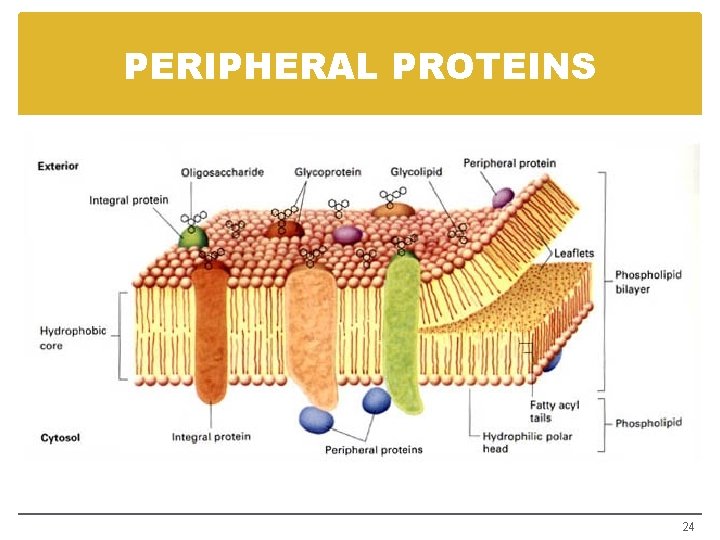
PERIPHERAL PROTEINS Proteins which attach to the membrane Predominately interact with integral proteins Can attach by 1. interaction by an amphipathic α-helix parallel to the membrane plane (in-plane membrane helix) 2. interaction by a hydrophobic loop 3. interaction by a covalently bound membrane lipid (lipidation) 4. electrostatic or ionic interactions with membrane lipids (e. g. through a calcium ion) weak hydrogen bonds 23
PERIPHERAL PROTEINS 24
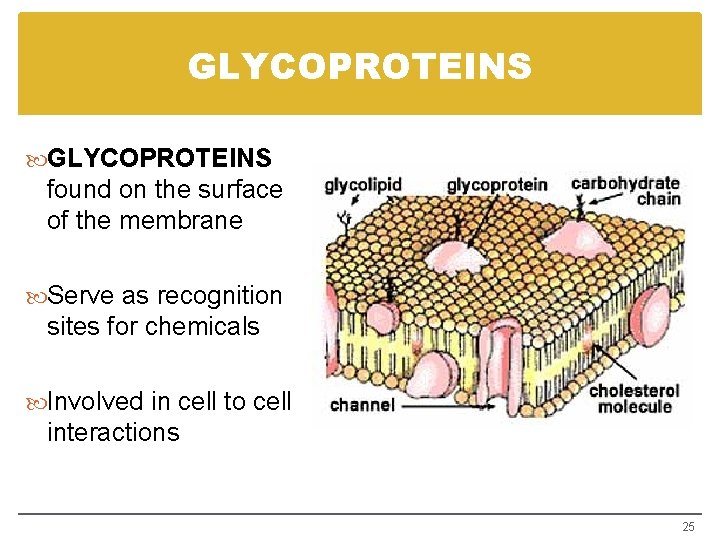
GLYCOPROTEINS found on the surface of the membrane Serve as recognition sites for chemicals Involved in cell to cell interactions 25
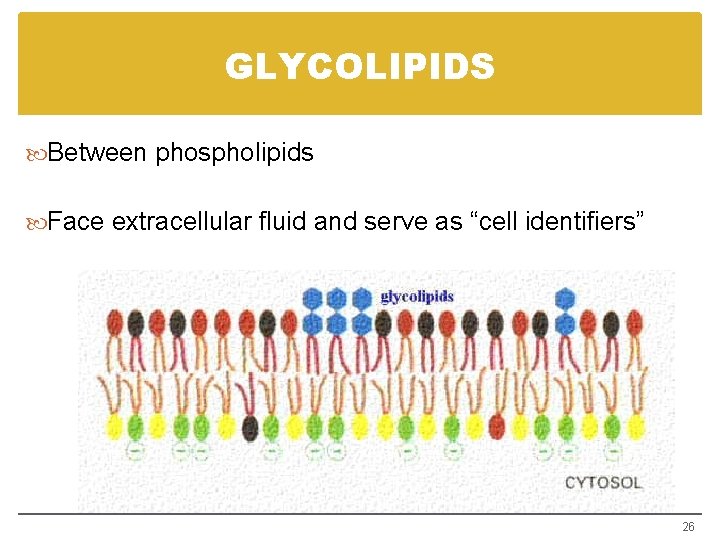
GLYCOLIPIDS Between phospholipids Face extracellular fluid and serve as “cell identifiers” 26
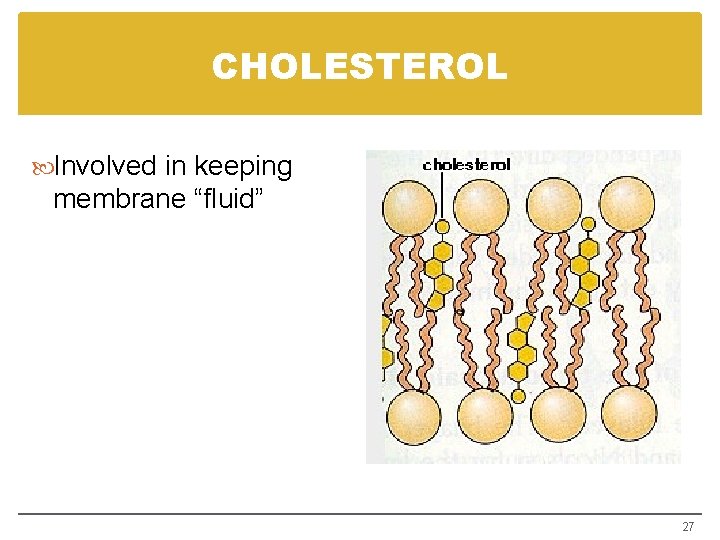
CHOLESTEROL Involved in keeping membrane “fluid” 27
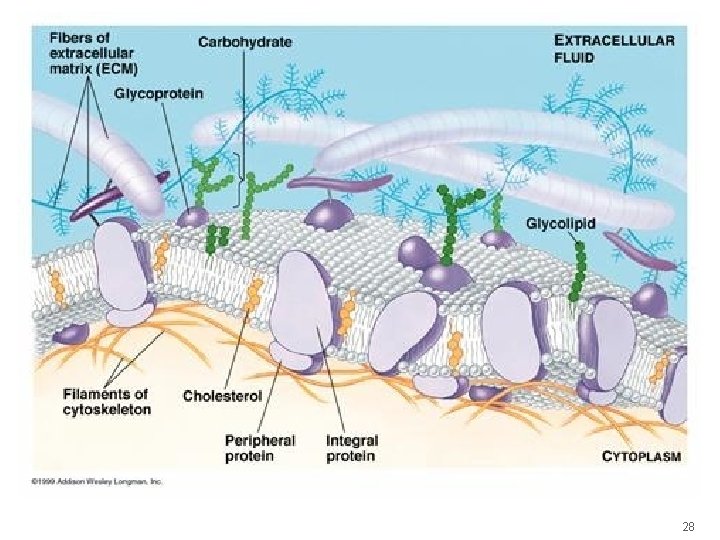
GLYCOLIPIDS 28
REVIEW 29
http: //bio-animations. blogspot. ca/2008/04/plasma-membrance-fluid-mosaicmodel. html 30
31
References Original presentation by M. Bregar (Dante C. S. S. ) http: //www. authorstream. com/Presentation/a. SGue st 77986 -711145 -fluid-mosaic-model/ Modified by D. Machacek 32