
Fluid Dynamics Based Design of A Wind Turbine

Fluid Dynamics Based Design of A Wind Turbine P M V Subbarao Professor Mechanical Engineering Department A Generic Method of Design. . .
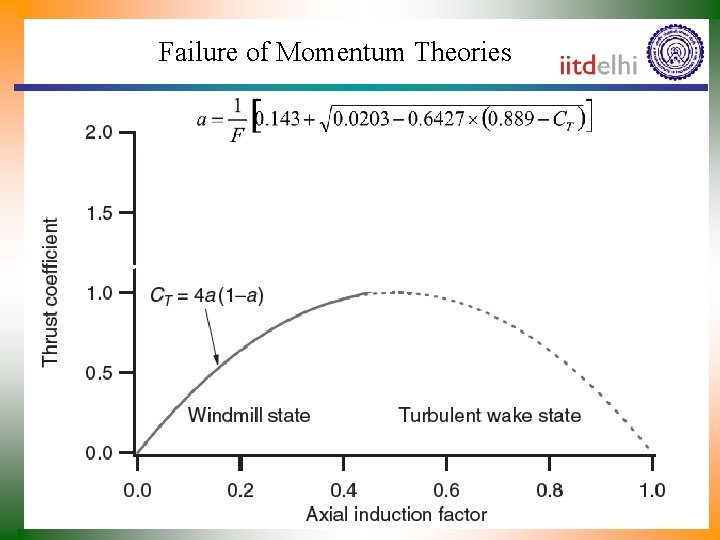
Failure of Momentum Theories
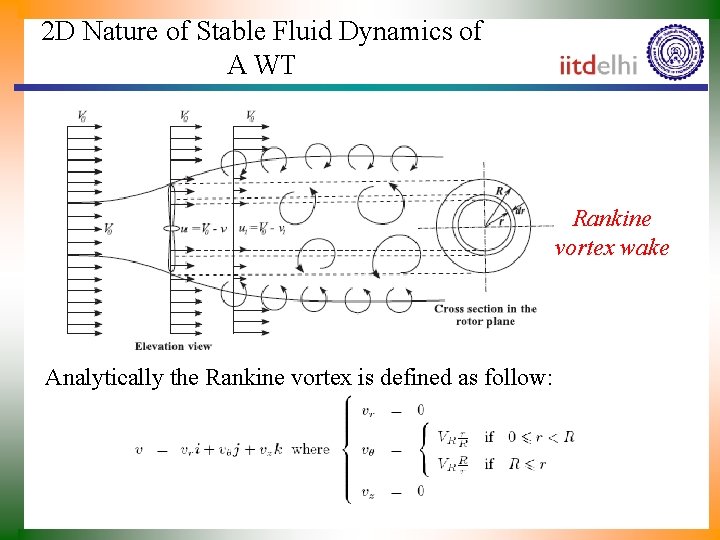
2 D Nature of Stable Fluid Dynamics of A WT Rankine vortex wake Analytically the Rankine vortex is defined as follow:
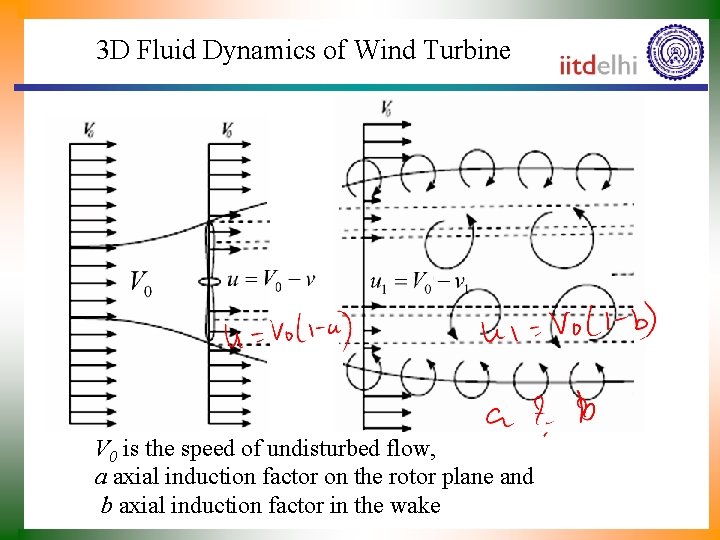
3 D Fluid Dynamics of Wind Turbine V 0 is the speed of undisturbed flow, a axial induction factor on the rotor plane and b axial induction factor in the wake
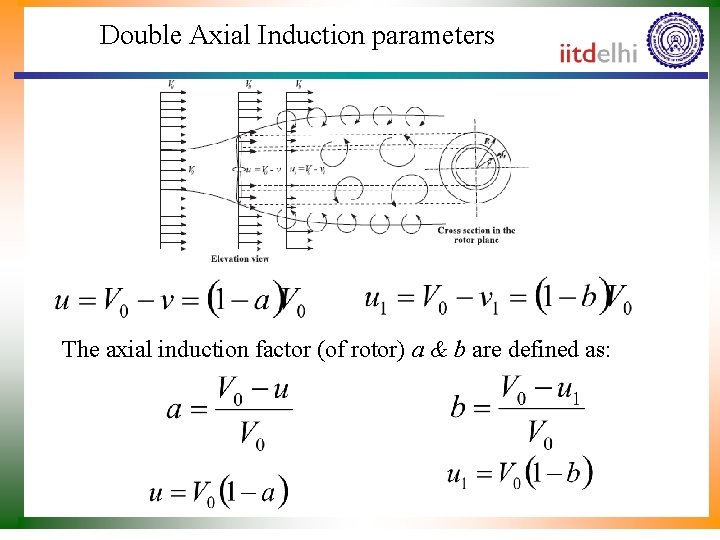
Double Axial Induction parameters The axial induction factor (of rotor) a & b are defined as:
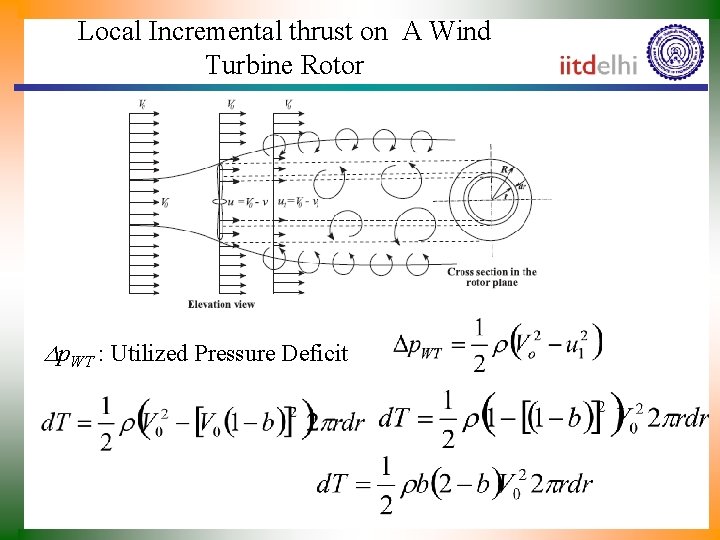
Local Incremental thrust on A Wind Turbine Rotor Dp. WT : Utilized Pressure Deficit
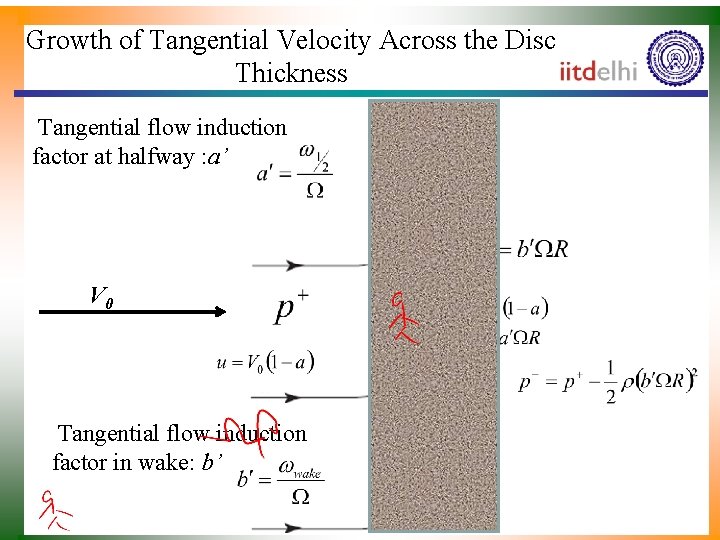
Growth of Tangential Velocity Across the Disc Thickness Tangential flow induction factor at halfway : a’ V 0 Tangential flow induction factor in wake: b’
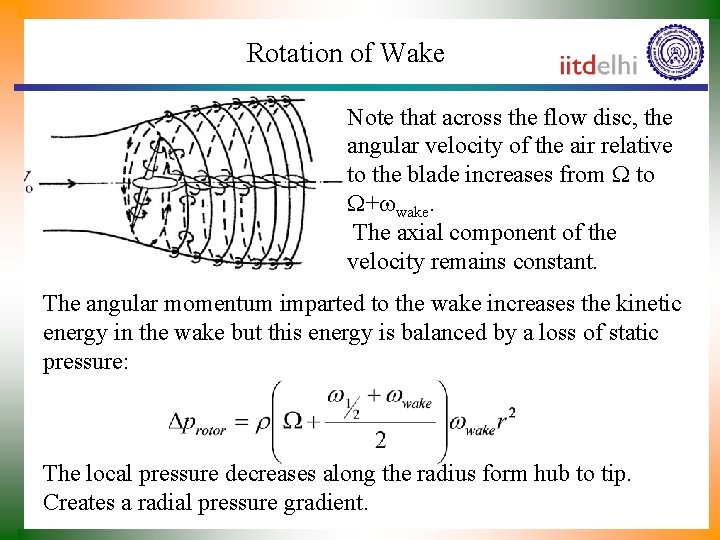
Rotation of Wake Note that across the flow disc, the angular velocity of the air relative to the blade increases from to + wake. The axial component of the velocity remains constant. The angular momentum imparted to the wake increases the kinetic energy in the wake but this energy is balanced by a loss of static pressure: The local pressure decreases along the radius form hub to tip. Creates a radial pressure gradient.
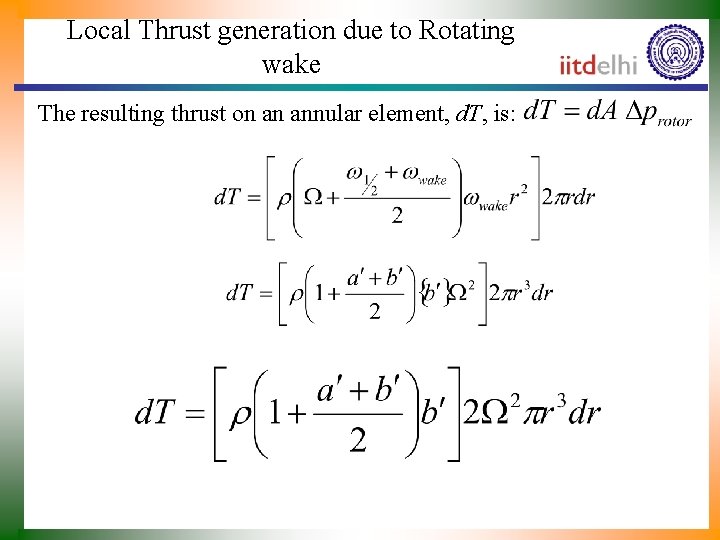
Local Thrust generation due to Rotating wake The resulting thrust on an annular element, d. T, is:
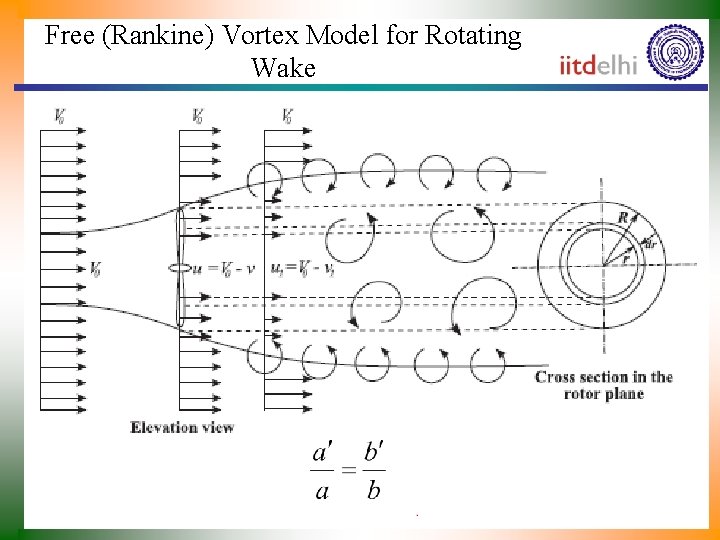
Free (Rankine) Vortex Model for Rotating Wake
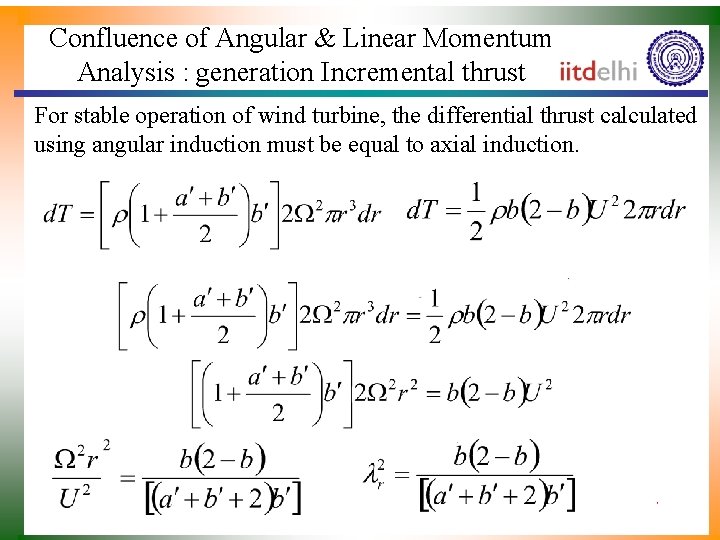
Confluence of Angular & Linear Momentum Analysis : generation Incremental thrust • For stable operation of wind turbine, the differential thrust calculated using angular induction must be equal to axial induction.
- Slides: 11