
Fluid Controls Institute Steam Basics Trap the Potential

Fluid Controls Institute Steam Basics Trap the Potential of Your Steam System STRAINERS © 2021 | Fluid Controls Institute. All rights reserved.
Definition of Strainer • A pipeline strainer is a fitting which provides a means of mechanically removing solids from a flowing fluid. This is accomplished by utilizing a perforated metal, mesh or wedge wire straining element. The most common range of strainer particle retention is 1” to 40 micron(0. 0016”).
Purpose of a Strainer • Strainers are employed in pipelines to protect downstream mechanical equipment such as control valves or regulators, condensers, heat exchangers, pumps, compressors, meters, spray nozzles, turbines, and steam traps from the detrimental effect of sediment, rust, pipe scale, or other extraneous debris.
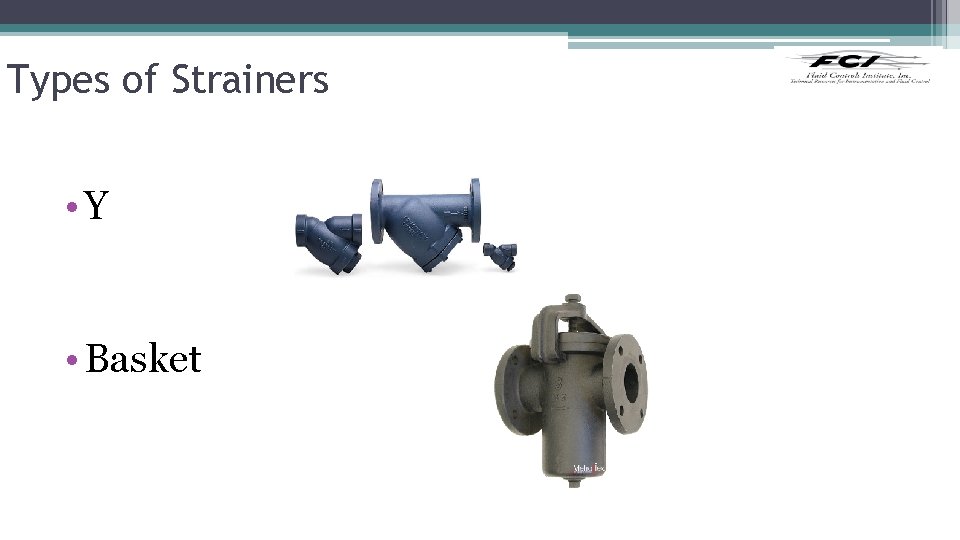
Types of Strainers • Y • Basket
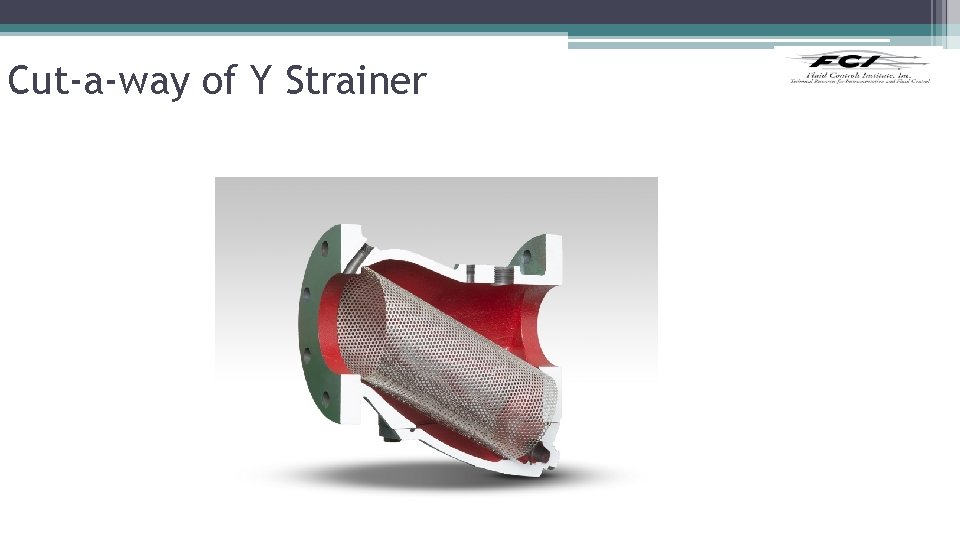
Cut-a-way of Y Strainer

Strainer Components
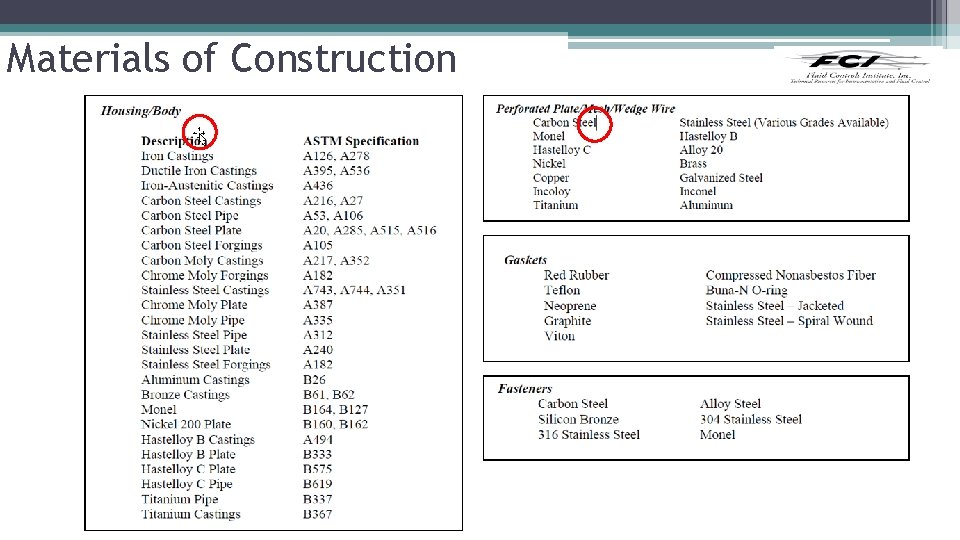
Materials of Construction
Strainer Screen Element • The main criteria for choosing hole and mesh size is the size and quantity of particles which can pass through downstream equipment without causing damage. • Available with perforated plate or mesh material. • A common way to accomplish fine straining in large strainers is by mesh lining a heavier gage perforated plate with larger holes. • The screen element total area of holes or mesh should be sufficient to incur a minimum pressure drop (commonly >3 x ID)
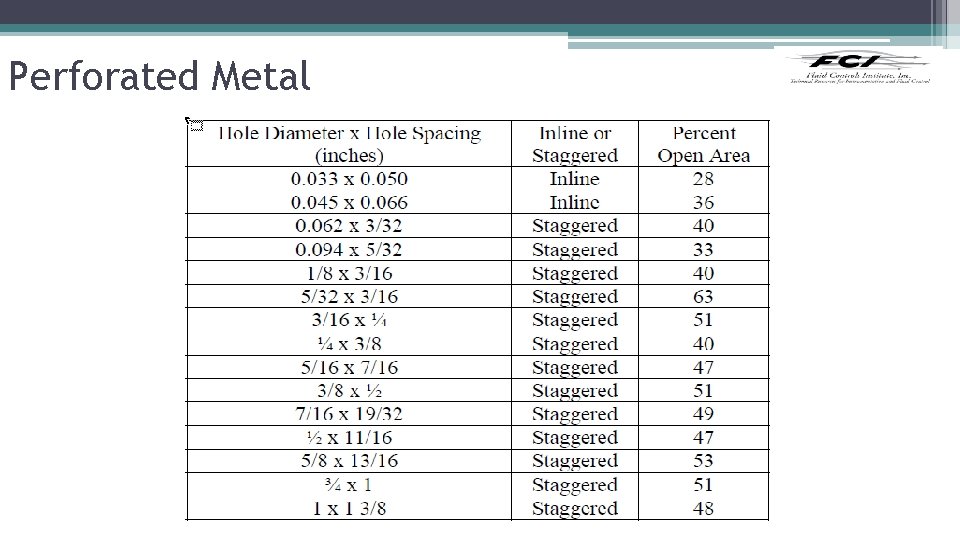
Perforated Metal
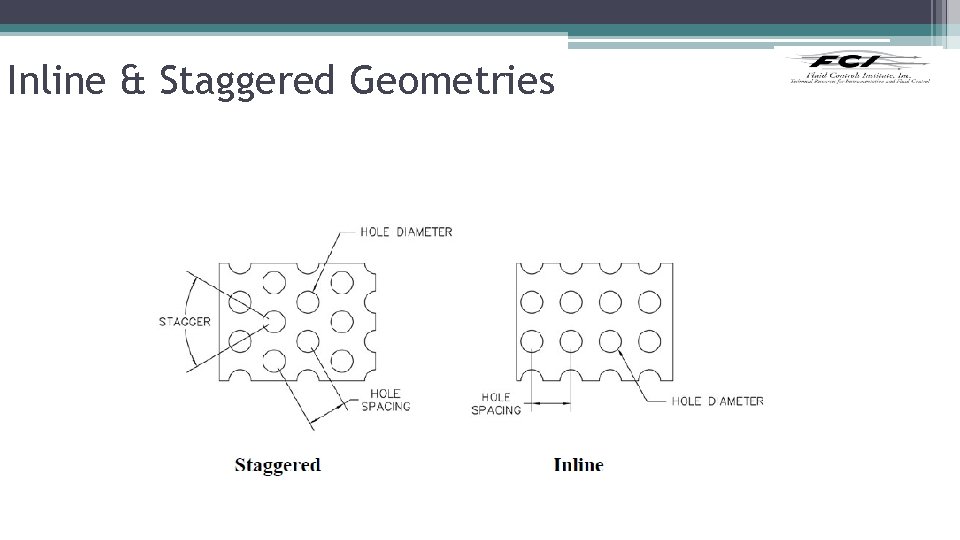
Inline & Staggered Geometries
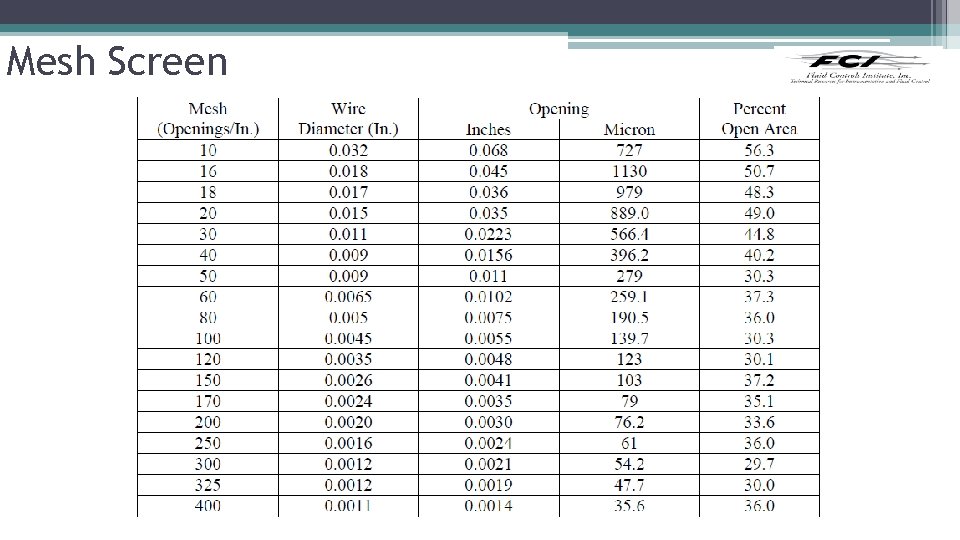
Mesh Screen
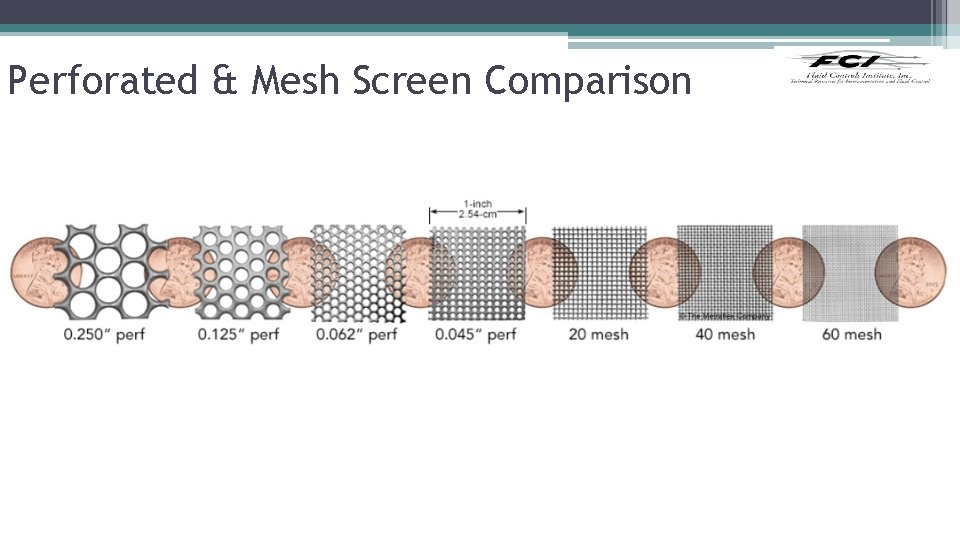
Perforated & Mesh Screen Comparison
Capacity Ratio/Open Area Ratio • The capacity ratio or open area ratio (OAR) of a strainer influences such operating characteristics as the length of time it can operate without cleaning and the resultant pressure loss. The OAR is the relationship between internal cross-sectional area (flow area) of the pipe and the open flow area of the material which makes up the straining element. The nominal pipe size should be used to calculate OAR for threaded strainers. • A 100% OAR, or 1 -to-1 ratio, would give an unrestricted flow area equal to that of the pipe while the element was clean. However, as clogging occurs flow would be inhibited. A 200% OAR, or 2 -to-1 ratio would provide full flow, after the element became 50% clogged. However, larger OAR’s would be appropriate for flow in which much debris is expected to be strained or where very viscous fluids are being handled.
Common Sizing Problem • A tendency exists to select smaller holes than those actually needed, leading to the following issues: ▫ Too-frequent cleaning ▫ Excessive pressure drop ▫ Screens constructed of thinner metal which will withstand less pressure differential ▫ Premature failure
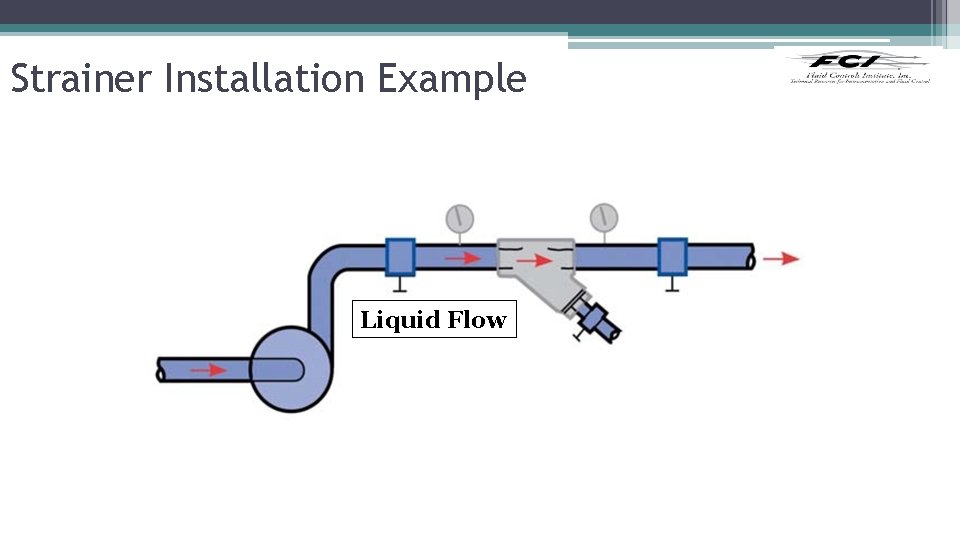
Strainer Installation Example Liquid Flow
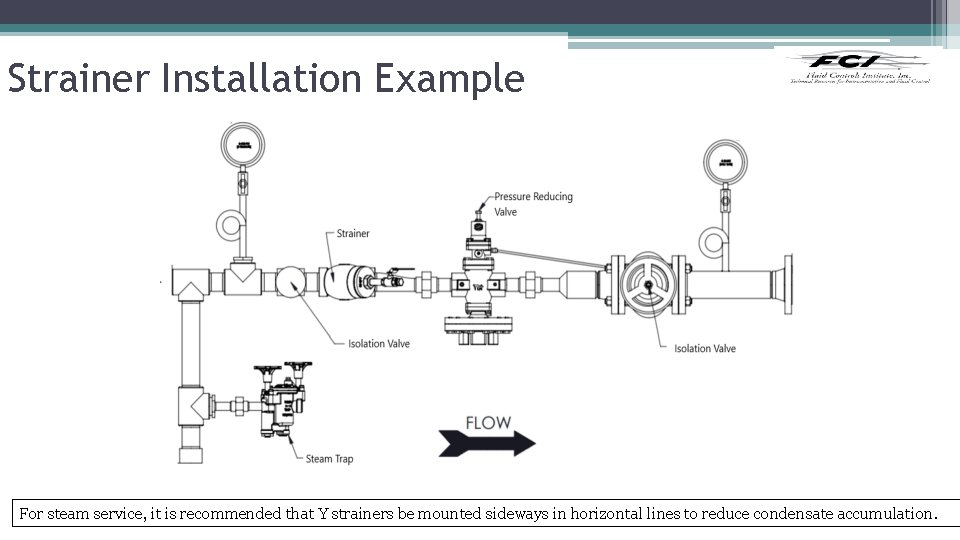
Strainer Installation Example For steam service, it is recommended that Y strainers be mounted sideways in horizontal lines to reduce condensate accumulation.
Reference Materials • Standards: § FCI 20 -1, Standard for Performance Testing Strainers for Liquid Service § FCI 73 -1, Pressure Rating Standard for “Y” Type Strainers § FCI 78 -1, Pressure Rating Standards for Pipeline Strainers Other Than “Y” Type • Tech Sheets: § Engineering Specification for the Selection, Installation and Maintenance of Pipeline Strainers
- Slides: 17