
FLUID BALANCE D C Mikulecky FLUID BALANCE z
FLUID BALANCE D. C. Mikulecky
FLUID BALANCE z. The Balance Concept: Input -Output = Storage/Depletion z. Body Fluid Compartments z. Regulation of fluid balance z. Relation between Salt Balance and ECF Volume
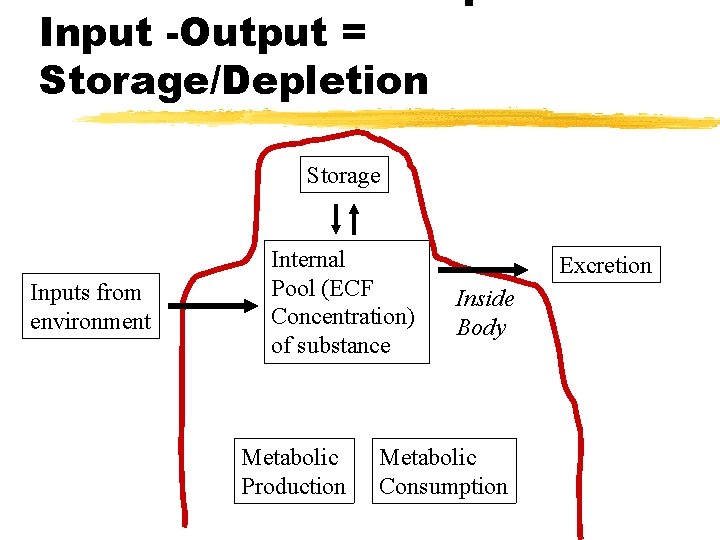
Input -Output = Storage/Depletion Storage Inputs from environment Internal Pool (ECF Concentration) of substance Metabolic Production Excretion Inside Body Metabolic Consumption
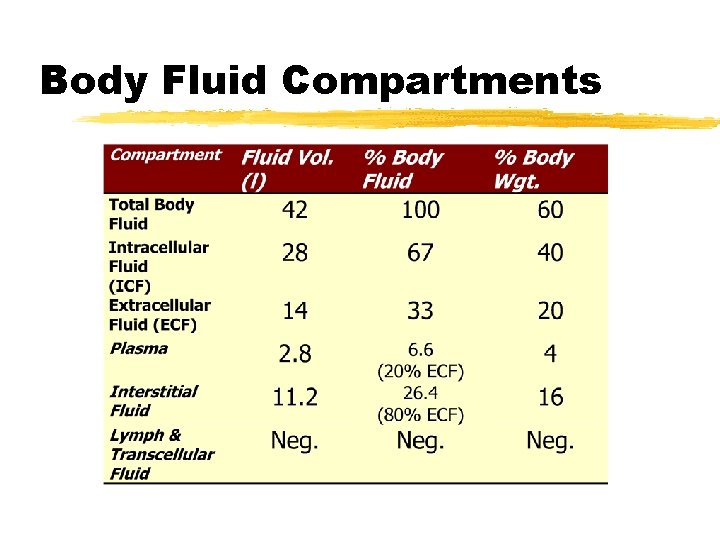
Body Fluid Compartments
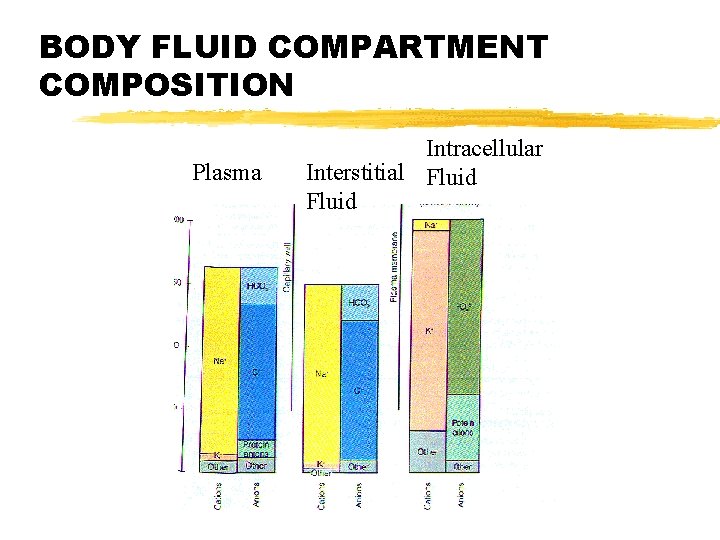
BODY FLUID COMPARTMENT COMPOSITION Plasma Intracellular Interstitial Fluid
Regulation of fluid balance z. ECF Volume: Maintains blood pressure z. ECF Osmolarity: Prevents swelling or shrinking of cells
ECF Volume: Maintains blood pressure - Short Term z. A Change in ECF Volume can raise or lower blood pressure z. Barorecepter reflexes: Alter Cardiac output and Total Peripheral Resistance leading to a compensatory alteration in blood pressure z. Fluid automatically shifts between plasma and interstitial fluid with rises or fall in blood pressure
Relation between Salt Balance and ECF Volume z. The total sodium load (quantity of sodium, not its concentration) in the ECF determines the total amount of water that will be osmotically retained z. The total sodium load is determined by the balance relation
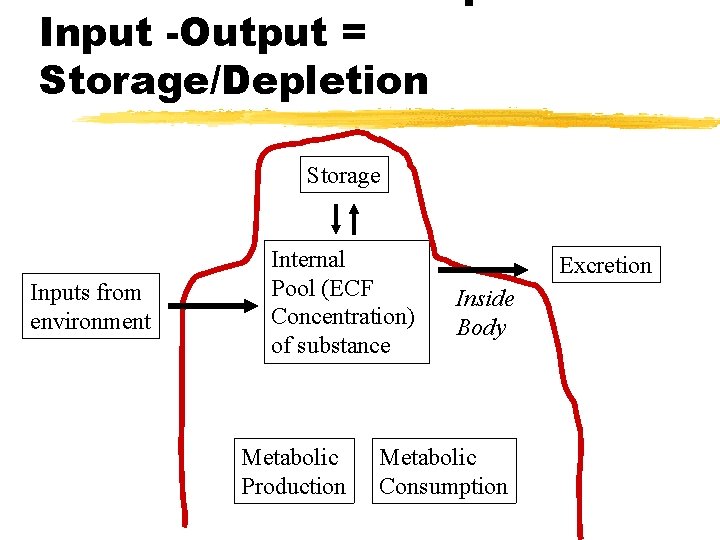
Input -Output = Storage/Depletion Storage Inputs from environment Internal Pool (ECF Concentration) of substance Metabolic Production Excretion Inside Body Metabolic Consumption
Control of sodium load z. Control of amount filtered by regulating GFR (Glomerular Filtration Rate) z. Control of sodium reabsorption through the Renin-Angiotensin-Aldosterone system
ECF Osmolarity: Prevents swelling or shrinking of cells z. ECF hypertonicity is associated with dehydration z. ECF hypotonicity is associated with overhydration z. Control of water balance is by thirst and vasopressin
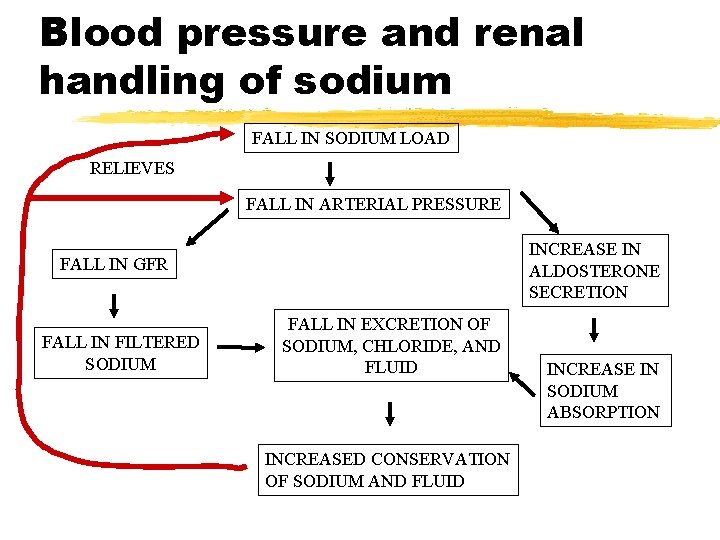
Blood pressure and renal handling of sodium FALL IN SODIUM LOAD RELIEVES FALL IN ARTERIAL PRESSURE INCREASE IN ALDOSTERONE SECRETION FALL IN GFR FALL IN FILTERED SODIUM FALL IN EXCRETION OF SODIUM, CHLORIDE, AND FLUID INCREASED CONSERVATION OF SODIUM AND FLUID INCREASE IN SODIUM ABSORPTION
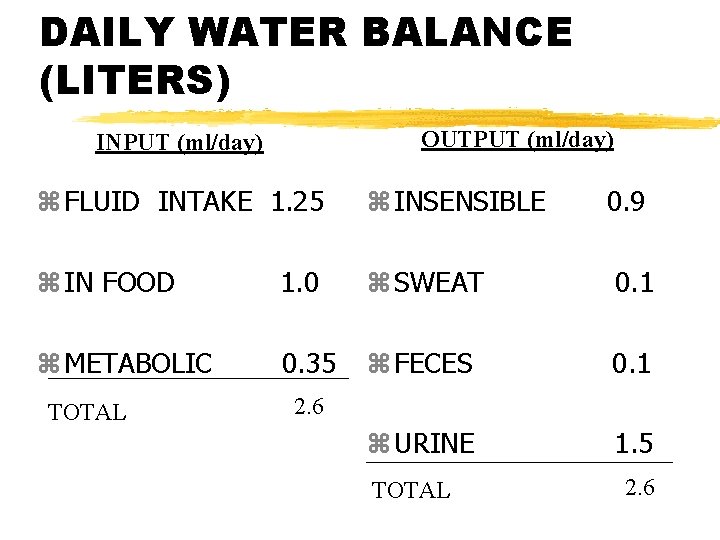
DAILY WATER BALANCE (LITERS) OUTPUT (ml/day) INPUT (ml/day) z FLUID INTAKE 1. 25 z INSENSIBLE 0. 9 z IN FOOD 1. 0 z SWEAT 0. 1 z METABOLIC 0. 35 z FECES 0. 1 z URINE 1. 5 TOTAL 2. 6
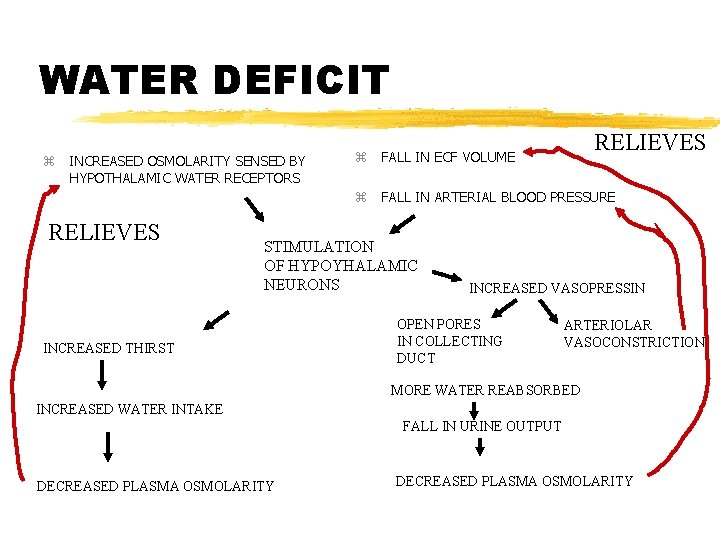
WATER DEFICIT z INCREASED OSMOLARITY SENSED BY HYPOTHALAMIC WATER RECEPTORS RELIEVES z FALL IN ECF VOLUME z FALL IN ARTERIAL BLOOD PRESSURE RELIEVES STIMULATION OF HYPOYHALAMIC NEURONS INCREASED THIRST INCREASED VASOPRESSIN OPEN PORES IN COLLECTING DUCT ARTERIOLAR VASOCONSTRICTION MORE WATER REABSORBED INCREASED WATER INTAKE FALL IN URINE OUTPUT DECREASED PLASMA OSMOLARITY
- Slides: 14