
Fluid and Electrolytes Presented by Joanna Shedd MS
Fluid and Electrolytes Presented by Joanna Shedd, MS, CNS, RN
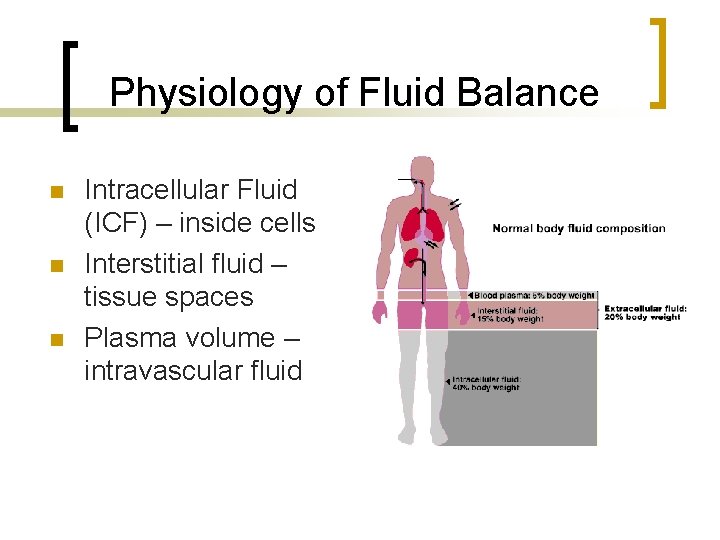
Physiology of Fluid Balance n n n Intracellular Fluid (ICF) – inside cells Interstitial fluid – tissue spaces Plasma volume – intravascular fluid
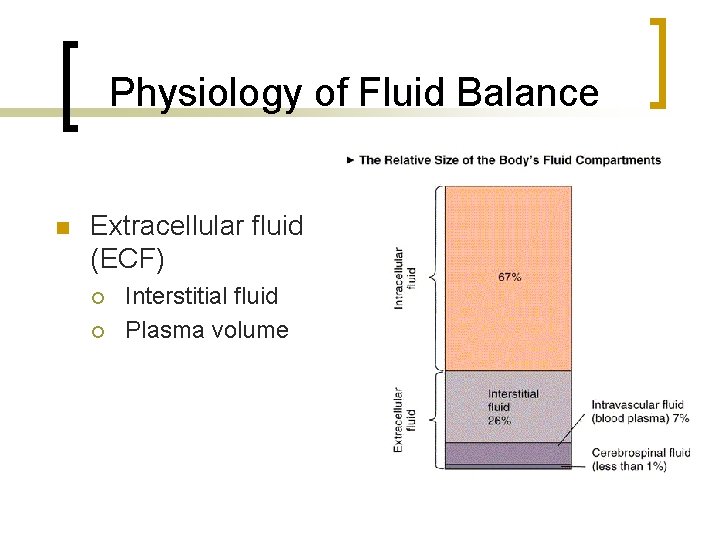
Physiology of Fluid Balance n Extracellular fluid (ECF) ¡ ¡ Interstitial fluid Plasma volume
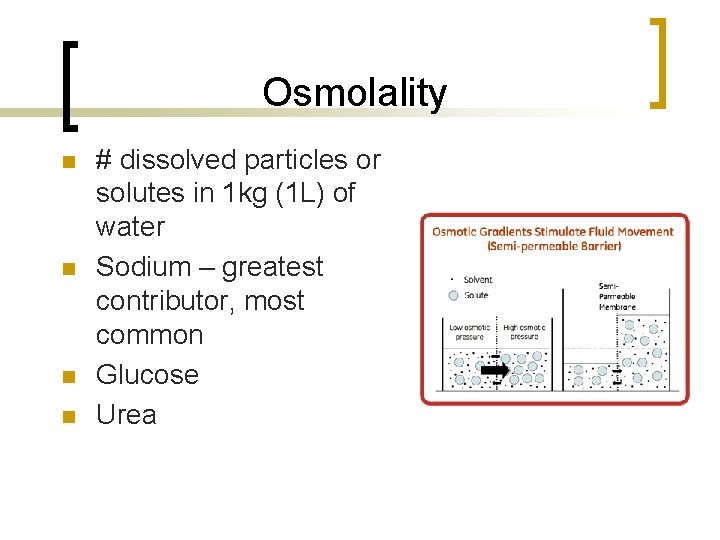
Osmolality n n # dissolved particles or solutes in 1 kg (1 L) of water Sodium – greatest contributor, most common Glucose Urea
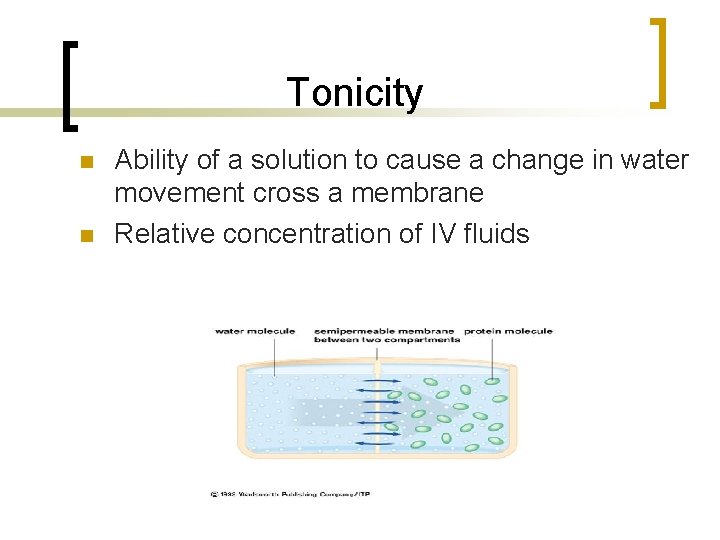
Tonicity n n Ability of a solution to cause a change in water movement cross a membrane Relative concentration of IV fluids
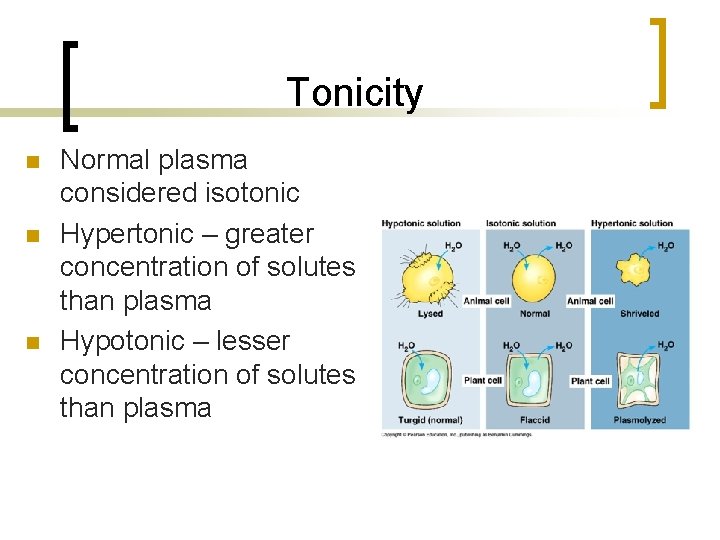
Tonicity n n n Normal plasma considered isotonic Hypertonic – greater concentration of solutes than plasma Hypotonic – lesser concentration of solutes than plasma
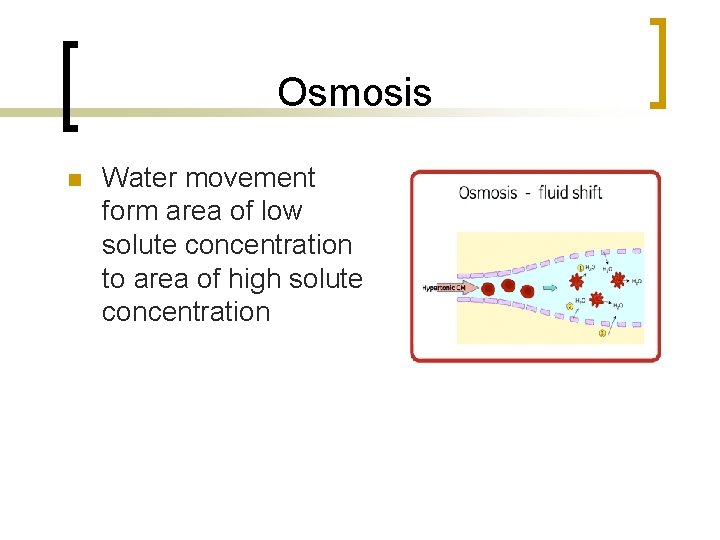
Osmosis n Water movement form area of low solute concentration to area of high solute concentration
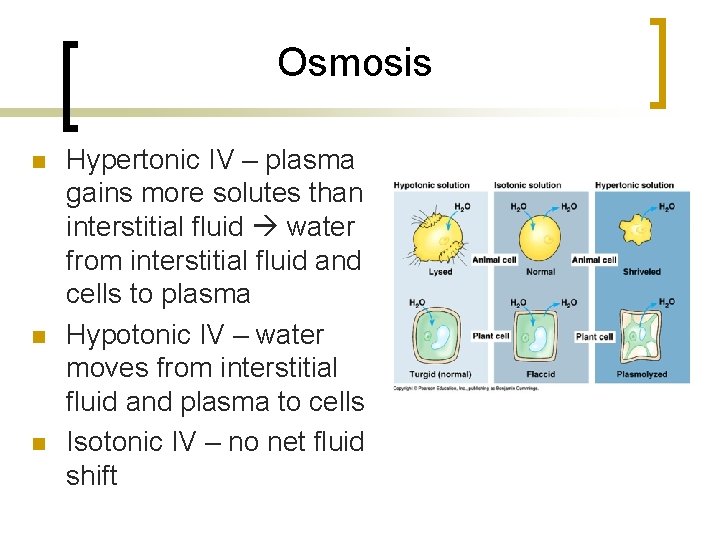
Osmosis n n n Hypertonic IV – plasma gains more solutes than interstitial fluid water from interstitial fluid and cells to plasma Hypotonic IV – water moves from interstitial fluid and plasma to cells Isotonic IV – no net fluid shift
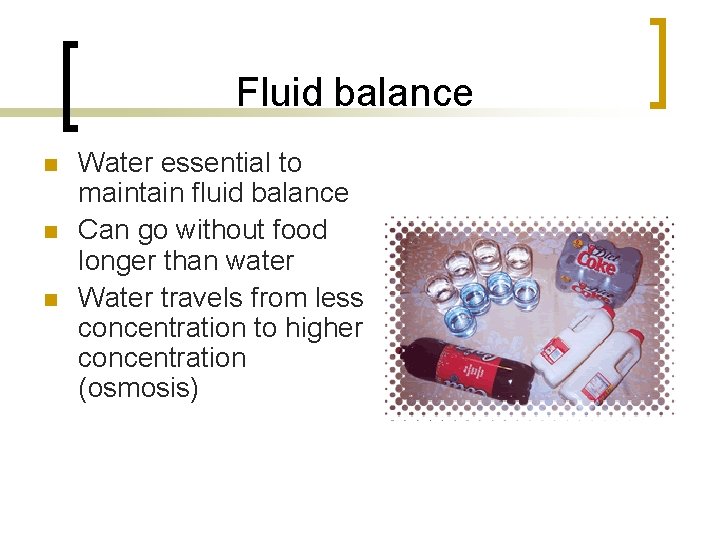
Fluid balance n n n Water essential to maintain fluid balance Can go without food longer than water Water travels from less concentration to higher concentration (osmosis)
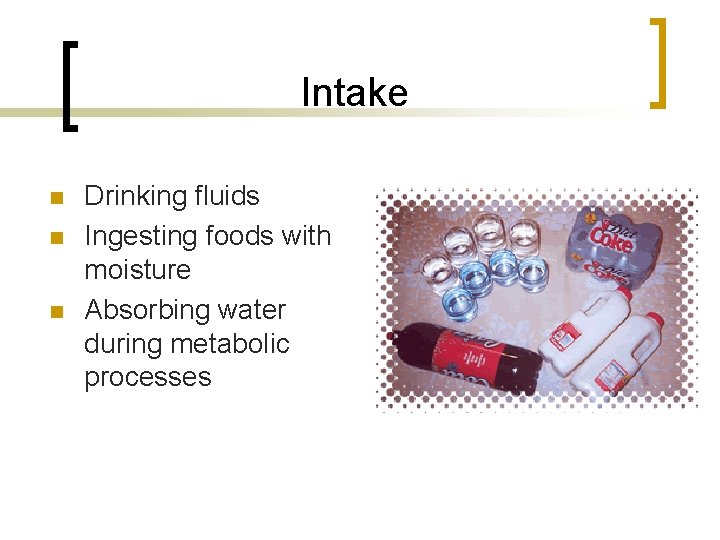
Intake n n n Drinking fluids Ingesting foods with moisture Absorbing water during metabolic processes
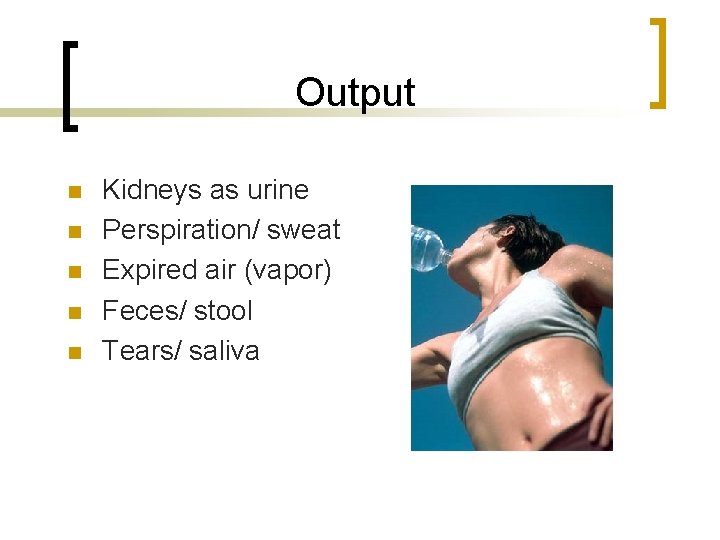
Output n n n Kidneys as urine Perspiration/ sweat Expired air (vapor) Feces/ stool Tears/ saliva
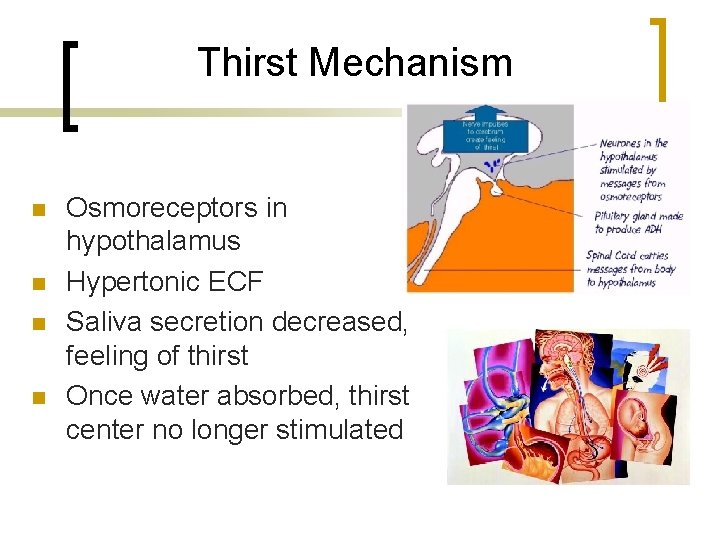
Thirst Mechanism n n Osmoreceptors in hypothalamus Hypertonic ECF Saliva secretion decreased, feeling of thirst Once water absorbed, thirst center no longer stimulated
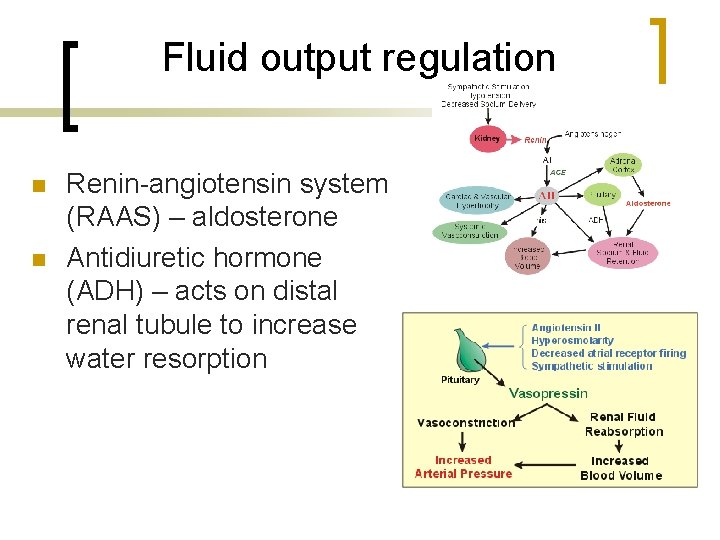
Fluid output regulation n n Renin-angiotensin system (RAAS) – aldosterone Antidiuretic hormone (ADH) – acts on distal renal tubule to increase water resorption
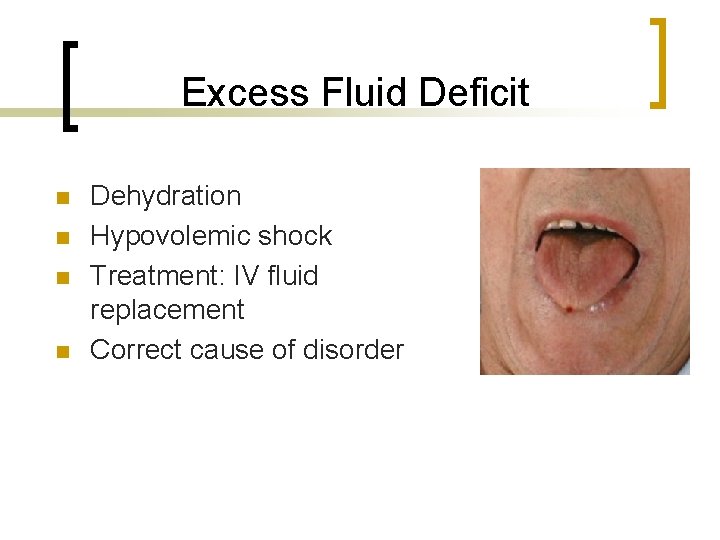
Excess Fluid Deficit n n Dehydration Hypovolemic shock Treatment: IV fluid replacement Correct cause of disorder
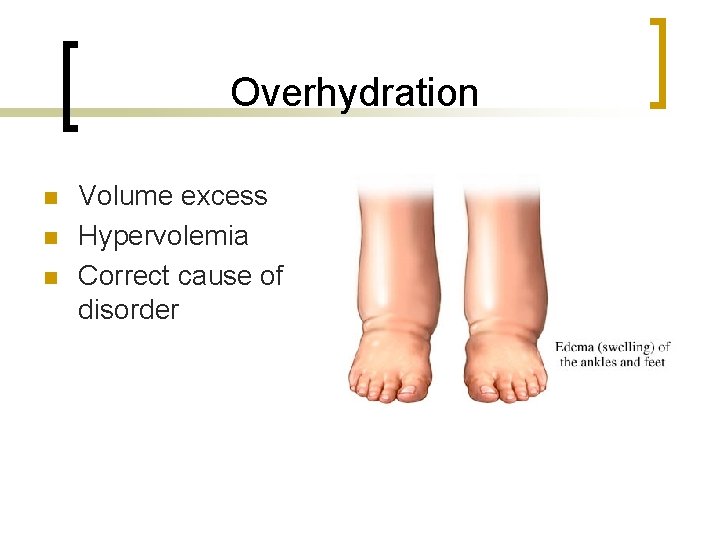
Overhydration n Volume excess Hypervolemia Correct cause of disorder
Colloids n n n Proteins/ large molecules that remain in blood for a long time Draw water from cells into plasma Increase plasma osmolality and osmotic pressure
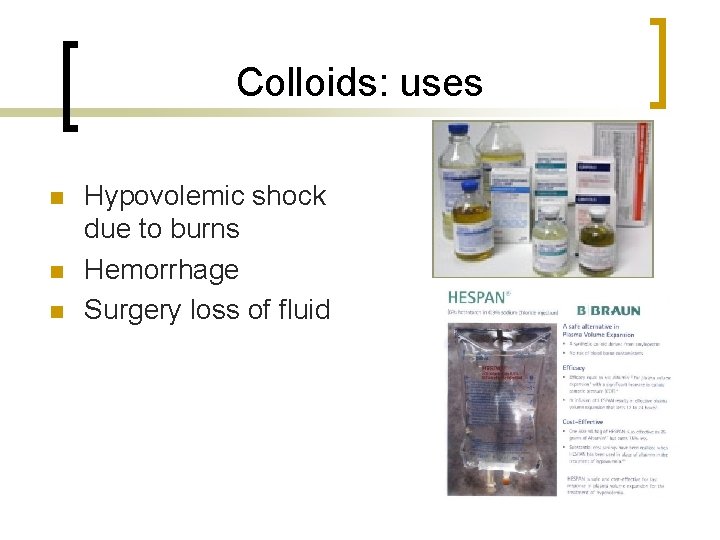
Colloids: uses n n n Hypovolemic shock due to burns Hemorrhage Surgery loss of fluid
Crystalloids n n Electrolytes used to replace lost fluids Promote urine output Quick diffusion across membranes Leave plasma and enter interstitital fluid
Crystalloids: uses n n n Replace electrolytes Increase total fluid volume in body Compartment which is most expanded dependent on solute
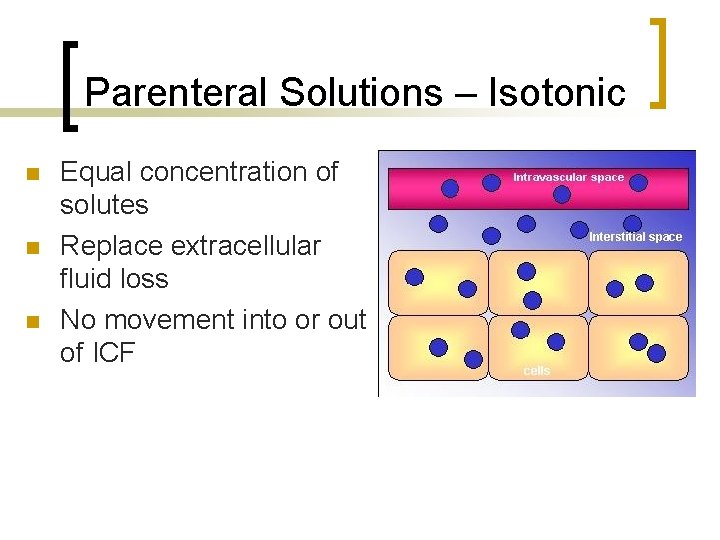
Parenteral Solutions – Isotonic n n n Equal concentration of solutes Replace extracellular fluid loss No movement into or out of ICF
Isotonic - uses n n n Before and after blood transfusion (NS) Treat metabolic alkalosis Intravascular dehydration
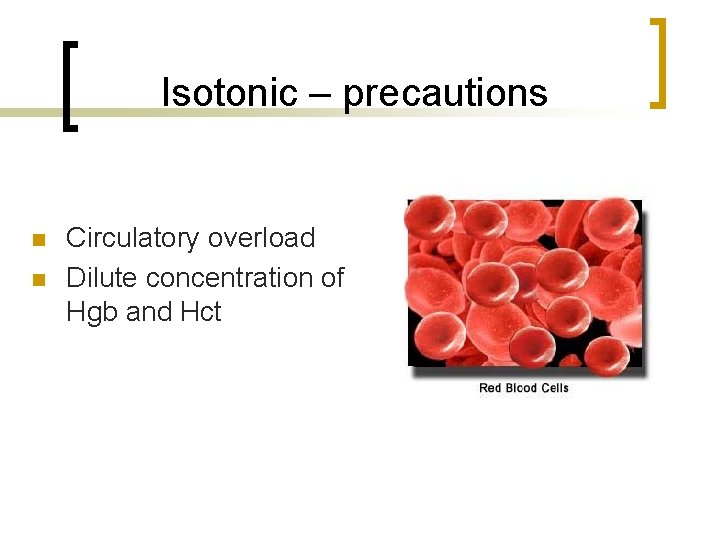
Isotonic – precautions n n Circulatory overload Dilute concentration of Hgb and Hct
Hyper- vs. Hypotonic http: //youtu. be/SSS 3 Et. KAz. Yc You. Tube explanation of hypertonicity and hypotonicity
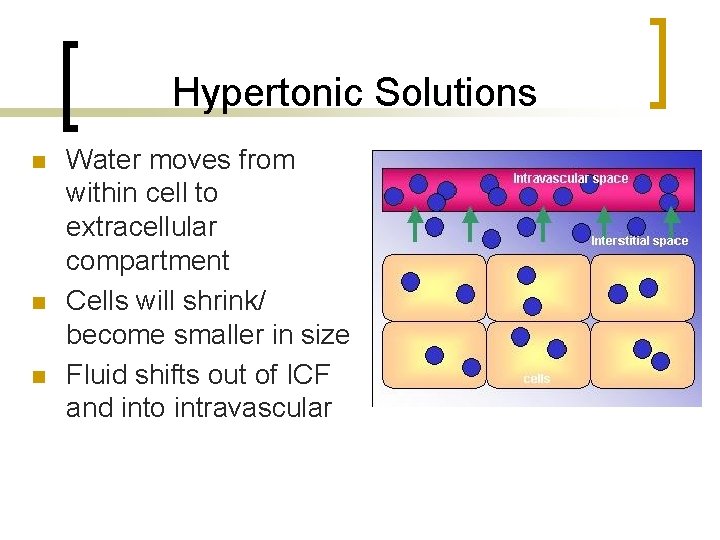
Hypertonic Solutions n n n Water moves from within cell to extracellular compartment Cells will shrink/ become smaller in size Fluid shifts out of ICF and into intravascular
Hypertonic – uses n n n Intravascular dehydration/ interstitial overload Decreases cellular edema raise BP and increase UO Draw fluid out of edematous cells to plasma Replace electrolytes Fluid shifted to plasma to be excreted by kidneys
Hypertonic – precautions n n n Circulatory overload Irritation to vein walls Careful with elderly as water retained as a response to stress
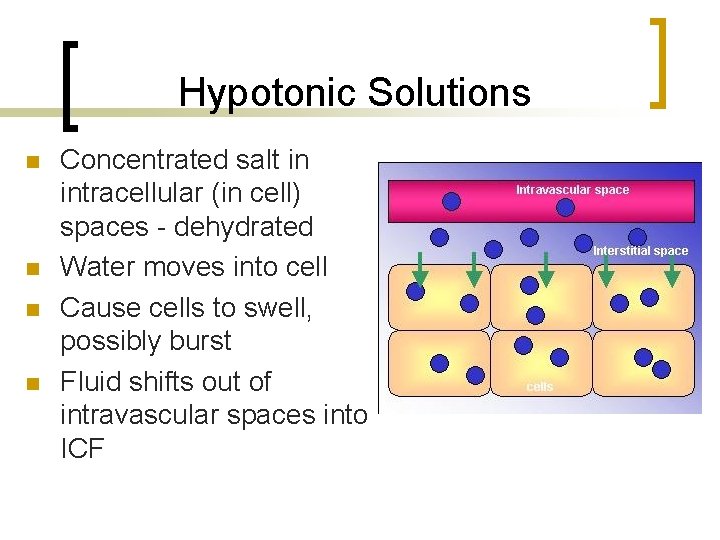
Hypotonic Solutions n n Concentrated salt in intracellular (in cell) spaces - dehydrated Water moves into cell Cause cells to swell, possibly burst Fluid shifts out of intravascular spaces into ICF
Hypotonic – uses n n n Cellular dehydration Hydrate cells and lower serum sodium levels Replace electrolytes depleted by diuretics Assists with renal function Provides free water, Na, and Cl Assists with daily body fluid needs
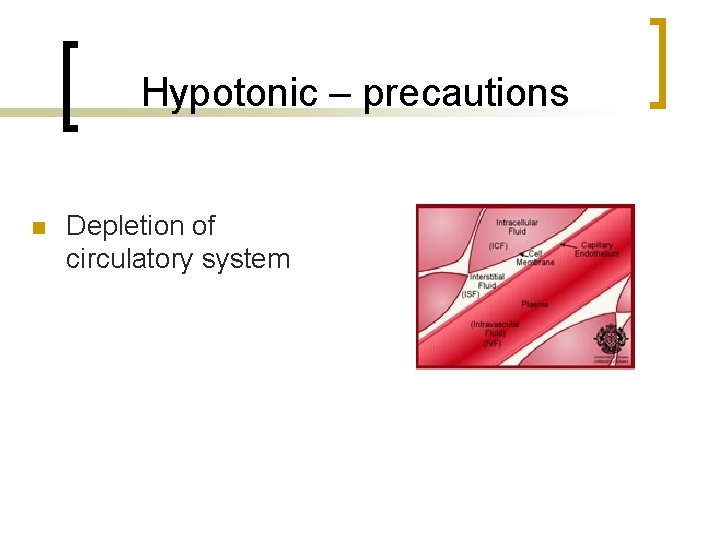
Hypotonic – precautions n Depletion of circulatory system
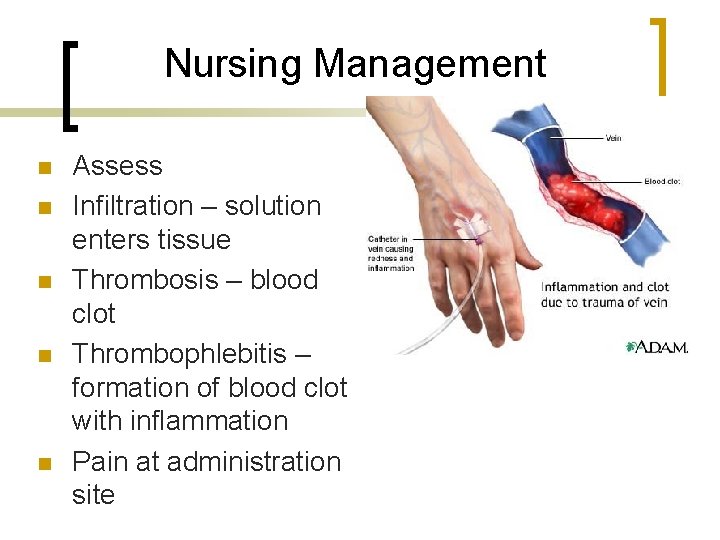
Nursing Management n n n Assess Infiltration – solution enters tissue Thrombosis – blood clot Thrombophlebitis – formation of blood clot with inflammation Pain at administration site
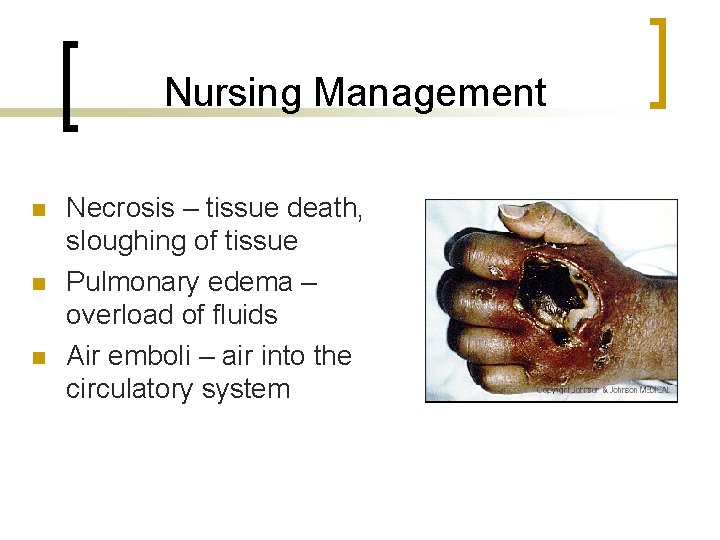
Nursing Management n n n Necrosis – tissue death, sloughing of tissue Pulmonary edema – overload of fluids Air emboli – air into the circulatory system
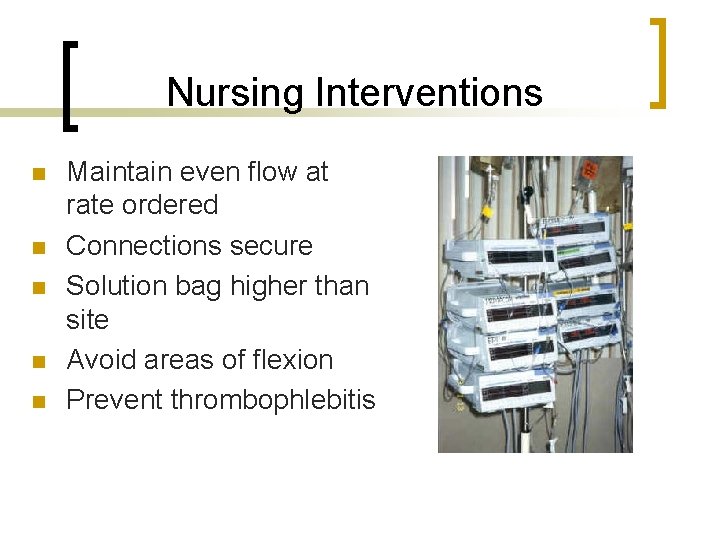
Nursing Interventions n n n Maintain even flow at rate ordered Connections secure Solution bag higher than site Avoid areas of flexion Prevent thrombophlebitis
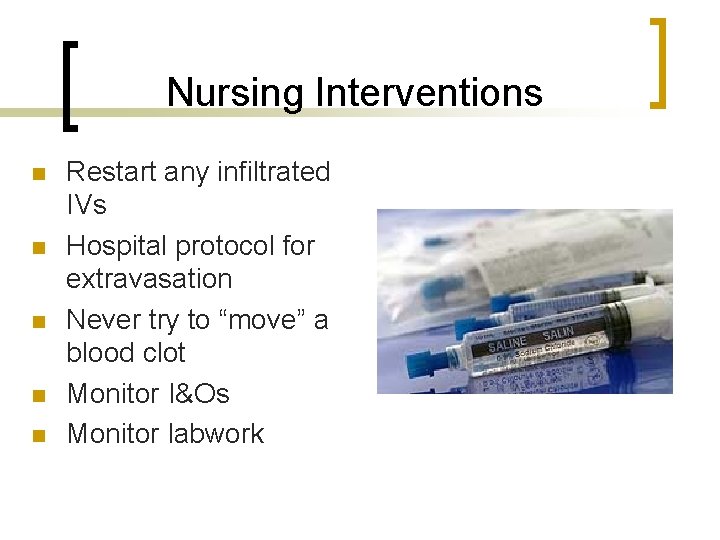
Nursing Interventions n n n Restart any infiltrated IVs Hospital protocol for extravasation Never try to “move” a blood clot Monitor I&Os Monitor labwork
Nursing Education n n Need for IV therapy Inform MD of labwork Educate family re: pain, infiltration, do not play with IV machinery Care of IV line with ambulation, getting out of bed Assessment of patient qshift and prn
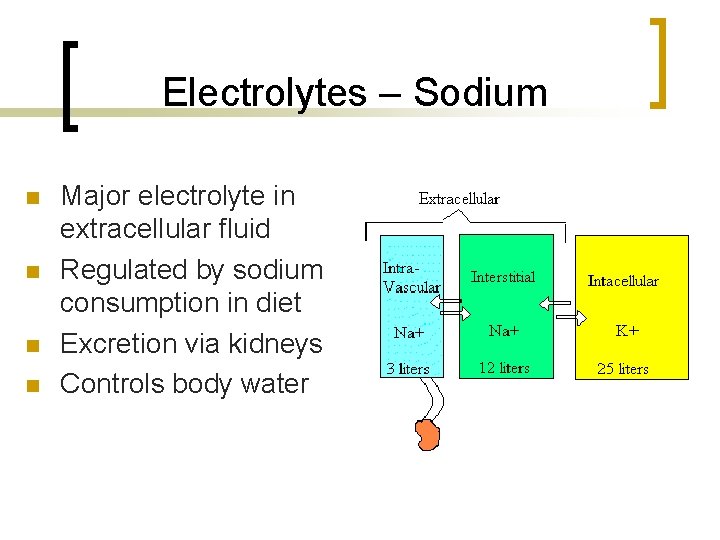
Electrolytes – Sodium n n Major electrolyte in extracellular fluid Regulated by sodium consumption in diet Excretion via kidneys Controls body water
Sodium n n n Electrophysiology of nerves, muscles, gland cells Regulates p. H and isotonicity Combines readily with Cl and HCO 3 to promote acid-base balance
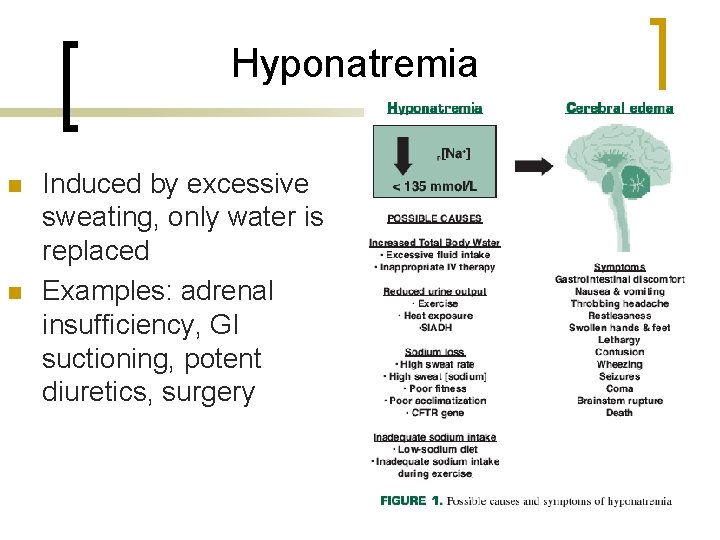
Hyponatremia n n Induced by excessive sweating, only water is replaced Examples: adrenal insufficiency, GI suctioning, potent diuretics, surgery
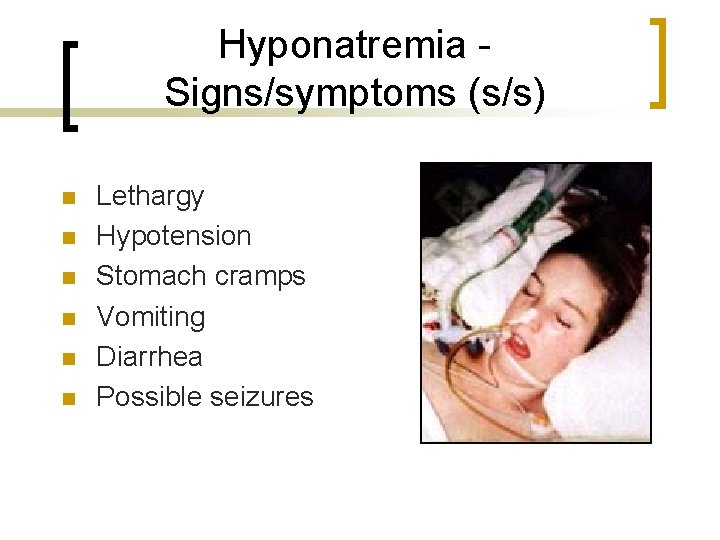
Hyponatremia Signs/symptoms (s/s) n n n Lethargy Hypotension Stomach cramps Vomiting Diarrhea Possible seizures
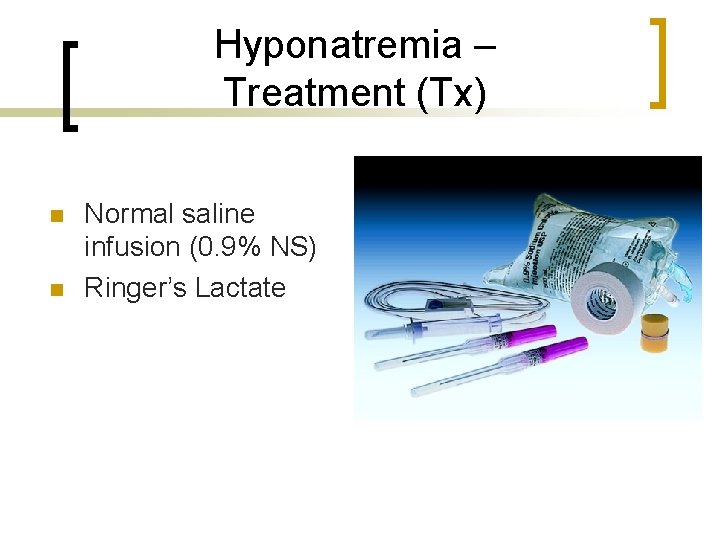
Hyponatremia – Treatment (Tx) n n Normal saline infusion (0. 9% NS) Ringer’s Lactate
Hypernatremia n n Excessive use of saline infusions Inadequate water consumption Examples: taking drugs such as cortisone preps and cough medications Excess fluid loss without a loss of sodium
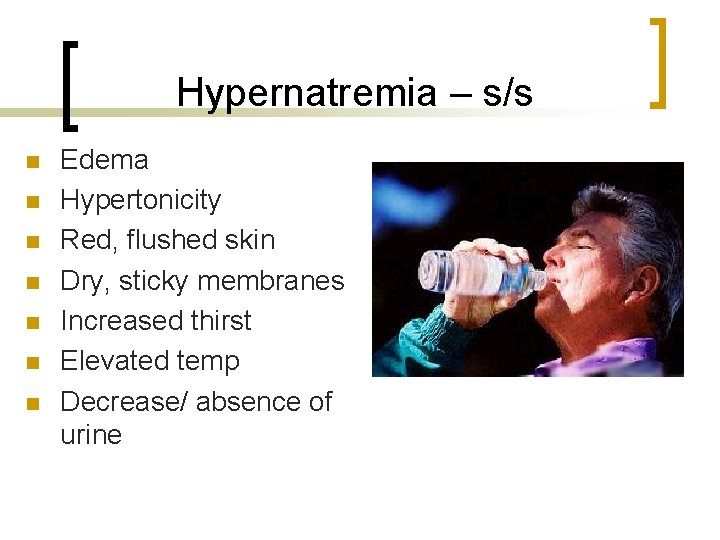
Hypernatremia – s/s n n n n Edema Hypertonicity Red, flushed skin Dry, sticky membranes Increased thirst Elevated temp Decrease/ absence of urine
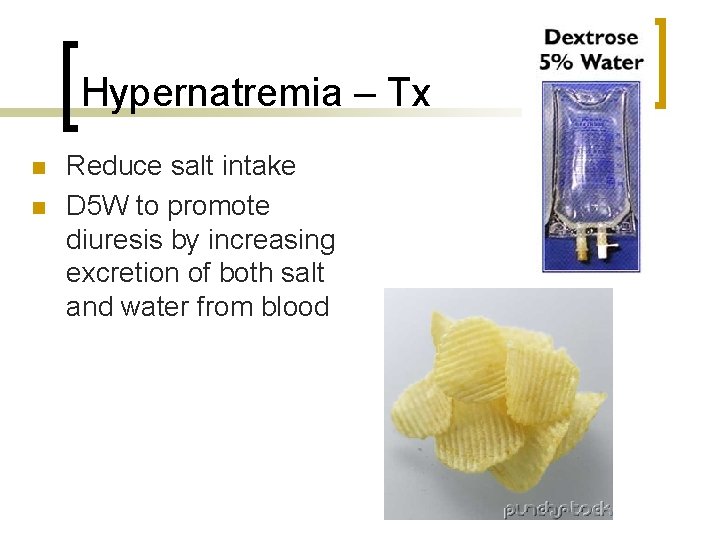
Hypernatremia – Tx n n Reduce salt intake D 5 W to promote diuresis by increasing excretion of both salt and water from blood
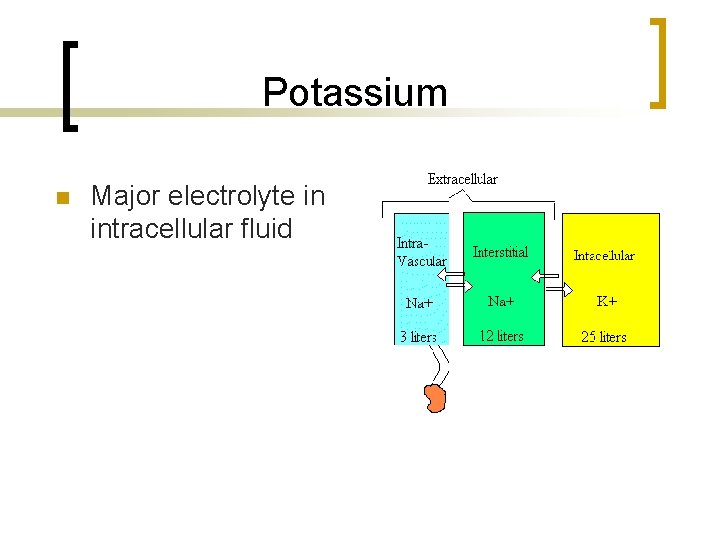
Potassium n Major electrolyte in intracellular fluid
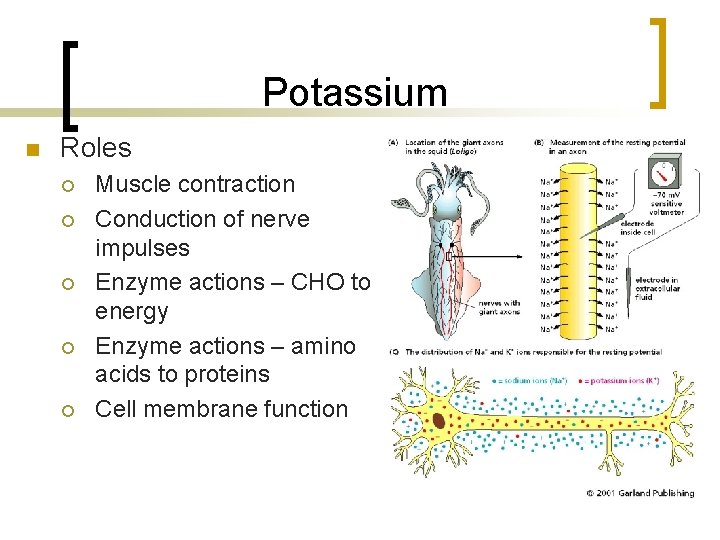
Potassium n Roles ¡ ¡ ¡ Muscle contraction Conduction of nerve impulses Enzyme actions – CHO to energy Enzyme actions – amino acids to proteins Cell membrane function
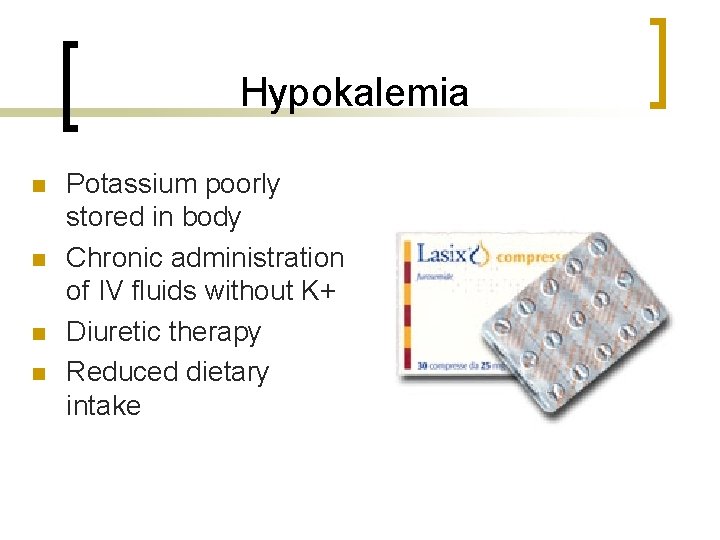
Hypokalemia n n Potassium poorly stored in body Chronic administration of IV fluids without K+ Diuretic therapy Reduced dietary intake
Hypokalemia n n Poor absorption – steatorrhea Vomiting/ diarrhea GI suctioning or drainage Extensive burns
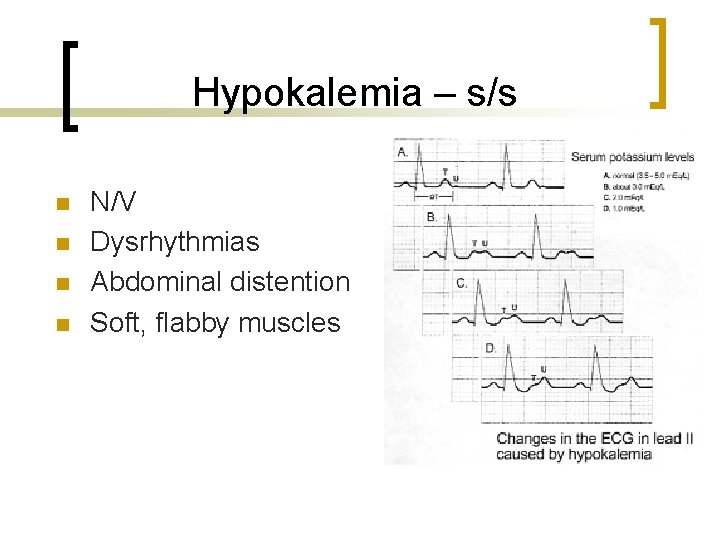
Hypokalemia – s/s n n N/V Dysrhythmias Abdominal distention Soft, flabby muscles
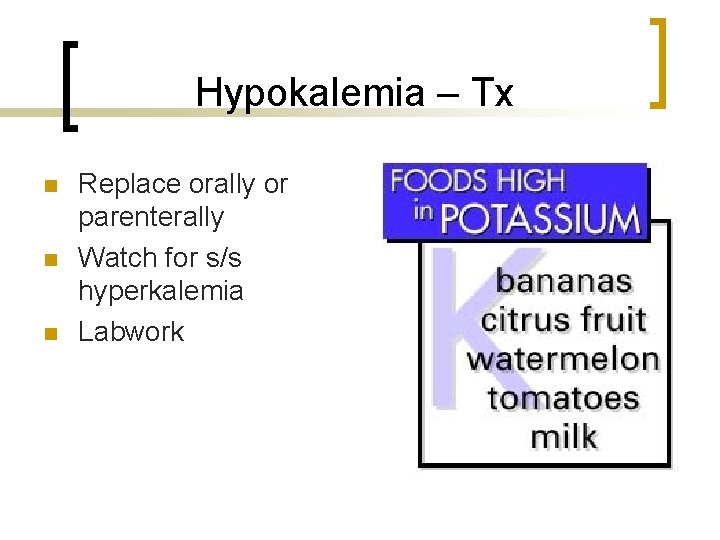
Hypokalemia – Tx n n n Replace orally or parenterally Watch for s/s hyperkalemia Labwork
Hyperkalemia n n n Acute/ chronic renal failure Overtreatment with K+ salts Metabolic acidosis (diabetes)
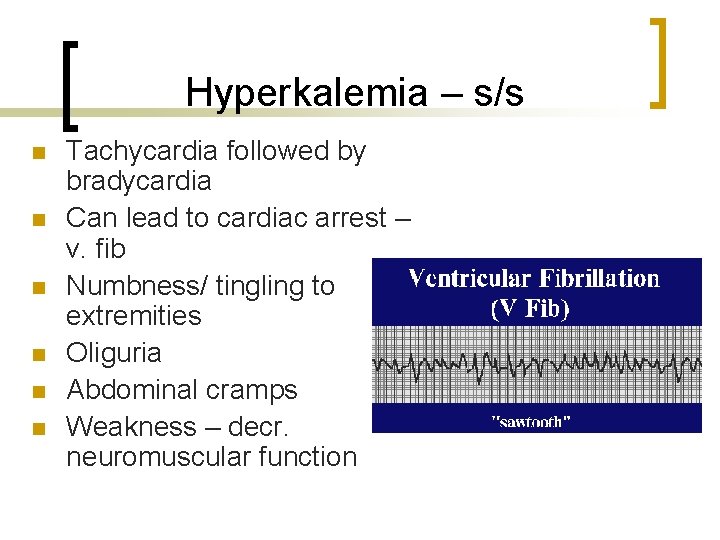
Hyperkalemia – s/s n n n Tachycardia followed by bradycardia Can lead to cardiac arrest – v. fib Numbness/ tingling to extremities Oliguria Abdominal cramps Weakness – decr. neuromuscular function
Hyperkalemia – Tx n n Stop K-sparing drugs or supplements Hypertonic dextrose with insulin (shift K into the cells temporarily) Kayexalate Diuretic therapy
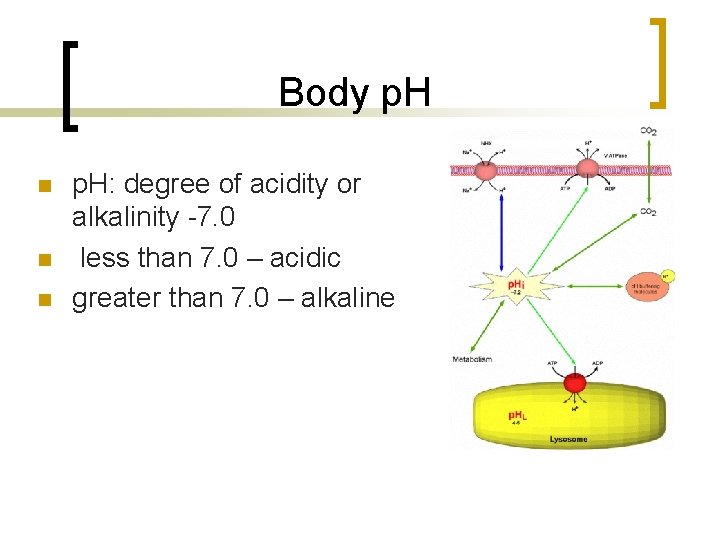
Body p. H n n n p. H: degree of acidity or alkalinity -7. 0 less than 7. 0 – acidic greater than 7. 0 – alkaline
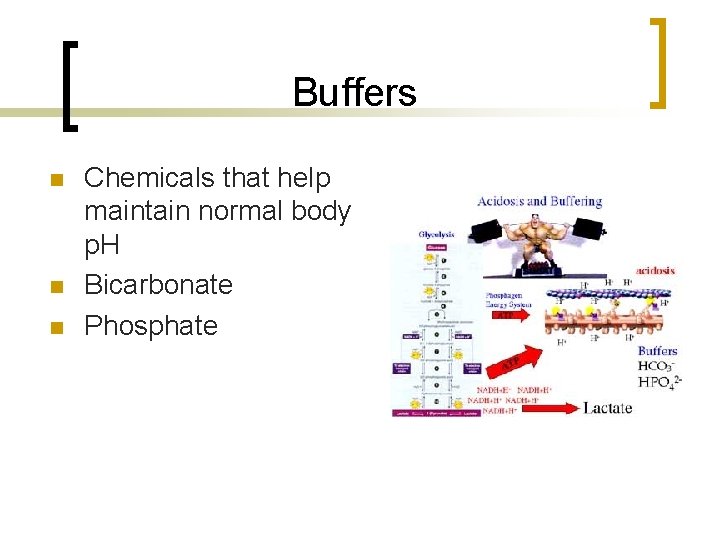
Buffers n n n Chemicals that help maintain normal body p. H Bicarbonate Phosphate
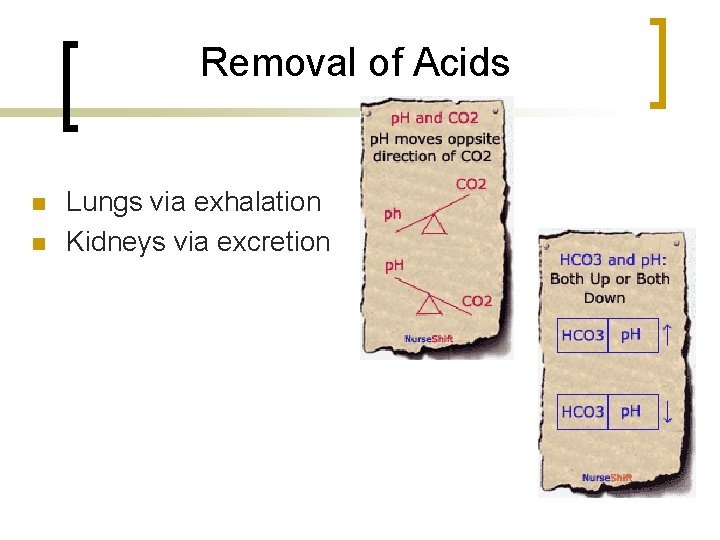
Removal of Acids n n Lungs via exhalation Kidneys via excretion
Acidosis – p. H < 7. 35 n n n Range: 7. 35 -7. 45 Can be respiratory or metabolic Sleepiness/ coma Disorientation Dizziness/ headache Seizures
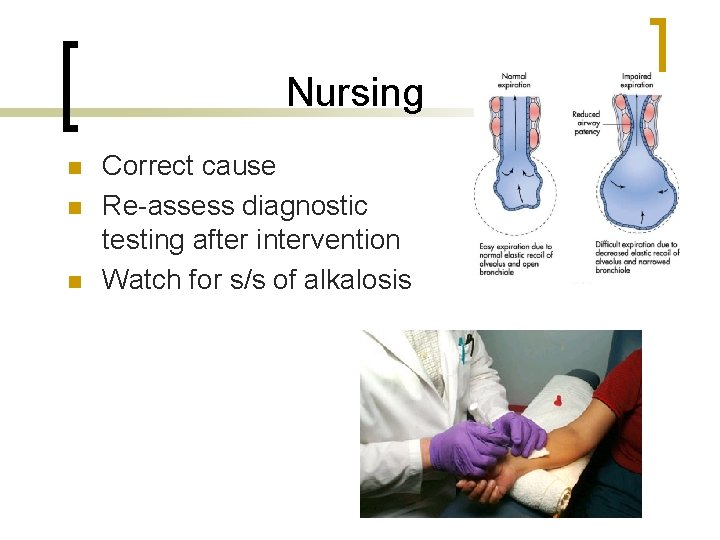
Nursing n n n Correct cause Re-assess diagnostic testing after intervention Watch for s/s of alkalosis
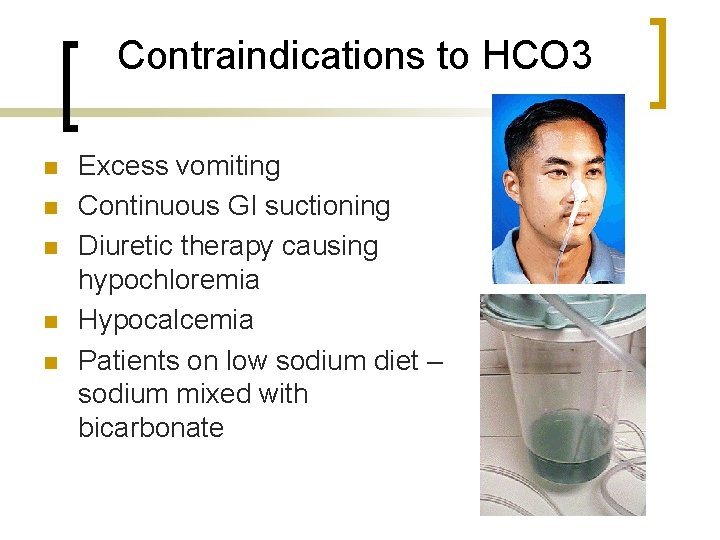
Contraindications to HCO 3 n n n Excess vomiting Continuous GI suctioning Diuretic therapy causing hypochloremia Hypocalcemia Patients on low sodium diet – sodium mixed with bicarbonate
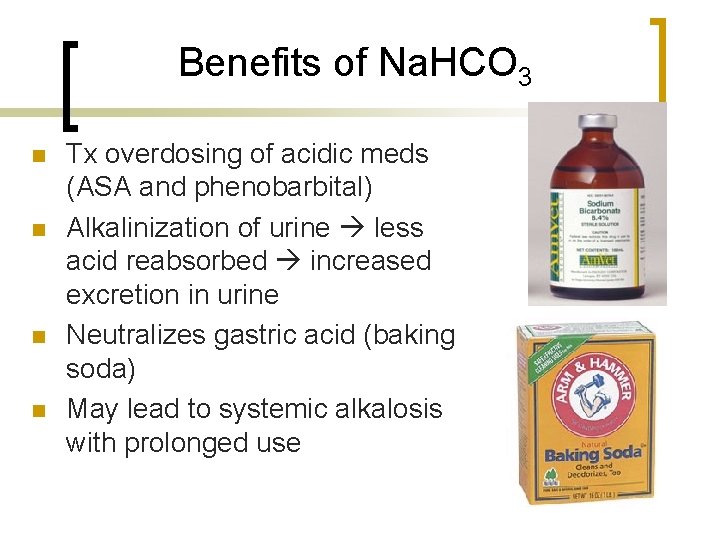
Benefits of Na. HCO 3 n n Tx overdosing of acidic meds (ASA and phenobarbital) Alkalinization of urine less acid reabsorbed increased excretion in urine Neutralizes gastric acid (baking soda) May lead to systemic alkalosis with prolonged use
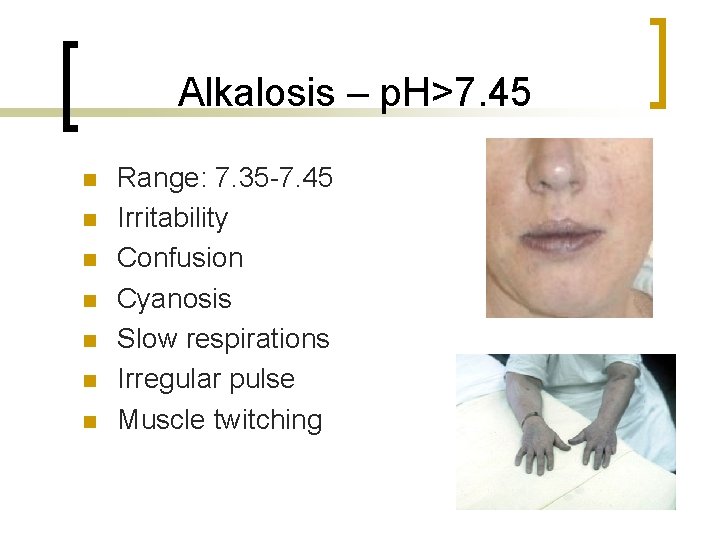
Alkalosis – p. H>7. 45 n n n n Range: 7. 35 -7. 45 Irritability Confusion Cyanosis Slow respirations Irregular pulse Muscle twitching
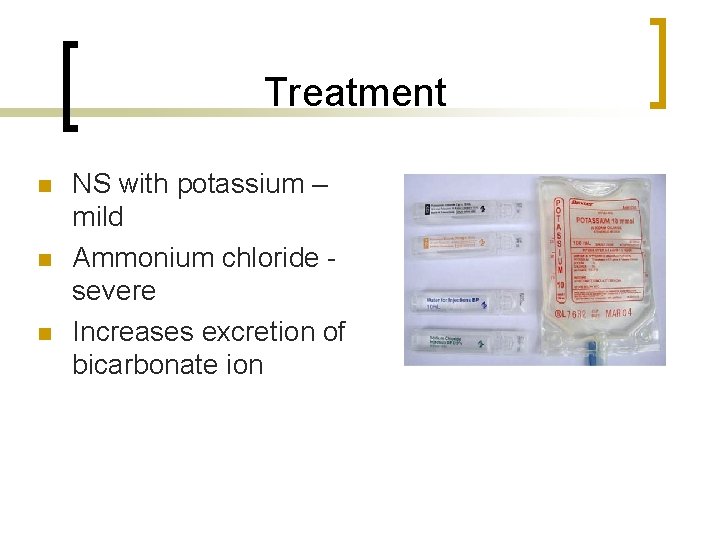
Treatment n n n NS with potassium – mild Ammonium chloride severe Increases excretion of bicarbonate ion
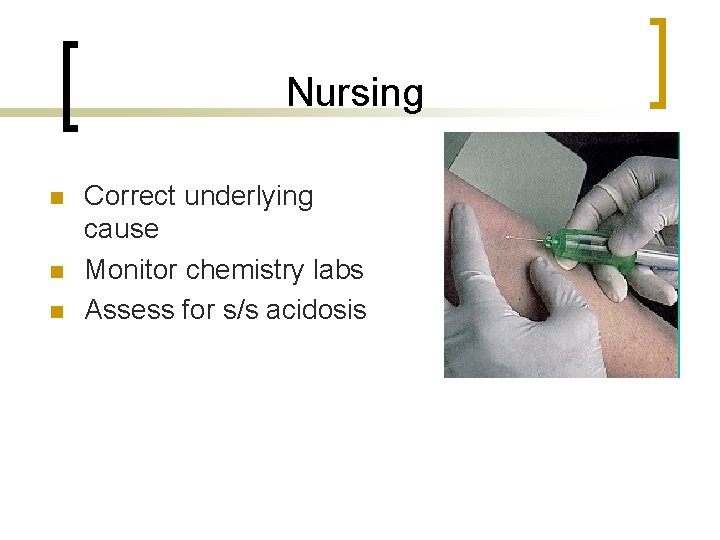
Nursing n n n Correct underlying cause Monitor chemistry labs Assess for s/s acidosis
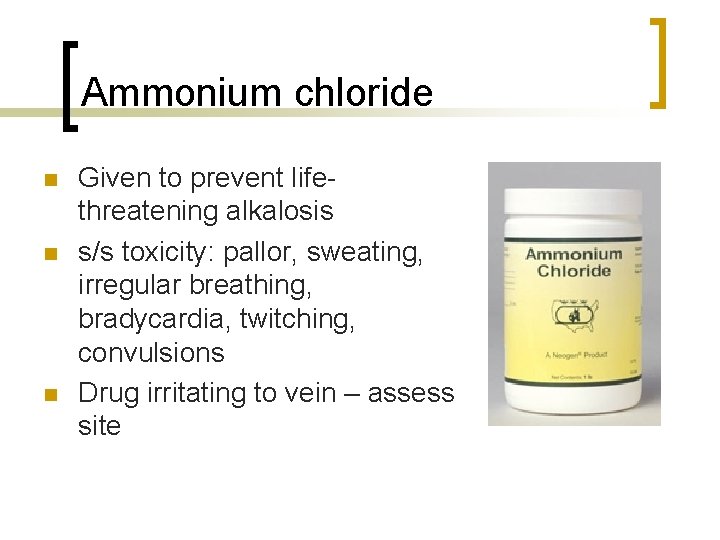
Ammonium chloride n n n Given to prevent lifethreatening alkalosis s/s toxicity: pallor, sweating, irregular breathing, bradycardia, twitching, convulsions Drug irritating to vein – assess site
- Slides: 62