
Fluid and Electrolytes for surgical patients in Emergency


- Slides: 47
Fluid and Electrolytes for surgical patients in Emergency Department Dr Abdulaziz Alrabiah, MD Emergency Medicine, Trauma & EMS specialist
Objectives • • IV Fluids • different types and classifications • indications • +/- contraindication Electrolytes • Hyper / Hypo Na • Hyper / Hypo K • Hyper / Hypo Ca
IV Fluid
Types of IV fluid • 3 types ( tonicity / osmolarity ) • Isotonic • Hypertonic
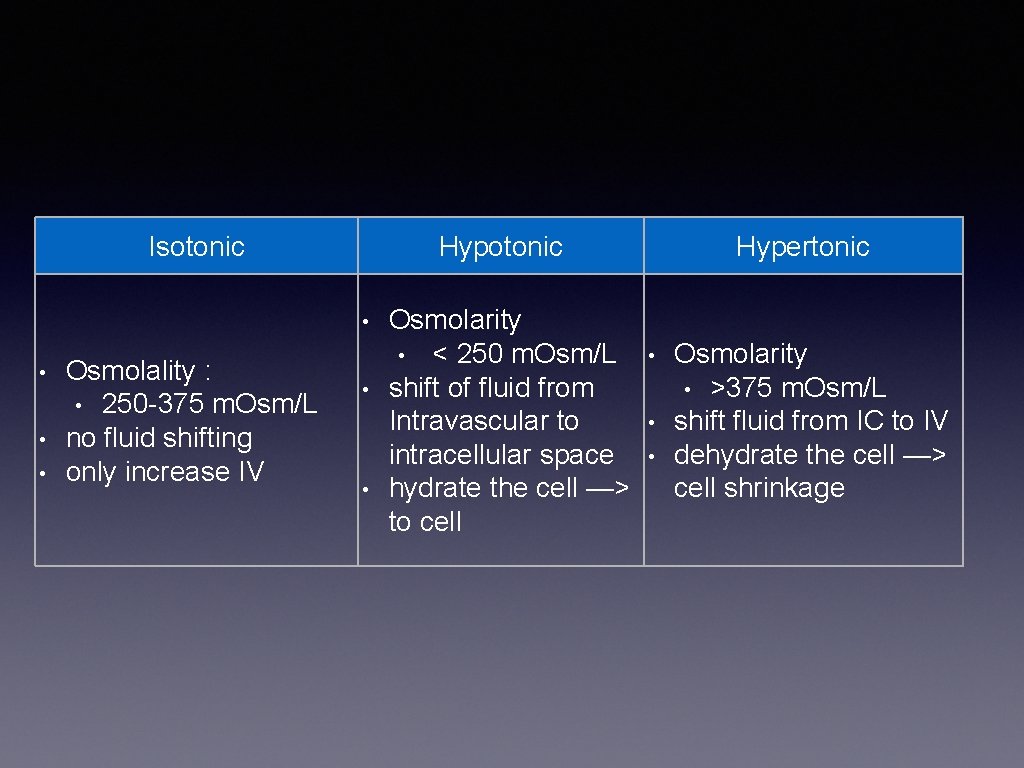
Isotonic Hypotonic • • Osmolality : • 250 -375 m. Osm/L no fluid shifting only increase IV • • Osmolarity • < 250 m. Osm/L shift of fluid from Intravascular to intracellular space hydrate the cell —> to cell Hypertonic • • • Osmolarity • >375 m. Osm/L shift fluid from IC to IV dehydrate the cell —> cell shrinkage
Classifications of IV fluid • Crystalloids • Colloids
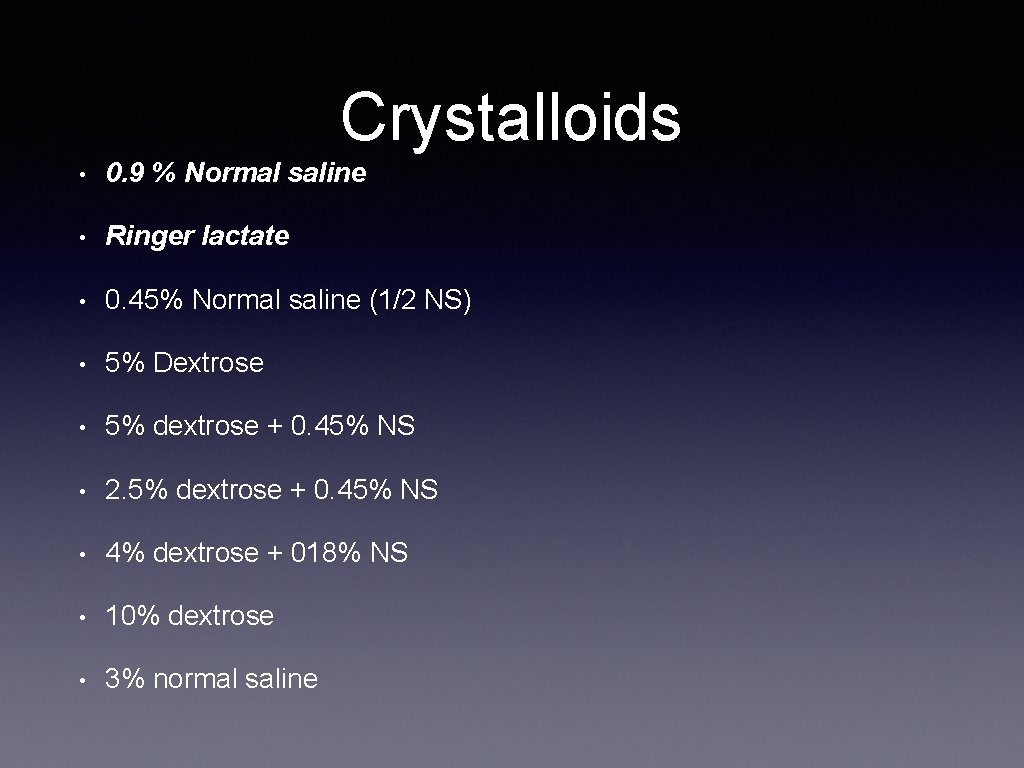
Crystalloids • 0. 9 % Normal saline • Ringer lactate • 0. 45% Normal saline (1/2 NS) • 5% Dextrose • 5% dextrose + 0. 45% NS • 2. 5% dextrose + 0. 45% NS • 4% dextrose + 018% NS • 10% dextrose • 3% normal saline
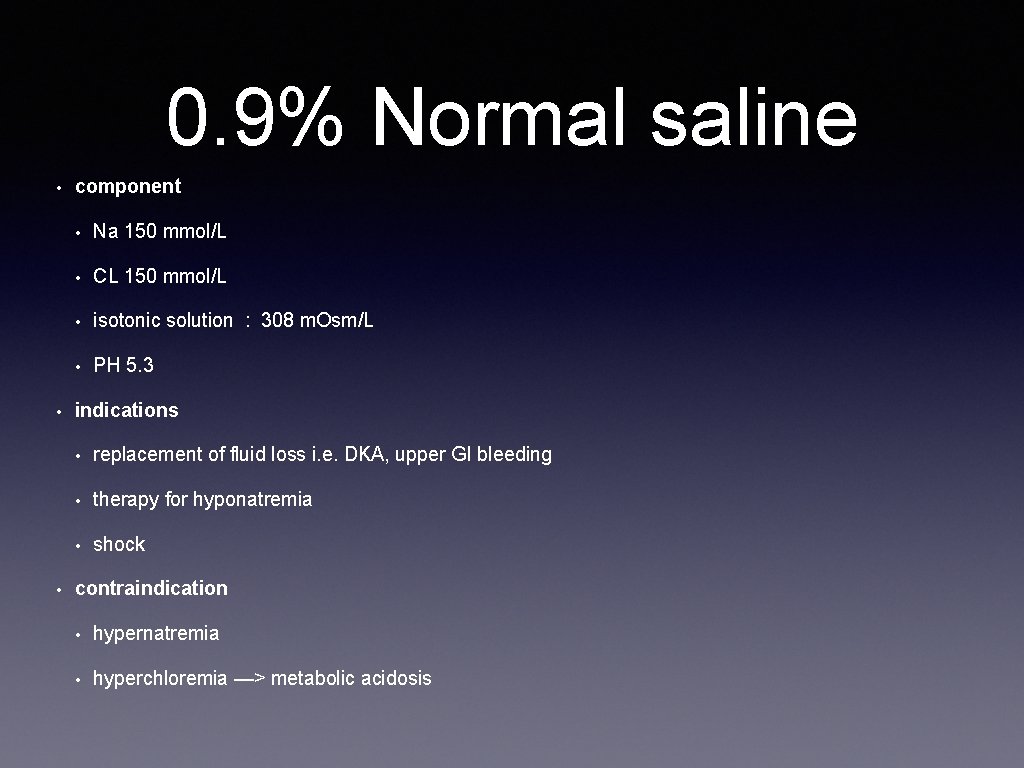
0. 9% Normal saline • • • component • Na 150 mmol/L • CL 150 mmol/L • isotonic solution : 308 m. Osm/L • PH 5. 3 indications • replacement of fluid loss i. e. DKA, upper GI bleeding • therapy for hyponatremia • shock contraindication • hypernatremia • hyperchloremia —> metabolic acidosis
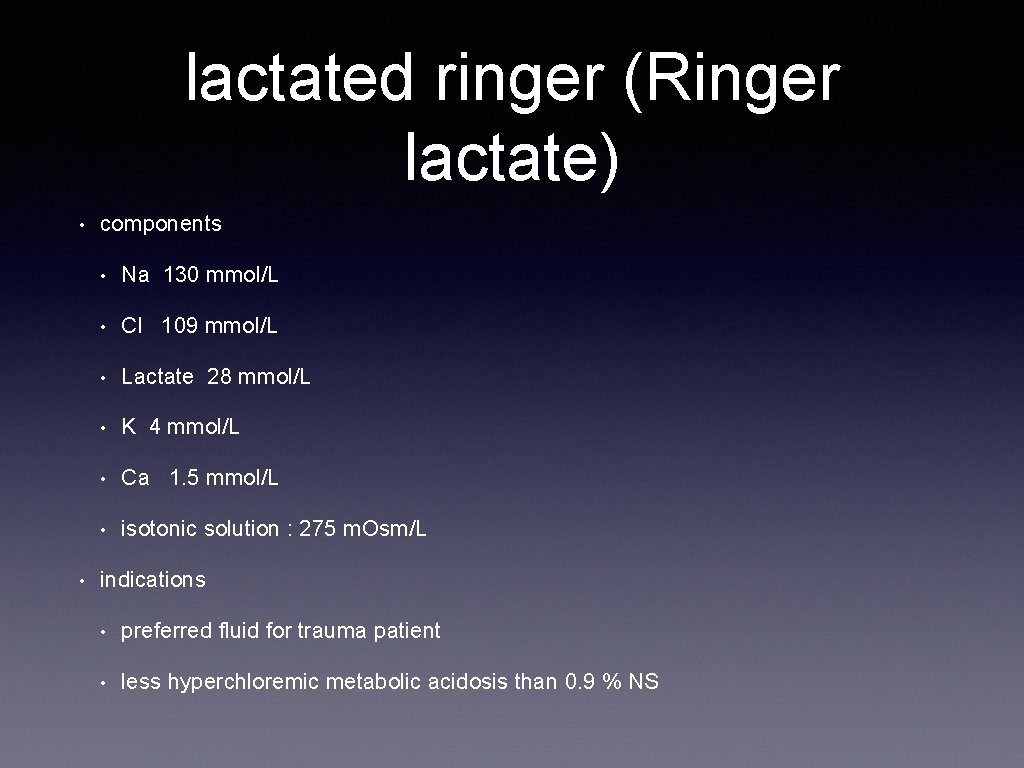
lactated ringer (Ringer lactate) • • components • Na 130 mmol/L • Cl 109 mmol/L • Lactate 28 mmol/L • K 4 mmol/L • Ca 1. 5 mmol/L • isotonic solution : 275 m. Osm/L indications • preferred fluid for trauma patient • less hyperchloremic metabolic acidosis than 0. 9 % NS
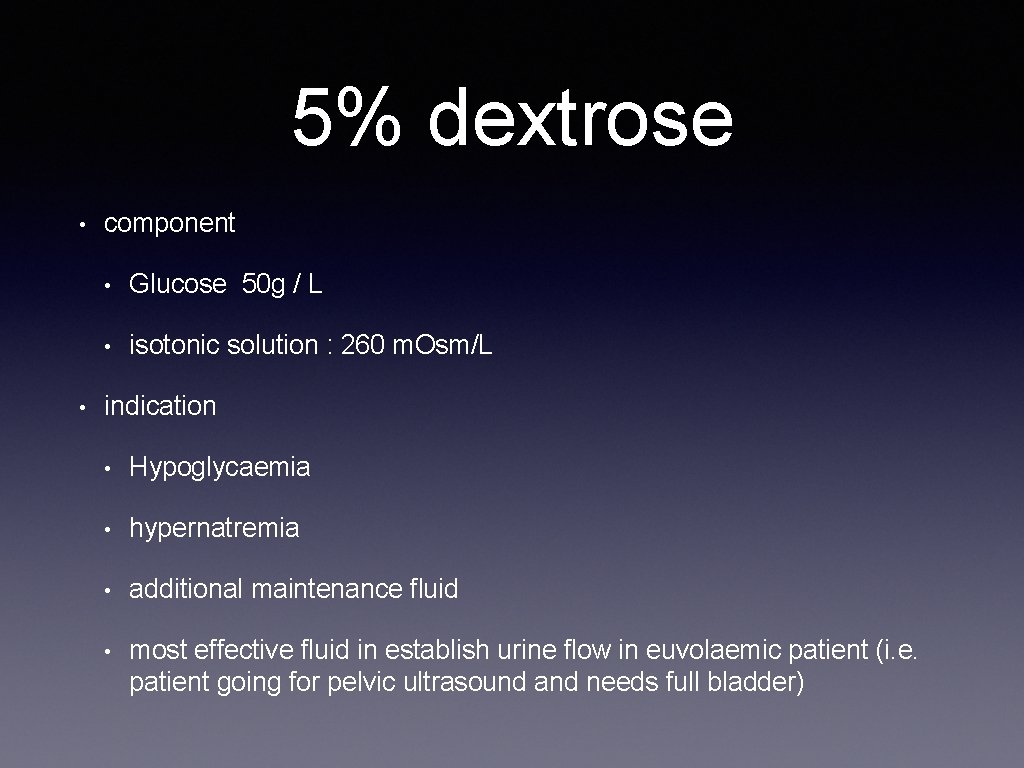
5% dextrose • • component • Glucose 50 g / L • isotonic solution : 260 m. Osm/L indication • Hypoglycaemia • hypernatremia • additional maintenance fluid • most effective fluid in establish urine flow in euvolaemic patient (i. e. patient going for pelvic ultrasound and needs full bladder)
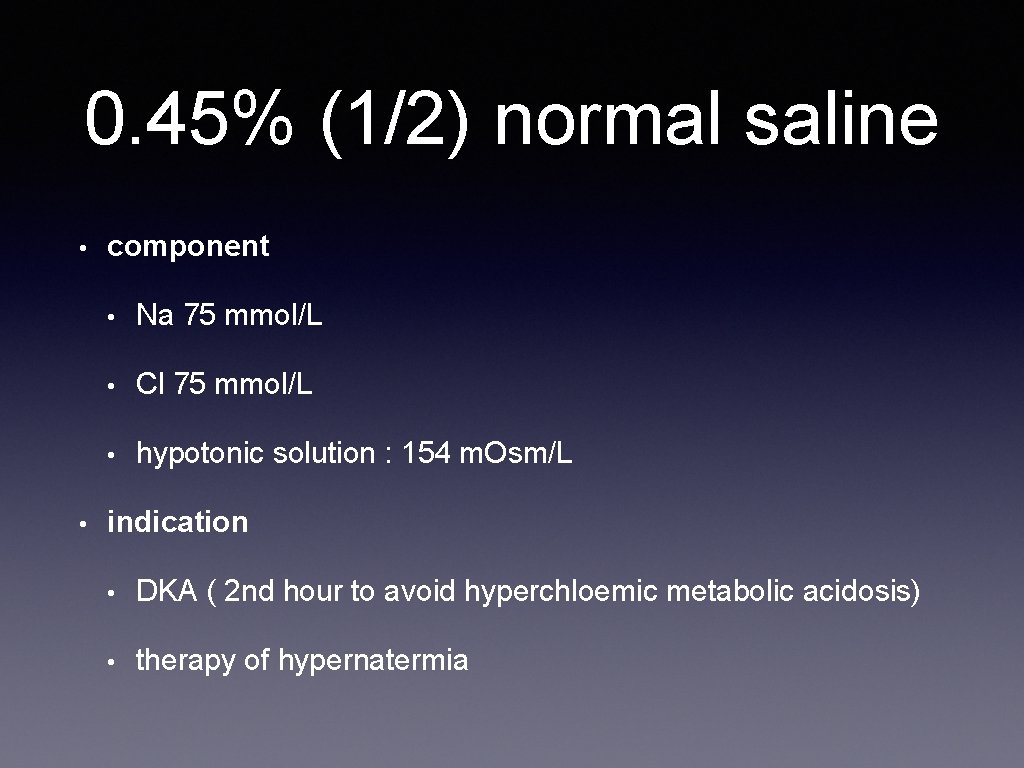
0. 45% (1/2) normal saline • • component • Na 75 mmol/L • Cl 75 mmol/L • hypotonic solution : 154 m. Osm/L indication • DKA ( 2 nd hour to avoid hyperchloemic metabolic acidosis) • therapy of hypernatermia
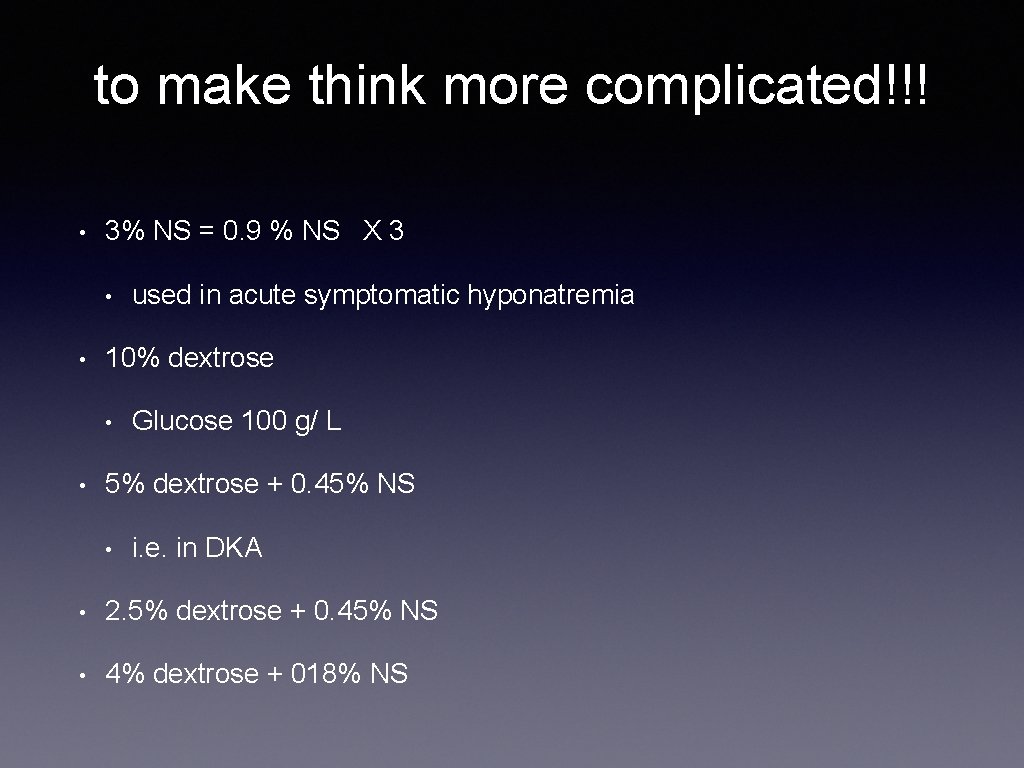
to make think more complicated!!! • 3% NS = 0. 9 % NS X 3 • • 10% dextrose • • used in acute symptomatic hyponatremia Glucose 100 g/ L 5% dextrose + 0. 45% NS • i. e. in DKA • 2. 5% dextrose + 0. 45% NS • 4% dextrose + 018% NS
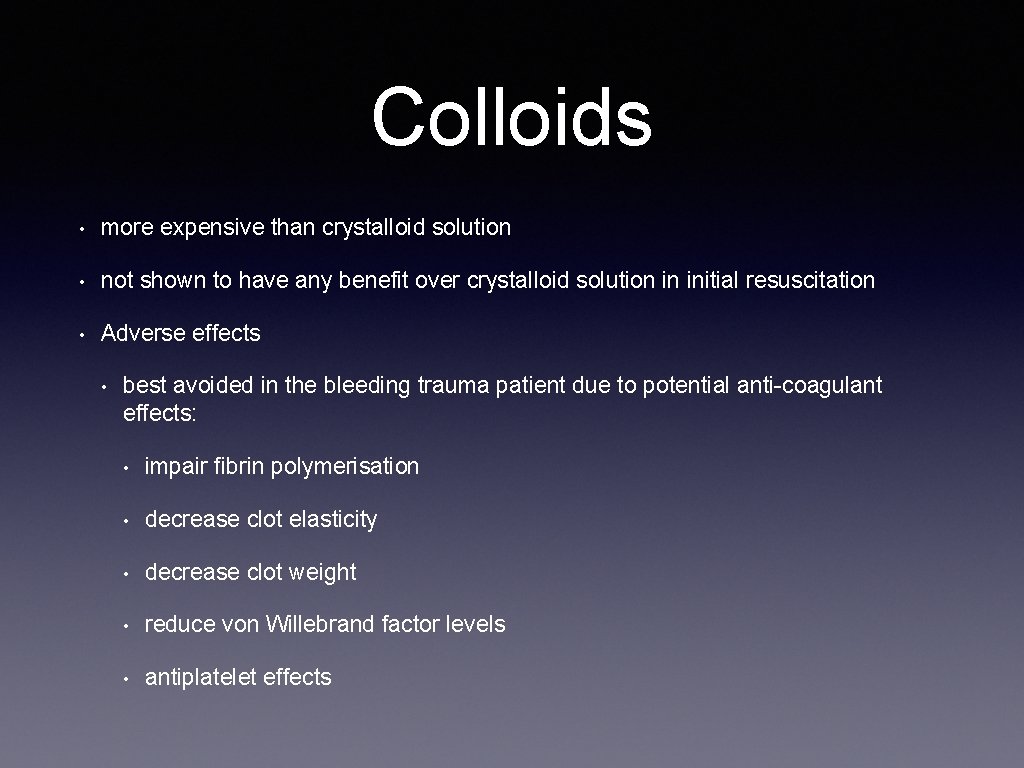
Colloids • more expensive than crystalloid solution • not shown to have any benefit over crystalloid solution in initial resuscitation • Adverse effects • best avoided in the bleeding trauma patient due to potential anti-coagulant effects: • impair fibrin polymerisation • decrease clot elasticity • decrease clot weight • reduce von Willebrand factor levels • antiplatelet effects
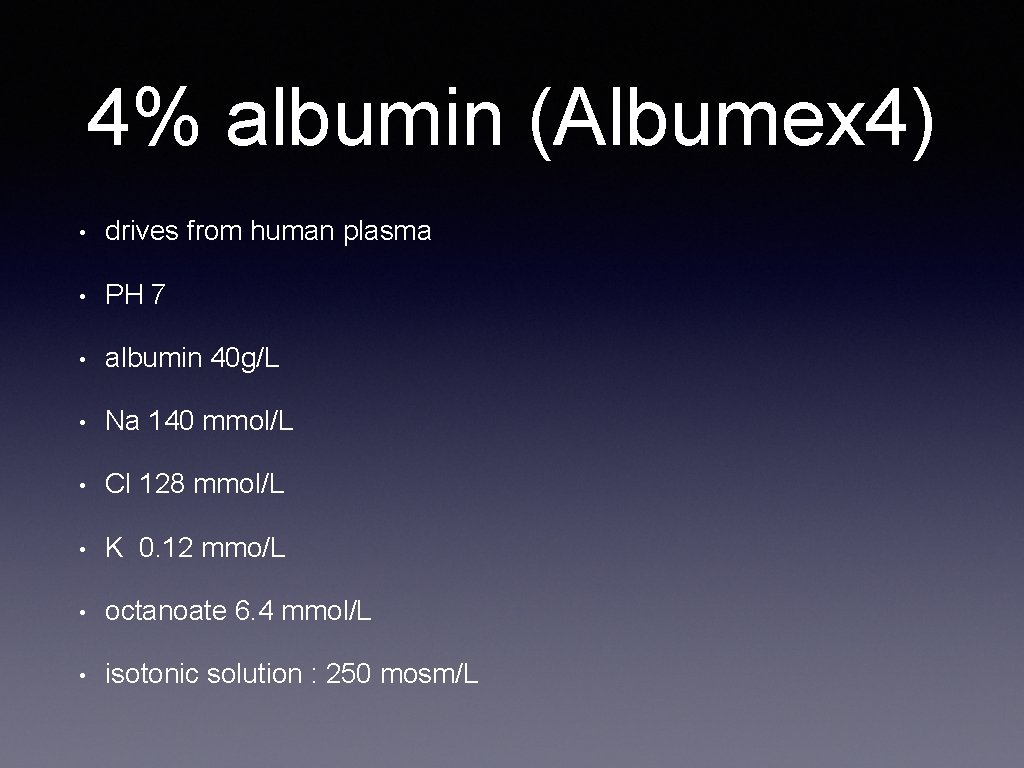
4% albumin (Albumex 4) • drives from human plasma • PH 7 • albumin 40 g/L • Na 140 mmol/L • Cl 128 mmol/L • K 0. 12 mmo/L • octanoate 6. 4 mmol/L • isotonic solution : 250 mosm/L
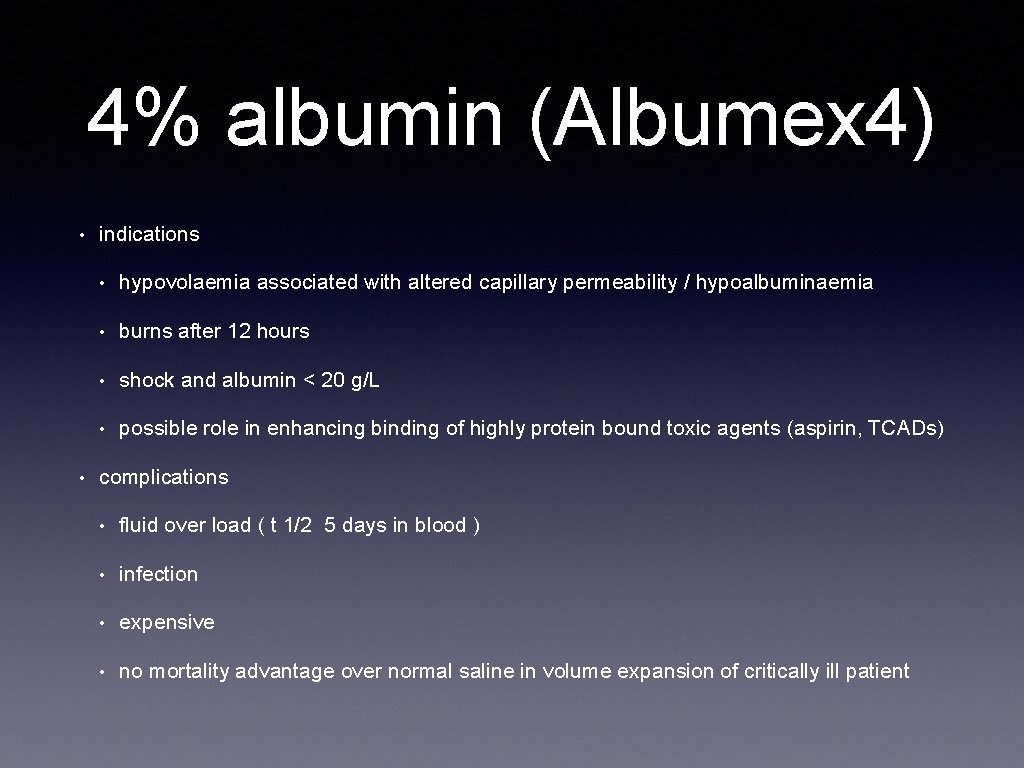
4% albumin (Albumex 4) • • indications • hypovolaemia associated with altered capillary permeability / hypoalbuminaemia • burns after 12 hours • shock and albumin < 20 g/L • possible role in enhancing binding of highly protein bound toxic agents (aspirin, TCADs) complications • fluid over load ( t 1/2 5 days in blood ) • infection • expensive • no mortality advantage over normal saline in volume expansion of critically ill patient
other colloid fluid • 20% albumin ( Albumen 20 ) : 200 g / L • Gelofusine • Starch solution
Electrolytes disorders
Na • Major extracellur electrolytes • normal Na level in blood 135 m. Eq/L - 145 m. Eq/L
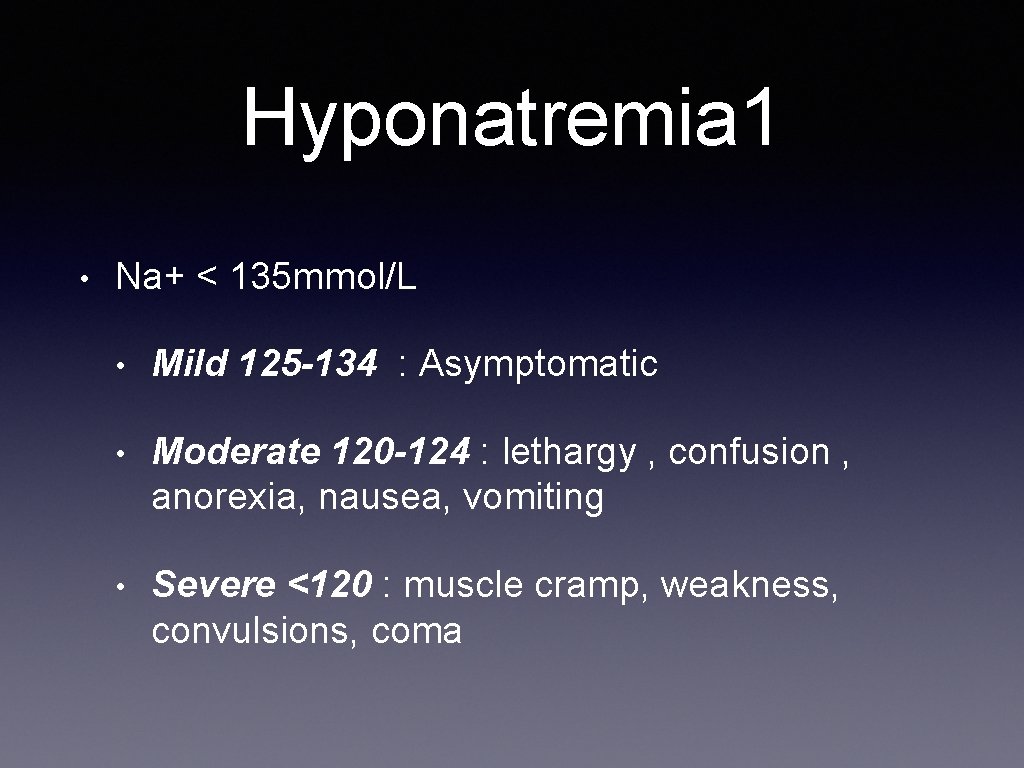
Hyponatremia 1 • Na+ < 135 mmol/L • Mild 125 -134 : Asymptomatic • Moderate 120 -124 : lethargy , confusion , anorexia, nausea, vomiting • Severe <120 : muscle cramp, weakness, convulsions, coma
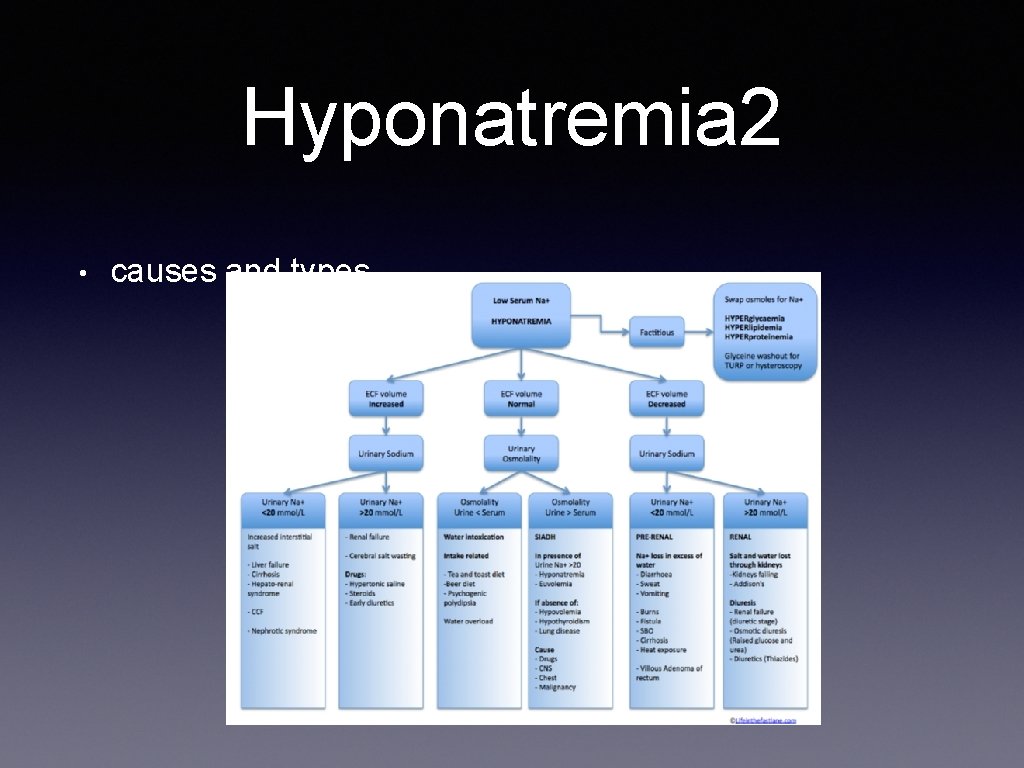
Hyponatremia 2 • causes and types
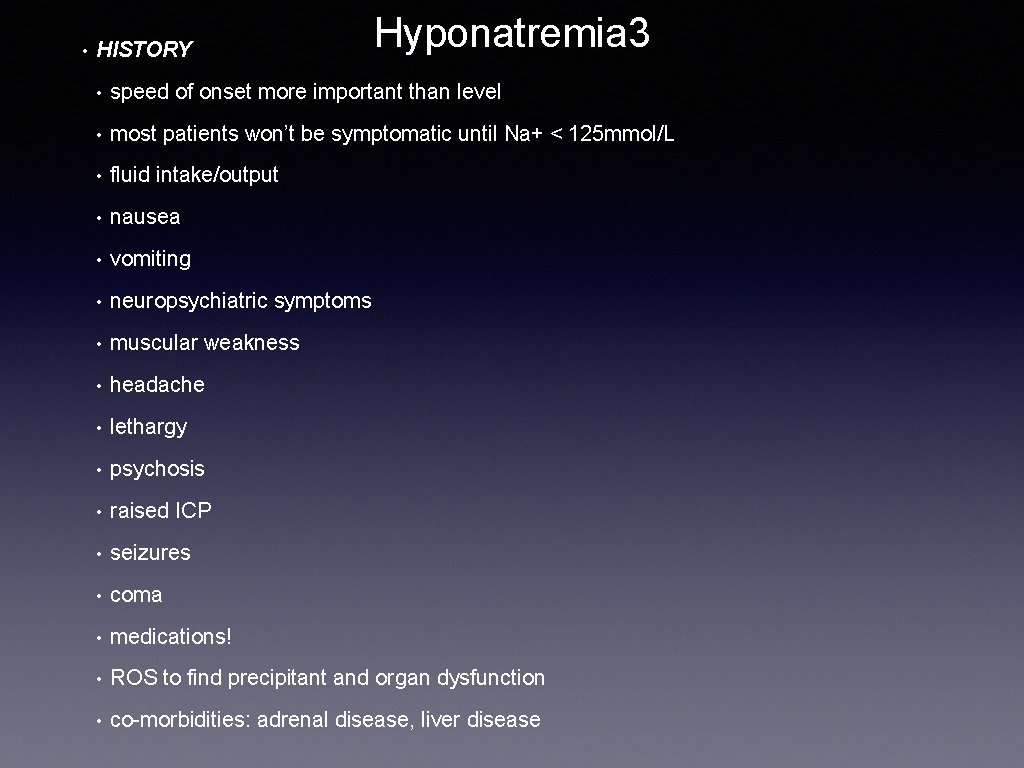
• HISTORY Hyponatremia 3 • speed of onset more important than level • most patients won’t be symptomatic until Na+ < 125 mmol/L • fluid intake/output • nausea • vomiting • neuropsychiatric symptoms • muscular weakness • headache • lethargy • psychosis • raised ICP • seizures • coma • medications! • ROS to find precipitant and organ dysfunction • co-morbidities: adrenal disease, liver disease
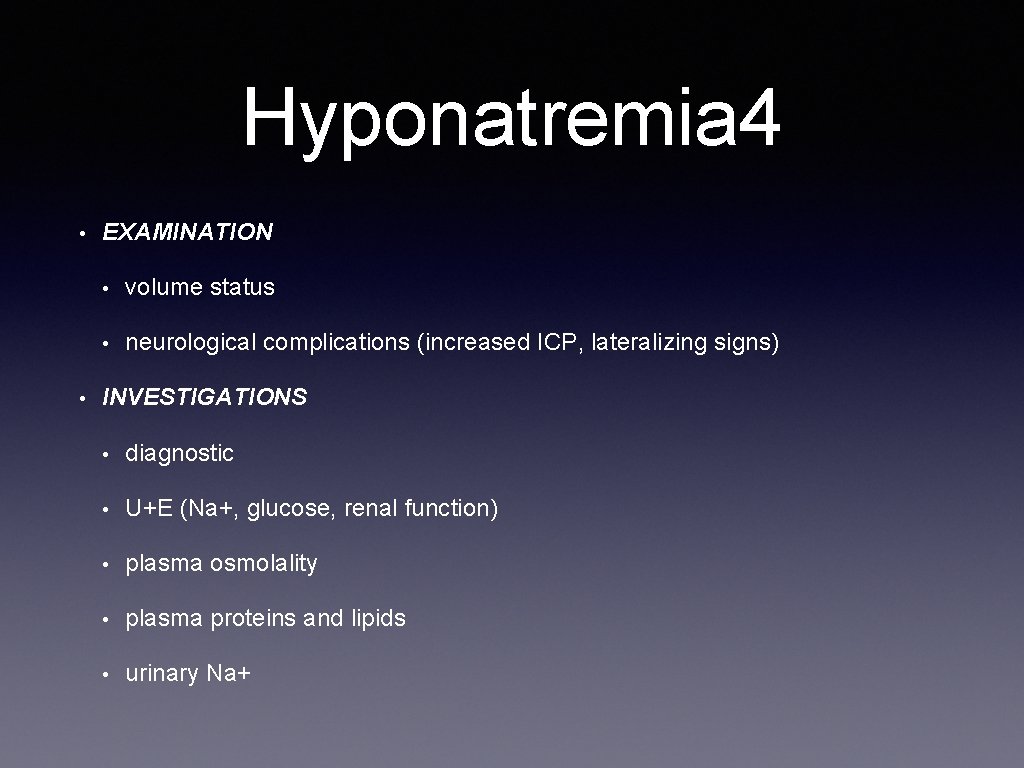
Hyponatremia 4 • • EXAMINATION • volume status • neurological complications (increased ICP, lateralizing signs) INVESTIGATIONS • diagnostic • U+E (Na+, glucose, renal function) • plasma osmolality • plasma proteins and lipids • urinary Na+
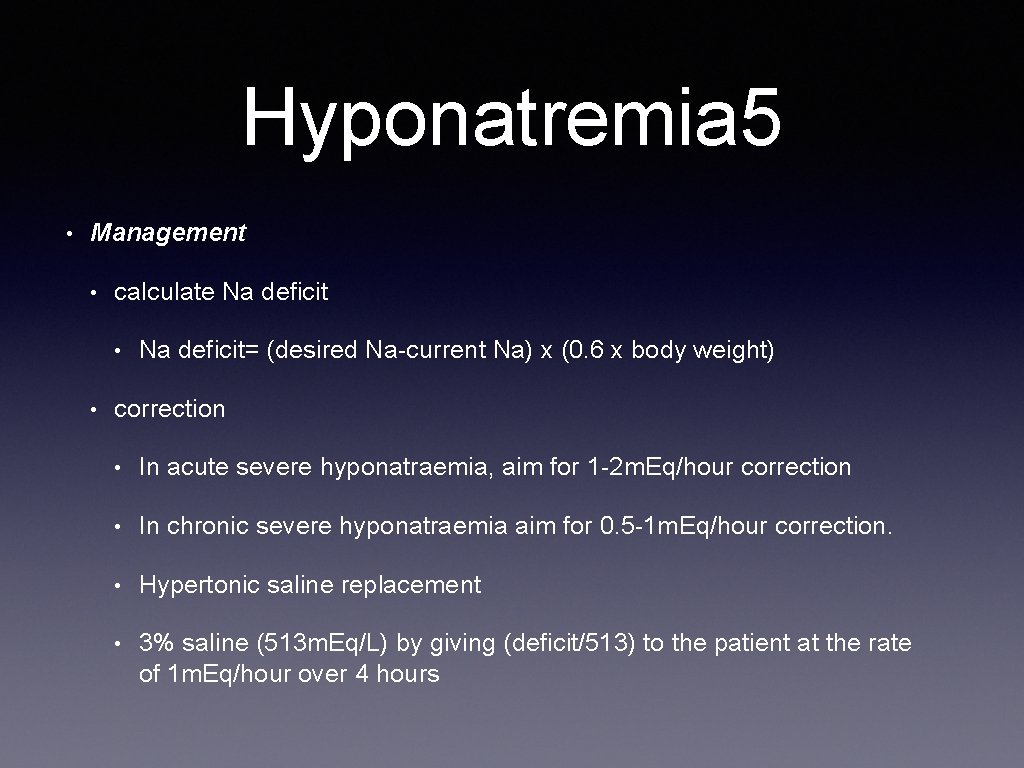
Hyponatremia 5 • Management • calculate Na deficit • • Na deficit= (desired Na-current Na) x (0. 6 x body weight) correction • In acute severe hyponatraemia, aim for 1 -2 m. Eq/hour correction • In chronic severe hyponatraemia aim for 0. 5 -1 m. Eq/hour correction. • Hypertonic saline replacement • 3% saline (513 m. Eq/L) by giving (deficit/513) to the patient at the rate of 1 m. Eq/hour over 4 hours
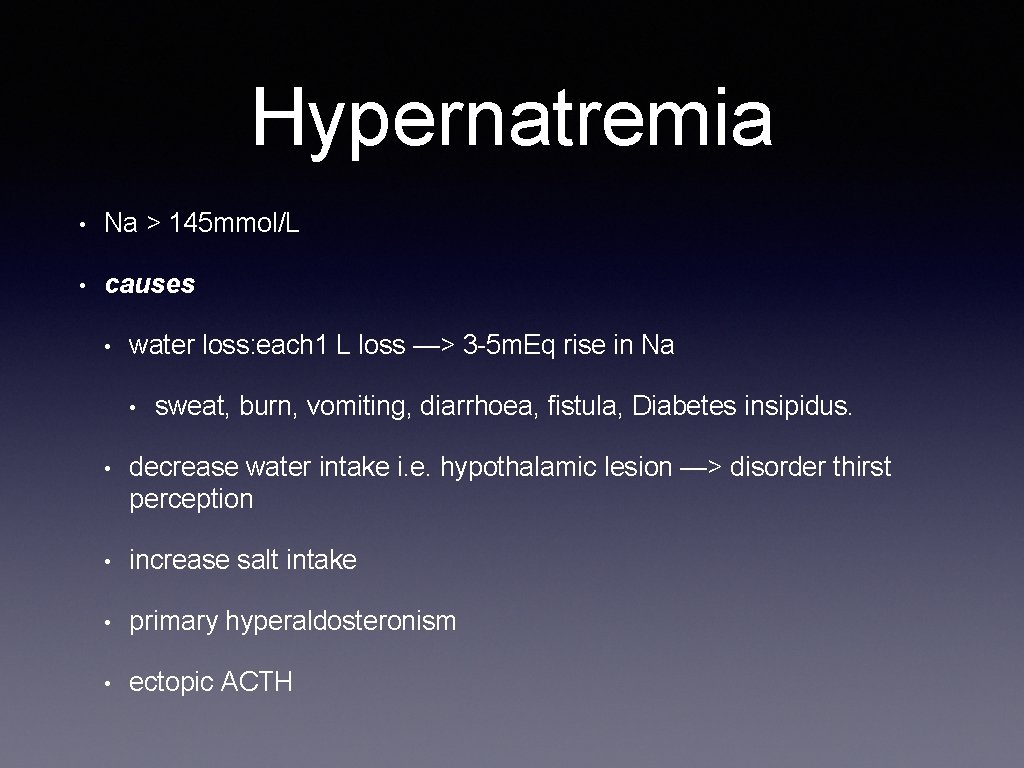
Hypernatremia • Na > 145 mmol/L • causes • water loss: each 1 L loss —> 3 -5 m. Eq rise in Na • sweat, burn, vomiting, diarrhoea, fistula, Diabetes insipidus. • decrease water intake i. e. hypothalamic lesion —> disorder thirst perception • increase salt intake • primary hyperaldosteronism • ectopic ACTH
Hypernatremia 2 • clinically • dehydration • increase risk of IC bleed , due to brain shrinkage
Hypernatremia 3 • • correction • Stop ongoing losses • Correct water deficit • Correct sodium deficit if hypovolaemic • Treat the underlying cause Complications of treatment • Intracerebral haemorrhage • Coma and seizures • Cerebral oedema (if correction too rapid)
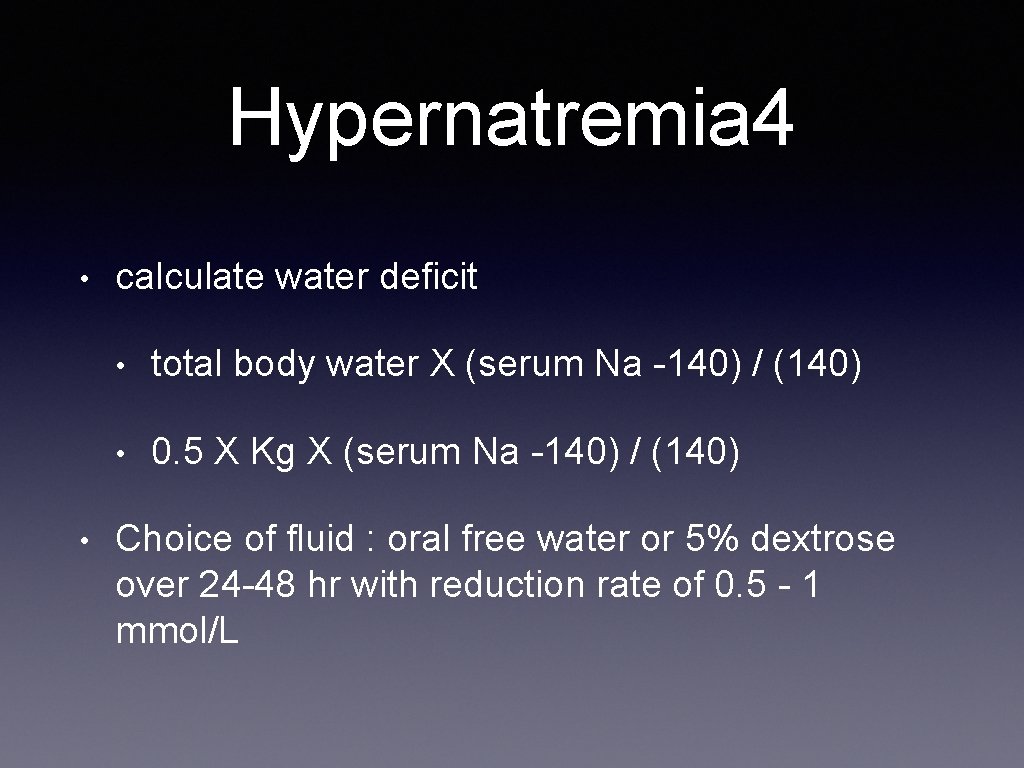
Hypernatremia 4 • • calculate water deficit • total body water X (serum Na -140) / (140) • 0. 5 X Kg X (serum Na -140) / (140) Choice of fluid : oral free water or 5% dextrose over 24 -48 hr with reduction rate of 0. 5 - 1 mmol/L
K
Hyperkalemia • normal K 3. 5 - 5. 1 • causes Hyperkalemia >5. 1 • increase intake ( oral or IV ) • endogenous K load • haemolysis • rhabdomyolysis • burns • TLS • increase activity • trauma
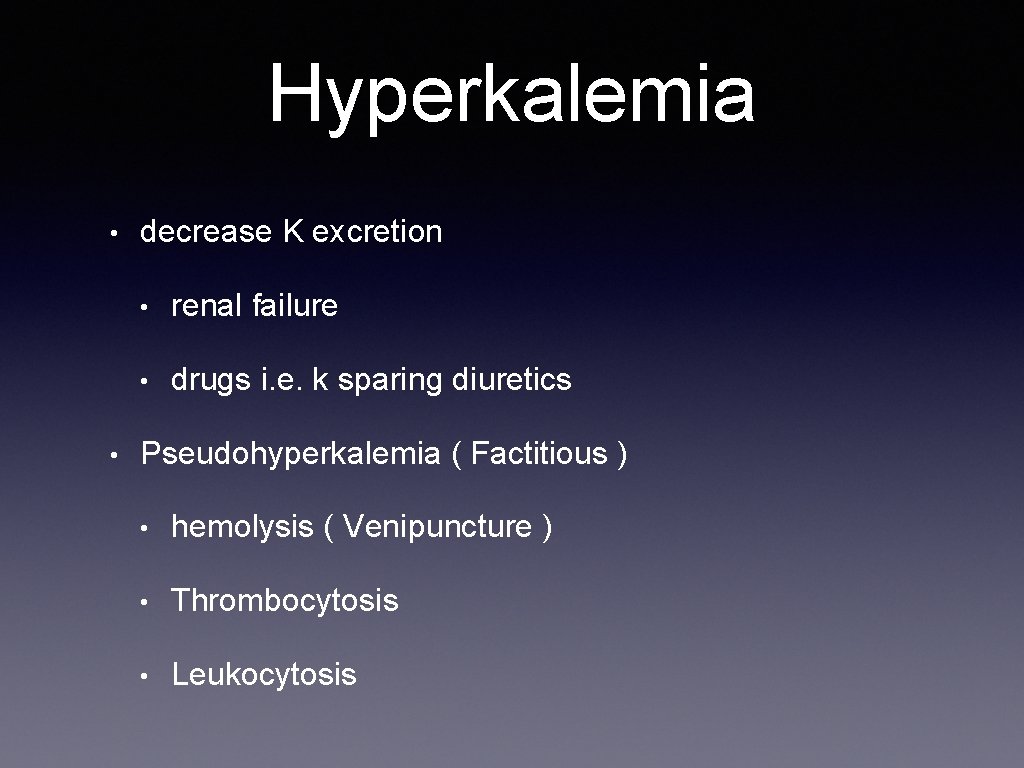
Hyperkalemia • • decrease K excretion • renal failure • drugs i. e. k sparing diuretics Pseudohyperkalemia ( Factitious ) • hemolysis ( Venipuncture ) • Thrombocytosis • Leukocytosis
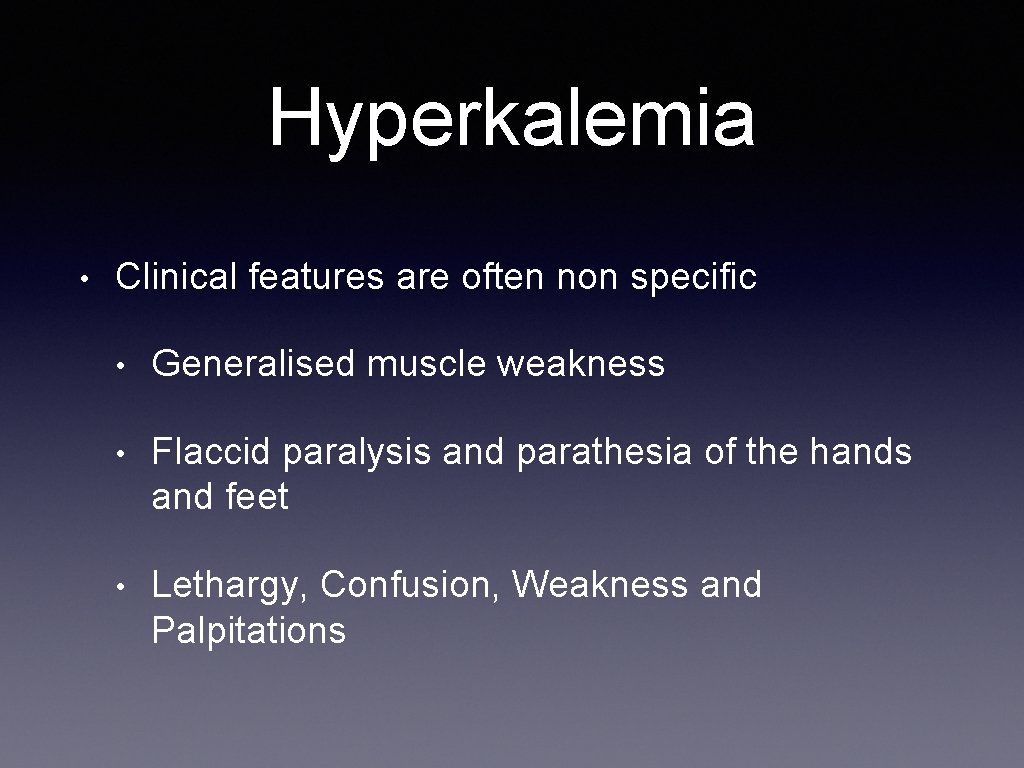
Hyperkalemia • Clinical features are often non specific • Generalised muscle weakness • Flaccid paralysis and parathesia of the hands and feet • Lethargy, Confusion, Weakness and Palpitations
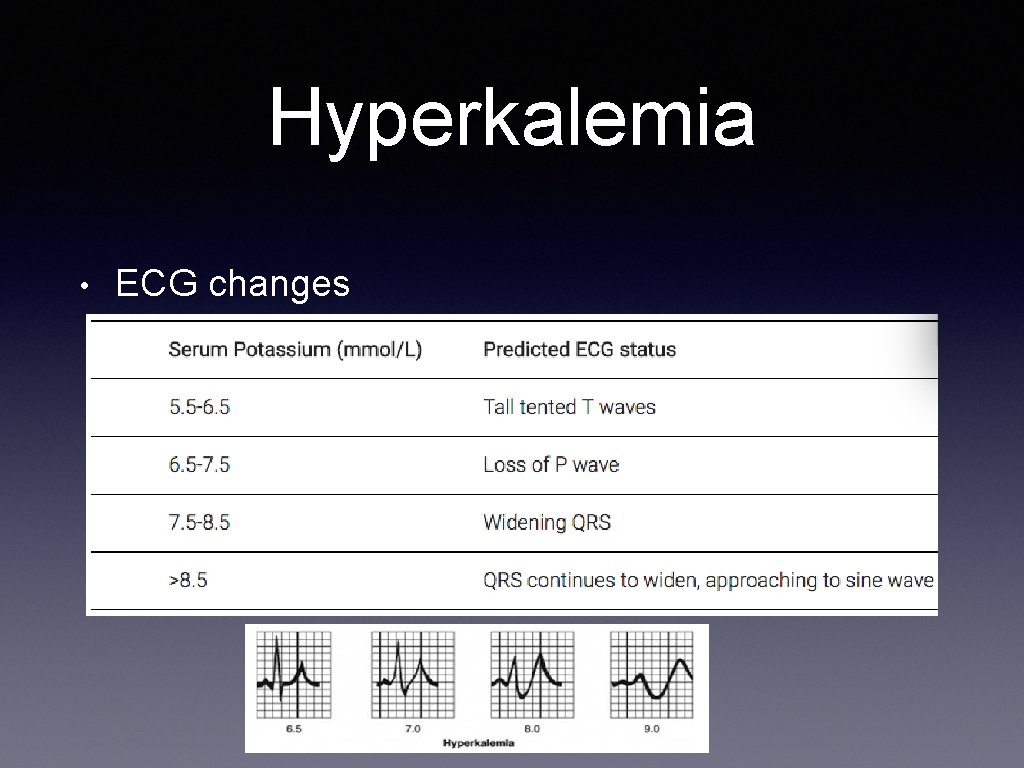
Hyperkalemia • ECG changes
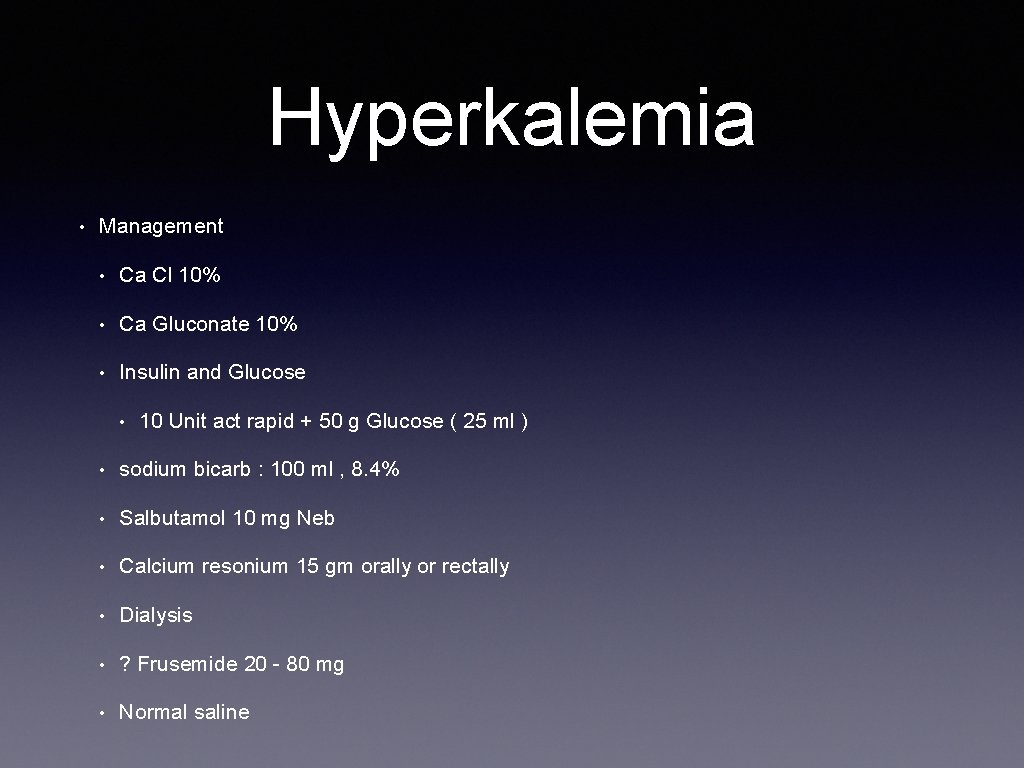
Hyperkalemia • Management • Ca Cl 10% • Ca Gluconate 10% • Insulin and Glucose • 10 Unit act rapid + 50 g Glucose ( 25 ml ) • sodium bicarb : 100 ml , 8. 4% • Salbutamol 10 mg Neb • Calcium resonium 15 gm orally or rectally • Dialysis • ? Frusemide 20 - 80 mg • Normal saline
Hypokalemia • K < 3. 5 • causes • decrease intake • increase loss • • GIT loss : vomit, NGT , Diarrhoea , fistula renal loss • diuretics, mannitol • primary and secondary hyperaldosternism • cushing syndrome • renal artery stenosis
Hypokalemia • • transcellular shift • alkalosis • dextrose, insulin infusion Pernicious anaemia, AML
Hypokalemia • Clinical • Weakness • Fatigue • Paralysis and rhabdomyolysis • Respiratory difficulty • Constipation/ileus • Leg cramps
Hypokalemia • Correction • Minimise further K loss (commonest is GI loss and drugs) • Give potassium replacement • Correct magnesium and phosphate deficiencies • Oral K • • Chlorvescent (K 14 mmol, Cl 8 mmol) • Span K (KCL 8 mmol) – nteric coated, delayed release Intravenous • Maximum 20 m. Eq/hr unless imminent cardiac arrest • CVL required if > 10 mmol/hr • Requires ECG monitoring
Ca
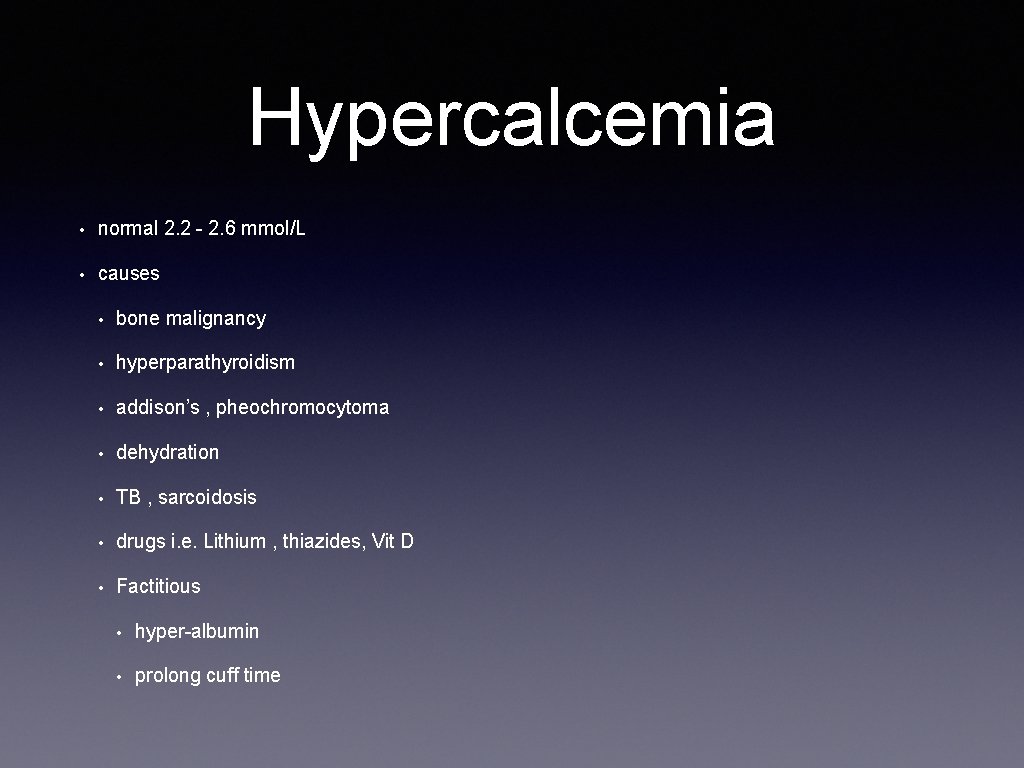
Hypercalcemia • normal 2. 2 - 2. 6 mmol/L • causes • bone malignancy • hyperparathyroidism • addison’s , pheochromocytoma • dehydration • TB , sarcoidosis • drugs i. e. Lithium , thiazides, Vit D • Factitious • hyper-albumin • prolong cuff time
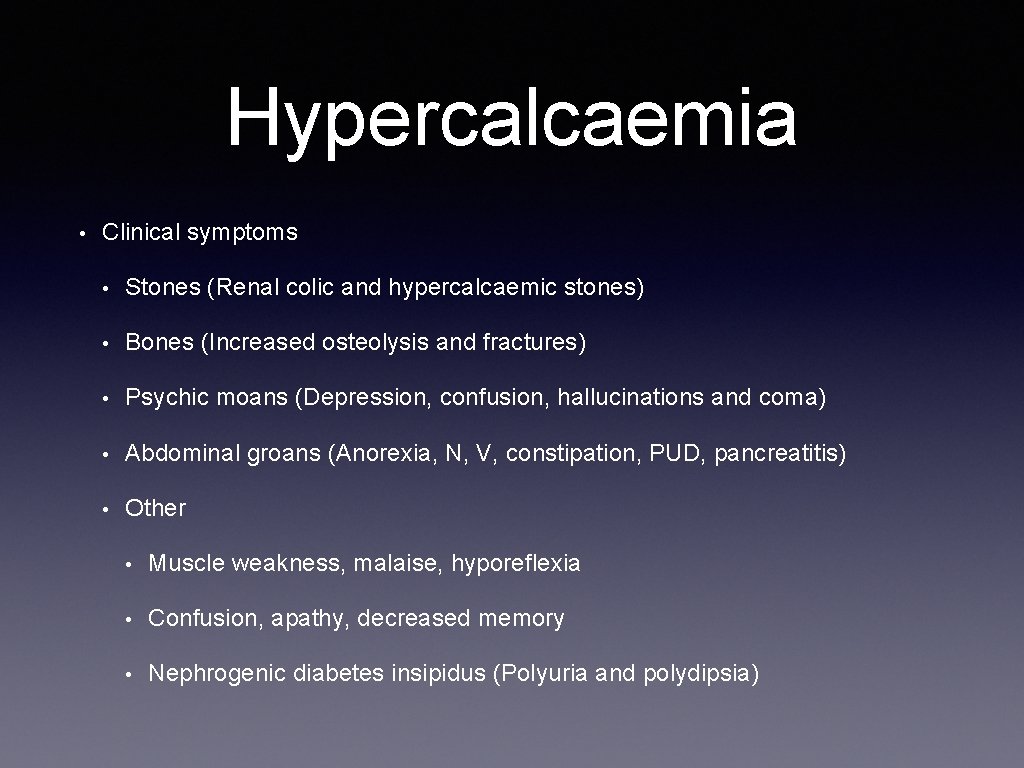
Hypercalcaemia • Clinical symptoms • Stones (Renal colic and hypercalcaemic stones) • Bones (Increased osteolysis and fractures) • Psychic moans (Depression, confusion, hallucinations and coma) • Abdominal groans (Anorexia, N, V, constipation, PUD, pancreatitis) • Other • Muscle weakness, malaise, hyporeflexia • Confusion, apathy, decreased memory • Nephrogenic diabetes insipidus (Polyuria and polydipsia)
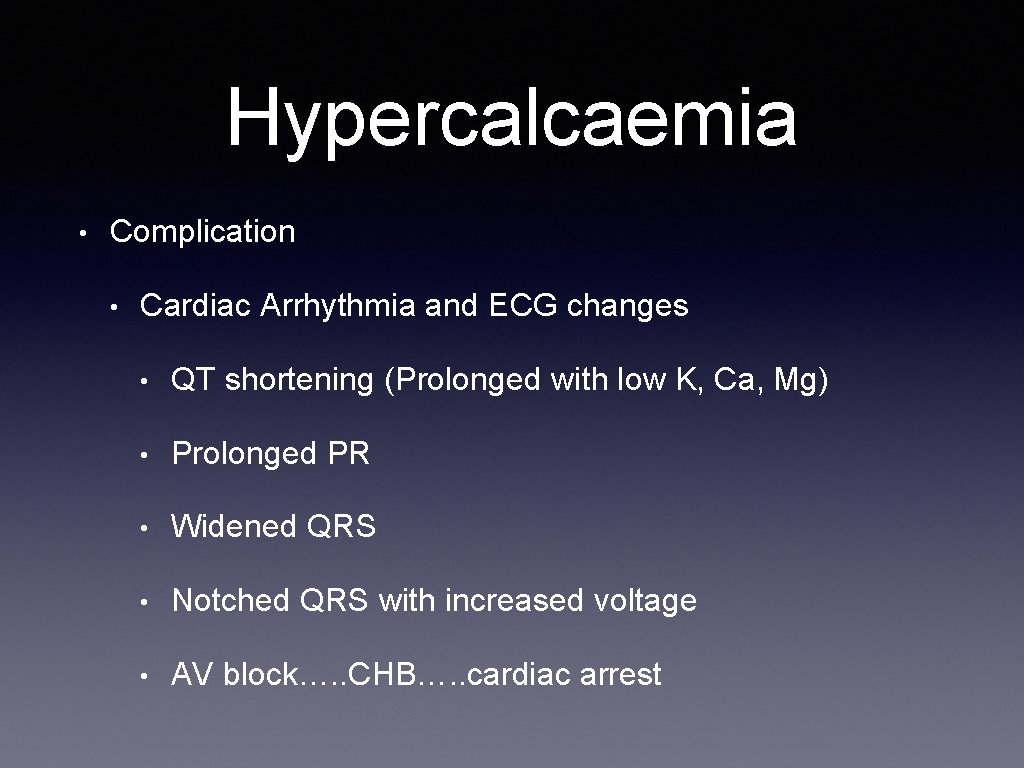
Hypercalcaemia • Complication • Cardiac Arrhythmia and ECG changes • QT shortening (Prolonged with low K, Ca, Mg) • Prolonged PR • Widened QRS • Notched QRS with increased voltage • AV block…. . CHB…. . cardiac arrest
Hypercalcemia • Management • Fluid , fluid • Haemodialysis i. e. CVS or renal compromise • Calcitonin , Bisphonates i. e. reduce bone resorption & reduce GIT absorption
Hypocalcemia • Ca < 2. 2 mmol/L • causes • Hypoparathyroidism • Vitamin D deficiency • Acute pancreatitis • Hyperphosphataemia • Hypomagnesaemia • Diuretics (frusemide) • Pseudohypoparathyroidism • Congenital disorders (e. g. Di. George syndrome) • Critical illness (e. g. sepsis) • Factitious (e. g. EDTA blood tube contamination)
Hypocalcaemia • Symptoms • Neuromuscular excitability • Carpopedal spasm • Tetany • Chvostek’s sign • Trousseau’s sign • Seizures
Hypocalcemia • ECGs Changes • Hypocalcaemia causes QTc prolongation primarily by prolonging the ST segment. • Dysrhythmias are uncommon, although atrial fibrillation has been reported. • Torsades de pointes may occur, but is much less common than with hypokalaemia or hypomagnesaemia.
Hypocalcaemia • Management • treat the cause • replace ca • • Oral • IV Ca 10 ml Ca Gluconate , or Ca chloride indication for IV Ca • symptomatic • Ca < 0. 8 • hyper kalmia • CCB overdose • after massive transfusion
Thank You aalrabiah@ksu. edu. sa