
FLUID AND ELECTROLYT BASIC PHYSIOLOGY Water largest single
FLUID AND ELECTROLYT

BASIC PHYSIOLOGY Water - largest single component of the body - Total body water approx 75% of body wt at birth. & decreases with age. - TBW – divided into 2 main compartments a, ICF (30 -40%) b, ECF (20 -25%) –plasma (5%) - interstitial (15%) * transcellular (2%)- GI secretions, urine, CSF, pleural, peritonial, synovial

AGE & TBW Age Body water ECF ICF Term 75 35 -44 33 4 -6 months 60 23 37 12 months 60 26 -30 37 puberty 60 20 40 Adult 50 -60 20 40

BASIC PHYSIOLOGY �Plasma Osmolality –concn of solute particles in plasma – 285 -295 mosm/kg/H 2 O �H 2 O is distributed b/w ICF & ECF according to amount of osmotically active solute in each compartment. �ECF solutes- Na+, Cl-, HCO 3, glucose & urea �ICF solute - mainly K+ �Other solutes-ethanol, mannitol, glycerol may contribute to an extent to plasma osmolality �* At steady state-Osmolality of ICF= ECF = Plasma

BODY WATER OSMOLALITY • Normal osmolality = 285 – 295 m. Osm/kg • Change in ECF osmolality leads to change in ICF osmolality • Calculated from E&u and glucose conc. – 2 x. Na + Glucose (mmol/L) + Urea (mmol/L) – Glu m/dl ÷ 18 = glu mmo/L – Urea mg/dl ÷ 2. 8 = urea mmol/L – Calculated value usually slightly less than measured value
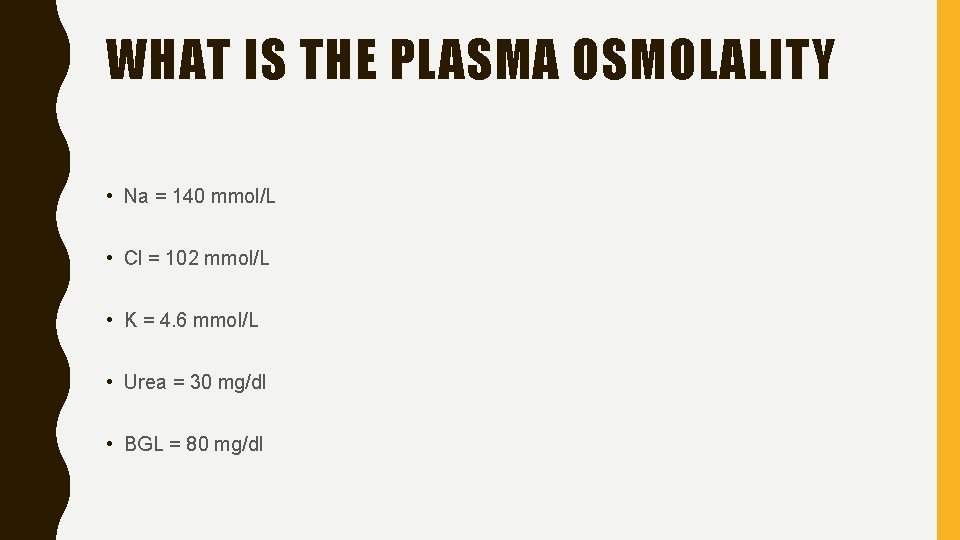
WHAT IS THE PLASMA OSMOLALITY • Na = 140 mmol/L • Cl = 102 mmol/L • K = 4. 6 mmol/L • Urea = 30 mg/dl • BGL = 80 mg/dl
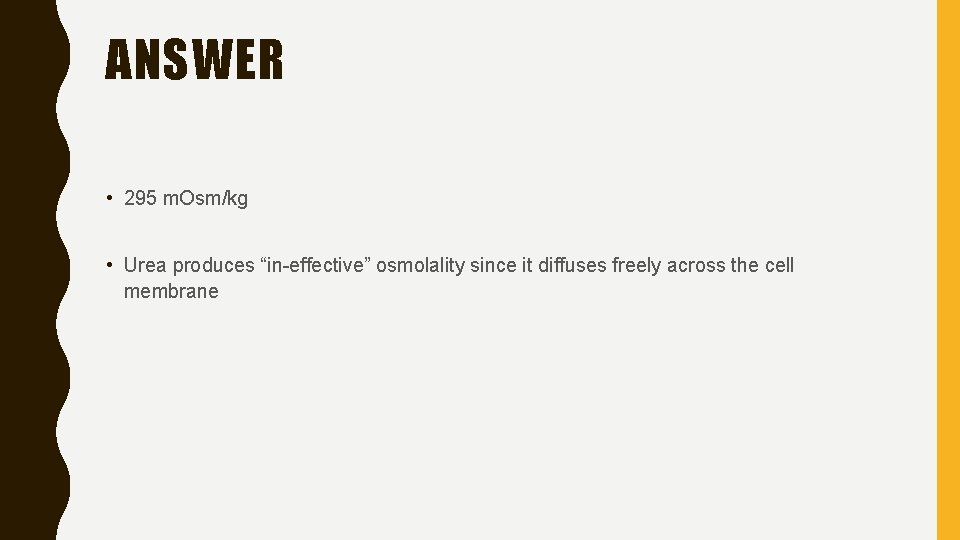
ANSWER • 295 m. Osm/kg • Urea produces “in-effective” osmolality since it diffuses freely across the cell membrane
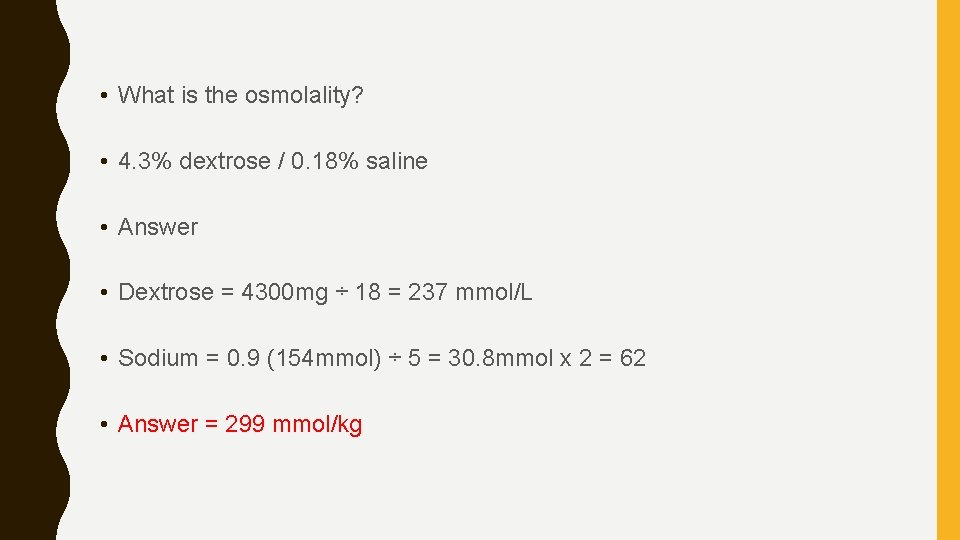
• What is the osmolality? • 4. 3% dextrose / 0. 18% saline • Answer • Dextrose = 4300 mg ÷ 18 = 237 mmol/L • Sodium = 0. 9 (154 mmol) ÷ 5 = 30. 8 mmol x 2 = 62 • Answer = 299 mmol/kg
MAINTENANCE FLUID
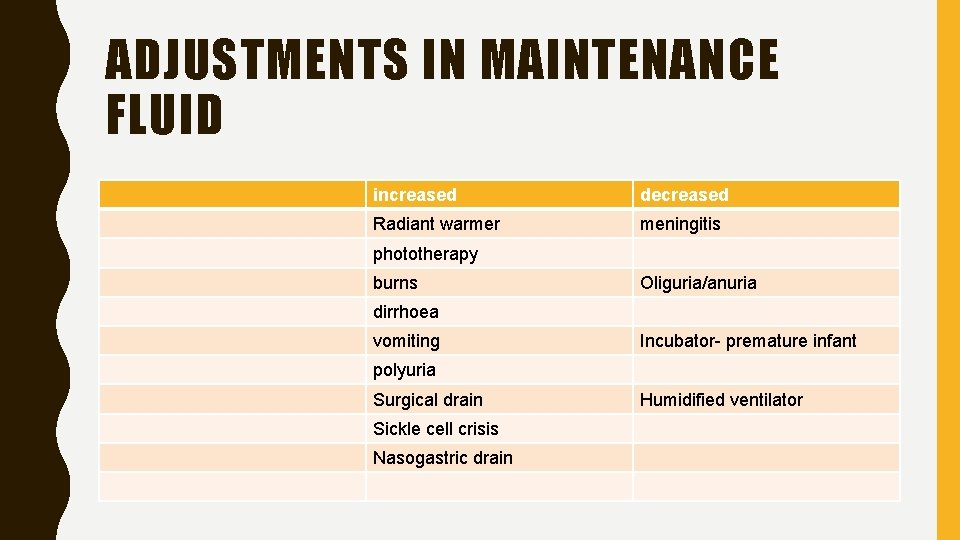
ADJUSTMENTS IN MAINTENANCE FLUID increased decreased Radiant warmer meningitis phototherapy burns Oliguria/anuria dirrhoea vomiting Incubator- premature infant polyuria Surgical drain Sickle cell crisis Nasogastric drain Humidified ventilator
�The commonest indication for fluid therapy in children is Diarrheal diseases contribute 19% underfive deaths in developing countries and 65% diarrheal deaths are attributable to dehydration �Fluid therapies in children require careful planning, administration and monitoring as complications, some of which may be fatal, may complicate careless fluid therapy.

DETERMINATION OF REQUIREMENTS Fluid Requirements are categorized into 3: �Maintenance fluid requirement �Replacement of deficits: �Supplemental fluid therapy: �Replaces ongoing losses of fluids and electrolytes �Administered in addition to the maintenance and deficit fluid replacement therapies
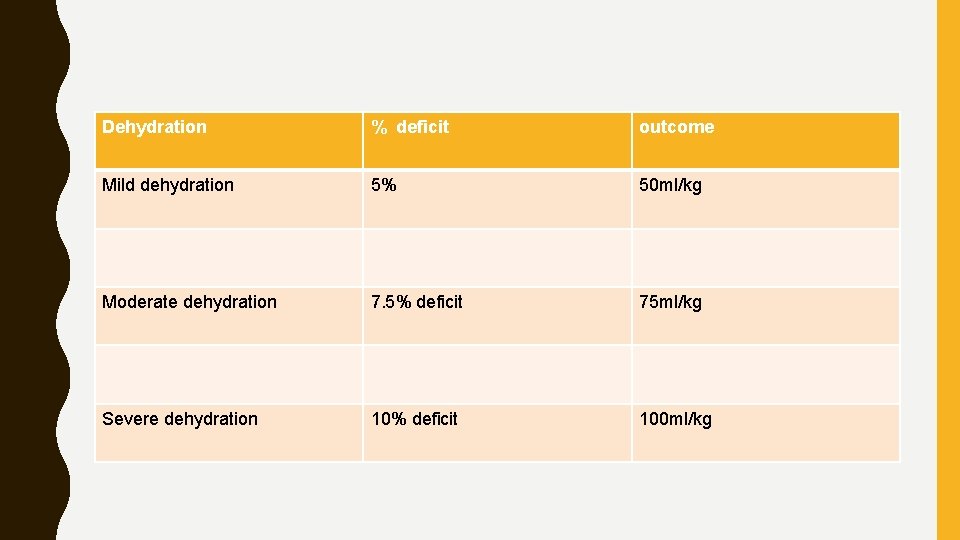
Dehydration % deficit outcome Mild dehydration 5% 50 ml/kg Moderate dehydration 7. 5% deficit 75 ml/kg Severe dehydration 10% deficit 100 ml/kg
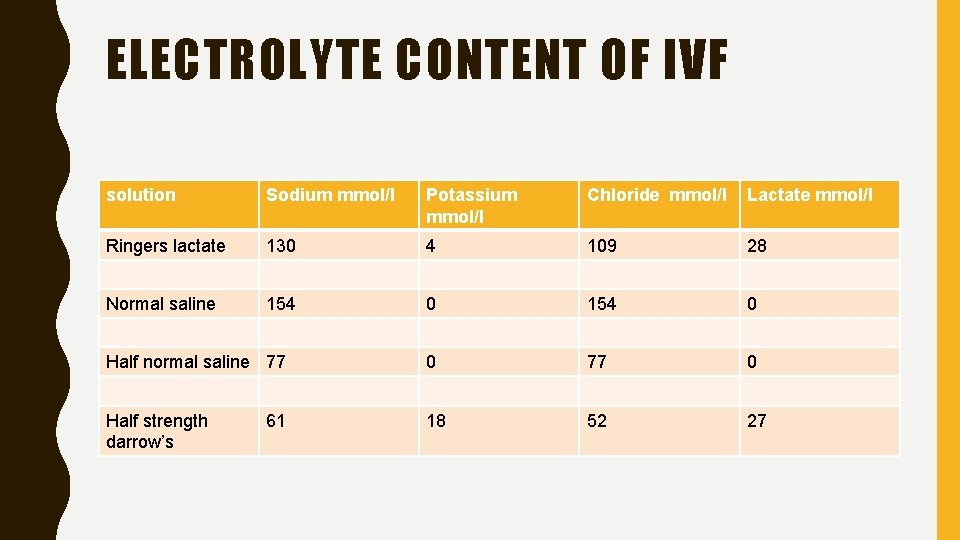
ELECTROLYTE CONTENT OF IVF solution Sodium mmol/l Potassium mmol/l Chloride mmol/l Lactate mmol/l Ringers lactate 130 4 109 28 Normal saline 154 0 Half normal saline 77 0 Half strength darrow’s 18 52 27 61
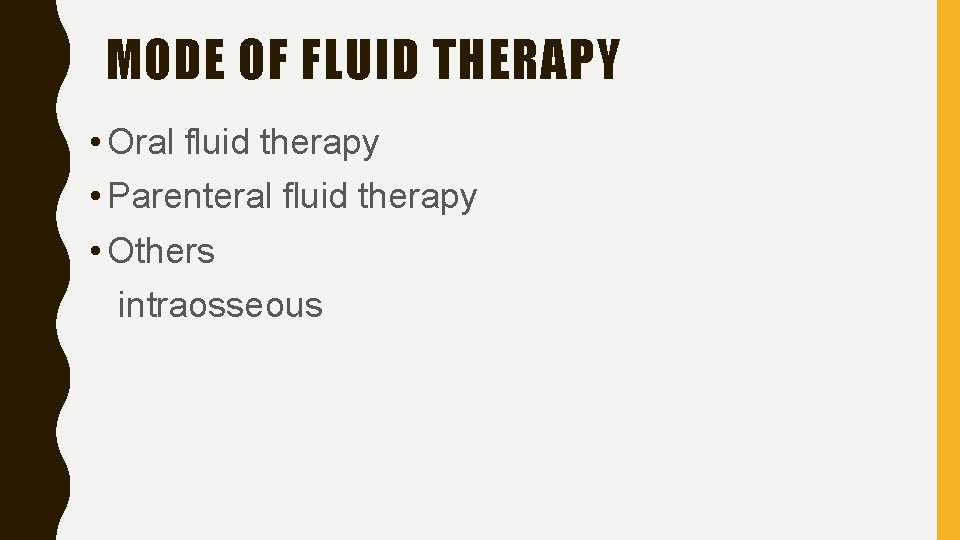
MODE OF FLUID THERAPY • Oral fluid therapy • Parenteral fluid therapy • Others intraosseous
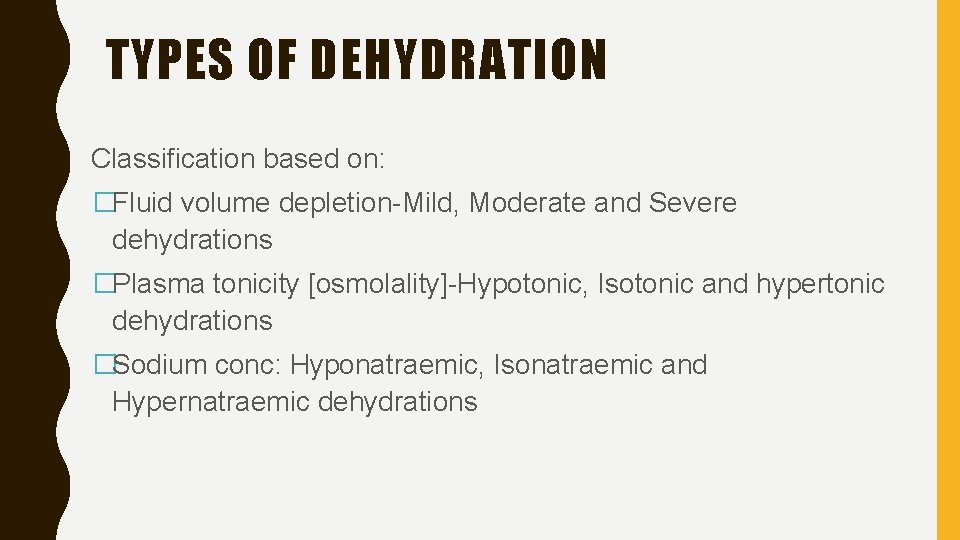
TYPES OF DEHYDRATION Classification based on: �Fluid volume depletion-Mild, Moderate and Severe dehydrations �Plasma tonicity [osmolality]-Hypotonic, Isotonic and hypertonic dehydrations �Sodium conc: Hyponatraemic, Isonatraemic and Hypernatraemic dehydrations
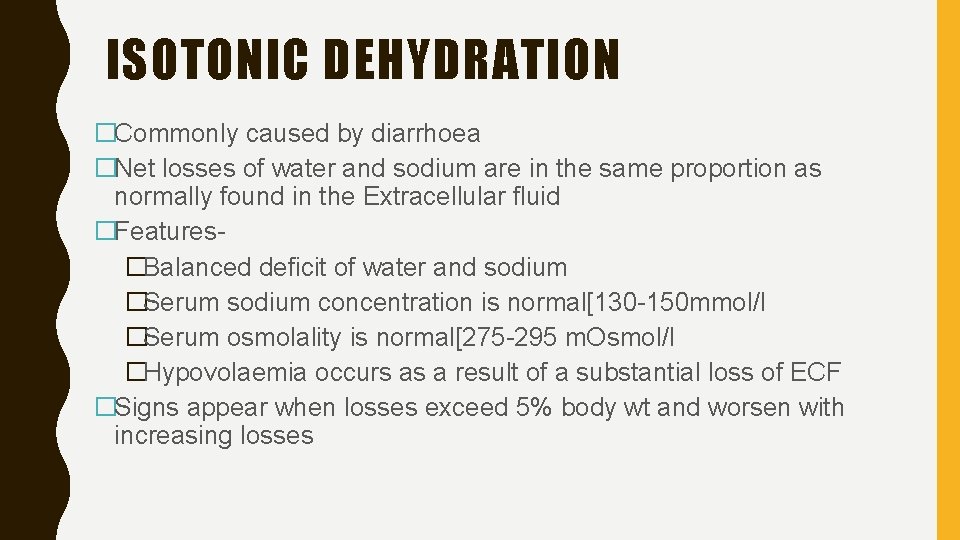
ISOTONIC DEHYDRATION �Commonly caused by diarrhoea �Net losses of water and sodium are in the same proportion as normally found in the Extracellular fluid �Features�Balanced deficit of water and sodium �Serum sodium concentration is normal[130 -150 mmol/l �Serum osmolality is normal[275 -295 m. Osmol/l �Hypovolaemia occurs as a result of a substantial loss of ECF �Signs appear when losses exceed 5% body wt and worsen with increasing losses
HYPERTONIC DEHYDRATION � Results from ingestion of fluids with high sodium or electrolyte content with poor intake of water or other hypo-osmolar fluids and poor absorption of the administered fluids. There is osmotic diarrhoea with loss of fluid from ECF � Features: �There is deficit of water and sodium, but the deficit of water is greater �Serum sodium concentration is elevated[>150 mmol/l]; �Serum osmolality is elevated[> 295 m. Osmol/l] �Thirst is severe and out of proportion to the apparent degree of dehydration; the child is very irritable; �Seizures may occur, especially when serum sodium concentration exceeds 165 mmol/l
HYPOTONIC DEHYDRATION �Results from intake of water or fluids with low solute content e. g. Dextrose infusions. The water is absorbed while sodium loss continues �Features �There is deficit of water and sodium but the deficit of sodium is greater �Serum sodium concentration is low-<130 mmol/l �Serum osmolality is low-<275 m. Osmol/l �The child is lethargic and infrequently may have seizures
HYPERNATREMIC DEHYDRATION • This is the most dangerous form of dehydration due to complication of hypernatremia and of therapy. • Brain haemorrhage is the most devastating consequence of hypernatremia, other complications of hypernatremia include; thrombosis, central pontine myelinosis, extrapontine myelinosis. • Hypernatremia may cause fever, hyperglycaemia and mild hypocalcaemia
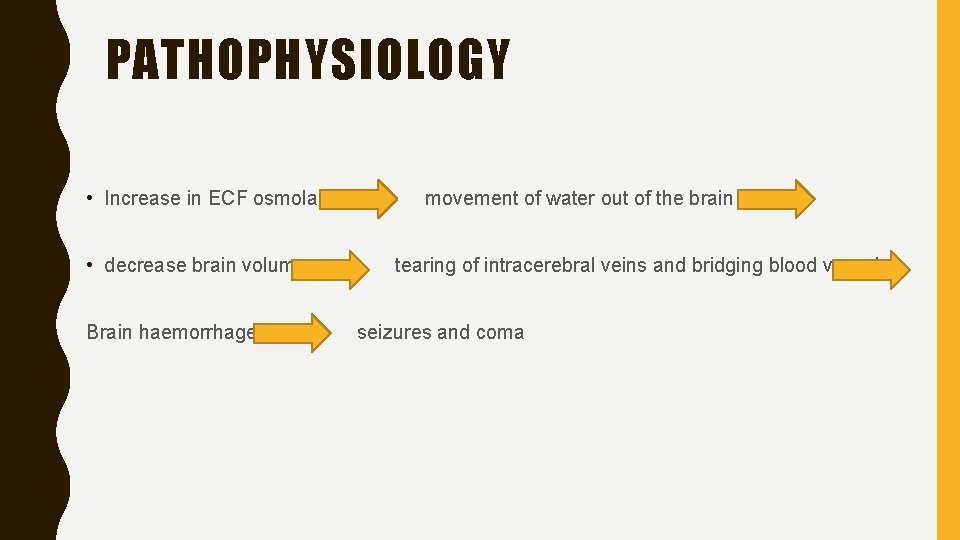
PATHOPHYSIOLOGY • Increase in ECF osmolality • decrease brain volume Brain haemorrhage movement of water out of the brain cells tearing of intracerebral veins and bridging blood vessels seizures and coma
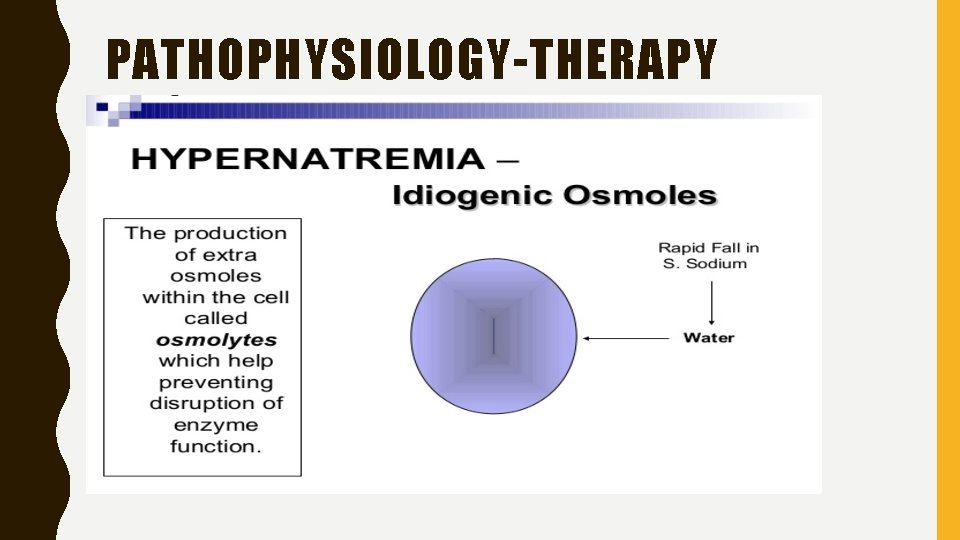
PATHOPHYSIOLOGY THERAPY • Rapid treatment of hypernatremia may cause significant morbidity and mortality • Idiogenic osmoles are generated within the brain during the development of hypernatremia. • They increases the osmolality within the brain, providing protection against brain shrinkage caused by the movement of water out of the brain cell into the hypertonic ECF. • Idiogenic osmoles dissipate slowly during correction of hypernatraemia • Rapid lowering of the ECF during correction causes water movement from the ECF into the brain, producing cerebral oedema
PATHOPHYSIOLOGY-THERAPY
TREAMENT OF HYPERNATREMIC DEHYDRATION • 5% dextrose in half normal saline. • Correction is over 48 -72 hrs or more depending on the serum level of sodium
HYPERKALAEMIA AND HYPOK • What are the ECG features and correction moderlaities
WHAT IS THE SIGN
- Slides: 27