
Flower structure Use the scaffolded notes Plant phyla
- Slides: 21
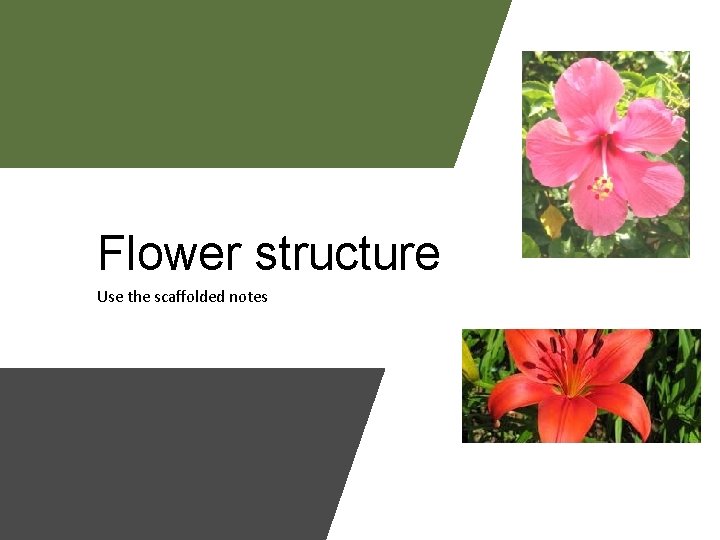
Flower structure Use the scaffolded notes
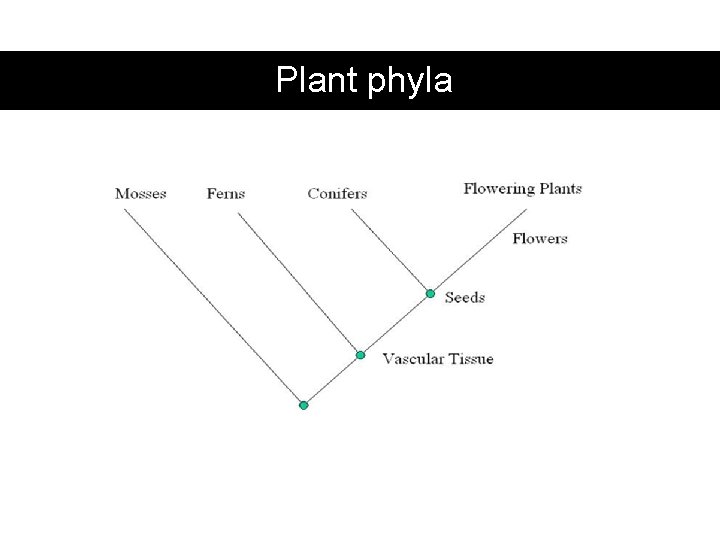
Plant phyla
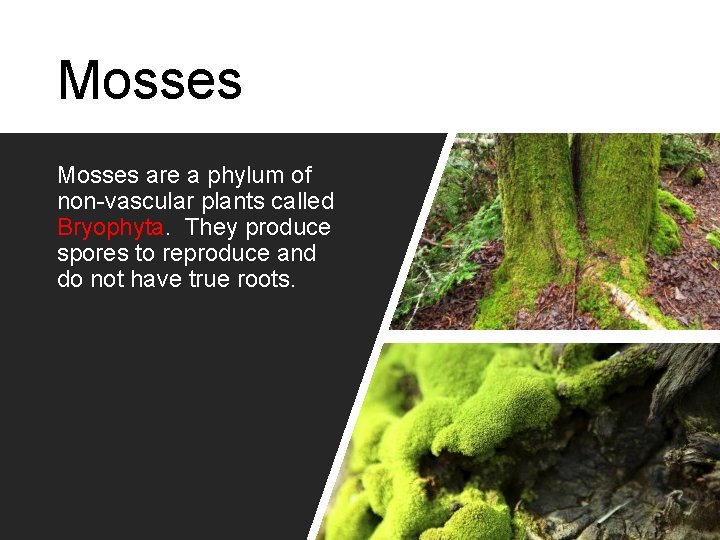
Mosses are a phylum of non-vascular plants called Bryophyta. They produce spores to reproduce and do not have true roots.
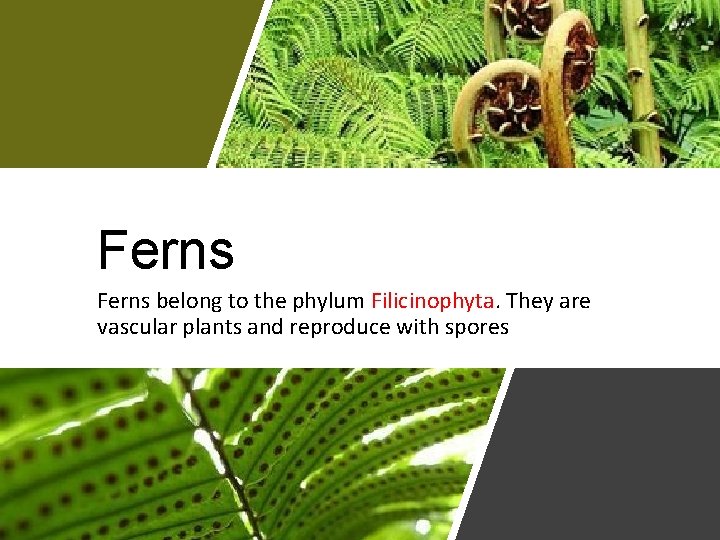
Ferns belong to the phylum Filicinophyta. They are vascular plants and reproduce with spores
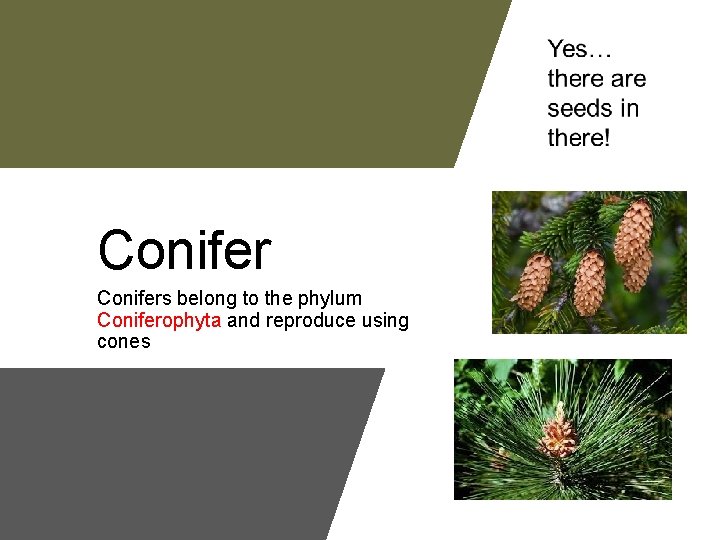
Conifers belong to the phylum Coniferophyta and reproduce using cones
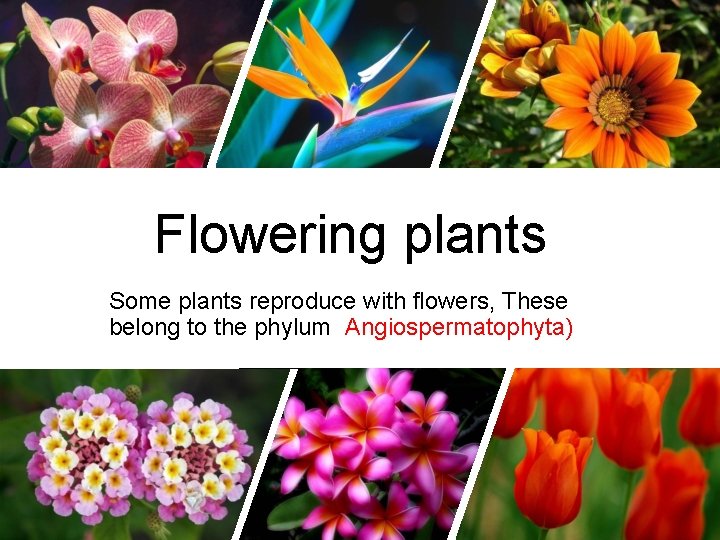
Flowering plants Some plants reproduce with flowers, These belong to the phylum Angiospermatophyta)
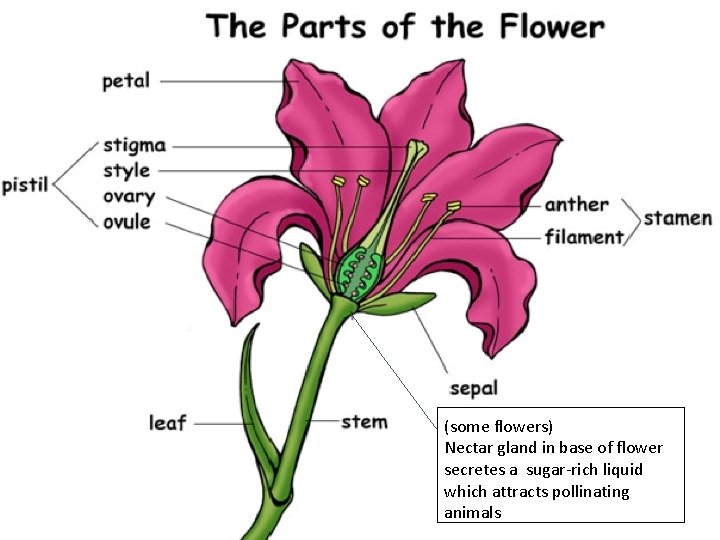
(some flowers) Nectar gland in base of flower secretes a sugar-rich liquid which attracts pollinating animals
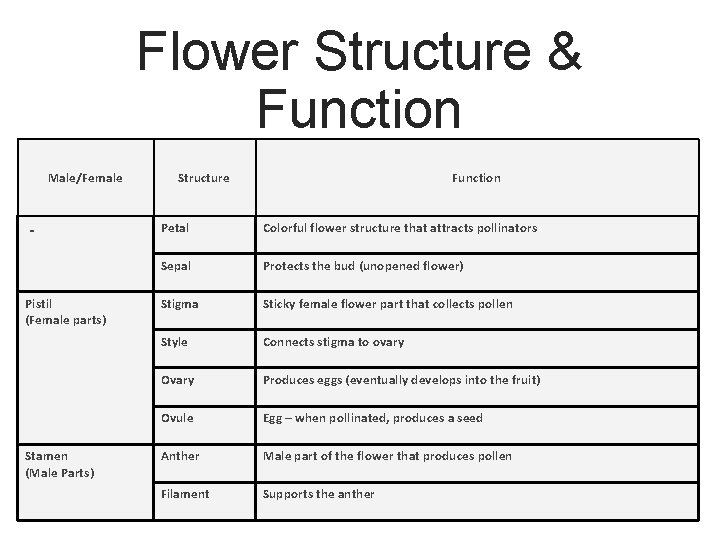
Flower Structure & Function Male/Female - Pistil (Female parts) Stamen (Male Parts) Structure Function Petal Colorful flower structure that attracts pollinators Sepal Protects the bud (unopened flower) Stigma Sticky female flower part that collects pollen Style Connects stigma to ovary Ovary Produces eggs (eventually develops into the fruit) Ovule Egg – when pollinated, produces a seed Anther Male part of the flower that produces pollen Filament Supports the anther
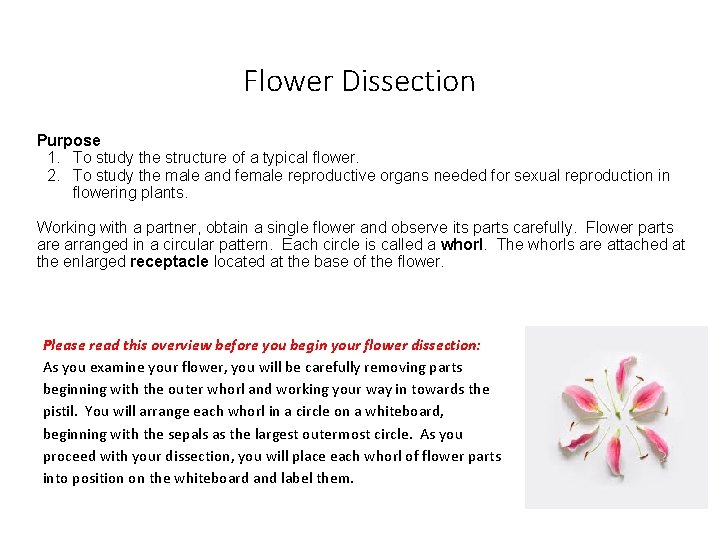
Flower Dissection Purpose 1. To study the structure of a typical flower. 2. To study the male and female reproductive organs needed for sexual reproduction in flowering plants. Working with a partner, obtain a single flower and observe its parts carefully. Flower parts are arranged in a circular pattern. Each circle is called a whorl. The whorls are attached at the enlarged receptacle located at the base of the flower. Please read this overview before you begin your flower dissection: As you examine your flower, you will be carefully removing parts beginning with the outer whorl and working your way in towards the pistil. You will arrange each whorl in a circle on a whiteboard, beginning with the sepals as the largest outermost circle. As you proceed with your dissection, you will place each whorl of flower parts into position on the whiteboard and label them.
1. Sepals ● The sepals form the outermost whorl of the flower. The sepals are leaf-like structures that are usually green in color. Sometimes, the sepals are the same color as the petals, or appear to be another set of petals of a different color. ● The function of the sepals is to protect the inner part of the flower before it blossoms. Gently remove the sepals, place them into position on the whiteboard, and label them.
2. Petals The petals are found directly under the sepals. The color and odor of the petals help to attract birds and insects to the flower for pollination. Gently remove the petals, place them into position onto the whiteboard, and label them.
3. Stamen The stalk-like structures inside the petals are the stamens, the male reproductive organs. Depending on the species, the stamens may be attached to the receptacle, to the petals, or to the pistil. The enlarged portion at the top of the stamen is the anther. Inside the anther are pollen sacs, which produce pollen grains. When the pollen grains mature, the pollen sacs split open, releasing the dust like pollen grains. The filament is the thin structure that supports the anther. Gently remove the stamens, place them into position on the whiteboard, and the component parts.
4. Pistil The central structure of the flower is the female reproductive organ, the pistil. The top of the pistil is the stigma. When mature the stigma is enlarged, and its surface is moist and sticky. The style is the middle portion of the pistil. It supports the sigma. Some flowers lack a style. The ovary is the enlarged structure at the bottom of the pistil. The ovary contains one or more hollow compartments which contain ovules, which in turn contain the egg nuclei. Carefully remove the pistil by cutting it from the stem just under the ovary. Place it on the whiteboard and label it.
4. Ovary Cut the ovary in half and place it under the stigma and style. Label the ovary wall, locules and ovules.
Questions Please write the answers to the following questions on your whiteboard: 1. Which does your flower produce in greater numbers: ovules 2. 3. 4. 5. 6. 7. 8. or pollen grains? Explain why this would be important in terms of reproductive success. What are some adaptations of flower petals to help attract pollinators? How is the stigma of your flower adapted to capture and hold pollen? Describe where pollination and fertilization occur. Explain the differences between pollination and fertilization. In which part of the male reproductive organ are the pollen grains made? In which part of the female reproductive organ are the egg cells made? By which nuclear process are these gametes (pollen and egg) formed?
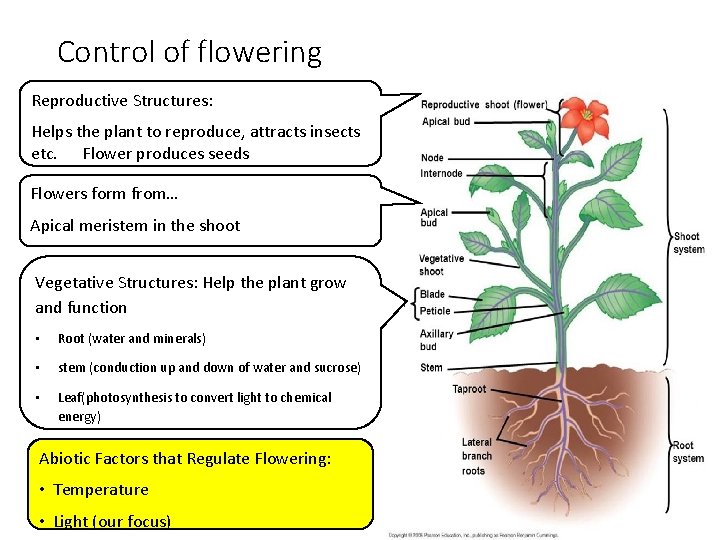
Control of flowering Reproductive Structures: Helps the plant to reproduce, attracts insects etc. Flower produces seeds Flowers form from… Apical meristem in the shoot Vegetative Structures: Help the plant grow and function • Root (water and minerals) • stem (conduction up and down of water and sucrose) • Leaf(photosynthesis to convert light to chemical energy) Abiotic Factors that Regulate Flowering: • Temperature • Light (our focus)
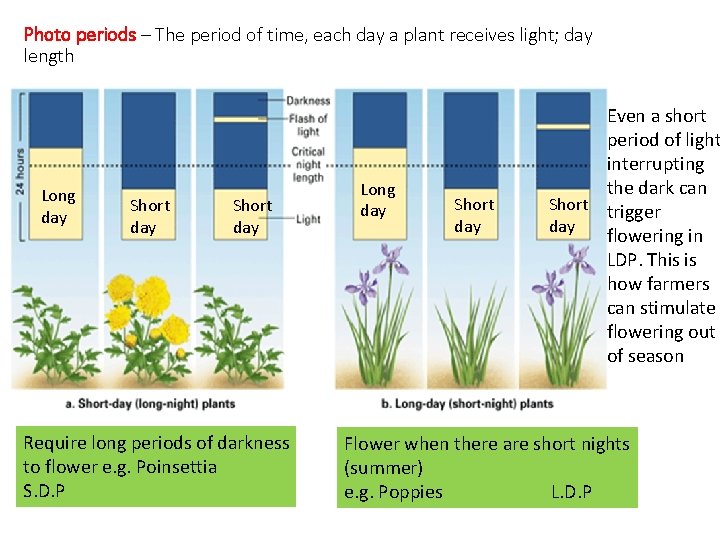
Photo periods – The period of time, each day a plant receives light; day length Long day Short day Require long periods of darkness to flower e. g. Poinsettia S. D. P Long day Short day Even a short period of light interrupting the dark can Short trigger day flowering in LDP. This is how farmers can stimulate flowering out of season Flower when there are short nights (summer) e. g. Poppies L. D. P
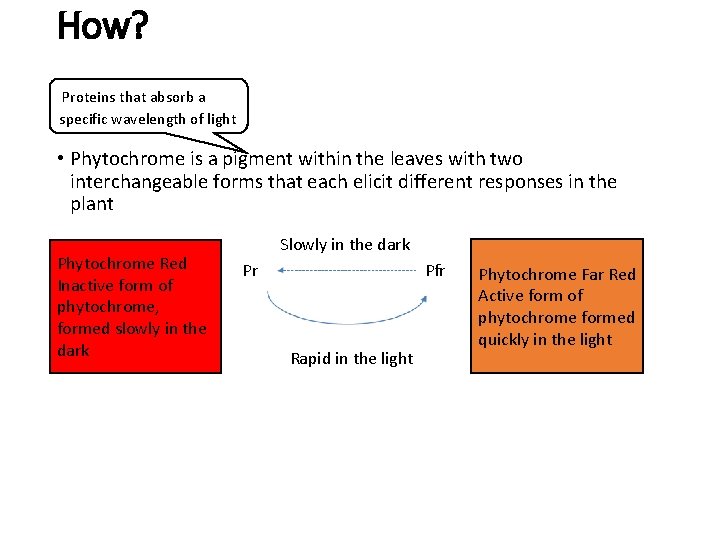
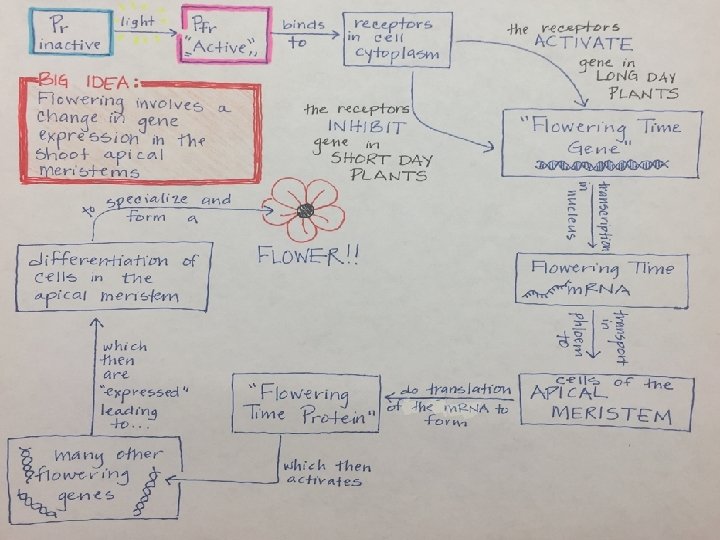
How? Proteins that absorb a specific wavelength of light • Phytochrome is a pigment within the leaves with two interchangeable forms that each elicit different responses in the plant Phytochrome Red Inactive form of phytochrome, formed slowly in the dark Slowly in the dark Pr Pfr Rapid in the light Phytochrome Far Red Active form of phytochrome formed quickly in the light
Watch and listen to gain an additional explanation of the control of flowering. Video Lesson Link This isn’t necessarily easy stuff… it may take a few times for you to “get it. ” Keep in mind -- FOCUS ON THE BIG IDEA!
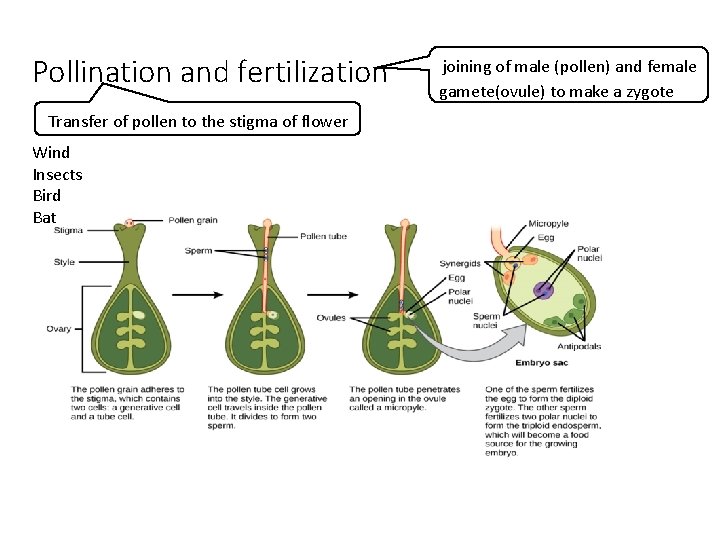
Pollination and fertilization Transfer of pollen to the stigma of flower Wind Insects Bird Bat joining of male (pollen) and female gamete(ovule) to make a zygote