
Flower Structure and Function Flowering plants are called
- Slides: 14
Flower Structure and Function Flowering plants are called angiosperms. They are the greatest number of plants on Earth. What helps them survive? Diversity ! What is diversity? Look around you. Diversity is variation within a community.
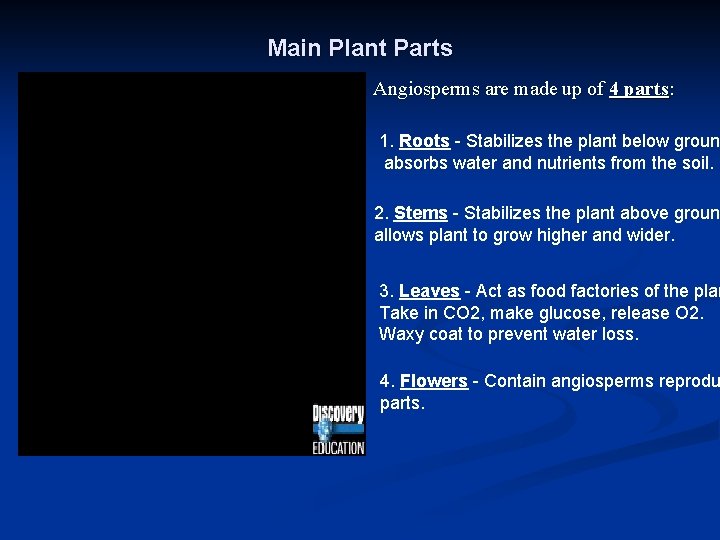
Main Plant Parts Angiosperms are made up of 4 parts: 1. Roots - Stabilizes the plant below groun absorbs water and nutrients from the soil. 2. Stems - Stabilizes the plant above ground allows plant to grow higher and wider. 3. Leaves - Act as food factories of the plan Take in CO 2, make glucose, release O 2. Waxy coat to prevent water loss. 4. Flowers - Contain angiosperms reprodu parts.
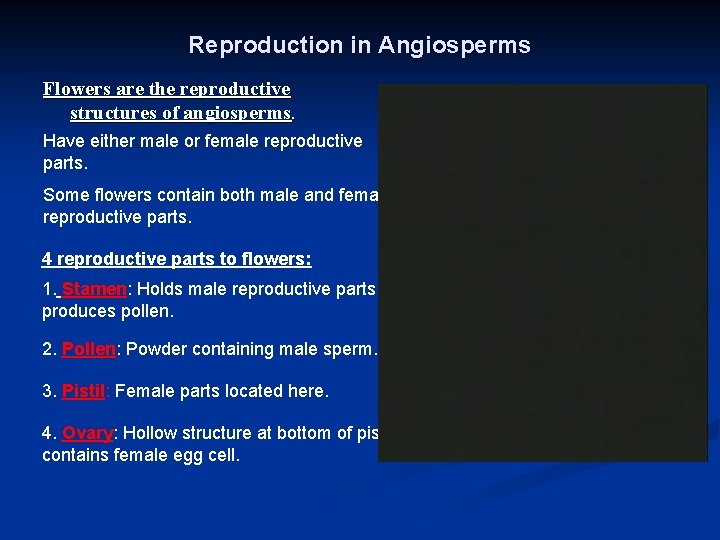
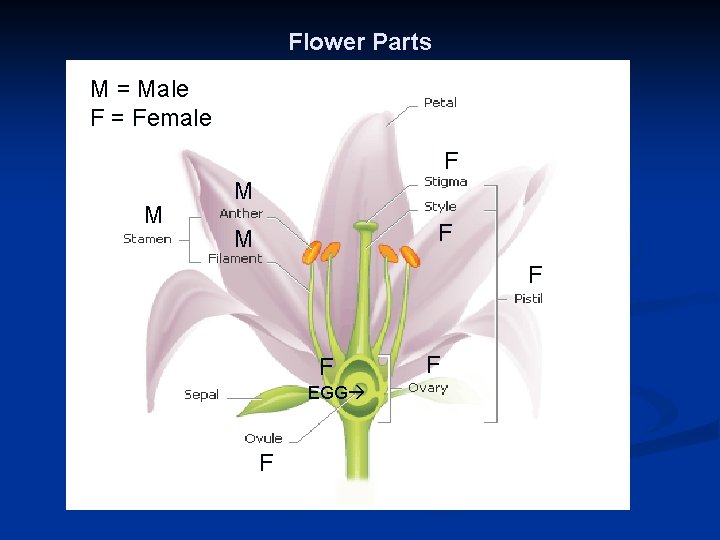
Reproduction in Angiosperms Flowers are the reproductive structures of angiosperms. Have either male or female reproductive parts. Some flowers contain both male and female reproductive parts. 4 reproductive parts to flowers: 1. Stamen: Holds male reproductive parts and produces pollen. 2. Pollen: Powder containing male sperm. 3. Pistil: Female parts located here. 4. Ovary: Hollow structure at bottom of pistil, contains female egg cell.
Flower Parts M = Male F = Female N n F M Male M F F EGG F F
Pollination When pollen from 1 of its flowers or from another flower of the same species reaches an egg cell. 2 characteristics that attract pollinators: 1. Color 2. Aroma (Smell) What are pollinators? Organisms that carry pollen from stamens t pistils. Examples are: insects, like honeybees, butterflies, moths, birds, and mammals, like bats.
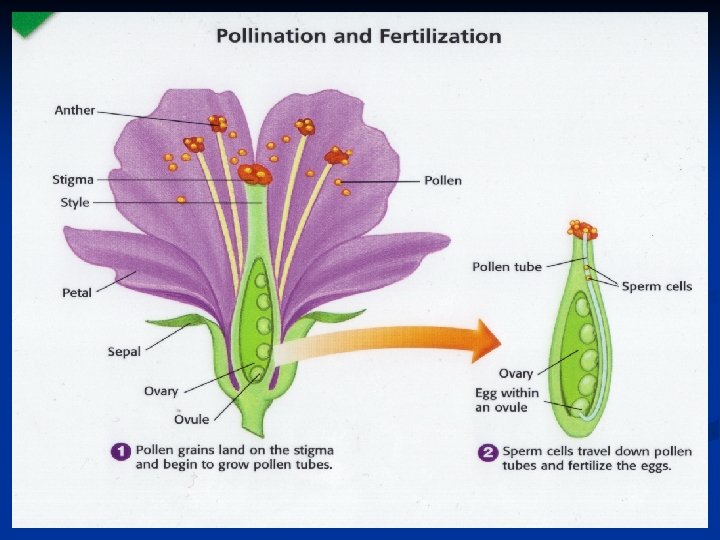
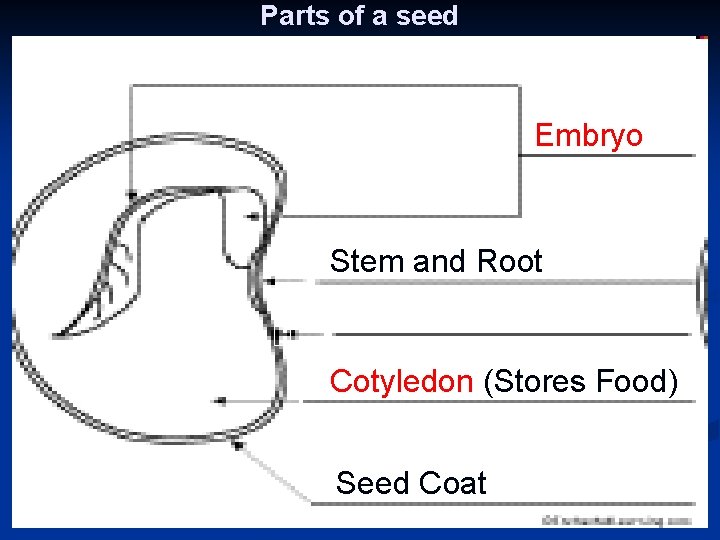
Steps in Fertilization 1 st- Pollen travels down into ovary to fertilize female egg. 2 nd-Fertilized egg becomes a seed. . - The ripened ovary develops into a f 3 rd The fruit contains the seeds that can dev into new plants. Fruit: A ripened ovary. Fruit protects newly fertilized egg. Some plants produce fruit with many/onl one seed. Ex. Peach-1/Apple-Many Each seed contains a tiny new plant called an embryo. New seed has 2 things: 1. Seed coat – protection 2. Cotyledons – Stored food for embryo.
Parts of a seed Embryo Stem and Root Cotyledon (Stores Food) Seed Coat
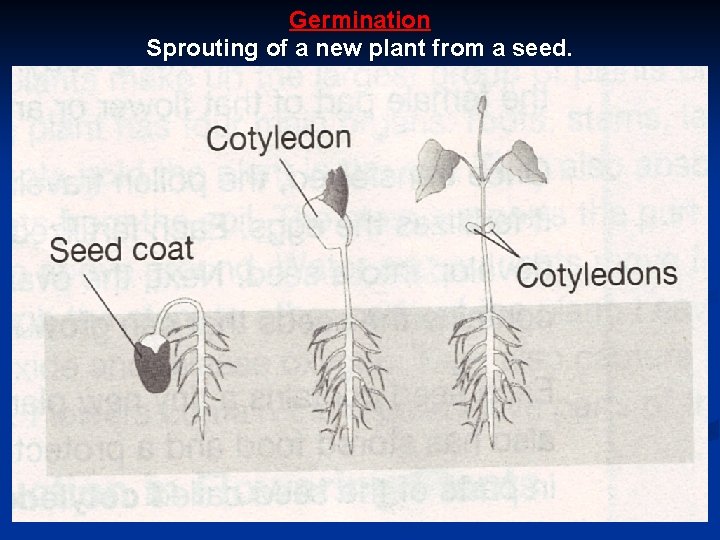
Germination Sprouting of a new plant from a seed.
Let’s look at Germination.
Seed Dispersal How are seeds sent out or dispersed into the environment? Animals, water, wind, hooks on certain seeds (cuckleburr) How do angiosperms and animals help another?
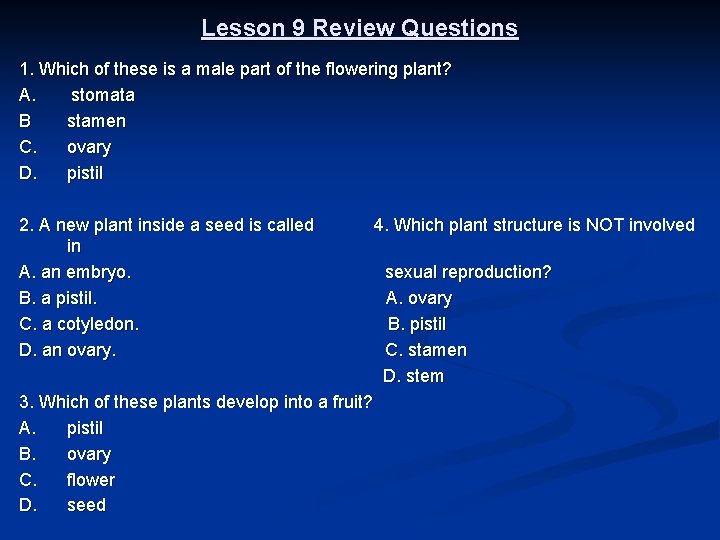
Lesson 9 Review Questions 1. Which of these is a male part of the flowering plant? A. stomata B stamen C. ovary D. pistil 2. A new plant inside a seed is called in A. an embryo. B. a pistil. C. a cotyledon. D. an ovary. 3. Which of these plants develop into a fruit? A. pistil B. ovary C. flower D. seed 4. Which plant structure is NOT involved sexual reproduction? A. ovary B. pistil C. stamen D. stem
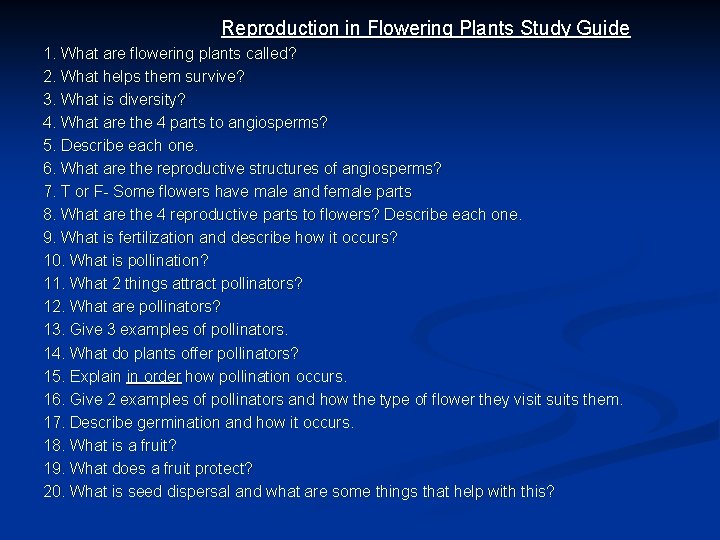
Reproduction in Flowering Plants Study Guide 1. What are flowering plants called? 2. What helps them survive? 3. What is diversity? 4. What are the 4 parts to angiosperms? 5. Describe each one. 6. What are the reproductive structures of angiosperms? 7. T or F- Some flowers have male and female parts 8. What are the 4 reproductive parts to flowers? Describe each one. 9. What is fertilization and describe how it occurs? 10. What is pollination? 11. What 2 things attract pollinators? 12. What are pollinators? 13. Give 3 examples of pollinators. 14. What do plants offer pollinators? 15. Explain in order how pollination occurs. 16. Give 2 examples of pollinators and how the type of flower they visit suits them. 17. Describe germination and how it occurs. 18. What is a fruit? 19. What does a fruit protect? 20. What is seed dispersal and what are some things that help with this?