
Flower Female reproductive structure A Structure of Gynoecium

- Slides: 14
@Flower@ Female reproductive structure A. Structure of Gynoecium B. Structure of Typical Ovule C. Types of ovules D. Megasporogenesis E. Development of Female gametophyte F. Types of embryo sac: Monosporic, Bisporic and Tetrasporic
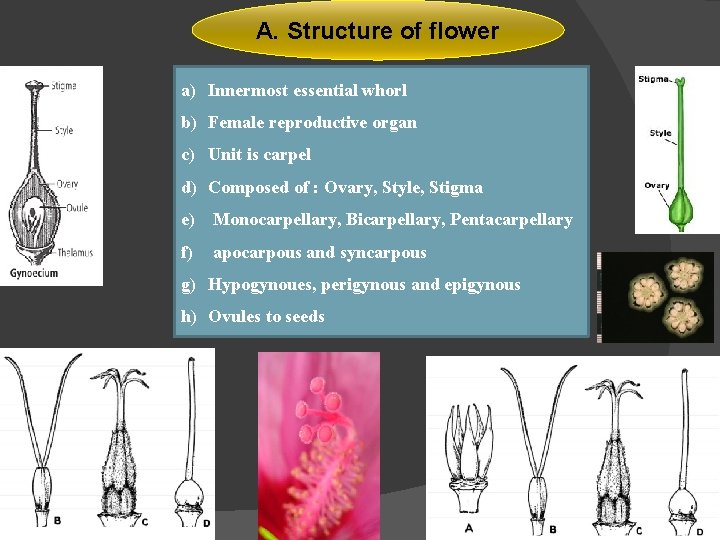
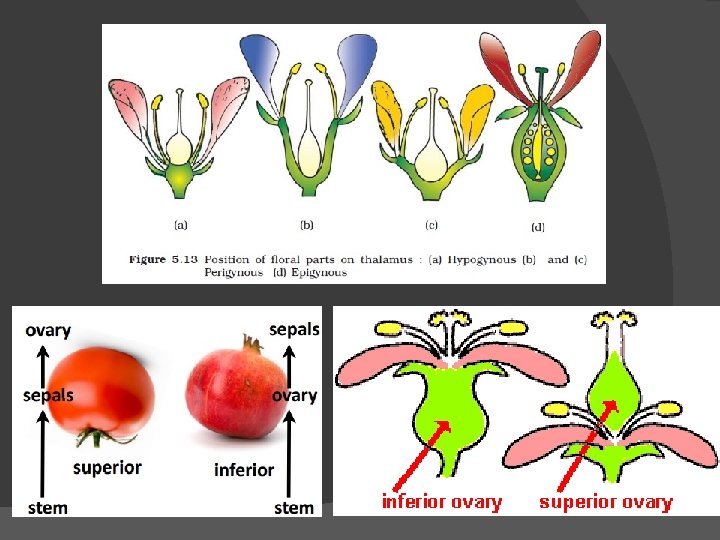
A. Structure of flower a) Innermost essential whorl b) Female reproductive organ c) Unit is carpel d) Composed of : Ovary, Style, Stigma e) Monocarpellary, Bicarpellary, Pentacarpellary f) apocarpous and syncarpous g) Hypogynoues, perigynous and epigynous h) Ovules to seeds
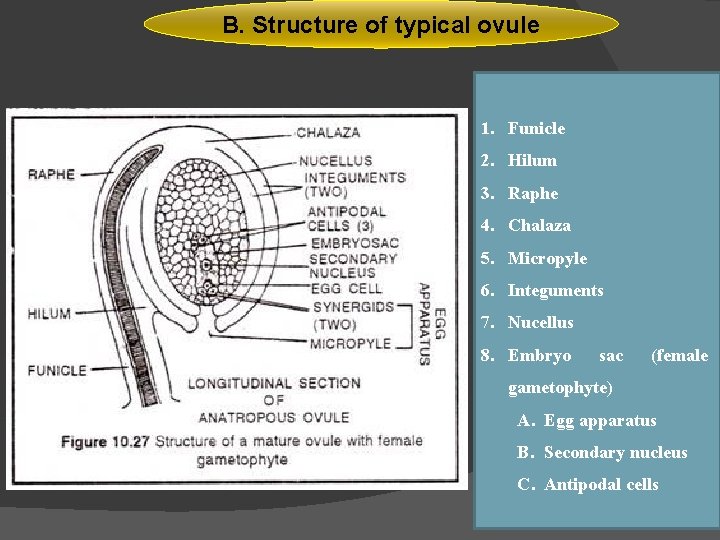
B. Structure of typical ovule 1. Funicle 2. Hilum 3. Raphe 4. Chalaza 5. Micropyle 6. Integuments 7. Nucellus 8. Embryo sac (female gametophyte) A. Egg apparatus B. Secondary nucleus C. Antipodal cells
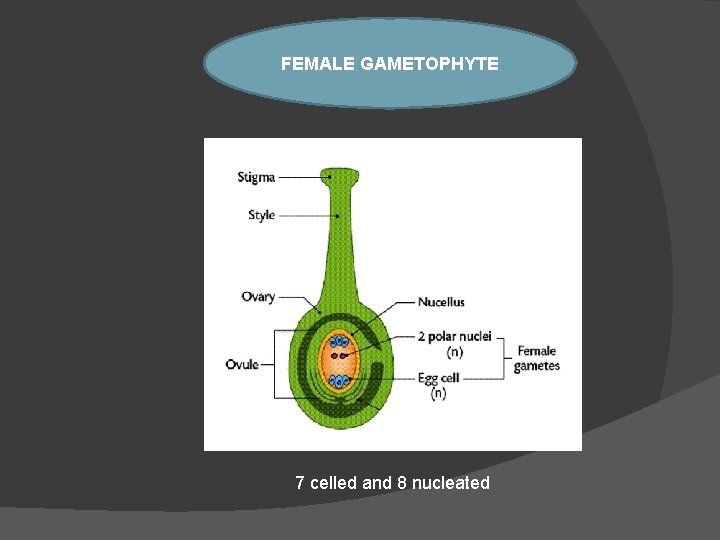
FEMALE GAMETOPHYTE 7 celled and 8 nucleated
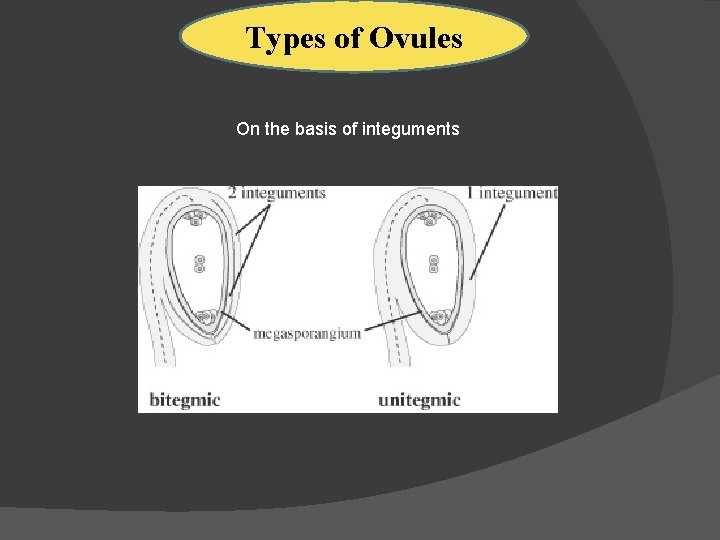
Types of Ovules On the basis of integuments
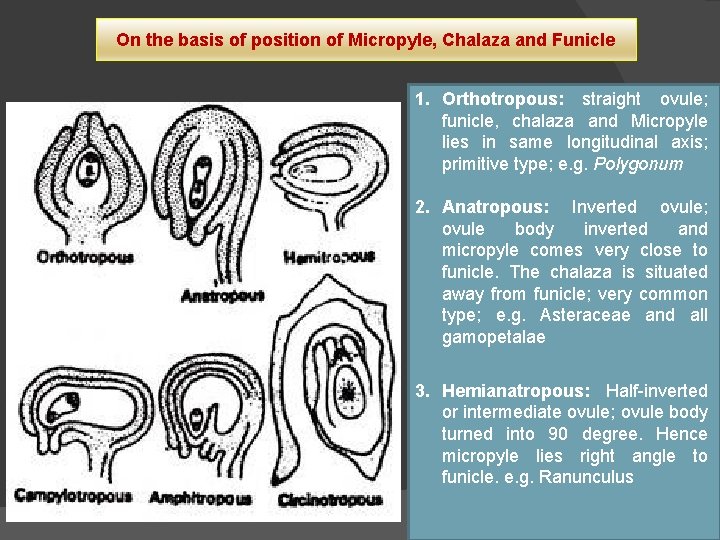
On the basis of position of Micropyle, Chalaza and Funicle 1. Orthotropous: straight ovule; funicle, chalaza and Micropyle lies in same longitudinal axis; primitive type; e. g. Polygonum 2. Anatropous: Inverted ovule; ovule body inverted and micropyle comes very close to funicle. The chalaza is situated away from funicle; very common type; e. g. Asteraceae and all gamopetalae 3. Hemianatropous: Half-inverted or intermediate ovule; ovule body turned into 90 degree. Hence micropyle lies right angle to funicle. e. g. Ranunculus
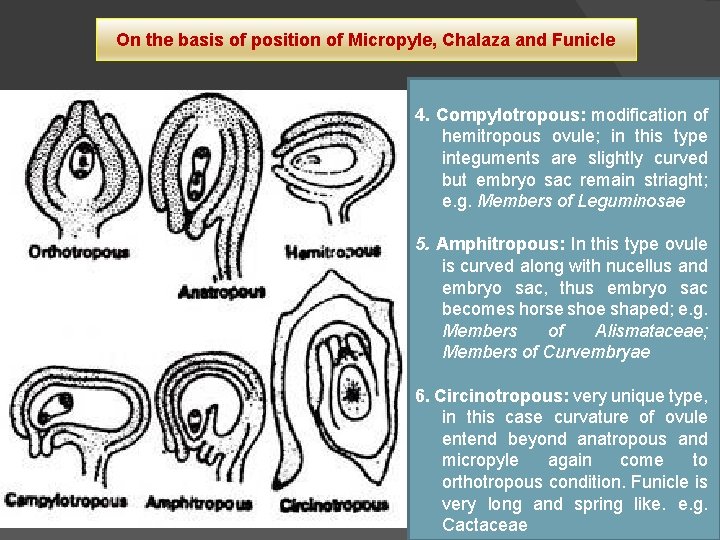
On the basis of position of Micropyle, Chalaza and Funicle 4. Compylotropous: modification of hemitropous ovule; in this type integuments are slightly curved but embryo sac remain striaght; e. g. Members of Leguminosae 5. Amphitropous: In this type ovule is curved along with nucellus and embryo sac, thus embryo sac becomes horse shoe shaped; e. g. Members of Alismataceae; Members of Curvembryae 6. Circinotropous: very unique type, in this case curvature of ovule entend beyond anatropous and micropyle again come to orthotropous condition. Funicle is very long and spring like. e. g. Cactaceae
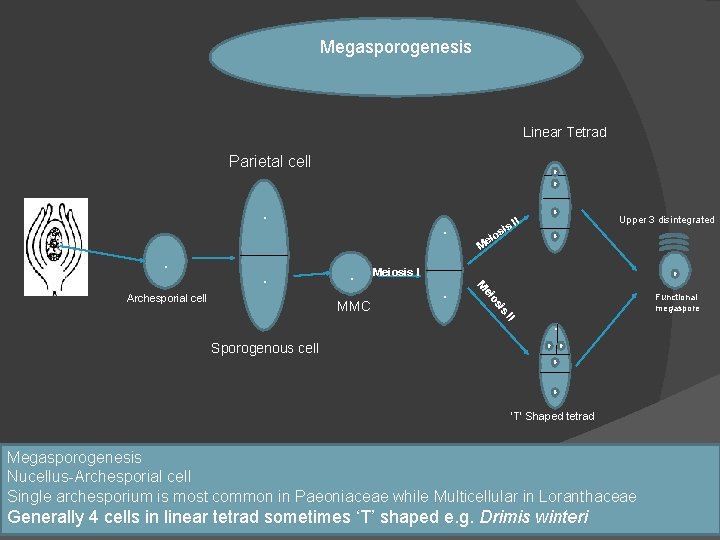
Megasporogenesis Linear Tetrad Parietal cell . . Upper 3 disintegrated . Meiosis I . Functional megaspore s si MMC II o ei Archesporial cell . Me is ios M . . II . Sporogenous cell . ‘T’ Shaped tetrad Megasporogenesis Nucellus-Archesporial cell Single archesporium is most common in Paeoniaceae while Multicellular in Loranthaceae Generally 4 cells in linear tetrad sometimes ‘T’ shaped e. g. Drimis winteri
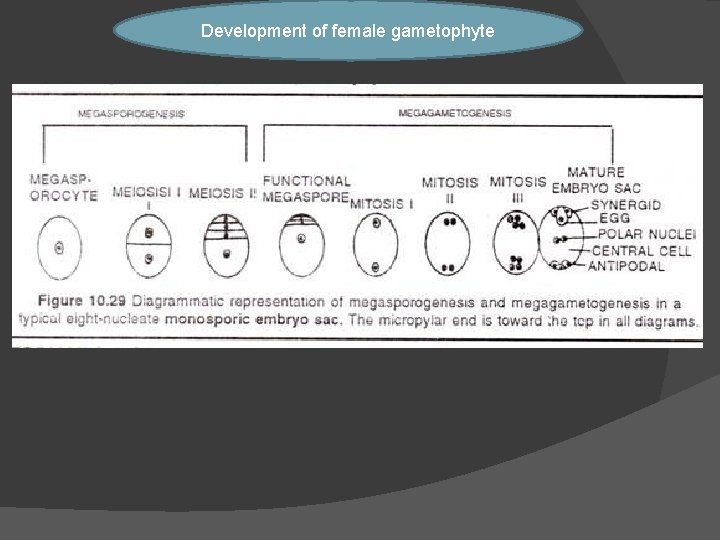
Development of female gametophyte
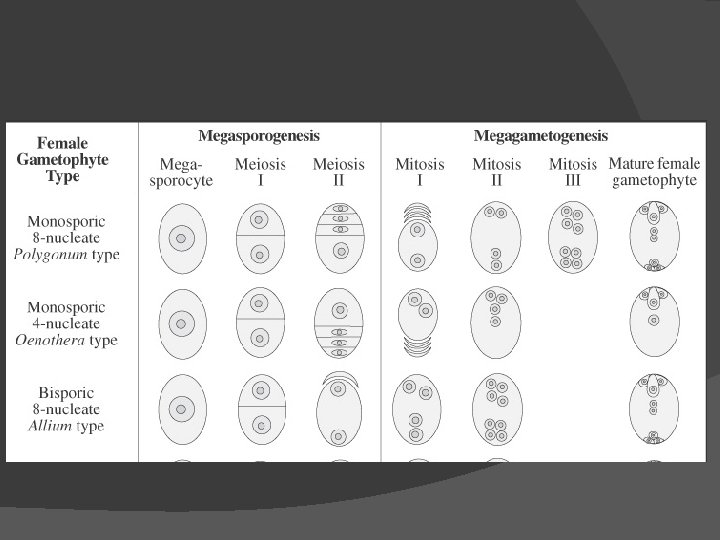
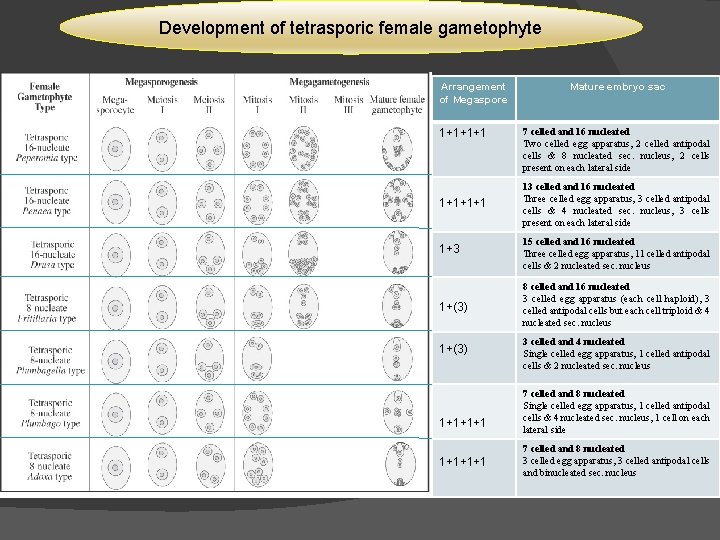
Development of tetrasporic female gametophyte Arrangement of Megaspore 1+1+1+1 Mature embryo sac 7 celled and 16 nucleated Two celled egg apparatus, 2 celled antipodal cells & 8 nucleated sec. nucleus, 2 cells present on each lateral side 1+1+1+1 13 celled and 16 nucleated Three celled egg apparatus, 3 celled antipodal cells & 4 nucleated sec. nucleus, 3 cells present on each lateral side 1+3 15 celled and 16 nucleated Three celled egg apparatus, 11 celled antipodal cells & 2 nucleated sec. nucleus 1+(3) 8 celled and 16 nucleated 3 celled egg apparatus (each cell haploid), 3 celled antipodal cells but each cell triploid & 4 nucleated sec. nucleus 1+(3) 3 celled and 4 nucleated Single celled egg apparatus, 1 celled antipodal cells & 2 nucleated sec. nucleus 1+1+1+1 7 celled and 8 nucleated Single celled egg apparatus, 1 celled antipodal cells & 4 nucleated sec. nucleus, 1 cell on each lateral side 7 celled and 8 nucleated 3 celled egg apparatus, 3 celled antipodal cells and binucleated sec. nucleus
Thank You