
Flower A Fascinating organ of Angiosperms Flower has
![n n n n I] SELF POLLINATION: It is the transfer pf pollen grains](https://slidetodoc.com/presentation_image_h/e70161e5d894cf8208e7992060b56e07/image-28.jpg "n n n n I] SELF POLLINATION: It is the transfer pf pollen grains")
![n n n n II] CROSS POLLINATION or XENOGAMY (Gk xenosstrange) It is the](https://slidetodoc.com/presentation_image_h/e70161e5d894cf8208e7992060b56e07/image-30.jpg "n n n n II] CROSS POLLINATION or XENOGAMY (Gk xenosstrange) It is the")
- Slides: 67
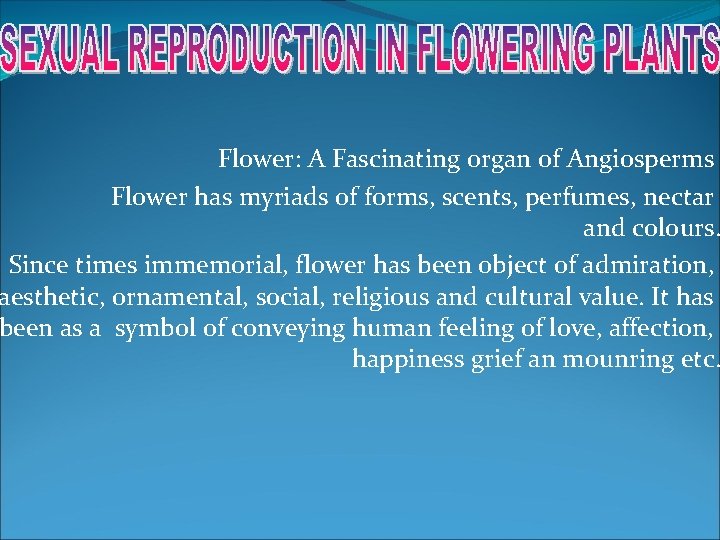
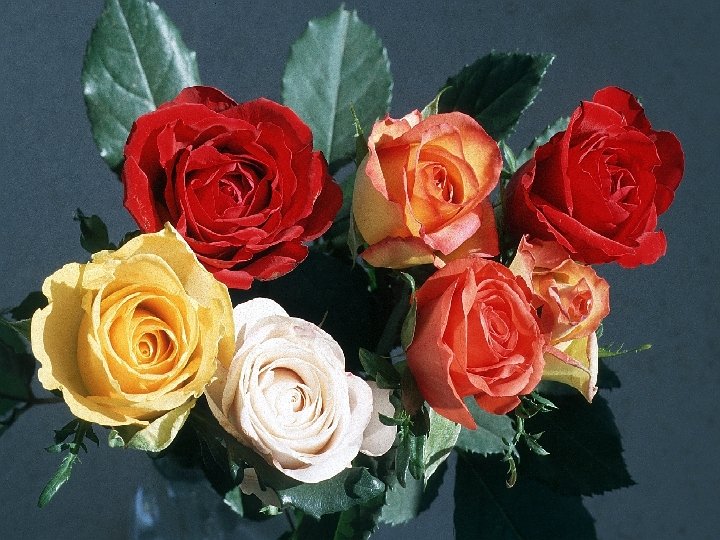
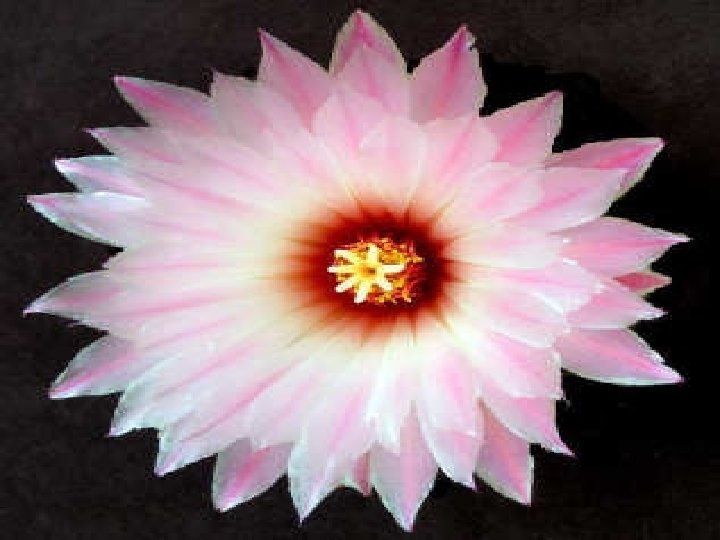
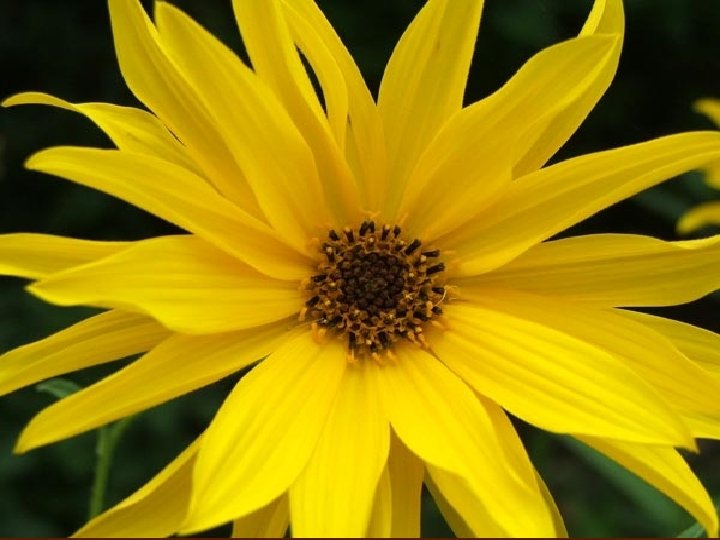
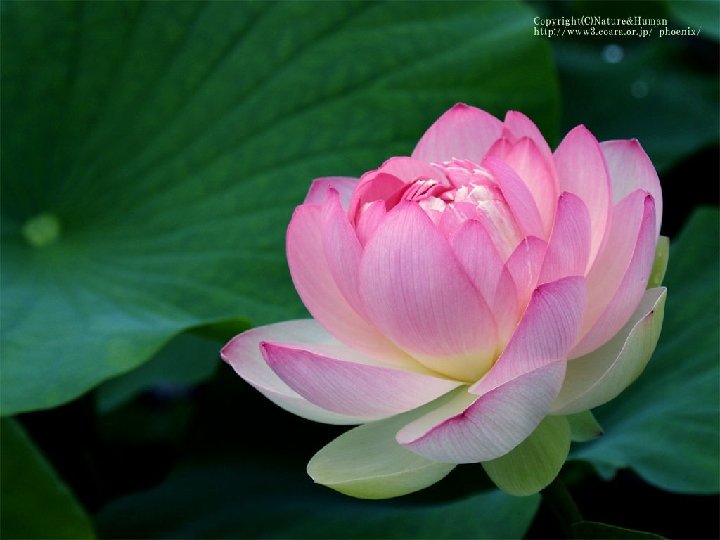
Flower: A Fascinating organ of Angiosperms Flower has myriads of forms, scents, perfumes, nectar and colours. Since times immemorial, flower has been object of admiration, aesthetic, ornamental, social, religious and cultural value. It has been as a symbol of conveying human feeling of love, affection, happiness grief an mounring etc.
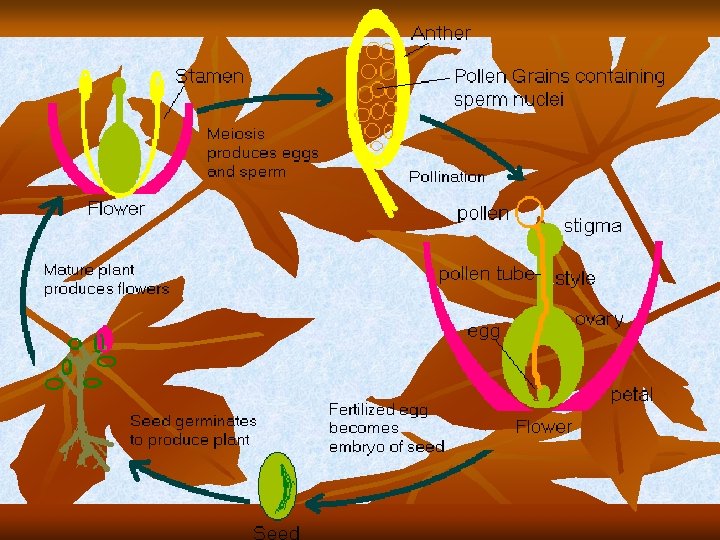
n n Sexual reproduction is the process of formation and fusion of haploid gametes resulting in the production of a diploid zygote that grows to produce a new individual or offspring. Flower has two types of sex organs, male stamens and female carpels or pistils. Meiosis occurs resulting in formation of microspores or pollen grains in another part of stamens and megaspores in ovule part of carpel. The phenomenon is called sporogenesis. Pre fertilization: Structure and Events.
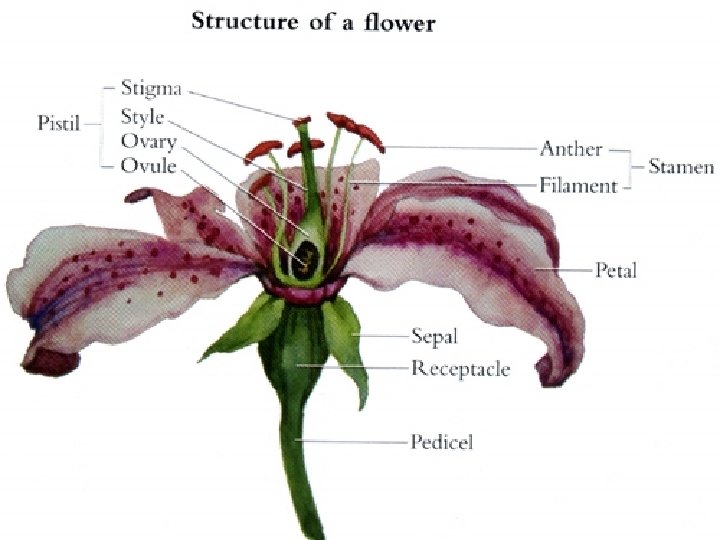
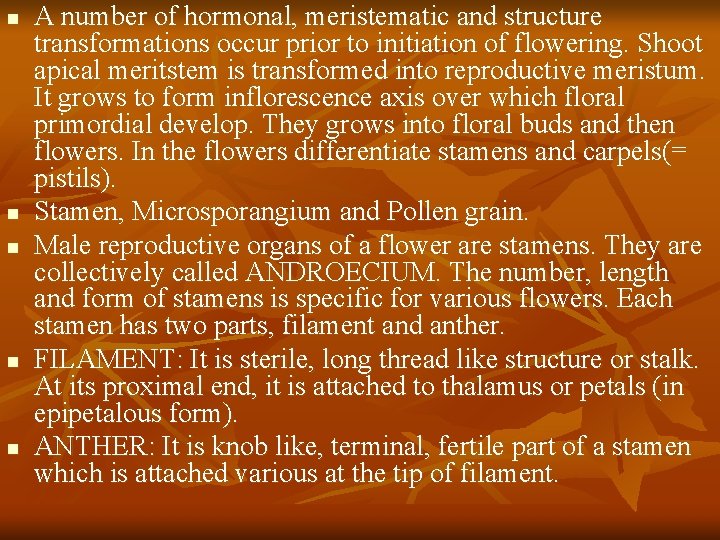
n n n A number of hormonal, meristematic and structure transformations occur prior to initiation of flowering. Shoot apical meritstem is transformed into reproductive meristum. It grows to form inflorescence axis over which floral primordial develop. They grows into floral buds and then flowers. In the flowers differentiate stamens and carpels(= pistils). Stamen, Microsporangium and Pollen grain. Male reproductive organs of a flower are stamens. They are collectively called ANDROECIUM. The number, length and form of stamens is specific for various flowers. Each stamen has two parts, filament and anther. FILAMENT: It is sterile, long thread like structure or stalk. At its proximal end, it is attached to thalamus or petals (in epipetalous form). ANTHER: It is knob like, terminal, fertile part of a stamen which is attached various at the tip of filament.
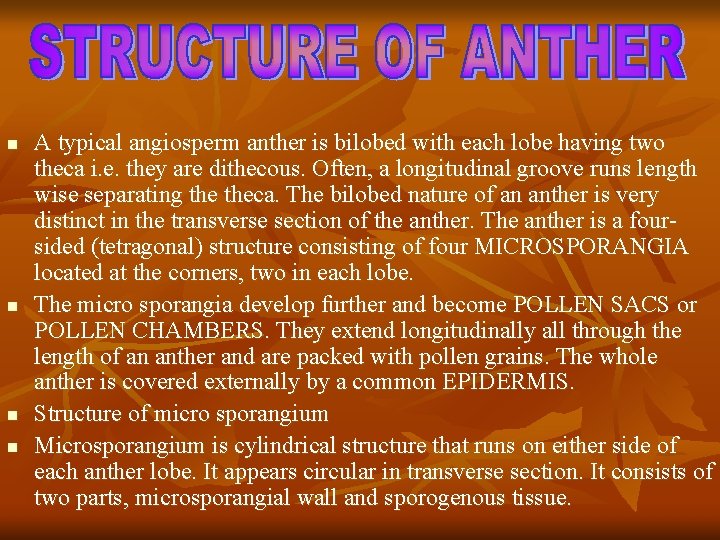
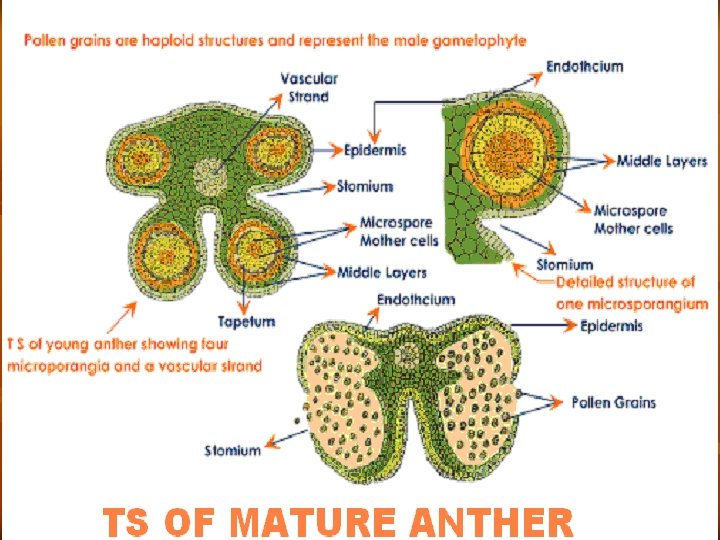
n n A typical angiosperm anther is bilobed with each lobe having two theca i. e. they are dithecous. Often, a longitudinal groove runs length wise separating theca. The bilobed nature of an anther is very distinct in the transverse section of the anther. The anther is a foursided (tetragonal) structure consisting of four MICROSPORANGIA located at the corners, two in each lobe. The micro sporangia develop further and become POLLEN SACS or POLLEN CHAMBERS. They extend longitudinally all through the length of an anther and are packed with pollen grains. The whole anther is covered externally by a common EPIDERMIS. Structure of micro sporangium Microsporangium is cylindrical structure that runs on either side of each anther lobe. It appears circular in transverse section. It consists of two parts, microsporangial wall and sporogenous tissue.
n n MICROSPORANGIAL WALL It is hypodermal wall having 3 -5 layers. Epidermis, endothecium, middle layers and the tapetum. The outer three layers performs the function of protection and help in dehiscence of other to release the pollen. The innermost wall layer is TAPETUM. It nourishes the developing pollen grains. Cells of the tapetum possess dense cytoplasm and generally have more than one nucleus.
n SPOROGENOUS TISSUE It fills the interior of microsporangium. all the cells are similar and called sporogenous cells. These cells divide regularly to form diploid microspore mother cells of the pollen grain mother cells(MMC or PMC). They are initially connected by plasmodesmata. Plasmodesmata are broken by formation of callose layers inner to cell wall. The separated mother cells round off and undergo meiosis to form four haploid microspores (tetrad). This phenomenon is known as MICROSPOROGENESIS. As the anther mature and dehydrate, the microspores dissociate from each other and develop into POLLEN GRAINS. Inside each microsporangium several thousands of microspores/ pollen grains are formed that are released with the dehiscence of anther.
n n n Pollen Grain: It represents the male reproductive propagule or young male gametophyte which is formed inside the anther and is meant for reaching the female reproductive organ though a pollinating agency. Pollen grains are generally spherical measuring about 25 -50 um in diameter. It has a prominent two-layered wall. EXINE: It has a hard outer layer made up of sporapollenin (Zelisch, 1932) which is one of the most resistant organic material known. It can withstand high temperatures and strong acids and alkali. No enzyme that degrades sporopollenin is so far known. Pollen grain exine has prominent apertures called GERM PORES, where sporopollenin is absent. There are usually 3 germ pores in dicots and 1 in monocots.
n n Pollen grains are well preserved as fossils because of the presence of sporapollenin INTINE: It is inner layer of pollen grain wall which is made up of cellulose and pectin. Some enzymatic proteins also occur in the intine (Knox and Heslop- Harrison, 1971). Intine is normally thin.
n n Due to peripheral position of nucleus, the protoplast of pollen grain divides unequally into two cells – a large tube or VEGETATIVE CELL and small GENERATIVE CELL. Tube cell or vegetative cell is rich in vacuoles as well as reserve food. Slowly its nucleus enlarges and becomes convoluted. Generative cell in lenticular to spherical in outline. It has a thin layer of cytoplasm around a compact nucleus. A layer of callose develop around the generative cell. It helps in separation of generative cell from the wall of a pollen grain. Later on, the callose covering of generative cell dissolves. In several plants, the pollen grains are shed in 2 celled stage. In many others, the generative cell divides further into two male gametes. In such cases pollen grains are shed in 3 celled stage.
n n n Pollen grains of many species cause severe allergies and bronchial afflictions in some people often leading to chronic respiratory disorders- asthma, bronchitis etc. Pollen grains are rich in nutrients. It has become fashionable to use pollen tablets as food supplements. Their consumption has been claimed to increase the performance of athletes and race horses. POLLEN VIABILITY: The period for which pollen grins remain functional is called pollen viability. It depends on the prevailing temperature, humidity and genetic potentiality. Eg. 1) Pollen grains of cereals like wheat, rice remain viable only for 30 minutes. 2) Pollen grains of members of Rosaceae, Fabaceae and Solanacea remain viable for several months. Pollen grains can also be cryopreserved in liquid N 2 (temperature → - 196 C) and used as POLLEN BANK, similar to seed bank in crop breeding.
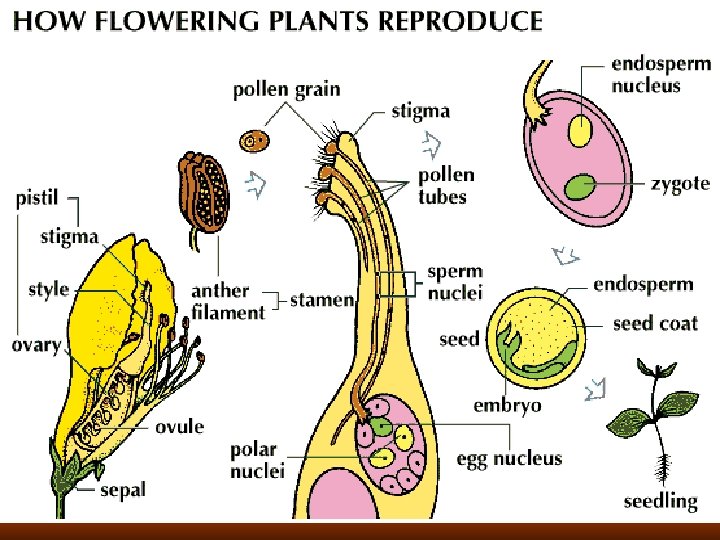
n n n n The Pistil, Megasporangium (ovule) and Embryo sac Female reproductive organs of the flower are carpel's, collectively called GYNOECIUM. It may have single carpel (monocarpellary), two carpel's (bicarpellary), several carpel's (multicarpellary). when there are more than one, the pistils may be fused together (i. e. Syncarpous) or may be free (apocarpous) Each pistil has 3 parts. OVARY: It is basal swollen ovule containing region. Ovary may have one to many chambers called locules. Ovary bearing cushions or placentae (Sing-Placenta) occur in the ovary. Number of ovules in an ovary may be one (eg. Wheat, paddy, mango, sunflower) to many (eg. Papaya, watermelon, orchids) STYLE: A long stalk- like structure. STIGMA: It is upper broader region which is specialized for receiving pollen grains.
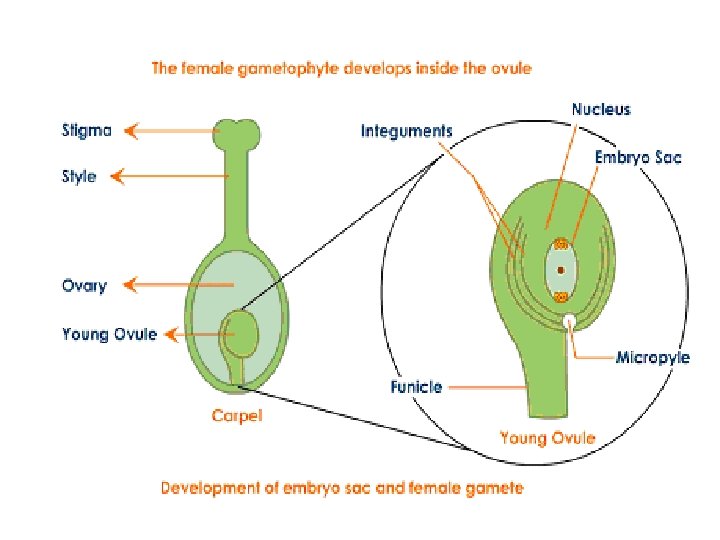
n n n Structural of Megasporangium (Ovule): the ovule is a small structure attached to the placenta by means of a stalk called funicle. The body of the ovule fuses with funicle in HILUM. Thus, hilum represents the junction between ovule and funicle. Each ovule has one or two protective envelopes called INTEGUMENTS. It encircle the ovule except at tip where a small opening called as MICROPYLE is organized. Opposite the micropylar end, is the CHALAZA, representing the basal part of the ovule. The main body of the ovule consist of parenchy matous tissue, the NUCELLUS. Located in the nucleus is the EMBRYOSAC or FEMAL GAMETOPHYTE.
n n MEGASPOROGENESIS: It is the process of formation of haploid megaspores from diploid megaspore mother cell or MMC. Ovules generally differentiate a single megaspore mother cell in the micropylar region of the nucellus. It is a large cell contaning dense cytoplasm and a prominent nucleus. The MMC undergoes meiotic division. Meiosis results in the production of four megaspores. Female Gametophyte: In a majority of flowering plants, one of the megaspore is functional while the other three degenerate. Only the functional megaspore develops into the female gametophytes (embryo Sac). This method of embryo sac formation from a single megaspore is termed MONOSPORIC development.
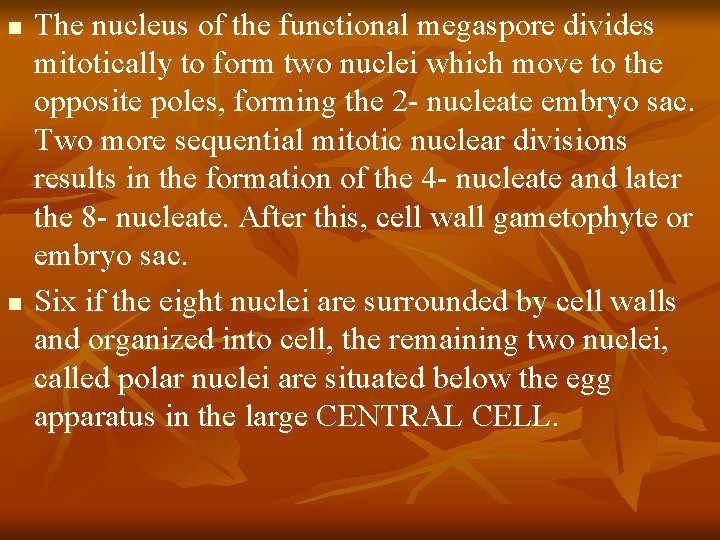
n n The nucleus of the functional megaspore divides mitotically to form two nuclei which move to the opposite poles, forming the 2 - nucleate embryo sac. Two more sequential mitotic nuclear divisions results in the formation of the 4 - nucleate and later the 8 - nucleate. After this, cell wall gametophyte or embryo sac. Six if the eight nuclei are surrounded by cell walls and organized into cell, the remaining two nuclei, called polar nuclei are situated below the egg apparatus in the large CENTRAL CELL.
n In embryo sac, 3 cells are grouped together at the micropylar and constitute the EGG APPARATUS. It consists of two SYNERGIDS and one EGG cell. The synergids have special cellular thickenings at the micropylar tip called filiform apparatus which play an important role in guiding the pollen tubes into the synergids. Three cells are at the chalazal end are called ANTIPODALS. The large central cells as mentioned earlier, has two polar nuclei. Thus, a typical angiosperm embryo sac, at maturity, through 8 - nuclear is 7 -celled.
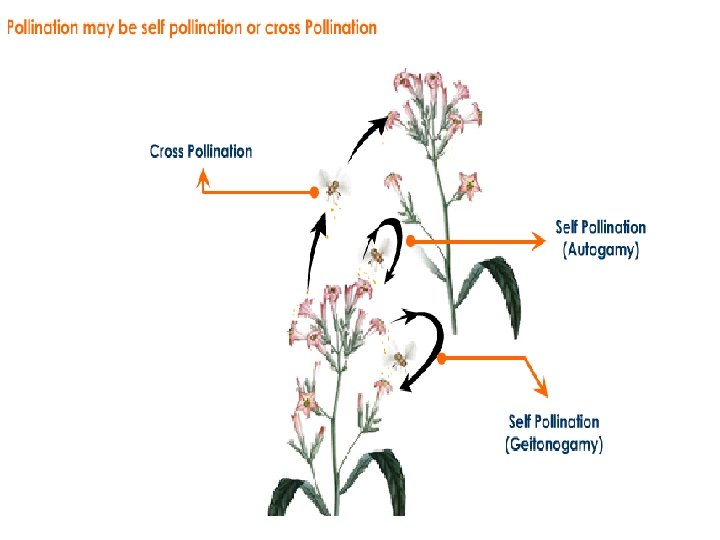
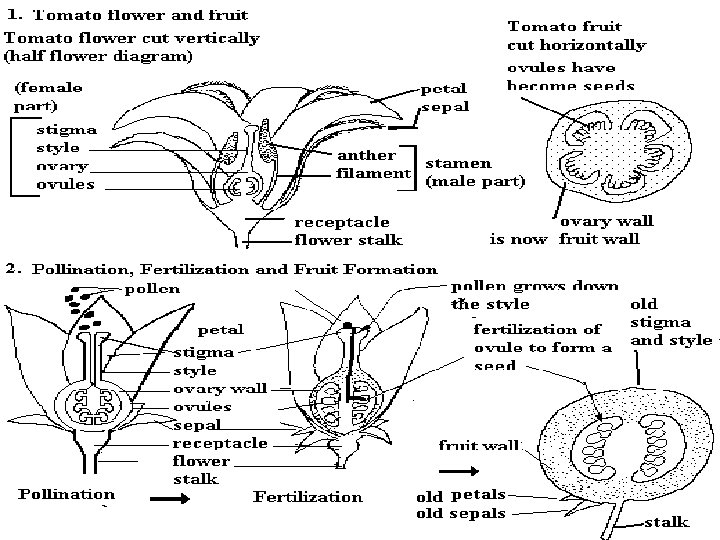
n Pollination: It is the process of transfer of pollen grains from anther and their deposition aver the stigma of a flower. Depending upon genetic similarity and dissimilarity between anther and stigma, pollination is two type, self pollination and cross- pollination (Xenogamy).
n n n n I] SELF POLLINATION: It is the transfer pf pollen grains from anthers to the stigma of same or genetically similar flower. Self pollination is of two types: (a) AUTOGAMY: (Gk-autos-self; gamos-marriage) It is self pollination which occurs between anther and stigma of the same flower. It is of the following types: Homogamy: The flower are open or chasmogamous. Both anthers and stigma mature simultaneously. As the anther dehisce, the pollen fall down due to gravity over the surface of stigma. Eg. Convolvulus, Catharanthus, Gargenia, Lilac etc. Clestogamy: (Gr. Kleisto-closed, gamos-marriage) The flowers are closed with anthers and stigma lying close to each other. When the anther dehisce, the pollen grains come in contact with stigma and pollination takes place. Eg. Commelina bengalensis, Arachis hypogea (Groundnut), Balsam, Oxalis, Viola etc.
n n b) GEITONOGAMY: (Gk –geiton- neighbour; gamos-marriage) It is the transfer of pollen grains from anther of one flower to stigma of another flower of either the same (endogamy) or genetically similar plat: Geitonogamy resembles cross pollination in the requirement of pollen transfer through a pollinating agency.
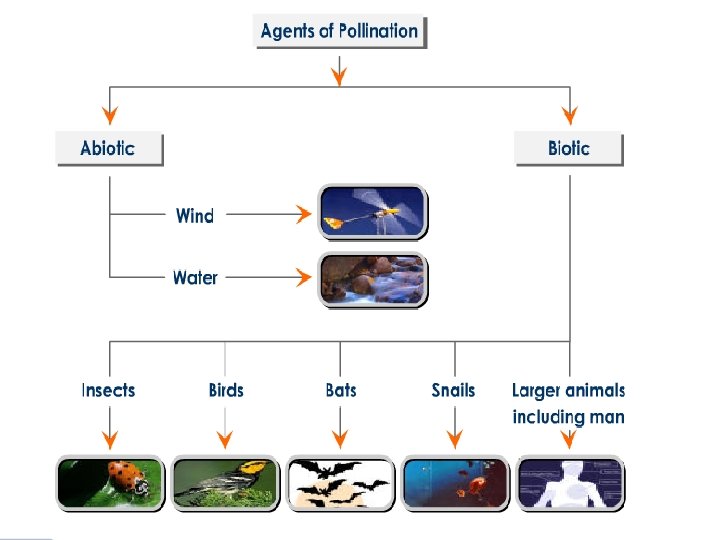
n n n n II] CROSS POLLINATION or XENOGAMY (Gk xenosstrange) It is the transfer of pollens from anther of one flower to the stigma of another flower belonging to genetically different plant. Cross-pollination can occur only with the help of external agencies (eg wind, water) and biotic (eg insects, birds, bats, snails, ants etc). the type of cross- pollination is named after the agency like. Anemophily (Gk anemos- wind; philein – to love) It is a mode of cross pollination performed through the agency of wind flowers are small and inconspicuous Flowers are usually colourless, nectarless and odourless. Anthers are exerted and versatile.
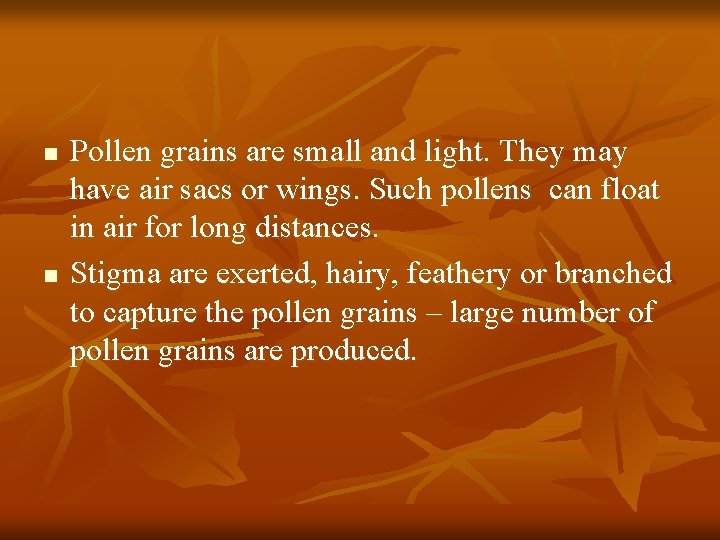
n n Pollen grains are small and light. They may have air sacs or wings. Such pollens can float in air for long distances. Stigma are exerted, hairy, feathery or branched to capture the pollen grains – large number of pollen grains are produced.
n n n Pistils commonly posses single ovules. Eg. Anemophily is common in grasses. Other eg. Are Amaranthus, Cannabif, Chenopodium, Coconut, Dates, Mulberrly, Poplar, Willow etc. (b) HYDROPHYLY: (Gk. –hydro-water; phyilein-to love) -It is pollination brought about through the agency of water. -Flowers are small, inconspicuous and light. -It occurs only in completely submerged plants. -Perianth is unwettable. - Flowers are with out nectar and odour. - Pollen grains are very thin, long, thread –like and lack exine. - stigma is long, sticky and unwattable. Eg. It occurs in about 30 ganera of mostly monocotyledonous aquatic plants. Eg. Lemna, Vallisneria, Ceratophyllum, Zostera etc.
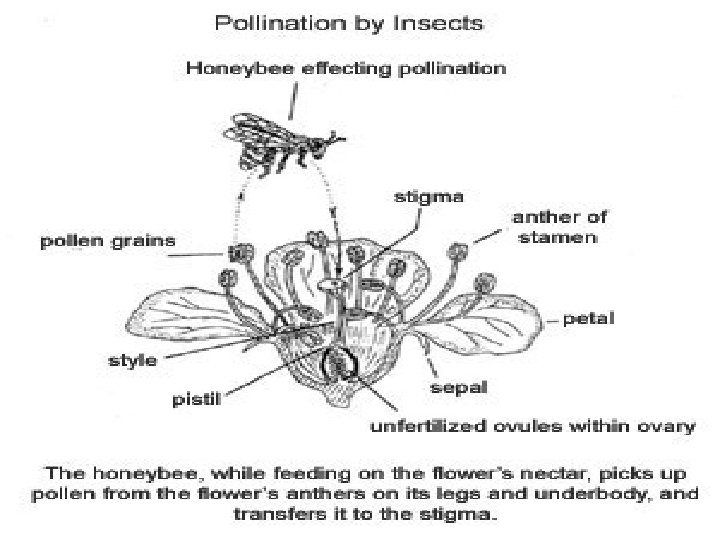
n n n n © Entomophily: It is transfer of pollen grains from anther of one flower to The stigma of another flower with the help of insects like moths, bees, wasps, butterflies, beetles, ants etc. bees are the most pollinating insects. Insects visit flowers for containing food (pollen, nectar) or shelter. Some insects also use flowers for laying eggs eg. Amorpholhallus. It has the largest inflorescence and the tallest flowers with a flower reaching about 1. 8 m (6 ft) Flowers are bright coloured, large and showy They produce nectar and fragrance.
n n n Flowers are generally large in size so that they become conspicuous from a distance. Majority of flowers have landing platform for insects. Pollen grains are covered by a yellow sticky substance called pollen kitt. Pollen grains are heavy and stigma is inserted and sticky. Eg. Calatropis, Rose, Salvia, Fig, Yucca, Ophrys etc.
n n n (d) Ornithophily: (Gk – ornis- bird; philein- to love) It is cross pollination performed through the agency of birds pollinating birds have long beaks, larger than the length of the corolla tube. Eg. Sun bird (eg. Nectarninia, Specles) and humming birds. flowers are large sizes with bright colours- red, yellow, orange etc. Odour is generally absent. Corolla is often funnel shaped. Floral parts are strong and leathery. Nectar is watery with abundant sugar. Eg. Bombax (red, silk cotton), bignonia, Tecomaria (honey Suckle), Coral tree, Graillea (silver oak), Agave (century plant) etc.
n n n n Outbreeding devices: The following six types of devices promote and ensure outbreeding through cross pollination: UNISEXUALITY (Dicliny): Flowers are unisexual or diclinous. Plants may be monoecious (eg. Maize, castor) or dioecious (eg. Mulberry, papaya, date palm) DICHOGAMY: (Gk-dicha- in two, gamos- marriage) Here in a bisexual flower, anthers and stigmas nature at different times, so that self pollination is inhibited. Eg. Clerodendron, Salvia, Sunflower, Rose, Magnolia, Gloriosa etc. SELF – STERILITY- Pollen grains of one flower are incapable of growing over the stigma of same flower due to the presence of similar sterile genes. Eg. Crucifers, Potato, Tobacco, Gramineae, Orechidaceae.
n n n PREPOTENCY: Pollen grains of one flower grow more rapidly over the stigma of another flower as compared to the same flower. Eg. Apple, Grape. HETEROSTYLY: Flower have different types of height of styles and stamens. Eg. Jasmine, Primrose, Lythyrsus, Oxalis. HERKOGAMY: They are mechanical devices that prevent self pollination and favour cross pollination even in homogamous flowers.
Eg. (a) Occurrence of extrose anthers. n In Gloriosa and Clerodendron, the mature stigma and anthers occur in different positions. n In Pansy, anthers are exposed while stigma occurs inside a flap. n In Calotrpois pollen grains occur in sacs called pollinia other eg. Are Salvia, Kalmia, Aristolochia etc.
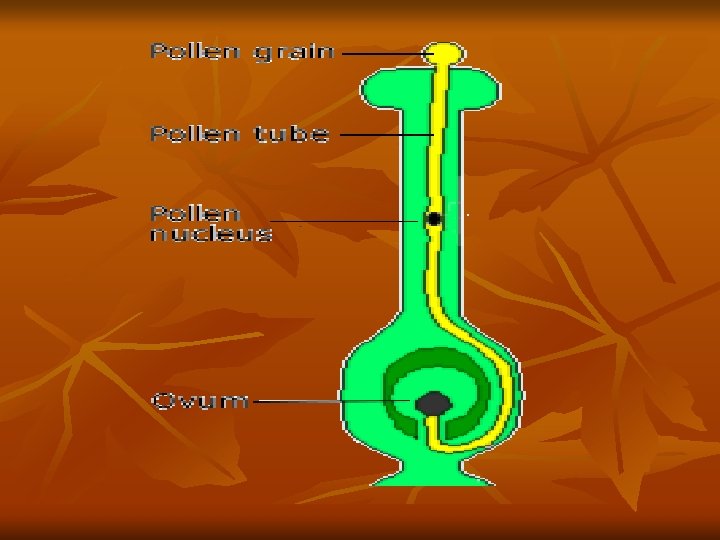
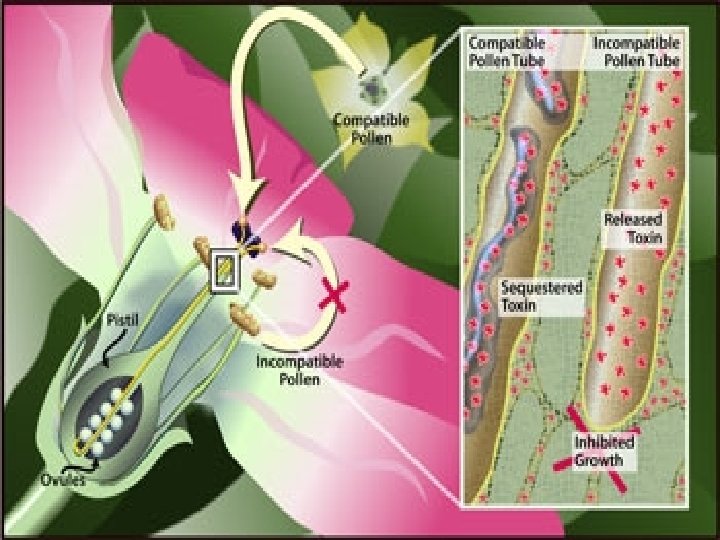
n n Pollen- Pistil Interaction: Pollen grains of a no. of plants descend over the stigma of a flower. All of them do not germinate there. Only the compatible pollen of the same species are able to germinate. Germination is connect with compatibility – incompatibility reaction between proteins presents over the pollen grains and the stigma. If the reaction is favourable, the pollen grains pick up water and nutrients from the stigma. It results in growth of pollen grains to from pollen tubes. Interaction between pollen tubes and pistil continue till the pollen tubes reach the ovule.
n n In the absence of compatibility- incompatibility reaction, pollen grains will germinate invariability, provided water and nutrients are available. Eg. Vinca, Balsam, Chick Pea, Crotalaria etc. Therefore understanding the mechanism of compatibility – incompatibility between the pollen and the pistil is important. It can help to over come incompatible reactions by supplying the chemicals that induce compatibility and allow the pollen to grow. Plant breeders will then be able to obtain hybrids between different species.
n n n Artificial Hybridization: It is the technique in plant breeding where crosses are made between different varieties, species and even genera in order to combine their desirable characters in a single superior variety. Artificial hybridization is one of the major approaches in crop improvement. This is carried out by the two process of EMASCULATION and BAGGING. Emasculation is the practice of removing anthers in their bud condition from the bisexual flowers of plants selected as female parents by means of a pair of fine forceps. It is not required in case of unisexual flowers.
n Bagging is the covering of both emasculated and non- emasculated flowers with butter paper/ polythene in their bud condition to prevent contamination from unwanted pollen. When the stigmas of emasculated flowers nature, the bags are removed for a while. The stigmas are dusted with pollen grains of desired male plants by means of a brush. The flowers are rebagged till fruits develop. Flowers are bagged to prevent contamination.
Double fertilization: n n n Double fertilization was discovered by Nawschin 1898, in Fritillaria and Lilium. It was confirmed by in 1899 by Guignard. After entering one of the synergids, the pollen tube release the two male gametes into the cytoplasm of the synergid. One of the male gamete move toward the egg cell and fuses with its nucleus and thus completing the SYNGAMY. This results in the formation of a diploid cell, the ZYGOTE. The other male gamete move towards the two polar nuclei located in the central cell and fuses with them to produce a triploid PRIMARY ENDOSPERM NUCLEUS (PEN). As this involves the fusion of three haploid nuclei it is termed as TRIPLE FUSION.
n Since two types of fusions, Syngamy and triple fusion takes place in an embryo sac. The phenomenon is termed as DOUBLE FERTILIZATION. The centers cell after the triple fusion becomes PRIMARY ENDOSPERM CELL (PEC) and develops into the endosperm while the zygote develops into an EMBROYO.
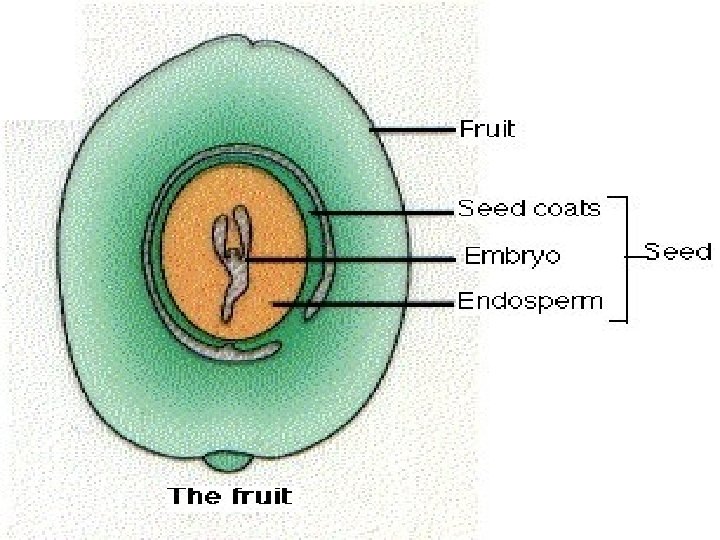
n n n Post fertilization- Structure and Events Following double fertilization, events of endosperm and embryo development, maturation of ovule(s) into seed(s) and ovary into fruit are collectively termed POST FERTILIZATION EVENTS. Endosperm: Endosperm is highly nutritive tissue that is formed as a result of triple fusion and provides nourishment to the developing embryo. In dicot seeds like beans and peas etc. the endosperm is completely used up during development and so they remain without endosperm (non- endospermic). In seeds of maize and coconuts, the endosperm remain there in even at maturity stage (endospermic).
n On the basics of its development, it is recognized into three types: n n n NUCLEAR TYPE: In this, the division of primary endosperm nucleus is not accompanied by the cell wall formation. But later on, the protoplast collects around each nuclei and then walls are formed. So the endosperm becomes cellular at the maturity. Eg. Maize, wheat , rice, and sunflower. CELLULAR TYPES: In this, the repeated mitotic division of PEN is flowed by cell wall formation around each nuclei, so the endosperm becomes cellular from the beginning. Eg. Datura, Petunia, Magnolia, Impatiens etc. HELOBIAL TYPE: In this, the first mitotic division of primary endosperm is followed by incomplete cytokinesis and the endosperm is formed both by cellular and nuclear types. eg -In coconut , the mature fruit contains both cellular (edible) and the free nuclear (water) endosperm. -Asphodelus. -Eremurus
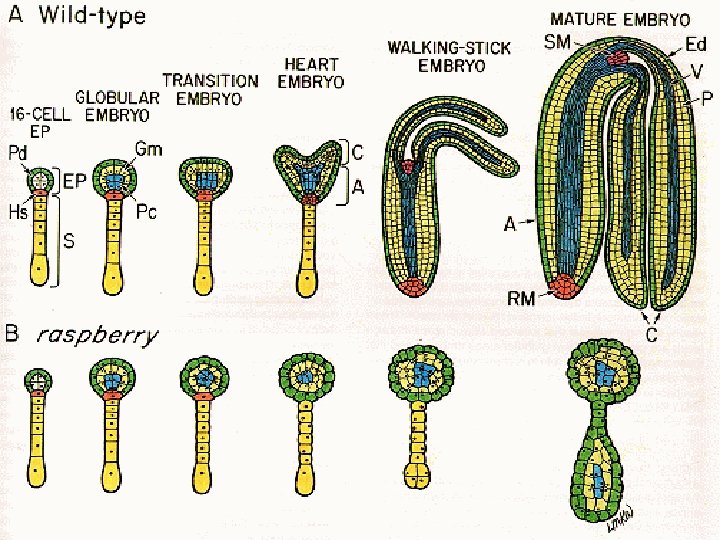
n n n Embryo: Embryo is the young future offspring which in seed plants develops inside mature fertilized ovule or seed. It is formed from zygote. Formation of embryo from zygote is called EMBRYOGENY. After fertilization, the zygote of the ovule divides transversely into two cells – a small terminal/ apical cell and a large basal cell. The first division of the zygote produces a hypobasal cell (BASAL) towards the micropyle and an epibasal (TERMINAL) towards the chalaza. The epibasal cell divides repeatedly tp produce a row of 4 -8 cells. The terminal cell divides in various planes to produce a cluster of cells, called the PROEMBRYO
n . The hypobasal and the remaining cells constitute the SUSPENSOR. The suspensor pushes the proembryo into the endosperm to enable the developing embryo to receive nutrition. A few cells of the proembryo nearest to suspensor develop into hypocotye and radicle. The other cells give rise to epicotyl, plumule and embryo, whereas in monocot plants, one of the two cotyledons get suppressed at an early stage, leaving only one in the mature embryo. As the embryo and endosperm develop and mature the integuements of the ovule become hard ( to provide protective covering, as seed coat) and lead to the formation of seed. The seed dormancy and the process of seed germination occur after this. The single cotylendon is called scutellum. Extensions of scutellum form coverings, coleorhiza (around radicle and rootcap) and coleoptile (around plumule).
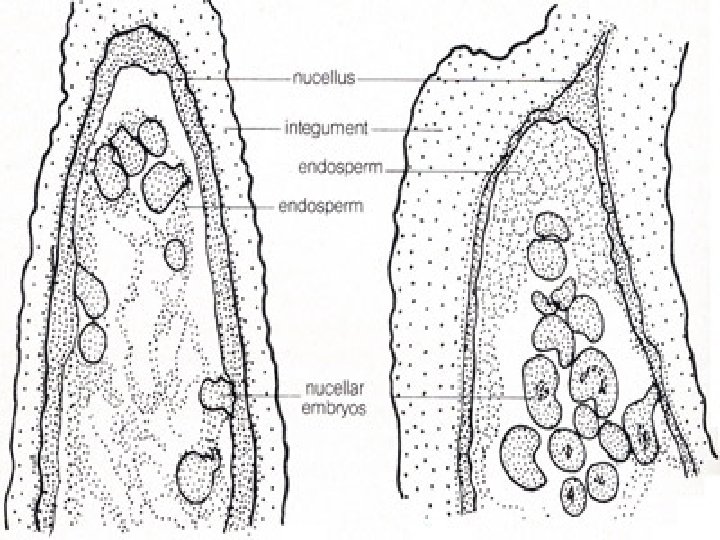
Seed and fruit formation n n n Seed is the final product of sexual reproduction. It is often called ripened ovule. Seeds develop inside stored food for later development of embryo is present either in cotylendons or endosperm. Where food is present in cotylendons, the latter are thick. Such seeds are called EXALBUMINOUS or NON ENDOSPERMIC. Eg. Pea, Gram, Bean, Groundnut. In exalbuminous seeds, the endosperm is consumed during growth of the embryo and transfer of food to cotylendons. In ALBUMINOUS or ENDOSPERMIC seeds, the whole of endosperm is not consumed during development of embryo. Sufficient food is also kept stored in it for future development of embryo. Eg. Wheat, Maize, Barley, Castor, Onion, Sunflower etc. Remants of nucellus persist in some seeds. The residual, persistent nucellus is called PERISPERM. Eg. Black Pepper.
n Integuements of ovules harden as tough protective seed coats. The microphyle remains as a small pore in the seed coat. This facilitates entry of oxygen and water into seed during germination. As the seed matures, its water content is reduced and seeds become relatively dry. The general metabolic activity of embryo slow down. The embryo may enter a state of inactivity called dormancy or if favourable conditions are available, they germinate.
n n n As ovules mature in seeds, the ovary develops into fruit i. e. the transformation of the ovule into seeds and ovary into fruits proceeds simultaneously. The wall of the ovary develops into wall of fruit called PERICARB. The fruit may be fleshy as in Guava. Orange, Mango etc or may be dry as in groundnut and mustard etc. In most plants, by the time the fruit develops from the ovary, other floral parts degenerate and fall off. But, in few species such Apple, Strawberry, Cashew, etc. The thalamus also contribute to fruit formation. Such fruits are called FALSE FRUITS. Most fruits develop only from ovary and are called true fruit eg. Tomato, Grapes etc. PARTHENOCARPIC FRUITS: This fruits develops without fertilization and do not bear seeds.
n n n Importance of seeds: DEPENDABLE PROCESS: Seeds formation is connected with pollination and fertilization that are independent of water. It is therefore more dependable process. PERENNATION : Seeds enable the future plant to pass through unfavourable periods without any harm because of the: n n n Presence of tough covering Dormant embryo Dehydrated protoplasm Inactive enzymes (c ) FOOD PRESERVE: Seed has sufficient food reserve that nourishes the germinating embryo and growing seedling till it becomes photosynthetically independent.
n n n (d) VARIATION : Being products of sexual reproduction, seeds have a number of variations due to genetic recombination's and crossing over. The variations are helpful in adaptations to varied environments and struggle for existence. (e) FOOD : Seeds are major article of human diet. They are also a source of oils, fibers, spices, beverages etc. stored seeds functions as an insurance against drought and vagaries of nature. (f) AGRICULTURE: Discovery of edible nature of some seeds, their germination and sowing by earlier humans gave rise to agriculture. It helped in development of civilization, progressive improvement in knowledge, development of science and technology.
n n Seed Viability: It is the period of time for which the seed retain the ability to germinate. Environmental conditions which can alter the viability are humidity and temperature. Genetically seed viability ranges from a few days (eg. Oxalis), one season (eg. Birch), 2 -5 years (most crop plant) to 100 years (eg. Trifolium) Seed Viability has been found out to be more than 1000 years in lotus. 2000 years old seeds of phoenix dactylifera excavated from king herod’s place near dead sea have been found viable. Similarly 10, 000 years old seeds of Lupinus arcticus (Lupine) excavated from arctic Tundra not only germinated but also produced plants that flowered. Apomixis and Polyembryony
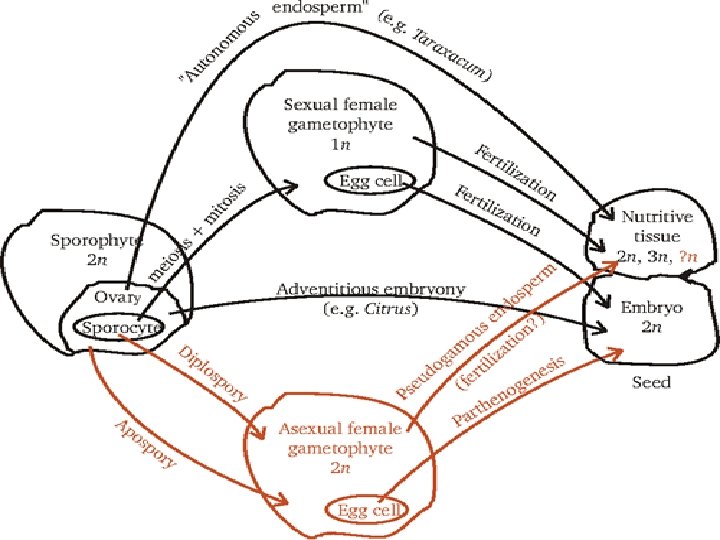
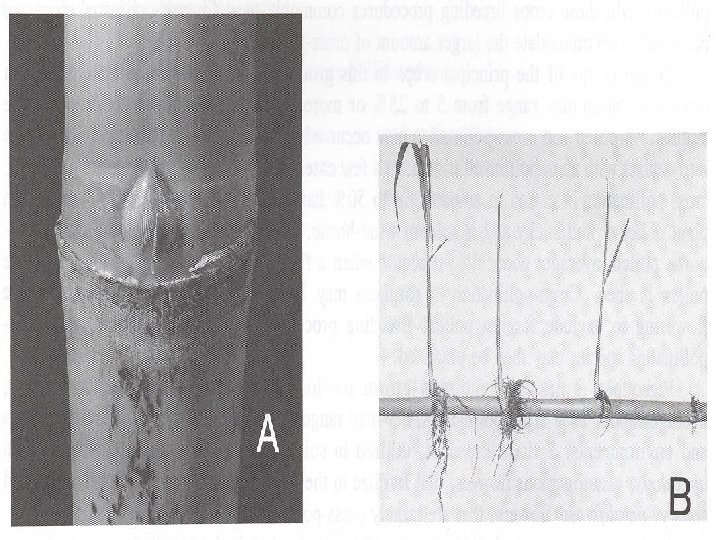
n n n APOMIXIX (Gk. Apo- without; mixis- marriage) It is the formation of new individual by asexual methods which do not involve fusion of gametes or sex cells. The organism reproducing through apomixis is called APOMICT. In apomixis, the new individual are genetically similar to the parent producing them. They are therefore, clone of there parents. There are several ways of development of apomicitic seeds like I ] Agamospermy: eg. Mango, orange. II] Parthenogenesis: eg Apple, poa III] Apogamy
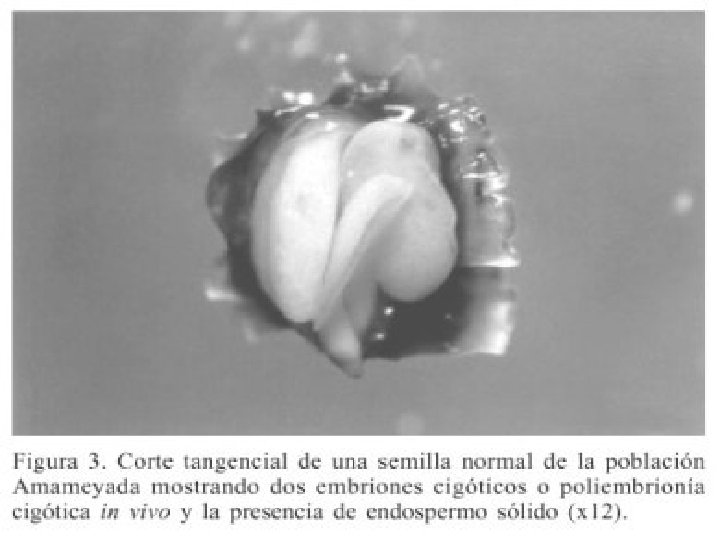
n n n POLYEMBYONY: - It is the phenomenon of formation of more than one embryo during the development of seed. Rao(1965) has found polyembryony to develop during seed germination in vandal caused by cleavage of apical promeristem of single embryo. Polyembryony was discovered by Leeuwenhoek(1719) in case of citrus. Polyembryony is of three types I] Simple- eg. Poa , Casuarinas, Citrus II] Cleavage polyembryony- eg. Pinus, orchids III] Adventitive polyembryony-eg. Citrus, opuntia , Onion, Mangifera, Trillium, Groundnut.